Disclosure: airfryerkitchensupply.com is reader-supported. When you buy through links on our site, we may earn an affiliate commission at no extra cost to you.
Where to buy
Every purifier below was matched against a live product listing through the site’s Amazon product listings before it earned a link, so the coverage areas, noise figures and filter details printed here come from verified listings. Use the links to check the current price on Amazon and confirm the exact model variant on the listing page — several of these ranges use very similar model names for meaningfully different machines.
- LEVOIT Core 300-P Air Purifier — Check on Amazon
- Coway Mighty Air Purifier (AP-1512HH) — Check on Amazon
- WINIX 5510 Air Purifier — Check on Amazon
- LEVOIT Core 400S-P Smart Air Purifier — Check on Amazon
- BLUEAIR Blue Pure 511i Max — Check on Amazon
- Medify MA-40 Air Purifier — Check on Amazon
Shoppers searching for the best selling home air purifiers are really asking which machines other households have settled on — and the honest way to answer that without printing a single sales figure is to look at the models that keep defining the category and judge them on the specifications that can be verified. That is what this guide does. It will not quote you a sales rank, a star average or a count of anything, because those numbers change constantly and prove little. Instead, each pick below was confirmed against a real listing, and the case for each rests on checkable facts: the room coverage the listing states, whether its performance is AHAM Verified where claimed, the filter stages it carries, its stated noise level, and the ownership details — filter format, warranty, auto modes — that decide whether a purifier is still pleasing in year three.
One boundary is stated plainly at the start: an air purifier is a home appliance, not a medical device. This guide discusses dust, pollen, pet dander, smoke particles and odours — the things these machines are built and rated to capture — and makes no health claims for any of them. Within that honest frame, the six picks cover the category’s main shapes: a compact all-rounder for bedrooms, a long-established mid-size design with a stated multi-year warranty, a large-room model with a serious carbon filter for odours, a smart large-room machine with an air quality monitor, the quietest bedroom option with a stated 19 dB night mode, and a high-coverage value pick.
In this guide
Quick Picks
The shortlist at a glance. Judge it by the coverage column against your own room’s size — that single match matters more than any other specification here.
| Pick | Badge | Why it made the list | Link |
|---|---|---|---|
| LEVOIT Core 300-P Air Purifier | Best Overall for Bedrooms | The category’s defining compact: AHAM Verified, stated coverage to 1073 sq ft, and a quiet HEPA sleep mode for bedrooms. | Check on Amazon |
| Coway Mighty Air Purifier (AP-1512HH) | Best Established Design | A long-running category fixture: coverage to 1,748 sq ft, air quality monitor, auto and eco modes, and a stated 3-year warranty. | Check on Amazon |
| WINIX 5510 Air Purifier | Best for Large Rooms and Odours | The largest stated coverage here — 1881 sq ft in one hour — with True HEPA and a high deodorization carbon filter for odour-heavy homes. | Check on Amazon |
| LEVOIT Core 400S-P Smart Air Purifier | Best Smart Large-Room Pick | AHAM Verified smart purification to 1718 sq ft, with an air quality monitor, auto mode and a child lock, in black. | Check on Amazon |
| BLUEAIR Blue Pure 511i Max | Best Quiet for Bedrooms | A stated 19 dB night mode — the quietest figure in this roundup — with HEPASilent filtration and 360-degree intake for bedrooms. | Check on Amazon |
| Medify MA-40 Air Purifier | Best High-Coverage Value | Stated coverage of 1,793 sq ft in one hour with HEPA filtration to 0.3 microns — big-room numbers in a value-positioned machine. | Check on Amazon |
How These Picks Were Chosen
Verification came first: every model’s listing title was matched through Amazon product listings for this site, and only what those titles state — coverage, filter type, noise, modes, warranty — is printed in the spec boxes. Where a listing states AHAM Verified, the review says so, because independent verification of a purifier’s clean-air delivery is the closest thing this category has to a trustworthy headline number.
A note on the search itself: ‘best selling’ is answered here by category standing and verified specification, never by numbers. This guide prints no sales volumes, no rankings and no review counts for any model, in line with the standing rule that fixed popularity figures go stale and mislead. If a model’s presence here needs justifying, its justification is in its review, in facts you can check.
Range balance was the third criterion. Home purifiers fail in two opposite ways — too small for the room, so they run flat out and change little, and too large for the room, so they cost more to buy and feed with filters than the room ever needed. The list therefore spans stated coverage from just over a thousand square feet to just under nineteen hundred, with the reviews explicit about which room each machine is actually for.
The 6 Best Selling Home Air Purifiers, Chosen on Verified Specs

LEVOIT Core 300-P Air Purifier — Best Overall for Bedrooms
The Core 300-P is the machine that taught a generation of buyers what a modern bedroom purifier looks like: a compact cylinder, a 3-in-1 style HEPA filtration setup, a sleep mode for night running, and — the detail that lifts it above the anonymous crowd — AHAM Verified performance stated in its listing, with coverage up to 1073 square feet. That coverage figure describes its air-changes capability in the AHAM sense; in a typical bedroom it is comfortably more than the room demands, which is exactly how a purifier should be sized.
Its natural home is the bedroom, the nursery-adjacent spare room and the home office: spaces where quiet matters as much as cleaning. The listing positions it squarely at pet hair, allergens, dust, pollen, smoke and pet odour in the bedroom context, and its compact footprint fits the nightstand-adjacent floor space those rooms actually have.
Strengths
- AHAM Verified performance stated in the listing — independently checked clean-air delivery
- Quiet HEPA sleep mode suits overnight bedroom running
- Compact cylinder fits real bedroom floor space
Trade-offs
- Sized for bedrooms and medium rooms, not open-plan living areas
- Uses proprietary filters — factor replacement filters into ownership
- No air quality sensor or auto mode in this model; bigger siblings carry those
| Coverage | Up to 1073 sq ft (as stated in listing) |
|---|---|
| Verification | AHAM Verified (as stated in listing) |
| Filtration | HEPA, with sleep mode |
| Stated targets | Dust, pollen, smoke, pet hair and odour |
Sizing deserves one clarification that will save buyers across this whole list: a purifier’s headline coverage assumes a certain number of air changes per hour, and for a bedroom you want the machine loafing, not straining. A model rated well above your room’s area cleans it on a low, quiet setting — which is why a 1073 sq ft rating in a 200 sq ft bedroom is not overkill but the correct way to buy quiet. Run the Core 300-P on its sleep mode overnight and a higher setting when the room is empty, and it will simply disappear into the household’s background.
Best for: Bedrooms, nurseries’ adjacent rooms and home offices / Not suited for: Large open-plan living spaces, or buyers wanting sensor-driven auto mode
Check on Amazon — check the current price on Amazon before you decide, and confirm the exact configuration on the listing page.

Coway Mighty Air Purifier (AP-1512HH) — Best Established Design
The Coway Mighty has been a default recommendation in this category for years, and its verified listing shows why the design endures: coverage up to 1,748 square feet, an air quality monitor with auto mode so the machine responds to the room rather than a guess, an eco mode, a timer, a filter indicator, and a stated 3-year warranty — a warranty figure few rivals in this roundup print at all.
The Mighty’s shape is the classic tower-free box with a front intake, sized for living rooms and large bedrooms rather than nightstand corners. For a buyer who wants one machine, from an established maker, that handles a main living space and then is largely forgotten about, this is the list’s most conservative and arguably most sensible answer.
Strengths
- Air quality monitor with auto mode — the machine reacts to the room
- Stated 3-year warranty, the strongest ownership signal in this roundup
- Coverage to 1,748 sq ft suits main living spaces
Trade-offs
- Box format takes more floor presence than the compact cylinders
- No app control in this established design
- Filter set is model-specific; confirm replacement availability when buying
| Coverage | Up to 1,748 sq ft (as stated in listing) |
|---|---|
| Modes | Auto and Eco, with timer |
| Monitoring | Air quality monitor, filter indicator |
| Warranty | 3 years (as stated in listing) |
Auto mode is worth more than its bullet point suggests. A purifier without a sensor runs at whatever speed a human last chose, which in practice means too slow when cooking smoke drifts in and too fast at 3 a.m. The Mighty’s monitor closes that loop, and its eco mode lets it idle down when the air is clean. Over years of ownership, that intelligence — plus the filter indicator that ends guessing about replacements — is what separates a machine that is used properly from one that is merely owned.
Best for: Main living rooms and large bedrooms; buyers who value warranty and auto operation / Not suited for: Small bedrooms where its footprint is wasted, or app-first smart-home buyers
Check on Amazon — check the current price on Amazon before you decide, and confirm the exact configuration on the listing page.

WINIX 5510 Air Purifier — Best for Large Rooms and Odours
The WINIX 5510 succeeds a well-known predecessor model and states the biggest number in this roundup: coverage for large rooms up to 1881 square feet in one hour. It pairs True HEPA filtration with a high deodorization carbon filter — the specification that matters when the problem is not just particles but smells: cooking, pets, and the general odour load of a busy house. Auto mode and app support complete a thoroughly modern large-room package.
Carbon is the honest divider in this category. HEPA media captures particles; odours and many gases pass through it, and only a substantial activated carbon stage addresses them. The 5510’s listing leads with that stage rather than treating it as a thin afterthought sheet, which is why this is the pick for homes where the nose, not the dust cloth, raises the complaint.
Strengths
- Largest stated coverage in the roundup: 1881 sq ft in 1 hr
- High deodorization carbon filter targets odours, not just particles
- True HEPA plus auto mode and app support
Trade-offs
- A large-room machine is wasted money and filter cost in a small bedroom
- Carbon filters are consumables with their own replacement rhythm
- App support means account and Wi-Fi setup some buyers would rather skip
| Coverage | Up to 1881 sq ft in 1 hr (as stated in listing) |
|---|---|
| Filtration | True HEPA plus high deodorization carbon filter |
| Modes | Auto mode, app support |
| Stated targets | Pet allergens, smoke, odours |
Place a large-room purifier where the air actually moves: a central spot with clearance around its intake and outlet, not wedged behind a sofa where it will diligently purify the back of the furniture. In open-plan spaces, one correctly placed 5510 usually serves the whole zone better than two small machines fighting in corners. And keep the carbon stage honest — in an odour-heavy home it exhausts sooner than the HEPA stage, so the filter indicator and your own nose are the schedule to follow.
Best for: Open-plan living spaces, pet-heavy and cooking-heavy homes / Not suited for: Small bedrooms, or buyers who do not want app-connected appliances
Check on Amazon — check the current price on Amazon before you decide, and confirm the exact configuration on the listing page.

LEVOIT Core 400S-P Smart Air Purifier — Best Smart Large-Room Pick
The Core 400S-P is the Core line scaled for large rooms and given a brain: stated coverage up to 1718 square feet, AHAM Verified performance, an air quality monitor feeding an auto mode, a HEPA sleep mode for nights, and app-driven smart control. The listing also notes a child lock — a small feature that households with toddlers will recognise as the difference between a purifier and an fascinating button panel.
In black, it also answers the aesthetic complaint about white appliances in media rooms and modern living spaces. For the smart-home household that wants the purifier in the same app ecosystem as everything else, and verified performance underneath the convenience, this is the roundup’s natural centre of gravity.
Strengths
- AHAM Verified, with coverage to 1718 sq ft for large rooms
- Air quality monitor plus auto mode and smart app control
- Sleep mode and child lock suit family living rooms
Trade-offs
- Smart features need Wi-Fi and an app account — not for the deliberately offline
- Black finish shows dust more than white between cleanings
- Proprietary 3-in-1 filters set the ongoing cost; check them before buying
| Coverage | Up to 1718 sq ft (as stated in listing) |
|---|---|
| Verification | AHAM Verified (as stated in listing) |
| Monitoring | Air quality monitor, auto mode |
| Extras | HEPA sleep mode, child lock, smart control |
The smart premium buys one thing above all: the purifier actually running. Schedules that start it before you come home, auto mode that answers events you never notice, and filter reminders that arrive as notifications rather than as a stale smell — these are what keep a purifier working across years instead of across the first enthusiastic month. If your household already runs app-controlled lights and heating, the 400S-P’s logic will feel familiar; if it does not, the Coway’s on-device auto mode delivers much of the same benefit without the ecosystem.
Best for: Smart-home households with large rooms and children / Not suited for: Buyers avoiding app-connected appliances
Check on Amazon — check the current price on Amazon before you decide, and confirm the exact configuration on the listing page.
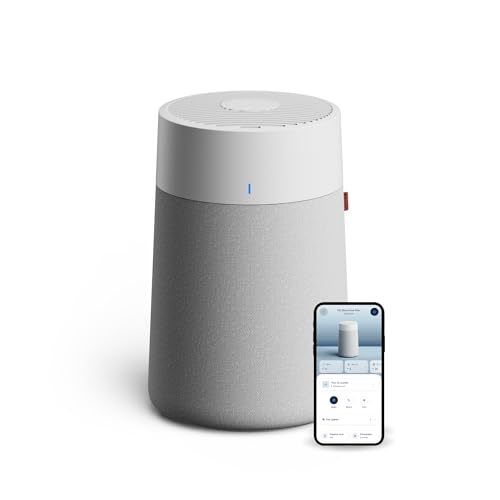
BLUEAIR Blue Pure 511i Max — Best Quiet for Bedrooms
Bedroom purifiers live or die by noise, and the 511i Max prints the number that decides it: a 19 dB night mode, stated in its listing. That is whisper territory, the level at which a purifier stops being a presence in the room. Around that quiet core it builds a complete specification — HEPASilent filtration for dust, pollen and pet dander, coverage up to 1,138 square feet, auto mode, Wi-Fi app control and a 360-degree air intake that frees you from aiming the machine at the room.
The 360-degree intake is more practical than it sounds: bedroom floor space is awkward, and a purifier that breathes from every side can sit in the corner it fits rather than the orientation it demands. For light sleepers, this is the pick the rest of the list has to argue against, and the argument is not easy.
Strengths
- Stated 19 dB night mode — the quietest verified figure here
- 360-degree intake makes placement forgiving in tight bedrooms
- Auto mode and Wi-Fi app control in a compact bedroom format
Trade-offs
- Coverage suits bedrooms and medium rooms, not open-plan spaces
- HEPASilent is the brand’s own filtration approach; buyers wanting conventional True HEPA wording should compare the Winix and Levoit listings
- App control again implies an account and Wi-Fi setup
| Coverage | Up to 1,138 sq ft (as stated in listing) |
|---|---|
| Noise | 19 dB night mode (as stated in listing) |
| Filtration | HEPASilent (brand’s stated technology) |
| Intake | 360-degree air intake |
A note on filtration language, in the interest of the honesty this guide trades on: HEPASilent is Blueair’s own name for its filtration approach, which differs in method from the sealed True HEPA filters other picks describe. Both approaches are sold for the same targets — dust, pollen, dander — and this guide reports each listing’s own wording rather than declaring a winner between technologies. What can be compared plainly is the stated noise, and on that figure the 511i Max stands alone in this roundup.
Best for: Light sleepers and bedroom use where silence is the priority / Not suited for: Open-plan spaces, or buyers set on conventional True HEPA specification wording
Check on Amazon — check the current price on Amazon before you decide, and confirm the exact configuration on the listing page.

Medify MA-40 Air Purifier — Best High-Coverage Value
The MA-40’s listing leads with reach: 1,793 square feet of coverage in one hour, HEPA filtration described as removing particles to 0.3 microns, and a stated remit spanning smoke, wildfires, odours, pollen and pets. In a category where coverage usually costs, Medify positions that reach at the value end — the positioning here is qualitative, so check the current price on Amazon against the Winix to see how the two large-room options sit on the day you buy.
Wildfire smoke in the stated remit is worth pausing on: for households in smoke-prone regions, a high-coverage HEPA machine is a seasonal essential rather than a lifestyle accessory, and the MA-40’s stated numbers address exactly that scenario. It is the roundup’s pick for the buyer whose problem is a whole floor, not a single room.
Strengths
- Stated 1,793 sq ft coverage in 1 hr — near the top of this roundup
- HEPA filtration with stated 0.3 micron removal
- Stated remit includes wildfire smoke — relevant for smoke-season households
Trade-offs
- No AHAM Verified claim in the verified listing title, unlike the Levoit picks
- No smart features or air quality monitor stated in the listing
- Large coverage in a value machine means filter costs deserve a check before buying
| Coverage | 1,793 sq ft in 1 hr (as stated in listing) |
|---|---|
| Filtration | HEPA, stated removal to 0.3 microns |
| Stated targets | Smoke, wildfires, odours, pollen, pets |
| Pack | 1-pack, white |
Coverage claims across brands are not measured in identical ways, which is why this guide keeps returning to AHAM Verification where it exists and reports other figures strictly as the listing’s own. The fair way to use the MA-40’s number is comparatively and conservatively: it is a large-room machine by its maker’s account, best deployed in one big space with doors open to the zone it serves, and judged — like every purifier — by whether the room feels and smells cleaner across a fortnight of real use.
Best for: Whole-floor coverage, smoke-season households, value-focused large rooms / Not suited for: Buyers who want AHAM Verified figures or smart auto operation
Check on Amazon — check the current price on Amazon before you decide, and confirm the exact configuration on the listing page.
Comparison Table
| Pick | Badge | Key spec | Best for |
|---|---|---|---|
| LEVOIT Core 300-P Air Purifier | Best Overall for Bedrooms | AHAM Verified, up to 1073 sq ft, HEPA sleep mode | Bedrooms, nurseries’ adjacent rooms and home offices |
| Coway Mighty Air Purifier (AP-1512HH) | Best Established Design | Up to 1,748 sq ft, auto/eco modes, 3yr warranty stated | Main living rooms and large bedrooms; buyers who value warranty and auto operation |
| WINIX 5510 Air Purifier | Best for Large Rooms and Odours | Up to 1881 sq ft/hr, True HEPA + serious carbon stage | Open-plan living spaces, pet-heavy and cooking-heavy homes |
| LEVOIT Core 400S-P Smart Air Purifier | Best Smart Large-Room Pick | AHAM Verified, up to 1718 sq ft, smart auto mode | Smart-home households with large rooms and children |
| BLUEAIR Blue Pure 511i Max | Best Quiet for Bedrooms | 19 dB night mode stated, up to 1,138 sq ft | Light sleepers and bedroom use where silence is the priority |
| Medify MA-40 Air Purifier | Best High-Coverage Value | 1,793 sq ft/hr stated, HEPA to 0.3 microns stated | Whole-floor coverage, smoke-season households, value-focused large rooms |
Read the table by room, not by brand. Bedrooms: the Levoit Core 300-P for verified all-round value, or the Blueair for silence. Main living spaces: the Coway for set-and-forget auto operation with a stated warranty, or the Levoit 400S-P for the smart version of the same idea. Open-plan and odour-heavy homes: the Winix. Whole floors and smoke season: the Medify.
Notice the pattern in what is printed and what is not. Coverage, noise and warranty figures appear because listings state them. Popularity figures appear nowhere, because no listing can state how a machine will serve your room — and serving your room, quietly, for years, is the entire purchase.
How to Choose a Home Air Purifier: Coverage, Filtration and Noise
Coverage first, and understood properly. A purifier’s stated area assumes a rate of air changes; for bedrooms, where the machine runs all night beside sleepers, choose a model rated well above the room’s size so it can do its work on a low, quiet speed. For living areas, match the stated coverage to the space with the doors in their usual position — open-plan means the whole zone counts, not the corner the machine stands in.
Filtration second. Particle capture is the HEPA stage’s job, and listings that state AHAM Verified performance have had their clean-air delivery independently checked — the strongest claim in this category. Odours are a different mechanism entirely: they need activated carbon, in quantity, which is why the Winix’s high deodorization carbon stage earns its own badge. A purifier bought for smells and given only a HEPA filter and a perfumed carbon sheet will disappoint, through specification rather than defect.
Noise third, because it decides whether the machine runs at all. A purifier switched off for being loud cleans nothing. Stated night-mode figures, like the Blueair’s 19 dB, are the numbers to compare for bedrooms; for living rooms, auto mode matters more, because a machine that speeds up only when the room needs it can be louder at its peak without ever being annoying.
Placement and Running Habits That Decide Whether a Purifier Works
- Give the intake and outlet clearance — a purifier behind furniture purifies the furniture.
- Run it continuously on low rather than in occasional blasts; steady state beats rescue missions.
- Keep doors and windows in their normal positions when judging performance; a purifier serves the zone it is actually in.
- Vacuum or replace pre-filters on the maker’s rhythm so the main filter’s life is spent on fine particles, not lint.
- Respect the filter indicator or the calendar, whichever your model offers; an exhausted filter quietly returns a purifier to being furniture.
These habits sound mundane because they are — and they separate the households that swear by their purifier from the households that swear at it more reliably than any specification does. The machine is half the system; placement and running discipline are the other half, and they are free.
How to Set Up a Home Air Purifier for Best Results
Setup is short, but each step protects the performance you paid for.
- Unpack and remove every filter’s protective wrapping before first use — the most common setup error in the category is running a machine with its filter still sealed in plastic.
- Place the purifier in the room it serves, with clear space around intake and outlet, near the pollution source if there is one (litter area, kitchen boundary, bedroom door).
- Run it on its highest setting for the first hour to turn the room’s air over, then settle into auto mode or a continuous low setting.
- In bedrooms, position it where its night mode serves the bed without blowing directly across sleepers.
- Set the filter reminder, app notification or calendar note for filter checks on the day of setup, not when the machine starts to smell stale.
- Judge the result across two weeks of normal living — cooking, pets, doors opening — rather than by the first evening’s impression.
A purifier that is set up this way and then left alone will quietly do its job for years. Most ‘it stopped working’ stories trace back to a sealed filter, a choked pre-filter or a machine exiled to a corner behind a sofa — all setup, no mystery.
Filter Economics: The Cost After the Purchase
A purifier’s purchase price is the smaller half of its lifetime cost. Filters are consumables with a rhythm set by your air: a pet-heavy, cooking-heavy home exhausts carbon stages faster, and dusty environments load HEPA media sooner. Before buying any pick here, look at its replacement filter on the same listing visit and note two things — the stated replacement interval and what a year of filters implies for your household. This guide prints no prices, static or otherwise, but the comparison habit itself is the point: two machines with similar tickets can have quite different appetites.
Proprietary filters are the norm in this category, which makes the maker’s continued support part of the purchase. Established lines — the Coway, the Levoit Core family, the Winix succession models — carry the practical advantage that their filters remain stocked. A purifier whose filters disappear from sale is a purifier with an expiry date, and that risk, more than any feature gap, is what the established names insure against.
Purifiers and Pets: Setting the Right Expectation
Pet households are this category’s core audience, and the honest expectation is this: a good purifier reduces airborne hair and dander floating in the room and helps noticeably with litter and general pet odour when it has a real carbon stage. It does not vacuum the sofa, and dander that has settled into upholstery is a cleaning task, not an air task. Run the machine in the room the pet lives in, keep its intake clear of the hair tumbleweeds that gather in corners, and vacuum its pre-filter more often than the manual’s average household assumes.
Placement near — not inside — the pet’s zone works best: beside the litter area’s room rather than in the box’s blast radius, and in the living room where the dog actually sleeps. Households that pair a correctly sized purifier with ordinary vacuuming discipline report the combination as transformative; either half alone is merely helpful. The machine’s job is the air, and judged on the air, the picks here earn their places.
What This Guide Deliberately Does Not Claim
Three absences in this guide are deliberate and worth naming. It prints no sales figures, rankings or review counts for any model, because such numbers are marketing weather — they change constantly and describe other people’s purchases, not your room’s air. It makes no medical claims, because a purifier is an appliance: it captures particles and odours as its listing describes, and questions about health conditions belong to clinicians, not buying guides. And it prints no prices, because a static price in a guide is wrong by the time it is read; the links exist so the current price can be checked at the moment of decision.
What remains after those absences is the part that ages well: verified coverage, verified filtration, verified noise, and the habits that make any of them work. A guide that restricts itself to what can be checked is a guide that can still be trusted next season.
Seasonal Air: When a Purifier Earns Its Keep Across the Year
Spring is pollen season, and the purifier’s job is at its clearest: windows open, pollen drifts, and the bedroom machine running overnight is the difference between the room being a refuge and being part of the problem. This is the season to check that filters are fresh — a purifier entering pollen season on an exhausted filter is a fan with a story. Summer brings cooking smoke through open doors, wildfire smoke in the regions that know it, and the general dust of a house being lived in hard; the large-room and smoke-remit picks justify themselves now.
Autumn is filter season in the practical sense: the year’s accumulated load peaks, heating systems start circulating household dust, and the household that replaces filters in autumn enters the closed-window months with the machine at full strength. Winter is the quiet test — doors and windows shut, the purifier running continuously in occupied rooms, its value measured in the dust that is not on the shelves. A machine bought for one season and kept for all four is the actual pattern of ownership, which is why this guide weights durability, filter availability and auto operation as heavily as any headline coverage figure.
Two Rooms, Two Machines, or One Big One?
The common planning question deserves a direct answer. Bedrooms want their own machine, because the door closes at night and a living-room purifier, however large, does not serve a closed room. Living areas want coverage matched to the whole open zone. So the honest default for most homes is a bedroom machine plus a living-space machine — which is exactly how this list is badged, with two bedroom picks and the rest scaled for shared rooms.
The one-big-machine strategy works only in genuinely open plans where the sleeping area is part of the same air volume — studio flats and open loft layouts. Everywhere else, air respects doors more than it respects specifications. Buy for the air volumes you actually have, run each machine continuously in its own zone, and the system outperforms any single heroic unit exiled to a hallway in the hope that clean air will wander.
Reading a Purifier Listing Like an Engineer
Strip a purifier listing to five questions and the marketing falls away. What area does it state, and is that figure independently verified — AHAM or the maker’s own? What are its stages, in order, and is the carbon stage substantial or decorative? What noise does it state at the speed you will actually sleep beside? What does a year of its filters look like, and are they in stock now? And what does it do without you — sensor, auto mode, timer, indicator — because a purifier’s second year is lived on automation, not enthusiasm.
Apply those five questions to any machine, including every pick in this guide, and the differences stop being brand folklore and become engineering trade-offs you can weigh against your rooms. That is the skill this category actually rewards, and it transfers to every future model long after this particular shortlist has been refreshed.
The Quiet Arithmetic of Running Costs
Beyond filters, a purifier consumes electricity continuously, and the honest way to think about it is by mode rather than by headline wattage. A machine idling on auto or a low night setting draws modestly; the same machine on turbo around the clock is a different appliance on the bill. This is one more argument for correct sizing: an oversized-for-the-room machine spends its life on its cheapest, quietest settings, while an undersized one pays turbo rates to stand still. Buy the size once, and the running arithmetic stays in your favour for the life of the machine — which, with filters replaced and intakes kept clear, is measured in years of unnoticed, unglamorous, exactly-as-promised service.
In Short
Size generously for the room, demand a real carbon stage for smells, value verified figures over marketing ones, run the machine continuously and change its filters on schedule — a purifier bought and kept on those rules will never be the loudest claim in the room, only the cleanest air in it.
One Last Placement Habit
Once a month, pull the machine a few inches from the wall and vacuum the intake faces and the floor beneath it; the ring of dust that gathers there is the visible record of what the filter has been sparing the room, and clearing it keeps airflow honest between filter changes, season after season, year after year.
And Keep the Box Until the Fortnight Verdict
Keep the packaging until two weeks of normal living have proved the machine in its room; returns are simpler, and the fortnight test is the honest one.
Common Buying Mistakes
Buying by room name instead of room size
A ‘bedroom’ purifier in a 600 sq ft living room will run flat out and change little. Match stated coverage to your actual space, and oversize for bedrooms so the machine can work quietly.
Expecting a HEPA filter to remove odours
Particles and smells are different mechanisms. Odour problems need a substantial activated carbon stage — the reason one pick here is badged specifically for its deodorization filter.
Running the purifier with its filter still wrapped
New filters ship sealed in plastic. A machine run that way moves air and cleans none of it — the most common setup failure in the category, and the easiest to avoid.
Turning it off at night in the bedroom
Night is when a bedroom purifier earns its keep, on its quiet mode. If the machine is too loud to sleep beside, the fix is a quieter-rated model or a larger one running slower — not switching it off.
Ignoring filter replacement until performance collapses
An exhausted carbon stage stops addressing odours long before it looks dirty. Follow the indicator or the calendar, and budget filters as part of the purchase.
Final Recommendation
For most bedrooms, the LEVOIT Core 300-P is the sensible default — AHAM Verified, compact, and quiet on its sleep mode. Light sleepers should step to the BLUEAIR 511i Max for its stated 19 dB night mode. Main living spaces belong to the Coway Mighty for set-and-forget auto operation with a stated 3-year warranty, or the Core 400S-P if the household runs on apps.
Large, odour-heavy, open-plan homes should take the WINIX 5510 and its serious carbon stage, and whole-floor or smoke-season coverage on a value brief points to the Medify MA-40. Whichever you choose, size it generously, place it in the open, run it continuously — and let verified specifications, not popularity numbers, make the decision.
Best Air Purifiers For Your Home Best Portable Air Purifiers For Home Best Small Air Purifiers Best Silent Air Purifiers Best Selling Non App Home Air Purifiers Best Air Purifiers Below 300
Frequently Asked Questions
How do I know what size air purifier my room needs?
Compare the room’s area with the coverage stated in the listing, and for bedrooms choose a model rated well above the room so it can clean on a low, quiet setting. Open-plan spaces count as one zone — size for the whole zone, not the corner the machine occupies.
What does AHAM Verified actually mean?
It means the model’s clean-air delivery performance has been independently verified under the Association of Home Appliance Manufacturers’ program, rather than resting only on the maker’s own figures. Three picks in this guide state it in their listings; where a model does not, its coverage is reported strictly as the maker’s own claim.
Can an air purifier remove pet odour and cooking smells?
Yes, if it has a substantial activated carbon stage — particles are the HEPA filter’s job, odours are carbon’s. The Winix 5510 is badged here specifically for its high deodorization carbon filter; a HEPA-only machine will not solve a smell problem.
How loud is a purifier in a bedroom at night?
The quietest stated figure in this roundup is the Blueair 511i Max’s 19 dB night mode. As a rule, a generously sized machine on its lowest setting is quieter in practice than a small machine straining — another reason to oversize for bedrooms.
How often do filters need replacing?
It depends on the model and your air; makers state intervals, and several picks here include filter indicators that end the guessing. Carbon stages in odour-heavy homes exhaust sooner. Check the replacement filter’s details on the listing before buying so the ongoing rhythm is no surprise.
Is an air purifier a medical device?
No. It is a home appliance that captures particles such as dust, pollen, pet dander and smoke, and — with a carbon stage — odours. This guide makes no health claims for any model; questions about medical conditions belong with a clinician.

