Disclosure: airfryerkitchensupply.com is reader-supported. When you buy through links on our site, we may earn an affiliate commission at no extra cost to you.
Where to buy
All six purifiers in this guide were cross-checked against Amazon’s own product data, so every link below is verified. For a 150 square foot room, start with the Levoit Core Mini, the right-sized desktop default, and check the current price on Amazon. Then compare the premium BLUEAIR Blue Pure Mini Max, the bedroom-focused Coway Airmega 50, the smart PuroAir 100i, the connected value of the Levoit Core 200S, and the pet-capable BLUEAIR Blue Pure 511i Max. A 150 square foot room, a nursery, a small bedroom, a home office, is the easiest size in air purification to serve well: the standard sizing rule asks for a CADR of at least two-thirds of the room’s area, which means a smoke CADR around 100 is the threshold, and every purifier in this guide clears it. The real choices are noise, filtration type, smart features, and filter replacement economics, and those are the axes the reviews below are organized on.
Introduction: purifying a small room properly
People shopping for the best air purifiers for 150 square feet are usually solving one of four rooms: a nursery where the air should be clean and the machine must be quiet enough to sleep beside, a small bedroom where allergies announce themselves at 2 a.m., a home office that shares air with a cat, or a dorm room where one machine has to do everything. The good news is that small rooms are where air purifiers perform best. Air changes per hour, the metric that actually decides how clean a room’s air stays, is a function of the purifier’s clean air delivery against the room’s volume, and in 150 square feet even a modest desktop unit turns the room’s air over several times an hour. The bad news is that small-room buyers are the market’s favorite target for undersized novelty devices, plug-in ionizers and USB gadgets whose clean air delivery is a rounding error. This guide excludes those on principle: every pick here is a real filtration appliance with a stated coverage, a real filter, and verified product data.
The six picks split into two honest families. The right-sized family, the Levoit Core Mini, the Blueair Mini Max, and the Coway Airmega 50, is designed for rooms like yours and sized within a few hundred square feet of it, which means quieter operation and cheaper filters. The headroom family, the PuroAir 100i, the Levoit Core 200S, and the Blueair 511i Max, is rated for rooms several times larger, which in a 150 square foot room translates to running on a low, near-silent speed while still delivering multiple air changes, plus the ability to move to a bigger room later. Neither family is the wrong answer; they are answers to different priorities, budget and fit versus quiet headroom and future-proofing. The buying guide after the reviews explains CADR, the two-thirds rule, HEPA grades, and noise in plain terms, so you can verify our reasoning and apply it to any machine, including the ones that did not make this list.
In this guide
Quick Picks
- Best Overall: Levoit Core Mini — a small, quiet bedroom and desktop purifier with a fragrance sponge and true filter-based cleaning, sized honestly for small rooms. Check the current price on Amazon.
- Best Premium: BLUEAIR Blue Pure Mini Max — compact HEPASilent filtration with auto sensor mode and a washable pre-filter, for small spaces, dorms, and offices. Check the current price on Amazon.
- Best for Bedrooms: Coway Airmega 50 — HEPA plus deodorization filtration for rooms up to 500 sq ft, with an air quality monitor, auto mode, and a night light. Check the current price on Amazon.
- Best Smart: PuroAir 100i — certified HEPA plus carbon filtration for rooms up to 550 sq ft, with WiFi app control, scheduling, and a quiet sleep mode. Check the current price on Amazon.
- Best Smart Value: Levoit Core 200S — smart and voice control with a 3-in-1 HEPA filter system and sleep mode, AHAM verified, at the accessible tier. Check the current price on Amazon.
- Best for Pet Owners: BLUEAIR Blue Pure 511i Max — HEPASilent filtration rated up to 1,138 sq ft in an hour, a 19 dB night mode, auto mode, and WiFi app control. Check the current price on Amazon.
How These Picks Were Chosen
Only listing-confirmed purifiers received purchase links, and every coverage figure and feature quoted in the reviews comes from the verified Amazon title rather than from unverifiable listing claims.
Selection for a 150 square foot brief then applied four tests. First, real filtration: a genuine filter stack with HEPA-grade media for particles, because the room’s problems, dust, pollen, dander, are particles, and ionizer-only gadgets were excluded regardless of their marketing. Second, adequate delivery: stated coverage comfortably above 150 square feet, so the machine achieves multiple air changes per hour without running at its loudest. Third, small-room livability: a sleep mode or low-noise specification, compact placement, and controls that make sense at a bedside or desk. Fourth, ownership economics: filter replacement that is available and proportionate, and features, auto sensors, app control, washable pre-filters, that reduce running cost or effort rather than merely decorating the spec sheet. This site’s standing rules apply throughout: no static prices, because appliance pricing moves with promotions, and no fixed star ratings or review counts anywhere in the article.
The 6 Best Air Purifiers for 150 Square Feet

Levoit Core Mini — Best Overall
The Core Mini is what a small-room purifier should be: a compact unit for bedrooms, dorms, and desktops whose Amazon title describes small-room purification for smoke, allergens, pet dander, odor, and dust, with a fragrance sponge in the design for rooms where a light scent is welcome. In a 150 square foot room it is not straining at the edge of its ability, which is exactly the position you want a purifier in, because machines working comfortably are machines running quietly. Its scale is its virtue: it sits on a nightstand or desk without rearranging the room, its filter is proportionately priced, and Levoit’s small-purifier line is the mainstream default for a reason. It suits nurseries, dorm rooms, and small bedrooms where the brief is clean air without appliance drama. It is not the pick for a room that will grow, a pet-heavy household, or anyone who wants sensor-driven automation; it is a simple, honest machine, and for the stated room size, simple and honest wins the overall slot.
Strengths
- Right-sized for 150 square feet, so it delivers real air changes without running hard or loud.
- Compact desktop footprint fits nightstands and desks where floor models cannot go.
- Fragrance sponge adds optional scent, a small-room feature larger machines rarely offer.
Trade-offs
- No smart features or air quality sensor in this model; control is manual and simple.
- Coverage headroom is modest; it is a small-room machine and should stay in one.
- Small filters need replacing on schedule to hold performance, like all compact units.
| Spec | Detail (from Amazon title) |
|---|---|
| Size class | Small / desktop purifier (Core Mini-P) |
| Targets | Smoke, allergens, pet dander, odor, dust |
| Extras | Fragrance sponge |
| Settings | Bedroom, dorm, office, desktop use |
Place it near the bed or desk rather than in a far corner, keep its intake unobstructed, and run it continuously on its quiet setting rather than in bursts; continuous low-speed filtration is how small purifiers keep a room’s air actually clean. On those terms, the Core Mini is the default recommendation this guide gives first.
Best for: nurseries, dorms, and small bedrooms wanting simple, quiet, right-sized purification. / Not suited for: pet-heavy homes, large rooms, or automation fans.

BLUEAIR Blue Pure Mini Max — Best Premium
Blueair’s Mini Max brings the brand’s HEPASilent technology, a hybrid of mechanical and electrostatic filtration that moves a lot of air quietly, down to a compact purifier for small spaces, bedrooms, dorms, and offices. The Amazon title specifies the features that justify the premium badge: an auto sensor mode that reads the room and adjusts, quiet HEPASilent filtration, and a washable pre-filter that catches the coarse dust and hair before it reaches the main filter, extending the main filter’s life. For a 150 square foot room, that package means the machine mostly manages itself: set it to auto, wash the pre-filter occasionally, and replace the main filter on its indicator’s schedule. It suits buyers who want the small-room problem solved at a high level of finish and quiet, and who value the sensor loop. It costs the premium tier to do it, and its compact coverage, while ample for this brief, is not a future large-room answer.
Strengths
- HEPASilent filtration delivers strong cleaning at low noise, the premium small-room combination.
- Auto sensor mode adjusts to the room’s actual air, saving filter life and attention.
- Washable pre-filter reduces main-filter loading and running cost.
Trade-offs
- Premium tier pricing for a compact machine.
- Sized for small spaces; not the pick if a much larger room is in your future.
- Brand-specific replacement filters are the ongoing cost to budget for.
| Spec | Detail (from Amazon title) |
|---|---|
| Filtration | HEPASilent, with washable pre-filter |
| Modes | Auto sensor, compact auto operation |
| Settings | Small spaces, bedroom, dorm, office |
| Targets | Pet hair, allergens, pollen, dust, smoke |
The premium logic is effort: this is the purifier for someone who wants to think about air quality least while getting it most. In a nursery or a light sleeper’s bedroom, where noise discipline is the whole game, that logic is at its strongest.
Best for: nurseries, light sleepers, and buyers who want sensor-driven, quiet, premium filtration. / Not suited for: budget shoppers or future large-room use.

Coway Airmega 50 — Best for Bedrooms
Coway’s Airmega 50 is a bedroom appliance in the complete sense: HEPA and deodorization filtration rated for rooms up to 500 square feet, an air quality indicator that shows the room’s status at a glance, an auto mode that responds to it, a filter indicator that ends the guessing about replacements, and a night light, all in a compact body. In a 150 square foot bedroom, its 500-square-foot rating means it spends its life loafing on low speed, which is the quietest way to purify anything. The deodorization stage matters in real bedrooms more than spec sheets admit, because small rooms concentrate everyday odors and a carbon stage is what addresses them; particle filters alone do not. The Amazon title also notes a two-year warranty, a meaningful signal in a category of disposable-feeling gadgets. It suits the primary small bedroom, the allergy sufferer’s sleep space, and anyone who wants the set-and-forget version of this purchase.
Strengths
- HEPA plus deodorization covers both particles and bedroom odors.
- Air quality monitor, auto mode, and filter indicator make ownership nearly thoughtless.
- 500 sq ft rating gives a 150 sq ft room huge, quiet headroom, with a two-year warranty noted in the title.
Trade-offs
- The night light, charming to some, is a feature light-sensitive sleepers may switch off or skip.
- Mid-premium tier; costs more than the right-sized minis.
- Its talents are wasted in a room where odor is never an issue and simplicity rules.
| Spec | Detail (from Amazon title) |
|---|---|
| Coverage | Up to 500 sq ft |
| Filtration | HEPA + deodorization filter |
| Features | AQI monitor, auto mode, filter indicator, night light |
| Warranty | 2-year (per Amazon title) |
Run it on auto, let the indicator tell you what your nose cannot, and let the low-speed headroom keep the room silent. For the specific brief of a bedroom you sleep in every night, this is the guide’s most complete answer.
Best for: primary bedrooms, allergy sleepers, and set-and-forget owners. / Not suited for: minimalists who want the smallest, simplest machine.

PuroAir 100i — Best Smart
The PuroAir 100i is the connected pick: a smart purifier rated for rooms up to 550 square feet, with certified HEPA filtration plus the brand’s carbon-focused stage, WiFi app control, scheduling, and a quiet sleep mode, per its Amazon title. In a 150 square foot room, the app control is more useful than it sounds in larger spaces, because small rooms are often nurseries and bedrooms where you want to adjust the machine without entering and waking anyone, and scheduling lets the purifier run hard while the room is empty and settle before it is occupied. The 550-square-foot rating, more than triple the brief, buys the usual headroom dividend: low speeds, low noise, high air changes. It suits connected-home households and parents managing a nursery from the hallway. Its trade-offs are the smart category’s: app dependence for full features, and a price tier above the simple minis for capability some buyers will never open.
Strengths
- WiFi app control and scheduling genuinely suit nurseries and bedrooms.
- Certified HEPA plus carbon stage addresses particles and odors together.
- 550 sq ft rating delivers quiet, low-speed operation in a 150 sq ft room.
Trade-offs
- Full value requires the app; button-only users leave features unpaid-for on the table.
- Mid-premium pricing above the guide’s simple picks.
- Smart features add setup time that plug-and-purify buyers may resent.
| Spec | Detail (from Amazon title) |
|---|---|
| Coverage | Up to 550 sq ft |
| Filtration | Certified HEPA + CarbonTech stage |
| Control | WiFi app, scheduling |
| Modes | Quiet sleep mode |
If your home already runs on schedules and an app, this is the purifier that joins the system instead of sitting outside it, and its headroom makes it the easiest machine here to live beside. That combination earns the smart slot without caveats beyond its tier.
Best for: smart-home households and nursery management from the phone. / Not suited for: buyers who want zero setup and purely manual control.

Levoit Core 200S — Best Smart Value
The Core 200S is where smart features meet the accessible tier: Levoit’s small-room purifier with smart and voice control, a 3-in-1 filter with HEPA sleep mode, and AHAM verification noted in its Amazon title, aimed at bedrooms, dorms, and pet households. AHAM verification is worth pausing on, because it means the machine’s clean air delivery claims have been through an independent testing program, the closest thing this category has to a referee, and at this tier that credential is not guaranteed. In a 150 square foot room the 200S delivers comfortable headroom, app and voice control for the connected household, and a sleep mode tuned for the bedroom it will most likely serve. It suits buyers who want the PuroAir’s connected convenience at a friendlier tier and accept a somewhat smaller coverage envelope in exchange. It remains a small-room machine at heart, so the future-large-room argument belongs to the Blueair 511i Max below.
Strengths
- Smart and voice control at the value end of the smart category.
- AHAM verified performance claims, per the Amazon title, independently tested.
- 3-in-1 HEPA filter system with a dedicated sleep mode for bedrooms.
Trade-offs
- Coverage is small-room class; less future-proof than the guide’s big-headroom picks.
- App ecosystem commitment, as with all smart appliances.
- Filter replacements are brand-specific and should be budgeted from day one.
| Spec | Detail (from Amazon title) |
|---|---|
| Filtration | 3-in-1 filter with HEPA |
| Control | Smart + voice control |
| Verification | AHAM VERIFIDE (per Amazon title) |
| Modes | HEPA sleep mode |
For a dorm room or first apartment with a voice assistant already on the shelf, this is the purifier that fits the life and the budget simultaneously. Verified performance plus connected control at this tier is the value equation of the whole guide.
Best for: smart-home beginners, dorms, and value shoppers who want app control. / Not suited for: buyers planning to move the machine to a large room.
BLUEAIR Blue Pure 511i Max — Best for Pet Owners
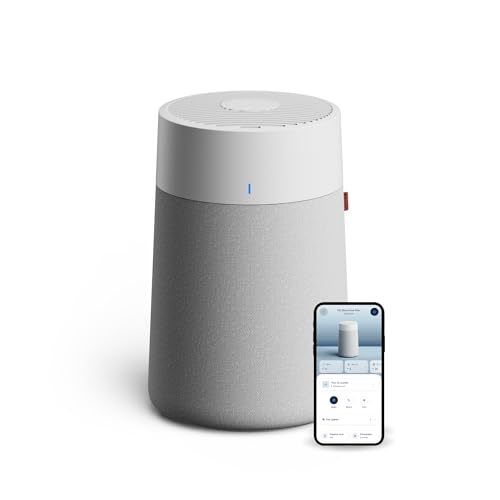
The 511i Max is the headroom flagship of this guide: HEPASilent filtration rated for rooms up to 1,138 square feet in an hour, a night mode specified at 19 dB in its Amazon title, auto mode, WiFi app control, and a 360-degree air intake, positioned by Blueair for dust, pollen, and pet dander. In a 150 square foot room with a pet, that specification translates to something close to luxury: the machine can run at its near-silent night setting and still turn the room’s air over repeatedly, while its intake and filtration handle the dander and hair load that overwhelms mini purifiers in pet households. The 360-degree intake also frees placement, since it does not demand a specific wall orientation. It suits the small bedroom or office that shares space with a cat or dog, and the buyer who expects to move and wants one purifier that survives the move to a larger room. It is, plainly, more purifier than 150 square feet requires, and its tier says so; the pet brief and the future-proofing are what justify it.
Strengths
- Enormous rated coverage means near-silent operation with high air changes in a small room.
- 19 dB night mode, per the Amazon title, is the quietest specification in this guide.
- Pet dander and hair are its stated design targets, with 360-degree intake easing placement.
Trade-offs
- Premium tier and larger filters cost more than the room strictly needs.
- Bigger footprint than the desktop minis; it is a floor or furniture-top unit, not a nightstand cube.
- Overkill is real: pet-free small rooms get the same air from the Coway or Mini Max for less.
| Spec | Detail (from Amazon title) |
|---|---|
| Coverage | Up to 1,138 sq ft in 1 hr |
| Filtration | HEPASilent |
| Noise | 19 dB night mode (per Amazon title) |
| Features | Auto mode, WiFi app, 360° air intake |
Buy it for the pet, the silence, or the next apartment, and it will be the best-performing machine in the room by a wide margin. Buy it for a plain 150 square foot bedroom with none of those factors, and the guide’s smaller picks will serve you as well for less.
Best for: pet owners, silence obsessives, and buyers future-proofing for a larger room. / Not suited for: tight budgets or nightstand-only placement.
Comparison Table
| Pick | Badge | Key spec | Best for |
|---|---|---|---|
| Levoit Core Mini | Best Overall | Compact desktop size, fragrance sponge, small-room filtration | Nurseries, dorms, small bedrooms |
| BLUEAIR Blue Pure Mini Max | Best Premium | HEPASilent, auto sensor, washable pre-filter | Quiet premium small spaces |
| Coway Airmega 50 | Best for Bedrooms | Up to 500 sq ft, HEPA + deodorization, AQI monitor, 2-yr warranty | Primary bedrooms, allergy sleepers |
| PuroAir 100i | Best Smart | Up to 550 sq ft, HEPA + carbon stage, WiFi app, scheduling | Connected homes, nurseries |
| Levoit Core 200S | Best Smart Value | Smart + voice control, 3-in-1 HEPA, AHAM verified | Dorms and value smart buyers |
| BLUEAIR Blue Pure 511i Max | Best for Pet Owners | Up to 1,138 sq ft/hr, 19 dB night mode, 360° intake | Pet rooms, silence, future-proofing |
How to Choose an Air Purifier for a 150 Square Foot Room
Learn one formula and you can judge every purifier ever sold to you. The industry sizing rule, used by the AHAM testing program, is that a purifier’s smoke CADR, its clean air delivery rate, should be at least two-thirds of the room’s square footage. For 150 square feet, that threshold is a CADR of about 100, which delivers roughly five air changes per hour in a standard-ceiling room, the level at which a purifier genuinely controls a room rather than decorating it. Every pick in this guide is rated for coverage well beyond 150 square feet, which is the manufacturer’s way of clearing that bar with room to spare. When you shop beyond this list, translate any coverage claim back to that rule, and treat devices with no CADR and no coverage rating, the plug-in and USB gadgets, as what they are: not purifiers in any functional sense.
Filtration type is the second decision. True HEPA media captures the fine particles that constitute most indoor complaints: pollen, dust mite debris, pet dander, and smoke particles. HEPASilent, Blueair’s hybrid, reaches similar particle results with a combination of mechanical and electrostatic capture and a reputation for quiet. Carbon stages address gases and odors, which HEPA does not touch, and in small bedrooms the Coway and PuroAir’s odor stages earn their keep. What to be wary of is ionization as a primary mechanism: this guide’s picks clean air by filtering it, and if a small room in your home is a nursery, filter-based cleaning is the conservative, evidence-friendly choice.
Noise is the third decision, and in a 150 square foot room it is often the deciding one, because the purifier shares your sleep or your calls. Read noise as a speed-dependent range: every machine is quiet on low and audible on turbo, and the practical question is how much cleaning the quiet speed delivers. That is the headroom family’s whole argument: an oversized machine on low can out-clean a right-sized machine on medium while making less noise doing it. If you are a light sleeper, weight the night-mode specifications, like the 511i Max’s stated 19 dB, heavily, and place the machine a few feet from the bed rather than beside your head.
Finally, price the ownership, not the appliance. Filters are the subscription every purifier sells: check the replacement interval and the filter’s ongoing availability for any model you consider, favor washable pre-filters that extend main-filter life, and treat a filter indicator, like the Coway’s, as a real feature rather than a light. A purifier with a fresh filter at a fair total cost beats a premium machine running a dead filter, every day of the year.
How to Set Up and Run a Small-Room Purifier
Setup takes ten minutes and decides half the machine’s performance. First, unbox and remove every plastic wrap from the filters inside the unit; purifiers ship with their filters bagged, and a surprising number of “my purifier does nothing” stories are bagged filters running for a month. Second, place the unit where air can reach it: a few inches of clearance on all sides, intake unobstructed, ideally near the room’s main pollution source or the bed, and not sealed into a corner behind furniture. Third, close the room’s door when you can; a purifier conditions a defined volume, and an open door to the whole house dilutes its air changes dramatically. Fourth, run it continuously on the highest speed you cannot hear, rather than in heroic bursts; air quality is a steady-state problem, and steady filtration holds the line that bursts keep losing. Fifth, use auto mode if your machine has it and let its sensor spend the filter’s life where the air actually needs it. Then maintain the rhythm: vacuum or wash the pre-filter monthly, note the filter indicator or mark the replacement month on a calendar, and wipe the sensor lens if your model has one, because a dusty sensor steers auto mode blind. That is the entire ownership ritual, and it is what separates rooms that stay clean from rooms that were clean in the first week.
One Room at a Time: Nursery, Dorm, Office, and Rental Scenarios
The same 150 square feet behaves like four different rooms depending on who lives in it, and the right pick changes with the scenario. Take the nursery first. The constraints are silence, safety, and absence: the machine must run through naps without a tonal hum, it must have no features that invite small fingers into trouble, and the parent managing it is often doing so from the doorway or the phone. That is why the smart picks score so highly here despite the room’s small size. The PuroAir 100i’s scheduling lets the purifier work hardest during the hours the room is empty and coast while the baby sleeps, and the Blueair Mini Max’s auto mode removes the daily decision entirely. What the nursery does not need is fragrance, which is why the Core Mini’s sponge should be left empty in that room even though the feature is a plus elsewhere, and why filter-based cleaning, rather than any ionizing gadget, is the conservative standard this guide holds for rooms where infants sleep.
The dorm room is the opposite problem: one room doing every job, sleeping, studying, cooking-adjacent snacking, and hosting, in a building whose ventilation the student does not control. Here the purifier is also a white-noise machine for many students, a steady low sound that masks corridor life, which reframes the noise question entirely, and the winning features are footprint and toughness. A desktop unit like the Core Mini or the Core 200S earns its place because floor space is the scarcest resource in the building, and the 200S’s voice control suits a room where the assistant speaker is already the light switch, the alarm, and the DJ. Filter cost matters more in a dorm budget than anywhere else, so the ownership-economics advice in the buying guide applies with double force: check the replacement filter’s price before the machine’s.
The home office scenario turns on two specifics: calls and cats. On calls, a purifier’s medium speed can be audible to a sensitive microphone even when the room’s occupant has stopped noticing it, which is the practical argument for the headroom family, an oversized machine delivering the needed air changes at a speed below the microphone’s attention. The 511i Max at its night setting is effectively a silent partner in a video call, and the Coway on auto will surge when the door opens and settle while you present. The cat, meanwhile, contributes dander continuously and litter dust in bursts, and the office that doubles as the cat’s favorite room is precisely the use case where a sensor-driven auto mode earns its premium, because the pollution is episodic and the purifier should be too.
Finally, the rental and the guest room, where the purifier is often a response to something specific: a musty spare room, a landlord’s carpet, a visiting relative with allergies. Here portability and immediacy outrank integration. A right-sized machine you can move between rooms as needs rotate, the Core Mini or the Airmega 50, beats a fixed installation of anything, and the correct operating pattern is a day of higher-speed running before the room is occupied, then continuous low speed during the stay. Across all four scenarios the constant is the physics from the buying guide: close the door, run it steadily, keep the filter fresh. The scenarios change which machine expresses that physics best, and the picks above were chosen so that each of these four rooms has a first choice waiting in the list.
Filters, Running Costs, and the Second Year of Ownership
Every purifier in this guide will still be cleaning air in its second year only if its owner planned for the filter cycle, and the planning is simple enough to do on purchase day. A purifier’s filter set is a consumable with a service life measured in months of runtime, shortened by exactly the conditions that make purifiers necessary: pet hair loads pre-filters, cooking and candle soot load particle media, and wildfire smoke, when it reaches your region, can consume a filter’s capacity in weeks. The habits that stretch that life are unglamorous and effective: vacuum the room’s floors and soft furnishings regularly so the purifier is polishing air rather than mining it, clean or wash the pre-filter monthly where the design allows it, as both Blueair picks here do, and keep the machine running steadily rather than in desperate turbo bursts after the room already smells of the problem. Steady running also flattens the noise and energy profile into something a household stops noticing, which is the true end state of a successful purifier purchase: not a device you operate, but a condition of the room you inhabit. When the indicator lights or the calendar page you marked arrives, replace the filter promptly and with the maker’s specified part, because a purifier’s verified performance, the AHAM numbers and coverage claims this guide selected on, is a statement about the machine with its correct, fresh filter installed. On that maintenance rhythm, the economics resolve kindly: the machine’s purchase price amortizes across years, the filters are the modest rent, and the room’s air is the dividend.
What a Purifier Cannot Do: Honest Boundaries for a Small Room
A trustworthy guide ends its technical case with the limits, because a 150 square foot room invites a few specific over-expectations. A purifier filters the air that passes through it; it does not remove dust that has already settled on surfaces, which is why the room still needs dusting and why the purifier’s benefit is that the dust resettles far more slowly. It does not address sources: a mold problem behind a wall, a litter box that needs changing, or a smoker’s habit are inputs that no filter outruns, and the honest sequence is always source first, filtration second. It does not ventilate: purifiers recycle a room’s air without refreshing it, so a stuffy, carbon-dioxide-heavy office still wants an open window when weather allows, with the purifier handling the particles the window lets in. And it does not work instantly or through walls: each room is its own volume, which is why this guide is sized per room and why one heroic machine in a hallway serves nobody well. Held inside those boundaries, the category delivers exactly what this guide promises: measurably cleaner air in the room you sleep, work, or keep a baby in, maintained quietly and continuously. That is a large, real benefit, and it needs no exaggeration to justify any pick on this page.
Placement Experiments Worth an Afternoon
If you want to feel your purifier working rather than trust it, run the placement experiment this guide’s logic predicts. Put the machine in its intended spot, close the door, and let it run on its working speed through an ordinary day of the room’s life, cooking smells drifting in, the cat visiting, the window opened and closed. Then move it to the room’s far corner behind the largest furniture it owns and repeat. Most owners can feel the difference in how the room smells by evening and how their morning congestion greets them, because intake access and air circulation paths are not abstractions at 150 square feet; they are the whole performance. The experiment’s real product is a permanent placement chosen by evidence in your actual room, which no guide, including this one, can choose for you from outside it.
Energy and Running Cost: the Small Print That Is Actually Small
Reassurance, briefly, on the running-cost question that makes some buyers ration their purifier’s hours: small-room purifiers on their working low and medium speeds draw modest power, in the range of a small fan or a couple of LED bulbs rather than anything resembling an appliance with a heating element. Run continuously, as this guide recommends, the machine’s electricity is a minor line in a household budget, and it is dwarfed, in both money and consequence, by the filter replacements that arrive on schedule regardless of how the hours were spent. The economical error is the opposite of the intuitive one: switching the purifier off to save power saves very little, loses the steady-state air quality that is the product’s entire purpose, and does not extend the filter’s calendar life at all. Run it, maintain it, and let the small print stay small.
Common Buying Mistakes
The first mistake is buying a gadget instead of a purifier: plug-in ionizers and USB desk fans with a filter sticker deliver negligible clean air, and in a nursery or allergy bedroom, negligible is the one result you cannot use. The second is undersizing by headline, trusting a “covers up to” number measured under ideal conditions at maximum speed, instead of applying the two-thirds CADR rule at the speed you will actually tolerate. The third is the opposite vanity, buying a whole-house flagship for a dorm room and losing the desk to it. The fourth is forgetting the filter economics, discovering a year later that the bargain machine’s filters are costly or discontinued. The fifth is placement sabotage: a purifier sealed behind a curtain or under a desk conditions the inside of the furniture. And the sixth is running the machine only when symptoms strike, when the entire science of the category says steady-state filtration, maintained quietly around the clock, is what keeps a small room’s air where you want it.
Final Recommendation
For the plain brief, a 150 square foot room that needs clean air without fuss, buy the Levoit Core Mini and run it continuously by the bed. If you want the premium, sensor-driven version of the same idea, the BLUEAIR Mini Max is the upgrade, and if the room is your primary bedroom, the Coway Airmega 50 adds odor filtration, an air quality display, and warranty-backed headroom. Connected households should choose between the PuroAir 100i for full smart capability and the Levoit Core 200S for smart value, and anyone sharing the room with a pet, or planning a move to a bigger space, should step up to the BLUEAIR 511i Max and enjoy the silence its headroom buys. Check the current price on Amazon for your pick, remove the filter bags before first use, and let it run. Small rooms reward that discipline faster than any other size.
More sizes and specialties from this program: Best Air Purifiers For 980 Square Feet · Best Air Purifiers Under $100 · Best Inexpensive Air Purifiers · Best Baby Air Purifiers
Frequently Asked Questions
What CADR do I need for a 150 square foot room?
About 100 or higher for smoke CADR, by the standard two-thirds rule used in AHAM testing: CADR should equal at least two-thirds of the room’s area in square feet. That delivers roughly five air changes per hour at standard ceiling height. Every purifier in this guide is rated for coverage well above 150 square feet, so all of them clear the threshold with headroom.
Should I buy a purifier rated for a much bigger room?
It is a legitimate strategy, not a waste. An oversized purifier run on low speed often cleans a small room more quietly than a right-sized unit on medium, and it can move to a larger room later. The costs are purchase price, filter size, and footprint. If none of those bind, headroom is comfort; this guide’s Coway, PuroAir, and 511i Max picks are built on exactly that logic.
Is HEPA filtration necessary for a small bedroom?
For the particles that dominate bedroom complaints, pollen, dust, and dander, HEPA-grade filtration is the proven mechanism, and every pick here uses HEPA or HEPASilent filtration rather than ionization alone. If odors are part of your problem, add a carbon or deodorization stage, as the Coway and PuroAir include, because particle filters do not capture gases.
How loud is too loud for a nursery or bedroom purifier?
Judge by the speed you will sleep beside, not the turbo number. A stated night mode in the low-20s dB range or below, like the 511i Max’s 19 dB specification, is effectively background-silent for most sleepers. Placement helps too: a few feet from the bed, on a soft surface, lowers perceived noise more than any setting.
How often do small purifier filters need replacing?
It varies by model and by how hard the machine works, which is why a filter indicator is a genuinely useful feature and washable pre-filters, which you clean monthly, extend the main filter’s life. Follow your model’s indicator or stated interval, and budget the replacement when you buy the machine, not when the light comes on.
Can one purifier handle a 150 square foot room with a pet?
Yes, with the right machine and honest expectations. Dander is a particle and HEPA filtration captures it; hair is a pre-filter’s job, so washable pre-filters and generous intake design matter, which is why the 511i Max, with pet dander as a stated target and 360-degree intake, holds the pet slot. Vacuuming the room still matters; a purifier cleans air, not floors.


