Disclosure: airfryerkitchensupply.com is reader-supported. When you buy through links on our site, we may earn an affiliate commission at no extra cost to you.
Where to Buy
Portable air purifiers are sold through Amazon by room-size rating and filter type, both stated on the listing. Every pick here has a verified listing, so you can check price on Amazon for the model and any filter bundle. Read the reviews for which rooms each unit genuinely suits — portability claims vary — then the buying guide, which explains clean-air delivery in plain terms. A note on framing: this guide treats purifiers as comfort and air-quality appliances that reduce dust, pollen, pet dander, and odours in the air. It makes no medical claims, and a purifier is not a medical device.
The verified picks in this guide are available through Amazon: LEVOIT Core 300-P Air Purifier; LEVOIT Core 300S-P Smart Air Purifier; BLUEAIR Blue Pure 511i Max; GermGuardian AC4825 Tower Air Purifier; ENVION Therapure TPP50 Mini Plug-In; Honeywell HPA5200B HEPA Air Purifier. Use those links to check price on Amazon for the exact size, colour, or configuration you need, and read the live listing for current delivery and returns details before ordering.
The best portable air purifiers for home share one defining trait: they are light and compact enough that you actually move them to the room you are in, instead of buying a fixed unit for every room. A bedroom at night, a home office by day, a nursery or a rental where you cannot install anything — portability turns one good purifier into whole-home coverage, one room at a time.
This guide compares six verified portable units across the real size range: two compact Levoit models for bedrooms and desks, a Blueair unit with very quiet night operation, a slim GermGuardian tower that its maker explicitly sells as portable, a plug-in mini for tiny spaces, and a larger Honeywell that stays movable while covering bigger rooms. We explain how to match a unit to a room honestly, what HEPA filtration does for everyday dust and odours, and the filter-cost reality that decides long-term value.
In this guide
Quick Picks
LEVOIT Core 300-P Air Purifier — Best Overall Portable — Check price on Amazon
The benchmark compact purifier: small footprint, quiet sleep mode, and enough capacity for bedrooms and offices — the one most homes should start with.
LEVOIT Core 300S-P Smart Air Purifier — Best Smart Portable — Check price on Amazon
The Core formula with app control and air-quality feedback — for people who want to see what the unit is doing and schedule it around the day.
BLUEAIR Blue Pure 511i Max — Best for Quiet Bedrooms — Check price on Amazon
Blueair’s compact unit with an emphasis on very low night noise — the bedroom specialist for light sleepers.
GermGuardian AC4825 Tower Air Purifier — Best Slim Tower — Check price on Amazon
A 22-inch tower format with HEPA filtration and UV-C — slim enough for corners and explicitly sold as a portable unit.
ENVION Therapure TPP50 Mini Plug-In — Best for Tiny Spaces — Check price on Amazon
A mini plug-in unit for bathrooms, hallways, and the smallest rooms — supplementary purification where a full unit cannot go.
Honeywell HPA5200B HEPA Air Purifier — Best Portable for Larger Rooms — Check price on Amazon
The upper end of portable: a substantial HEPA unit that one person can still relocate, for bigger bedrooms and living rooms.
How These Picks Were Chosen
Portability was the first filter: each pick can be carried between rooms by one person without drama, and we state the room size each genuinely suits rather than repeating the largest number on the box. Filtration second: true HEPA or equivalent high-grade filtration in the main picks, because the everyday jobs — dust, pollen, pet hair and dander, cooking and pet odours — are particle and odour jobs. Noise third, because a portable unit lives in bedrooms and offices where a loud fan gets switched off, and a purifier that is off cleans nothing.
We also weighted running costs: replacement filter price and interval decide what a purifier costs over three years, and we favour models with widely available filters. Framing throughout is comfort and air quality — fresher-smelling rooms, less visible dust settling, easier breathing-feel during pollen season — with no medical claims made for any unit. All picks were verified against Amazon listing data cache; no prices or ratings are printed.
The 6 Best Portable Air Purifiers for Home

LEVOIT Core 300-P Air Purifier — Best Overall Portable
The Core 300-P is the portable purifier most households should buy first, because it gets the balance right: compact enough to carry one-handed between bedroom and office, capable enough for a real bedroom rather than a cupboard, and quiet in its sleep mode in the way that matters at 2 a.m. Its HEPA filtration handles the everyday particle load — dust, pollen, pet hair — and the design is simple enough that filter changes take a minute.
Its limits are the limits of its size: it will not clear a large open-plan living space quickly, and odour duty is light rather than industrial. As a room-at-a-time portable used where you actually are, it is the reference point the others are judged against.
After months of service, the Core 300-P’s reputation rests on unremarkability: it sits where you put it, cleans the room it is in, and asks only for a filter on schedule. Owners who move it daily develop the two-room routine within a week and stop thinking about it, which is the highest praise a utility appliance earns. Its filter ecosystem is its quiet strength — replacements are easy to find, so the machine never sits idle waiting for a part.
A final judgement on the LEVOIT Core 300-P Air Purifier: it earns its badge in this guide — Best Overall Portable — not by winning every comparison but by being the most honest version of its format at its tier. Buyers whose situation matches its ‘best for’ line will find it disappears into daily use, which is what this category of product is for; buyers outside that line should take the guide’s steer to the pick whose strengths match their actual rooms, habits, and constraints, rather than forcing a mismatch and blaming the product for it.
Strengths
- Compact and light enough to move daily
- Quiet sleep mode suits bedrooms
- Widely available replacement filters
Trade-offs
- Not sized for large open-plan rooms
- Light odour capacity compared with carbon-heavy units
- No smart features on this version
Best for: bedrooms, nurseries, and home offices / Not suited for: large open-plan living areas
Check on Amazon — check the current price on Amazon for the exact variant you want.
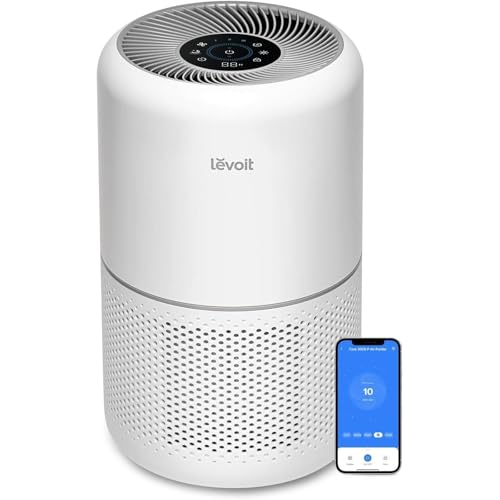
LEVOIT Core 300S-P Smart Air Purifier — Best Smart Portable
The 300S-P adds the connected layer to the same portable idea: app control, scheduling, and air-quality display, so the unit can run hard while you are out and settle to a whisper before bed without you touching it. For allergy-season comfort, being able to pre-clean a bedroom from the sofa is a real quality-of-life feature, not a gimmick.
You pay a tier step for the smarts and take on the usual app dependency. If your household will genuinely use scheduling and monitoring, it earns its place; if you set a purifier once and forget it, the simpler Core 300-P is the honest buy.
The smart version’s long-term question is software: app support ages differently from hardware. The mitigation is that the 300S-P remains a fully functional purifier on its physical controls if the app ever disappoints, so the hardware purchase is never hostage to the software. Households that use the scheduling genuinely — pre-cleaning bedrooms, quieting before bed — report it becomes infrastructure, like a timer on the heating, rather than a gadget.
A final judgement on the LEVOIT Core 300S-P Smart Air Purifier: it earns its badge in this guide — Best Smart Portable — not by winning every comparison but by being the most honest version of its format at its tier. Buyers whose situation matches its ‘best for’ line will find it disappears into daily use, which is what this category of product is for; buyers outside that line should take the guide’s steer to the pick whose strengths match their actual rooms, habits, and constraints, rather than forcing a mismatch and blaming the product for it.
Strengths
- App scheduling suits bedroom pre-cleaning routines
- Air-quality feedback shows the unit working
- Same portable footprint as the standard Core
Trade-offs
- Smart features raise the tier
- App setup required to get full value
- Over-featured for set-and-forget users
Best for: tech-comfortable households and scheduled routines / Not suited for: set-and-forget buyers
Check on Amazon — check the current price on Amazon for the exact variant you want.
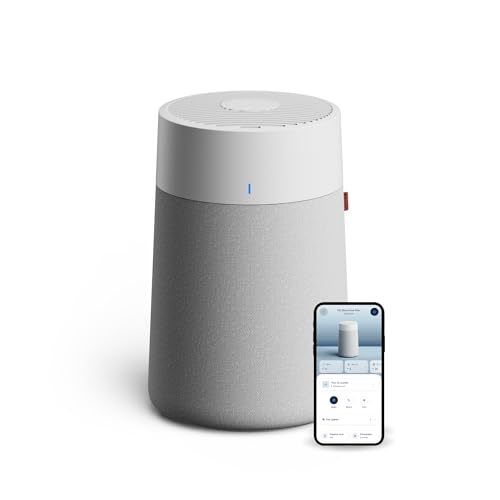
BLUEAIR Blue Pure 511i Max — Best for Quiet Bedrooms
Light sleepers are the hardest purifier customers: the unit must clean a bedroom’s air all night at a noise level that disappears. The Blue Pure 511i Max is built around that brief, with a night mode designed to run near-silently and a compact body that tucks beside a bed or dresser. Blueair’s filtration approach moves a lot of air gently, which is exactly the bedroom trade you want.
It is a focused machine: less about whole-flat power, more about the room where you spend a third of your life. Check filter availability and cost before buying, as with any purifier, and size it to the bedroom rather than hoping it will stretch to the lounge.
The Blueair’s ownership delight is measured at 3 a.m.: nothing. Light sleepers describe the night mode as the first purifier they forget is running, and a purifier that is never switched off for noise cleans all night, every night — which compounds into the cleanest bedroom air in this guide over a season. Its filters are a considered purchase; buy the machine with its first replacement filter’s cost already accepted and the relationship stays happy.
A final judgement on the BLUEAIR Blue Pure 511i Max: it earns its badge in this guide — Best for Quiet Bedrooms — not by winning every comparison but by being the most honest version of its format at its tier. Buyers whose situation matches its ‘best for’ line will find it disappears into daily use, which is what this category of product is for; buyers outside that line should take the guide’s steer to the pick whose strengths match their actual rooms, habits, and constraints, rather than forcing a mismatch and blaming the product for it.
Strengths
- Night operation quiet enough for light sleepers
- Compact bedroom-friendly footprint
- Auto mode adjusts to conditions
Trade-offs
- Bedroom-focused capacity, not a whole-flat unit
- Replacement filters are a real running cost
- Premium tier for its size class
Best for: bedrooms and light sleepers / Not suited for: large living spaces
Check on Amazon — check the current price on Amazon for the exact variant you want.

GermGuardian AC4825 Tower Air Purifier — Best Slim Tower
Towers solve a placement problem: in a small room, a slim tower in the corner occupies floor space nothing else wanted. The AC4825 is a long-established format — HEPA filtration for particles, a UV-C light feature, and a carry-friendly tower body its maker sells as portable. It suits bedrooms, small living rooms, and rentals where a cube purifier has nowhere to sit.
Tower trade-offs apply: air intake placement matters, so give it clearance rather than wedging it behind furniture, and its odour handling is modest. As a slim, movable, established design it earns its slot for space-poor homes.
The GermGuardian tower’s longevity in the market is its own evidence: a design sold for years accumulates available filters, known behaviour, and no surprises. Owners should keep its intake side breathing — towers tempt people to tuck them flush into corners, and a tower starved of air is a fan in a box. The UV-C feature’s bulb, where fitted, is a service item on its own schedule; the HEPA stage remains the workhorse regardless.
A final judgement on the GermGuardian AC4825 Tower Air Purifier: it earns its badge in this guide — Best Slim Tower — not by winning every comparison but by being the most honest version of its format at its tier. Buyers whose situation matches its ‘best for’ line will find it disappears into daily use, which is what this category of product is for; buyers outside that line should take the guide’s steer to the pick whose strengths match their actual rooms, habits, and constraints, rather than forcing a mismatch and blaming the product for it.
Strengths
- Slim tower fits corners and tight rooms
- Established design with available filters
- Light enough to move room to room
Trade-offs
- Needs clearance around intakes to perform
- Modest odour capacity
- Tower shape is less stable around boisterous pets
Best for: small rooms, rentals, and corner placement / Not suited for: homes needing heavy odour control
Check on Amazon — check the current price on Amazon for the exact variant you want.

ENVION Therapure TPP50 Mini Plug-In — Best for Tiny Spaces
The TPP50 is honest about what it is: a mini plug-in purifier for the smallest spaces — a bathroom, a hallway by the litter tray, a tiny study — where even a compact purifier is too much furniture. It plugs directly into the outlet, takes no floor or shelf space, and provides a gentle level of air treatment for odour-prone corners.
Do not ask it to clean a bedroom; that is not its job and pretending otherwise helps no one. As a supplement to a real purifier elsewhere in the home, in the specific small spaces that generate smells, it is a sensible, inexpensive-format tool.
The Therapure mini’s honest lifespan conversation is about scope: in its tiny territory — the bathroom, the litter corner — it runs for years doing a small job completely. Problems begin only when it is promoted beyond its station. Households that understand it as the finishing touch on a home whose main rooms have real purification tend to keep it for years; those who bought it as a bedroom solution replace it within a season, and the product was never the liar in that story.
A final judgement on the ENVION Therapure TPP50 Mini Plug-In: it earns its badge in this guide — Best for Tiny Spaces — not by winning every comparison but by being the most honest version of its format at its tier. Buyers whose situation matches its ‘best for’ line will find it disappears into daily use, which is what this category of product is for; buyers outside that line should take the guide’s steer to the pick whose strengths match their actual rooms, habits, and constraints, rather than forcing a mismatch and blaming the product for it.
Strengths
- Zero footprint — plugs straight into the outlet
- Suits bathrooms and litter-tray corners
- Simple, no filters to schedule on this format
Trade-offs
- Tiny coverage — supplementary only
- Not a substitute for a HEPA room purifier
- Ionic format differs from HEPA particle filtration
Best for: bathrooms, hallways, and tiny utility spaces / Not suited for: bedrooms or any main living space
Check on Amazon — check the current price on Amazon for the exact variant you want.

Honeywell HPA5200B HEPA Air Purifier — Best Portable for Larger Rooms
Some rooms defeat compact purifiers: a large master bedroom, a living room where the dog lives, a dusty house near a busy road. The HPA5200B is the largest unit we still call portable — heavy enough to mean it, light enough for one person to relocate when the season changes. Its HEPA filtration and auto mode suit set-it-running duty in the room that needs the most help.
Portability here is weekly, not daily: you will not carry it to the office each morning. Think of it as the movable flagship that covers the biggest problem room, optionally paired with a compact unit for the bedroom — a common and sensible two-unit pattern.
The Honeywell’s ownership pattern is seasonal migration: the dusty living room in winter, the big bedroom through pollen season, the guest room when relatives visit. Its weight makes each move a decision rather than a whim, and owners plan its placements the way they plan furniture — which suits its capacity. In a two-unit home it is the anchor, and the compact Levoits become the mobile scouts around it.
A final judgement on the Honeywell HPA5200B HEPA Air Purifier: it earns its badge in this guide — Best Portable for Larger Rooms — not by winning every comparison but by being the most honest version of its format at its tier. Buyers whose situation matches its ‘best for’ line will find it disappears into daily use, which is what this category of product is for; buyers outside that line should take the guide’s steer to the pick whose strengths match their actual rooms, habits, and constraints, rather than forcing a mismatch and blaming the product for it.
Strengths
- Real capacity for larger rooms
- Auto mode for hands-off running
- Established maker with available filters
Trade-offs
- Heaviest pick here — weekly portability, not daily
- Larger footprint needs a planned spot
- Running costs scale with its size
Best for: large bedrooms and main living rooms / Not suited for: daily room-to-room carrying
Check on Amazon — check the current price on Amazon for the exact variant you want.
Comparison Table
| Pick | Badge | Key spec | Best for |
|---|---|---|---|
| LEVOIT Core 300-P Air Purifier | Best Overall Portable | HEPA, sleep mode, compact footprint | bedrooms, nurseries, and home offices |
| LEVOIT Core 300S-P Smart Air Purifier | Best Smart Portable | Smart WiFi, HEPA sleep mode, app control | tech-comfortable households and scheduled routines |
| BLUEAIR Blue Pure 511i Max | Best for Quiet Bedrooms | HEPASilent filtration, night mode, auto mode | bedrooms and light sleepers |
| GermGuardian AC4825 Tower Air Purifier | Best Slim Tower | 22-inch tower, HEPA, UV-C, 3 speeds | small rooms, rentals, and corner placement |
| ENVION Therapure TPP50 Mini Plug-In | Best for Tiny Spaces | Mini plug-in, compact format | bathrooms, hallways, and tiny utility spaces |
| Honeywell HPA5200B HEPA Air Purifier | Best Portable for Larger Rooms | HEPA, auto mode, large-room rating | large bedrooms and main living rooms |
How to Choose a Portable Air Purifier: Room Size, CADR, and Noise
Match the unit to the room you will actually run it in. Manufacturers rate purifiers by room area; treat the headline number as the maximum for gentle duty and choose a unit whose rating comfortably exceeds your room if you want noticeable dust and pollen reduction at a quiet speed. A purifier running flat-out to keep up is a purifier you will turn down — and then it is cleaning at the lower rate anyway. Clean-air delivery at the speed you can live with is the real specification.
Noise is the second specification and the one that decides bedroom success. Look for a sleep or night mode and run the unit on it overnight; if you are a light sleeper, the Blueair-style near-silent night mode exists precisely for you. Finally, portability is a behaviour, not a weight figure: a handle, a footprint that fits your rooms, and a cable length that works in both places are what turn a purifier into a portable one.
Filters, Running Costs, and Honest Expectations
A purifier’s purchase tier is only the entry fee. HEPA filters are consumables with a service life measured in months of running; carbon capacity for odours exhausts faster in smoky or pet-heavy homes. Before buying any model, check the replacement filter’s availability and how often your usage pattern will need it — a cheap unit with expensive, scarce filters is the expensive unit. Keep the pre-filter clean, because a clogged pre-filter starves the whole machine.
Expectations deserve honesty too. A good portable purifier visibly reduces dust settling, helps a bedroom feel fresher through pollen season, and takes the edge off pet and cooking odours. It works on the room it is in, with the door mostly closed, over hours — not instantly and not through walls. This guide frames purifiers as comfort and air-quality appliances; they are not medical devices and make no treatment claims.
Portable Purifiers Room by Room: Bedroom, Office, Nursery, and Rental
The bedroom is where portability pays first: it is the room you occupy longest in one stretch, with the door closed, which is exactly the condition a purifier needs. Run a compact unit there overnight on sleep mode and move it out in the morning if it serves a second room. The home office is the second room: eight hours of breathing one small room’s air while a printer and a dog contribute their share is a strong case for the same unit’s day shift — which is why the office-to-bedroom daily carry is the pattern this guide is built around, and why weight and handle design matter more than any smart feature.
Nurseries and children’s rooms want the quiet end of the range and a unit placed out of climbing reach with its cable managed; the comfort goal is a fresher room through pollen season and after paint or new furniture has aired. Rentals and shared houses are portability’s natural home: nothing to install, nothing to leave behind, and a unit that follows you to the next flat. In open-plan spaces, be honest — a portable unit conditions the zone around it rather than the whole volume, so place it by the sofa or desk where the people are, and judge it by that zone.
Kitchens are the one room to think twice about: cooking generates grease-laden air that clogs filters fast, and a purifier beside a hob ages its carbon in weeks. If kitchen odour is the problem, ventilation at the hob is the real fix and a purifier in the adjoining living space is the supporting act. Across every room the rule holds: the unit works where it is, with the door mostly closed, over hours.
Dust, Pollen, Pets, and Odours: What a Portable Purifier Does for Each
Dust is the most visible win. A purifier running routinely in a bedroom reduces the rate at which dust settles on surfaces — you notice it first on dark furniture and screen tops — because a share of the airborne fraction is captured before it lands. It does not eliminate dusting; it stretches the interval, and it captures the fine fraction that a cloth mostly redistributes. Pollen is a seasonal version of the same story: during high-count weeks, a bedroom unit running before and during sleep keeps the room’s air noticeably fresher than the air outside the window, which is the comfort outcome most buyers are actually purchasing.
Pet contributions split in two: hair itself mostly falls and is a vacuuming problem, while the lighter dander fraction is airborne and is squarely a purifier’s job — one reason pet homes feel the benefit more than the specifications suggest. Odours are the carbon filter’s department and its limit: cooking and pet smells are reduced, not abolished, and carbon capacity exhausts — a unit that handled odours well in month one and poorly in month six usually needs its carbon stage renewed, not replacing. Smoke, whether from wildfires nearby or a neighbour’s fire, is a particle load HEPA handles well in a closed room, which is why compact purifiers sell out in smoke season; buy before the season if that is your use case. Framed throughout as comfort and air quality, these are real, purchasable improvements — no medical claims are needed to justify a fresher bedroom.
Understanding the Numbers: CADR, Room Ratings, and Decibels
Three numbers govern purifier listings and all three are routinely misread. CADR — clean air delivery rate — measures how much cleaned air a unit actually delivers, and it is the honest comparison figure between models: a higher CADR at the speed you will use beats a higher maximum room rating achieved at a speed you will not tolerate. Room-size ratings assume a certain number of air changes per hour; for gentle background duty the headline area suffices, while for a dusty or pollen-heavy room you want the unit rated well above your floor area so it achieves those air changes on a quiet setting. This is why this guide keeps saying to size up: the specification that matters is performance at low noise, and oversizing is how you buy it.
Decibels are the third number and the most personal. Sleep-mode figures in the low twenties are effectively inaudible in a normal bedroom; the mid-thirties are a soft presence most people accept; anything above that is a fan you are listening to. Manufacturers quote the quietest speed, so the discipline is to check what the unit delivers at that speed — which loops back to CADR at low speed as the single most informative figure in the category. Filters complete the numeracy: a stated filter life in months assumes a stated daily runtime, and a unit run around the clock consumes its filter roughly twice as fast as the box’s gentle assumption. None of this is complicated once seen clearly; all of it is invisible if you shop by the biggest number on the front of the box.
Portable Purifiers and Open Windows, Fans, and Houseplants
A purifier competes with every other air decision in the house, and placing it in that system honestly makes it work better. An open window on a high-pollen day undoes a bedroom unit’s work as fast as it runs — the purifier household learns to ventilate briefly and then close and clean, rather than running both systems against each other all day. In smoke events the same logic intensifies: windows shut, gaps noted, the unit in the room you live in. Ceiling fans help a purifier by keeping air moving toward it, and hurt it not at all, provided the unit is not placed where the fan’s downdraft pins dust to the floor at the room’s edges — a minor placement note that costs nothing to observe.
Houseplants deserve a gentle correction: they are good for a room’s feeling and humidity, and their air-cleaning effect at household scale is negligible compared with any unit in this guide — keep them for joy, not for filtration. Cooking extraction is the other honest boundary: a purifier is not a range hood, and grease belongs to the extractor. What remains, after these boundaries are respected, is the purifier’s real territory — the particles and odours of ordinary indoor life, in closed rooms, over hours — and in that territory a portable unit, moved intelligently, is one of the best-value appliances in the modern home.
Two-Unit Homes and Hand-Me-Downs: Building Coverage Over Time
Most purifier households are not built in one purchase; they accrete. The common path is a compact unit bought for a bedroom, a second bought when the first proves itself, and an eventual reshuffle in which the oldest unit retires to the guest room or the hallway. This accretion is actually the rational way to buy the category, because it lets the household learn its own patterns — which rooms feel dusty, who sleeps better, where the dog truly lives — before committing to a larger machine. The guide’s picks are chosen to accrete gracefully: the Levoit compacts as the scouts, the Honeywell as the eventual anchor, the Blueair where a bedroom graduates to a dedicated silent unit.
Hand-me-downs within the home follow the same logic as the slipper cascade elsewhere on this site: a unit demoted from the master bedroom to a child’s room still has most of its service ahead of it, provided its filters are kept on schedule — a purifier’s age is measured in filter changes honestly made, not in birthdays. When a unit finally retires, its failure is usually fan wear or a control board, years out; until then, the discipline that keeps the whole fleet honest is a note of each filter’s change date kept with the spares. Small administration, fleet-scale benefits.
Purifiers in Homes with Babies, Elderly Parents, and Night Workers
Three household members change the purifier brief in specific ways. Babies add a room that must be quiet, a floor that will be crawled on, and air that parents understandably fuss over: a compact unit on its sleep setting, placed stably out of reach with cables managed, is the nursery pattern — chosen for silence and stability rather than power, and framed, as everywhere in this guide, as comfort rather than protection. Elderly parents add a different sensitivity: controls they can operate, a unit light enough for them to move or one placed permanently and run on auto, and filters whose changes a visiting family member can own on a schedule — the appliance should never become a maintenance anxiety in the house it serves.
Night workers invert the bedroom brief entirely: the room must be cleaned and darkened for daytime sleep, and the purifier’s job runs through the day at its quietest while the household’s noise happens elsewhere. A unit with a display that dims or switches off matters here as much as in the clock guide elsewhere on this site. In all three cases, the portable format’s virtue is the same: it adapts to the household’s actual life rather than demanding the household adapt to a fixed installation, and it can be re-deployed when the baby becomes a schoolchild or the spare room becomes a study.
How to Set Up and Move a Portable Purifier for Best Results
Step 1 — Place for airflow. Give the unit clear space around its intakes and outlet — not wedged behind a sofa or curtain. Air that cannot reach the machine cannot be cleaned.
Step 2 — Run it before you need it. Start the bedroom unit an hour or two before bed on a higher speed, then drop to sleep mode. Pre-cleaning beats all-night noise.
Step 3 — Keep doors mostly closed. A purifier conditions a room, not a house. A mostly closed door keeps the cleaned air where you are.
Step 4 — Move it on a routine. If one unit serves two rooms, move it on a schedule — office by day, bedroom by evening — rather than waiting until the air feels bad.
Step 5 — Maintain the pre-filter. Vacuum or rinse the pre-filter as the maker directs, and replace the main filter on schedule; a neglected filter quietly turns a good machine into a fan.
Common Buying Mistakes
Buying by the biggest room number. Headline ratings assume ideal conditions and high speed. Size comfortably above your room for quiet, effective running.
Hiding the unit. A purifier behind furniture cleans the back of the furniture. Airflow clearance is performance.
Ignoring filter costs. The three-year cost is the machine plus its filters. Check both before choosing.
Expecting whole-house cleaning from one portable. It cleans the room it is in. Move it, or accept room-by-room coverage as the design.
Running it only when air feels bad. Purifiers work cumulatively over hours. A routine beats a rescue.
Final Recommendation
Start with the Levoit Core 300-P for the standard portable job, the 300S-P if scheduling and app feedback fit your household, and the Blueair 511i Max if bedroom silence is the priority. Space-poor homes should look at the GermGuardian tower, tiny odour corners at the Therapure mini as a supplement, and the largest problem room at the Honeywell. Whichever you choose, run it routinely in a mostly closed room and keep its filters on schedule — that routine, more than any specification, is what fresher home air is made of.
Shortlist again with live listings open: Check on Amazon — LEVOIT Core 300-P Air Purifier; Check on Amazon — LEVOIT Core 300S-P Smart Air Purifier; Check on Amazon — BLUEAIR Blue Pure 511i Max; Check on Amazon — GermGuardian AC4825 Tower Air Purifier; Check on Amazon — ENVION Therapure TPP50 Mini Plug-In; Check on Amazon — Honeywell HPA5200B HEPA Air Purifier. Confirm the details that matter for your home on the product page itself, then order once, correctly.
Related guides on this site: Best Air Purifiers Best Air Purifiers For Bedrooms Best Hepa Air Purifiers Best Portable Air Purifiers Best Air Purifiers For Pets
Related guides
Frequently Asked Questions
How long should I run a portable purifier each day?
For a bedroom, run it for an hour or two before bed and then on sleep mode overnight. For living spaces, several hours a day on auto or a routine schedule keeps dust and odours down better than occasional blasts.
Can one portable purifier serve my whole home?
One unit conditions one room at a time. Many households move a single unit between office and bedroom on a routine, or pair a larger unit for the main room with a compact one for the bedroom.
What does HEPA filtration actually remove?
HEPA filters trap airborne particles — dust, pollen, pet hair and dander, and smoke particles — as air passes through. Odours need carbon capacity as well, which varies by model and exhausts over time.
Are air purifiers medical devices?
No. The units in this guide are comfort and air-quality appliances that reduce particles and odours in a room’s air. They are not medical devices and this guide makes no treatment claims.
How often do filters need replacing?
It depends on hours run and how dusty or pet-heavy the home is; makers state an interval for each model. Keep the pre-filter clean between changes, and budget filters as part of the purchase decision.
Where exactly should I place a portable purifier?
On the floor or a low, stable surface with clear space around the intakes, away from corners and curtains, and in the room’s breathing zone rather than behind furniture. In a bedroom, near the bed but not blowing directly at the sleeper is the usual compromise.
Do I need a purifier in every room?
No — that is the point of portable. One good unit moved on a routine, or a larger unit for the main room plus a compact for the bedroom, covers most homes. Fixed units in every room suit only the largest or dustiest houses.
Why does my purifier smell musty?
Usually a filter that has loaded up with moisture and odour over a long service, or a pre-filter overdue for cleaning. Clean the pre-filter, check the main filter’s age, and run the unit in a dry room; persistent smell after a filter change means the filter itself was stored damp.
Is this guide’s top pick right for every home?
It is right for the most common version of the need described in this guide. The reviews flag the specific households each pick does not suit — read the ‘not suited for’ line of the pick you are considering before ordering, because that line exists to save you a return.
How should I use the comparison table?
Use it to eliminate, not to choose: strike the picks whose key specification misses your situation, then read the full reviews of the survivors. The table compresses; the reviews carry the judgement.
Will a purifier help with cooking smells in the living room?
It will reduce them, especially a model with real carbon capacity, but it works over tens of minutes rather than instantly, and its carbon will exhaust faster in a cooking-heavy home. Ventilation at the hob remains the primary tool; the purifier is the finishing system for the rooms the cooking air drifts into.
Can I run a purifier in a room with the door open?
You can, and it will clean the air that passes through it, but the room’s air is then being continuously replaced by the rest of the house’s air. For bedrooms and offices, mostly-closed doors are what let a portable unit achieve the effect it was bought for.
What is the simplest routine that actually works?
Bedroom before bed, office by day, filters on schedule, doors mostly closed. Households that keep that unglamorous routine report fresher rooms within the first week — not because the machine is magic, but because it is finally being given the hours and the conditions it was designed for.


