Disclosure: airfryerkitchensupply.com is reader-supported. When you buy through links on our site, we may earn an affiliate commission at no extra cost to you.
Where to buy
Shopping for the best 18000 btu window air conditioner 120 volt starts with a voltage check — so every air conditioner below is sold on Amazon with its BTU rating and voltage confirmed in its verified listing title, so open the listing, check its stated voltage against the outlet you actually have, and check price on Amazon. For this category the voltage line in the title is the most important specification on the page — read it before the BTU number.
- LG 18,000 BTU Window Air Conditioner with Heat 230/208V — check price on Amazon
- LG 18,000 BTU Dual Inverter Window AC 230V WiFi — check price on Amazon
- Frigidaire 18,000 BTU Smart Window Air Conditioner 208/230V with Heater — check price on Amazon
- Whirlpool 15,000 BTU Window Air Conditioner 115V — check price on Amazon
- Amana 15,000 BTU Window Air Conditioner 115V — check price on Amazon
- Friedrich Chill Premier 15,000 BTU 115V Cooling Only — check price on Amazon
Start with the fact this whole guide is built around: the best 18000 btu window air conditioner 120 volt is a product that, in verified listings, effectively does not exist. Every 18,000 BTU window air conditioner confirmed for this guide runs on 230/208 volts — the LG and Frigidaire models below state it in their titles — because an 18,000 BTU compressor draws more current than a standard 120-volt household circuit is built to deliver. Any listing or article that casually promises you a true 18,000 BTU unit for a normal 120-volt outlet is asking you not to do the arithmetic.
So this guide does the honest thing and splits into two branches. Branch one: true 18,000 BTU picks, labelled with their real 230/208-volt requirement, for readers who have — or will pay an electrician to add — the correct circuit. Branch two: the strongest verified 115-volt window air conditioners that exist, which top out at 15,000 BTU in the models confirmed here, for readers whose wiring is fixed and who want the most cooling a standard outlet can honestly run. Each branch’s picks are excellent; what you must not do is mix up which branch your home belongs to.
The physics deserves one paragraph. Cooling capacity is bought with electrical power, and a 120-volt circuit at typical household amperage simply caps how much compressor a manufacturer can sell you. That is why the verified 115-volt ceiling in this guide is 15,000 BTU, why every genuine 18,000 BTU window unit steps up to 230 volts, and why the buying guide below walks you through circuit checks before product features. Voltage first, BTU second, features third — in that order, this purchase goes well.
In this guide
Quick Picks
Three true 18,000 BTU picks that require 230/208V, clearly labelled, followed by the three strongest verified 115V picks at 15,000 BTU. Badges state the branch, and the reviews repeat the voltage in every spec box.
- Best True 18,000 BTU with Heat (230V): LG 18,000 BTU Window Air Conditioner with Heat 230/208V — a genuine 18,000 BTU unit with supplemental heat for rooms up to 1,000 square feet — on the 230/208V circuit its title states.
- Best True 18,000 BTU Efficiency (230V): LG 18,000 BTU Dual Inverter Window AC 230V WiFi — dual-inverter 18,000 BTU with WiFi and voice control — the quiet, efficient flagship of the 230V branch.
- Best True 18,000 BTU Smart Pick (230V): Frigidaire 18,000 BTU Smart Window Air Conditioner 208/230V with Heater — Frigidaire’s verified entry: 18,000 BTU cooling, a 16,000 BTU heater, dehumidifier, and Wi-Fi — on 208/230 volts.
- Best True 120-Volt-Class Pick (115V): Whirlpool 15,000 BTU Window Air Conditioner 115V — 15,000 BTU on a standard 115V outlet for rooms up to 700 square feet — the honest maximum of the 120-volt branch.
- Best 115V Alternative: Amana 15,000 BTU Window Air Conditioner 115V — Amana’s 15,000 BTU 115V unit with digital display — the equal alternative at the top of the standard-outlet branch.
- Best 115V Cooling-Only Specialist: Friedrich Chill Premier 15,000 BTU 115V Cooling Only — Friedrich’s cooling-only 15,000 BTU unit for window or wall installation — the specialist’s choice in the 115V branch.
How These Picks Were Chosen
Selection began with verification, and verification is what created this guide’s structure. Every candidate’s BTU rating and voltage had to be confirmed in its Amazon listing title. The 18,000 BTU search returned only 230/208-volt models — LG with heat, LG Dual Inverter, and Frigidaire — and no verified 120-volt 18,000 BTU window unit appeared at all. Rather than invent one, the guide documents that absence and builds the second branch from the strongest confirmed 115-volt models.
Within the 230-volt branch, picks were chosen to differ meaningfully: one adds supplemental heat, one is the dual-inverter efficiency and quietness flagship, and one is the smart-home Frigidaire with a heater. Within the 115-volt branch, the three 15,000 BTU models — Whirlpool, Amana, and Friedrich — represent the verified ceiling of standard-outlet cooling from established brands.
Room-size claims were taken only from titles that state them (the 18,000 BTU models cite up to 1,000 square feet; the 15,000 BTU models cite up to 700). No efficiency ratings, noise figures, or prices are asserted anywhere in this guide, because none were verified — check the listing for the current figures that matter to you.
The 6 Best 18000 BTU Window Air Conditioner 120 Volt Alternatives, Verified by Voltage
Read the voltage line in each spec box before anything else. The first three picks are true 18,000 BTU units and require a 230/208V circuit. The last three run on standard 115V outlets and deliver 15,000 BTU — the verified maximum for that branch.
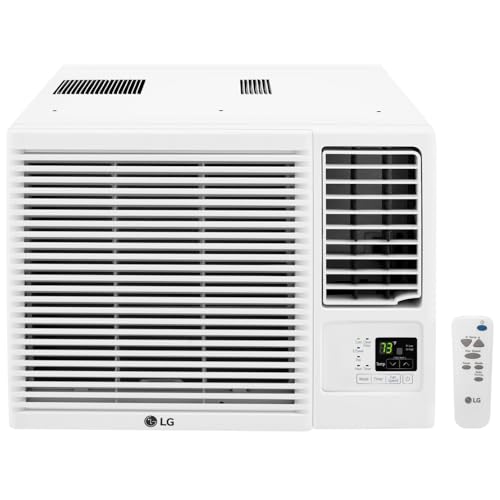
LG 18,000 BTU Window Air Conditioner with Heat 230/208V — Best True 18,000 BTU with Heat (230V)
This is what a real 18,000 BTU window air conditioner looks like on paper: the verified title pairs the full 18,000 BTU with 230/208 volts, coverage up to 1,000 square feet, and a heat function that extends the unit’s usefulness into the shoulder seasons. For a large living room, an open-plan space, or a basement apartment with the right circuit, this is the branch-one default — big, honest capacity with a remote, two speeds, and a 24-hour timer covering the everyday controls.
The conditions are electrical, and they are not optional. This unit needs a 230/208V circuit and the matching receptacle; it will not run from a standard outlet, and no adapter changes that safely. If your room has that circuit — many were installed for older large air conditioners — installation is a normal window install. If it does not, price the electrician’s circuit into the purchase, or move to the 115-volt branch below with clear eyes about the 15,000 BTU ceiling.
Strengths
- True 18,000 BTU capacity, verified
- Supplemental heat extends the season
- Covers rooms up to 1,000 square feet per title
Trade-offs
- Requires a 230/208V circuit — not a standard outlet
- Circuit installation adds real cost if absent
- Large, heavy window unit needs a careful install
| Specification | Detail |
|---|---|
| Cooling | 18,000 BTU |
| Voltage | 230/208V — dedicated circuit required |
| Coverage | Up to 1,000 sq. ft. per title |
| Extras | Heat function, remote, 24-hour timer |
Best for: large rooms with an existing or planned 230V circuit / Not suited for: any room limited to a standard 120V outlet
Check the current price on Amazon.
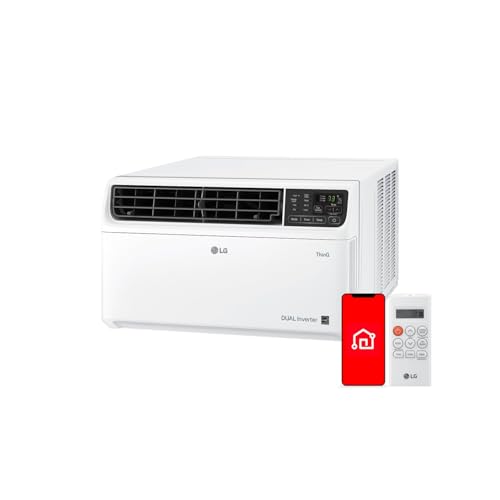
LG 18,000 BTU Dual Inverter Window AC 230V WiFi — Best True 18,000 BTU Efficiency (230V)
The Dual Inverter model is the refined way to buy 18,000 BTU. An inverter compressor varies its speed instead of cycling fully on and off, which is the technology behind this title’s Energy Star and ultra-quiet claims, and it holds a steadier room temperature than a conventional unit. Add LG ThinQ WiFi control with Alexa and Google Assistant compatibility, and this is the pick for a main living space or a large bedroom where the air conditioner is a daily presence rather than background equipment.
It shares the branch’s non-negotiable condition: 230 volts, stated plainly in the title. Readers with the circuit who run cooling for long seasons will feel the inverter’s advantages every day — in steadiness, in noise, and in the smart scheduling that keeps the unit off when the room is empty. Readers without the circuit should not let the feature list seduce them past the voltage line; the 115-volt branch exists precisely for them.
Strengths
- Dual inverter steadiness, efficiency, and quiet claims
- WiFi, ThinQ, Alexa, and Google Assistant control
- Full 18,000 BTU for up to 1,000 square feet
Trade-offs
- 230V circuit required, as with all true 18,000 BTU units
- Smart features are wasted if you will not use them
- Flagship tier within the branch
| Specification | Detail |
|---|---|
| Cooling | 18,000 BTU |
| Voltage | 230V — dedicated circuit required |
| Compressor | Dual Inverter, Energy Star per title |
| Control | WiFi, remote, voice control |
Best for: large main rooms with a 230V circuit and long cooling seasons / Not suited for: standard-outlet rooms or buyers who ignore smart features
Check the current price on Amazon.
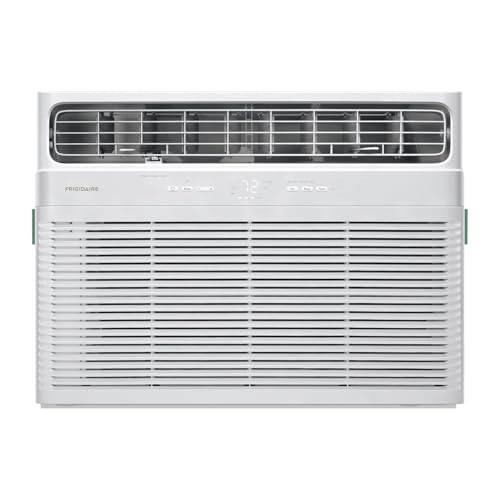
Frigidaire 18,000 BTU Smart Window Air Conditioner 208/230V with Heater — Best True 18,000 BTU Smart Pick (230V)
Frigidaire’s model is the most function-dense of the 230-volt branch: the verified title confirms 18,000 BTU of cooling for up to 1,000 square feet, a 16,000 BTU heater, a dehumidifier mode, and Wi-Fi with remote control. For a space that needs year-round climate help — a converted garage, a large workshop living space, a basement that is damp in summer and cold in winter — one unit covering cooling, heating, and moisture is a genuinely economical architecture.
The electrical condition is identical to its LG rivals: 208/230 volts, in the title, non-negotiable. What differs is emphasis. The LG with heat is the simpler machine; the Dual Inverter is the efficiency flagship; this Frigidaire is the all-seasons smart unit. Choose by which of those jobs your room actually has, and confirm the heater’s usefulness against your climate — supplemental electric heat is a comfort feature, not a primary heating system.
Strengths
- Cooling, 16,000 BTU heating, and dehumidifying in one unit
- Wi-Fi and remote control
- Full 18,000 BTU for up to 1,000 square feet
Trade-offs
- 208/230V circuit required
- Heater is supplemental, not a primary heat source
- Feature density means more to learn and set up
| Specification | Detail |
|---|---|
| Cooling | 18,000 BTU |
| Voltage | 208/230V — dedicated circuit required |
| Heating | 16,000 BTU heater per title |
| Extras | Dehumidifier, Wi-Fi, remote |
Best for: all-season spaces with a 230V circuit / Not suited for: cooling-only rooms on standard outlets
Check the current price on Amazon.

Whirlpool 15,000 BTU Window Air Conditioner 115V — Best True 120-Volt-Class Pick (115V)
Here is the strongest verified answer for readers whose wiring is not changing: 15,000 BTU, 115 volts, rooms up to 700 square feet, with a dehumidifier, remote, auto-restart, and a 24-hour timer. Whirlpool’s unit makes no impossible promises — its title is a model of the honesty this category needs — and 15,000 BTU is real cooling: a large bedroom, a studio, a living room in a moderate climate, or the main room of a small apartment sits comfortably inside its envelope.
Be clear-eyed about the gap to branch one. In a 900-square-foot open space in a hot climate, this unit will run long and may not hold temperature on the worst afternoons, where a true 18,000 BTU unit on a proper circuit would. The remedies are the classic ones — shade, sealing, a ceiling fan, realistic expectations — or the electrician. What this pick guarantees is the maximum verified cooling your existing outlet can deliver, from a mainstream brand, with no electrical work.
Strengths
- Runs on a standard 115V outlet — no electrician
- 15,000 BTU verified, rooms up to 700 sq. ft.
- Dehumidifier, remote, auto-restart, and timer included
Trade-offs
- 3,000 BTU below the 18,000 BTU branch
- Large open spaces in hot climates will stretch it
- Still a heavy window unit to install
| Specification | Detail |
|---|---|
| Cooling | 15,000 BTU |
| Voltage | 115V — standard household outlet |
| Coverage | Up to 700 sq. ft. per title |
| Extras | Dehumidifier, remote, auto-restart, 24H timer |
Best for: standard-outlet rooms up to about 700 square feet / Not suited for: rooms that genuinely need 18,000 BTU of capacity
Check the current price on Amazon.

Amana 15,000 BTU Window Air Conditioner 115V — Best 115V Alternative
The Amana matches the Whirlpool’s essential proposition — 15,000 BTU on 115 volts — with its own control package: three speeds, a 24-hour timer, auto-restart, remote, and a digital display. Between these two 115-volt anchors, the decision is about controls and availability rather than capacity, because the capacity is identical and honestly stated in both titles. That is a comfortable position for a buyer: choose the interface you prefer.
Amana’s heating-and-cooling heritage shows in the straightforward, appliance-like design brief — bedroom, kitchen, and living room are the title’s named rooms, which matches where 15,000 BTU units actually succeed. As with its branch-mate, respect the ceiling: this is the top of what a standard circuit runs, and a room beyond its envelope needs either a second unit or the 230-volt conversation, not wishful thinking.
Strengths
- Full 15,000 BTU on a standard 115V outlet
- Digital display with remote, timer, and auto-restart
- Established HVAC brand
Trade-offs
- Same 15,000 BTU ceiling as the whole 115V branch
- No supplemental heat in this model
- Large window unit — two-person install advised
| Specification | Detail |
|---|---|
| Cooling | 15,000 BTU |
| Voltage | 115V — standard household outlet |
| Control | Digital display, remote, 24H timer |
| Speeds | 3 speeds; auto-restart |
Best for: buyers who prefer Amana’s controls at the 115V ceiling / Not suited for: rooms needing heat from the same unit
Check the current price on Amazon.

Friedrich Chill Premier 15,000 BTU 115V Cooling Only — Best 115V Cooling-Only Specialist
Friedrich is the connoisseur’s window-air-conditioner brand, and the Chill Premier’s proposition is focus: 15,000 BTU, 115 volts, cooling only, in a unit that can install in a window or through a wall sleeve. The wall option matters more than it first appears — a through-wall install frees the window, seals better, and suits rooms where the unit is a permanent fixture rather than a seasonal guest. Cooling-only keeps the machine single-minded for buyers whose heating is already solved.
The verified title for this pick is spare, so this review is correspondingly careful: capacity, voltage, cooling-only operation, and the window-or-wall format are what is confirmed, and buyers should read the listing for the control and feature details that matter to them. What Friedrich’s presence in the branch guarantees is build intent — this is a unit from a maker whose reputation rests on exactly this product category.
Strengths
- Window or through-wall installation flexibility
- Cooling-only focus from a specialist brand
- Full 15,000 BTU on standard 115V power
Trade-offs
- No heat function — cooling only, as titled
- Title confirms fewer features; check the listing for controls
- Same capacity ceiling as all 115V models
| Specification | Detail |
|---|---|
| Cooling | 15,000 BTU |
| Voltage | 115V — standard household outlet |
| Operation | Cooling only |
| Install | Window or wall unit |
Best for: permanent installs and cooling-only rooms on standard power / Not suited for: buyers wanting heat or a feature list confirmed in advance
Check the current price on Amazon.
Comparison Table
| Pick | Badge | Key spec | Best for |
|---|---|---|---|
| LG 18,000 BTU Window Air Conditioner with Heat 230/208V | Best True 18,000 BTU with Heat (230V) | 18,000 BTU, 230/208V, cools 1,000 sq. ft., with heat | large rooms with an existing or planned 230V circuit |
| LG 18,000 BTU Dual Inverter Window AC 230V WiFi | Best True 18,000 BTU Efficiency (230V) | 18,000 BTU dual inverter, 230V, WiFi | large main rooms with a 230V circuit and long cooling seasons |
| Frigidaire 18,000 BTU Smart Window Air Conditioner 208/230V with Heater | Best True 18,000 BTU Smart Pick (230V) | 18,000 BTU, 208/230V, heater and dehumidifier | all-season spaces with a 230V circuit |
| Whirlpool 15,000 BTU Window Air Conditioner 115V | Best True 120-Volt-Class Pick (115V) | 15,000 BTU, 115V, cools 700 sq. ft. | standard-outlet rooms up to about 700 square feet |
| Amana 15,000 BTU Window Air Conditioner 115V | Best 115V Alternative | 15,000 BTU, 115V, digital display | buyers who prefer Amana’s controls at the 115V ceiling |
| Friedrich Chill Premier 15,000 BTU 115V Cooling Only | Best 115V Cooling-Only Specialist | 15,000 BTU, 115V, cooling only, window/wall | permanent installs and cooling-only rooms on standard power |
How to Choose Between the 230V and 115V Branches
Everything in this category is decided by one question: what circuit can your room actually feed? Check the outlet near the window first. A standard parallel-blade outlet is 120-volt service, and your honest ceiling is the 15,000 BTU branch. A large, sideways or tandem-blade receptacle is the sign of a 230-volt circuit — often left by an older large air conditioner — and it unlocks the true 18,000 BTU branch. When in doubt, an electrician can identify the circuit in minutes; guessing wrong in either direction wastes money.
If you have no 230-volt circuit, price the decision properly. Adding one is a defined electrician job whose cost depends on your panel’s capacity and the run length; against it, weigh how many years you will cool this room and how badly 15,000 BTU underserves it. For a renter, the answer is almost always the 115-volt branch. For a homeowner cooling a main living space for a decade, the circuit can be the best money in the whole purchase.
Size the room last, with the branch already chosen. The verified titles here anchor the math: 18,000 BTU models cite up to 1,000 square feet, 15,000 BTU models up to 700. Sunny, high-ceilinged, kitchen-adjacent, or crowded rooms need capacity at the top of their class; shaded bedrooms can sit comfortably below it. Never solve a sizing problem by believing a voltage impossibility — solve it with the other branch, a second unit, or a different format entirely.
Why 18,000 BTU Needs 230 Volts: The Short Physics
A window air conditioner’s compressor is an electric motor doing heavy work, and its appetite scales with capacity. Household 120-volt circuits are typically rated at 15 or 20 amps, and appliances are expected to draw only a portion of that continuously. An 18,000 BTU compressor’s draw simply exceeds what that envelope can supply with margin, so manufacturers build every genuine unit in this class for 230/208-volt service, where the same power arrives at roughly half the current. The verified titles in this guide reflect that industry-wide reality without exception.
This is also why you should distrust any too-good listing in this category. A page that headlines 18,000 BTU and standard-outlet convenience together is either mislabelling a smaller unit, quoting a non-window format, or simply wrong — and in each case the correction will arrive at your expense, on delivery day. The titles gathered here state BTU and voltage side by side; hold every listing you meet to the same standard.
Living Well at 15,000 BTU
If the 115-volt branch is your branch, close the capacity gap with the room, not with hope. Seal the window install properly — side panels and foam are not decoration; they are capacity you already paid for. Add blackout or thermal curtains on sun-struck glass, run a ceiling fan to distribute the cooled air, and keep doors to uncooled spaces closed during the worst heat. Each of these is worth real, felt degrees.
Set expectations by time of day. A 15,000 BTU unit in a 700-square-foot space will typically hold comfort through a normal hot day and strain only in the late-afternoon peak of an extreme one. Pre-cooling the room in the morning, when the unit’s job is easy, is the experienced user’s trick: cold-soaked walls and furniture carry you through the hours when any window unit, of any size, works hardest.
Installation and Circuit Safety Notes
Window units in this class are heavy — plan a two-person install, a properly supported sill, and the manufacturer’s side-panel and sealing kit fitted carefully. For the 230-volt branch, the receptacle must match the unit’s plug exactly; never file, adapt, or replace a plug to make a mismatched outlet fit, and never run a large air conditioner on an extension cord. These are not fussy rules; they are the difference between a circuit doing its job and a cord doing a circuit’s job badly.
If a circuit must be added, have the electrician confirm panel capacity at the same visit, and ask about a dedicated circuit even in the 115-volt branch for the largest units — a 15,000 BTU unit sharing a circuit with a microwave and a vacuum is a breaker trip waiting for a hot day. Ten minutes of circuit planning is the cheapest reliability this purchase offers.
Portable and Split Alternatives When Neither Branch Fits
Some rooms defeat both branches: no 230-volt circuit, a window that will not take a large unit, and a cooling need beyond one 15,000 BTU machine. The honest alternatives are a second 115-volt unit serving a zoned part of the space, a portable air conditioner on its own circuit where windows allow the exhaust, or — the step change — a mini-split system, which delivers large capacity efficiently because its electrical work is part of the design rather than an afterthought. Each costs more than wishful thinking and less than a summer of misery.
What not to do is combine loads creatively: running a big unit through converters, sharing a circuit past its rating, or trusting a listing that promises impossible specifications. The two branches in this guide exist because the physics has exactly two doors at this capacity — a bigger circuit, or a 15,000 BTU ceiling. Every safe solution walks through one of them.
Reading Any Air Conditioner Listing After This Guide
You now own the two questions that sort this entire category: what is the verified BTU, and what voltage does the title state beside it? Apply them everywhere. A listing that answers both plainly, as every pick here does, deserves your shortlist. A listing that buries the voltage, contradicts itself between headline and specification table, or promises capacity that its stated circuit cannot feed has told you how the ownership experience will go.
Carry the same habit to room-size claims: square-footage figures assume standard ceilings and moderate sun, and the honest ones are framed as ‘up to’. Your room’s real answer comes from its size, sun, and occupancy measured against those anchors — the method this guide used, and the only method that survives contact with August.
What Happens If You Simply Buy the Smaller Unit
Plenty of readers will read this guide, accept the 115-volt branch, and wonder what the compromise feels like in practice. In a room at the edge of the envelope, the pattern is predictable: the unit holds temperature comfortably through the morning, works continuously through the afternoon peak, and on the season’s worst days the room settles a few degrees above the setpoint until the sun drops. Most occupants adapt with a fan and find the arrangement entirely livable — which is why 15,000 BTU is a ceiling worth respecting rather than a failure to apologise for.
The compromise becomes unreasonable when the room is much larger than the rating, when the space is a kitchen or a sun-baked top floor, or when the occupant’s health makes temperature control medical rather than preferential. Those are the cases where the electrician’s circuit stops being an upgrade and becomes the actual product you are buying — with the air conditioner almost incidental. Judge your room against that line honestly.
Seasonal Removal, Storage, and Year-Round Installs
Large window units force a seasonal decision. Removing a 15,000 to 18,000 BTU machine for winter is a two-person job with storage space attached; leaving it installed demands proper sealing and an exterior cover, because a badly sealed window unit is a winter heating leak with a fan attached. The Friedrich’s through-wall option in the 115-volt branch exists partly to end this annual negotiation — a sleeved unit is a permanent appliance, sealed once and serviced in place.
Whichever way you choose, end the season by cleaning the filter and coils, running the fan alone to dry the interior, and inspecting the condensate path. Mould in a stored or idle unit is the most common reason a good air conditioner smells bad in its second summer, and it is entirely preventable in twenty minutes each autumn.
Noise Expectations in This Class
Big window units move big air, and none of them is silent; the differences are in character. Inverter models — the LG Dual Inverter in the 230-volt branch — avoid the start-stop thump of conventional compressors and hold a steadier, lower working note, which is why they suit bedrooms and living rooms where the unit is company. Conventional units in both branches cycle audibly, a sound many sleepers actually prefer as masking noise once they are used to it.
What should concern you is not volume but vibration: a poorly supported install rattles against the sash and turns a reasonable machine into a nuisance. The mechanical securing and sealing steps in this guide’s installation section are therefore also its noise section. Fit the unit like furniture, and its sound becomes weather; fit it loosely, and no specification can save you.
Dedicated Circuits for Large Appliances: A Primer
A dedicated circuit serves one appliance and nothing else, which for a large air conditioner means its breaker trips are messages about the unit itself rather than about a vacuum cleaner three rooms away. In the 230-volt branch a dedicated circuit is simply how the product class is installed. In the 115-volt branch it is a recommendation worth pricing: a 15,000 BTU unit on a shared 15-amp circuit with modern household loads is the most common source of nuisance trips in this entire category.
Ask the electrician two questions while they are in the panel: what spare capacity exists, and what would the next circuit cost while the wall is already open to their tools. Homes tend to add large loads over time — heaters, heaters’ cousins, workshop tools — and the marginal cost of foresight during a planned visit is the cheapest capacity you will ever buy.
Humidity, Oversizing, and the Short-Cycle Trap
Air conditioners dehumidify only while they run, which creates the oversizing paradox: a unit too large for its room cools the air to the setpoint quickly, shuts off, and leaves the moisture behind, producing the cold-and-clammy room every experienced installer warns about. This is one more reason the honest 15,000 BTU branch serves many rooms better than a forced march to 18,000 — capacity matched to the room wrings the air dry as a by-product of running steadily.
Judge your room by its worst ordinary day, not its worst imaginable one, and let curtains, sealing, and fans absorb the exceptional peaks. A right-sized unit that runs long and steady is the comfort machine; a giant that sprints and sleeps is a humidity machine with a cooling hobby. The titles in this guide give you the coverage anchors to size by — use them as ceilings, not as targets to exceed.
Filters, Coils, and the Twenty-Minute Season Routine
Every unit in this guide breathes through a filter that wants rinsing monthly in season; a clogged filter quietly taxes capacity you paid for and can make a correctly sized unit feel undersized by August. The fix is embarrassingly cheap: slide it out, rinse, dry, replace. Coils want an annual gentle cleaning, and the condensate path wants confirming before the first humid week, because a blocked drain announces itself as water where water should never be.
Build the routine into the season change rather than into your memory: filter with the monthly bills, coils and drains when the unit goes in or comes out. Ten-year-old window units that cool like new almost always belong to households with this unglamorous habit, and neglected three-year-old units are the ones being replaced in the listings’ review sections.
Disposing of and Replacing an Old Large Unit
Old window air conditioners contain refrigerant that must be recovered, not vented, so disposal runs through municipal hazardous-waste programmes, retailer take-back on replacement purchases, or utility bounty schemes that periodically pay for elderly units. Ask at purchase time; the delivery crew that brings a hundred-pound unit is often authorised to take the old one on the same trip, which solves the weight problem and the refrigerant problem in one signature.
If the old unit still cools, a garage, workshop, or rental property may extend its life — but move it with the same two-person discipline as a new install, and be honest about why it was replaced. A unit retired for noise will be noisy in the garage too; a unit retired for a bigger room may be perfect for a smaller one.
The Decision, Summarised Without the Myth
Everything in this guide reduces to a sentence you can carry into any shop or listing: 18,000 BTU of window cooling runs on 230 volts, and a standard outlet’s honest ceiling is 15,000 BTU. Neither fact is a disappointment unless a headline taught you to expect magic. The 230-volt branch in this guide contains excellent machines — an inverter flagship, a heat-equipped all-rounder, and an all-seasons smart unit — and the 115-volt branch contains the strongest standard-outlet cooling that verified listings offer, from three established makers.
Decide your branch by your circuit, size by your room, and install like the machine is heavy — because it is. Do that, and the purchase that this search makes confusing becomes one of the more straightforward in the house: the right number of BTUs, on the right number of volts, cooling the right number of square feet, for years.
Renters, Landlords, and the Circuit Conversation
If you rent, the 230-volt branch is usually a conversation before it is a purchase: a new circuit is a modification to someone else’s property, and the landlord’s answer will often — reasonably — be no. The renter’s strong play is the 115-volt branch executed well: the best verified 15,000 BTU unit, installed and sealed carefully, supported by curtains and a fan. Presented with a specific, reversible, no-modification plan, landlords also occasionally say yes to more than expected; presented with a fait accompli involving their wiring, they never do.
Landlords reading for their units should note the flip side: a rental with a properly installed 230-volt receptacle in the main room is a durable amenity that outlives any single appliance, and the true 18,000 BTU units it enables are the ones tenants cannot easily replicate in the next property. Small electrical foresight, advertised honestly, rents homes.
How to Check Your Circuit and Install a Large Window Air Conditioner Safely
Do these checks in order, before the unit arrives. The circuit question is cheaper to answer with the room empty than with a hundred-pound box in it.
- Identify the window outlet: a standard parallel-blade receptacle means 120V service; a large sideways-blade receptacle suggests a 230V circuit — verify at the panel or with an electrician.
- At the breaker panel, find the circuit for that outlet and note its amperage and what else shares it.
- Decide your branch honestly: 230V circuit present or worth adding for true 18,000 BTU, or 115V with the verified 15,000 BTU ceiling.
- Measure the window opening and sill, and confirm the chosen unit’s stated dimensions and weight support requirements on its listing.
- On delivery, install with two people: set the unit level or at the manufacturer’s specified slight outward tilt, secure it mechanically, and fit all side panels.
- Seal every gap with the supplied kit and foam — air leaks are lost capacity.
- Plug directly into the wall receptacle the unit was built for; no extension cords, no adapters, no exceptions.
- Run the unit through all modes, confirm condensate drains outward, and check that the breaker holds under full compressor load on a hot afternoon.
If the breaker trips under load, stop and solve the circuit — a shared or tired circuit is information, not bad luck. An electrician’s visit at this point costs far less than a compressor damaged by chronic undervoltage, and it converts guesswork into a circuit you can trust for the unit’s whole life.
Common Buying Mistakes
Believing a 120V 18,000 BTU listing at face value. Verified listings put every true 18,000 BTU window unit on 230/208V. Treat contrary claims as mislabelling until proven otherwise.
Ordering before checking the outlet. The receptacle decides your branch. Check it first, and let it — not the headline BTU — lead the purchase.
Using adapters or extension cords on large units. A big air conditioner needs its exact receptacle and a direct connection. Anything else is a fire-risk workaround.
Ignoring the electrician option. For a homeowner’s main room, adding a 230V circuit can be the rational purchase. Price it before dismissing the whole branch.
Undersizing the install. Poor sealing and unsupported weight waste capacity and invite water damage. Fit the kit, seal the gaps, support the sill.
Expecting 15,000 BTU to do an 18,000 BTU room. In a large, sunny, open space it will run long and fall behind at peak heat. Use the room remedies in this guide or step up a branch.
Final Recommendation
If you have the circuit, the true 18,000 BTU choice is between the LG Dual Inverter for efficiency and quiet, the LG with heat for simple all-round capacity, and the Frigidaire smart unit for heating and dehumidifying in one box. If you do not, the Whirlpool 15,000 BTU is the strongest verified standard-outlet answer, with the Amana and Friedrich as equals in capacity for their own niches. Either way, you now know the one thing this search tries to hide: voltage decides.
Related reading in this cluster: Best 220 Volt Air Conditioner, Best 220 Volt Portable Air Conditioner, Best 20 Gallon 220 Volt Water Heater, Best 220 Volt Garage Heater, and Best 220 Volt Heater. Each applies the same voltage-first, verify-the-title discipline.
Frequently Asked Questions
Does a true 18,000 BTU window air conditioner for a standard 120V outlet exist?
Not in any listing verified for this guide. Every confirmed 18,000 BTU window unit — from LG and Frigidaire — states 230/208 volts in its title, because that capacity exceeds what a standard 120V circuit can supply. Treat any contrary listing claim as a mislabel until the manufacturer confirms it.
What is the largest window air conditioner I can run on a normal outlet?
In verified listings, 15,000 BTU at 115 volts — the Whirlpool, Amana, and Friedrich picks in this guide, rated for rooms up to about 700 square feet. That is substantial cooling for most bedrooms, studios, and living rooms.
Can I use an adapter or a step-up converter to run a 230V unit on 120V?
No — not safely or practically for a load this size. A large air conditioner needs a genuine 230V circuit installed by an electrician. Adapters that change plug shapes do not change the power available and create real hazards with continuous heavy loads.
Is adding a 230V circuit worth it?
For a homeowner cooling a main space for years, often yes: it unlocks true 18,000 BTU capacity and the best inverter models. For renters and single rooms well served by 15,000 BTU, the 115V branch is the rational buy. Get the electrician’s quote before deciding — the number is usually less frightening than the unknown.
Will a 15,000 BTU unit cool a 1,000 square foot space?
Not reliably. The verified 15,000 BTU titles cite up to 700 square feet; the 18,000 BTU titles cite up to 1,000. In a 1,000-square-foot space, choose the 230V branch, or plan on two units and zoning by doors.
Why do listings show both 208V and 230V?
North American commercial and residential supplies differ slightly, and large appliances are built to run across that range. A title stating 208/230V means the unit suits either supply — what it never means is 120V. Your electrician can confirm which your home delivers.