Disclosure: airfryerkitchensupply.com is reader-supported. When you buy through links on our site, we may earn an affiliate commission at no extra cost to you.
Where to buy
Analog mixers are bought with the ears, which makes honest buying advice essential: the models below were confirmed for their exact listings before earning links, and the reviews separate the things that genuinely shape analog sound — preamp design, EQ voicing, summing headroom — from the folklore that surrounds the format. Buy from listings naming the exact model, since several of these lines span many sizes that share a name.
Allen & Heath XONE:96 — check price on Amazon
Mackie Onyx16 — check price on Amazon
Soundcraft Signature 22 MTK — check price on Amazon
Tascam Model 12 — check price on Amazon
Yamaha MG20XU — check price on Amazon
Allen & Heath ZED-12FX — check price on Amazon
The search for the best sounding analog mixers is really a search for character you can trust. Analog sound is not magic; it is the sum of preamp behaviour when pushed, EQ curves designed by people with opinions, and a summing stage that stays composed when every channel arrives at once. The mixers below were chosen because their sonic reputations rest on those identifiable design choices — and because each suits a different kind of work, from studio hybrid recording to live bands.
Expect honest framing throughout. A great-sounding analog mixer will not rescue poor microphones or a bad room, and ‘analog’ alone guarantees nothing: a cheap analog desk sounds cheap, with noisy preamps and cramped headroom. What the best analog designs offer is a forgiving, musical response — sources that blend willingly, EQ that flatters rather than merely corrects, and overload that arrives as warmth rather than a cliff edge.
Every pick was cross-checked against its Amazon listing. Several are hybrid designs that pair the analog path with serious USB recording, because that is how most analog mixers are actually used now: the desk provides the sound, the computer keeps the evidence.
In this guide
Quick Picks
Allen & Heath XONE:96 — Best Overall Sound. The analog benchmark in this guide: a signal path and filter section that producers and DJs cite when they describe what ‘sounding analog’ should mean. Check the current price on Amazon
Mackie Onyx16 — Best for Live Bands. The band-room favourite: Onyx preamps with real headroom, musical EQ and multitrack recording of the gig, in a chassis built to travel. Check the current price on Amazon
Soundcraft Signature 22 MTK — Best Studio Character. British console character for the project studio: Ghost preamps, Sapphyre EQ and Lexicon effects with every channel recorded over USB. Check the current price on Amazon
Tascam Model 12 — Best Hybrid Recorder. A recording studio wearing a mixer’s clothes: hands-on analog-style mixing with 12-track recording to card and full USB interface duties. Check the current price on Amazon
Yamaha MG20XU — Best Value Workhorse. Yamaha’s D-PRE clarity at a working tier: twenty inputs, six buses and SPX effects — the dependable sound of a thousand venues and schools. Check the current price on Amazon
Allen & Heath ZED-12FX — Best Compact Live. Small format, real Allen & Heath sound: DuoPre preamps, sweepable mids and quality effects for duos, small bands and compact venues. Check the current price on Amazon
How These Picks Were Chosen
Sound criteria were specific. Preamps were judged on clean gain and graceful behaviour at their limits — the best analog preamps thicken slightly rather than splintering. EQ voicing mattered as much as EQ specification: musical curves that invite bold moves beat surgical tools in an analog context. Summing headroom — how the stereo bus behaves with a full arrangement running — separated the mixers that sound expensive from those that merely are.
Use-case fit disciplined the list. A studio hybrid mixer, a band’s live desk and a DJ’s analog flagship are all ‘analog mixers’, but ranking them against one another without context would be theatre. Each pick therefore owns a brief — studio, live, DJ, recording — and the comparison table states it plainly.
Ownership closed the selection: build that survives transport, faders and pots that feel like instruments, and designs from makers with service networks. Analog mixers are kept for a long time; the best sounding one is partly the one still sounding its best in year eight.
The 6 Best Sounding Analog Mixers, Reviewed
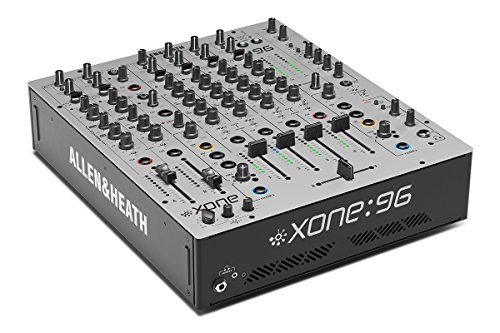
Allen & Heath XONE:96 — Best Overall Sound
Judged purely on sound, the XONE:96 sets this guide’s standard. Its fully analog path is quiet and wide, the four-band EQ is voiced for musical surgery, and the twin VCF filters sweep with a liquid resonance that has become a reference sound in electronic music. Fed with good sources, it does the thing analog devotees describe: tracks do not just coexist, they merge.
Though built as a DJ mixer, its sound has made it a studio and hybrid tool — producers run stems and synths through it to capture its summing and filters, and its dual USB interfaces keep it fluent in digital rigs. Six channels with returns suit summing-stem workflows as naturally as multi-deck DJ sets.
Its brief is its limit: this is not a band’s PA desk, and it offers no microphone-channel count for live vocal work. Within performance and hybrid-studio mixing, though, no analog mixer here sounds more convincingly premium — it is the pick for buyers whose first, second and third criteria are all the sound itself.
Strengths
- Reference-grade analog summing and filters
- Four-band EQ with genuinely musical voicing
- Dual USB keeps hybrid rigs simple
Trade-offs
- A performance mixer, not a band PA desk
- Premium tier across the board
- No onboard effects beyond its filters
Key specs: 6 channels, fully analog path, 4-band EQ, dual VCF filters, dual USB interfaces
Best for: DJs, producers and hybrid summing rigs / Not suited for: live bands needing many mic channels
Check the current price on Amazon

Mackie Onyx16 — Best for Live Bands
The Onyx16 sounds like a Mackie in the best sense: Onyx preamps with generous, clean headroom that take loud vocalists and drum kits without flinching, and Perkins EQ — the British-voiced equalisation Mackie built its live reputation on — that makes instruments sit together with broad, forgiving moves. A full band through this desk sounds like a band, quickly, which is the live analog brief in one sentence.
Multitrack USB recording makes it a double asset: the same desk that mixes the gig captures every channel for the demo, the live album or the post-mortem on a rough night. For working bands and small venues, that combination — sound, recording, roadworthy steel build — is why the Onyx line keeps its following across generations of models.
It will not flatter like the XONE:96 or process like a digital desk, and its effects are absent by design — outboard or pedals carry that load. As the sound-first analogue centre of a live rig that also records, it is the most complete package here.
Strengths
- Onyx preamps with serious headroom
- Musical Perkins EQ, fast to mix on
- Multitrack recording of every show
Trade-offs
- No onboard effects section
- Utilitarian rather than luxurious feel
- 16 channels cap larger productions
Key specs: 16 channels, Onyx mic preamps, British-style Perkins EQ, multitrack USB recording, rugged steel chassis
Best for: live bands, small venues and rehearsal rooms / Not suited for: buyers wanting onboard digital effects
Check the current price on Amazon
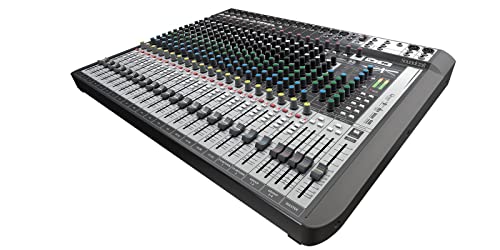
Soundcraft Signature 22 MTK — Best Studio Character
The Signature 22 MTK is the project studio’s analog argument. Soundcraft’s Ghost preamps bring a quiet, slightly rich character drawn from the company’s large consoles, the Sapphyre EQ is unmistakably British in its broad musicality, and Lexicon effects — reverbs with genuine pedigree — sit onboard where studio mixers need them. Twenty-two channels cover a full band tracking together, synths and all.
Multitrack USB is the workflow key: every input records separately while the desk mixes in analog, so a studio gets analog sound with digital editing freedom. Home and project studios built around a desk — rather than a mouse — find their centre here, with hands on faders and the computer acting as tape machine.
Against pure live desks it trades road armour for studio grace, and against digital consoles it trades recall for immediacy and character. Studios that mix with their hands and print their sound as they track will consider that the right trade every time.
Strengths
- Ghost preamps with real console character
- Sapphyre EQ plus Lexicon effects onboard
- Full multitrack USB recording
Trade-offs
- Studio manners rather than road armour
- No scene recall — analog immediacy only
- 22 channels is the ceiling
Key specs: 22 channels, Ghost mic preamps, Sapphyre EQ, Lexicon effects, dbx input limiting, multitrack USB
Best for: project studios and desk-centred producers / Not suited for: heavy touring live rigs
Check the current price on Amazon

Tascam Model 12 — Best Hybrid Recorder
The Model 12 answers the producer who thinks in faders but records in tracks. Its surface works like a classic analog mixer — a knob-laden channel strip per input, one-knob compression, musical EQ — while underneath it records twelve tracks to SD card with no computer present, then becomes a USB interface and DAW controller when the computer joins. The sound is clean and honest, with the workflow warmth analog lovers actually miss: immediacy.
For songwriters, small bands and podcast-adjacent music work, it collapses three purchases into one tactile desk. Overdubs, punch-ins and mixdowns happen at the surface, and the recordings move to a DAW only when they should — for editing depth, not basic capture.
Purists should note its hybrid nature: the mixing experience is analog in feel while the recording path is digital, so it will not satisfy a buyer seeking an all-analog signal chain for its own sake. As a sounding, working, recording mixer it is superb value and a legitimate member of this guide’s family.
Strengths
- Records 12 tracks with no computer
- Tactile, analog-style channel strips
- Interface and DAW control built in
Trade-offs
- Hybrid design — not an all-analog path
- 12 tracks cap bigger sessions
- Compact faders for compact desks
Key specs: 12-track recording to SD, analog-style mixer surface with per-channel EQ and compression, USB audio interface, DAW control
Best for: songwriters and small-band recording / Not suited for: analog-chain purists or large sessions
Check the current price on Amazon

Yamaha MG20XU — Best Value Workhorse
Yamaha’s MG series is the sound of competent live audio everywhere, and the MG20XU shows why. The D-PRE preamps are clean and neutral with honest headroom, the channel layout is a model of clarity, and SPX effects — a Yamaha pedigree line — provide reverbs and delays that sit naturally on voices. Twenty inputs and six buses cover bands, worship teams and school productions with room to spare.
Its sonic personality is transparency rather than character: it will not warm a source the way the Soundcraft or Allen & Heath designs do, and engineers who mix by feel sometimes call it polite. Engineers who mix for clarity call it correct. For spoken word, acoustic music and mixed programmes, that neutrality is a genuine virtue and a reason these desks anchor so many installed systems.
As value, it is formidable — the most channels and buses here for a working tier, with Yamaha’s build and support behind it. Buyers chasing character should look up the list; buyers chasing dependable, clear sound at scale have found their desk.
Strengths
- Clean D-PRE preamps, honest headroom
- Most channels and buses for the tier
- SPX effects and rugged Yamaha build
Trade-offs
- Neutral character — no analog warmth added
- Stereo USB rather than multitrack
- Utilitarian fader feel
Key specs: 20 inputs, D-PRE mic preamps, 6 buses, SPX effects, USB interface, metal chassis
Best for: schools, worship and mixed-programme venues / Not suited for: buyers seeking console colour and character
Check the current price on Amazon

Allen & Heath ZED-12FX — Best Compact Live
The ZED-12FX proves analog sound quality is not a function of size. Its DuoPre preamps deliver the quiet, confident gain Allen & Heath is known for, the sweepable mid EQ does the real tonal work small desks usually fudge, and the onboard effects are the company’s own — reverbs and delays that flatter voices instead of announcing themselves. A duo or small band through this desk sounds finished.
The format suits the work: six mono and three stereo channels cover the classic small-act line-up — voices, guitars, keys in stereo, playback — with USB for recording the stereo mix or playing tracks from a computer. Solo performers and duos who also record will find it a tidy two-way hub.
Larger acts will outgrow the channel count, and there is no multitrack escape hatch. Within its format it is the sound-quality pick: the compact desk engineers recommend when the brief is ‘small, but it has to sound like a real console.’
Strengths
- DuoPre preamps punch above the format
- Sweepable mids and quality onboard effects
- USB for playback and stereo recording
Trade-offs
- Channel count caps growing acts
- Stereo USB only, no multitrack
- Compact controls for compact hands
Key specs: 6 mono + 3 stereo channels, DuoPre preamps, onboard effects, USB audio, sweepable mid EQ
Best for: duos, solo acts and compact venues / Not suited for: full bands or multitrack recording
Check the current price on Amazon
Comparison Table
| Pick | Badge | Key spec | Best for |
|---|---|---|---|
| Allen & Heath XONE:96 | Best Overall Sound | 6ch analog, dual filters | DJs, producers and hybrid summing rigs |
| Mackie Onyx16 | Best for Live Bands | 16ch analog, Onyx preamps, multitrack | live bands, small venues and rehearsal rooms |
| Soundcraft Signature 22 MTK | Best Studio Character | 22ch, Ghost preamps, multitrack | project studios and desk-centred producers |
| Tascam Model 12 | Best Hybrid Recorder | 12-track recorder-mixer hybrid | songwriters and small-band recording |
| Yamaha MG20XU | Best Value Workhorse | 20-in, D-PRE preamps, SPX FX | schools, worship and mixed-programme venues |
| Allen & Heath ZED-12FX | Best Compact Live | Compact, DuoPre, onboard FX + USB | duos, solo acts and compact venues |
What Actually Makes an Analog Mixer Sound Good
Three design decisions dominate. First, the preamp: its job is large, quiet gain, and the best designs stay composed as they approach their limits, adding a hint of density rather than harshness. Second, the EQ: analog EQ is a voicing choice, and the celebrated desks — British EQ traditions especially — use broad, interactive curves that encourage musical moves. Third, the summing bus: when sixteen channels arrive together, headroom and power-supply integrity decide whether the mix stays open or turns congested.
Notice what is absent from that list: the word ‘vintage’, price alone, and channel count. A modern, well-designed analog mixer at a fair tier will out-sound a tired old desk with a famous name, because capacitors age, faders wear and power supplies drift. Buy design quality and condition, not mythology.
Your sources set the ceiling. Analog character flatters good microphones and instruments; it cannot invent detail a poor source never captured. Spend in chain order — source, preamp, then processing — and judge mixers with your own material, at matched levels, whenever a dealer allows.
How to Choose Between Studio, Live and Performance Analog
Studio analog is about tracking and summing: multitrack USB, effects onboard and EQ character lead — the Signature 22 MTK and Model 12 patterns. Live analog is about headroom, durability and speed: the Onyx16 and MG20XU patterns, where a mix must come together fast and survive the road. Performance analog — DJ mixers like the XONE:96 — is about filters, EQ as an instrument and summing that glues a set together.
Hybrid buyers should be honest about percentages. A desk used eighty percent for live bands and twenty for recording belongs to the live family with recording as a bonus; the reverse ratio belongs to the studio family. Buying the wrong family’s flagship is the classic analog mistake — superb desks, wrong briefs.
Size follows the same honesty. Count simultaneous sources at your biggest session, add two spares, and stop there. Every unused channel is weight, cost and one more fader between you and the ones you ride.
Analog Versus Digital: An Honest Word
Digital mixers offer recall, per-channel everything and impossible consistency; analog offers immediacy, character and a control surface that is exactly what it appears to be. In controlled, level-matched listening, modern digital is transparent and fine analog is flattering — and flattering is a legitimate engineering goal when the material is voices and instruments rather than test tones.
The practical differences often matter more than the sonic ones. Analog cannot recall last night’s show; digital cannot be repaired with a soldering iron and a schematic at a village-hall level. Analog ages mechanically; digital ages through software support. Choose the ageing and workflow you prefer, with your ears confirming the sound.
Many rigs sensibly run both: an analog desk for its sound at the centre, digital tools around it for recording, playback and distribution. The hybrid mixers in this guide exist because that combination is what most musicians actually build.
How to Set Up an Analog Mixer for the Best Sound
Start with gain, the analog sacrament. Bring each channel’s gain up until the loudest expected moment peaks healthily below clipping, then stop — analog headroom is where the sound lives, and a desk run timidly sounds thin while a desk run into the red sounds harsh. Match channels by ear on real material, not by identical knob positions.
Use EQ in the analog spirit: broad moves, made while listening to the whole mix. Cut before you boost, use the sweepable mids to find where a voice or instrument actually lives, and resist sculpting every channel in solo — analog EQ earns its reputation in context, gluing sources together rather than perfecting them separately.
Mind the summing bus. Keep the master in its comfortable middle range and balance with channel and group faders; a master fader buried low with channels screaming, or vice versa, wastes the desk’s designed headroom. If your mixer offers groups, mix sections to groups and let the master stay calm.
Finish with housekeeping that protects sound over years: dust cover on when idle, faders exercised, connections seated and clean, and a photograph of your baseline settings. Analog desks reward owners who treat them as instruments — because that is what the good ones are.
Common Buying Mistakes
Believing ‘analog’ alone guarantees sound quality — cheap analog is noisy, cramped and entirely real.
Running gains timidly or into the red; analog character lives in correct gain staging, not in abuse.
Buying a famous old desk in tired condition instead of a modern design in full health.
Judging mixers with unfamiliar demo material at unmatched levels — loudness masquerades as quality every time.
Oversizing: unused channels add cost, weight and clutter between you and the faders you actually ride.
Final Recommendation
For pure analog sound, the Allen & Heath XONE:96 is this guide’s reference. Live bands should build around the Mackie Onyx16, project studios around the Soundcraft Signature 22 MTK, recording songwriters around the Tascam Model 12, value-driven venues around the Yamaha MG20XU, and compact acts around the ZED-12FX — each the sound-first answer to a distinct brief.
Keep exploring with Best Sound Mixers, Best Analog Mixers, Best Sounding Analog Mixers Dj, Best Soundcraft 8 Bus Mixers and Best 16 Channel Mixers. Trust your ears, at matched levels, on your own material — that discipline is worth more than any badge on the front panel.
Preamps in Depth: Gain, Headroom and Graceful Limits
The preamp is where an analog mixer’s sound is born, and its virtues repay a closer look than most buying guides give. A microphone’s signal is minute; the preamp’s job is to raise it enormously without adding noise of its own, and to behave gracefully when a loud source pushes it toward its limits. The celebrated designs in this guide — Mackie’s Onyx, Soundcraft’s Ghost, Yamaha’s D-PRE, Allen & Heath’s DuoPre — differ in philosophy: some aim for transparency, some for a hint of density as levels rise, but all share the expensive trait of failing gently. A preamp that thickens slightly at its ceiling invites confident gain staging; one that splinters teaches its owner to mix timidly, and the whole desk sounds smaller for it.
Clean gain is the practical specification beneath the poetry. Quiet sources — ribbon microphones, soft singers, distant acoustic instruments — expose a preamp’s noise floor mercilessly, and the difference between a desk that hisses at working gain and one that stays silent is the difference between a recording and an apology. When auditioning mixers, this is the test that matters most: your quietest real source, at real gain, on headphones, in a quiet room.
Headroom completes the picture. It is the distance between healthy operating level and audible distortion, and it is spent invisibly all night — by the singer’s loudest chorus, the drummer’s accent, the moment every channel peaks together. Desks with generous headroom sound calm under pressure, which listeners experience as quality without being able to name it. When this guide praises a mixer’s sound, headroom is usually the largest single ingredient.
EQ Philosophies: British Curves, Surgical Tools and Mixing by Ear
Analog EQ is a designer’s opinion made physical, and the opinions in this guide span a genuine spectrum. The British tradition — carried here by Soundcraft’s Sapphyre EQ and Mackie’s Perkins design — favours broad, interactive curves: bands that overlap musically, boosts that flatter, cuts that clean without thinning. Engineers raised on it mix boldly and quickly, shaping a sound’s character in two moves. The opposing philosophy prizes precision: narrow, assignable correction that fixes a problem frequency and leaves everything else untouched, a tool digital desks have since perfected.
Neither philosophy is wrong, but they suit different hands and materials. Character EQ rewards engineers who mix by feel on musical material — bands, voices, acoustic instruments — and punishes nothing except indecision. Surgical EQ rewards engineers solving specific problems in difficult rooms. Most analog desks in this guide lean deliberately toward character, because that is the virtue analog still owns outright; buyers who need surgery should let a digital desk or a hybrid chain provide it.
A practical discipline follows: on a character desk, EQ in context and in motion. Solo a channel to find a problem, then fix it while the whole mix plays, because British-style curves are designed to be judged by what they do to the ensemble. Engineers who EQ every channel to perfection in solo routinely discover a mix of perfect strangers; the analog tradition exists to prevent exactly that record.
Summing, Power Supplies and the Invisible Engineering
Ask engineers why one analog desk sounds bigger than another with similar specifications and the conversation eventually reaches two unglamorous places: the summing bus and the power supply. Summing is where every channel meets; doing it without congestion at full arrangement density requires headroom, careful grounding and current delivery that does not sag when the low end works hard. The power supply is the foundation under all of it — an under-specified supply makes a desk sound small precisely at the moments the music gets big, and no front-panel feature compensates.
This invisible engineering explains the category’s pricing better than feature lists do. Large, well-regulated supplies and generous bus design cost money and weight, and they are exactly what separates the desks in this guide from budget analog mixers that share their channel counts. It also explains why condition matters in used purchases: power supplies age, capacitors drift, and a tired example of a great desk can sound smaller than a fresh example of a lesser one.
For the buyer, the actionable version is simple. Weight and heat are weak but real signals of supply investment; owner testimony about behaviour at full tilt is a strong one; and a service history on a used desk is worth money. Judge analog mixers the way engineers do — at full arrangement, at working volume, over a whole evening — and the invisible engineering becomes perfectly audible.
Used Analog Mixers: Buying Heritage Without Buying Trouble
The used market is where analog mythology meets capacitor reality, and it rewards buyers who inspect like engineers. A famous desk at a tempting price may be a tired desk: power supplies drift, faders wear into noise, and switches oxidise into intermittency that hides during a five-minute demo and blooms during your first session. Test every channel with the same source, ride every control through its full travel while listening, and run the desk at working level for at least half an hour — heat reveals faults that cold demonstrations conceal.
Price the service, not just the desk. A professional cleaning, fader replacement where needed and a power-supply health check can return a good design to full voice, and sellers who have had the work done — with receipts — own a genuinely different product from sellers who have not. In this category, a documented service history is worth a meaningful premium, and its absence is a legitimate negotiating instrument rather than a deal-breaker.
Modern desks change the used equation in your favour. The mixers in this guide are current designs with living support, which means a used Onyx, Signature or ZED carries none of the orphan risk of a discontinued legend. For most buyers, the sweet spot is exactly there: a well-kept example of a current, serviceable design, bought after a hands-on test, over a famous nameplate bought on faith.
Analog Mixing Technique: Making the Desk Sound Its Best
Analog desks reward a technique that digital habits can erode, and rebuilding it is part of the purchase. Start every mix at the gains, with sources at real energy, and resist the modern reflex to fix levels later — on an analog desk there is no later, only the sum you are hearing. Mix with the master in its designed comfort zone and the channels doing the work, and you will hear the headroom this guide keeps praising as a physical calm in the whole programme.
Use the desk’s EQ as a arranging tool. On character desks, small broad moves re-balance an entire ensemble’s relationships — warming the vocal group against the band, opening the top of the whole mix at the master — in a way that dozens of surgical channel moves cannot imitate. Engineers who learn to reach for fewer, larger gestures discover what the format’s devotees mean by musical: the mix coheres, because it was shaped coherently.
Print your sound with intention. Analog’s lack of recall is a discipline as much as a limitation: photograph settings, note the moves that worked, and build a house method for your regular material. Studios and venues that keep those notes find their analog desk getting better across a season, because the engineer is accumulating what the desk cannot store. That partnership — machine character, human memory — is the format’s real workflow, and at its best it is not a compromise at all.
Analog Mixers in Education and Community Settings
Schools, community studios and houses of worship buy a disproportionate share of the world’s analog mixers, and their criteria deserve explicit respect in a sound-first guide. Teachability leads: a desk whose signal path can be seen — gain, EQ, fader, group, master, laid out in the open — is a teaching instrument in itself, and generations of engineers have learned the craft on exactly such surfaces. The Yamaha and Mackie picks in this guide anchor countless training rigs for that reason, and a student who learns gain staging on a honest analog desk carries the discipline into every digital system they will ever touch.
Robustness and replaceability follow. Community desks are operated by many hands, moved by optimistic volunteers and stored in real cupboards; steel chassis, clear labelling and controls that survive enthusiasm are sound-quality features across a five-year horizon, because the best-sounding desk is the one still working correctly in year five. Institutions should also value the cascade: today’s main desk becomes tomorrow’s rehearsal-room desk, and an analog workhorse cascades gracefully for decades.
Budget honesty completes the institutional picture. The saving from choosing a sound, mid-tier analog desk over a flagship digital one is real money that buys microphones, loudspeakers and the room treatment this guide keeps recommending — the parts of the chain a school audience actually hears. Institutions that spend in chain order serve their communities better than those that buy a badge, and the picks above were ordered to make chain-order spending easy.
The Analog Desk as an Instrument: Performance Practice
The deepest claim analog devotees make is not about frequency response at all; it is that a great analog desk is played. Faders with the right resistance, EQ that responds like a musical control, a summing bus that pushes back gently when the mix gets dense — these invite a performance from the engineer, and the resulting mix carries that performance in it. Live engineers describe riding a good desk the way musicians describe a good instrument: the feedback loop between hand, ear and sound tightens until mixing feels like playing along.
This is not mysticism, and it has a practical corollary for buyers: audition desks with your hands, at length, on material you will actually mix. Ten minutes of fader-riding on your own band’s multitrack will tell you more about whether a desk is your instrument than a month of specifications. Dealers who serve this market understand the request; make it without embarrassment.
It also explains why engineers keep personal desks across careers and why this guide’s per-pick briefs speak of fit as much as quality. The best sounding analog mixer, in the end, is the one whose sound you can reach — fluently, nightly, under pressure. Choose the instrument your hands believe, maintain it like an instrument, and the audience will hear the difference without ever knowing its name.
Analog Mixers for Streaming and Content Creation
An unexpected modern buyer has joined the analog market: the content creator. Streamers and video producers raised on software mixers have begun choosing analog desks for reasons this guide’s framework predicts — tactile control that works while looking at a camera, processing that needs no plugin window, and a sound with enough character to distinguish a channel’s voice in a feed of identical interfaces. The hybrid desks in this guide, with multitrack or stereo USB, serve that buyer directly: analog hands, digital delivery.
The creator’s criteria reorder the usual list. A single superb microphone channel outranks sixteen adequate ones; a mute that can be hit without looking outranks a third effects engine; and the desk’s appearance on camera — compact, tidy, free of cable chaos — is a production value rather than vanity. Producers should also respect the format’s honesty: analog processing is printed into the stream live, which rewards a set-it-carefully discipline and punishes mid-show experimentation in public.
For creators whose audio is primarily voice, the podcast and streaming guides in this series may serve better than a general analog desk, and this guide says so without territorial pride. But for creators who perform music, mix sources live or simply think with their hands, a sound-first analog mixer remains a legitimate centre of the desk — chosen, as everywhere in this guide, by brief rather than by fashion.
Voices Through Analog: Speech, Worship and Word-Led Work
This guide has dwelt on music, but a large share of analog mixers earn their living on the spoken word — worship services, community theatre, spoken-word venues, council chambers and podcasts performed live — and speech judges a desk differently. Intelligibility is the whole product: consonants must survive the room, quiet speakers must be lifted without hiss, and the operator’s EQ moves serve comprehension rather than beauty. The desks with clean preamps and clear, unfussy EQ — Yamaha’s D-PRE clarity and the ZED family’s honest small-format sound among this guide’s picks — earn their word-led followings precisely here.
Speech also forgives less. Music masks a multitude of small sins beneath arrangement and energy; a single voice in a quiet room exposes every one — the noisy fader, the strained preamp, the reverb that seemed tasteful on a band and turns a sermon to soup. Word-led buyers should audition with a voice, in a quiet room, at the gain their softest speaker demands, and should weight cleanliness above character in every comparison. The best sounding analog mixer for speech is the one you forget is there, which is the highest compliment the format can earn.
Gain Staging Across a Hybrid Analog-Digital Chain
Most analog desks now live inside hybrid chains — digital recorders behind them, powered speakers after them, a streaming feed beside them — and the chain is only as clean as its gain staging at every joint. Set each interface between worlds deliberately: the analog desk’s output should arrive at a recorder or interface healthily below its clipping point, with the desk’s own master in its composed range rather than attenuated to protect a downstream input that was never configured. Mismatched joints are the commonest cause of the vague complaint that a good desk ‘sounds small’ in a modern rig, and they are cured with ten minutes and a test recording, not with a new mixer.
Make the test recording your chain’s passport. One minute of your densest material, captured at the chain’s end, listened to on headphones: hiss means a joint is starved, harshness means a joint is overloaded, and a clean, calm capture means the analog desk’s virtues survived the journey into the digital world intact. Repeat the test whenever any link changes. Hybrid rigs are this decade’s normal, and the engineers who document their joints are the ones whose analog sound arrives where it was going.
One last discipline ties the whole guide together: revisit your baseline quarterly. Rooms change with seasons and furniture, bands change members, voices change with age and health, and the settings that were perfect in spring drift quietly wrong by winter. A quarterly hour — reference material played, gains confirmed, EQ assumptions retested, the notebook updated — keeps an analog desk sounding like the instrument you bought rather than the habit you fell into. Analog mixing has no recall button; the calendar is its recall, and the engineers who keep that appointment are the ones whose rooms sound consistently like someone cares, because someone demonstrably does.
Related guides
Frequently Asked Questions
Do analog mixers really sound better than digital?
They sound different in identifiable ways: forgiving summing, musical EQ voicings and gentle overload behaviour. Modern digital is more transparent and consistent. ‘Better’ depends on whether your material benefits from flattery — voices and instruments often do — and on the quality of the specific desk, analog or digital.
What is British EQ and why do people praise it?
A tradition of equaliser design from classic British consoles: broad, interactive curves that make bold, musical changes feel natural. Soundcraft’s Sapphyre EQ and Mackie’s Perkins EQ both descend from this philosophy. It encourages mixing by ear and feel rather than by numbers.
Can an analog mixer record to a computer?
Many modern ones can. Multitrack models like the Onyx16 and Signature 22 MTK record every channel over USB; simpler desks record the stereo mix. Check the comparison table — it is the feature that most divides modern analog desks.
How do I keep an analog mixer sounding its best?
Correct gain staging, dust protection, exercised faders and clean connections cover most of it. Across years, a professional service — cleaning, capacitor health, power supply check — restores a good desk fully, which is one of analog’s genuine ownership advantages.
Is a hybrid like the Tascam Model 12 really analog?
Its mixing experience and channel strips are analog in design and feel, while recording is digital — an honest hybrid. It belongs in this guide because buyers seeking analog workflow and sound routinely choose it; buyers needing an all-analog signal path should pick from the fully analog desks above.
How many channels should my analog mixer have?
Count simultaneous sources at your largest session, add two spares for guests and failures, and buy that size. Oversized desks cost more, weigh more and slow you down; undersized desks force compromises mid-session. The headroom that matters is in the summing bus, not in unused channels.


