Finding the best mixers under 500 starts with a simple question: what will the mixer actually do in this kitchen? A stand mixer is the hardest-working appliance on the counter for anyone who bakes, and the models in this guide all sit inside the same budget class, from compact 4 quart machines to 6.5 quart workhorses. This guide covers kitchen stand mixers only, the machines that cream butter, knead dough and whip cream, and every model below is a genuine stand mixer with a bowl, a beater set and a motor built for the job.
The six models below were chosen to cover the ways people actually buy a stand mixer in this budget class: the classic KitchenAid entry point, the iconic Artisan, the most powerful value pick from Cuisinart, a compact Hamilton Beach for small kitchens, and two bottom-drive workhorses from Bosch and NutriMill for bakers who mix large doughs. Every one of them is a real, currently listed product with a clear identity: a brand, a model and a set of specifications you can check on its listing before you buy.
Read the guide first if you are unsure which type suits the household, or jump straight to the comparison table and the picks. The buying guide at the end explains bowl size, motor power, tilt-head versus bottom-drive designs and attachments, and the frequently asked questions answer the points first-time buyers ask most, including how big a bowl a household needs and whether a mixer in this budget class can handle bread dough.
In this guide
Quick picks: best mixers under 500
| # | Product | Where to buy |
|---|---|---|
| 1 | KitchenAid Classic K45SS 4.5 Qt | Check on Amazon |
| 2 | KitchenAid Artisan KSM150PS 5 Qt | Check on Amazon |
| 3 | Cuisinart SM-50BK 5.5 Qt | Check on Amazon |
| 4 | Hamilton Beach 4 Qt 7-Speed | Check on Amazon |
| 5 | Bosch Universal Plus 6.5 Qt | Check on Amazon |
| 6 | NutriMill Artiste 6.5 Qt | Check on Amazon |
How We Chose the Best Mixers Under 500
The picks in this guide were chosen from kitchen stand mixers listed on Amazon that fit the under-500 budget class, looking for models that cover the main ways people buy one rather than six versions of the same machine. A good list needs a range of bowl sizes, from 4 quarts to 6.5 quarts, and a range of designs, from tilt-head to bottom-drive, so the picks below span those roles. Every pick is a real, currently listed product with a clear identity: a brand, a model and a set of specifications you can check on its listing before you buy.
Three things mattered most. First, the mixer has to be a genuine kitchen stand mixer, built for baking, with a bowl and a beater set, not a hand mixer or a different kind of machine. Second, it has to fit the budget class, meaning a machine a household can buy without stepping into the professional price range. Third, the range has to cover different household needs, from a beginner who bakes a few times a month to a bread baker who mixes large doughs every week. Models that failed on any of those points did not make the list.
We have not tested these models ourselves, and this guide does not pretend otherwise. The descriptions, strengths and trade-offs come from the specifications and features stated on each listing, plus the practical realities of owning a stand mixer: bowl size, motor power, weight on the counter and how the attachments fit. Where a model asks more of its owner, that is stated as a trade-off rather than hidden.
Quick Comparison
Use this table to narrow the list before reading the detail. The right-hand column is only a pointer to the full section, not a ranking.
| Mixer | Headline detail | Section |
|---|---|---|
| KitchenAid Classic K45SS 4.5 Qt | 4.5 qt stainless bowl | 10 speeds | 59 touchpoints | Metal construction | Model K45SS | 1 |
| KitchenAid Artisan KSM150PS 5 Qt | 5 qt stainless bowl with handle | 10 speeds | Pouring shield | Tilt-head | Model KSM150PS | 2 |
| Cuisinart SM-50BK 5.5 Qt | 5.5 qt | 500-watt motor | 12 speeds | Die-cast metal | Model SM-50BK | 3-year warranty | 3 |
| Hamilton Beach 4 Qt 7-Speed | 4 qt stainless bowl | 7 speeds | 300 watts | Planetary mixing | Splash guard, whisk, flat beater, dough hook | 4 |
| Bosch Universal Plus 6.5 Qt | 6.5 qt BPA-free bowl | 500 watts | Belt-driven | Bottom drive | Wire whips, dough hook, NutriMill extender | 5 |
| NutriMill Artiste 6.5 Qt | 6.5 qt bowl | 500 watts | Bottom drive | Dough hook, wire whips | Suction cup feet | 1-year warranty | 6 |

1. KitchenAid Classic Series 4.5 Quart Tilt-Head Stand Mixer K45SS, Onyx Black | 10 Speeds, Durable Metal construction, 59 Touchpoints for Thorough Mixing, Compatible with KitchenAid Attachments
The KitchenAid Classic K45SS is the entry point to the most famous stand mixer range in the world, and it earns its place at the top of this guide by being the model most households actually need. The listing describes a 4.5 quart tilt-head mixer in onyx black, with 10 speeds, a durable metal body and 59 touchpoints around the bowl for thorough mixing. The 4.5 quart stainless bowl mixes up to eight dozen cookies in a single batch, which is more than enough for a family bake, and the bowl is dishwasher safe.
The tilt-head design is the detail that matters in daily use. Lift the head, and the bowl is open for adding ingredients or scraping down the sides; lock it back in place, and the mixer runs hands-free. The 10 speeds run from a slow stir for folding flour into a batter to speed 8 for whipping cream, and the flat beater, dough hook and six-wire whip in the box cover the three jobs a home baker actually does: creaming, kneading and whipping. The attachment hub on the front takes the full KitchenAid attachment range, from pasta rollers to meat grinders, so the mixer grows with the household’s cooking.
The trade-offs are the ones that come with the smallest bowl in the range. A 4.5 quart bowl will not handle a double batch of bread dough or a very large cake, and a household that bakes in volume will want the 5 or 5.5 quart models further down this list. The Classic is also the plainest model in the range, with fewer colour choices than the Artisan, and the onyx black finish shows flour dust, so a quick wipe after baking is part of the routine.
Strengths:
- The most affordable way into the KitchenAid range, with the full attachment hub.
- 59 touchpoints around the bowl for thorough mixing.
- 4.5 quart bowl handles eight dozen cookies in one batch.
Trade-offs:
- Smallest bowl in the range, so double batches are out.
- Fewer colour choices than the Artisan models.
- Black finish shows flour dust and needs wiping.
It fits a household buying its first serious stand mixer, or a baker who wants the KitchenAid system without paying for the larger bowls.
Best for: first-time stand mixer buyers who want the KitchenAid attachment system. Not suited for: bakers who regularly mix double batches of bread dough.
Check price on Amazon: KitchenAid Classic K45SS 4.5 Qt
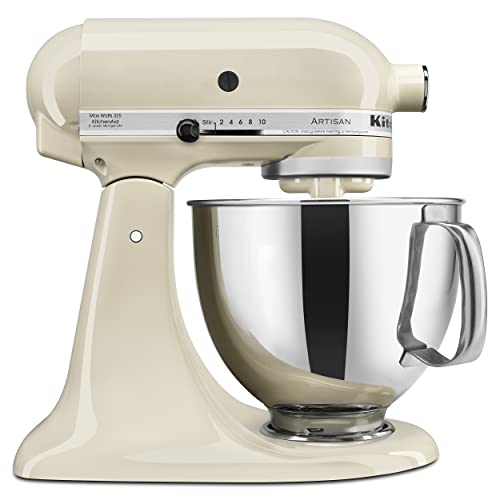
2. KitchenAid Artisan, 5-Qt Tilt Head Stand Mixer, KSM150PS, Almond Cream | Includes Pouring Shield for Mess-Free Mixing, 10 Speed Settings, Easily add Ingredients with the Tilt-Head Design
The KitchenAid Artisan KSM150PS is the mixer most people picture when they hear the name KitchenAid, and this almond cream version is the classic of the range. The listing describes a 5 quart tilt-head mixer with 10 speeds, a stainless bowl with a comfortable handle, and a pouring shield for mess-free mixing. The 5 quart bowl mixes up to nine dozen cookies in a single batch, and the handle makes it easy to lift a full bowl of dough off the base and carry it to the bench.
What sets the Artisan apart from the Classic above it is the combination of the larger bowl and the finish. The extra half quart matters for a household that bakes for a crowd, and the pouring shield matters for anyone who has ever added flour to a running mixer and watched it drift across the bench. The tilt-head design gives the same easy access to the bowl, the 10 speeds cover the same range from slow stir to fast whip, and the metal construction gives the mixer the weight that keeps it planted on the counter when the dough gets stiff.
The trade-offs are size and weight. The Artisan is a substantial machine, and it needs a permanent place on the counter or a strong shelf, since lifting it in and out of a cupboard every time is a chore. The almond cream finish is lovely, but it will show scuffs over years of use, and the pouring shield is one more part to wash. None of those are reasons to avoid it, but they are worth knowing before it arrives.
Strengths:
- 5 quart bowl with a handle, mixing nine dozen cookies per batch.
- Pouring shield keeps flour and sugar in the bowl.
- Metal construction and tilt-head design from the classic KitchenAid formula.
Trade-offs:
- Heavy, so it needs a permanent counter spot.
- Cream finish shows scuffs over time.
- Pouring shield is an extra part to wash.
It fits a household that bakes regularly and wants the iconic KitchenAid in a colour that suits a warm kitchen.
Best for: regular bakers who want the classic Artisan look and a handled bowl. Not suited for: anyone who needs to store the mixer away after every use.
Check price on Amazon: KitchenAid Artisan KSM150PS 5 Qt
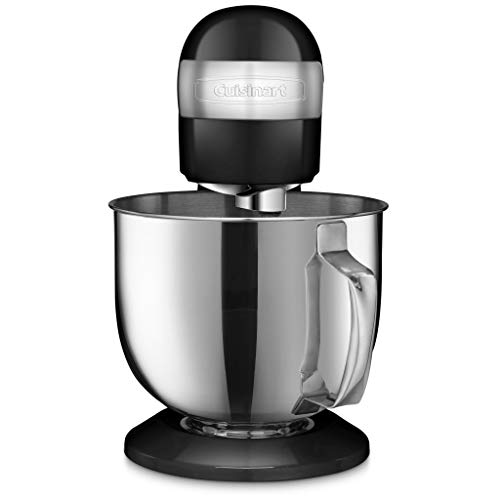
3. Cuisinart Stand Mixer, 12 Speed, 5.5 Quart Stainless Steel Bowl, Chef’s Whisk, Mixing Paddle, Dough Hook, Splash Guard w/ Pour Spout, Onyx, SM-50BK, Manual
The Cuisinart SM-50BK is the strongest value argument in this guide: a 5.5 quart stand mixer with a 500-watt motor, 12 speeds and a die-cast metal body, in onyx. The listing leads with power, precision and performance, and the numbers back it up: 500 watts is more than the KitchenAid Classic, 12 speeds is more than the 10 on the KitchenAid models, and the 5.5 quart polished stainless bowl is the largest in the tilt-head class here. For a household that wants the most mixer for the money, those three numbers are the whole argument.
In use, the extra speeds are genuinely useful rather than decoration. The low speeds fold flour into batter without throwing it across the kitchen, and the high speeds whip cream and egg whites quickly. The tilt-back head gives the same easy bowl access as the KitchenAid models, and the box includes the chef’s whisk, the dough hook, the flat mixing paddle and a splash guard with a pour spout, so the mixer is ready for bread, cakes and whipping straight out of the box. The single power outlet on the front takes Cuisinart’s optional attachments, including a pasta extruder, a meat grinder and an ice cream maker.
The trade-offs are brand and refinement. Cuisinart is a serious kitchen brand, but its stand mixer does not have the same attachment range or the same resale following as KitchenAid, and the 12-speed dial takes a little learning, since the steps between speeds are smaller. The die-cast body is sturdy, but the mixer is lighter than the KitchenAid Artisan, so very stiff doughs can make it rock slightly on the counter. The three-year limited warranty is reassuring, and the mixer is BPA free.
Strengths:
- 500-watt motor and 12 speeds, the strongest specification here.
- Largest bowl in the tilt-head class at 5.5 quarts.
- Full accessory set in the box, including a splash guard with pour spout.
Trade-offs:
- Smaller attachment range than KitchenAid.
- 12-speed dial takes a little learning.
- Lighter body can rock slightly with very stiff dough.
It fits a buyer who wants the most power and capacity for the budget, and who will use the extra speeds.
Best for: value seekers who want 500 watts and 12 speeds. Not suited for: anyone buying mainly for the KitchenAid attachment system.
Check price on Amazon: Cuisinart SM-50BK 5.5 Qt

4. Hamilton Beach 4 Qt Electric Stand Mixer With 7 Speeds, Easy-Carry Handle | Planetary Mixing For Full Bowl Coverage | Splash Guard | 300 Watts | Whisk, Flat Beater, Dough Hook | Mixing Guide | Black
The Hamilton Beach 4 quart stand mixer is the compact pick of this guide, and it is the right answer for a kitchen where counter space is short and the baking is occasional rather than daily. The listing describes a 4 quart electric stand mixer with 7 speeds, a 300-watt motor, planetary mixing for full bowl coverage, and a splash guard, whisk, flat beater and dough hook in the box. The bowl is stainless steel with handles, and the mixer has a built-in handle on top for carrying it to and from a shelf.
Planetary mixing is the feature worth understanding here. The beaters rotate around the bowl as well as spinning, so they reach the whole bowl rather than just the centre, which is the same mixing action the higher-priced brands use. The 7 speeds include a slow first speed for kneading bread and for adding dry ingredients without splatter, and the mixing guide printed on top of the mixer helps choose the right speed for the job. The splash guard keeps batter in the bowl, and the bowl and attachments are dishwasher safe.
The trade-offs follow from the size and the power. At 300 watts and 4 quarts, this mixer handles cupcakes, cookies and everyday batters with ease, but a heavy wholemeal dough or a double batch will ask a lot of it, and the motor will let the household know. The styling is plain and functional rather than decorative, and the 7 speeds, while enough, give less fine control than the 10 or 12 on the models above. For a small household that bakes a few times a month, none of that matters much.
Strengths:
- Planetary mixing action for full bowl coverage, like the premium brands.
- Built-in carry handle and compact body for easy storage.
- Slow first speed and printed mixing guide for beginners.
Trade-offs:
- 300 watts suits everyday baking, not heavy wholemeal dough.
- 4 quart bowl is the smallest here.
- Plain styling rather than a showpiece design.
It fits a small household or a beginner baker who wants a real stand mixer without giving up half a counter.
Best for: small kitchens and beginner bakers. Not suited for: heavy bread baking or large double batches.
Check price on Amazon: Hamilton Beach 4 Qt 7-Speed
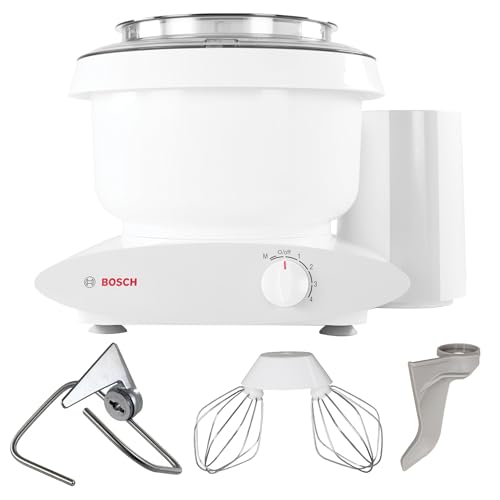
5. Bosch Universal Plus Stand Mixer 500 Watt, 6.5 Quarts with Wire Whips, Dough Hook & NutriMill Dough Hook Extender Bundle
The Bosch Universal Plus is the workhorse of this guide, and it works differently from every other mixer here. Instead of a tilt head, it uses a bottom drive: the bowl sits on the base and the beaters come up from below, which leaves the top of the bowl completely open for adding ingredients. The listing describes a 500-watt, 6.5 quart mixer with wire whips, a dough hook and a NutriMill dough hook extender, and the belt-driven transmission is rated to knead up to 14 loaves of whole grain bread dough, or mix 34 dozen cookies, in a single batch.
That capacity is the reason to buy it. A 6.5 quart bowl is the largest here by a clear margin, and the bottom drive means the mixer can handle dough quantities that would stall a tilt-head machine. The dual beaters give a triple whipping action, so as little as one egg white can be whipped, and the same machine can mash 10 pounds of cooked potatoes or shred cooked chicken. The bowl is a lightweight BPA-free plastic with an easy-grip handle and a removable drive shaft, and it is dishwasher safe. The bundle adds the NutriMill dough hook extender, which reaches deeper into the bowl for large doughs.
The trade-offs are looks and learning curve. The Bosch is a tall, practical machine rather than a pretty one, and the bottom-drive design feels unfamiliar to anyone used to a tilt-head mixer. The plastic bowl will not suit buyers who want a stainless bowl, and the accessory range, while wide, is a different system from the KitchenAid hub, so attachments do not cross over. For a household that bakes bread in volume, those are small complaints next to the capacity.
Strengths:
- Largest bowl here at 6.5 quarts, rated for 14 loaves of bread dough.
- Bottom drive leaves the bowl top open for adding ingredients.
- Belt-driven transmission with strong torque for heavy dough.
Trade-offs:
- Plastic bowl rather than stainless steel.
- Unfamiliar bottom-drive design for tilt-head users.
- Different attachment system from KitchenAid.
It fits a household that bakes bread in volume and wants the biggest bowl in this budget class.
Best for: serious bread bakers who mix large dough batches. Not suited for: anyone who wants a stainless bowl or the KitchenAid attachment system.
Check price on Amazon: Bosch Universal Plus 6.5 Qt

6. NutriMill Artiste Kitchen Electric Stand Mixer 500 Watt 6.5 Quart Bowl with Dough Hook & Wire Whips (Black Trim)
The NutriMill Artiste closes this guide as the second bottom-drive mixer, and it is the pick for a household that wants the Bosch-style capacity in a simpler, more affordable package. The listing describes a 500-watt kitchen electric stand mixer with a 6.5 quart bowl, a dough hook and wire whips, in black trim. The bowl handles dough in batches of 8 pounds, the motor drives power directly through the bottom drive, and the suction cup feet stop the mixer from walking across the counter when a heavy dough is being kneaded.
The Artiste shares the Bosch’s best idea: power through the bottom of the bowl, which keeps the top open and lets the mixer handle large quantities without the head getting in the way. The extended-length dough hook reaches the bottom of the bowl, the wire whips handle cream and egg whites, and the recipe book in the box gives a new owner somewhere to start. The one-year manufacturer’s warranty covers the first year of use, and the stainless steel drive is built for the torque a large dough demands.
The trade-offs are finish and brand depth. The Artiste is a practical machine with a black trim finish, not a design statement, and NutriMill is a smaller name than KitchenAid or Bosch, so the attachment range is narrower and the service network is thinner. The 6.5 quart bowl is generous, but the 8-pound dough rating is lower than the Bosch’s 14-loaf rating, so the very largest bakes belong to the Universal Plus. For a household that wants bottom-drive capacity without the Bosch’s bulk, the Artiste is a fair compromise.
Strengths:
- 6.5 quart bowl with bottom drive at a friendly size.
- Suction cup feet keep the mixer planted during heavy kneading.
- Extended dough hook and wire whips in the box, plus a recipe book.
Trade-offs:
- Smaller brand with a narrower attachment range.
- 8-pound dough rating is below the Bosch Universal Plus.
- Plain black-trim styling.
It fits a household that wants a large-bowl mixer for bread and baking, without paying for the biggest name.
Best for: home bakers who want 6.5 quart capacity in a compact bottom-drive mixer. Not suited for: anyone who needs the largest possible dough capacity or a wide attachment range.
Check price on Amazon: NutriMill Artiste 6.5 Qt
Buying Guide: How to Choose a Stand Mixer Under 500
Start with the bowl. A 4 quart bowl suits a single person or a couple who bake a few times a month, and it mixes a single batch of cookies or a loaf of bread without fuss. A 4.5 or 5 quart bowl suits a family that bakes weekly, and a 5.5 or 6.5 quart bowl suits a household that bakes in volume or makes bread in large batches. The bowl size on the listing is the total capacity, so a 5 quart bowl will not hold 5 quarts of dough: dough needs room to move, and the practical dough capacity is roughly half the bowl volume. Our guide to kitchen stand mixers covers bowl sizes in more detail, and the kitchen mixers under 300 guide is worth a look for buyers working to a tighter budget.
Motor power is the second decision, and it matters most for dough. A 300-watt motor handles batters, creams and light doughs, while a 500-watt motor handles stiff wholemeal dough and large batches without straining. The wattage on the listing is the input power, not a direct measure of torque, so read it together with the bowl size and the dough rating: a 500-watt motor in a 6.5 quart bowl is built for volume, while the same motor in a 5.5 quart bowl is built for power in a smaller package. If the household bakes bread weekly, aim for the higher wattage.
The third decision is the design: tilt-head or bottom-drive. A tilt-head mixer lifts its head to open the bowl, which makes adding ingredients easy and keeps the machine familiar to anyone who has used one before. A bottom-drive mixer drives the beaters from below, which leaves the top of the bowl completely open and suits very large doughs, but feels unfamiliar at first. Neither is better in general; the right one is the one that suits the baking the household actually does. Attachments are the last check: a mixer with a front hub takes pasta rollers, meat grinders and more, so a machine bought for baking can grow into a kitchen system.
Finally, check the weight and the counter space. A stand mixer is heavy, and the best mixer is the one that stays on the counter rather than living in a cupboard. Measure the space under the wall cabinets, since a tall mixer may not fit underneath, and check that the household can lift the bowl when it is full of dough. A mixer that is awkward to move will be used less, whatever its specification.
Using and Looking After a Stand Mixer
A stand mixer is simple to use well, and most of the skill is in the speed setting. Start slow when adding dry ingredients, so flour stays in the bowl instead of drifting across the bench, and raise the speed gradually as the mixture comes together. For bread dough, use the dough hook at a low speed and let the mixer work the dough rather than forcing it, and stop to scrape the bowl down once or twice so the flour at the bottom is properly mixed in. For cream and egg whites, use the whisk at a higher speed and watch the mixture rather than the clock, since a minute too long turns cream to butter.
Cleaning is straightforward if it is done straight away. The bowl and most attachments are dishwasher safe, and the mixer body wipes clean with a damp cloth. Do not immerse the head of the mixer in water, and do not let dough dry on the beaters, since dried dough is far harder to remove than fresh dough. The dough hook and the flat beater should be washed and dried before they are put away, and the whisk wires should be checked for bent tines, since a bent wire can scratch the bowl.
Storage matters too. A stand mixer should live on the counter if it is used weekly, with a cover over it to keep dust out of the bowl. If it lives in a cupboard, keep the bowl on the mixer so the parts stay together, and lift it by the base rather than the head. The attachment hub cover should stay in place when no attachment is fitted, to keep flour out of the socket. With those habits, a good stand mixer will serve a household for many years.
Common Mistakes to Avoid
The most common mistake is buying too small a bowl. A 4 quart mixer is a delight for a single batch of cookies, but a household that bakes for a crowd will quickly wish for the 5 or 5.5 quart bowl, and a bigger bowl cannot be added later. Buy for the baking the household will do in a year, not the baking it does in a quiet month. The second mistake is the opposite: buying the biggest bowl for a household that bakes rarely, and then finding the mixer too heavy to move and too large to store.
The third mistake is running the mixer too fast with dry ingredients, which throws flour out of the bowl and leaves the mixture uneven. Start slow, add dry ingredients gradually, and let the mixer work. The fourth mistake is overloading the bowl with dough, which strains the motor and leaves the dough under-mixed at the bottom. The dough rating on the listing is the limit, not a challenge.
The fifth mistake is ignoring the attachments. A mixer bought for baking can also make pasta, grind meat and churn ice cream, but only if the household buys the attachments and uses them. Finally, do not store the mixer with a wet bowl or wet beaters, since trapped moisture leaves marks on the bowl and can mark the finish. Dry everything before it goes away.
Our Recommendation
If you want one answer, start with how the household bakes. For a first stand mixer that will do everything well, the KitchenAid Classic K45SS is the pick, with the full attachment system and a bowl that suits most family baking. For a household that bakes regularly and wants the iconic machine, the Artisan KSM150PS is the one, with its handled bowl and pouring shield. For the most power and capacity for the budget, the Cuisinart SM-50BK is hard to beat, with its 500-watt motor, 12 speeds and 5.5 quart bowl.
For a small kitchen or a beginner, the Hamilton Beach 4 quart is the sensible choice, and for bread bakers who mix large doughs, the Bosch Universal Plus is the pick, with the NutriMill Artiste as the more compact bottom-drive alternative. Any of the six will serve a baking household well once the bowl size is matched to the household, so choose by the baking the household actually does. Our kitchen mixers under 100 guide covers the budget end of the range, and the hand mixer that does a stand mixer job guide is worth a look for buyers who want a lighter machine.
Frequently Asked Questions
What size stand mixer bowl do I need?
A 4 quart bowl suits one or two people who bake occasionally. A 4.5 or 5 quart bowl suits a family that bakes weekly. A 5.5 or 6.5 quart bowl suits a household that bakes in volume or makes bread in large batches. Remember that the practical dough capacity is roughly half the bowl volume.
Can a mixer in this budget class handle bread dough?
Yes, if the motor and the bowl are matched to the dough. A 500-watt motor with a dough hook handles stiff wholemeal dough well, while a 300-watt motor suits lighter doughs and smaller batches. Check the dough rating on the listing and do not overload the bowl.
What is the difference between tilt-head and bottom-drive mixers?
A tilt-head mixer lifts its head to open the bowl, which makes adding ingredients easy. A bottom-drive mixer drives the beaters from below, which leaves the top of the bowl open and suits very large doughs. Both mix well; the choice depends on the baking the household does.
Do I need the attachments?
Not at first. The flat beater, dough hook and whisk in the box cover baking. Attachments such as pasta rollers, meat grinders and ice cream makers are worth adding later if the household wants to use the mixer as a kitchen system rather than just a baker.
How heavy is a stand mixer?
Most models in this guide are substantial machines that are best kept on the counter. Check the weight on the listing and make sure the household can lift the bowl when it is full, and that the mixer fits under the wall cabinets.


