Disclosure: airfryerkitchensupply.com is reader-supported. When you buy through links on our site, we may earn an affiliate commission at no extra cost to you.
Where to buy
Use the links in the Quick Picks and in each review to check the current price on Amazon, because handheld sealers are bundled differently from seller to seller — some include reusable bags, some include a charging dock, and some are the pump only. The short version: the FoodSaver Mini Handheld Vacuum Sealer is the easiest starting point for most kitchens, the Chef Preserve Compact is the most complete kit in the box, and the ZWILLING Fresh & Save pump is the pick if you want one pump that works across bags and rigid containers.
Introduction: what a handheld vacuum sealer actually is
The best handheld vacuum sealers share one defining trait: the vacuum does the work, not a heat-seal bar. A true handheld vacuum sealer is a small cordless or compact pump that pulls air out of a reusable zip bag, a valve bag, or a rigid container, then stops — the bag’s zip closure or the container’s lid holds the vacuum. That is a different machine from a mini countertop sealer, which is really a shrunken edge sealer: it still needs textured channel bags and still melts a seal with a heated bar. Both styles get marketed with the word “handheld,” and confusing them is the most common buying mistake in this category, so this guide separates them strictly. Every pick below is a genuine handheld pump system that works with valve or zip bags (and, in two cases, containers), needs no counter space, charges or plugs in like a small appliance, and can be dropped in a drawer when the job is done. If you seal large volumes, wide bags, or liquids for sous vide, a handheld is the wrong tool no matter how good it is — the countertop and chamber machines covered in our companion guides exist for that work. If you seal a few bags of leftovers, cheese, deli meat, coffee, or meal-prep portions at a time and your kitchen has no spare counter, a handheld is arguably the most sensible sealer you can own.
One honest warning before the picks: a handheld pump cannot match the vacuum depth of a good countertop machine, and the reusable zip bags these systems depend on slowly admit air over weeks in a way a heat-sealed bag does not. For fridge storage measured in days and freezer storage measured in a few weeks, that trade is invisible in practice. For a side of salmon you plan to keep frozen until next season, it is not. The picks below were chosen for the jobs handhelds genuinely do well, and each review states plainly where that model’s ceiling is.
In this guide
Quick Picks: the best handheld vacuum sealers at a glance
- Best Overall: FoodSaver Mini Handheld Vacuum Sealer
- Best for Marinating: FoodSaver FS2160 Multi-Use Handheld Vacuum Sealer
- Best Premium System: ZWILLING Fresh & Save Handheld Vacuum Pump
- Best Complete Kit: Chef Preserve Compact Vacuum Sealer
- Best for Travel and Small Kitchens: HOTO Handheld Vacuum Sealer
- Best Simple Zipper-Bag Sealer: FoodSaver FreshSaver Handheld Sealing System
Six pumps, three bag ecosystems, and two very different ideas of what “a kit” means. FoodSaver’s two entries work inside the FoodSaver zipper-bag ecosystem, which is the easiest to restock. The ZWILLING pump anchors the Fresh & Save system, the only one here built equally around glass containers and bags. Chef Preserve and HOTO compete on what is in the box — both include a full set of reusable bags — while the FreshSaver is the long-running classic for shoppers who simply want yesterday’s cheese sealed again tonight.
How These Picks Were Chosen
Each candidate was first verified through the Amazon catalog data available to this site: the exact model, its current listing title, and what the listing says is in the box. Models whose listings turned out to be countertop edge sealers wearing a handheld label were removed, however good their specifications looked, because this guide’s promise is true handheld pumps only. What remained was judged on five criteria. First, the bag or container system: which bags the pump works with, whether those bags are reusable, and how easily replacements can be bought. Second, vacuum method and control: one-touch automatic stop versus manual control, and whether the pump can also marinate or evacuate containers through a hose or valve. Third, power source: cordless pumps with a dock or USB-style charging are more convenient than pumps that must stay tethered, but a dock also becomes one more thing to store. Fourth, kit completeness, because a pump without bags is a paperweight until the first accessory order arrives. Fifth, brand support: handheld sealers live or die on replacement bags being available next year, which favors established food-storage brands. No pick here carries a price in this article, and none carries a fixed rating score — check price on Amazon at the listing, where both can change at any time.
The 6 Best Handheld Vacuum Sealers Reviewed
FoodSaver Mini Handheld Vacuum Sealer — Best Overall
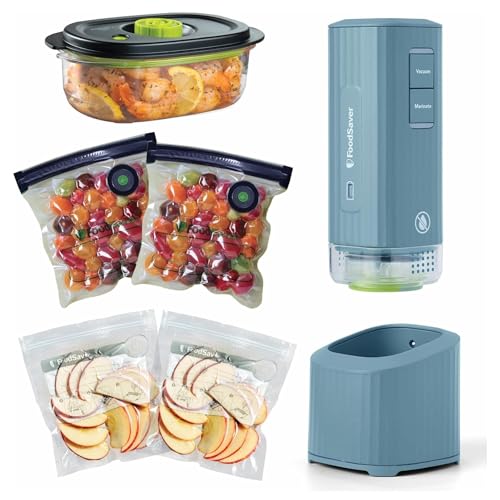
The FoodSaver Mini is the handheld that best understands why people buy handhelds. Its verified listing describes a cordless machine with a marinate setting and a charging dock, aimed at freezer storage, pantry storage, sous vide, and meal prep — and that combination matters more than raw suction in daily use. Cordless operation means the pump lives wherever the dock fits, comes to the food instead of the other way around, and never fights a cord across a crowded counter. The marinate setting is the feature shoppers underestimate: cycling vacuum on a container or bag of protein in marinade opens the surface of the food and pulls flavor in within a short session instead of an overnight soak, which turns the pump from a storage tool into a cooking tool. It suits households that seal a handful of bags at a time, several days a week, and want the process to feel like using a pepper mill rather than setting up an appliance. It is not the pick for sealing a hunter’s harvest or a warehouse-club run in one sitting.
Strengths
- Cordless design with a charging dock, so the pump is always charged and never tethered to an outlet mid-task
- Dedicated marinate setting adds a genuine second job beyond storage — quick marinades for weeknight cooking
- Works inside the FoodSaver bag ecosystem, the most widely stocked handheld bag system, including reusable zipper bags with the brand’s valve design
Trade-offs
- Vacuum depth is handheld-class: excellent for days-to-weeks storage, not a substitute for a heat-sealed bag on long freezer holds
- The dock needs a permanent home on the counter or in a cabinet, which slightly undercuts the drawer-storage promise
- Bags are a running cost, and only bags with the matching valve work — generic zip bags cannot be evacuated
Key specs (from the verified listing)
- Type: True handheld vacuum pump (no heat-seal bar)
- Power: Cordless, rechargeable, with charging dock
- Modes: Vacuum seal and marinate setting (per listing)
- Bag system: FoodSaver handheld-compatible reusable zip/valve bags
- Listing focus: Freezer, storage, sous vide, meal prep
In practice, the Mini’s rhythm is what sells it. A bag of grated cheese gets zipped, the pump seats on the valve, one press pulls the air down, and the bag goes back in the fridge — under a minute, no setup, no teardown. That low friction is the entire argument for handhelds, and FoodSaver, which effectively created this category, executes it with the fewest rough edges: the dock keeps the pump topped up, the marinate mode is genuinely useful rather than a badge on the box, and replacement bags are a stocked supermarket-and-Amazon item rather than a scavenger hunt. Where it gives ground is absolute sealing longevity. A zip-and-valve bag, resealed a dozen times, will not hold a hard vacuum for months the way a melted seam does, and the pump itself cannot evacuate a wide roll bag or a bag of soup. Buy it as a fridge-and-short-freezer tool and it is excellent; ask it to replace a countertop machine and it will disappoint you honestly and predictably.
Best for: everyday fridge and meal-prep sealing in FoodSaver-bag households / Not suited for: bulk freezer packing, liquids, or anyone who wants one machine for every sealing job

FoodSaver FS2160 Multi-Use Handheld Vacuum Sealer — Best for Marinating
The FS2160’s verified listing calls it a multi-use handheld vacuum sealer and marinator, and the second half of that description is its identity. Where the Mini treats marinating as a mode, the FS2160 is built around the idea that a handheld pump’s best party tricks involve containers and marinades as much as bags: evacuating a marinating dish, pulling air from storage containers, and handling the small, frequent jobs that never justified dragging out a countertop machine. It suits cooks who meal-prep proteins on weekends, marinate often, and think of vacuum as a cooking technique first and a storage method second. It shares the FoodSaver bag ecosystem with the Mini, so bags and accessories interchange across the brand’s handheld line, which keeps restocking simple. Buyers who only ever seal dry goods in bags will find the Mini’s dock-and-go simplicity cleaner; buyers who marinate weekly will use the FS2160’s strengths constantly.
Strengths
- Marinator positioning is real: built for vacuum marinating cycles, not just bag evacuation
- Multi-use design covers bags and container-style jobs, widening the range of leftovers it can handle
- Same FoodSaver ecosystem as the Mini, so reusable zipper bags and accessories are easy to source
Trade-offs
- Less streamlined for pure bag-only households than the dock-charged Mini
- Like every handheld, it cannot heat-seal, so long-term freezer storage still belongs to a countertop machine
- Container compatibility depends on valve and hose fittings — check your containers match before assuming
Key specs (from the verified listing)
- Type: True handheld vacuum pump and marinator
- Power: Compact handheld unit (see listing for charging details)
- Bag system: FoodSaver handheld-compatible reusable zip/valve bags
- Listing focus: Multi-use sealing and vacuum marinating
The honest way to choose between FoodSaver’s two entries is by your calendar. If your sealing is a nightly tidy-up of the fridge, the Mini’s dock wins. If Sunday means chicken thighs in a yogurt marinade, peppers in oil, and a container of soup stock you want the air out of, the FS2160 is the more capable tool, because vacuum marinating is where a handheld genuinely outperforms every alternative at any price — a countertop machine cannot marinate in a dish at all. Its limits are the category’s limits: zip bags instead of heat seals, handheld vacuum depth instead of chamber depth, and a pace suited to portions rather than production. Within those limits it is the most cooking-oriented handheld in this guide, and for marinade-heavy kitchens it earns its badge outright.
Best for: cooks who vacuum-marinate often and want one pump for bags and containers / Not suited for: shoppers who only seal dry bags and want the simplest dock-and-go routine

ZWILLING Fresh & Save Handheld Vacuum Pump — Best Premium System
ZWILLING’s Fresh & Save pump is the design-object entry in this category, and its verified listing carries an important piece of fine print: this is the pump on its own, with no container included. That honesty defines the product. Fresh & Save is a system — the same pump evacuates the brand’s reusable vacuum bags and its glass vacuum containers through the same valve — and buying the pump solo makes sense when you are building that system piece by piece or replacing a pump in a set you already own. The glass containers are the system’s real argument: leftovers stored under vacuum in glass, visible at a glance, reheatable without plastic, and sealed again in seconds. It suits deliberate, design-conscious kitchens that store food in containers as much as bags and are willing to pay premium-tier money for fit, finish, and a single ecosystem. It does not suit bargain hunters, because the pump is only the first purchase in a system that rewards commitment.
Strengths
- One pump serves both reusable bags and rigid glass containers — the broadest storage range of any pick here
- Premium build and compact, quiet operation suit kitchens where the pump stays visible on the counter
- The Fresh & Save bag range is broad and well stocked, including sous-vide-rated reusable bags
Trade-offs
- Pump-only listing: budget for bags or containers separately if you do not already own Fresh & Save pieces
- Premium-tier pricing across the whole system — bags and containers cost more than FoodSaver equivalents
- Locked ecosystem: the pump does not evacuate other brands’ valve bags
Key specs (from the verified listing)
- Type: True handheld vacuum pump
- In the box: Vacuum pump only — no container included (per listing)
- Bag system: ZWILLING Fresh & Save reusable vacuum bags
- Container system: ZWILLING Fresh & Save vacuum containers via the same valve
What you are buying with Fresh & Save is a storage philosophy. Bags are for the freezer and for sous vide; glass boxes are for the fridge, where vacuum slows the browning of cut fruit, the wilting of herbs, and the staling of cheese without burying anything in plastic. The pump itself is small, tidy, and quick, and the valve connection is the same satisfying press-and-pull on every piece in the range. The trade-offs are financial and philosophical: the system only pays back if you actually use containers daily, and every future bag or box purchase stays inside one brand’s pricing. For the right kitchen — one that cooks fresh, stores visibly, and hates single-use plastic — it is the most satisfying handheld here. For a household that just wants leftovers sealed cheaply, it is an expensive way to do a simple job.
Best for: container-first kitchens building a premium reusable storage system / Not suited for: budget shoppers, or anyone unwilling to commit to one brand’s bags and boxes

Chef Preserve Compact Vacuum Sealer — Best Complete Kit
Chef Preserve’s Compact takes the opposite approach to ZWILLING: the verified listing bundles the handheld machine with 30 reusable vacuum bags, so the box that arrives is a working system on day one with no accessory order in between. That completeness is its badge. The pump is a compact handheld unit in the modern cordless style, and the included bags span the everyday sealing most households actually do — portions of meat and fish, blocks of cheese, chopped vegetables, coffee, and meal-prep components. It suits first-time handheld buyers who want one purchase to answer every question, gift buyers who cannot hand someone a pump that needs accessories, and households switching from a countertop machine who want to test the handheld format without ecosystem research. The honest caveat is longevity of supply: an included-bag kit is only as good as your ability to buy the same bags next year, so check replacement-bag availability on the listing before you commit your whole pantry to the format.
Strengths
- 30 reusable bags in the box — the most complete starter kit in this guide, working from the first evening
- Compact handheld format with no counter footprint and no heat-seal bar to wait on
- Reusable bags cut the per-seal cost and plastic waste versus single-use roll bags
Trade-offs
- Replacement bags are brand-specific; confirm ongoing availability before standardizing on the system
- Smaller brand than FoodSaver or ZWILLING, so long-term accessory support is less certain
- Handheld vacuum depth and zip-bag storage limits apply, as with every pick in this category
Key specs (from the verified listing)
- Type: True handheld vacuum pump
- In the box: Handheld sealer plus 30 reusable vacuum bags (per listing)
- Bag system: Chef Preserve reusable vacuum bags
- Listing focus: Meal saving, portable food sealing, meal prep
In daily use, the Chef Preserve’s appeal is momentum. New handheld owners often stall at the accessory stage — the pump arrives, the two sample bags run out, and the gadget joins the drawer of good intentions. Thirty bags removes that stall entirely: there are enough to seal a full week of shopping on day one and learn the format by doing. The bags being reusable matters beyond thrift, because handheld sealing is a repeat, small-batch habit, and a system that charges you a fresh bag for every leftover discourages exactly the habit it exists to build. The machine itself is unremarkable in the best sense — compact, quick, and simple — which is what a tool you use for ninety seconds at a time should be. Its risk is not performance but ecosystem: treat the first box as a trial, confirm you can reorder bags easily, and only then let it take over your storage routine.
Best for: first-time handheld buyers and gift buyers who want a complete, working kit immediately / Not suited for: shoppers who prioritize a big-brand accessory guarantee above all else
HOTO Handheld Vacuum Sealer — Best for Travel and Small Kitchens
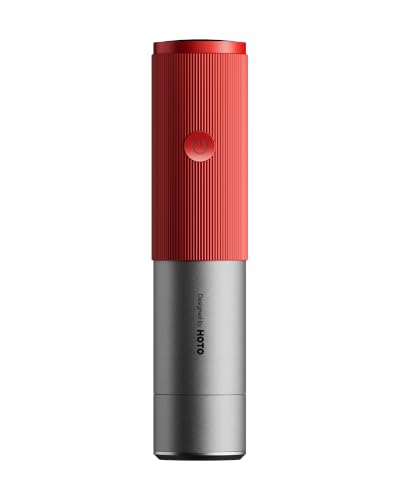
HOTO built its name on tidy, minimal tools, and its handheld sealer follows the same script: the verified listing describes a portable, cordless, one-touch machine bundled with 30 reusable bags in three sizes. The three-size bag set is the detail that matters — most kits include one bag size and leave you folding, overfilling, or wasting space, while a small/medium/large spread matches the way food actually varies, from a knob of ginger to a family pack of chicken thighs. One-touch operation keeps the learning curve at zero: seat the pump on the valve, press, and the machine stops when the air is out. It suits small kitchens, dorm and RV cooking, travel with coffee or snacks that must stay fresh, and anyone whose storage space is a single drawer. It is not the pick for shoppers who want a marinating program or a glass-container ecosystem; HOTO’s machine is deliberately a bag pump and nothing more, executed cleanly.
Strengths
- 30 reusable bags in three sizes included — the most flexible bag bundle in this guide
- Cordless and genuinely portable: sized for drawers, RV galleys, and travel kits, not counters
- One-touch automatic operation makes it the easiest pick here for non-technical users
Trade-offs
- Bags-only system: no container or marinating pathway like the FoodSaver FS2160 or ZWILLING pump
- Brand-specific bags mean replacement supply depends on one smaller brand’s catalog
- Compact pumps trade some vacuum depth for size — fridge and short freezer holds are its home ground
Key specs (from the verified listing)
- Type: True handheld vacuum pump (no heat-seal bar)
- Power: Cordless, portable (per listing)
- In the box: Sealer plus 30 reusable vacuum bags in 3 sizes
- Operation: One-touch
The HOTO is the pick that understands sealing as a small, frequent act rather than a project. Its bags-in-three-sizes bundle quietly fixes the most common annoyance of the format, and its one-touch cycle removes the last excuse not to seal the half onion, the open coffee, or the leftover rice before they dry out. In an RV or a studio kitchen, where a countertop sealer is simply not happening, it may be the only vacuum sealing that ever occurs — and imperfect vacuum used daily beats perfect vacuum that lives in a box. Judge it as that tool: a portable freshness keeper for bags, excellent within its lane, with no ambitions toward marinades, containers, or bulk freezer season. Shoppers who need those things have two FoodSavers and a ZWILLING above to choose from.
Best for: small kitchens, RV and travel use, and anyone who wants one-touch bag sealing with sized bags included / Not suited for: marinating, container storage, or long-term freezer archiving

FoodSaver FreshSaver Handheld Sealing System — Best Simple Zipper-Bag Sealer
The FreshSaver is the elder of this category — the handheld that taught a generation of shoppers the zip-bag-and-valve routine — and its verified listing still describes exactly that: a handheld sealing system, in red, built around FoodSaver’s reusable vacuum zipper bags. There is no dock ecosystem to manage, no marinating program to learn, and no container range to buy into; there is a pump, a valve, and bags that zip. That simplicity is precisely its remaining case. It suits shoppers who keep a narrow, predictable sealing routine — cheese, deli meats, sliced fruit, the open bag of nuts — and who value a mature product with a long-established bag supply over newer features. It also suits as a second pump: one for the house, one for the cabin or the camper, at a complexity level any family member can operate without instruction. Newer FoodSaver models out-feature it, and this guide’s Best Overall pick is the better single purchase for most people; the FreshSaver’s badge is for doing one simple job the same way it has always been done.
Strengths
- The simplest routine in the guide: zip the bag, seat the pump, done — nothing to configure
- Mature product with a long-established, easy-to-restock supply of FoodSaver zipper bags
- Compact handheld size stores anywhere and travels between kitchen, cabin, and camper easily
Trade-offs
- Feature set is dated beside the Mini: no charging-dock convenience story and no marinate setting
- Zipper bags only — no container pathway and no heat-seal option for long freezer storage
- As the oldest design here, it lacks the polish and one-touch automation of the newest pumps
Key specs (from the verified listing)
- Type: True handheld vacuum pump for zipper bags
- Bag system: FoodSaver reusable vacuum zipper bags with valve
- Listing focus: Handheld sealing system for everyday fridge storage
- Color: Red (per listing)
There is a real virtue in a tool that has stopped changing. The FreshSaver’s bags are stocked everywhere FoodSaver products are sold, its operation can be taught in one sentence, and its failure modes are known and boring: a worn zipper track, a tired valve, a bag that has been washed once too often. Replace the bag and the system works again. Against the Mini, it loses on convenience theatre — the dock, the marinate mode — and against Chef Preserve and HOTO it loses on what is in the box. What it wins is predictability, and for the shopper whose sealing life is a short list of fridge staples repeated weekly, predictability is not a consolation prize; it is the product. Buy the Mini if you want the best handheld FoodSaver makes now; buy the FreshSaver if you want the one that simply seals zipper bags, full stop.
Best for: simple, repetitive fridge sealing and second-pump duty at home or cabin / Not suited for: buyers who want marinating, containers, a dock, or the newest one-touch automation
Comparison Table
| Pick | Badge | Key spec | Best for |
|---|---|---|---|
| FoodSaver Mini Handheld | Best Overall | Cordless pump, charging dock, marinate setting | Everyday fridge and meal-prep sealing |
| FoodSaver FS2160 Multi-Use | Best for Marinating | Handheld pump and marinator, bag + container jobs | Vacuum marinating and multi-use storage |
| ZWILLING Fresh & Save Pump | Best Premium System | Pump only; bags and glass containers in one system | Container-first, design-led kitchens |
| Chef Preserve Compact | Best Complete Kit | Handheld pump with 30 reusable bags included | First-time buyers who want a working kit day one |
| HOTO Handheld | Best for Travel and Small Kitchens | Cordless one-touch pump, 30 bags in 3 sizes | Small kitchens, RVs, travel, dorms |
| FoodSaver FreshSaver | Best Simple Zipper-Bag Sealer | Classic handheld pump for zipper bags | Simple weekly fridge sealing |
Read the table by ecosystem first and features second. The pump is the cheap part of any handheld system; the bags and containers you will buy for years are the real commitment, and the table’s middle column is really describing which ongoing purchases each badge signs you up for.
Handheld Pumps vs Mini Countertop Sealers: the Difference That Decides Everything
Because both product types are small and both get advertised with the word “handheld,” it is worth spelling out the mechanical difference once, clearly. A handheld pump never touches the bag’s opening. It presses onto a one-way valve built into the bag’s wall or a container’s lid, pulls air out through that valve, and leaves the bag’s own zip closure to hold the result. Nothing is melted, nothing is cut, and the same bag can be opened, partly used, and evacuated again a dozen times — which is why handheld systems are built around reusable bags and why they excel at the open-seal-reopen rhythm of fridge life. A mini countertop sealer works like its full-size relatives: you lay the open end of a textured channel bag across a seal bar, the machine vacuums and then heats a wire that melts the plastic into a permanent seam. That seam is stronger and longer-lived than any zip, which is why edge sealers own long freezer storage — but the bag is consumed in the act, the machine needs flat counter space and a power outlet, and resealing means cutting the seam off and spending more bag. The third category, chamber machines, evacuates an entire chamber and seals bags of liquid flat, and belongs to yet another guide. So the decision tree is simple: repeated small fridge jobs point to a handheld pump; batch freezer jobs point to an edge sealer, mini or full-size; liquids and volume point to a chamber. Shoppers who buy across that tree — a pump expecting heat-seal longevity, or an edge sealer expecting to reseal the cheese nightly — are the ones who leave disappointed reviews of perfectly good machines.
How to Choose a Handheld Vacuum Sealer
Start with the distinction this guide opened with, because it decides everything else. A true handheld vacuum sealer is a pump: it removes air through a valve in a reusable zip bag or a port on a rigid container, and the closure — zip, lid, valve — holds the result. A mini countertop sealer is an edge sealer in a smaller coat: it needs textured bags and melts a seam. Mini edge sealers produce longer-lasting seals and handle standard roll bags; handheld pumps produce unmatched convenience and reusable bags. Neither is “better” in the abstract. Choose the pump if your sealing is small, frequent, and fridge-centered; choose a small edge sealer if your sealing is freezer-centered and batch-based; choose a full countertop machine if you do both at volume.
Match the pump to its bag system
Every handheld is married to its bags. FoodSaver pumps evacuate FoodSaver valve bags; the ZWILLING pump evacuates Fresh & Save bags and containers; Chef Preserve and HOTO evacuate their own included reusable bags. Before falling for a pump, price and locate its replacement bags — qualitatively, is the bag a common, stocked item or a specialty order? — and check the sizes on offer against the food you actually store. A household sealing family packs of meat needs large bags; a household sealing cheese and herbs needs small ones and will waste money and plastic on a large-only range. Reusable bags also need washing and thorough drying between uses, which is a real, if small, chore that single-use roll bags never ask of you.
Power, docks, and where the pump will live
Cordless pumps with docks, like the FoodSaver Mini, trade a slice of counter or cabinet space for permanent readiness. Bare cordless pumps, like the HOTO, trade that readiness for true drawer portability. Decide where the pump will live before you buy: a pump that lives in a drawer gets used for big jobs and forgotten for small ones, while a pump that lives charged on the counter gets used for everything. For RVs, boats, and second homes, portability wins; for a primary kitchen, the dock usually wins.
Containers and marinating: the second job
The best reason to pay more for a handheld is the second job. Vacuum marinating genuinely shortens marinade time and is something no edge sealer can do in a dish. Rigid vacuum containers genuinely change fridge storage — leftovers, cut produce, and berries keep visibly better under vacuum in a box you can see into. If neither appeals, save the money: a simple bag pump like the HOTO or FreshSaver does the core job completely.
What handhelds cannot do
No handheld heat-seals, so no handheld is right for liquids sealed flat, for wide bags, for sous vide cooks longer than a day where a failed zip is a ruined dinner, or for freezer storage measured in seasons. Suction figures quoted for handhelds are also not comparable to countertop specifications in any simple way, because the seal that matters is the bag’s closure, not the pump’s peak vacuum. Buy the handheld for the fridge and the short freezer stay, and let it be excellent at that.
How to Use a Handheld Vacuum Sealer
Fill the bag sensibly first: leave headroom below the zip closure, keep the valve area and the zip track clean and dry, and never fill past the line the bag’s design implies — food or liquid on the valve is the leading cause of weak seals. Zip the bag fully, running a finger along the track twice, because a zip that looks closed and is not will defeat any pump. Seat the pump squarely on the valve so its cup covers the valve completely, then run the cycle until the pump stops or the bag is drawn tight and wrinkle-free around the food; a bag that still billows has a leak at the zip, the valve, or a fold, and re-seating beats re-running. For containers, check the lid gasket is seated and the valve is clean before evacuating, and release the vacuum with the valve or tab before forcing a lid — vacuum containers opened by force age quickly. After use, wash reusable bags in warm soapy water, dry them fully inside and out before storing, and inspect valves and zips; a bag that will not hold vacuum overnight in the fridge has reached the end of its life and should be retired, not trusted with good food. Finally, label bags with contents and date: vacuum removes the visual cues of age, and a tidy freezer of anonymous bags is a food-waste machine of a different kind.
Using the marinate cycle well
On pumps with a marinate setting, like the FoodSaver Mini and the FS2160, the machine alternates vacuum and rest so the food is repeatedly squeezed and released in its marinade. Use a container or a bag filled conservatively — marinade expands its reach under vacuum and will climb toward the valve if the bag is crowded — and keep the food fully coated before the cycle starts, because vacuum distributes marinade that is already touching the surface; it does not move marinade across a dry gap. Delicate items such as fish fillets need a gentler hand: shorten the cycle, and never run a full cycle on soft fruit or mushrooms you intend to serve raw, which vacuum will bruise. When the cycle ends, the food can go straight to the pan or rest in the fridge; either way, treat marinade that touched raw protein as raw itself and discard it rather than reusing it as a sauce unless it is boiled first.
Keeping Bags, Valves, and Pumps Working
A handheld system has three wear points, and all three are cheap to respect and annoying to ignore. The zip track fails first: crumbs, fat, and moisture in the track prevent a full closure, so wipe the track before zipping and run the closure twice as a habit. The valve fails second: it is a small one-way door, and dried marinade or cheese fat on it leaks slowly and silently, which is why a bag that was tight at dinner is soft by morning. Keep food below the valve, wipe the valve area before sealing, and if a bag repeatedly relaxes, retire it rather than re-running the pump harder. The pump itself fails last and usually through its seal cup or a tired battery: keep the cup clean, store cordless pumps charged rather than flat — the dock designs exist partly for this reason — and never use the pump to pull liquid, which coats internals no cleaning routine reaches. Bags themselves are consumables with a lifespan measured in dozens of uses, not hundreds; budget for periodic replacement the way you budget for sponge refills, and the system will feel permanently new. Bought with that expectation, a handheld kit’s running cost stays modest; bought expecting the bags to last forever, the same kit feels like a subscription you never agreed to.
Common Buying Mistakes
The first mistake is buying a mini edge sealer believing it is a handheld pump, or the reverse — read the product type, not the headline adjective. The second is buying a pump-only listing, like the ZWILLING in this guide, without budgeting for the bags or containers that make it useful. The third is judging by suction numbers: in a zip-bag system the closure is the weak point, so a stronger pump cannot rescue a worn bag. The fourth is expecting freezer-archival performance from reusable zip bags and blaming the pump when a three-month-old bag has relaxed; that job belongs to heat seals. The fifth is ignoring bag supply: the cheapest pump with unobtainable bags is the most expensive pump you will ever own. The sixth is sealing wet food carelessly — liquid drawn into a valve fouls it, weakens the seal, and shortens bag life; pat food dry, or freeze liquids in a container first. The seventh is skipping the label and date, because vacuum-stored food outlasts your memory of putting it there.
Final Recommendation
For most kitchens, buy the FoodSaver Mini: it is cordless, docked, marinade-capable, and backed by the easiest bag supply in the category. If marinating is a weekly ritual, the FS2160 is the more capable cook’s tool. If your fridge runs on glass containers and you are building a system to keep, the ZWILLING Fresh & Save pump is the premium answer — bought with its bags and boxes in mind. If you want everything in one box, choose between Chef Preserve’s 30-bag kit and HOTO’s 30 bags in three sizes, the latter winning for travel and small spaces. If you want the simplest possible routine, the FreshSaver still does it. And when your sealing outgrows handhelds entirely, step up deliberately: see our guides to Best Heavy Duty Vacuum Food Sealers, Best Chamber Vacuum Sealers, and Best Food Vacuum Sealers for the countertop end of the category, Best Portable Vacuum Sealers for travel-oriented alternatives, and Best Foodsaver Vacuum Sealers for the full FoodSaver range.
Related guides
Frequently Asked Questions
Can a handheld vacuum sealer replace a countertop machine?
For fridge storage and short freezer stays of small items, yes — and it will probably get used more. For bulk packing, liquids, wide bags, and freezer storage measured in months, no: those jobs need a heat seal only a countertop or chamber machine makes.
Are the reusable bags really reusable?
Yes, within limits. Wash them in warm soapy water, dry them completely, and retire any bag whose zip or valve no longer holds vacuum. Avoid reusing bags that held raw meat or fish for other foods unless they have been thoroughly washed and dried, and when in doubt, retire the bag — bags are the consumable of this system.
Do handheld sealers work with any zip bag?
No. The pump needs a one-way valve to pull air through, so only bags designed for the system — with a valve in the bag wall — can be evacuated. Ordinary zip bags have no valve and cannot be vacuum sealed by a handheld pump.
Can I vacuum seal liquids with a handheld?
Soups and sauces belong in rigid vacuum containers, where the liquid stays below the valve, or in a chamber machine. In a zip bag, liquid migrates to the valve and the zip, fouls both, and ruins the seal. Marinades work because the FS2160-style cycle is designed around a container or a carefully filled bag with headroom.
How long does vacuum-sealed food keep with a handheld?
Longer than the same food in a plain container or wrap — vacuum slows oxidation and drying — but shorter than a heat-sealed bag from a countertop machine, because zip closures relax over time. Treat handheld sealing as a days-to-weeks technology in the fridge and a weeks-scale technology in the freezer, and always label and date what you seal.
Which handheld is best for sous vide?
For short cooks with bags rated for it, the FoodSaver Mini and the ZWILLING system (whose bag range includes sous-vide-rated reusable bags) are the sensible handheld choices. For long or high-temperature cooks, a heat-sealed bag from a countertop machine is the safer tool, because a zip failure mid-cook ruins the meal.


