Disclosure: airfryerkitchensupply.com is reader-supported. When you buy through links on our site, we may earn an affiliate commission at no extra cost to you.
Where to buy
Every pick below for the best vacuum sealers for wild game is a verified, live Amazon listing matched to the exact model described. Sealers divide into external (edge) machines and chamber machines, and bags and rolls differ by type — confirm bag compatibility on the listing before ordering, especially for chamber models. Prices vary widely across this category and change often, so each pick links to the live listing instead of quoting a figure.
- VacMaster VP210 Chamber Vacuum Sealer — the chamber flagship — a maintenance-free commercial chamber machine that seals liquids, marinades, and a season’s game without breaking stride.
- Weston Pro-2300 Vacuum Sealer (65-0220-W) — the wide-bar workhorse — an extra-wide 5mm seal bar for bags up to 15 inches, a 1020-watt fan-cooled motor, in stainless steel.
- FoodSaver Elite All-in-One Liquid+ Vacuum Sealer — the liquid-capable FoodSaver — an all-in-one external machine with a Liquid+ mode for soups, sauces, and marinated meat, and six custom settings.
- Weston Professional Advantage Vacuum Sealer (65-0501-W) — the mid-tier Weston — an 11-inch stainless and black sealer from the game-processing brand, at a friendlier tier than the Pro-2300.
- Nesco Deluxe Vacuum Sealer (VS-12) — the controlled value pick — a 130-watt sealer with a viewing lid and kit bags included, compact enough for any kitchen.
- FoodSaver FM2100 Vacuum Sealer Machine — the household standard — one-touch sealing with built-in roll storage and cutter, dry and moist modes, and an accessory port with hose.
The best vacuum sealers for wild game are chosen under a pressure no other kitchen category feels: the animal is already harvested, the meat is already cut, and whatever you seal tonight decides what your family eats in eight months. Game meat is lean, precious, and unforgiving of freezer burn — a whiff of air left in a bag becomes a gray, dried patch on a venison loin by spring. The six verified picks below span the two technologies that handle this work: heavy-duty external sealers with wide bars and fan-cooled motors for long sessions, and a true chamber sealer for hunters who process whole seasons and liquids like marinades and ground meat in sauce.
Game processing imposes three demands ordinary sealing does not. First, session length: a deer becomes thirty to sixty bags in an afternoon, and a sealer that overheats and rests every few bags turns processing day into processing weekend — fan-cooled motors and duty cycle matter here more than any other feature. Second, bag width: backstraps, roasts, and whole fish fillets need 11- to 15-inch sealing capacity, not the snack-size bars of countertop convenience models. Third, moisture: game is often sealed damp, with marinade, or as ground meat, and the machine must handle wet sealing without sucking liquid into the pump or failing the seal.
The picks below were verified as current listings and chosen against those three demands. There is a chamber flagship for the serious processor, two Weston machines from the game-processing world, and three FoodSaver and Nesco options at friendlier tiers for hunters who process a deer or two a year. Read by your harvest volume: the right sealer is the one whose duty cycle matches your biggest processing day, not your average one.
In this guide
Quick Picks
Six verified sealers for game work: one chamber machine, two wide-bar Weston workhorses, and three accessible external sealers.
- Best Chamber Sealer: VacMaster VP210 Chamber Vacuum Sealer — the serious processor’s machine — chamber sealing ends the duty-cycle and liquid problems entirely.
- Best Wide-Bar External: Weston Pro-2300 Vacuum Sealer (65-0220-W) — for whole backstraps and long roasts — the widest sealing capacity in this roundup, built for long sessions.
- Best for Wet and Marinated Game: FoodSaver Elite All-in-One Liquid+ Vacuum Sealer — for marinade hunters — an external sealer that genuinely handles wet game and liquids.
- Best Mid-Tier Game Sealer: Weston Professional Advantage Vacuum Sealer (65-0501-W) — Weston credibility without the flagship price — the one-to-two deer a year machine.
- Best Value with Control: Nesco Deluxe Vacuum Sealer (VS-12) — the thoughtful budget option — see your seal through the viewing lid and start with bags in the box.
- Best Accessible All-Rounder: FoodSaver FM2100 Vacuum Sealer Machine — the easiest entry into game sealing — roll storage in the machine and the brand’s full bag ecosystem behind it.
How These Picks Were Chosen
Every sealer here was cross-checked against Amazon’s live catalog: searched by brand and model, matched against the returned listing title, and recorded only on a certain match. Catalog prices were used only to place picks into honest tiers and are never printed. Chamber and external machines were verified as the types they claim to be — a distinction marketing often blurs, and one that decides what bags you buy and what foods you can seal.
Picks were judged on the game-processing brief: seal bar width (11 inches minimum, 15 preferred), motor cooling for back-to-back sealing, a moist-food mode or chamber design for wet work, and manual pulse control for delicate items. Brand ecosystems mattered too — bag and roll availability, accessory ports for canisters and jar sealing — because a sealer is a system you feed for years. We deliberately included one chamber machine, because for high-volume game work it is not a luxury but the correct technology, and its review explains exactly who should pay for it.
One scope note: this guide covers sealing for storage — freezers, sous vide, and marinades. Vacuum sealing is not canning and does not make game shelf-stable; sealed game belongs in the freezer, and the how-to section covers the labeling and rotation habits that make a freezer full of game a pleasure rather than an archaeology project.
Excluded from this roundup: handheld zipper-bag sealers and their proprietary bags, which are refrigerator-convenience tools that cannot do freezer-season work; no-name wide-bar machines whose session claims could not be verified; and canning equipment, which is a different preservation science entirely and should never be conflated with vacuum sealing. Also excluded were several competent kitchen sealers whose bars, motors, and moist performance are simply aimed at weekly leftovers rather than harvest volume — good machines, wrong brief. The six above were each verified as the model their listing claims, and each was chosen because its bar width, duty cycle, or liquid handling answers a demand that wild game specifically makes. A sealer bought for game will serve the kitchen all year; the reverse is not always true, which is why this guide grades on the harder brief.
The 6 Best Vacuum Sealers for Wild Game

VacMaster VP210 Chamber Vacuum Sealer — Best Chamber Sealer
The VP210 is the machine experienced game processors graduate to, and the reason is the chamber. Instead of sucking air out of a textured bag through a nozzle — the external method, with its overheating motors and liquid-in-the-pump failures — a chamber sealer places the whole bag inside a chamber, evacuates the air from the entire space, and seals while pressures equalize. Liquids stay in the bag. Marinades stay on the meat. Ground venison in sauce, duck breasts in brine, soups and stews for camp — all seal perfectly, at a vacuum level external machines cannot match, bag after bag without a cooling rest.
For wild game specifically, the economics compound. Chamber bags are smooth, simple, and dramatically cheaper per bag than the textured rolls external sealers require, so a hunter sealing two hundred bags a season saves real money every year after the machine. The VP210’s maintenance-free dry-piston pump removes the oil changes of commercial chamber machines, and its 10.25-inch seal bar takes bags up to 10 by 13 inches — the working size for roasts, loin sections, and family packs of ground meat.
The costs are the purchase itself, the weight, and the chamber’s fixed geometry: a cut longer than the chamber cannot be sealed in one piece, which is why some processors own this and a wide external machine. For the hunter who processes multiple animals a season, makes sausage and marinades, and is tired of babying a consumer sealer through processing day, the VP210 is not the expensive option. It is the last sealer purchase, and this guide’s top recommendation for serious game work.
Strengths
- Chamber sealing handles liquids and marinades that defeat external sealers
- No duty-cycle drama — seal bag after bag through a whole harvest
- Chamber bags cost a fraction of textured external bags over a season
Trade-offs
- A serious purchase and a heavy, countertop-committed machine
- Chamber size caps the largest cuts — very long items may need the Weston instead
- Overkill for a hunter who seals a dozen bags a year
| Type | Chamber vacuum sealer |
| Seal bar | 10.25 inches — for bags up to 10 x 13 inches |
| Pump | Maintenance-free (dry piston) |
| From listing | Seals liquids, marinades, and sous vide portions |
Best for: high-volume hunters, sausage and marinade makers, multi-animal seasons / Not suited for: occasional sealers or the very longest whole cuts
Check the current price on Amazon

Weston Pro-2300 Vacuum Sealer (65-0220-W) — Best Wide-Bar External
The Pro-2300 is Weston’s answer to the two failures that end processing days: bags too narrow for the cut, and a motor too hot to continue. Its extra-wide seal bar takes bags up to 15 inches across — whole venison backstraps, pork loins, large roasts, and whole fish that simply do not fit an 11-inch machine — and lays down a 5mm seal, a wide seam that inspires confidence for the nine-month freezer stays game meat makes. Behind the bar sits a 1020-watt motor with fan cooling, the specification that separates session machines from snack machines: it is designed to seal consecutively through a harvest, not to rest between bags.
Weston’s game-processing heritage shows in the priorities. This is a stainless, countertop-committed tool built for the annual rhythm of hunting households — quiet competence in October, a wiped-down shelf the rest of the year, and parts and bag support from a company whose customers process animals for a living-adjacent hobby. For sous vide cooks it doubles as a wide-format precision-cooking sealer, and for anglers it is the machine that seals a whole fillet without folding it.
It asks for counter space, a premium-tier budget, and the ongoing cost of textured bags, which exceed chamber bag prices over heavy seasons — the arithmetic that pushes the highest-volume processors toward the VP210. For everyone below that volume who needs width and stamina in an external machine, the Pro-2300 is the strongest pick in this guide and the benchmark for its class.
Strengths
- 15-inch capacity seals whole loins, roasts, and fillets other machines cannot
- Fan-cooled motor is built for back-to-back processing-day sessions
- 5mm seal is a wide, confidence-inspiring seam for long freezer storage
Trade-offs
- A large, heavy machine that wants a dedicated spot
- Premium tier among external sealers
- Uses textured external bags, which cost more per bag than chamber bags
| Seal bar | Extra-wide 5mm bar — bags up to 15 inches wide |
| Motor | 1020 watts, fan-cooled |
| Body | Stainless steel |
| Model | 65-0220-W |
Best for: hunters sealing long cuts and full processing days / Not suited for: small kitchens or chamber-bag economics seekers
Check the current price on Amazon

FoodSaver Elite All-in-One Liquid+ Vacuum Sealer — Best for Wet and Marinated Game
Marinated game is where external sealers traditionally embarrass themselves: the vacuum pulls marinade toward the seal, the seal fails wet, and the bag quietly admits air in the freezer. FoodSaver’s Elite Liquid+ is engineered directly at that failure. Its Liquid+ mode is designed to seal liquids — soups, sauces, and by extension the marinated venison, duck in brine, and ground meat preparations that game cooks actually make — within the external format, and its six custom settings let you soften the vacuum for delicate fish and berries or commit fully for dense roasts.
Around that headline, it is FoodSaver’s flagship all-in-one: the category’s deepest ecosystem of bags, rolls, containers, and accessories, one-touch familiarity for anyone who has used the brand, and the convenience features that make a sealer get used weekly rather than seasonally. For the hunter whose game cooking leans on marinades — wild turkey in buttermilk, venison in wine, goose in brine — this is the external machine that treats that cooking as normal.
The chamber VP210 still out-seals it on pure liquids and outlasts it on marathon sessions, and its price sits at the top of its brand’s range. But as the single machine for a household that seals game, leftovers, sous vide, and the weekly shop in one footprint, the Elite Liquid+ is the most versatile external pick in this roundup.
Strengths
- Liquid+ mode tackles the marinade problem that stops ordinary external sealers
- Six custom settings adapt vacuum strength to delicate and sturdy foods alike
- FoodSaver’s bag and accessory ecosystem is the deepest in the category
Trade-offs
- External format still has session limits the chamber machine does not
- Feature-rich controls are more than dry-goods sealers need
- Premium tier within the FoodSaver range
| Type | External (edge) sealer, all-in-one |
| Standout mode | Liquid+ — seals liquids like soups and sauces |
| Settings | 6 custom sealing settings |
| From listing | Keeps food fresh up to 5x longer |
Best for: marinade-heavy game cooks and versatile household sealing / Not suited for: marathon processing days or chamber-bag budgets
Check the current price on Amazon
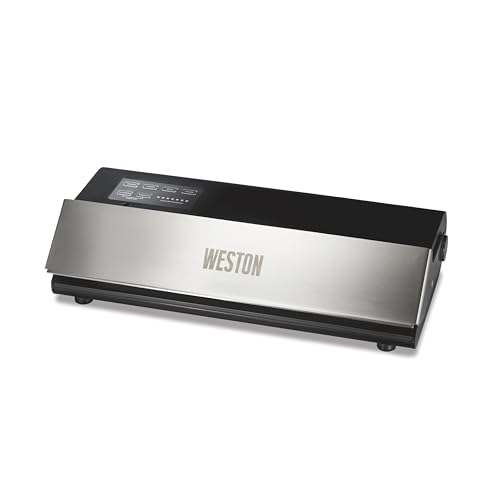
Weston Professional Advantage Vacuum Sealer (65-0501-W) — Best Mid-Tier Game Sealer
The Professional Advantage is the Weston for the hunter who processes a deer or two a season rather than a camp’s worth. It brings the brand’s game-world priorities — an honest 11-inch seal bar, a stainless and black body that belongs on a processing bench, and construction aimed at seasonal heavy use rather than daily light use — at a tier well below the wide-bar flagship. For standard cuts, portioned backstrap medallions, ground meat in family packs, and the general freezer work of a hunting household, 11 inches is the size that covers nearly everything.
Its character is tool-like in the good sense: straightforward operation, a seal you can trust across a winter, and a brand behind it that sells bags, rolls, and parts to people who process animals every year. Households graduating from a bargain sealer that overheated through their first deer will recognize this as the machine they were looking for — the step from consumer appliance to processing equipment, without the flagship’s price or footprint.
The boundaries are width and stamina. Whole long loins must be portioned to fit 11 inches, and a multi-animal processing day will ask for the patience the Pro-2300’s fan-cooled motor was built to avoid. Within its brief — a season or two of deer, the freezer restocked, the machine wiped down and shelved — the Professional Advantage is the mid-tier pick this guide recommends without hesitation.
Strengths
- Weston’s processing-world build and support at a mid tier
- 11-inch bar covers standard cuts, ground meat, and family packs
- Stainless-front design suits a permanent counter or processing bench
Trade-offs
- 11 inches will not take the longest whole loins — cut them or step up
- Session stamina is good, not Pro-2300 fan-cooled good
- Fewer convenience settings than the FoodSaver flagship
| Seal bar | 11 inches |
| Body | Stainless steel and black |
| Model | 65-0501-W |
| Brand focus | Game and harvest processing |
Best for: hunters processing one or two animals a season / Not suited for: whole-loin sealers or multi-animal processing days
Check the current price on Amazon

Nesco Deluxe Vacuum Sealer (VS-12) — Best Value with Control
The Nesco VS-12 earns its place on a feature more expensive machines oddly skip: a viewing lid. Watching the bag sit correctly and the seal form sounds trivial until you have lost a bag of venison to a wrinkled, half-sealed seam discovered in March. The VS-12’s transparent lid turns seal quality into something you verify in the moment, and for a value-tier machine aimed at households sealing a season’s game carefully rather than quickly, that visibility is worth more than wattage.
It arrives ready to work, with kit bags in the box — a small mercy that matters when the deer is already on the table. The 130-watt motor and compact silver body place it honestly: this is a household-duty sealer that handles a deer’s worth of bags with sensible pacing, plus the year-round work of leftovers, bulk buys, and sous vide that justifies its drawer space in the off-season. Nesco is a food-preservation brand of long standing, and the VS-12’s following reflects that competence.
Pace is the caveat to plan around. Back-to-back sealing across a long session should include short rests to protect the seal bar and motor — the discipline this guide’s how-to section builds into processing day. Multi-animal households should step up to the Westons or the chamber machine. For the one-deer household that seals carefully and cooks all year, the VS-12 is the value pick with its eyes open.
Strengths
- Viewing lid lets you watch bag alignment and seal formation — fewer failed seals
- Kit bags in the box mean processing can start the day it arrives
- Compact body stores where session machines cannot
Trade-offs
- 130 watts is a household-duty motor — pace long sessions with rests
- Standard width only; long cuts need portioning
- Compact format means fewer pro-session features
| Power | 130 watts |
| Design | Viewing lid, compact body |
| Included | Kit bags |
| Finish | Silver |
Best for: one-deer households, careful sealers, and year-round kitchen use / Not suited for: marathon sessions or wide cuts
Check the current price on Amazon

FoodSaver FM2100 Vacuum Sealer Machine — Best Accessible All-Rounder
The FM2100 is the sealer most households actually start with, and for game it is a better starting point than its friendly positioning suggests. The built-in roll storage and cutter matter on processing day more than any electronic feature: custom-length bags, cut to the cut of meat in front of you, with the roll living inside the machine instead of rolling off the counter. One-touch operation keeps the rhythm going, and the moist food mode — designed for damp foods — is the setting that game, which rarely reaches the sealer bone-dry, genuinely needs.
The accessory port and hose extend it beyond bags: canisters for the pantry, jar sealing for dry goods, and marinating containers that use vacuum to pull marinade into meat in minutes rather than hours — a trick game cooks use constantly on tougher cuts. Starter bags are in the box, and behind the machine stands the deepest bag and roll ecosystem in the category, available everywhere, forever. As an ownership proposition for a first sealer, that ecosystem is the argument.
Its ceiling is the consumer duty cycle: a full processing day asks for pacing and short rests, and the standard bar width portions the longest loins. Hunters who discover they process more than expected graduate to the Westons or the VacMaster — and commonly keep the FM2100 as the kitchen’s everyday sealer when they do. As the accessible, ecosystem-backed entry to game sealing, it earns its place in this roundup outright.
Strengths
- Roll storage and cutter in the machine — custom bag sizes without a separate roll hunt
- Moist mode handles damp game and marinated items better than basic sealers
- Accessory port opens the door to canisters, jars, and marinating containers
Trade-offs
- Consumer duty cycle — long game sessions need pacing
- Standard width; portion the longest cuts
- Not a liquids machine — that is the Liquid+ and chamber picks’ territory
| Operation | One-touch sealing |
| Storage | Built-in roll storage and cutter |
| Modes | Dry and moist food settings |
| Accessories | Accessory port and hose, starter bags included |
Best for: first sealers, mixed household and game use, marinade-container fans / Not suited for: unpaced marathon sessions or whole long cuts
Check the current price on Amazon
Comparison Table
| Pick | Badge | Key spec | Best for |
|---|---|---|---|
| VacMaster VP210 Chamber Vacuum Sealer | Best Chamber Sealer | Chamber design, 10.25-inch seal bar, maintenance-free pump | high-volume hunters, sausage and marinade makers, multi-animal seasons |
| Weston Pro-2300 Vacuum Sealer (65-0220-W) | Best Wide-Bar External | 15-inch bag capacity, 5mm seal, fan-cooled 1020W motor | hunters sealing long cuts and full processing days |
| FoodSaver Elite All-in-One Liquid+ Vacuum Sealer | Best for Wet and Marinated Game | Liquid+ sealing mode, 6 custom settings | marinade-heavy game cooks and versatile household sealing |
| Weston Professional Advantage Vacuum Sealer (65-0501-W) | Best Mid-Tier Game Sealer | 11-inch seal bar, stainless and black body | hunters processing one or two animals a season |
| Nesco Deluxe Vacuum Sealer (VS-12) | Best Value with Control | 130W, viewing lid, kit bags included | one-deer households, careful sealers, and year-round kitchen use |
| FoodSaver FM2100 Vacuum Sealer Machine | Best Accessible All-Rounder | Roll storage and cutter built in, dry/moist modes, accessory port | first sealers, mixed household and game use, marinade-container fans |
How to Choose the Best Vacuum Sealer for Wild Game
Decide the technology first, because it decides everything downstream. External (edge) sealers pull air from textured bags and suit most households: they are affordable, compact, and — in the wide, fan-cooled Weston form — genuinely capable of processing days. Their limits are liquids (which get sucked toward the seal), duty cycle (motors and seal bars need rests), and bag cost (textured bags and rolls are the pricey consumable). Chamber sealers evacuate a whole chamber instead: liquids and marinades seal perfectly, sessions run without rest, and smooth chamber bags cost far less per bag — at a machine price and size that only make sense for real volume. The crossover is honest arithmetic: count your bags per season, and if the number runs into the hundreds, the chamber machine’s bag savings and stamina repay it.
Then size the bar to your cuts. Eleven inches covers portioned cuts, ground meat packs, and most roasts — the majority of game sealing. Fifteen inches, the Weston Pro-2300’s territory, covers whole backstraps, loins, and fillets uncut. Chamber machines trade that length for their chamber’s fixed footprint, which fits roasts and family packs but not the longest whole muscles. There is no universal winner; there is the shape of your harvest. A household that portions everything can buy smaller with confidence; a household that freezes whole loins cannot.
Finally, match the duty cycle to your biggest day and check the moisture story. Fan-cooled motors and manufacturer session ratings are the difference between a sealer that finishes the deer and one that rests through it. For wet work, insist on a moist mode at minimum, a liquid mode like the FoodSaver Elite’s at best, or the chamber’s native immunity. And confirm the consumables before the machine: bag sizes you need, roll availability, and per-bag cost over a season. A sealer is a system you feed — choose the system, not just the machine.
Vacuum Sealing Wild Game: Storage Science in Plain Terms
Freezer burn is not cold damage; it is dehydration and oxidation. Air left in a bag lets ice crystals sublime from the meat’s surface and lets oxygen reach the fat and pigments, producing the gray, dry, off-flavored patches every game cook has trimmed away in disappointment. A good vacuum seal attacks both: it removes the air, presses the barrier film against the meat so no air pocket remains, and seals with a seam wide enough to survive months of freezer handling. That is why seal quality — a clean, wide, fully fused seam — matters more to your March venison than any feature on the box, and why this guide favors machines with serious seal bars.
Realistic storage expectations keep the system honest. Properly vacuum-sealed game, kept at a steady deep-freeze temperature, holds excellent quality far longer than wrapped or bagged-with-air meat — venison and other red game commonly a year and beyond, birds and fish somewhat less, ground meat less than whole cuts because its surface area invites oxidation. Vacuum sealing does not stop time, and it does not make meat shelf-stable: sealed game belongs in the freezer, labeled with species, cut, and date, and eaten in rotation. The freezer is a pantry with a slow clock, and the sealer’s job is to slow it further, not stop it.
Two habits multiply the machine’s value. First, seal meat cold and surface-dry where the recipe allows — excess surface moisture is the enemy of both vacuum draw and seal integrity, and a pat dry is the cheapest quality upgrade in the process. Second, freeze delicate items partially before sealing when a strong vacuum would crush or deform them. Processors who adopt the chamber machine gain a third option — sealing in marinade, so the meat seasons as it thaws — which is less a storage technique than a cooking one, and a genuine pleasure of the format.
Bags, Rolls, and the True Cost of a Sealing Season
A vacuum sealer’s purchase price is the down payment; its bags are the mortgage. External sealers require textured bags or rolls — the texture channels let air escape as the machine draws vacuum — and that texture is a manufactured feature you pay for on every single bag, forever. Chamber sealers use smooth bags, a simpler product that costs dramatically less per bag in the sizes game processors use. Run the arithmetic on a realistic season: a household sealing two deer, a pig share, and a year of bulk buys might use two hundred bags. At external-bag prices that consumable bill is a significant fraction of a mid-tier machine, every year; at chamber-bag prices it is a rounding error. This is the math that moves high-volume processors to chamber machines even when an external sealer would technically do the work.
Rolls deserve their own word, because for game they are often the smarter external format. A roll lets you cut a bag to the cut — long for a loin section, short for a pack of chops — eliminating the waste of fixed sizes and the failure of almost-fitting bags. The FoodSaver FM2100’s built-in roll storage and cutter exist precisely for this workflow. Whichever format you use, buy bags rated for freezer and, if you sous vide, for cooking temperatures, and treat bargain no-name bags with suspicion: a bag that micro-leaks is not a saving but a delayed loss, discovered at the meat’s expense.
Storage of the bags themselves closes the loop. Keep rolls and bags flat, dry, and out of the freezer’s door traffic; a creased bag mouth is a future failed seal. Processors who label the bag before filling — marker on the label area while it is flat and empty — write more legibly and forget less than those labeling a cold, filled bag at the end of a long day. The consumables are unglamorous, and they are where sealing seasons are actually won.
From Field to Freezer: Where Sealing Fits in Game Processing
A vacuum sealer is the last station of a chain that begins in the field, and its results are capped by everything upstream. Properly cooled, cleanly butchered game, cut into meal-size portions and chilled before sealing, freezes into the kind of inventory that makes a hunting household eat well all year. The sealer’s contribution is specific and crucial: it removes the air that would otherwise spend the winter drying and oxidizing the surface of that careful work. Hunters who have eaten a poorly wrapped loin in April and a well-sealed one side by side do not need the science explained twice — the difference is the difference between game as a chore and game as a privilege.
The processing-day workflow this guide’s how-to describes — portion, chill, dry, seal, inspect, label, freeze flat — is designed around the sealer as one station among several, with trimming and grinding upstream and the freezer downstream. Households that grind will find the two machines of this program’s guides working as a pair: the grinder turns trim into burger and sausage meat, the sealer turns it into dated, flat, stackable inventory. Sausage in particular rewards the pairing, since ground meat’s surface area makes it the most oxidation-prone product in the freezer and therefore the greatest beneficiary of a true vacuum.
Finally, the freezer itself is part of the system. Seal quality cannot rescue a warm, cycling freezer, and the best-sealed game deserves a steady deep freeze, an honest rotation — oldest eaten first, which labels make possible — and the discipline of the flat freeze before filing. Do those things and the sealer you chose from this guide will repay you at the table for years, one unremarkable, perfectly preserved package at a time. That unremarkableness is the trophy.
How to Vacuum Seal Wild Game for the Freezer, Step by Step
Processing day runs smoothly when sealing is treated as a station, not an afterthought. These steps work with every pick in this roundup, external or chamber.
- Portion before you seal. Cut game into meal-size portions for your household — a roast for four, medallions for two, ground meat in one- or two-pound packs — because a sealed bag is opened once and its contents are dinner.
- Chill and pat dry. Cold meat seals better and freezes faster. Pat surfaces dry with clean towels; excess moisture is drawn toward the seal on external machines and weakens seams.
- Size bags generously. Leave several inches of headroom above the meat on external bags so the seal area stays clean and flat; on chamber bags, center the portion with the open end flat across the seal bar.
- Keep the seal zone clean. Wipe any moisture or fat from the inside of the bag’s mouth before sealing — a contaminated seal area is the number one cause of seams that fail quietly in the freezer.
- Seal, then inspect every seam. Hold each finished bag up: the seam should be a continuous, even band with no channels or wrinkles, and the bag should hug the meat with no air pockets. Reseal any bag that fails inspection — now, not in March.
- Label everything, without exception: species, cut, weight, and date, in marker on the bag’s label area. Freeze bags flat in a single layer until solid, then file them upright like books — flat freezing is faster, and a filed freezer rotates honestly.
One rhythm protects both the meat and the machine on external sealers: work in batches and let the sealer rest briefly between groups of bags, especially on long days. The fan-cooled Weston stretches that rhythm furthest; the chamber machine removes it entirely. Either way, a processing day run at a steady, inspected pace produces a freezer that gives back exactly what you put into it — which, after a season in the field, is the whole point.
A final habit separates good freezers from great ones: the inventory list. A simple note — on the freezer door or in a phone — recording what went in and when turns the labeling discipline into an actual rotation system, so the oldest packages surface first and nothing becomes a two-year mystery. It takes ten minutes at the end of processing day, when the information is free, and saves real meat over the year. The sealer preserves the game; the list preserves the plan.
Common Buying Mistakes
Sealing with a wet or dirty seal zone. Moisture and fat in the bag’s mouth prevent a full seal, and the failure often appears months later as freezer burn. Wipe the seal area clean and dry on every bag — it takes two seconds and saves the meat.
Buying a narrow sealer for long cuts. An 11-inch bar cannot seal a whole backstrap. Portioning is a valid choice, but make it a choice — measure your typical cuts before choosing between standard, 15-inch, and chamber formats.
Ignoring duty cycle on processing day. Consumer sealers need rests; forcing back-to-back sealing overheats seal bars and motors and produces weak seams exactly when volume peaks. Pace the session, or buy the fan-cooled or chamber machine your volume demands.
Skipping the label. Unlabeled game is mystery meat by spring. Species, cut, weight, and date on every bag turns the freezer into an inventory you can cook from confidently and rotate properly.
Treating vacuum sealing as preservation by itself. Sealed game still belongs in the freezer. Vacuum sealing prevents freezer burn and extends quality; it does not make meat shelf-stable, and room-temperature storage of sealed meat is unsafe.
Final Recommendation
For the serious game processor, the VacMaster VP210 chamber sealer is the best vacuum sealer for wild game in this guide: it ends the liquid problem, the duty-cycle problem, and the bag-cost problem in one machine. External-sealer buyers should take the Weston Pro-2300 for whole cuts and long sessions, the Weston Professional Advantage for mid-tier seasonal work, the FoodSaver Elite Liquid+ for marinated game, the Nesco VS-12 for careful value, and the FoodSaver FM2100 as the accessible all-rounder a household will use all year.
Confirm bag compatibility and bar width on the listing before ordering — chamber and external bags are different products — and check the current price on Amazon rather than trusting any quoted figure. Then seal cold, seal clean, label everything, and freeze flat. Done that way, the last package of the season eats like the first, which is the entire promise of the harvest.
One last piece of advice before you order: time the purchase to your season, not to a sale. A sealer bought in the off-season gets practiced on grocery meat, learned calmly, and trusted completely by the time the harvest is on the table — and processing day is no place for a first date with a machine. Learn it on chicken; trust it with the deer.
Keep exploring the cluster: Best Chamber Vacuum Sealers, Best Commercial Grade Vacuum Sealers, Best External Vacuum Sealers, Best Bags For Vacuum Sealers, Best Affordable Vacuum Sealers Machines, Best Economical Vacuum Sealers.
Frequently Asked Questions
Is a chamber sealer worth it for wild game?
For high-volume processors, yes. Chamber machines like the VacMaster VP210 seal liquids and marinades perfectly, run entire processing days without rest, and use smooth bags that cost far less per bag than textured external bags — over hundreds of bags a season, the economics and the stamina both favor the chamber. For a dozen bags a year, an external sealer is the rational buy.
What size sealer do I need for deer?
An 11-inch bar covers portioned cuts, roasts, and ground meat packs — most deer processing. Whole backstraps and loins need a 15-inch machine like the Weston Pro-2300, or portioning to fit. Chamber machines fit roasts and family packs within their chamber footprint. Measure your typical cuts, not your biggest imaginings.
Can I vacuum seal marinated game?
Yes, with the right machine. Chamber sealers do it natively, since the liquid stays in the bag while the chamber evacuates. Among external machines, choose one built for liquids — the FoodSaver Elite Liquid+ in this guide — or freeze the marinade partially first and use a moist setting on a standard machine.
How long does vacuum-sealed game last in the freezer?
Far longer than wrapped meat, because the vacuum prevents the air exposure that causes freezer burn. Whole cuts of red game commonly hold excellent quality for a year or more at a steady deep freeze; ground meat and birds somewhat less. Label with the date and rotate — first in, first eaten.
Why did my sealed bag lose its vacuum?
Almost always the seam: moisture or fat in the seal zone, a wrinkled bag mouth, or a seal bar overheated by back-to-back sealing. Wipe the seal area dry, keep the bag mouth flat, pace long sessions, and inspect every seam before the bag goes in the freezer — a failed seal caught on processing day costs a bag; caught in spring, it costs the meat.
Can I reuse vacuum sealer bags for game?
External bags that held raw game should be treated cautiously: wash thoroughly if you reuse them at all, and never reuse a bag whose seal area is damaged or that held raw meat for a different raw product without proper washing. Most processors use fresh bags for raw game and reserve reuse for dry goods — the bag is cheap insurance next to the meat inside it.
