Disclosure: airfryerkitchensupply.com is reader-supported. When you buy through links on our site, we may earn an affiliate commission at no extra cost to you.
Where to buy
Start with the verified listings for the six machines in this guide: FoodSaver FM2100 Vacuum Sealer Machine, Bonsenkitchen Vacuum Sealer Machine – Silver, MEGAWISE Vacuum Sealer Machine – 80kPa, FoodSaver PowerVac Compact VS0150, Nesco Deluxe Food VS-12 Vacuum Sealer, FoodSaver Compact Vacuum Sealer – White. Each link goes to the exact model verified. If a listing shows a different model name or a different included kit, pause and re-check the model number before you order. Vacuum sealers are sold in many near-identical variants, and the recommendations below apply to the specific models named.
If you are shopping for the best affordable vacuum sealers machines can offer without stepping into commercial equipment, you are in a genuinely good moment. The best affordable vacuum sealers machines buyers actually keep using share a simple formula: reliable suction, a seal that stays consistent across a batch, controls a tired cook can operate on a weeknight, and bags that are easy to buy again. Purchase price alone tells you almost none of that. A very cheap sealer that fails every third seal wastes more money in ruined bags and freezer-burned meat than it saves, while a fairly priced machine with honest modes and a good bag supply can serve a household for years. This guide sorts the affordable field by job, not by marketing claims.
Affordable here means the mainstream home tier: machines sold for family kitchens, meal prep, sous vide and bulk buying, not chamber sealers for professional packing and not novelty handheld gadgets that only work with one proprietary zipper bag. Every pick below was verified by brand and model through the API, and where a feature is named it comes from the verified listing title rather than from a reseller description. Where this guide cannot verify a detail, it says so in plain language instead of inventing a specification. That discipline matters more in this category than in most, because lookalike machines with different motors, modes and included kits are common, and a recommendation attached to the wrong variant helps nobody.
Think about your own routine before the picks. Do you break down a bulk meat purchase once a fortnight, seal leftovers twice a week, prepare sous vide dinners, or protect dry goods from a humid pantry? Each pattern rewards a different badge below. The happiest owners in this category are not the ones who bought the most powerful machine; they are the ones whose machine matches the three jobs they repeat most, fits the space they actually have, and uses bags they can reorder without thinking.
In this guide
Quick Picks
- Best Overall – FoodSaver FM2100 Vacuum Sealer Machine: Check price on Amazon. Best for: home cooks who seal every week.
- Best Budget – Bonsenkitchen Vacuum Sealer Machine – Silver: Check price on Amazon. Best for: first-time buyers and meal-prep beginners on a tight budget.
- Best Compact Power – MEGAWISE Vacuum Sealer Machine – 80kPa: Check price on Amazon. Best for: small kitchens that still want strong suction for dense meat and grain.
- Best for Small Kitchens – FoodSaver PowerVac Compact VS0150: Check price on Amazon. Best for: apartment and small-counter kitchens that store the sealer upright.
- Best for Heavy Use – Nesco Deluxe Food VS-12 Vacuum Sealer: Check price on Amazon. Best for: frequent sealers, hunters, anglers and bulk buyers who run many bags in a row.
- Best Simple Starter – FoodSaver Compact Vacuum Sealer – White: Check price on Amazon. Best for: beginners who want a familiar brand, a small footprint and supplies in the box.
Read the badges as jobs. Best Overall is what most households should buy first. The other badges solve specific problems – budget, storage, volume, speed or simplicity – and confusing those problems is the most common reason purchases in this category get returned. Shortlist two picks from the badges, then read those two full reviews carefully before you decide.
How These Picks Were Chosen
We started from the market as it actually exists for home kitchens, not from a catalogue of professional equipment. Each candidate had to pass four checks. First, identity: brand, model or pack had to match cleanly in Amazon listing data, with a listing title that confirms the product type and its headline features. Second, honesty: a feature was only credited where the verified listing itself states it. Third, supply: a product is only useful if its consumables or companions are easy to buy again. Fourth, session behaviour: how a product behaves on the fifth and tenth repetition matters more than how it behaves once, because this category lives on batch work – the Sunday session where a bulk purchase becomes a row of labelled freezer portions.
We also weighted forgiveness. Beginners overfill, leave moisture where it should not be and cut crooked. A good pick tolerates small errors, signals clearly when a job is complete and does not require perfect technique before the first success. Finally, we considered storage honestly: a product that must live in a drawer it does not fit will not be used, whatever its merits on paper.
The 6 Best Affordable Vacuum Sealer Machines, Reviewed

FoodSaver FM2100 Vacuum Sealer Machine – Best Overall
Badge: Best Overall. One-touch sealing, built-in roll storage and cutter, dry and moist modes, accessory port and hose, and a starter set of bags and a roll included, as confirmed in the Amazon listing title. That is why this pick earns its badge rather than simply filling a slot. In daily use the difference between a product you reach for and one you leave in a cupboard is rarely a headline number. It is how quickly it is ready, how forgiving it is when placement is slightly imperfect, how clearly it tells you the job is finished, and how much material you waste learning its habits in the first month.
Who it suits is easy to picture. If you recognise yourself in the best-for line at the end of this review, the trade-offs below will mostly feel minor. If you recognise yourself in the not-suited-for line, read the next pick before you decide, because a cheaper or simpler option that matches your actual routine will work better in practice than a more capable option you avoid using.
Strengths
- Verified identity and included contents: the Amazon listing confirms exactly what this product is and what arrives in the box, so there is no guessing about modes, format or starter supplies.
- Coverage for real food: dry goods, moist food and everyday freezer storage are the jobs most households actually do, and this pick is positioned for those jobs rather than a single narrow trick.
- Forgiving everyday workflow: clear controls or format, visible placement and a result you can inspect before the bag goes into the freezer or the water bath.
Trade-offs
- Technique still matters: overfilling, a wet sealing surface and sharp edges can defeat any product in this class.
- Space still matters: even a compact option needs room to work and a sensible place to live between sessions.
- Running costs continue after purchase: consumables are part of ownership, so heavy users should think about supply from the start.
Spec snapshot (from the verified listing): One-touch sealing, built-in roll storage and cutter, dry and moist modes, accessory port and hose, and a starter set of bags and a roll included, as confirmed in the Amazon listing title.
On performance, judge this pick by consistency over a whole session, not by a single perfect result. Work through a mix of dry goods, raw portions and something moist, and check each result by looking for air creeping back in. A good affordable choice holds up after a night in the freezer, when material has gone cold and stiff and any weak spot shows itself. Judge it, too, by how it handles the second and third repetition in a row, because batch work after a bulk shopping trip is the real test for most families.
On care, clean the working surfaces after moist foods, let heated parts cool between long runs, and store consumables flat and dry so they stay clean. Keep contact surfaces free of crumbs and sauce. Those small habits do more for long-term quality than any later upgrade, and they cost nothing.
Check the current price on Amazon for the FoodSaver FM2100 Vacuum Sealer Machine.
Best for: home cooks who seal every week / Not suited for: people who seal once a year and resent any counter footprint.
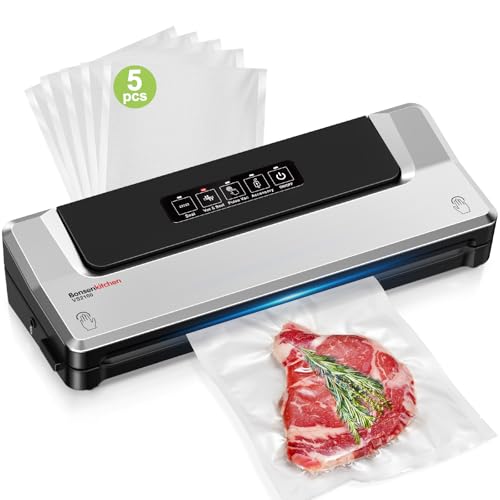
Bonsenkitchen Vacuum Sealer Machine – Silver – Best Budget
Badge: Best Budget. Multiple modes for meal prep, a compact silver body, an external vacuum system for containers, and five vacuum bags included, as confirmed in the Amazon listing title. That is why this pick earns its badge rather than simply filling a slot. In daily use the difference between a product you reach for and one you leave in a cupboard is rarely a headline number. It is how quickly it is ready, how forgiving it is when placement is slightly imperfect, how clearly it tells you the job is finished, and how much material you waste learning its habits in the first month.
Who it suits is easy to picture. If you recognise yourself in the best-for line at the end of this review, the trade-offs below will mostly feel minor. If you recognise yourself in the not-suited-for line, read the next pick before you decide, because a cheaper or simpler option that matches your actual routine will work better in practice than a more capable option you avoid using.
Strengths
- Verified identity and included contents: the Amazon listing confirms exactly what this product is and what arrives in the box, so there is no guessing about modes, format or starter supplies.
- Coverage for real food: dry goods, moist food and everyday freezer storage are the jobs most households actually do, and this pick is positioned for those jobs rather than a single narrow trick.
- Forgiving everyday workflow: clear controls or format, visible placement and a result you can inspect before the bag goes into the freezer or the water bath.
Trade-offs
- Technique still matters: overfilling, a wet sealing surface and sharp edges can defeat any product in this class.
- Space still matters: even a compact option needs room to work and a sensible place to live between sessions.
- Running costs continue after purchase: consumables are part of ownership, so heavy users should think about supply from the start.
Spec snapshot (from the verified listing): Multiple modes for meal prep, a compact silver body, an external vacuum system for containers, and five vacuum bags included, as confirmed in the Amazon listing title.
On performance, judge this pick by consistency over a whole session, not by a single perfect result. Work through a mix of dry goods, raw portions and something moist, and check each result by looking for air creeping back in. A good affordable choice holds up after a night in the freezer, when material has gone cold and stiff and any weak spot shows itself. Judge it, too, by how it handles the second and third repetition in a row, because batch work after a bulk shopping trip is the real test for most families.
On care, clean the working surfaces after moist foods, let heated parts cool between long runs, and store consumables flat and dry so they stay clean. Keep contact surfaces free of crumbs and sauce. Those small habits do more for long-term quality than any later upgrade, and they cost nothing.
Check the current price on Amazon for the Bonsenkitchen Vacuum Sealer Machine – Silver.
Best for: first-time buyers and meal-prep beginners on a tight budget / Not suited for: bulk hunters sealing very large, bone-heavy cuts every weekend.
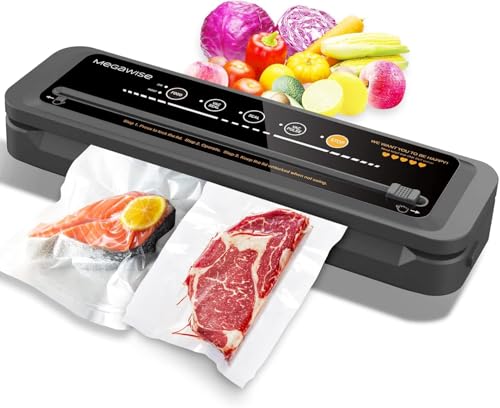
MEGAWISE Vacuum Sealer Machine – 80kPa – Best Compact Power
Badge: Best Compact Power. 80kPa suction power stated in the Amazon title, bags and a cutter included, one-touch automatic operation, an external vacuum system, and dry, moist and fresh modes. That is why this pick earns its badge rather than simply filling a slot. In daily use the difference between a product you reach for and one you leave in a cupboard is rarely a headline number. It is how quickly it is ready, how forgiving it is when placement is slightly imperfect, how clearly it tells you the job is finished, and how much material you waste learning its habits in the first month.
Who it suits is easy to picture. If you recognise yourself in the best-for line at the end of this review, the trade-offs below will mostly feel minor. If you recognise yourself in the not-suited-for line, read the next pick before you decide, because a cheaper or simpler option that matches your actual routine will work better in practice than a more capable option you avoid using.
Strengths
- Verified identity and included contents: the Amazon listing confirms exactly what this product is and what arrives in the box, so there is no guessing about modes, format or starter supplies.
- Coverage for real food: dry goods, moist food and everyday freezer storage are the jobs most households actually do, and this pick is positioned for those jobs rather than a single narrow trick.
- Forgiving everyday workflow: clear controls or format, visible placement and a result you can inspect before the bag goes into the freezer or the water bath.
Trade-offs
- Technique still matters: overfilling, a wet sealing surface and sharp edges can defeat any product in this class.
- Space still matters: even a compact option needs room to work and a sensible place to live between sessions.
- Running costs continue after purchase: consumables are part of ownership, so heavy users should think about supply from the start.
Spec snapshot (from the verified listing): 80kPa suction power stated in the Amazon title, bags and a cutter included, one-touch automatic operation, an external vacuum system, and dry, moist and fresh modes.
On performance, judge this pick by consistency over a whole session, not by a single perfect result. Work through a mix of dry goods, raw portions and something moist, and check each result by looking for air creeping back in. A good affordable choice holds up after a night in the freezer, when material has gone cold and stiff and any weak spot shows itself. Judge it, too, by how it handles the second and third repetition in a row, because batch work after a bulk shopping trip is the real test for most families.
On care, clean the working surfaces after moist foods, let heated parts cool between long runs, and store consumables flat and dry so they stay clean. Keep contact surfaces free of crumbs and sauce. Those small habits do more for long-term quality than any later upgrade, and they cost nothing.
Check the current price on Amazon for the MEGAWISE Vacuum Sealer Machine – 80kPa.
Best for: small kitchens that still want strong suction for dense meat and grain / Not suited for: buyers who need roll storage built inside the machine itself.
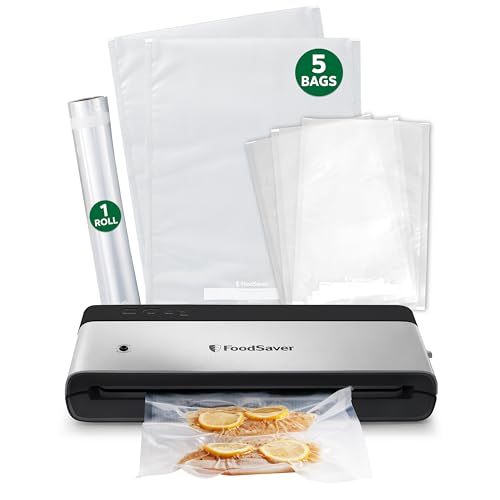
FoodSaver PowerVac Compact VS0150 – Best for Small Kitchens
Badge: Best for Small Kitchens. A compact FoodSaver designed for vertical storage in stainless steel and black, positioned to preserve freshness and reduce bag waste for both dry and wet food, as confirmed in the Amazon listing title. That is why this pick earns its badge rather than simply filling a slot. In daily use the difference between a product you reach for and one you leave in a cupboard is rarely a headline number. It is how quickly it is ready, how forgiving it is when placement is slightly imperfect, how clearly it tells you the job is finished, and how much material you waste learning its habits in the first month.
Who it suits is easy to picture. If you recognise yourself in the best-for line at the end of this review, the trade-offs below will mostly feel minor. If you recognise yourself in the not-suited-for line, read the next pick before you decide, because a cheaper or simpler option that matches your actual routine will work better in practice than a more capable option you avoid using.
Strengths
- Verified identity and included contents: the Amazon listing confirms exactly what this product is and what arrives in the box, so there is no guessing about modes, format or starter supplies.
- Coverage for real food: dry goods, moist food and everyday freezer storage are the jobs most households actually do, and this pick is positioned for those jobs rather than a single narrow trick.
- Forgiving everyday workflow: clear controls or format, visible placement and a result you can inspect before the bag goes into the freezer or the water bath.
Trade-offs
- Technique still matters: overfilling, a wet sealing surface and sharp edges can defeat any product in this class.
- Space still matters: even a compact option needs room to work and a sensible place to live between sessions.
- Running costs continue after purchase: consumables are part of ownership, so heavy users should think about supply from the start.
Spec snapshot (from the verified listing): A compact FoodSaver designed for vertical storage in stainless steel and black, positioned to preserve freshness and reduce bag waste for both dry and wet food, as confirmed in the Amazon listing title.
On performance, judge this pick by consistency over a whole session, not by a single perfect result. Work through a mix of dry goods, raw portions and something moist, and check each result by looking for air creeping back in. A good affordable choice holds up after a night in the freezer, when material has gone cold and stiff and any weak spot shows itself. Judge it, too, by how it handles the second and third repetition in a row, because batch work after a bulk shopping trip is the real test for most families.
On care, clean the working surfaces after moist foods, let heated parts cool between long runs, and store consumables flat and dry so they stay clean. Keep contact surfaces free of crumbs and sauce. Those small habits do more for long-term quality than any later upgrade, and they cost nothing.
Check the current price on Amazon for the FoodSaver PowerVac Compact VS0150.
Best for: apartment and small-counter kitchens that store the sealer upright / Not suited for: high-volume sealers who want the widest possible seal bar.

Nesco Deluxe Food VS-12 Vacuum Sealer – Best for Heavy Use
Badge: Best for Heavy Use. 130 watts stated in the Amazon title, kit bags included, a viewing lid so you can watch placement, and a compact silver body from a long-standing food preservation brand. That is why this pick earns its badge rather than simply filling a slot. In daily use the difference between a product you reach for and one you leave in a cupboard is rarely a headline number. It is how quickly it is ready, how forgiving it is when placement is slightly imperfect, how clearly it tells you the job is finished, and how much material you waste learning its habits in the first month.
Who it suits is easy to picture. If you recognise yourself in the best-for line at the end of this review, the trade-offs below will mostly feel minor. If you recognise yourself in the not-suited-for line, read the next pick before you decide, because a cheaper or simpler option that matches your actual routine will work better in practice than a more capable option you avoid using.
Strengths
- Verified identity and included contents: the Amazon listing confirms exactly what this product is and what arrives in the box, so there is no guessing about modes, format or starter supplies.
- Coverage for real food: dry goods, moist food and everyday freezer storage are the jobs most households actually do, and this pick is positioned for those jobs rather than a single narrow trick.
- Forgiving everyday workflow: clear controls or format, visible placement and a result you can inspect before the bag goes into the freezer or the water bath.
Trade-offs
- Technique still matters: overfilling, a wet sealing surface and sharp edges can defeat any product in this class.
- Space still matters: even a compact option needs room to work and a sensible place to live between sessions.
- Running costs continue after purchase: consumables are part of ownership, so heavy users should think about supply from the start.
Spec snapshot (from the verified listing): 130 watts stated in the Amazon title, kit bags included, a viewing lid so you can watch placement, and a compact silver body from a long-standing food preservation brand.
On performance, judge this pick by consistency over a whole session, not by a single perfect result. Work through a mix of dry goods, raw portions and something moist, and check each result by looking for air creeping back in. A good affordable choice holds up after a night in the freezer, when material has gone cold and stiff and any weak spot shows itself. Judge it, too, by how it handles the second and third repetition in a row, because batch work after a bulk shopping trip is the real test for most families.
On care, clean the working surfaces after moist foods, let heated parts cool between long runs, and store consumables flat and dry so they stay clean. Keep contact surfaces free of crumbs and sauce. Those small habits do more for long-term quality than any later upgrade, and they cost nothing.
Check the current price on Amazon for the Nesco Deluxe Food VS-12 Vacuum Sealer.
Best for: frequent sealers, hunters, anglers and bulk buyers who run many bags in a row / Not suited for: minimalist kitchens where every extra control feels like clutter.
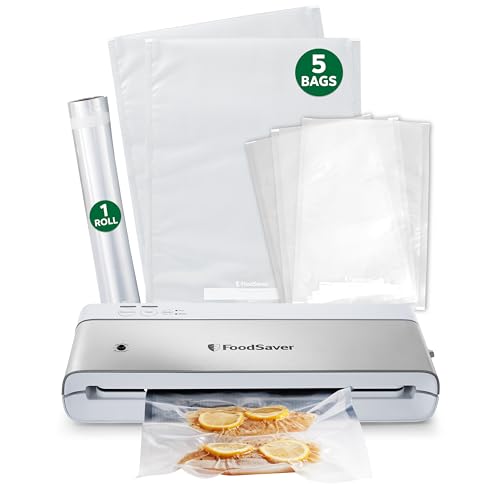
FoodSaver Compact Vacuum Sealer – White – Best Simple Starter
Badge: Best Simple Starter. A compact FoodSaver supplied with airtight bags and a roll, positioned in its Amazon title for sous vide and airtight food storage, in a clean white finish. That is why this pick earns its badge rather than simply filling a slot. In daily use the difference between a product you reach for and one you leave in a cupboard is rarely a headline number. It is how quickly it is ready, how forgiving it is when placement is slightly imperfect, how clearly it tells you the job is finished, and how much material you waste learning its habits in the first month.
Who it suits is easy to picture. If you recognise yourself in the best-for line at the end of this review, the trade-offs below will mostly feel minor. If you recognise yourself in the not-suited-for line, read the next pick before you decide, because a cheaper or simpler option that matches your actual routine will work better in practice than a more capable option you avoid using.
Strengths
- Verified identity and included contents: the Amazon listing confirms exactly what this product is and what arrives in the box, so there is no guessing about modes, format or starter supplies.
- Coverage for real food: dry goods, moist food and everyday freezer storage are the jobs most households actually do, and this pick is positioned for those jobs rather than a single narrow trick.
- Forgiving everyday workflow: clear controls or format, visible placement and a result you can inspect before the bag goes into the freezer or the water bath.
Trade-offs
- Technique still matters: overfilling, a wet sealing surface and sharp edges can defeat any product in this class.
- Space still matters: even a compact option needs room to work and a sensible place to live between sessions.
- Running costs continue after purchase: consumables are part of ownership, so heavy users should think about supply from the start.
Spec snapshot (from the verified listing): A compact FoodSaver supplied with airtight bags and a roll, positioned in its Amazon title for sous vide and airtight food storage, in a clean white finish.
On performance, judge this pick by consistency over a whole session, not by a single perfect result. Work through a mix of dry goods, raw portions and something moist, and check each result by looking for air creeping back in. A good affordable choice holds up after a night in the freezer, when material has gone cold and stiff and any weak spot shows itself. Judge it, too, by how it handles the second and third repetition in a row, because batch work after a bulk shopping trip is the real test for most families.
On care, clean the working surfaces after moist foods, let heated parts cool between long runs, and store consumables flat and dry so they stay clean. Keep contact surfaces free of crumbs and sauce. Those small habits do more for long-term quality than any later upgrade, and they cost nothing.
Check the current price on Amazon for the FoodSaver Compact Vacuum Sealer – White.
Best for: beginners who want a familiar brand, a small footprint and supplies in the box / Not suited for: sealers who need advanced delicate-food control as their main use.
Comparison Table
| Pick | Badge | Key spec (verified listing) | Best for |
|---|---|---|---|
| FoodSaver FM2100 Vacuum Sealer Machine | Best Overall | One-touch sealing, built-in roll storage and cutter, dry and moist modes, accessory port and hose, and a starter set of bags and a roll included, as confirmed in the Amazon listing title. | home cooks who seal every week |
| Bonsenkitchen Vacuum Sealer Machine – Silver | Best Budget | Multiple modes for meal prep, a compact silver body, an external vacuum system for containers, and five vacuum bags included, as confirmed in the Amazon listing title. | first-time buyers and meal-prep beginners on a tight budget |
| MEGAWISE Vacuum Sealer Machine – 80kPa | Best Compact Power | 80kPa suction power stated in the Amazon title, bags and a cutter included, one-touch automatic operation, an external vacuum system, and dry, moist and fresh modes. | small kitchens that still want strong suction for dense meat and grain |
| FoodSaver PowerVac Compact VS0150 | Best for Small Kitchens | A compact FoodSaver designed for vertical storage in stainless steel and black, positioned to preserve freshness and reduce bag waste for both dry and wet food, as confirmed in the Amazon listing title. | apartment and small-counter kitchens that store the sealer upright |
| Nesco Deluxe Food VS-12 Vacuum Sealer | Best for Heavy Use | 130 watts stated in the Amazon title, kit bags included, a viewing lid so you can watch placement, and a compact silver body from a long-standing food preservation brand. | frequent sealers, hunters, anglers and bulk buyers who run many bags in a row |
| FoodSaver Compact Vacuum Sealer – White | Best Simple Starter | A compact FoodSaver supplied with airtight bags and a roll, positioned in its Amazon title for sous vide and airtight food storage, in a clean white finish. | beginners who want a familiar brand, a small footprint and supplies in the box |
Use the table to shortlist, not to decide outright. The key-spec column repeats only what the verified listings state. If a detail you care about is not in the table, check it on the listing for that exact product before ordering, and measure your own space and equipment with a tape rather than estimating by eye.
How to Choose the Best Affordable Vacuum Sealers Machines for Your Routine
Start with what you seal, how often, and in what quantity. A household sealing coffee beans, cheese and the occasional chicken breast needs a different machine from one breaking down bulk meat every fortnight. Write down your three most common jobs before you shop. If two of the three are moist or batch jobs, prioritise moist modes, drip handling and session consistency over the lowest purchase price. If two of the three are dry and occasional, a simple compact machine will make you happier and will actually come out of the cupboard.
Suction style and what it means in practice
All six picks are external suction sealers: the open end of a textured bag sits in the machine, air is drawn out through the bag channels, and a heated bar seals the end. That design is why they are affordable and compact, and it is also why technique matters. Liquid gets drawn toward the seal, sharp bones can puncture film, and smooth bags without air channels will not evacuate properly. Chamber sealers solve those problems at a very different cost and size. Within the affordable class, the practical questions are simpler: does the machine offer a gentler approach for delicate food, a moist setting for juicy food, and a seal-only function for making bags from a roll?
Footprint, storage and the bag runway
Measure two spaces, not one: where the machine will live, and the flat run in front of it while a bag is being sealed. A large bag of stew needs a long, clear runway. Vertical-storage designs and compact bodies help small kitchens, but only if the cabinet or drawer you plan to use is actually tall or deep enough, so measure it. Roll storage inside the machine is convenient and keeps the roll clean, yet it makes the body larger. A separate roll in a drawer is a perfectly good system if space is tight, and many experienced sealers prefer it because the machine itself stays smaller.
Bags are the real running cost
Two households can buy the same machine and spend very different amounts over a year, purely through bag habits. Rolls you cut yourself usually give the most flexibility and the least waste for odd shapes; precut bags are faster for standard portions and batch work. Leaving enough headroom at the top of the bag, freezing liquids flat first, and labelling before filling all reduce failed seals, and every failed seal is a bag you paid for and threw away. When you compare machines, compare their bag ecosystems with the same seriousness as their motors. Our companion guide to bags, linked at the end, works through that arithmetic in full.
Controls you will actually use
Dry and moist modes, a seal-only button and some form of gentle control for delicate items cover almost every home job. Extra programs are only valuable if they map to food you really seal. Equally important is feedback: a progress indication or clear completion signal prevents the classic beginner error of opening the lid early and breaking a warm seal. If you seal with wet hands or in a busy kitchen, large physical buttons beat fiddly touch panels, and a lid you can close with one hand while the other holds a bag steady is worth more than an extra program you will never select.
What Vacuum Sealing Does Well, and What It Does Not Do
Vacuum sealing slows freezer burn by removing air and keeping film close to the food, helps marinades contact meat evenly, keeps dry goods from going stale as quickly once opened, and makes sous vide cooking clean and reliable. It does not make unsafe food safe, it does not replace refrigeration or freezing, and it does not rescue food that was already past its best when it went into the bag. Date every bag and rotate stock. If something smelled questionable before sealing, it will be questionable when you open it. The sealer preserves condition; it does not improve it.
Home vacuum packaging also deserves a sober safety note. Follow current food-safety guidance for storage times and refrigeration, keep vacuum-sealed perishables refrigerated or frozen as directed, and never treat a sealed bag as shelf-stable unless the food itself was already shelf-stable. That caution costs nothing and belongs in any honest guide to an appliance that touches food storage. When in doubt about a particular food, check the guidance for that food rather than relying on a general rule from an appliance guide.
How to Use an Affordable Vacuum Sealer for Clean, Reliable Seals
- Prep the food. Portion first, pat surfaces dry, and remove or pad sharp bone edges. Freeze very wet foods briefly until just firm if your machine struggles with liquid creep.
- Size the bag generously. Leave several inches of headroom between the food and the open end. Headroom is not waste; it is what keeps the seal area clean and dry.
- Load flat and straight. Keep the bag mouth flat inside the machine, smooth out wrinkles across the seal line, and orient the textured channel side as the maker directs.
- Choose the honest mode. Dry for dry goods, moist for juicy food, gentle control for berries and baked goods. Use seal-only when making a bag from a roll: seal the bottom first, then fill.
- Wait, then inspect. Let the cycle finish fully, then check the seal line is even and unbroken and that no air is creeping back in. Press gently around the food; a good seal hugs it.
- Label and store flat. Write contents and date before filling when you can, freeze bags flat to save space and thaw evenly, and clean the drip area before you put the machine away.
If a seal fails, diagnose before you retry blindly. Moisture on the seal line, a wrinkle, an overfilled bag and a crumb on the gasket account for most failures. Fix the cause, use a fresh section of bag, and seal again. Repeatedly re-running the same dirty seal teaches you nothing and wastes film. Keep a short mental log of your first sessions: which foods needed the moist mode, which needed pre-freezing, and how much headroom your machine likes. Within a month those notes become instinct, and your failure rate drops to near zero.
For sous vide, seal with the mode your machine and the food need, keep the seal clean and complete, and follow your circulator makers guidance on temperatures and times for each protein. For marinades, remember that vacuum pulls marinade into close contact quickly, so shorter marinating times usually suffice and very acidic marinades should not sit for extended periods. For dry goods, reseal the original bag where your machine allows it or decant into a sized bag, and store away from heat and light just as you would have before.
Common Buying Mistakes
- Buying on suction numbers alone. Seal consistency, modes and bag supply matter more in a home kitchen than a headline figure.
- Ignoring bag costs. The machine is a one-time purchase; bags are forever. Check roll and precut availability for your pick before you commit.
- Choosing a footprint you cannot store. A sealer that does not fit your kitchen will not be used, however capable it is.
- Expecting chamber-sealer behaviour. External sealers need headroom and some liquid management. That is the design, not a defect.
- Sealing without labelling. Mystery bags waste food and money. Date and name everything, especially lookalike portions of meat and sauce.
- Skipping the starter-kit check. Confirm what bags, rolls and hoses are actually included in the verified listing so your first session is not delayed by a missing consumable.
- Judging by the first bag. Every machine has a short learning curve. Judge it after a full, varied session, not after one rushed attempt.
Final Recommendation
For most households, start with the FoodSaver FM2100 as Best Overall: it covers dry and moist sealing, stores a roll, and arrives with starter supplies, which removes the friction that stops beginners forming the habit. On the tightest budget, the Bonsenkitchen is the sensible first machine. Learn your routine on it, and you will know exactly what, if anything, you need next. Small kitchens should look first at the PowerVac Compact for vertical storage or the MEGAWISE for compact power. If you seal in long, regular sessions, the Nesco VS-12 is the heavy-use pick, and anyone who wants the simplest familiar-brand start should choose the FoodSaver Compact in white.
Ready to check the finalists? Check price on Amazon for the FM2100, Check price on Amazon for the Bonsenkitchen, and Check price on Amazon for the Nesco VS-12.
Whichever pick you choose, buy the bags for your first month at the same time, keep a marker with the machine, and plan one low-stakes practice session with inexpensive food before you seal an expensive bulk purchase. That single habit prevents most early disappointment in this category.
Keep exploring the cluster: Best Bags For Vacuum Sealers, Best Vacuum Sealers, Best Vacuum Sealer Rolls, Best Vacuum Sealers For Sous Vide. Those companion guides cover the consumables and specialist angles that decide long-term cost far more than small differences between machines.
Related guides
Frequently Asked Questions
Are affordable vacuum sealers strong enough for meat and fish?
Yes, for home portions. The picks here are positioned for dry and moist food, meat storage and sous vide. Portion sensibly, pad sharp bones, manage liquid with headroom or a brief pre-freeze, and inspect each seal before freezing.
Can I seal liquids like soup and marinade?
With care. External sealers draw liquid toward the seal, so freeze soup flat in a container first and then seal the frozen block, or leave generous headroom and stop the vacuum early using the controls your model provides. Never overfill a bag with liquid and hope the machine will cope.
Do I have to buy the same brand of bags as the machine?
Usually not, as long as the bags are textured channel bags made for external suction sealers and the width fits your seal bar. Brand ecosystems are convenient and predictable, while quality third-party rolls can reduce running costs. Smooth bags will not evacuate properly in these machines.
How long does vacuum-sealed food keep in the freezer?
Longer than loosely wrapped food, because air removal slows freezer burn, but storage life still depends on the food, its condition when sealed and a consistently cold freezer. Follow current food-safety guidance for the specific food, label with dates, and rotate older bags to the front.
Is a vacuum sealer worth it for a household of two?
Often yes, if you buy family packs and split them, cook in batches, or lose food to freezer burn now. Small households benefit from portion control most of all: seal ingredients in the exact amounts your recipes use, and the machine earns its keep in avoided waste rather than in bulk volume.
What is the first accessory I should buy after the machine?
More of the right bags, in the two sizes you use most, plus a marker you keep with the machine for labelling. A container hose or accessory set only earns its space if your pick supports it and you genuinely store food in compatible containers.

