Disclosure: airfryerkitchensupply.com is reader-supported. When you buy through links on our site, we may earn an affiliate commission at no extra cost to you.
Where to Buy
This is a two-category roundup: the first three picks are cooktops, the last three are wall ovens, and every one was verified by brand and model against live retailer data. Buy the pair as a system — check price on Amazon for each half, confirm the cooktop’s fuel and the wall oven’s electrical requirements against your kitchen, and read the pairing guide below before ordering either.
- ThermoMate 36 Inch Gas Cooktop — check price on Amazon
- GASLAND 30 Inch Induction Cooktop — check price on Amazon
- Samsung 30 Inch Smart Gas Cooktop NA30N7755TS — check price on Amazon
- GE 30 in. Single Smart Convection Wall Oven — check price on Amazon
- ZLINE 30 in. Professional True Convection Wall Oven WAS-30 — check price on Amazon
- Cosmo COS-30ESWC 30 in. Electric Wall Oven — check price on Amazon
Introduction
The best cooktops and wall ovens are really one decision wearing two hats: splitting the range into a separate cooktop and wall oven is the layout move that defines most serious kitchen remodels, and it changes how a kitchen cooks in ways a single range cannot imitate. The wall oven goes at standing height, so heavy roasts come out at waist level instead of floor level; the cooktop becomes a pure stovetop station with storage beneath instead of an oven you bend over; and two cooks can work the top and the oven simultaneously without negotiating for the same four feet of cabinet. Kitchens that make the split rarely go back.
The split also doubles the homework. A range arrives with its fuel, width and venting already decided as a package; a cooktop-plus-wall-oven pairing asks you to choose fuel twice (and they do not have to match — gas on top over an electric wall oven is the classic professional answer), to plan two electrical or gas services instead of one, and to think about ventilation and wall cabinetry as separate projects. This roundup is built for that reality: three verified cooktops spanning gas, smart gas and induction, three verified convection wall ovens spanning mainstream, professional-style and value tiers, and a pairing guide that treats the two halves as one system.
Every pick below was verified by brand and model number, and we cover only what the listings establish — sizes, burner and element configurations, convection types and headline features. Where a pairing consideration comes from general kitchen practice rather than a product specification (circuit planning, vent sizing, cabinet cutouts), the guide says so and tells you which professional confirms it. Splitting the range is a remodel-grade decision; this article’s job is to make the product half of it easy and the planning half impossible to forget. Read it in that spirit: the reviews will happily sell you any of the six products, and the guide sections will just as happily slow you down until the layout, the services and the ventilation deserve them — because a pairing installed in the right kitchen outperforms a superior pairing installed in the wrong one, every day, for the life of both appliances.
In this guide
Quick Picks
- ThermoMate 36 Inch Gas Cooktop — Best Gas Cooktop for the Pairing. Five Italy Sabaf burners on 304 stainless steel, NG/LPG convertible — the flame half of the classic cooktop-and-wall-oven split, sized for serious stovetop work. Check on Amazon
- GASLAND 30 Inch Induction Cooktop — Best Induction Cooktop for the Pairing. A 240V induction top with a bridge element and boost function — the electric half of the pairing for kitchens without a gas line, and the easiest surface in this roundup to clean. Check on Amazon
- Samsung 30 Inch Smart Gas Cooktop NA30N7755TS — Best Smart Gas Cooktop. A 22K BTU dual power burner and five burners with smart connectivity — the gas cooktop for cooks who want the wall oven and the top to share one connected brain. Check on Amazon
- GE 30 in. Single Smart Convection Wall Oven — Best Wall Oven Overall. True convection cooking plus no-preheat air fry in a mainstream 30-inch wall oven — the default recommendation for the oven half of most pairings. Check on Amazon
- ZLINE 30 in. Professional True Convection Wall Oven WAS-30 — Best Professional-Style Wall Oven. Professional styling, true convection, air fry and self clean — the wall oven that visually matches a pro-style cooktop across the kitchen. Check on Amazon
- Cosmo COS-30ESWC 30 in. Electric Wall Oven — Best Value Wall Oven. A 5 cu. ft. true convection wall oven with a blue porcelain interior and self clean — the capacity-and-convection essentials without the flagship tier. Check on Amazon
How These Picks Were Chosen
Verification came first, as always: each cooktop and wall oven was confirmed by brand and model against live retailer data, and only verified models carry links — a real discipline in these two categories, where regional variants and discontinued model numbers litter the listings. We then balanced the slate deliberately. Cooktops: one large-format gas top for serious stovetop cooking, one smart mainstream gas top in the standard 30-inch width, and one induction top for all-electric kitchens, because the fuel question is the first fork in any pairing. Wall ovens: one mainstream smart convection oven as the default, one professional-style oven for design-matched kitchens, and one value oven that keeps true convection and full capacity — because the wall oven is where budgets quietly double, and an honest roundup needs a credible lower tier.
Convection was a requirement on the oven side: every wall oven here is a convection model, three of them explicitly true convection, because even heat is the entire technical point of separating the oven from the cooktop. On the cooktop side we weighted burner layout and total flexibility over headline output numbers, which flatter to deceive. And throughout, we favored standard widths — 30 and 36 inches — because pairings live or die on cabinet dimensions that already exist.
The 6 Best Cooktops and Wall Ovens

ThermoMate 36 Inch Gas Cooktop — Best Gas Cooktop for the Pairing
If the cooktop half of your pairing is where the daily cooking happens — and in most households it is — this 36-inch ThermoMate is the strongest flame platform in the roundup: five Italy Sabaf burners on a 304 stainless steel body, with NG/LPG convertibility built in. Sabaf burners are the industry’s reference component, the same Italian-made hardware found under the grates of far more expensive brands, and in practice that means clean flame patterns, reliable ignition and burners that hold a simmer without the pulsing cheaper hardware suffers. At 36 inches, the five burners spread out enough for a stockpot and two skillets to coexist, which is the entire reason to give a cooktop six extra inches.
Strengths
- Five Italy Sabaf burners — the reference burner hardware in the industry
- 304 stainless steel body and NG/LPG convertibility for fuel flexibility
- 36-inch spread fits a stockpot and two skillets at once
Trade-offs
- Needs the 36-inch opening and a properly sized gas line
- Powerful gas tops demand real ventilation — budget the hood with the top
- Stainless shows daily use; it ages as a tool, not a showpiece
| Specification | Detail |
|---|---|
| Width | 36 in. |
| Burners | 5 Italy Sabaf burners |
| Fuel | Natural gas / liquid propane convertible (per listing) |
In a pairing, a gas cooktop like this one takes the role gas plays best — instant, visible, tactile heat — while the electric wall oven below handles precision baking, and the convertibility matters more than it first appears: a kitchen on natural gas today can be a propane kitchen after a move or a fuel change, and a convertible top travels with you. The stainless body wipes down and ages honestly, developing the working patina of a tool rather than the scratches of a showpiece.
Plan the pairing around it properly: a 36-inch gas top wants a hood with real capture area above it (the guide below covers sizing logic), a gas line sized for the top’s total draw, and an island or counter run with the landing space serious stovetop cooking deserves. If your kitchen is a 30-inch opening, the Samsung below is your gas answer; if you have the 36 inches and the gas line, this ThermoMate is the top half of the classic pairing, done right.
Best for: the cooktop half of a gas-top/electric-oven pairing in a 36-inch kitchen / Not suited for: a standard 30-inch opening or an all-electric kitchen
Check on Amazon — check the current price on Amazon before you buy, because multi-pack configurations change.

GASLAND 30 Inch Induction Cooktop — Best Induction Cooktop for the Pairing
Induction is the electric answer that converts gas loyalists, and this GASLAND is the pairing-ready version: a 30-inch, 240V induction cooktop with five cooking zones’ worth of flexibility in its class layout, a bridge element that joins two zones for a griddle or a long roaster, boost function for violent-speed boils, touch controls, and an ETL-certified matte, scratch-resistant surface. The bridge element is the feature that matters most in a pairing context — it is what lets an induction top host the big rectangular pans a gas grate handles naturally, closing induction’s one layout gap.
Strengths
- Bridge element joins zones for griddles and long pans — induction’s layout gap, closed
- Boost function delivers the fastest boils in this roundup
- Matte scratch-resistant surface ages better than glossy glass; ETL certified
Trade-offs
- Cookware must pass the magnet test — audit your pans first
- 240V circuit planning must be shared with the wall oven’s load
- Touch controls divide opinion; wet-hand operation takes practice
| Specification | Detail |
|---|---|
| Width | 30 in. |
| Power | 240V induction with bridge element and boost |
| Surface | Matte scratch-resistant, ETL certified (per listing) |
Paired with an electric wall oven, an induction top makes the whole cooking wall electric: one fuel, one (substantial) electrical plan, no gas line, no combustion venting calculations beyond ordinary cooking ventilation. The matte surface is a thoughtful touch in a category of glossy glass — it hides the micro-scratches and fingerprints that make shiny induction tops look tired in a year. Touch controls wipe clean in one pass, and the cooktop’s surface stays comparatively cool, which in a kitchen where the wall oven is doing the roasting means the stovetop station stays comfortable through a long cook.
The induction disciplines apply: cookware must be magnetic (the fridge-magnet test decides), pans should be flat-bottomed for full contact, and the boost function’s speed will recalibrate your sense of how fast water boils — walk away from a boosting pot once and you learn. Confirm the 240V circuit capacity with your electrician when the wall oven’s circuit is planned, because two electric cooking appliances are a real load calculation, not an afterthought. For all-electric kitchens, this is the top half to build around.
Best for: the cooktop half of an all-electric pairing / Not suited for: kitchens with a gas line whose cooks prefer open flame
Check on Amazon — check the current price on Amazon before you buy, because multi-pack configurations change.

Samsung 30 Inch Smart Gas Cooktop NA30N7755TS — Best Smart Gas Cooktop
Samsung’s NA30N7755TS is the mainstream smart gas cooktop: five burners in the standard 30-inch width, anchored by a 22K BTU dual power burner — the listing’s headline figure — that can run from a serious sear down to a controlled simmer in one burner body. Dual power burners are the gas top’s answer to range anxiety: the center position becomes the wok-and-stockpot station and the sauce station in the same evening, which is how a 30-inch top punches at a 36-inch weight. Smart connectivity lets the cooktop talk to a phone app for monitoring — a feature whose real value is the “did I leave a burner on” check from the sofa.
Strengths
- 22K BTU dual power burner covers sear-to-simmer in one position
- Five burners in the standard 30-inch width most kitchens already have
- Smart monitoring answers the “left a burner on” question from anywhere
Trade-offs
- Headline burner output needs pan-size discipline to be useful
- Smart features depend on Wi-Fi and app upkeep
- Gas line and ventilation planning are part of the project, as with any gas top
| Specification | Detail |
|---|---|
| Width | 30 in. |
| Burners | 5, with 22K BTU dual power burner (per listing) |
| Features | Smart connectivity, stainless steel |
In a pairing, this is the gas top for kitchens that want the split layout without the professional-industrial aesthetic: black stainless and stainless variants in this line sit comfortably under a modern wall oven, and Samsung’s ecosystem means a Samsung wall oven and the cooktop can share an app and a design language. Even paired cross-brand, the 30-inch standard width drops into the commonest cabinet layout in American kitchens, which keeps the remodel scope sane.
The honest notes: a 22K BTU burner under a small saucepan is wasted and scorching, so burner-to-pan matching becomes a habit; smart features depend on your Wi-Fi and your patience for apps, and they add nothing on the day the network is down (the knobs, reassuringly, always work); and like every gas top here, it needs its gas line and its hood planned as part of the project. For the standard-width kitchen that wants flame, flexibility and a connected check-in, this is the balanced choice. It is also, not incidentally, the easiest of our three cooktops to live with during the remodel itself: the 30-inch standard width is the size existing cutouts most often already are, which means the Samsung is the pick most likely to drop into a kitchen that is being split in stages — cooktop this year, wall oven when the cabinet run is rebuilt — without forcing both halves of the project into the same expensive month.
Best for: the gas half of a pairing in a standard 30-inch, connected kitchen / Not suited for: cooks who want zero apps between them and their burners
Check on Amazon — check the current price on Amazon before you buy, because multi-pack configurations change.
GE 30 in. Single Smart Convection Wall Oven — Best Wall Oven Overall
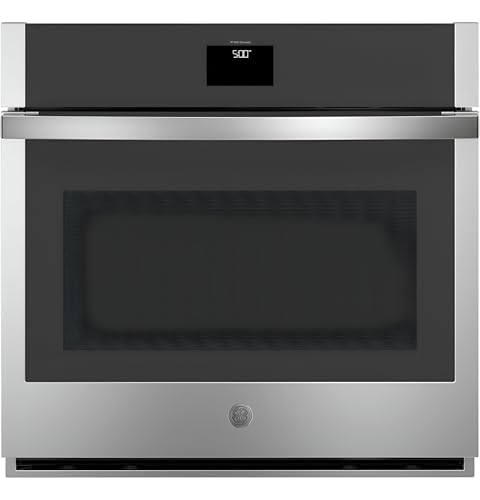
The wall oven half of most pairings should be exactly this: a mainstream 30-inch single wall oven with real convection and air fry, from a brand with a national service network. GE’s entry adds a genuinely useful twist — no-preheat air fry, which uses the convection system to crisp without the preheat wait that makes oven air frying feel like a project — inside a smart, connected oven that preheats from the couch and reports its own status. As the default oven recommendation in this roundup, it is the one we would specify into a typical remodel without a second thought.
Strengths
- No-preheat air fry removes the wait from oven crisping
- Smart convection wall oven in the standard 30-inch format
- Mainstream brand service and parts network behind it
Trade-offs
- Single cavity — two-temperature cooks need the cooktop to improvise
- Smart features assume a household that uses an app willingly
- Mid-premium tier; the Cosmo below keeps convection for less
| Specification | Detail |
|---|---|
| Width | 30 in. |
| Type | Single smart convection wall oven |
| Feature | No-Preheat Air Fry (per listing) |
The pairing logic favors it twice over. First, capacity and convection: a full-size single cavity at 30 inches handles the holiday bird and the weeknight sheet pan with the same even heat, and convection is the feature that justifies separating the oven in the first place. Second, ergonomics: mounted at standing height under a counter-height cooktop plan — or in a tall cabinet across from it — this oven ends the era of lifting a braiser from knee level, which is the daily dividend the split layout pays. Smart features, used sparingly (remote preheat, timer checks), support that dividend rather than distracting from it.
Consider the alternatives honestly: the ZLINE below out-styles it in a professional-look kitchen, and the Cosmo undercuts it on tier while keeping true convection. The GE’s case is the ecosystem case — parts, service, and a control language millions of kitchens already speak — plus that no-preheat air fry, which in a household that crisps weekly is not a gimmick but a schedule change. If your pairing needs one safe, complete answer on the oven side, it is this one. It is also the oven we would pair blind with any cooktop in this roundup — gas, smart gas or induction — because its competence is general rather than specialized, and general competence is what the oven half of a split kitchen is asked for on the greatest number of days: roasts on Sunday, trays on Tuesday, a frozen pizza on Friday, each at standing height, each evenly heated, none of them an event.
Best for: the oven half of most pairings — the default recommendation / Not suited for: design-led kitchens that want a professional-style oven face
Check on Amazon — check the current price on Amazon before you buy, because multi-pack configurations change.
ZLINE 30 in. Professional True Convection Wall Oven WAS-30 — Best Professional-Style Wall Oven
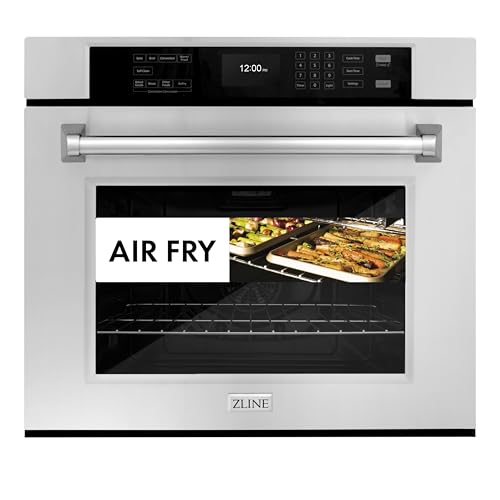
ZLINE’s WAS-30 exists for the kitchen whose cooktop is a professional-style statement — very possibly the ZLINE range family’s aesthetic — and whose wall oven must not look like an apology beside it. It is a 30-inch professional true convection single wall oven with air fry and self clean, in stainless steel, with the handle-and-knob visual weight of the pro category. True convection — the fan with its own heating element — is the correct specification for a wall oven that will do serious baking, and the self-clean cycle is the correct specification for one that will do serious roasting.
Strengths
- Professional styling that matches pro-style cooktops and rangetops
- True convection with air fry and self clean — the complete oven brief
- Full 30-inch single cavity at standing height
Trade-offs
- Tier premium is substantially for design and hardware feel
- Service network is younger than the legacy brands’ — check local coverage
- Pro styling can overwhelm a small, quiet kitchen design
| Specification | Detail |
|---|---|
| Width | 30 in. |
| Type | Professional True Convection single wall oven with Air Fry |
| Cleaning | Self clean (per listing) |
As the second oven in a pro-style kitchen — the role wall ovens often play beside a big range — or as the sole oven paired with a rangetop-style cooktop, the WAS-30’s argument is coherence: same design language, same tier of hardware feel, and convection performance that does not embarrass the room. Air fry at wall-oven scale covers the family-batch crisping that retires countertop appliances, and the standing-height installation delivers the ergonomic half of the split-layout promise in full.
The trade-offs are the pro category’s usual ones: you are paying a tier premium substantially for design coherence and hardware feel, and ZLINE’s service footprint, while growing, is not the legacy brands’ — the local-servicer phone call recommended in our range guide applies here with interest. Verify the current configuration and price on Amazon. If your kitchen’s design brief says professional, and your cooking brief says true convection, this is the wall oven that satisfies both sentences at once.
Best for: professional-style kitchens pairing a rangetop or pro cooktop / Not suited for: budget-led remodels where the oven tier must stay lean
Check on Amazon — check the current price on Amazon before you buy, because multi-pack configurations change.

Cosmo COS-30ESWC 30 in. Electric Wall Oven — Best Value Wall Oven
Every pairing budget has a pressure point, and it is usually the wall oven — which is why the Cosmo COS-30ESWC matters: a 30-inch, 5 cu. ft. electric wall oven with true convection, a blue porcelain interior and self clean, at the value end of this roundup’s tiers. Five cubic feet is full family capacity — the largest cavity figure among our three wall ovens — and true convection at this tier is the specification that separates a real answer from a compromise. The blue porcelain interior is the classic oven finish doing its quiet work: heat-indifferent, stain-resistant, and easy to keep honest.
Strengths
- 5 cu. ft. true convection cavity — the largest oven here, at the value tier
- Blue porcelain interior and self clean included, not upsold
- Standard 30-inch format drops into mainstream cabinet plans
Trade-offs
- Controls and connected features are modest beside the GE
- Thinner service network — verify local support before ordering
- Value-tier fit and finish reward realistic expectations
| Specification | Detail |
|---|---|
| Width | 30 in. |
| Capacity | 5 cu. ft. (per listing) |
| Interior | Blue porcelain, True Convection, Self Clean |
Paired thoughtfully, the Cosmo is how a remodel affords the split at all: put the money into the cooktop you touch hourly and the cabinetry that makes the layout work, and let the wall oven be the competent, capacious convection box it is. Self clean at this tier deserves emphasis — roasting at standing height, weekly, produces exactly the soil self-cleaning exists for, and value ovens that skip it cost their owners weekends. Cosmo’s Haven/Lumin-era lines have built the brand on this formula: the specification sheet of a tier above, the invoice of its own.
The economies show where economies usually do: control refinement and connected features are modest next to the GE, and the brand’s service network is thinner than the mainstream giants’ — again, make the local call before ordering. But judged on the pairing brief — true convection, full capacity, self-cleaning, standard width — the COS-30ESWC is complete, and for budget-led remodels it is not the fallback pick. It is the enabling one.
Best for: budget-led pairings that refuse to compromise on convection or capacity / Not suited for: buyers who want smart, connected oven features as a priority
Check on Amazon — check the current price on Amazon before you buy, because multi-pack configurations change.
Comparison Table
| Pick | Badge | Key spec | Best for |
|---|---|---|---|
| ThermoMate 36 Gas Cooktop | Best Gas Cooktop | 5 Sabaf burners, NG/LPG convertible | Serious stovetop cooking |
| GASLAND 30 Induction | Best Induction Cooktop | Bridge element, boost, 240V | All-electric pairings |
| Samsung NA30N7755TS | Best Smart Gas Cooktop | 22K BTU dual burner, 5 burners | Standard-width connected kitchens |
| GE Smart Wall Oven | Best Wall Oven Overall | Convection, No-Preheat Air Fry | The default oven half |
| ZLINE WAS-30 | Best Professional Wall Oven | True Convection, Air Fry, Self Clean | Pro-style kitchens |
| Cosmo COS-30ESWC | Best Value Wall Oven | 5 cu. ft., True Convection, Self Clean | Budget-led pairings |
How to Choose Cooktops and Wall Ovens as a Pair
Plan the pair in this order: layout, services, ventilation, then products. Layout first means deciding where the oven lives relative to the top — the classic arrangements are the cooktop on an island or peninsula with the wall oven in a tall cabinet nearby, or the cooktop on the main run with the wall oven under it or beside it at standing height. Each arrangement has a traffic logic: keep the oven out of the cooktop’s landing zone, give both appliances door-swing and walk-past clearance, and put the landing counters where hot pans actually land — beside the top and beside the oven, not across the room.
Fuel Strategy: Matching, Mixing, and the Classic Split
The fuels do not have to match, and the most respected pairing in kitchen design deliberately mixes them: gas or induction on top for responsive stovetop work, electric in the wall oven for steady, even, convection-friendly heat. All-electric pairings (the GASLAND induction top with any oven here) simplify services to one utility and suit homes without gas. All-gas pairings exist but give up the electric oven’s baking precision, which is why no gas wall oven appears in this roundup. Decide fuel by service reality — what reaches the kitchen wall today, and what a contractor quotes to change it — and let the products follow.
Services and Ventilation: The Invisible Half of the Budget
Two appliances mean two service plans. A gas cooktop needs a gas line sized for its total draw and a shutoff within reach; an induction top and an electric wall oven each need dedicated 240V circuits, and together they are a panel-capacity conversation for an electrician, not an assumption. Ventilation scales with the cooktop: a 36-inch five-burner gas top under a decorative low-capture hood is a grease management plan for your cabinets, not your air. Size the hood to the top’s width and output, prefer external venting where the building allows, and price all of this before the appliances are ordered — the pairs that go wrong go wrong here, not in the product selection.
Widths and Cutouts: Measure the Cabinets, Not the Brochure
Cooktops and wall ovens are cutout appliances: what matters is the hole, not the headline width. A “30-inch” wall oven needs its specific cutout height, width and depth, plus the cabinet support for its weight; a cooktop needs its cutout plus clearance below for gas connections or induction airflow and, often, a drawer’s worth of sacrificed storage. Bring the manufacturers’ cutout sheets to your cabinetmaker before cabinets are ordered, and if you are retrofitting into existing cabinetry, measure the existing holes with the old appliances out. Standard widths (30 and 36) exist precisely to make this tractable — every pick in this roundup plays in those standards.
How to Plan the Pairing: A Measurement and Ordering Checklist
- Step 1 — Fix the layout on paper. Sketch the kitchen triangle with the split in place: cooktop station, wall oven position, sink, refrigerator. Walk the sketch mentally with a hot roasting pan in your hands; if the path crosses the room’s traffic lane, redraw.
- Step 2 — Inventory the services. Photograph the breaker panel, note any existing gas line’s location, and list what each candidate appliance needs. This inventory, given to an electrician and a plumber, produces the real installation budget.
- Step 3 — Measure cutouts and clearances. Record cabinet opening dimensions for both appliances, door-swing arcs, and the counter landing space beside each. Compare against the manufacturers’ cutout sheets, not the marketing widths.
- Step 4 — Choose fuel per half. Decide the cooktop fuel and the oven fuel independently, using the strategy section above. Confirm conversions (NG vs LP) for any gas appliance at order time.
- Step 5 — Size the ventilation to the cooktop. Match hood width to cooktop width, confirm the duct path to outside, and order the hood with the appliances — not after the cabinets close the wall.
- Step 6 — Order as a system. Appliances, hood, and any cabinet modifications go on one timeline with the trades scheduled between delivery and installation. The pairing fails on sequencing more often than on selection.
One Wall Oven or Two? The Second-Cavity Question
Every pick in this roundup is a single wall oven, and for most pairings one is correct — the cooktop already provides four or five parallel cooking positions, and the split layout’s benefit is position, not duplication. The households that genuinely use a double wall oven are specific: bakers who run two temperatures through a whole Saturday, large families whose holidays involve simultaneous roasting and baking, and keen cooks who treat the second cavity as a permanent warming and proofing station. If that is not your household on an ordinary month — not the holiday you host once — a single oven plus the cooktop’s flexibility covers you, and the savings fund the ventilation and cabinetry that make the single oven shine.
There is also a middle path worth knowing: a single wall oven paired with a capable countertop convection oven as the overflow appliance. It lacks the built-in elegance, but it delivers the second temperature at a fraction of the cost, it can live in a pantry when idle, and it is replaceable without a cabinetmaker. Remodels on a budget routinely make this choice and regret it less than they expect. The wall oven you install in the cabinet should be the best single cavity your budget allows — which is the logic behind this roundup’s three: a mainstream default, a professional statement, and a value enabler, each a complete answer at its tier.
Smart Features Across the Pair: Useful, Optional, and Unevenly Distributed
Connectivity appears on both sides of this pairing — Samsung’s cooktop monitoring, GE’s smart oven — and it is worth a level-headed assessment. The genuinely useful smart features in cooking appliances are few and specific: remote preheat that saves real minutes, a burner-left-on notification that answers a real anxiety, and an oven that reports a finished preheat or a fault in plain language. The rest — recipe libraries, novelty modes, social features — is garnish that dates faster than the appliance. Buy smart features when they are bundled with hardware you already want, as they are in the Samsung and GE picks here; do not let them outrank burner layout, cavity size or convection type, which you will use every single day for a decade.
One pairing-specific consideration: two smart appliances from two brands means two apps, two accounts and two update cycles. Households that value a single pane of glass should weight same-brand pairing more heavily than this roundup does; households that cook first and connect second can safely ignore the question. Either way, insist that every smart appliance in the pair works completely — knobs, timers, all of it — with the Wi-Fi off. Connectivity should be a layer on a sound appliance, never a dependency of one.
Counter Space, Landing Zones and the Human Geometry of the Split
The split layout’s final test is human, not mechanical. A cooktop station needs landing counter on both sides — somewhere for the raw ingredients going in and the hot pan coming off — and the wall oven needs its own landing counter within a step, because a roasting pan at temperature does not travel across a kitchen looking for a trivet. Tall-cabinet oven installations should place the oven’s floor around waist height for the household’s primary cook: too high and a heavy braiser is lifted toward your face; too low and you have rebuilt the range’s stoop at greater expense. Handle styles matter at height, too — a sturdy horizontal bar you can hook with a towel-wrapped hand beats a sculptural minimal rail when the pan is heavy and the mitts are on.
Lighting and outlets finish the geometry. Task light over the cooktop that does not cast the cook’s shadow across the burners, outlets placed for the small appliances that migrate to the cooktop’s counters, and a floor surface in the work zone that forgives a dropped Dutch oven — these are the details that decide whether a split kitchen feels designed in year three or merely photographed well in week one. None of them appear on a product listing, which is exactly why this guide insists on them: the products in this roundup are the half of the pairing you can buy; the geometry is the half you must plan.
Common Buying Mistakes
- Choosing products before layout. A beautiful 36-inch top in a 30-inch plan is a return shipment. Layout, services, ventilation — then products, in that order.
- Forgetting the wall oven needs a cabinet, not a hole in the wall. Cutout dimensions, support, and trim kits are part of the purchase; discover them at order time, not install time.
- Under-venting a serious gas top. The hood is part of the cooktop purchase in every way that matters to your cabinets and air.
- Assuming the panel can take it. An induction top plus an electric wall oven is a real electrical load. The electrician’s load calculation is a step, not a courtesy.
- Splitting the range and keeping range habits. The split pays off when you use it — oven at height, two cooks in parallel, storage under the top. Plan the kitchen work around the new geometry.
- Mixing design languages carelessly. A pro-style top beside a minimalist oven can work, but decide it deliberately — the ZLINE oven exists for kitchens that want the matched statement.
Final Recommendation
Build the classic pairing if your services allow it: the ThermoMate 36-inch gas cooktop over the GE smart convection wall oven is this roundup’s reference combination — flame above, convection at standing height below. All-electric kitchens should pair the GASLAND induction cooktop with that same GE oven; standard-width gas kitchens take the Samsung smart gas cooktop; professional-style rooms match their top with the ZLINE WAS-30; and budget-led remodels enable the whole split with the Cosmo COS-30ESWC. Continue within the cluster: the cooktop-only field is covered at Best 30 Inch Cooktops and Best 36 Cooktops, the wall-oven side at Best 27 Inch Wall Convection Ovens and Best Convection Wall Ovens For New Home, and the unsplit alternative at Best Convection Range Ovens.
Frequently Asked Questions
Is it better to have a cooktop and wall oven or a range?
Neither is universally better. The split layout wins on ergonomics (oven at standing height), parallel cooking (two cooks, two stations) and design freedom; the range wins on simplicity, cost and installation — one appliance, one service, one delivery. Households remodeling a kitchen they will cook in for a decade usually find the split worth it; everyone else is honestly served by a good range.
Should the cooktop and wall oven match in brand?
They do not need to. Fuel, size and function are independent between the two halves, and mixed-brand pairings are the norm in designed kitchens. Matching brands buys design coherence and, in smart ecosystems, a single app — real benefits, but secondary ones. Buy each half on its own merits first, then let brand-matching break ties — and if you do match brands, register both appliances and keep both manuals in the same drawer, because the pairing’s paperwork, like its planning, works best as a single system.
Can I put a wall oven under a cooktop?
Yes — under-counter wall oven installation beneath a cooktop is a standard arrangement, provided both manufacturers’ clearance and cutout specifications are met and the services fit. It preserves the range-like footprint while gaining the split’s serviceability. Confirm the pairing against both installation manuals, since the cooktop’s underside clearance and the oven’s top clearance must agree.
What size wall oven do I need?
Thirty inches is the standard and the size of every oven in this roundup; it accepts full sheet pans and holiday roasts in single-cavity form. Smaller 24- and 27-inch ovens serve compact and replacement situations. Judge by cavity volume and your largest pans rather than width alone — the Cosmo’s 5 cu. ft. and a slimmer 30-inch cavity cook very differently.
Does a wall oven need its own circuit?
An electric wall oven requires a dedicated 240V circuit sized to its rating — this is code-standard practice, not an upgrade. The same conversation with your electrician should cover the cooktop if it is electric or induction, the hood’s (modest) draw, and any plan to add a second oven later; pulling one extra circuit while the walls are open is cheap insurance compared with reopening finished cabinetry in three years when the household’s cooking outgrows the original plan. If the pairing also includes an induction cooktop, the electrician’s load calculation covers both appliances and the panel’s total capacity. Gas cooktops need only a standard outlet for ignition and controls, plus the gas line itself.
How much ventilation does a separate cooktop need?
At minimum, a hood as wide as the cooktop, with capture and airflow matched to the top’s output — high-output gas tops in particular should be paired with externally vented hoods. Island installations need deeper capture and more airflow than wall installations for the same cooktop, because rising heat and vapor escape sideways without a wall to contain them; if your pairing puts the cooktop on an island, treat the hood as a design centerpiece with a real capture canopy rather than a slim decorative shelf, and confirm the duct run to the roof or wall before the island cabinets are finalized. Island cooktops need more capture than wall installations because they lose the wall’s containment. Treat the hood as part of the cooktop purchase and size it with the same care.


