Disclosure: airfryerkitchensupply.com is reader-supported. When you buy through links on our site, we may earn an affiliate commission at no extra cost to you.
Where to buy
All six of the best bar bq smokers below are current-production models sold on Amazon, and every ASIN was verified against the live Amazon catalog before publication — brand and model searched, returned listing title matched, link issued only on a confident match. Check price on Amazon on the listing in front of you before ordering; this category rotates seasonally and the live listing is the only honest price.
- Masterbuilt 710 WiFi Digital Smoker — Check the current price on Amazon
- Weber Smokey Mountain Cooker 18-inch — Check the current price on Amazon
- Z GRILLS ZPG 550B2 Pellet Smoker — Check the current price on Amazon
- Masterbuilt MPS 230S Propane Smoker — Check the current price on Amazon
- Cuisinart 18-inch Vertical Charcoal Smoker COS-118 — Check the current price on Amazon
- Smokehouse Big Chief Electric Smoker — Check the current price on Amazon
People search for the best bar bq smokers the way they talk about it at the hardware store — casually, hungry, and usually planning a weekend rather than a lifestyle. This guide is written for exactly that buyer: the household that wants real smoked food — ribs that bend, chicken with actual smoke in it, a pork butt for Saturday — without turning the patio into a pitmaster’s workshop. The six picks below are the friendly end of serious smoking: a smart electric cabinet, the classic mid-size charcoal bullet, a compact pellet smoker, a simple propane cabinet, a small vertical charcoal cooker, and the fisherman’s favorite cold-smoke box. Every one of them can be unboxed, seasoned, and feeding people within a single weekend.
What “best” means at this end of the market is forgiveness. Bar bq for family and friends is cooked by people with jobs, kids, and a lawn to mow; the cooker has to tolerate a late start, a forgotten chip reload, and a temperature that wandered while somebody was at the store. The picks were scored on how they behave in that real world: how fast they stabilize, how much food they hold for a normal gathering (figure four to ten people), how honest their cleanup is, and how gently they treat a first-year cook’s mistakes. Deep competition features were ignored on purpose. Nobody at a family cookout has ever asked about your controller’s firmware.
One expectation to set straight away: bar bq smokers in this class trade a little smoke intensity for a lot of ease, and that is the correct trade for most households. The charcoal picks here still deliver unmistakable wood flavor; the electric and propane cabinets deliver a gentler version that children and spice-shy grandparents often prefer. Choose by the table you feed, not by the internet’s intensity rankings, and you will use the cooker you bought three times as often.
In this guide
Quick Picks
- Best Smart Electric — Masterbuilt 710 WiFi Digital Smoker: 711 square inches, four chrome racks, a wood chip loader, and WiFi monitoring — the set-it-and-check-your-phone bar bq cabinet. Check the current price on Amazon
- Best Mid-Size Charcoal — Weber Smokey Mountain 18-inch: the classic bullet with dual grates and a water pan; the size most families actually need. Check the current price on Amazon
- Best Compact Pellet — Z GRILLS ZPG 550B2: 553 square inches, PID temperature control, and a meat probe in a pellet smoker sized for real patios. Check the current price on Amazon
- Best Propane Value — Masterbuilt MPS 230S: a 30-inch propane cabinet that lights in seconds and holds a family cook on a tank you already own. Check the current price on Amazon
- Best Compact Charcoal — Cuisinart 18-inch Vertical Charcoal Smoker COS-118: integrated thermometer, water bowl, and dual vents in a small-footprint charcoal smoker for tight spaces. Check the current price on Amazon
- Best for Fish and Jerky — Smokehouse Big Chief: the low-and-slow electric box with a 50 lb capacity that anglers and jerky makers have sworn by for decades. Check the current price on Amazon
How These Picks Were Chosen
Every model was verified: brand and model searched, the returned listing title matched to the intended product, and only then was the ASIN linked. Specifications in the mini boxes come from those verified listing titles.
Scoring for this guide weighted the family-cookout virtues. Startup burden came first — how long from decision to stable smoke, because weeknight and weekend-morning cooks die in the setup. Second, capacity for the real gathering: a butt and two racks of ribs, or a spatchcocked chicken and trays of wings, without gymnastics. Third, forgiveness — water pans, stable controllers, and designs whose temperatures forgive a distracted hour. Fourth, cleanup and storage: ash volume, grease handling, and whether the cooker fits a normal patio corner under a cover. Finally, community and parts: these are first or second smokers for most buyers, and a model with a deep bench of owner advice shortens every learning curve.
Deliberately excluded: anything requiring assembly skills beyond a free afternoon, anything whose basic operation depends on an app, and the competition-offset class, which this cluster covers in its own guides. This page is the welcoming door into smoked food, and every pick was chosen to keep it welcoming.
The 6 Best Bar BQ Smokers

Masterbuilt 710 WiFi Digital Smoker — Best Smart Electric
The 710 WiFi is the bar bq smoker for the cook who hosts with their phone in their pocket: a vertical electric cabinet with 711 square inches across four chrome-coated racks, a side wood chip loader for adding smoke without opening the door, and WiFi connectivity that reports the cook to an app while you are inside making sides. It takes the proven Masterbuilt cabinet formula and adds the one feature busy hosts actually use — remote awareness — without making the cooker depend on it.
Strengths
- WiFi monitoring means the brisket reports to you; alerts beat guesswork on long cooks.
- Four racks and 711 square inches handle a family cookout’s worth of mixed food at once.
- Electric heat is indifferent to wind and weather — the cabinet just holds its number.
Trade-offs
- Electric smoke is the gentle kind; bark chasers should look at the charcoal picks.
- Cabinet width limits the widest briskets; plan a trim or choose the point-forward fit.
- Needs an outdoor outlet and a covered home for its electronics.
- Cooking space: 711 sq in (per Amazon listing)
- Format: vertical digital electric smoker with WiFi and wood chip loader (per Amazon listing)
- Racks: 4 chrome-coated smoking racks (per Amazon listing)
In practice, the 710’s party trick is sequencing. Load it in the morning with a butt on the top racks and beans below to catch the drippings, add wings for the last stretch, and let the app tell you when each stage lands. Hosts consistently report that the monitoring changes the social math of smoking — the cook rejoins the party instead of haunting the patio — and for family bar bq, that may be the most valuable feature any cooker on this page offers.
Best for: hosts who want smoked food without leaving the gathering. / Not suited for: deep-bark purists or off-grid cooking. Check the current price on Amazon
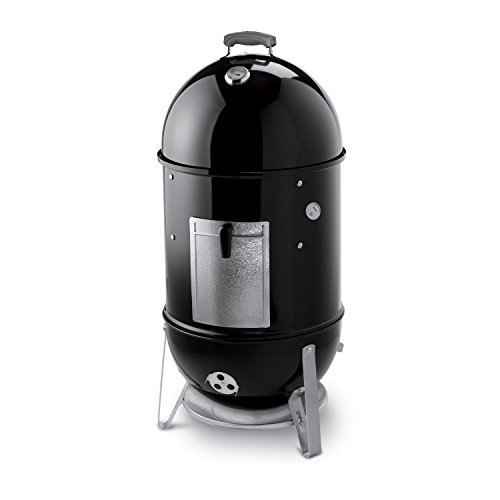
Weber Smokey Mountain Cooker 18-inch — Best Mid-Size Charcoal
The 18-inch Smokey Mountain is the sweet spot of the most proven design in backyard smoking: two cooking grates over a water pan in a porcelain-enameled bullet, sized for the cooks families actually make — a pork butt with ribs below, two chickens, a modest brisket — rather than the feasts its 22-inch sibling swallows. If you want charcoal flavor with the gentlest learning curve in the fuel, this is the default answer, and it has been for a very long time.
Strengths
- Water pan stability forgives beginner fire management; the cooker cruises once the dampers are set.
- Porcelain enamel shrugs off weather and cleans easily; parts and accessories are sold everywhere.
- Uses modest charcoal per cook — the economical way to burn real wood flavor.
Trade-offs
- Full packer briskets are a squeeze; the 22-inch exists for households that cook them often.
- Lower-grate access mid-cook requires lifting the top grate and its food.
- No electronics: your thermometer discipline is the monitoring system.
- Format: 18-inch vertical bullet charcoal smoker (per Amazon listing)
- Grates: dual cooking grates, porcelain-enameled kettle, temperature control dampers (per Amazon listing)
The 18-inch WSM’s real gift is confidence. Its fires are small, its moods are mild, and the internet’s collective knowledge about it could fill a library — whatever your cook does at hour four, a thousand owners have photographed the explanation. Families who buy it tend to keep it for a decade and add a second cooker beside it rather than replace it, which is about the strongest endorsement a bar bq smoker can earn.
Best for: families wanting real charcoal bar bq in a manageable size. / Not suited for: frequent whole-packer brisket cooks or push-button cooks. Check the current price on Amazon

Z GRILLS ZPG 550B2 Pellet Smoker — Best Compact Pellet
The ZPG 550B2 answers the most common pellet-grill objection — “they’re all huge” — with 553 square inches of cooking area, the latest PID temperature control in its class, an LCD controller, and a meat probe, in a footprint that fits the patios pellet grills usually overwhelm. It is the pellet format edited down to family scale without giving up the format’s essence: dial a temperature, and the cooker holds it while wood pellets lay down clean smoke.
Strengths
- PID control at a compact size — steady temperatures without the flagship footprint.
- 553 square inches is the honest family zone: brisket or butts plus sides, ribs in quantity.
- 8-in-1 versatility covers grilling duty, so it can be a small patio’s only cooker.
Trade-offs
- Pellet smoke is mild, especially at grilling temperatures; cook low first for depth.
- Compact hopper class means checking fuel on the longest cooks.
- Like all pellet machines, it wants dry pellet storage and periodic fire-pot vacuuming.
- Cooking area: 553 sq in (per Amazon listing)
- Controller: PID with LCD and meat probe (per Amazon listing)
- Format: 8-in-1 wood pellet smoker and grill
Z GRILLS built its name on owners who read spec sheets, and the 550B2 is that philosophy at family scale: the control hardware of bigger machines, sized for the cooks a household of four to six actually runs. For apartment-adjacent patios, townhome decks, and anyone whose “cookout” means eight people rather than thirty, it is the pellet pick that respects the space it will live in.
Best for: smaller patios and families wanting pellet ease without pellet-grill bulk. / Not suited for: crowd cooking or offset-intensity smoke. Check the current price on Amazon

Masterbuilt MPS 230S Propane Smoker — Best Propane Value
The MPS 230S is bar bq at its most straightforward: a 30-inch vertical propane cabinet that lights with a push, heats with a valve, and smokes with a chip tray over the flame. There is no charcoal to light, no cord to run, and no app to pair — just a tank, a cabinet, and food that comes out tasting like a Saturday. For households that already grill on propane, it is the lowest-friction step into smoking that exists.
Strengths
- Fastest startup in this guide: flame on, temperature stable, food smoking in short order.
- Vertical cabinet racks suit ribs, chickens, and trays — the family menu, stacked.
- No ash, no cord, and a fuel system (the standard tank) you already understand.
Trade-offs
- Analog control wanders more than digital; plan on a probe thermometer and occasional valve tweaks.
- Chips need renewing on long cooks to keep smoke present.
- Keep a spare tank or a gauge — an empty tank mid-brisket is the format’s one classic failure.
- Format: 30-inch propane vertical smoker (per Amazon listing)
The MPS 230S earns its place on rhythm: it is the smoker most likely to be lit on a whim — a rack of ribs decided at lunch, smoked by dinner — because nothing about starting it feels like a project. Households that smoke often and briefly, rather than rarely and monumentally, will get more total bar bq out of this modest cabinet than out of any heroic cooker they hesitate to light.
Best for: frequent, spontaneous smokes and propane households. / Not suited for: digital-precision seekers or overnight unattended cooks. Check the current price on Amazon

Cuisinart 18-inch Vertical Charcoal Smoker COS-118 — Best Compact Charcoal
The COS-118 packages the bullet-smoker idea at its most compact and approachable: an 18-inch vertical charcoal smoker with an integrated thermometer, a water bowl for moisture and stability, dual vents for airflow control, and chrome-plated grates, sized for balconies, small patios, and even the camping and tailgate trips its listing cheerfully suggests. It is the least intimidating charcoal smoker in this guide, in size and in spirit.
Strengths
- Small footprint, real charcoal flavor — the entry ticket for tight spaces.
- Water bowl and dual vents give genuine temperature control, not just a hot box.
- Light enough to travel: tailgates and campsites are realistic, not marketing.
Trade-offs
- Capacity is snack-and-family scale; big briskets and rib counts need another cooker.
- Compact charcoal beds mean more frequent tending on long cooks.
- Integrated thermometer is a guide, not gospel — a probe still improves everything.
- Format: 18-inch vertical charcoal smoker (per Amazon listing)
- Features: integrated thermometer, water bowl, dual vents, chrome-plated grates (per Amazon listing)
Think of the COS-118 as the gateway cooker: inexpensive in spirit, honest in function, and good enough at ribs, chicken, and small butts that many owners never feel the lack of more. It is also the pick we would hand a young cook moving into a first place with a small patio — a machine that teaches fire, smoke, and patience at a scale where mistakes cost a chicken, not a brisket.
Best for: small spaces, beginners, and portable charcoal smoking. / Not suited for: crowd cooks or long unattended sessions. Check the current price on Amazon

Smokehouse Big Chief Electric Smoker — Best for Fish and Jerky
The Big Chief is the elder statesman of this guide: a simple electric box smoker with a 50 lb capacity, designed around the low, gentle, smoke-heavy cooking that fish, jerky, sausage, and cheese demand. It does not chase brisket temperatures or bark; it smolders chips at modest heat for hours and turns out the smoked salmon and beef jerky that its owners — many of them on their second or third decade with the brand — consider the entire point of owning a smoker.
Strengths
- Low-temperature, smoke-forward cooking is exactly right for fish, jerky, and sausage.
- 50 lb capacity across its racks — batch-friendly for anglers processing a catch.
- Radical simplicity: few parts, nothing to pair, update, or troubleshoot.
Trade-offs
- Not a hot smoker: briskets and butts belong on the other five picks.
- Temperature follows its element and the weather more than a dial; it is a smoker, not an oven.
- Chips burn in pan loads that need periodic renewal during long smokes.
- Capacity: 50 lb (per Amazon listing)
- Format: electric box smoker, 24.5 × 18 × 12 in (per Amazon listing)
Every category has a product that survives by being perfect for one job, and the Big Chief is this guide’s. If your bar bq dreams run toward smoked trout, venison jerky, and summer sausage, no other pick here will serve you as well — and if they run toward brisket, the Big Chief’s honesty about what it is not should steer you to its five stablemates with confidence.
Best for: fish, jerky, sausage, and cheese smokers; anglers and hunters processing batches. / Not suited for: hot-and-fast or brisket-centered cooking. Check the current price on Amazon
Comparison Table
| Pick | Badge | Key spec | Best for |
|---|---|---|---|
| Masterbuilt 710 WiFi | Best Smart Electric | 711 sq in, 4 racks, WiFi, chip loader | Hosts who monitor from the party |
| Weber Smokey Mountain 18-inch | Best Mid-Size Charcoal | Dual grates, water pan, porcelain bullet | Real charcoal flavor, family size |
| Z GRILLS ZPG 550B2 | Best Compact Pellet | 553 sq in, PID control, meat probe | Pellet ease on smaller patios |
| Masterbuilt MPS 230S | Best Propane Value | 30-inch propane vertical cabinet | Fast, spontaneous smokes |
| Cuisinart COS-118 | Best Compact Charcoal | 18-inch vertical, water bowl, dual vents | Small spaces and beginners |
| Smokehouse Big Chief | Best for Fish and Jerky | 50 lb capacity electric box | Low-temp smoking, fish and jerky |
How to Choose a Bar BQ Smoker for Family Cooking
Choose by the cook you will repeat, not the feast you will attempt once. The repeating cook for most households is some rotation of ribs, chicken, pork butt, and wings for four to ten people — and every pick here does that rotation well, which is why the tiebreakers are about your life rather than the food. Do you want to monitor from inside? The Masterbuilt 710. Do you enjoy tending a small fire? The Weber or the Cuisinart. Do you want to turn a dial and think about something else? The Z GRILLS. Do you already own propane tanks and impatience? The MPS 230S. Do you fish? The Big Chief, and welcome to your new personality.
Size it to the table, not the yard
Family bar bq capacity is measured in simultaneous dishes: a main, a second main for the picky, and a tray of something snackable. That is 450–750 square inches or three to four cabinet racks for most households. Bigger than that buys headroom for holidays at the price of slower preheats and more cleaning every ordinary Saturday. The mid-size picks dominate this guide because the mid-size cook dominates real life.
Startup speed is a flavor
The smoker you light is the smoker that flavors your food; the heroic one you hesitate to light flavors nothing. Propane and electric start in minutes, pellet in a quarter hour, charcoal in the time a chimney takes — all workable, but be honest about your weeknight self. Many households solve this with the two-cooker pattern: a fast cabinet or propane unit for spontaneous cooks, and a charcoal bullet for the planned Saturday production. Both patterns are represented here, and both are respectable.
What a family cook actually costs in fuel
Fuel is the running cost nobody budgets, so here is the shape of it. A charcoal bullet cooks a family batch on a modest pile of briquettes and a few chunks — the cheapest fire in this guide per cook. The propane cabinet sips from a tank that also runs the grill, and its cost hides in a utility you already buy. Electric cabinets trade fuel for electricity at rates that make long, gentle cooks — jerky days, fish days — nearly free compared with any combustion option. Pellet cooking sits in the middle: a family cook consumes a few pounds of pellets, more in winter. None of these numbers should pick your cooker, but across fifty cooks a year they separate into real money, and they reward the household that matches fuel to its most frequent cook rather than its most glamorous one.
Where it will live
Small cookers earn their keep in storage as much as in cooking: a compact footprint under a cover in the patio corner, a cabinet that rolls into the garage, a box light enough for the truck. Check the storage story before the cooking story if your space is tight — the Cuisinart and Big Chief exist in this guide largely because so many bar bq buyers live in townhomes, apartments with patios, and houses with more family than yard.
How to Smoke Your First Bar BQ: Ribs, Chicken, and a Pork Butt
Ribs are the right first cook on any of these six: they take an afternoon, forgive small errors, and teach you your cooker’s personality. Set the smoker in its smoking band and let it stabilize with clean, thin smoke. Season the ribs while it warms — a simple salt-pepper-paprika rub is plenty for a first run — and put them on bone-side down. Then practice the discipline: lid closed, no peeking for the first two hours. Judge doneness by the bend test (the rack cracks its surface when lifted from one end) rather than the clock, and sauce, if you sauce, only in the final stretch so the sugars do not scorch.
Chicken is the second lesson, and its lesson is temperature staging. Smoke it low for flavor, then raise the heat at the end — open the vents, raise the controller, move it to the hot zone — so the skin renders crisp instead of rubbery. Pork butt is the graduation cook: a long, forgiving ride that teaches fuel planning and the stall, that famous plateau where the temperature stops rising for hours while the meat’s moisture does its work. Wrap it or ride it out; both are correct, and the butt forgives either. Rest everything. The cook who masters these three cooks on a modest smoker can feed any gathering that matters, which is the entire promise of this guide.
Rub, Sauce, and Timing: The Bar BQ Trinity Nobody Can Sell You
New smokers often spend on gear what they should spend on understanding three free things. Rub is a surface treatment: salt first for seasoning depth, then the spices for the bark’s flavor — and it works best applied with time to spare, even overnight for big cuts. Smoke is an early-cook ingredient: meat takes on the most smoke while it is cool and its surface is moist, which is why the first hours matter and why late smoke mostly perfumes the yard. Sauce is a finish, not a cooking medium: applied early, its sugars burn; applied at the end or served at the table, it does its bright, sweet work. Time, finally, is measured in doneness, not hours — every recipe time is an estimate wearing a costume, and the probe and the bend test are the truth. Master those four sentences and the modest cookers in this guide will embarrass expensive ones in careless hands.
Care and Feeding: Keeping a Family Smoker Ready
Family smokers live or die on small routines. Empty ash when it is cold, because ash plus dew is corrosion in a bucket. Keep the grease path clear — cabinets and bullets collect fat in pans and bowls that are easy to forget until they announce themselves. Wipe door seals, check that vents and dampers still move freely, and store charcoal, chips, and pellets dry and sealed; damp fuel is the hidden cause of half the “my smoker won’t hold temperature” complaints in the world. Cover the cooker, keep the propane tank valve closed between cooks, and run one empty hot burn each season to refresh the interior. Ten minutes of this rhythm per cook buys years of Saturdays.
Sides From the Smoker: The Tray Foods That Steal the Show
Once a family smoker is running, the smartest cooks fill its spare corners, because a smoker at temperature is a resource that should never ride half-empty. Baked beans in a cast-iron pan under a pork butt catch the drippings and emerge as the dish people ask about. Mac and cheese takes smoke beautifully in its final stretch and holds well while the meat rests. Corn on the cob, halved cabbage, whole onions, and trays of seasoned potatoes all cook happily in the smoking band alongside the main event. Even dessert plays: smoked peaches and apples soften into something between pie filling and campfire memory.
The technique is mostly traffic management. Put the sides where the heat suits them — beans and sturdy pans low, delicate items in the gentle zones — and time them backward from the meat’s finish so everything lands together. A cabinet’s extra racks and a bullet’s second grate stop being specifications and start being a menu. Households that learn this habit find their smoker running fuller, their fuel going further per meal, and their gatherings fed from one fire — which is, when you think about it, the oldest definition of bar bq there is.
Troubleshooting: The Five Problems Every New Smoker Meets
Problem: temperature will not come up. → Check the fuel first (damp charcoal and swollen pellets are the usual suspects), then airflow: vents open, ash cleared from the fire’s breathing space, and on windy days, reposition or shield the cooker rather than fighting it with more fuel.
Problem: temperature runs away high. → Too much lit fuel or too much air. Close intake dampers partway and wait a full fifteen minutes before judging — smokers respond slowly, and stacking corrections on top of each other causes the oscillation beginners blame on the cooker.
Problem: bitter, harsh smoke flavor. → The smoke was too thick or the wood was wrong for the job. Run a smaller, hotter fire, wait for thin pale smoke before the food goes on, and halve the wood next time; bitterness is almost always too much smoke, applied too early, for too long.
Problem: meat stalls for hours. → That is the stall, and it is physics, not failure: evaporative cooling balancing the heat. Wrap the meat to push through it, or simply plan for it — but do not raise the temperature in a panic, which trades a plateau for a dried-out finish.
Problem: dry results. → Usually a trio: cooked past done (probe earlier), sliced too soon (rest longer), or cooked at a wandering temperature (fix the first two problems above). Brining poultry and choosing butts over leaner cuts for long cooks stacks the deck in your favor while you learn.
Bar BQ Budgeting: Where the Money Should Actually Go
A sane first-year bar bq budget spends most of itself on the cooker, then deliberately on three unglamorous things: a dual-probe thermometer, a cover, and fuel storage. After that, the highest-return purchases are a chimney starter for charcoal cooks, a sturdy pair of tongs and a wide spatula, heat-resistant gloves for handling hot racks and pans, and a lidded metal bin for ash. Notice what is not on the list: injector kits, elaborate rub collections, and gadgetry shaped like animals. The cooks whose food improves fastest spend on information (probes), protection (covers and bins), and ingredients — in that order — and let the gadget drawer fill slowly, if at all. Every pick in this guide leaves room in a normal budget for the full supporting list, which is part of what makes them the right first smokers.
A Year of Bar BQ: The Seasonal Rhythm of a Family Smoker
A family smoker’s year has a rhythm worth planning around, because each season asks something different of the cooker and the cook. Spring is for ribs and chicken — shorter cooks that shake off the winter rust and remind your hands how the dampers and valves behave. It is also cover-off inspection season: seals, grates, and fuel stores all get their annual honest look. Summer is the high season of volume: butts for gatherings, wings for game nights, corn and sides riding every spare rack. The cooker’s enemies in summer are heat and grease — shade the digital cookers’ electronics where you can, and keep the grease path ahead of the volume.
Autumn is brisket season in spirit — cooler air, longer cooks, and the patience for them — and the season when charcoal and pellet stores should be laid in dry before the weather turns. It is also jerky and sausage season for the Big Chief households, when hunting and fishing harvests come home. Winter separates the committed from the curious: electric and propane cabinets keep their manners best in the cold, charcoal bullets do fine with a windbreak and a fuller chimney, and every format rewards the cook who plans the day rather than improvising it in a coat. None of this requires four cookers. It requires one cooker from this guide, understood across four seasons — which is exactly the relationship these six were chosen to build.
Safety and Common Sense Around a Family Cookout
Bar bq is fire plus food plus family, and the safety rules are few, plain, and worth printing in a guide aimed at households. Keep the cooker on a stable, non-combustible surface with the clearances its manual specifies, away from siding, fences, and the traffic path of children and dogs. Never run any combustion smoker in a garage or enclosed space — carbon monoxide is the invisible reason every manual says it, and electric models belong outdoors or in properly ventilated areas per their instructions too. Ash goes into a metal container, and it waits a full day before it goes anywhere near a trash bin; more patio fires start from “cold” ash than from any dramatic failure.
Food safety is the other half: keep raw and cooked tools separate, chill leftovers promptly rather than letting the tray ride the evening out, and reheat smoked meats thoroughly. None of this diminishes the pleasure of the thing — it is what allows the pleasure to repeat for years without incident. The families who smoke for decades are not lucky; they are habitual about exactly these unglamorous paragraphs, the way they are habitual about seasoning and probes. Build the habits with the first cook and they will never feel like rules at all.
Common Buying Mistakes
Buying the competition fantasy. A cooker sized and priced for contest briskets will mostly cook family ribs, slowly and at great fuel cost. Buy for the table you feed, and for the weekends you actually have.
Skipping the probe thermometer. Built-in gauges are approximate on every format here. One probe for the grate and one for the meat transforms first-year results.
Judging smoke by volume. Thick white smoke is unburned fuel and bitter flavor. Thin, pale smoke is the goal — if you can barely see it, you are doing it right. This single misunderstanding ruins more first cooks than every equipment flaw combined, because new cooks keep adding wood to make the smoke look impressive while the food quietly turns harsh.
Saucing early. Sugared sauces scorch over long cooks. Sauce at the end, or at the table. If your household loves a glazed finish, brush it on in the final twenty minutes and let the cooker’s residual heat set it to a shine — the difference between lacquered and burnt is mostly a clock.
Letting fuel get damp. Charcoal, chips, and pellets all absorb moisture and all misbehave afterward. Sealed bins are the cheapest performance upgrade in bar bq, and the one most often skipped by cooks who then blame the cooker for a wet Saturday.
Final Recommendation
For most families, start with the Weber Smokey Mountain 18-inch if you want charcoal flavor with training wheels, or the Masterbuilt 710 WiFi if you want to host the party instead of the smoker. The Z GRILLS 550B2 is the dial-it-and-done pellet pick for smaller patios, the MPS 230S is the spontaneous-cook champion, the Cuisinart COS-118 fits the tightest spaces, and the Big Chief owns fish and jerky outright. Order a probe thermometer and a cover in the same box as whichever cooker you choose, season it the day it arrives, and make the first cook ribs for people who love you — the forgiving audience every new smoker deserves while the cooker and the cook learn each other. Keep exploring the cluster: Best Backyard Smokers, Best Barbeque Smokers, Best Barbecue Smokers Grills, Best Backyard Pellet Smokers, Best Backyard Offset Smokers, Best Affordable Backyard Smokers.
Frequently Asked Questions
What is the easiest smoker for a complete beginner?
An electric cabinet like the Masterbuilt 710: set the temperature digitally, add chips through the loader, and the cooker handles the rest. A charcoal bullet like the Smokey Mountain is the easiest of the fire-based options and teaches more, at the price of a little more attention. The honest tiebreaker is what you want from the hobby: if smoking is a means to dinner, go electric or pellet and never apologize; if the fire itself sounds like half the fun, start with the bullet and you will learn more in one summer than a decade of push-button cooking teaches — both paths lead to excellent bar bq, and households regularly walk one, then the other.
How long do ribs take on a bar bq smoker?
Plan on roughly four to six hours at smoking temperatures depending on the cut — spares longer, baby backs shorter — and judge by the bend test rather than the clock. Every cooker in this guide runs ribs comfortably in an afternoon. A few refinements once the basics land: ribs are done in stages you can see — the meat pulls back from the bone ends, the surface color deepens, and the rack flexes with a crack in the bark when lifted. Sauce, if your household sauces, belongs in the last half hour. And rest ribs briefly, tented, while the sides finish; ten patient minutes is the difference between juicy and merely done.
Can I smoke on a small patio or balcony?
Where local rules and your lease allow any cooker at all, compact electric and small charcoal models like the Cuisinart COS-118 are the usual fit: small footprint, modest smoke output, easy storage. Always follow your building’s and fire code’s rules for outdoor cooking appliances. Consider your neighbors as part of the setup, too: a smoker placed so its smoke drifts across the next patio will generate complaints regardless of its legality, while a thoughtfully placed one, run with clean thin smoke, rarely bothers anyone. Good smoke is nearly invisible; if the whole building can see yours, the fire — not the balcony — is the problem to fix.
What wood should I start with?
Apple or cherry chunks and chips for a gentle start — they flatter pork and poultry and are hard to overdo. Add hickory when you want a stronger voice, especially for beef and big pork cuts. Whatever you choose, buy cooking wood that has been stored dry, and store your own the same way: wood that steams in the firebox for its first hour is spending that hour not making smoke. A single bag of fruitwood and a single bag of hickory will carry a first year of family cooking, and by the end of it you will know your household’s preference better than any chart can tell you.
Why does my smoked chicken have rubbery skin?
Low temperatures render fat too slowly to crisp skin. Finish chicken with a hotter stretch at the end of the cook — higher controller setting, open vents, or the cooker’s hot zone — and the skin will set properly. Two supporting habits: dry the skin well before seasoning (an uncovered rest in the refrigerator is the classic move), and avoid wet marinades that keep the surface steaming instead of rendering. Chicken is the cook where these small disciplines pay off most visibly, and mastering it on a modest smoker is a genuine milestone — the bird that comes off with mahogany, crisp skin and smoke in the meat is the one that converts skeptics at the table.
Do I need to use the water pan?
On the bullet smokers, yes for most cooks: it stabilizes temperature and keeps the cooking environment humid, which forgives mistakes. Some cooks replace water with sand for bark-focused cooks once they know their cooker — an advanced move, not a first-month one. Two practical notes: fill the pan with hot water so the cooker does not spend its first hour heating a cold reservoir, and check the level on long cooks, because a pan that boils dry quietly removes the stability you were counting on — the mid-cook refill, done carefully with a watering can or spouted jug, is a normal part of bullet ownership.


