Disclosure: airfryerkitchensupply.com is reader-supported. When you buy through links on our site, we may earn an affiliate commission at no extra cost to you.
The best affordable backyard smokers share one trait: they spend your money on the cooking chamber, the racks, and temperature control instead of on badges and Bluetooth you will use twice. The backyard is actually the easiest place in the world to smoke well on a budget, because you have space, you have a power outlet, and nobody is asking the cooker to travel. That means the affordable end of the market — electric cabinets, bullet charcoal smokers, compact pellet grills, and simple offsets — is full of machines that produce genuinely good barbecue.
Affordable here means the entry tier of each fuel type, the cookers a first-time buyer can justify without a spreadsheet. Within that tier the differences are real: some hold temperature for ten hours untouched, some need babysitting every forty minutes, and some are built from steel so thin that a windy October evening defeats them. This guide sorts the six worth buying by how a backyard actually gets used — weeknight ribs, Saturday pork butts, and the occasional brisket that takes over the whole day.
Every pick below was verified against its current Amazon listing before inclusion, and each one is a current-production model with replacement parts and community knowledge behind it. No discontinued bargains, no mystery brands with no support — a backyard smoker should be a five-year appliance, not a one-summer experiment.
Where to buy
All six cookers are sold on Amazon, most through their manufacturers’ own stores, and big-box outdoor retailers stock several of them seasonally. Start with the links below and check price on Amazon before you buy.
- Masterbuilt 30-inch Digital Electric — Check the current price on Amazon
- Weber Smokey Mountain 18 — Check the current price on Amazon
- Pit Boss 500 Carbon Series — Check the current price on Amazon
- Dyna-Glo Wide Body Offset — Check the current price on Amazon
- Masterbuilt MPS 230S Propane — Check the current price on Amazon
- Cuisinart 18-inch Vertical Charcoal — Check the current price on Amazon
In this guide
Quick Picks
The short version: one pick per fuel type, plus the best all-rounder and the best small-footprint option, so you can choose by how you like to cook rather than by marketing.
- Masterbuilt 30-inch Digital Electric Smoker MB20071117 — Best Overall: The backyard default for a reason: set the digital temperature, load chips through the side loader without opening the door, and smoke on 710 square inches across chrome racks. — Check on Amazon
- Weber Smokey Mountain Cooker 18-inch — Best Charcoal Flavor: The bullet smoker that taught a generation to barbecue: charcoal and water-pan stability, porcelain-enameled steel, and a community of owners larger than any other smoker’s. — Check on Amazon
- Pit Boss 500 Carbon Series Pellet Grill & Smoker — Best Pellet: Pellet convenience at an entry price: an LCD controller, a 180–500°F range that smokes and grills, a meat probe, and a 13.5 lb hopper on 543 square inches. — Check on Amazon
- Dyna-Glo Wide Body Vertical Offset Smoker DGO1890BDC-D — Best for Big Cookouts: A vertical offset with a wide body and multiple racks: burn charcoal and splits in the side box, load the cabinet with meat, and feed a crowd from one fire. — Check on Amazon
- Masterbuilt MPS 230S Propane Smoker 30-inch — Best Propane: Gas-fired cabinet smoking with no outlet required: a 30-inch vertical propane smoker that lights instantly, heats fast, and runs anywhere in the yard. — Check on Amazon
- Cuisinart 18-inch Vertical Charcoal Smoker — Best Budget / Small Footprint: The smallest spend that still smokes properly: an 18-inch vertical charcoal smoker with a water bowl, dual vents, and chrome grates, sized for small yards and first cooks. — Check on Amazon
How These Picks Were Chosen
We limited the field to current-production smokers in the entry price tier of each fuel type — electric, charcoal, pellet, offset, and propane — then verified every candidate against its live Amazon listing. Models with no verifiable listing, no parts support, or a pattern of safety complaints were removed before scoring.
Scoring weighted what a backyard actually demands: temperature stability over a six-hour cook, honest capacity (a ‘large’ smoker that cannot fit a brisket lying flat is not large), build materials that survive outdoor storage, and the true cost of ownership including fuel. Two cookers can share a badge category only if they serve genuinely different yards, which is why the list carries one pick per fuel plus a budget footprint option instead of six near-identical electric cabinets.
The 6 Best Affordable Backyard Smokers

Masterbuilt 30-inch Digital Electric Smoker MB20071117 — Best Overall
For most backyards, the best smoker is the one that gets used on a Tuesday, and that is the Masterbuilt 30-inch digital electric. There is no charcoal to light, no fire to manage, and no propane tank to swap: plug it in, set the temperature on the digital panel, and the cabinet holds a steady smoking heat for hours. The side wood chip loader is the feature owners praise most — you add smoke wood without opening the door and dumping the heat and humidity you spent an hour building.
Strengths
- Digital temperature control holds steady heat with almost no attention
- Side chip loader adds wood without opening the door and losing heat
- 710 sq in of racks covers family-size cooks comfortably
Trade-offs
- Smoke flavor is milder than charcoal or offset cooking
- Needs a nearby outdoor outlet and shelter from heavy rain
- Chrome racks need a soak and scrub to stay presentable
| 7 | 1 |
| E | l |
| S | i |
The 710 square inches of rack space handles the real backyard menu: a couple of pork butts, several racks of ribs laid flat, or a whole load of wings for a game day. Electric heat does produce a gentler smoke flavor than charcoal or an offset, which some people honestly prefer and which suits fish, cheese, and poultry beautifully. If your household’s idea of smoking is ‘set it at breakfast, eat it at dinner,’ this is the affordable machine that delivers that life with the least friction.
Long-term ownership is this cabinet’s quiet strength. The element and controller are proven across an enormous installed base, replacement racks, water pans, and chip loaders are stocked everywhere, and the cleaning routine — racks in the sink, a wipe of the interior, the drip pan emptied — takes minutes. Owners who keep it covered and occasionally clean the temperature sensor report years of uneventful service, which is precisely the point of an electric smoker: the drama belongs in the food. It is also the smoker most likely to convert a skeptical household, because its output is consistent from the very first cook, and consistency is what turns a purchase into a habit.
Best for: busy backyard cooks who want real smoked food with push-button effort / Not suited for: purists chasing deep charcoal bark and a heavy smoke ring
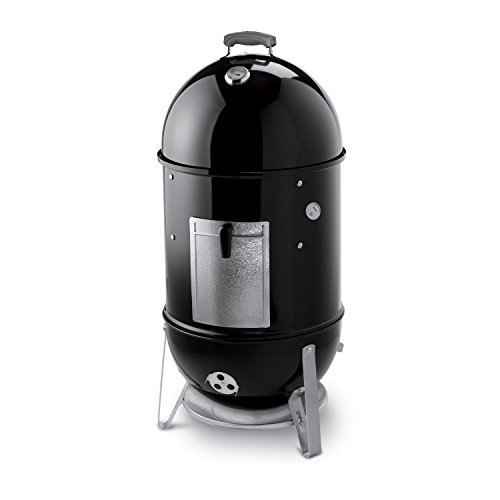
Weber Smokey Mountain Cooker 18-inch — Best Charcoal Flavor
If flavor is the priority and the budget is fixed, the 18-inch Smokey Mountain is where backyard charcoal smoking starts. The design is beautifully simple — charcoal basket at the bottom, water pan in the middle, two cooking grates above — and that water pan is a thermal flywheel that smooths out temperature swings for hours. Once the vents are set, a full basket of charcoal runs a long, steady cook with only occasional nudges, which is why this bullet shows up at competitions in the hands of people who could afford anything.
Strengths
- Deep, genuine charcoal smoke flavor electric cookers cannot match
- Water pan design delivers famously stable long cooks
- Unmatched parts availability and owner community knowledge
Trade-offs
- Charcoal is an ongoing cost and takes 20 minutes to light
- Vent management has a real, if short, learning curve
- Two-grate layout means big briskets need care or a rib rack shuffle
| 1 | 8 |
| C | h |
Weber’s porcelain-enameled steel and parts support matter in the affordable tier, where no-name bullets rust out in two seasons. Every gasket, grate, and door for this smoker is a click away, and the technique library written for it — forums, videos, books — dwarfs any rival. The honest costs are charcoal itself, a chimney starter if you do not own one, and the learning curve of vent management, which takes two or three cooks to internalize and then becomes second nature.
What owners discover across the first season is how little this smoker asks for beyond charcoal and attention. There is no element to fail, no auger to jam, no app to update — the maintenance list is ash, grate cleaning, and the occasional door adjustment, and the cooker rewards that simplicity with a working life measured in decades rather than product cycles. It also holds a unique place in the ecosystem: nearly every barbecue book, class, and forum thread of the last twenty years assumes this design, so every question a new owner can ask has been answered a hundred times with photographs. Buying the Smokey Mountain is buying into the largest body of smoking knowledge in existence, and that knowledge is a feature as real as the steel.
Best for: backyard cooks who care most about classic charcoal barbecue flavor / Not suited for: anyone who wants to press a button and walk away for eight hours

Pit Boss 500 Carbon Series Pellet Grill & Smoker — Best Pellet
Pellet grills are the fastest-growing corner of the backyard, and the Pit Boss 500 Carbon is the affordable way in: wood pellets feed automatically, the LCD controller holds the temperature you dial in, and the 180–500°F range means the same machine smokes ribs on Saturday and grills burgers on Sunday. A built-in meat probe keeps the guesswork out of doneness, and 543 square inches is honestly sized for a family — a brisket fits, a spatchcocked turkey fits, and two racks of ribs fit with room to spare.
Strengths
- Automatic pellet feed with LCD control — set it and monitor, not manage
- 180–500°F range covers smoking, roasting, and weeknight grilling
- Meat probe included for confident doneness
Trade-offs
- 13.5 lb hopper needs a refill on the longest overnight cooks
- Pellet smoke flavor is cleaner and lighter than charcoal
- Moving parts (auger, fan) mean more long-term maintenance than a bullet smoker
| 5 | 4 |
| 1 | 8 |
| 1 | 3 |
The 13.5 lb hopper is the specification to understand: it is plenty for a ribs-and-chicken afternoon, but an overnight brisket will want a top-up, so overnight cooks should start with a full hopper and check it before bed. Pellet flavor sits between electric and charcoal — clean, real wood smoke, less intense than an offset — and pellets are a recurring purchase, though an efficient cooker sips them at low temperatures. As a first pellet grill that does not feel like a compromise, this is the backyard sweet spot.
The ownership rhythm of a pellet grill settles quickly: vacuum the fire pot every few cooks, keep the hopper topped with dry pellets, and wipe the grease tray before it becomes a project. The 500 Carbon makes those chores easy with accessible internals, and its controller’s behavior — steady at smoking temperatures, brisk to recover after the lid opens — is the mature end of budget pellet design. It also changes the household’s cooking map more than expected: because it grills as readily as it smokes, it tends to become the default outdoor appliance, and the gas grill beside it starts gathering the dust instead. That versatility, at this price, is the deepest argument for it.
Best for: backyard cooks who want wood-fired flavor with thermostat convenience / Not suited for: offset purists, or anyone far from a reliable pellet supply

Dyna-Glo Wide Body Vertical Offset Smoker DGO1890BDC-D — Best for Big Cookouts
When the backyard cookout means twenty people, the affordable answer is vertical space, and the Dyna-Glo Wide Body is built exactly for that: a side firebox burns charcoal and wood while the tall, wide cabinet stacks rack above rack of ribs, butts, chickens, and sausage. Vertical offsets use their footprint brilliantly — this cooker feeds a party from a patio corner that a horizontal offset would dominate — and cooking in the rising heat and smoke path gives food a genuine wood-fired character.
Strengths
- Huge vertical capacity for parties from a small patio footprint
- Real wood-and-charcoal flavor from a true offset firebox
- Multiple racks let you cook different meats at once
Trade-offs
- Fire management every 45 minutes or so — this is hands-on cooking
- Door sealing on affordable offsets benefits from a gasket upgrade
- Assembly is a two-person, one-afternoon job
| W | i |
The trade-offs are the honest ones of the offset style. You are the thermostat: expect to check the fire every 45 minutes or so, add fuel in small amounts, and learn your vents. Affordable offsets also benefit from simple sealing tweaks around the doors, a worthwhile one-time hour with gasket tape. In return you get capacity and flavor per dollar that nothing else in this guide touches, plus the deep satisfaction of running a real fire — for many backyard cooks, that ritual is not a chore but the entire point.
A season with the wide body teaches the offset arts faster than any book: fire sizing, coal-bed management, the sound of a clean burn, the look of thin blue smoke. The vertical format adds its own lesson — heat and smoke stratify, so the racks cook at subtly different rates, and rotating food between levels becomes a skill that produces remarkably even big-batch results. Owners who add the gasket seal and a water pan find the cooker’s temperament settles considerably, and the firebox’s appetite moderates. It remains the most hands-on pick here, and deliberately so: this is the smoker for the person who suspects, correctly, that tending the fire might be the best part of their Saturday.
Best for: hosts who cook for crowds and enjoy tending a real fire / Not suited for: set-and-forget cooks or small households cooking two racks at a time

Masterbuilt MPS 230S Propane Smoker 30-inch — Best Propane
Propane is the overlooked backyard fuel, and the MPS 230S makes its case well: instant ignition, fast heat recovery after the door opens, and complete freedom from extension cords — the smoker can live wherever in the yard the smoke drifts away from the house. A standard grill tank runs many long cooks, and the vertical cabinet format with multiple racks covers the family menu the same way its electric sibling does, with wood chips in the tray providing the smoke.
Strengths
- No electricity needed — place it anywhere, take it anywhere
- Instant start and fast heat recovery compared with charcoal
- Long, cheap runs from a standard propane tank
Trade-offs
- Analog dial control needs occasional small adjustments
- A spare propane tank is a near-mandatory accessory
- Smoke output depends on chip tray management early in the cook
| 3 | 0 |
| P | r |
Gas cabinets reward one habit: keep a spare tank or at least a gauge, because a tank that dies at hour five of a pork butt is a preventable heartbreak. Temperature control is a dial rather than a digital thermostat on this class of smoker, so expect to make small adjustments as the day warms and cools — most owners find their setting within two cooks and mark it. For backyards without a convenient outdoor outlet, or cooks who also want a smoker that can travel to a tailgate or a lake house, propane is the practical answer.
Propane ownership has a rhythm of its own: the tank gauge checked with the Saturday coffee, hoses inspected each spring, the chip tray loaded before the meat so the first smoke is the deepest. The MPS 230S rewards those small disciplines with the most forgiving schedule in this guide — it is the smoker that can be decided on at 10 a.m. and eating from at dinner without a charcoal chimney’s lead time or an outlet hunt. It also travels in a way cabinets rarely do: the same cooker that lives by the patio can ride to a hunting camp or a family reunion and perform identically, because its fuel is sold at every crossroads in America.
Best for: backyards without a handy outlet and cooks who value instant starts / Not suited for: anyone who wants digital set-and-forget temperature holding

Cuisinart 18-inch Vertical Charcoal Smoker — Best Budget / Small Footprint
Every backyard list needs an honest entry point, and the Cuisinart 18-inch vertical is it: a simple bullet-style charcoal smoker with the features that actually matter — a water bowl for temperature stability and moisture, dual vents for real fire control, and an integrated thermometer to learn by. It assembles quickly, occupies a genuinely small footprint on a patio or balcony-adjacent yard, and cooks the learning menu — ribs, chicken, a first pork butt — exactly the way the big cookbooks describe.
Strengths
- Lowest cost of entry to real charcoal smoking in this guide
- Water bowl and dual vents teach genuine fire management
- Compact footprint suits small patios and yards
Trade-offs
- Lightweight steel will not match premium bullets for longevity
- Integrated thermometer is approximate — budget for a probe later
- Capacity tops out at small-family cooks
| 1 | 8 |
| I | n |
Keep expectations aligned with the price and it will not disappoint: the steel is lighter than a Weber’s, the thermometer is a guide rather than an instrument, and capacity suits couples and small families rather than parties. But as a first smoker it teaches the transferable skills — fire building, vent control, smoke management — on equipment cheap enough that upgrading later feels like graduation, not waste. Many owners keep it afterward as a dedicated fish and chicken cooker even after a bigger pit arrives.
The Cuisinart’s long-term role surprises many owners: bought as a starter, it stays as a specialist. Its small chamber heats fast and sips charcoal, making it the economical choice for a single chicken, a salmon side, or a small rib cook that would waste a big pit’s fuel. The skills it teaches — vent control, water management, smoke judgment — are the complete foundation of charcoal cooking, and they are learned on a cooker cheap enough that mistakes feel like tuition rather than damage. Keep it dry, keep the ash out, and this little vertical will still be teaching somebody’s first cook years from now, which is a fine legacy for the least expensive pick in the guide.
Best for: first-time smokers, small yards, and anyone learning charcoal on a budget / Not suited for: hosts cooking for crowds or buyers wanting a decade-long appliance
Comparison Table
| Pick | Badge | Key spec | Best for |
|---|---|---|---|
| Masterbuilt 30-inch Digital Electric Smoker MB20071117 | Best Overall | 710 sq in, digital electric, side chip loader | busy backyard cooks who want real smoked food with push-button effort |
| Weber Smokey Mountain Cooker 18-inch | Best Charcoal Flavor | 18-inch charcoal bullet with water pan | backyard cooks who care most about classic charcoal barbecue flavor |
| Pit Boss 500 Carbon Series Pellet Grill & Smoker | Best Pellet | 543 sq in pellet, LCD control, 180–500°F | backyard cooks who want wood-fired flavor with thermostat convenience |
| Dyna-Glo Wide Body Vertical Offset Smoker DGO1890BDC-D | Best for Big Cookouts | Vertical offset, multi-rack wide body cabinet | hosts who cook for crowds and enjoy tending a real fire |
| Masterbuilt MPS 230S Propane Smoker 30-inch | Best Propane | 30-inch propane cabinet smoker | backyards without a handy outlet and cooks who value instant starts |
| Cuisinart 18-inch Vertical Charcoal Smoker | Best Budget / Small Footprint | 18-inch charcoal vertical, water bowl, dual vents | first-time smokers, small yards, and anyone learning charcoal on a budget |
Matching a Backyard Smoker to Your Land, Weather, and Routine
The most common backyard smoker mistake is buying for the cook you imagine rather than the yard you have. A cooker lives where it stands: the offset that thrives on a rural acre sulks on a windy townhouse patio, and the electric cabinet that delights a covered-porch cook is homeless in an open yard with no outlet. Before choosing among the six, walk the actual spot with the actual questions. Where does the wind come from on a Saturday afternoon? Where does smoke drift relative to the neighbor’s windows and your own? Is there a covered corner, a dry fuel store, a level pad? The answers eliminate half the field before flavor is even discussed, and they should — a smoker perfectly matched to its place gets used constantly, and use is the multiplier on every other virtue.
Routine is the second filter, and it is about time rather than space. Charcoal and offset cooking are scheduled around the fire: lighting, stabilizing, tending. Electric, pellet, and propane cooking are scheduled around the food: prep, load, monitor. Neither is superior — they are different hobbies that happen to share a menu. The honest self-test is your last three free Saturdays: if they were spent on projects you tended happily, fire craft will feel like leisure; if they were spent everywhere at once, a set-and-forget cooker is not a compromise but a correct diagnosis. Most households that smoke monthly for years are the ones whose cooker matched their calendar from the start.
Finally, think in seasons. A backyard smoker bought in June must still make sense in January: charcoal in the cold is entirely workable but slower to stabilize, pellets burn faster against the cold, electrics sip power unbothered under a porch roof, and propane lights instantly in any weather. If you intend to smoke year-round — and the holiday brisket tradition suggests you will — weight your choice toward the fuel your winter self will still enjoy managing. The six picks here each own at least one season outright; the right one owns the seasons you actually cook in.
How to Choose an Affordable Backyard Smoker
Affordable does not mean cheap in the disposable sense — it means every dollar went to the cook. Work through fuel, capacity, and your own patience honestly, and the right pick from the six above usually names itself.
E
l
S
q
I
n
T
h
How the Affordable Tiers Divide by Fuel
In the affordable band, your money buys different things depending on fuel. Electric cabinets spend it on insulation and controllers — the cooking chamber is simple, so the budget goes to the parts that hold temperature. Charcoal bullets spend it on steel and enamel, because there is nothing else to buy; that is why the Smokey Mountain’s build quality embarrasses cookers costing more in other categories. Pellet grills split the budget three ways — chamber, auger system, controller — which is why entry pellet models must be judged on which corner, if any, was cut. Offsets spend it on raw material: capacity and firebox, with refinement left to the owner’s gasket tape.
The second budget is the running one, and it reverses some rankings. Electric and propane are the cheapest fuels per hour of smoking; charcoal costs a bag every cook or two; pellets sit in the middle and reward bulk buying. Add the accessories each style truly needs — a chimney for charcoal, a cover for everything, a probe thermometer for anything with a dial — and the first-year totals converge more than the stickers suggest. The practical advice is to compare twelve-month costs for your cooking frequency, not shelf prices: a frequent cook saves real money on fuel efficiency, while an occasional cook should optimize for the purchase price and simplicity instead.
How to Set Up a New Backyard Smoker for Its First Cook
Whatever fuel you chose, the first session should be a seasoning burn, not a brisket. This sequence protects the cooker, teaches you its personality, and makes the first real cook dramatically more predictable.
- B u
- R a
- C o
- I n
- F o
- L e
Keep a small notebook or phone log for the first five cooks: fuel amount, vent settings, weather, and results. Affordable smokers vary more from unit to unit than premium ones, and your own notes become the manual that actually matches your cooker.
Seasonal Care That Doubles a Budget Smoker’s Life
Affordable smokers do not die of cooking; they die of storage. Four habits, none costing more than a few minutes, are the difference between a three-season cooker and a ten-season one.
Ash out, every time
Cold ash absorbs moisture from the air and holds it against the steel it sits in, corroding fireboxes and charcoal bowls from the inside. Empty ash after every cook once it is fully cold, and never let a cooker overwinter with ash inside — that single habit prevents the most common death of budget smokers.
Grease managed, not accumulated
Rendered fat in drip pans and cabinet floors turns rancid, flavors new food, and becomes a flare risk near burners and elements. Empty and wipe grease systems after long cooks, and do a scrape-down monthly in heavy season. Your next brisket will taste like brisket, not like the last four cooks.
Covered, but breathing
A fitted cover keeps rain off, but a sealed-wet cooker sweats under its own cover. Cover only a cool, dry smoker, and lift the cover after storms to let moisture escape. Electric and pellet models deserve a roof if one exists; their cords, controllers, and hoppers age fastest in standing damp.
Moving parts exercised and inspected
Dampers, hinges, augers, and igniters fail from disuse and corrosion more than from wear. Work every vent through its range monthly, check propane hoses with soapy water each spring, and vacuum pellet fire pots on schedule. Twenty minutes a season keeps every system in this guide honest.
Four Backyard Scenarios, Four Right Answers
The weeknight family
Dinner must happen between work and bedtime, so the smoker’s job is to be ready when you are. The Masterbuilt digital electric owns this scenario: chips in the loader, temperature set, chicken or salmon smoking while homework happens. Pellet cooking is the runner-up — the Pit Boss 500 Carbon preheats fast and grills the sides — but for pure midweek smoking with zero fire management, the electric cabinet is the appliance that turns smoked food into a Tuesday possibility instead of a Saturday project.
The Saturday traditionalist
The cook is the entertainment: coffee, a chimney of charcoal, a day that smells like hickory. The Smokey Mountain 18 is this scenario’s instrument, with the Dyna-Glo offset as the graduate version when the guest list grows. What matters here is not convenience but engagement — vent craft, wood selection, the long afternoon — and both charcoal picks deliver the deepest version of it at an affordable price. If this is your Saturday, do not let anyone sell you a button to press instead.
The neighborhood host
Twelve people, one yard, a reputation to maintain. Capacity and reliability rule: the Dyna-Glo wide body’s vertical racks swallow the load, and its fire-tending becomes part of the party’s theater. Hosts who would rather mingle than tend should scale the electric or pellet route instead — two cabinets or the big pellet class in the wider market — accepting a milder smoke in exchange for being present at their own gathering. The right answer depends on whether the host’s place is at the fire or at the table.
The small-yard realist
A townhouse patio, a balcony-adjacent slab, a landlord’s rules. The Cuisinart vertical and the Masterbuilt propane cabinet are the honest fits: compact footprints, contained fuel, and smoke that a small space can absorb without feuds. Electric is viable where an outlet and a tolerant lease exist. What the small-yard cook should not do is buy the big offset of their dreams and store it in a garage it must be dragged from — the best small-yard smoker is the one standing ready three steps from the kitchen door.
Pre-Purchase Checklist: Backyard Smokers
Eight checks that take ten minutes and prevent the three classic regrets — wrong fuel, wrong size, wrong spot.
- Fuel chosen by routine: Name the fire you will actually manage in month six — not the one that sounds best today. This decision outranks all others.
- Brisket test passed: Confirm your actual biggest cut fits lying flat, or that you are content to trim or separate it. Measure; do not imagine.
- A home spot identified: Level ground, wind-sheltered, smoke drifting away from windows, clearances respected. Walk the spot before you buy.
- Power or fuel logistics solved: Outlet within reach for electric and pellet, dry storage for charcoal and pellets, a spare tank plan for propane.
- Cover in the same order: The fitted cover is part of the purchase, sized to the exact model. Buying it later means buying it after the first rust.
- Probe thermometer budgeted: Any cooker with a dial — and most without — needs a grate-and-meat probe to cook precisely. It is part of the price.
- Parts availability confirmed: Check that your model has listed replacement racks, elements, igniters, or gaskets. A supported model is a long-term appliance.
- Assembly honesty: Offsets and pellet grills are projects of an hour or three. Confirm you have the time, tools, and a second pair of hands before delivery day.
Common Buying Mistakes
A
d
N
e
E
v
A
s
R
e
The Long View: What a Backyard Smoker Really Buys
Strip away the steel and the specifications and a backyard smoker is a machine for manufacturing occasions: the Saturday the neighbors drifted over following the smell, the holiday brisket that became a family institution, the quiet Tuesday when salmon and a sunset justified the whole patio. Affordable models manufacture those occasions exactly as reliably as premium ones, because occasions are made of smoke, time, and people — none of which inspect the cooker’s price tag. This is why the guidance in this guide keeps returning to fit: the smoker that matches your yard and your calendar produces occasions weekly, and a decade of weekly occasions is a return on investment no flagship feature list can outbid.
The second long-view truth is that your first backyard smoker is also your education, and its lessons are the permanent asset. Fire behavior, smoke judgment, meat doneness, your own household’s tastes — these are learned on whatever cooker you own, and they transfer intact to every cooker that follows. Buying affordably is therefore not a compromise position; it is the rational way to fund an education whose diploma is a lifetime of good barbecue. Start with the pick that fits, cook relentlessly, keep the notebook, and let the food argue for whatever comes next.
Troubleshooting: Backyard Smoker Problems and Fixes
Problem: the smoker will not reach temperature
Work the chain in order: fuel first (enough, dry, and lit properly), airflow second (vents open, ash not choking the fire or the element vents clear), and weather third (wind and cold tax every cooker — reposition before you repair). On electrics, confirm the outlet actually delivers power under load; on pellet grills, a fire pot buried in ash is the usual culprit and a vacuum is the usual cure.
Problem: temperature overshoots, then crashes
This is almost always a control-rhythm problem, not a broken cooker: vents adjusted too far, too often, on charcoal; a door opened repeatedly ‘to check’ on cabinets; a pellet grill recovering from a long lid-open loading. Make one small adjustment, wait fifteen minutes, and resist the second touch. Affordable smokers reward patient hands disproportionately, because their thermal mass is modest and every input is amplified.
Problem: the smoke tastes bitter
Bitter smoke is dirty smoke: a smoldering, starved fire on charcoal; oversoaked chips piled too deep in an electric tray; or a pellet grill fed damp pellets. The fix is a smaller, hotter, better-ventilated fire and patience until the smoke runs thin and nearly invisible. Also check the chamber itself — old grease deposits smoke bitterly into fresh food, which is why the monthly scrape exists.
Problem: one side cooks faster than the other
Every cooker has a map, and you have found yours. Confirm it with a biscuit test or a row of chicken thighs, then cook to the map instead of against it: rotate meat halfway, place thick ends toward the warmth, and use the cool zone for foods that finish early. A water pan or a simple baffle tames many hot spots; the rest is placement, which costs nothing and works forever.
Problem: rust appears after the first winter
Diagnose the storage, not the steel: ash left inside, a cover sealed over a damp cooker, or standing water in a firebox are the usual authors. Clean to bare metal where rust has started, treat and touch up with high-heat paint, and change the storage habit that caused it. Affordable steel that is stored dry lasts for years; the same steel stored wet fails in two seasons, and the difference is entirely in the owner’s routine.
Backyard smoking has a calendar: spring is for the deep clean and the first forgiving cooks, summer for volume and experiments, autumn for the long briskets that cooling air makes pleasant to tend, and winter for the cooks that prove the setup — sheltered spot, dry fuel, hot coffee. Owners who think seasonally about their smoker — servicing it in spring, protecting it in winter — find that an affordable cooker behaves like a permanent appliance rather than a seasonal toy, and the food calendar quietly expands to fill the whole year.
Final Recommendation
If you want one recommendation: the Masterbuilt 30-inch digital electric is the backyard smoker most households will use most often, and used often beats perfect occasionally. Choose the Smokey Mountain instead if charcoal flavor is the point of the exercise, the Pit Boss 500 Carbon if you want one machine that smokes and grills, and the Dyna-Glo wide body when the guest list regularly passes a dozen.
Propane buyers should take the MPS 230S and a spare tank in the same order, and true beginners on a tight budget should start with the Cuisinart vertical and a notebook — the skills transfer to every cooker you will ever own. Whichever you pick, season it before you cook, seal it if it leaks, and keep the ash out. That is the whole secret of the affordable tier.
A closing observation from years of backyard cooks: nobody at the table has ever asked what the smoker cost. They ask for the recipe, the wood, and seconds. Buy the cooker your yard and calendar support, season it this weekend, and let the food make the argument — it is the only review that has ever mattered.
Keep exploring the cluster: Best Affordable Smokers Best Affordable Meat Smokers Best Affordable Pellet Smokers Best Affordable Outdoor Smokers Best Affordable Wood Pellet Smokers
Related guides
Frequently Asked Questions
A
n
E
n
Y
e
I
f
I
t
W
i
Can I use a backyard smoker on a wooden deck?
Only with protection and clearance: a non-combustible grill mat under the cooker, the manufacturer’s clearances from railings and walls respected, and never leave any fuel-burning smoker unattended on a deck. Electric models are the most deck-friendly; charcoal and offset cookers, which drop embers and ash, belong on pavers or concrete whenever possible.
What is the best first cook on a new smoker?
A pork butt or a load of chicken thighs — fatty, forgiving foods that season the cooker while they feed you, and that tolerate the temperature quirks of a machine you are still learning. Save the brisket for the third or fourth cook, when your notes tell you how your smoker actually behaves. The first cook’s real product is information; dinner is the bonus.
How do I stop my smoker’s temperature from swinging?
Work through the usual causes in order: wind exposure (reposition or shelter), fuel inconsistency (uniform charcoal, dry pellets), leaks (gasket the doors), and impatient vent changes (adjust once, wait fifteen minutes). Most swinging smokers are cured by placement and patience rather than parts — and a water pan, where the design allows one, smooths what remains.
H
o
Q
u


