Disclosure: airfryerkitchensupply.com is reader-supported. When you buy through links on our site, we may earn an affiliate commission at no extra cost to you.
The best affordable outdoor smokers are built for a life lived outside: rain on the lid, wind across the patio, winter storage under a cover, and cooks that start at dawn in July and at dusk in November. That outdoor reality is the filter for this guide, because plenty of inexpensive smokers cook beautifully in a sheltered showroom test and fall apart — sometimes literally — after one season of weather. In the affordable tier, outdoor worthiness is about steel, seals, fuel practicality, and how a cooker behaves when the evening turns breezy.
Outdoor also means placement freedom. Some yards have a covered patio with an outlet; others have a patch of gravel at the fence line and nothing else. The six picks below deliberately span that reality: a heavy offset that anchors a permanent cooking spot, a large propane cabinet that needs no power, a compact pellet grill, a portable charcoal bullet, a simple analog electric for the covered patio, and a tall gas vertical for batch cooks.
Every model was verified against its current Amazon listing before inclusion. Where a pick needs a caveat — shelter for an electric, a spare tank for gas, a gasket session for an offset — the caveat is printed in its review, because an outdoor appliance bought on honest expectations lasts years, while one bought on brochure promises lasts a season.
Where to buy
All six are sold on Amazon, most through their makers’ stores. Outdoor gear sells seasonally, so check price on Amazon and order covers with the cooker, not after the first storm.
- Oklahoma Joe’s Highland Offset — Check the current price on Amazon
- Masterbuilt 40-inch ThermoTemp Propane — Check the current price on Amazon
- Z Grills ZPG-450A2 — Check the current price on Amazon
- Weber Smokey Mountain 14 — Check the current price on Amazon
- Masterbuilt 30-inch Analog Electric — Check the current price on Amazon
- Pit Boss 3-Series Propane Vertical — Check the current price on Amazon
In this guide
Quick Picks
Six outdoor-ready picks by situation: the permanent offset, the big propane cabinet, the compact pellet, the portable bullet, the patio electric, and the tall gas vertical.
- Oklahoma Joe’s Highland Offset Smoker — Best Overall Outdoor: A heavy-gauge horizontal offset built to live outdoors permanently: big cooking area, real wood fire, and the mass to shrug off wind that defeats lighter pits. — Check on Amazon
- Masterbuilt 40-inch ThermoTemp Propane Smoker MB20051316 — Best Large Propane: 960 square inches of vertical propane smoking with a thermostat-style control — big-batch outdoor cooking with no outlet and no charcoal. — Check on Amazon
- Z Grills ZPG-450A2 Pellet Grill & Smoker — Best Compact Pellet: A 459 sq in pellet grill with a PID V3.0 controller, meat probe, foldable shelves, and — tellingly for outdoor life — a rain cover in the box. — Check on Amazon
- Weber Smokey Mountain Cooker 14-inch — Best Portable Outdoor: The baby bullet: the same water-pan charcoal design as its big brothers in a 14-inch package one person can carry to a campsite, tailgate, or beach house. — Check on Amazon
- Masterbuilt 30-inch Analog Electric Smoker MB20070210 — Best Simple Patio Electric: The uncomplicated covered-patio smoker: analog dial control, 535 square inches of racks, and nothing electronic to confuse — plug in, set the dial, smoke. — Check on Amazon
- Pit Boss 3-Series Propane Vertical Smoker (HVR) — Best Tall Gas Vertical: 983 square inches on four racks, a wide 100–300°F gas range, and a wood chip tray — a tall outdoor cabinet for ribs, jerky, and batch cooks. — Check on Amazon
How These Picks Were Chosen
Outdoor suitability was the first screen: candidates needed the build and fuel practicality to live outside — steel that tolerates weather, fuel that stores and runs outdoors, and a design that holds temperature when the air moves. Every surviving model was then verified against its current Amazon listing, and indoor-leaning or discontinued units were cut.
Scoring weighted wind stability, storage reality (covers, hopper moisture, tank management), and placement freedom — whether the cooker needs an outlet, a sheltered patio, or nothing but level ground. The final six deliberately cover different outdoor situations rather than naming six variations of one cabinet, because ‘outdoor’ means a farmhouse yard to one buyer and a rented townhouse patio to another.
The 6 Best Affordable Outdoor Smokers

Oklahoma Joe’s Highland Offset Smoker — Best Overall Outdoor
The Highland is the affordable outdoor smoker for the yard that has a permanent cooking corner. Its heavy steel construction is the headline feature outdoors: thermal mass smooths the temperature dips that wind causes in thin-walled pits, the offset firebox keeps flame and ash away from the meat chamber, and the whole cooker sits with the planted confidence of something designed to stay where you put it through every season. The cooking area handles briskets, multiple butts, and rib loads for real gatherings.
Strengths
- Heavy steel mass resists wind-driven temperature swings
- True offset fire delivers the deepest smoke flavor here
- Generous cooking area covers crowd-size cooks
Trade-offs
- Fire management every 45 minutes or so, in all weathers
- Needs ash discipline and occasional paint touch-ups outdoors
- Far too heavy to move once placed — choose its spot carefully
| 9 | 0 |
| H | o |
Outdoor ownership of an offset is a ritual with rules: season the steel, keep the firebox ash-free so moisture never sits against the metal, touch up exterior paint where it blisters, and run a gasket on the cooking chamber door if your unit leaks at the seams. Do those things and a Highland-class pit serves for many years; skip them and any offset rusts from the firebox outward. The reward is the deepest wood-smoke flavor in this guide and a cooker that becomes the yard’s landmark.
Years with a Highland follow a known arc: the first season is education — fire sizing, vent patience, gasket sealing — and every season after is dividend, as the cooker becomes an extension of habit. The steel asks for its small tributes (ash discipline, paint where the firebox blisters, a cover that actually gets used) and repays them with a working life that embarrasses lighter pits. It also anchors a social fact: the big offset in the yard becomes the reason gatherings happen at your house, and its smoke is a neighborhood announcement no app notification matches. Buy it as infrastructure, not as an appliance, and it will be priced correctly in your mind from day one.
Best for: a permanent outdoor cooking spot and cooks who love running a wood fire / Not suited for: renters, small patios, or anyone who needs the cooker to move or store away

Masterbuilt 40-inch ThermoTemp Propane Smoker MB20051316 — Best Large Propane
The ThermoTemp 40-inch is built for the outdoor cook who hosts: 960 square inches of vertical rack space swallows the rib loads, chicken batches, and sausage strings of a real gathering, and propane power means it can stand anywhere in the yard — no cord snaking across the patio, no charcoal bags to store under cover. The ThermoTemp control is the feature that elevates it above basic gas cabinets: it works like a thermostat, moderating the burner to hold your set temperature rather than leaving you to chase a bare dial all afternoon.
Strengths
- 960 sq in of vertical space for serious batch cooking
- ThermoTemp control holds temperature like a thermostat
- No electricity or charcoal storage needed outdoors
Trade-offs
- Propane tank management — a spare is effectively required
- Analog-style control is less precise than digital pellet or electric systems
- Tall cabinet catches wind; needs a level, sheltered placement
| 9 | 6 |
| P | r |
Outdoor practicalities favor gas more than most guides admit. A standard tank runs many cooks, refills are available everywhere, and there is no ash to dispose of and no pellet hopper to keep dry through a wet month. The disciplines are simple: keep a spare tank, check hose connections with soapy water each season, and load the chip tray early and generously, since gas cabinets make their smoke in the first hours. For a big, free-standing outdoor smoker that starts instantly in January, this is the pick.
The ThermoTemp’s ownership gift is schedule freedom at scale: a full cabinet of ribs for a reunion can be lit at breakfast without a charcoal chimney relay or a pellet hopper worry, and the thermostat-style control frees the host to actually host. Propane logistics become invisible with the spare-tank habit, and the cabinet’s vertical layout makes loading a production line — racks staged in the kitchen, carried out, and hung in minutes. Owners consistently report the same surprise: the big gas cabinet gets used for ordinary weekends too, because starting it is so little trouble that batch-cooking for the freezer becomes the default rather than the exception.
Best for: hosts cooking big batches outdoors without power at the cooking spot / Not suited for: small households, or cooks wanting app-level temperature precision
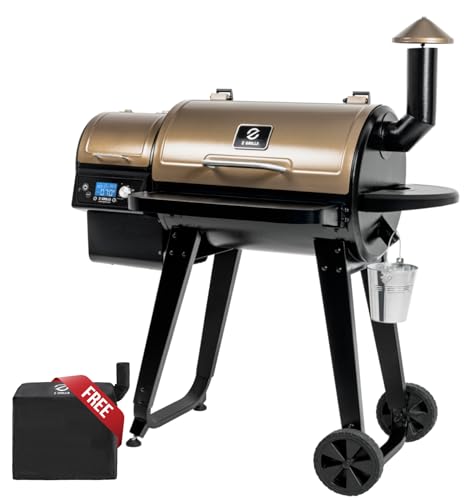
Z Grills ZPG-450A2 Pellet Grill & Smoker — Best Compact Pellet
The ZPG-450A2 is the outdoor pellet pick for smaller yards and patios: 459 square inches cooks for a family without dominating the space, foldable shelves tuck it tighter against the wall between cooks, and the PID controller holds smoking temperatures with the steadiness that makes pellet cooking famous. Z Grills including a rain cover in the box is a small detail that signals the right priorities — this machine is expected to live outside, and it arrives dressed for it.
Strengths
- PID controller holds steady smoking temperatures
- Rain cover included — genuinely designed for outdoor storage
- Foldable shelves suit small patios and yards
Trade-offs
- 459 sq in is family-sized; big parties will overflow it
- Pellets must be kept dry or the auger will jam
- Needs an outdoor outlet within cord reach
| 4 | 5 |
| P | I |
Pellet cookers outdoors have one true enemy, and it is moisture in the hopper: pellets that absorb damp swell, crumble, and jam augers. The cover, a sheltered spot, and the habit of not leaving pellets sitting through a wet month defeat that enemy entirely. In return you get clean wood smoke, a meat probe for confident briskets and butts, and a cooker that also grills weeknight dinners. For a compact outdoor station that smokes on Saturdays and grills on Tuesdays, this is the most complete affordable answer.
Compact pellet ownership has a distinct pleasure: the cooker is always ready. The 450A2 preheats while you season the meat, holds its temperature while you make the sides, and shuts down while you eat — a rhythm that fits weeknight life as well as Saturday smoking. The included cover and the foldable shelves make its stored footprint genuinely small, which in a tight yard is the difference between a cooker that lives out ready and one that lives in the garage forgotten. Keep the hopper dry and the fire pot vacuumed, and this little PID machine will quietly become the most-used appliance outside your kitchen.
Best for: small-to-medium yards wanting pellet convenience in a compact footprint / Not suited for: crowd cooking, or yards with no sheltered spot and no outlet
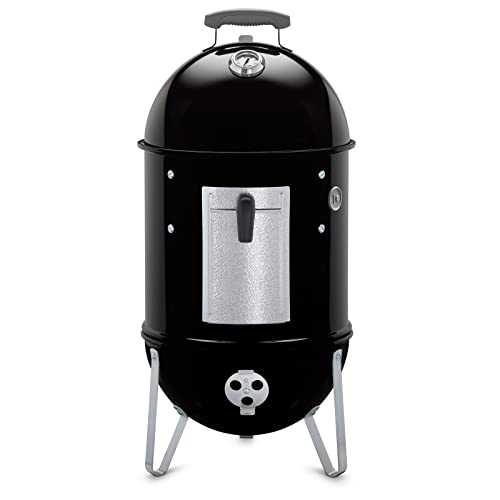
Weber Smokey Mountain Cooker 14-inch — Best Portable Outdoor
Outdoor cooking is not always in your own yard, and the 14-inch Smokey Mountain is the smoker that travels: light enough for one person to load into a car, quick to assemble at a campsite, and built with the same porcelain-enameled quality as the 18 and 22. The water pan design works identically at small scale — charcoal below, water buffering the middle, two small grates above — producing ribs, chicken, and small butts with genuine charcoal character wherever you set it down.
Strengths
- Genuinely portable — one person, one car trip
- Same proven water-pan design and Weber build quality
- Sips charcoal; ideal for small cooks anywhere
Trade-offs
- Capacity suits two to four people only
- Small water pan needs checking on longer cooks
- Not a brisket cooker — full packers do not fit
| 1 | 4 |
| C | h |
Scale is the honest trade: this is a smoker for two to four people, for a rack of ribs or a couple of chickens, not for a brisket party. Charcoal consumption is tiny, which suits travel, and the whole cooker cleans and packs faster than any other pick here. Many owners buy it as a second smoker — the big pit stays home, the 14 goes fishing — and as a first smoker for apartment-adjacent outdoor spaces where a full-size cooker simply cannot live.
The baby bullet’s ownership story is travel: it rides to campsites, fishing cabins, beach houses, and parents’ patios, and it cooks the same honest charcoal barbecue in all of them because the design has no environment-sensitive parts. At home it becomes the small-cook specialist — a single chicken, a salmon side, a rack of ribs for two — fired with a handful of charcoal that would be lost in a big pit. Its parts interchange conceptually with its big brothers, so skills and accessories transfer if a larger Weber joins the yard later. Few cookers at any price deliver as much genuine smoking per pound of steel carried.
Best for: campers, tailgaters, and small households wanting real charcoal smoke anywhere / Not suited for: hosts, brisket cooks, or anyone feeding more than four
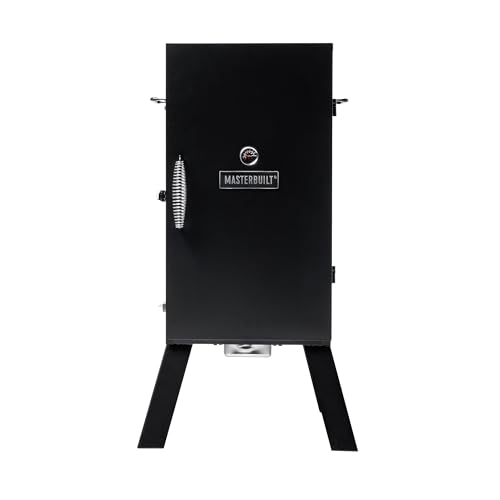
Masterbuilt 30-inch Analog Electric Smoker MB20070210 — Best Simple Patio Electric
There is a strong case for analog outdoors: no digital panel to fog, no controller board to fail in year three, just a heating element, a dial, and a cabinet. The Masterbuilt analog 30-inch is that case in product form — 535 square inches across chrome racks, a simple temperature dial, and a footprint that tucks onto a covered patio where it can live plugged in and ready. For ribs, chicken, fish, and cheese, the foods a patio smoker cooks most, it asks almost nothing of its owner.
Strengths
- Dead-simple analog control with nothing digital to fail
- Compact covered-patio footprint, always ready to cook
- 535 sq in covers the everyday patio menu well
Trade-offs
- Dial control swings more than digital models — a probe thermometer helps
- Must live under cover; not a rain-exposed cooker
- Smaller capacity than the 30-inch digital cabinet
| 5 | 3 |
| A | n |
Analog control means the temperature is a range you learn rather than a number you set: the dial’s markings are a guide, the cabinet swings a little with the weather, and a basic probe thermometer at the rack turns guesswork into knowledge for a few dollars. It also needs the electric caveats — a covered spot, a dry outlet, no standing in the rain. Within those honest limits, this is the lowest-maintenance outdoor smoker in the guide, and for many patios the most-used one per dollar spent.
Analog ownership is a study in what does not happen: no firmware, no pairing, no controller faults, no error codes — the cooker simply heats when the dial turns, this year and in five years. That simplicity makes it the pick most often recommended to parents, in-laws, and first-apartment cooks, because the support burden on the giver is zero. Its temperature personality — a gentle swing around the dial’s suggestion — becomes familiar within two cooks, and a cheap probe thermometer closes the information gap completely. In an era of disposable smart appliances, a box that just smokes, repairably and indefinitely, has a radical charm.
Best for: covered patios and cooks who value simplicity over precision / Not suited for: exposed yards without shelter, or precision-focused brisket cooks

Pit Boss 3-Series Propane Vertical Smoker (HVR) — Best Tall Gas Vertical
The Pit Boss 3-Series vertical is the outdoor batch machine: four racks and 983 square inches in a tall cabinet footprint, with a gas range that starts low enough — 100°F at the bottom of the dial — to flirt with jerky and fish work and runs to 300°F for poultry that needs crisper skin. Vertical cabinets use outdoor space efficiently, and this one turns a two-foot square of patio into a rib factory when the family gathers.
Strengths
- 983 sq in on four racks from a small patio footprint
- 100–300°F range covers jerky-low to poultry-crisp
- Gas convenience with a proper wood chip tray
Trade-offs
- Tall door dumps significant heat when opened
- Spare propane tank required for worry-free long cooks
- Analog gas control needs a cook or two to learn
| 9 | 8 |
| 1 | 0 |
The wood chip tray and gas burner combination means smoke management is front-loaded: fill the tray at the start, let the first hours lay the smoke on the meat, and resist opening the tall door, which dumps more heat than a horizontal lid does. As with every propane pick here, a spare tank is part of the true purchase price, and the cabinet should stand level and out of the worst wind. Judged as an outdoor appliance — capacity per footprint, fuel practicality, and range — it is one of the strongest values in this guide.
The 3-Series vertical earns its keep in batches: jerky weekends, sausage-making days, rib cooks for the extended family — the tall four-rack format turns a small patio square into production capacity. The wide temperature range widens the menu further than most cabinets, from low jerky work to the hotter finish poultry wants. Owners learn its one mannerism quickly — the tall door’s heat dump — and adapt by staging everything before opening, a discipline that improves their cooking generally. With a spare tank standing by, it is the outdoor smoker least likely to ever cancel a plan, and reliability of that kind is a feature no specification table lists.
Best for: batch cooks — ribs, jerky, sausage — on a compact outdoor footprint / Not suited for: precision digital-control seekers or very small households
Comparison Table
| Pick | Badge | Key spec | Best for |
|---|---|---|---|
| Oklahoma Joe’s Highland Offset Smoker | Best Overall Outdoor | Heavy offset, 900 sq in per listing | a permanent outdoor cooking spot and cooks who love running a wood fire |
| Masterbuilt 40-inch ThermoTemp Propane Smoker MB20051316 | Best Large Propane | 960 sq in propane vertical, thermostat control | hosts cooking big batches outdoors without power at the cooking spot |
| Z Grills ZPG-450A2 Pellet Grill & Smoker | Best Compact Pellet | 459 sq in PID pellet, cover included | small-to-medium yards wanting pellet convenience in a compact footprint |
| Weber Smokey Mountain Cooker 14-inch | Best Portable Outdoor | 14-inch portable charcoal bullet | campers, tailgaters, and small households wanting real charcoal smoke anywhere |
| Masterbuilt 30-inch Analog Electric Smoker MB20070210 | Best Simple Patio Electric | 535 sq in analog electric cabinet | covered patios and cooks who value simplicity over precision |
| Pit Boss 3-Series Propane Vertical Smoker (HVR) | Best Tall Gas Vertical | 983 sq in 4-rack propane vertical | batch cooks — ribs, jerky, sausage — on a compact outdoor footprint |
Designing an Outdoor Cooking Spot Around Your Smoker
A smoker’s performance is half product and half placement, and the placement half is free. Start with the wind: every yard has a prevailing direction and a calm corner, and a cooker parked in the calm corner holds temperature like a model costing twice as much. Then consider the smoke path — chimneys and vents should exhaust where the plume rises away from windows, doors, and the neighbor’s laundry line, because goodwill is a consumable too. Finally, think about the cook’s path: the route from kitchen to cooker, carrying hot racks and cold meat, should be short, level, and lit, because half of outdoor smoking happens before dawn or after dark.
Surfaces and storage complete the station. A non-combustible pad under the cooker protects deck and lawn and catches the inevitable grease spot; a side table at elbow height prevents the juggling of hot grates; a dry bin for charcoal or pellets beside the cooker prevents the mid-cook dash to the garage. None of this requires construction — pavers, a folding table, and a sealed tote accomplish it in an afternoon — yet the difference in use is dramatic: stations invite cooking, while chores discourage it. The owners who smoke year-round are rarely the ones with the best cookers; they are the ones with the best-arranged ten square feet.
Plan for the seasons while you arrange. A spot that is perfect in June may be a wind tunnel in November or a puddle in March; watch your yard across a few weeks of weather before committing the heavy cookers to a permanent home. Leave room in the layout for the second cooker that experience says is coming — the little bullet beside the big offset, the patio electric beside the pellet grill — because outdoor cooking, like every good hobby, expands to fill the space you make for it.
How to Choose an Affordable Outdoor Smoker
An outdoor smoker is an appliance that lives in the weather and cooks in the wind. Choose it the way you would choose anything else that stays outside: for materials, shelter needs, and how it behaves on the worst day, not the best one.
E
v
D
e
O
u
V
e
Outdoor Value: Where Affordable Money Works Hardest Outside
Outdoors, the hierarchy of spending is ruthless: steel and sealing first, because weather taxes them daily; fuel practicality second, because a cooker you cannot feed conveniently becomes furniture; capacity third; and electronics last, because they are the component the outdoors ages fastest. The six picks reflect that hierarchy — even the digital-leaning pellet model here leads with its cover and its controller’s steadiness rather than with connectivity. When comparing two outdoor smokers, ask what the extra money buys in those four currencies, in that order, and the value answer usually announces itself.
The hidden outdoor budget is protection: a fitted cover, a grill mat, a dry fuel bin, and a spare propane tank or a chimney starter, depending on fuel. Together they typically add a modest sum that buyers resist — and that resistance is the most expensive instinct in outdoor cooking, because every item on that list prevents a failure mode that ends cookers early. Count protection as part of the purchase price from the start, and the affordable tier’s true cost stays what it should be: low, once, for years.
How to Set Up an Outdoor Smoker Station That Lasts
The cooker is half the purchase; the station is the other half. A level, sheltered, sensibly equipped spot makes an affordable smoker perform like a premium one and age like it too.
- S e
- P l
- G i
- M e
- A
- T w
Photograph your station setup — cooker position, vent orientation, fuel storage — once it works. After winter storage or a storm shuffle, the photo puts everything back in the arrangement you already proved, instead of starting the experiment over.
Weatherproofing Habits for Outdoor Smokers
Outdoor cookers do not need much — they need the right little, regularly. These habits are calibrated to the failures that actually kill affordable smokers left outside.
Ash and grease before weather
Never let a storm find a dirty cooker. Ash turns to corrosive paste in rain, and grease films hold moisture against steel. A five-minute cleanout when the cook ends is the cheapest weatherproofing in existence.
The cover, used correctly
Cover a cool, dry cooker; lift the cover after heavy rain to vent trapped moisture; replace a torn cover promptly — a shredded cover is worse than none, because it holds water against the steel while pretending to protect it.
Cords, hoses, and connections each season
Inspect electric cords for cracking, propane hoses for stiffness and leaks (soapy water tells the truth), and pellet hopper seals for gaps. Weather attacks the connections first, and every one of these checks takes under five minutes.
Paint and rust, touched up early
On steel offsets and cabinets, a wire brush and a dab of high-heat paint on a chip today prevents a rust patch next season. Rust is a slow fire; the time to fight it is when it is the size of a coin.
Outdoor Scenarios: The Right Smoker for the Real Yard
The open country yard
Space is free, wind is real, and the cooking spot is permanent. The Highland offset was born for this scenario — mass against the wind, capacity for the extended family, and a fire ritual that suits a place where smoke bothers no one. Propane’s big ThermoTemp is the lower-effort alternative for the same ground. What this scenario should avoid is the opposite error: a delicate electric cabinet dragged out to an exposed pad, where weather will tax it every single cook.
The suburban patio
Neighbors are close, the spot is a slab, and the cooker lives under a cover between weekends. Pellet and propane verticals dominate this scenario for a reason: contained fuel, tidy footprints, and smoke that behaves. The Z Grills 450A2 under its cover, or the Pit Boss vertical with its spare tank, will cook for years without a single complaint from across the fence — provided cooks are sensible about not running heavy smoke at laundry hour.
The covered porch
A roof changes everything: electrics become viable year-round, cords stay dry, and the analog Masterbuilt’s simplicity shines as an always-ready porch appliance. The discipline here is clearance and ventilation — a covered porch is still outdoors only if air moves freely through it; enclosed porches are never a place for fuel-burning cookers, and even electrics need their manufacturer’s clearances from walls and ceilings respected.
The mobile outdoor life
Campsites, tailgates, lake houses, and relatives’ yards: the Smokey Mountain 14 is the only pick designed for a life in motion, with the propane MPS-class cabinets in the wider market as the larger alternative. Mobile smoking rewards light weight, fast setup, and fuel sold everywhere — charcoal wins on all three. If your best outdoor memories happen away from home, buy the cooker that can be there for the next one.
Pre-Purchase Checklist: Outdoor Smokers
Outdoor purchases fail on placement and weather more than on cooking. Check these eight before you commit.
- The spot is level and non-combustible: Pavers, concrete, or a proper grill mat — with the manufacturer’s clearances from structures on every side.
- Wind has been considered: Watch your yard on a breezy day. The calm corner is worth more than an upgrade tier.
- Smoke drift is neighbor-safe: Know where the plume goes at cooking height, at the hours you will cook. Goodwill is a cooking supply.
- Shelter matches the fuel: Electrics and pellet hoppers need a roof or a rigorous cover routine. Charcoal and propane tolerate open sky with a cover.
- Fuel storage exists: A dry bin for charcoal or pellets, a shaded upright spot for the spare tank, a weatherproof outlet for electrics.
- The cover is ordered with the cooker: Fitted, model-specific, and used from day one. This line prevents more failures than any other on the list.
- The work triangle works: Kitchen door to cooker to table, on a path you can walk carrying a hot rack, in the dark, in November.
- Winter has a plan: Indoor storage, a winterized covered spot, or a cooker chosen to live out. Decide in summer, not in the first snow.
Common Buying Mistakes
P
e
A
T
h
C
h
O
u
The Long View: An Outdoor Station That Grows With You
Outdoor cooking setups evolve the way gardens do — a cooker this year, a better station next year, a second smaller cooker the year after — and the affordable picks in this guide were chosen to age gracefully inside that evolution. The offset becomes the anchor, the little bullet becomes the traveler, the patio electric becomes the weeknight instrument; none of them becomes waste, because each was bought for a real role rather than a fantasy. That is the deeper meaning of value outdoors: not the cheapest first purchase, but a set of purchases none of which you regret when the station matures.
The other long-view asset is the place itself. A level pad, a calm corner, a dry fuel store, a light for the dark hours — this small infrastructure outlasts every cooker that will ever stand on it, and it is built once, cheaply, by an owner who has decided that outdoor cooking is a permanent part of the household’s life. Decide that first, build the station second, and choose the smoker third, and the six picks here will sort themselves almost without argument. The yard you cook in for twenty years is designed in exactly that order.
One more outdoor reality deserves a paragraph of its own, because it decides more purchases than any specification: the distance between the cooker and the kitchen door, measured in January rather than June. Every step of that path is walked carrying something hot, cold, or heavy, in the dark, in weather — and a station that shortens it gets used, while a station that lengthens it gets admired. When you evaluate the six picks here, walk your own path with a tray in your hands and count the steps, the gates, the stairs. Then choose the cooker whose placement makes that walk shortest and safest, even if it is not the cooker with the most impressive numbers. Outdoor cooking is a practice, not a purchase, and practices are built out of paths that are easy to walk. The hosts whose yards produce smoked food in every month are not the ones with the most capable equipment; they are the ones whose equipment stands three easy steps from where the meat is seasoned, under a light, out of the wind, with the fuel dry and the cover hanging on its hook. Build that, with whichever pick fits it, and the outdoors stops being a condition your smoker endures and becomes the reason it exists.
Neighbors deserve a sentence in any honest outdoor guide, because smoke is a shared experience whether we plan it or not. The considerate outdoor cook runs clean fires — thin smoke rather than billowing — keeps the heaviest smoke hours reasonable, and learns the small diplomacy of the fence line: a portion of ribs delivered occasionally has settled more smoke questions than any ordinance ever written. Every pick in this guide can run clean when its fire is managed properly, which means good-neighbor smoking is a technique, not a purchase. Master the clean burn and your outdoor station becomes what it should be: a source of envy that smells wonderful, rather than a source of complaints that smells constant.
Troubleshooting: Outdoor Smoker Problems and Fixes
Problem: the cooker struggles only on windy days
Wind is stealing heat and disturbing the fire’s air. Before buying anything, move the cooker: a fence corner or the lee of the house can transform its behavior. Add a water pan where the design allows, keep exhaust vents out of the direct gust path, and on charcoal, orient the intake away from the wind. If a cooker only misbehaves in wind, it is not broken — it is placed.
Problem: the pellet grill keeps jamming outdoors
Moisture has reached the pellets — in the hopper, in the bag, or both. Clear the auger per the manual, discard swollen fuel, and change the storage system: sealed bin, hopper emptied during wet spells, cover fitted properly. A pellet grill stored dry essentially never jams; one stored damp essentially always does, eventually. The jam is a storage diagnosis wearing a mechanical disguise.
Problem: the propane smoker’s flame is weak or yellow
Check the simple chain: tank level, hose connections (soapy water for leaks), and the burner ports, which spiders and rust love to obstruct. A lazy yellow flame is a dirty or starved burner, not a dying smoker. Clean the ports gently, confirm the regulator is not in bypass from opening the tank valve too fast, and the cabinet will heat like it did when it was new.
Problem: the electric smoker trips the breaker
Outdoor circuits are often shared and modest. Give the smoker its own outlet where possible, avoid long thin extension cords (a heavy-gauge, short cord if one is unavoidable), and check the cord and plug for weather damage. An element that trips a dedicated, healthy circuit repeatedly is announcing its own failure — elements are replaceable parts on supported models, which is why support mattered at purchase.
Problem: the cover fills with condensation and the cooker sweats
A cover over a warm or damp cooker traps a private rainstorm. Cover only when the cooker is cool and dry, choose a cover with vents if yours has none, and lift it after storms to let the metal breathe. In persistently damp climates, a roof beats a cover entirely — which is why the covered-porch scenario in this guide exists.
Outdoor cooking infrastructure pays its dividend in the shoulder seasons: the March evening when a sheltered, ready station turns a whim into ribs, and the November morning when dry fuel and a level pad make a holiday cook feel routine. Summer forgives sloppy setups; the rest of the year audits them. Build the station for the audit — wind, water, and darkness — and summer simply becomes the easiest quarter of a year-round practice.
Final Recommendation
For a permanent outdoor station, the Oklahoma Joe’s Highland is the anchor pick: heavy, capacious, and built to live where it stands. Hosts without power at the cooking spot should take the Masterbuilt ThermoTemp for its thermostat-style control, or the Pit Boss vertical when the menu runs to ribs and jerky by the batch. Smaller yards are best served by the Z Grills 450A2 under its included cover, and the Smokey Mountain 14 is the one pick here that treats ‘outdoors’ as anywhere at all.
The analog Masterbuilt remains the quiet value for a covered patio — simple, ready, and nearly maintenance-free. Whichever you choose, spend the small extra on the cover, the spare tank or dry bin, and a level spot out of the wind. Outdoor smokers rarely die of cooking; they die of weather and neglect, and both are cheap to prevent.
The outdoor cooks whose setups get admired share a secret: nothing about them is accidental. The cooker matches the ground, the fuel matches the storage, the cover matches the cooker, and the cook matches the ritual. Assemble those matches from the six picks above and your yard gains what every great cooking place has — a station that is always ready for the next Saturday.
Keep exploring the cluster: Best Affordable Smokers Best Affordable Backyard Smokers Best Affordable Meat Smokers Best Affordable Pellet Smokers Best Affordable Smokers Digital
Frequently Asked Questions
Y
e
M
a
F
o
C
o
A
D
e
Can I smoke in the rain?
Yes — cooks do it constantly — with the cooker in open air (never in a garage or under a low roof), the lid openings kept brief, and electrics and pellet hoppers shielded from direct downpour. Expect longer preheats and higher fuel use, and give yourself more time. A pop-up canopy over the cook — not tight over the cooker — is the veteran’s compromise.
How do I keep an outdoor smoker from rusting?
The complete program is short: ash out after cooks, grease managed, cover fitted and vented, paint chips touched up, and a dry spot out of standing water. Porcelain-enameled and well-painted steel then lasts for many seasons. Rust almost never starts with the steel’s quality; it starts with stored ash and standing moisture, both of which are owner-controlled.
Should I bring my smoker inside for winter?
If you have dry storage and the cooker is portable, wintering indoors extends its life — after a full clean and dry. Heavy offsets and cabinets are built to winter outside under covers instead. Electrics benefit most from indoor storage; charcoal cookers care least. Whatever you choose, never store a cooker dirty: winter multiplies every residue problem.
D
o
Y
e

