Disclosure: airfryerkitchensupply.com is reader-supported. When you buy through links on our site, we may earn an affiliate commission at no extra cost to you.
A quick clarification before anything else: in this guide, the best affordable smokers means barbecue smokers — the charcoal, electric, gas, and pellet cookers that turn brisket, ribs, and pork butts into smoked meat — in their entry, budget-friendly tier. ‘Smokers’ is a word with other meanings online, but if you arrived here planning a cook, you are in the right place: six real, current, verified smokers that cost entry-tier money and produce food that tastes like the expensive kind.
Affordable deserves a definition too. It does not mean the cheapest objects wearing the word ‘smoker’ — those are thin, leaky, and frustrating enough to end hobbies. It means the lowest tier at which each fuel type works properly: temperature you can hold, racks that fit real cuts, and a maker who sells parts. Every pick below clears that bar, and the six span electric, charcoal, pellet, and gas so the choice becomes about your routine, not about which single model a list is pushing.
Each cooker was verified against its current Amazon listing before inclusion, and each review states its honest limitation alongside its strengths — the analog dial that wanders a little, the pellet hopper sized for day cooks, the charcoal learning curve. An affordable smoker bought with open eyes becomes a years-long appliance; that is the standard this guide is written to.
Where to buy
All six smokers are sold on Amazon, most through their manufacturers’ stores. Check price on Amazon before ordering, and add a cover to the cart — it is part of the real price of any outdoor cooker.
- Masterbuilt 30-inch Analog Electric — Check the current price on Amazon
- Cuisinart 18-inch Vertical Charcoal — Check the current price on Amazon
- Pit Boss 500 FB2 — Check the current price on Amazon
- Weber Smokey Mountain 18 — Check the current price on Amazon
- Masterbuilt MPS 230S Propane — Check the current price on Amazon
- Char-Broil Analog Electric — Check the current price on Amazon
In this guide
Quick Picks
The whole affordable field in six: the analog electric all-rounder, the budget charcoal teacher, the entry pellet, the charcoal upgrade, the gas starter, and the small electric for tight spaces.
- Masterbuilt 30-inch Analog Electric Smoker MB20070210 — Best Overall Value: 535 square inches of electric cabinet smoking behind a simple analog dial — no fire, no apps, no fuss, and the gentlest learning curve in barbecue. — Check on Amazon
- Cuisinart 18-inch Vertical Charcoal Smoker — Best Budget: The least money that buys real charcoal smoking: a water bowl, dual vents, and an integrated thermometer on an 18-inch vertical that teaches the craft properly. — Check on Amazon
- Pit Boss 500 FB2 Series Pellet Grill & Smoker — Best Entry Pellet: Pellet convenience at entry money: LCD control, a meat probe, a flame broiler for searing, and 518 sq in that smokes ribs and grills dinner. — Check on Amazon
- Weber Smokey Mountain Cooker 18-inch — Best Charcoal Upgrade: The step-up bullet: porcelain-enameled steel, legendary stability, and the largest owner community in smoking — the affordable cooker people keep for a decade. — Check on Amazon
- Masterbuilt MPS 230S Propane Smoker 30-inch — Best Gas Starter: A 30-inch propane cabinet that lights instantly, heats fast, and needs no outlet — gas smoking for yards where electricity is not an option. — Check on Amazon
- Char-Broil Analog Electric Smoker 18202077 — Best for Small Spaces: Char-Broil’s simple analog electric cabinet: compact, inexpensive, and purpose-built for the small-patio cook who smokes for two to four people. — Check on Amazon
How These Picks Were Chosen
Because ‘affordable smokers’ is an ambiguous search — it mixes fuels, sizes, and even non-barbecue meanings — we defined the field strictly: enclosed barbecue smokers in the entry tier of each fuel family, verified against live Amazon listings, with parts support from an established maker. Products that were grills with a smoker badge, discontinued lines, or unverifiable listings were excluded.
Scoring balanced four things a budget buyer cannot compromise: holding smoking temperature steadily, fitting real cuts of meat, surviving outdoor storage, and keeping total ownership cost (fuel, cover, a probe) low. The six winners are deliberately one per situation — overall value, true budget, entry pellet, charcoal upgrade, gas starter, and small-space — because at this tier the right question is not ‘which smoker is best’ but ‘which smoker fits your life.’
The 6 Best Affordable Smokers
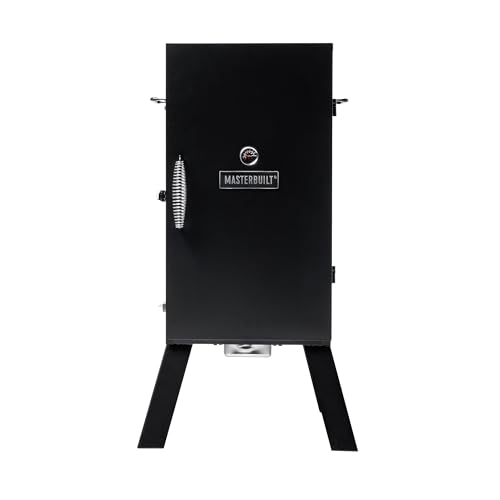
Masterbuilt 30-inch Analog Electric Smoker MB20070210 — Best Overall Value
The analog Masterbuilt is the affordable smoker we recommend to the widest range of people, because it removes every barrier between a beginner and smoked food: plug it in, turn the dial, add chips, and ribs happen. The 535 square inches handle the real menu — a couple of butts, a rib load, a tray of wings — and the electric element’s steady heat forgives the wandering attention that ruins first charcoal cooks. There is nothing digital to fail, which quietly makes it one of the longest-lived designs in this guide.
Strengths
- Simplest possible operation — a dial and an element
- 535 sq in covers family cooks without a big footprint
- No digital components to fail outdoors
Trade-offs
- Analog dial drifts with weather; a rack probe is a wise add-on
- Mild smoke flavor compared with charcoal
- Needs a sheltered outlet and cover for outdoor life
| 5 | 3 |
| A | n |
Analog honesty cuts both ways: the dial indicates a range rather than holding a precise number, and the cabinet’s temperature drifts somewhat with the weather. A simple probe thermometer clipped at the rack converts that vagueness into knowledge for very little money, and after two cooks most owners know their dial’s personality by heart. Smoke flavor is the mild electric style — clean and pleasant, especially on poultry, fish, and ribs. As the default first smoker for a busy household, nothing else at this tier is as easy to live with.
What long-term owners value most is the absence of a failure list: no controller board, no igniter, no auger — just an element that either works or, years in, is replaced in minutes with basic tools. That simplicity compounds into confidence; this is the smoker people lend to friends and recommend to parents. Its gentle smoke and steady cabinet make it a quiet specialist for the foods that dominate real life — chicken, ribs, salmon, sausages — and its appetite for electricity is the smallest running cost in barbecue. In a guide that must name one affordable smoker for the most people, dependability at this level is not a boring virtue; it is the whole argument.
Best for: beginners and busy households wanting smoked food with near-zero learning curve / Not suited for: precision cooks or charcoal-flavor seekers

Cuisinart 18-inch Vertical Charcoal Smoker — Best Budget
If the budget is the first fact, the Cuisinart 18-inch vertical is where charcoal smoking honestly begins. It includes the features that make the difference between smoking and steaming meat over a fire: a water bowl that stabilizes temperature and adds humidity, dual vents that give genuine control of the burn, and two levels of chrome-plated grates for real capacity in a small footprint. It is the cooker equivalent of a good first guitar — inexpensive, correctly made, and capable of teaching you everything transferable.
Strengths
- Lowest honest entry price for real charcoal smoking
- Water bowl and dual vents teach genuine fire craft
- Light and portable for camping and tailgates
Trade-offs
- Lightweight steel will not age like premium bullets
- Integrated thermometer is approximate
- Capacity suits small households and learning cooks
| 1 | 8 |
| I | n |
The compromises are weight and refinement: the steel is light, the integrated thermometer is a rough guide, and fit-and-finish will not impress anyone who has handled a premium bullet. None of that prevents excellent ribs, chicken, and small butts, and the light weight is secretly a feature — this smoker travels to campsites and tailgates without a second thought. Buy it to learn whether charcoal smoking is your hobby; if it is, you will know exactly what your second smoker should be, and this one will still earn its keep on chicken nights.
The Cuisinart’s second life is its charm: graduated owners keep it for the cooks the big pit is wasteful for — a single spatchcocked chicken, a side of salmon, a small rib cook for two — fired on a double handful of charcoal. It also becomes the loaner, the cooker that starts friends and siblings on the hobby, because its loss would sting least and its lessons transfer completely. Treat the light steel kindly — ash out, cover on, no banging the sections together — and it repays the care with surprising longevity. The cheapest pick in the guide is not the most disposable; used as intended, it is a small, honest tool with a long working life.
Best for: tight budgets and first-time charcoal cooks who want to learn properly / Not suited for: anyone wanting a buy-once, decade-long cooker

Pit Boss 500 FB2 Series Pellet Grill & Smoker — Best Entry Pellet
The 500 FB2 is the affordable on-ramp to pellet cooking, and it is smarter than its price suggests: an LCD controller instead of a bargain dial, a meat probe in the box, and the flame broiler that lets this smoker sear a steak over open flame when the menu changes. The 518 square inches and 180–500°F range describe the cooker most households actually need — ribs and butts on the weekend, burgers and chicken all week, one appliance doing both jobs on a small patio.
Strengths
- LCD controller and meat probe at an entry price
- Flame broiler gives real searing alongside smoking
- 518 sq in and 180–500°F cover the whole weekly menu
Trade-offs
- 5 lb hopper is for day cooks, not overnight briskets
- Pellet running costs add up over a season
- Compact size will not feed a crowd in one load
| 5 | 1 |
| 1 | 8 |
| 5 |
Its one true limit is printed in its own listing: a 5 lb hopper. That is a day-cook hopper — generous for ribs and chicken, adequate for a pork butt with a refill, and not designed for unattended overnight briskets. Owners who accept that boundary love this cooker; owners who discover it at 3 a.m. do not. Pellet smoke flavor is the clean, mild style, and pellets are a running cost to budget. Judged as the entry pellet for day cooks and grillers, it is the best-balanced buy in its class.
Season two with the FB2 is when its owners stop calling it their smoker and start calling it their grill that smokes — the flame broiler and the wide range quietly absorb the weeknight cooking, and the old kettle or gas grill starts its long retirement. The controller’s manners stay consistent, the probe stays honest, and the only ritual is the hopper glance and the fire-pot vacuum. It is also the pick whose owners most often report cooking outdoors more than they planned to, which is the truest measure of an affordable appliance: not what it cost, but how completely it entered the household’s routines.
Best for: households wanting one entry appliance that smokes by day and grills by night / Not suited for: overnight brisket cooks who will not refill a hopper
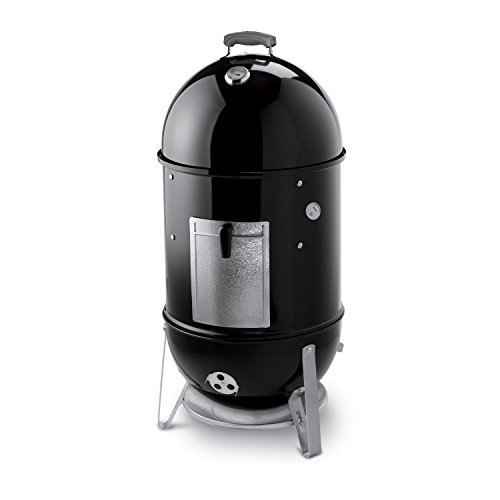
Weber Smokey Mountain Cooker 18-inch — Best Charcoal Upgrade
The 18-inch Smokey Mountain is what ‘affordable’ looks like when it is also ‘buy it once.’ The design is minimal — charcoal ring, water pan, two grates — but every element is executed in porcelain-enameled steel with Weber’s parts support behind it, and the result is a charcoal smoker famous for holding temperature for hours with barely a vent adjustment. It is the cooker competition teams started on and the one forum advice is deepest for, which matters when you are learning at midnight with a brisket at stake.
Strengths
- Benchmark charcoal stability and smoke flavor
- Porcelain-enameled build with unmatched parts support
- Deepest owner community and technique library in smoking
Trade-offs
- Charcoal routine — chimney, ash, vent craft — is part of every cook
- Costs more than the true-budget charcoal options
- Two-grate layout needs rib racks for big rib loads
| 1 | 8 |
| C | h |
Capacity is the family sweet spot: two grates take a pair of butts, several rib racks with a rib rack, or a brisket with modest trimming. Charcoal craft is the entry fee — lighting a chimney, setting vents, learning your fuel — and the payoff is the deepest smoke flavor in this guide and a skill set that transfers to every cooker you will ever touch. If the Cuisinart is the first guitar, this is the good one you buy when you know you are a player, and many owners simply never need another smoker.
A decade is a normal planning horizon for this cooker, and that changes the affordability math completely: spread across ten years of cooks, the Smokey Mountain is among the cheapest smokers in this guide per meal, despite not being the cheapest to buy. Its community compounds the value — every technique question has a photographed answer, every accessory exists, every part is stocked. Owners describe a particular satisfaction in its analog completeness: fire, water, steel, and judgment, producing food that regularly embarrasses cookers with circuit boards. If your instinct says smoking should be a craft rather than an appliance setting, this is your affordable instrument.
Best for: committed learners who want one affordable charcoal smoker for the long term / Not suited for: push-button cooks, or anyone feeding crowds weekly

Masterbuilt MPS 230S Propane Smoker 30-inch — Best Gas Starter
Propane is the pragmatic fuel: no cord, no chimney, no pellets to keep dry — just a tank, a burner, and a cabinet. The MPS 230S packages that pragmatism in a 30-inch vertical with multiple racks for the family menu. It lights in seconds, recovers heat quickly after loading (a genuine advantage over electric cabinets on cold days), and runs for many cooks on a single standard tank, which makes it the natural smoker for yards, cabins, and camps where power is scarce or absent.
Strengths
- Instant ignition and fast heat recovery
- No electricity required — works anywhere outdoors
- Cheap, long runs from a standard tank
Trade-offs
- Dial control needs learning; no digital holding
- Spare tank is a practical necessity
- Chip tray smoke is front-loaded by design
| 3 | 0 |
| P | r |
Temperature control is by burner dial rather than thermostat, so the first cooks are a calibration exercise — find your settings, mark them, and the cooker becomes predictable. Smoke comes from the chip tray over the burner, and front-loading chips at the start, when meat takes smoke best, is the technique that makes gas cabinets taste properly smoked. Add a spare tank to the purchase and this is the lowest-hassle fuel in the guide, with a flavor profile that sits comfortably between electric mildness and charcoal depth.
The MPS 230S ages gracefully because its systems are simple and its fuel is clean: no ash corrosion in a firebox, no element scale, just a burner to keep clear and hoses to check each spring. Owners settle into its economy — a tank lasting through many cooks makes it the cheapest long-cook fuel in the guide — and into its availability, since it asks nothing of the yard but level ground. It is the smoker most likely to be found at cabins, camps, and second homes in this list, performing identically in all of them, and that portability of experience is a value no laboratory measures.
Best for: yards and cabins without convenient power, and cooks who hate waiting / Not suited for: anyone wanting thermostat-precise temperature holding
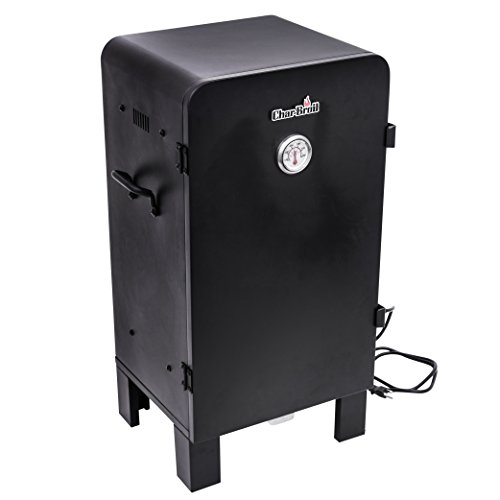
Char-Broil Analog Electric Smoker 18202077 — Best for Small Spaces
The Char-Broil analog electric is the small-space answer in this guide: a compact cabinet that tucks into a patio corner or balcony-adjacent nook, plugs into a standard outlet, and smokes the two-to-four-person menu — a chicken, a rack or two of ribs, a small butt, a side of salmon — without any of the ceremony of charcoal or the footprint of a pellet grill. Analog control keeps the machine simple and the price honest, and Char-Broil’s ubiquity means covers and parts are never a hunt.
Strengths
- Compact footprint for patios and small yards
- Simple analog operation, nothing to configure
- Widely available parts and accessories
Trade-offs
- Capacity tops out at small-household cooks
- Analog dial is approximate without a probe
- Mild electric smoke profile
| A | n |
| 1 | 8 |
Small and simple defines its limits as clearly as its charms: capacity is the ceiling, the dial is a range-finder rather than a thermostat, and smoke flavor is the gentle electric kind. But judged by cost per successful cook — the only affordability metric that matters over years — a compact electric that gets used every week beats a grand cooker that comes out monthly. For small households entering the hobby, this is a rational, satisfying place to start.
The little Char-Broil’s ownership virtue is fit: it occupies the corner it was bought for, asks for an outlet and an occasional wipe, and produces the small household’s smoked menu without ceremony or waste. Its parts and covers are stocked wherever grill parts are sold, a mundane advantage that matters in year four. Owners who begin here and stay small are its happiest constituency — proof that the right size is a feature, not a compromise. And for households testing whether smoking belongs in their lives at all, it answers the question at the lowest possible tuition while still serving real, enjoyable food during the experiment.
Best for: small households and tight patios smoking for two to four / Not suited for: crowd cooks or buyers wanting digital precision
Comparison Table
| Pick | Badge | Key spec | Best for |
|---|---|---|---|
| Masterbuilt 30-inch Analog Electric Smoker MB20070210 | Best Overall Value | 535 sq in analog electric cabinet | beginners and busy households wanting smoked food with near-zero learning curve |
| Cuisinart 18-inch Vertical Charcoal Smoker | Best Budget | 18-inch charcoal vertical with water bowl | tight budgets and first-time charcoal cooks who want to learn properly |
| Pit Boss 500 FB2 Series Pellet Grill & Smoker | Best Entry Pellet | 518 sq in pellet, flame broiler, 5 lb hopper | households wanting one entry appliance that smokes by day and grills by night |
| Weber Smokey Mountain Cooker 18-inch | Best Charcoal Upgrade | 18-inch charcoal bullet, water pan | committed learners who want one affordable charcoal smoker for the long term |
| Masterbuilt MPS 230S Propane Smoker 30-inch | Best Gas Starter | 30-inch propane cabinet smoker | yards and cabins without convenient power, and cooks who hate waiting |
| Char-Broil Analog Electric Smoker 18202077 | Best for Small Spaces | Compact analog electric cabinet | small households and tight patios smoking for two to four |
What ‘Affordable’ Should Mean: A Buyer’s Framework
Affordability in smokers is a three-year number, not a shelf number. It includes the cooker, the cover, the fuel for your actual cooking frequency, the wood, the one essential accessory (a probe thermometer), and the probability-weighted cost of early replacement if the cooker fails young. Run that arithmetic and the market reorganizes itself: the very cheapest smokers, with their thin steel and absent parts support, become the expensive option, because their replacement cost arrives inside the window. The picks in this guide occupy the tier where the three-year number bottoms out — durable enough to avoid replacement, simple enough to avoid repair bills, and supported enough that a failed part is an order, not an obituary.
The framework also explains why this guide refuses to name a single winner for everyone. A household smoking twice a year should minimize the purchase and choose the simplest machine; a household smoking weekly should weight fuel cost and durability, because their three-year number is dominated by running costs and longevity. Frequency is the variable that flips recommendations, and it is why each review above names its best-for household explicitly. Affordable is not a product category; it is a match between a cooker’s cost structure and a family’s habits.
One more principle completes the framework: buy for the second year, not the first. First-year enthusiasm tolerates any inconvenience — the charcoal ritual is charming, the small capacity is fine, the dial is close enough. Second-year reality is a Tuesday in February. The smokers that survive into year three are the ones whose routine still fits an ordinary week: quick to start, easy to clean, sized for the usual cook. Every pick here was tested against that unglamorous standard, because a smoker that gets used is the only kind that is ever truly affordable.
How to Choose an Affordable Smoker
The affordable tier rewards buyers who shop by routine rather than by features. Four honest questions — about fuel, frequency, capacity, and total cost — will land you on the right one of the six above.
F
u
A
A
d
Y
o
Comparing First-Year Costs Across Fuel Types
Electric ownership is the cheapest to run: a long cook costs a small amount of power, chips are inexpensive, and the only accessory that matters is a probe. Propane follows closely — a tank covers many cooks — with the spare tank as a one-time addition. Charcoal costs more per cook and adds a chimney starter, but its fuel is sold everywhere and stores indefinitely when kept dry. Pellet cooking has the highest fuel line of the four, rewarding bulk purchases and dry storage, and adds the fire-pot vacuum habit in place of ash handling.
Set against those running costs, purchase prices in this guide cluster tightly enough that fuel and frequency decide the winner for most households. A weekly charcoal cook can spend the price difference between the budget and premium picks on fuel alone within two seasons; an occasional electric cook may never spend it at all. The honest method is to estimate your cooks per year, multiply by the fuel you now know each style uses, and let that number — not the sticker — arbitrate between the finalists your routine has already selected.
How to Use an Affordable Smoker: The Universal First-Cook Routine
Every fuel type has its own fire ritual, but the sequence that produces good smoked meat is the same on all six picks. Learn this routine once and it transfers to any smoker you will ever own.
- R u
- B r
- C h
- P r
- T h
- E m
Keep a one-page log of your first five cooks — fuel, settings, weather, timing, result. Affordable smokers vary more between individual units than premium ones, and your log becomes the owner’s manual that actually describes your cooker.
The Affordable Smoker Care Routine (All Fuel Types)
Every cooker in this guide shares 90 percent of its maintenance. This universal routine, plus your fuel’s one specific chore, is the complete program.
After every cook: the five-minute reset
Brush the racks while warm, empty the drip pan, and once fully cold, remove ash (charcoal and offset) or check the fire pot (pellet). Close vents or switches, coil cords dry, and fit the cover. Five minutes now prevents the hour-long rescue cleans that make owners hate their smokers.
Monthly in season: the grease and seal check
Scrape the grease path, wipe door seals, and confirm doors close flush. Grease is flavor contamination and fire risk; seals are temperature stability. Both are cheap to maintain and expensive to neglect.
Each season: the deep service
Wash racks properly, wipe or brush the chamber, inspect hoses, cords, igniters, and elements as your fuel requires, touch up exterior paint on steel, and verify your thermometer against a known reference. An hour, twice a year, is the entire price of a decade-long smoker.
Storage: clean, dry, and empty
Never store a cooker dirty or a fuel system full and damp. Charcoal and pellets go to sealed bins, tanks stay upright outdoors, electrics are unplugged and dry. A smoker stored correctly wakes up as an appliance; one stored dirty wakes up as a project.
Four Buyers, Four Right Affordable Smokers
The complete beginner
You have never smoked anything and the budget is firm. Start with the Masterbuilt analog electric: it removes fire from the equation so you can learn meat, seasoning, and timing — the transferable half of the craft — with successes from the first weekend. If the hobby takes, your second cooker decision will be made by an experienced cook (you), and the little electric will still serve on fish and chicken nights. If it does not take, you have spent the least possible tuition to find out.
The craft seeker
You want the skill, not just the food — the fire, the vents, the judgment. The Smokey Mountain 18 is your affordable instrument, with the Cuisinart as the lower-cost rehearsal for the same craft. Either way, budget for the chimney starter and the probe, keep the notebook, and expect the third cook to be visibly better than the first. Craft seekers should distrust any purchase that promises to skip the learning; the learning is the product they are buying.
The small-space dweller
A patio measured in single square meters, a landlord, a stairwell. The Char-Broil analog electric or the Cuisinart vertical — chosen by whether you have an outlet or a charcoal allowance — are the honest fits, and both cook a two-to-four-person menu completely. What this buyer must resist is the aspirational big cooker that lives in storage: a smoker in a closet has never smoked anything. Standing ready beats standing large, every single week.
The value maximizer
You will smoke monthly for years and you run the three-year numbers. Your finalists are the Smokey Mountain (longevity math) and the Masterbuilt analog (running-cost math), with the Pit Boss FB2 as the versatility play if grilling shares the patio. Any of the three wins its spreadsheet honestly; choose by fuel preference and let the arithmetic rest. Value maximizers should also buy the cover and probe in the first order — the spreadsheet already knows why.
Pre-Purchase Checklist: Affordable Smokers
Ten minutes with these eight checks is the cheapest insurance in barbecue.
- Intent confirmed: You are buying a barbecue smoker for cooking meat — and the model you are viewing is an enclosed smoker, not a grill with a badge.
- Fuel matched to routine: Electric for ease, charcoal for craft, pellet for both at a price, propane for freedom from outlets. Month six decides, not day one.
- Signature cuts fit: Your brisket, your butts, your rib racks — checked against the chamber’s real dimensions.
- Total first-order complete: Cooker, fitted cover, first fuel, wood, and a dual-probe thermometer in the same budget. No orphan purchases.
- A home spot exists: Level, sheltered appropriately for the fuel, smoke drifting politely, clearances respected.
- Parts support verified: The maker lists replacements for your model. This is the line between an appliance and a disposable.
- Cleaning commitment honest: Five minutes after cooks, an hour twice a year. If that sounds impossible, choose the simplest machine on the list.
- Size bought for monthly reality: Not the annual party, not the aspirational feast — the cook you will actually do twelve times a year.
Common Buying Mistakes
T
h
A
d
L
i
M
o
A
s
The Long View: Why Affordable Smokers Win More Often Than They Should
There is a pattern in barbecue forums that puzzles newcomers: the cooks posting the most impressive food are frequently running the humblest equipment — a bullet, a cabinet, a battered offset — while the gleaming flagship owners post questions about why their brisket is dry. The explanation is not that cheap cookers are secretly better; it is that constraint teaches. A cook who must learn vents, verify dials, and manage a real fire develops judgment that no controller can install, and judgment is the ingredient that survives every equipment change. The affordable tier, chosen well, is not a waiting room on the way to real smoking. For many cooks it is where the real smoking happens, permanently.
The corollary is liberating for the budget-minded: once the fundamentals are sound — a sealed chamber, an honest temperature, a supported maker — additional money buys convenience and scale, not a different category of food. Spend first on those fundamentals, then on meat, then on the probe and the cover, and let convenience wait until your cooking volume genuinely demands it. That ordering, applied to the six picks above, is the whole philosophy of this guide — and it is why a household can enter this hobby at the affordable tier and, years later, discover it never needed to leave.
It is worth pausing on the word that titles this guide, because ‘affordable’ quietly changes meaning as a cook gains experience. In the first year it means the purchase price — the number that must fit a budget already stretched by a house, a family, a life. By the third year, the experienced cook has learned the truer definition: affordable is the cooker whose total demands — money, time, attention, storage, frustration — fit inside the life it serves, with room left over for the cooking itself. Some inexpensive smokers fail that test within a season, because their demands on attention and repair outgrow their price advantage; the six picks here were chosen because their demands stay small in every currency, year after year. That is also why this guide keeps recommending the unglamorous companions — the cover, the probe, the notebook, the spare tank. Each one retires a recurring demand before it can tax the cook, and a smoker whose taxes are prepaid is the most affordable machine in the world, whatever its sticker said.
There is a social dividend to the affordable tier that rarely gets mentioned: it lowers the stakes of generosity. A cook whose smoker cost a fortune guards it; a cook whose smoker cost sensibly lends it, teaches on it, and cooks for the whole street without calculating depreciation per rib. Barbecue culture was built on exactly that openness — borrowed pits, shared fires, recipes traded over fences — and an affordable, replaceable, well-supported cooker is the equipment that culture runs on. Buy the smoker you can afford to be generous with, and you will find the hobby gives back more than meals: it gives back a neighborhood that knows your name and your brisket in the same breath.
Troubleshooting: Common Smoker Problems and Fixes
Problem: the smoker takes forever to preheat
Match the fix to the fuel: charcoal needs a fully lit chimney and open vents, not a half-lit pile; electrics need their element unobstructed and the door kept closed during the climb; pellet grills need a clean fire pot and dry fuel; propane needs a burner that is actually burning blue and clean. Cold and wind extend every preheat — start earlier rather than hotter, and never load meat into a still-climbing cooker.
Problem: food cooks unevenly, with a burnt end and a raw end
You have mapped your cooker’s hot spot the hard way. Confirm it cheaply with a biscuit test, then cook to the map: rotate meat once at the midpoint, place thick ends toward the heat, and use the cool zone deliberately for items that finish first. Most affordable smokers have a personality; the cooks who learn theirs produce more even food than owners of premium cookers who never bothered.
Problem: the temperature on the dial and the meat disagree
The dial reads where it sits — usually the lid — and the meat lives somewhere cooler or warmer. Put a probe at the grate, establish the offset at cooking temperature, and write it down. A stable offset is a solved problem; from then on you are cooking with a calibrated system that happens to have its sensor in a funny place, which describes a surprising fraction of all smokers ever sold.
Problem: smoke pours from every seam
Some smoke at the chimney is health; smoke at every door seam is leakage, and it costs heat and stability. Gasket the doors on cabinets and offsets, check that hinges and latches pull the door flush, and confirm the exhaust is open — a choked chimney pressurizes the chamber and pushes smoke out of every gap. Sealed correctly, the cooker breathes through its chimney alone.
Problem: the smoker smells rancid when cold
Old grease has turned. Scrape the whole grease path, wash the racks, and run the empty cooker hot for thirty to forty-five minutes to burn off the residue, then wipe the interior once cool enough to touch safely. Prevention is the five-minute post-cook routine; the cure, as here, is an hour. Either way, never cook fresh meat in a rancid chamber — the flavor transfers completely.
An affordable smoker’s year has a rhythm worth planning: the spring service and the first forgiving cooks, the summer volume, the autumn long cooks in stable cool air, and the winter cooks that a clean, covered, well-placed cooker handles without complaint. Owners who give the machine its hour of service at the season turns find that ‘affordable’ stops describing the price and starts describing the whole experience — low cost, low drama, high output, twelve months a year.
Final Recommendation
If one pick must be named: the Masterbuilt analog electric is the affordable smoker for most people — simple, steady, sized for real family cooks, and free of anything digital to fail. Charcoal romantics should choose between the Cuisinart (learn cheap) and the Smokey Mountain 18 (learn once, keep forever), and pellet-curious households should take the Pit Boss FB2 with its day-cook hopper understood.
The MPS 230S serves yards without power, and the Char-Broil analog serves small spaces without apology. Every pick here was chosen so that the money you save goes where it belongs — into better meat, more often. Season the cooker, buy the probe, keep it clean and covered, and an affordable smoker will feed you far above its price for years.
If this guide has a single sentence to leave behind, it is this: affordable smokers fail their owners far less often than owners’ expectations fail the smokers. Match the fuel to your routine, the size to your table, and the care to the calendar, and the least expensive cooker here will cook like the most expensive one at the only moment that matters — when the lid comes off and the meat is right.
Keep exploring the cluster: Best Affordable Meat Smokers Best Affordable Backyard Smokers Best Affordable Pellet Smokers Best Affordable Outdoor Smokers Best Affordable Smokers Digital
Frequently Asked Questions
A
n
W
i
Y
e
Y
e
C
h
A
Is a smoker a good gift at this price level?
It is one of the best, provided it matches the recipient’s space and patience: an electric cabinet for the busy beginner, the little Cuisinart for the curious experimenter, the Smokey Mountain for the committed craftsman. Include the cover and a bag of wood in the gift — the accessories signal that this is a complete start, not a project dumped in a lap.
Can I smoke food without a dedicated smoker?
A kettle grill with a two-zone fire and a wood chunk can smoke passably, and it is a fine experiment. But a dedicated affordable smoker wins on capacity, stability, and fuel efficiency for long cooks — the difference between an occasional trick and a reliable method. If you smoke more than a few times a year, the dedicated cooker pays for itself in saved fuel and saved briskets.
What is the single best upgrade for a cheap smoker?
A dual-probe thermometer, ahead of every gasket, gadget, and modification. It tells you the truth at the grate and in the meat, which converts any affordable cooker into a precision instrument and any beginner into a cook with data. Second place goes to the fitted cover, which upgrades the smoker’s lifespan rather than its cooking.
W
h
W
h


