Disclosure: airfryerkitchensupply.com is reader-supported. When you buy through links on our site, we may earn an affiliate commission at no extra cost to you.
Where to buy
The fastest way to buy any pick in this guide is through Amazon, where stock and configurations change often, so check the current price on Amazon on the product page rather than relying on any number printed elsewhere. These are the verified picks for best affordable pressure cookers:
- Instant Pot Duo 6 Qt 7-in-1 Electric Pressure Cooker — Check on Amazon
- COSORI 6QT Pressure Cooker 9-in-1 — Check on Amazon
- COMFEE’ 12-in-1 Electric Pressure Cooker 6 Quarts — Check on Amazon
- Presto 01264 6-Quart Aluminum Pressure Cooker — Check on Amazon
- Presto 01362 6-Quart Stainless Steel Pressure Cooker — Check on Amazon
- Presto 02141 6-Quart Electric Pressure Cooker — Check on Amazon
Affordable pressure cookers sell in waves around holidays and restock unevenly. The format split in this guide — three electrics, three stovetops — means a stock gap on one side rarely blocks the purchase; the other civilisation’s pick at the same job is a genuine alternative, not a consolation.
The best affordable pressure cookers disprove the idea that pressure cooking is a premium hobby. Pressure is pressure: a sealed pot, steam, and temperatures above boiling do the same work in a value-tier machine as in a flagship, turning dried beans tender without a soak, shoulders shreddable in about an hour, and stock rich in a fraction of the afternoon. What money buys in this category is not the cooking — it is automation, pot materials, preset depth and ecosystem. This guide is for buyers who would rather keep the difference and cook the same dinners.
Six verified picks split across both formats, because ‘affordable’ means different machines to different kitchens. The electrics — Instant Pot’s entry Duo, COSORI’s 9-in-1 and COMFEE’s 12-in-1, all at 6 quarts — deliver programmed, unattended pressure at the value tier. The stovetops — Presto’s aluminium and stainless 6-quart classics and Presto’s own electric — deliver decades of service and burner-speed pressure for cooks who are happy to be the control system. Every pick was confirmed in its own listing; nothing here is linked on a guess.
Affordable also demands honesty about what is given up, and each review names it: thinner ecosystems on the value electrics, coatings that age, stovetops that need your presence. None of those trade-offs touches the food. Read the badges by household — first pressure cooker, budget batch cooker, buy-it-for-decades pot — and the right pick tends to announce itself.
In this guide
Quick Picks
Best Overall Affordable Electric — Instant Pot Duo 6 Qt 7-in-1 Electric Pressure Cooker: The affordable benchmark: the original 7-in-1 Duo at 6 quarts, with the world’s recipe base written for its buttons. Check on Amazon
Best Feature Value — COSORI 6QT Pressure Cooker 9-in-1: A ceramic-coated pot and sous vide among nine functions — the feature-rich value electric. Check on Amazon
Best Budget Electric — COMFEE’ 12-in-1 Electric Pressure Cooker 6 Quarts: Twelve menus and a ceramic inner pot from a major maker, at the friendliest electric tier in this guide. Check on Amazon
Best Budget Stovetop — Presto 01264 6-Quart Aluminum Pressure Cooker: The cheapest real pressure cooking in this guide: Presto’s 6-quart aluminium stovetop classic. Check on Amazon
Best Affordable Stovetop for the Long Term — Presto 01362 6-Quart Stainless Steel Pressure Cooker: The buy-for-decades pot: Presto’s 6-quart stainless stovetop, induction-friendly and nearly immortal. Check on Amazon
Best Electric for Traditionalists — Presto 02141 6-Quart Electric Pressure Cooker: Presto’s own electric: programmed pressure from the stovetop dynasty, for brand loyalists going plug-in. Check on Amazon
How These Picks Were Chosen
Affordable was defined by tier, not by a printed number — prices move, and this series prints none — so candidates were the entry and value lines of their respective makers, verified in their own listings at 6-quart pressure capacity. Any model whose value story depended on an unverifiable claim was excluded. The six slots balance the two formats three and three, because at the affordable end the electric-versus-stovetop choice is the purchase, and a guide that hid one format would fail the searchers who came for it.
Judging weighted cost of ownership, not just cost of entry: pot and gasket longevity, spare-part availability, and whether the machine’s cheapness lives in its marketing (fine) or in its pressure hardware (not fine). Every pick here puts its savings in the acceptable places — fewer presets, simpler finishes, thinner accessories — and none of them saves money on the seal, the valve or the lid.
The 6 Best Affordable Pressure Cookers

Instant Pot Duo 6 Qt 7-in-1 Electric Pressure Cooker — Best Overall Affordable Electric
There is a reason the Duo is the affordable benchmark rather than merely an affordable option: it is the machine the entire pressure-cooking world’s knowledge is indexed to. Buy it, and every recipe time you ever look up was probably tested on your exact cooker; every problem you might have has a thousand answered threads. For a first pressure cooker — the household this guide mostly serves — that knowledge base is worth more than any preset.
Strengths
- The original Duo formula: pressure, slow cook, rice, steam, saute, yogurt and warm in the most-documented machine in the category
- Stainless inner pot at the value tier — the durable pot rivals reserve for flagships
- Every recipe, video and troubleshooting thread in pressure cooking assumes this machine first
Trade-offs
- An older interface: no fancy display, and newer rivals present presets prettier
- No air-fryer or sous-vide ambitions — it is the classic repertoire, done well
- Lid and ring care is on you; the ecosystem makes spares cheap, not unnecessary
Key specs: 6-quart capacity; 7-in-1 functions; stainless steel inner pot (per Amazon listing title).
The hardware honours the price of admission: a stainless inner pot with no coating to age, the full classic function set, and pressure behaviour so standard it defines the word. It sautes its base, seals, pressures, and keeps dinner warm, and it will do so for years with nothing but ring replacements.
Newer value rivals beat it on paper features — a ceramic pot here, sous vide there — and two of them are in this guide for exactly those buyers. But as the default affordable electric, the one to recommend to a friend who will never read a comparison table, the Duo remains the answer.
Best for: best overall affordable electric / Not suited for: households where this matters most — an older interface.
Check on Amazon — check the current price on Amazon before you decide, because configurations and included accessories vary by listing.
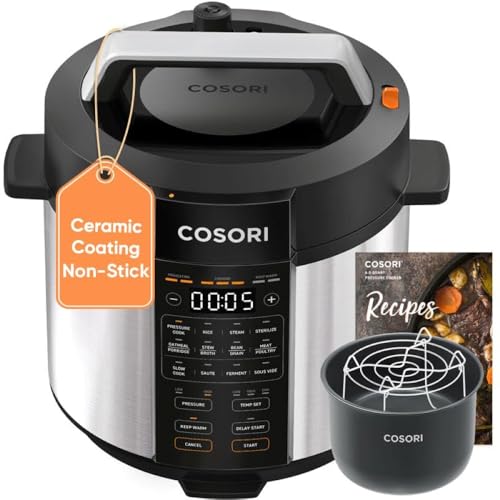
COSORI 6QT Pressure Cooker 9-in-1 — Best Feature Value
The COSORI makes the opposite bet to the Duo: that the affordable buyer would rather have features than folklore. Nine functions bring sous vide into the value tier — genuinely useful for steaks, eggs and hands-off proteins — and the ceramic-coated pot answers the stainless pot’s one daily annoyance, which is how hard rice and beans cling to it. Cleanup after a bean batch is a rinse, and that speed is what keeps a cooker in weekly use.
Strengths
- Nine functions including sous vide — a technique the benchmark reserves for pricier lines
- Ceramic-coated pot releases rice, grains and beans with a rinse instead of a soak
- A dozen safety features headline a listing that takes the pressure part seriously
Trade-offs
- Ceramic coating is a wear surface: silicone tools and gentle washing are the deal
- COSORI’s recipe ecosystem is growing, not grown — some translation from Duo timings
- 1100W element is strong for the class, but full-load come-up still takes patience
Key specs: 6-quart capacity; 9-in-1 functions; ceramic coating pot; 12 safety features; 1100W (per Amazon listing title).
The safety story is stated unusually plainly in its listing — a dozen safety features — which matters in a category where trust is the product. In the kitchen it behaves like the modern electric it is: preset-led, predictable, and friendly to cooks who would rather choose a food than a pressure level.
The trades are time-based. Ceramic coatings age under metal tools and scouring, so this pot asks for the gentle handling its fans already give their pans; and COSORI’s recipe world, while real, is smaller than the benchmark’s, so expect occasional translation. Buyers who cook rice and beans weekly and want sous vide without the flagship tier will find this the smartest value on the page.
Best for: best feature value / Not suited for: households where this matters most — ceramic coating is a wear surface.
Check on Amazon — check the current price on Amazon before you decide, because configurations and included accessories vary by listing.

COMFEE’ 12-in-1 Electric Pressure Cooker 6 Quarts — Best Budget Electric
The COMFEE 6-quart is where the electric format’s price floor gets respectable: twelve menus spanning pressure, slow cook, rice and steam, a ceramic inner pot, and a 24-hour timer for scheduling — the feature set of a mid-tier machine wearing a value badge, from one of the world’s largest appliance makers. For the buyer whose budget is a hard fact, this is the electric to beat.
Strengths
- Twelve menus of multi-cooker coverage at the friendliest electric tier in this guide
- Ceramic inner pot with a 24-hour timer — scheduling depth rivals skip at this level
- From the Midea group: a value machine with a real manufacturer behind it
Trade-offs
- Menus compress in practice to a handful of favourites, as with every multi-cooker
- Ceramic pot care rules apply — no metal scouring, no utensil abuse
- Spares and support are adequate, not ecosystem-deep
Key specs: 6-quart capacity; 12-in-1 functions; nonstick/ceramic inner pot; 24H timer (per Amazon listing title).
Daily life with it is the standard modern pattern, which is a compliment: build the base with saute, seal, choose the menu, and let the machine manage pressure and the warm hold after. The ceramic pot keeps the grain-and-bean rotation easy to clean, and the timer means the cook can be loaded at lunch for a dinner-hour finish.
It asks the usual ceramic care and offers a thinner spare-parts world than the benchmark. Households that will pressure cook a few times a week for years — rather than daily for a decade — will never feel either limit. As the budget electric pick, it is the one this guide would hand to a student, a first apartment, or a second home without a flicker of hesitation.
Best for: best budget electric / Not suited for: households where this matters most — menus compress in practice to a handful of favourites, as with every multi-cooker.
Check on Amazon — check the current price on Amazon before you decide, because configurations and included accessories vary by listing.

Presto 01264 6-Quart Aluminum Pressure Cooker — Best Budget Stovetop
If the budget is the whole story, this is the end of the search: Presto’s 6-quart aluminium stovetop cooker delivers real pressure cooking — the same steam, the same temperatures, the same hour-long shoulders and soak-free beans — at the friendliest tier in the guide, in a pot light enough to lift full and simple enough to re-gasket forever. It has been the working cook’s pressure cooker for generations because the arithmetic never stopped working.
Strengths
- The lowest-cost route in this guide to genuine pressure cooking, from the category’s founding name
- Aluminium heats fast and keeps the pot light enough for anyone to handle
- Gaskets and regulators are standard parts, available essentially forever
Trade-offs
- Not induction-compatible, and aluminium prefers not to store acidic food in the pot
- You regulate pressure and time the cook — presence is part of the price
- No warm hold or second functions: dinner timing is the cook’s craft
Key specs: 6-quart capacity; aluminium body; stovetop pressure cooker (per Amazon listing title).
The skill it asks is the classic one: bring it up, settle the regulator’s rhythm with the burner, time the cook, choose your release. That is an afternoon’s learning, repaid with searing power and pressure speed no value electric matches, and a pot that works on gas, coil and camp stoves alike.
Skip it for induction, for set-and-forget schedules, and for households where nobody wants to learn the regulator. Take it — happily — if you want pressure cooking’s benefits at cookware prices, with a service life measured in decades and spare parts measured in pocket change.
Best for: best budget stovetop / Not suited for: households where this matters most — not induction-compatible, and aluminium prefers not to store acidic food in the pot.
Check on Amazon — check the current price on Amazon before you decide, because configurations and included accessories vary by listing.

Presto 01362 6-Quart Stainless Steel Pressure Cooker — Best Affordable Stovetop for the Long Term
The stainless Presto is the affordable pick for buyers who hate buying twice. Stainless brings induction compatibility, indifference to tomato sauces and vinegar finishes, and a body that shrugs off the decades; the design on top of it is the same proven regulator-and-gasket simplicity as the aluminium classic, with the same permanent spare-parts pipeline. Amortised over its realistic life, it may be the cheapest cooker in this guide.
Strengths
- Stainless steel body: induction-ready, acid-indifferent, and the closest thing to a lifetime pot in this guide
- Same Presto simplicity and parts availability as its aluminium sibling
- Holds its value in every sense — the cooker most likely to be cooking in twenty years
Trade-offs
- Costs more than the aluminium Presto — the premium is material, not function
- Heavier and slower to heat than aluminium
- Still a manual art: regulation and timing are yours
Key specs: 6-quart capacity; stainless steel body; stovetop pressure cooker (per Amazon listing title).
In use it trades a little speed for that solidity: steel heats slower than aluminium and the pot is heavier in the hand, full or empty. Cooks who sear hard, simmer acidic ragus under pressure, or run an induction hob will count those as the right trades without blinking.
Choose it when your horizon is long and your hob is induction, or when you simply want the pot your kitchen retires with. The aluminium sibling wins on entry price and lightness; this one wins the twenty-year argument, and for many households that is the affordable decision that actually saves money.
Best for: best affordable stovetop for the long term / Not suited for: households where this matters most — costs more than the aluminium presto.
Check on Amazon — check the current price on Amazon before you decide, because configurations and included accessories vary by listing.

Presto 02141 6-Quart Electric Pressure Cooker — Best Electric for Traditionalists
Some households buy brands the way they buy tools: the name that has never failed them gets the next purchase too. The Presto 02141 is for them — an electric pressure cooker from the company that taught their grandparents stovetop pressure, with programmed cycles replacing the regulator and a panel that stays mercifully simple. If a relative is graduating from a beloved stovetop Presto to electric convenience, this is the gentlest bridge in the guide.
Strengths
- Programmed electric pressure from Presto — the stovetop dynasty’s own plug-in machine
- Simple, unpretentious controls for cooks moving from stovetop to electric without relearning a computer
- 6-quart electric convenience with a name your household may already trust
Trade-offs
- Feature set is conservative next to COSORI and COMFEE at similar tiers
- Ecosystem is Presto-sized, not Instant-sized: fewer recipes written for its exact panel
- No special pot story — it competes on trust and simplicity, not materials
Key specs: 6-quart capacity; electric pressure cooker (per Amazon listing title).
Functionally it covers the electric essentials: set the cook, let the machine build and hold pressure, and rely on the keep-warm afterwards. It does not chase the feature frontier — no sous vide headlines, no dozen-menu theatre — and its buyers will not miss them.
Value shoppers comparing spec sheets will land on the COSORI or COMFEE; ecosystem shoppers on the Duo. The Presto electric wins the specific, legitimate contest of trust and simplicity, and at the affordable tier that is a real constituency, honestly served.
Best for: best electric for traditionalists / Not suited for: households where this matters most — feature set is conservative next to cosori and comfee at similar tiers.
Check on Amazon — check the current price on Amazon before you decide, because configurations and included accessories vary by listing.
Comparison Table
| Pick | Badge | Key spec | Best for |
|---|---|---|---|
| Instant Pot Duo 6 Qt 7-in-1 Electric Pressure Cooker | Best Overall Affordable Electric | 6-quart capacity | Best Overall Affordable Electric |
| COSORI 6QT Pressure Cooker 9-in-1 | Best Feature Value | 6-quart capacity | Best Feature Value |
| COMFEE’ 12-in-1 Electric Pressure Cooker 6 Quarts | Best Budget Electric | 6-quart capacity | Best Budget Electric |
| Presto 01264 6-Quart Aluminum Pressure Cooker | Best Budget Stovetop | 6-quart capacity | Best Budget Stovetop |
| Presto 01362 6-Quart Stainless Steel Pressure Cooker | Best Affordable Stovetop for the Long Term | 6-quart capacity | Best Affordable Stovetop for the Long Term |
| Presto 02141 6-Quart Electric Pressure Cooker | Best Electric for Traditionalists | 6-quart capacity | Best Electric for Traditionalists |
How to Choose an Affordable Pressure Cooker Without Buying Twice
The affordable trap is not a bad cooker — it is the wrong format bought cheaply, then bought again properly. So decide format by life, not by price. Unattended dinners, warm holds and one-button habits point electric, and the value electrics here genuinely deliver them. Hands-on cooking, induction or camp stoves, canning-adjacent ambitions and a decades horizon point stovetop, where the Presto pair deliver at cookware prices. Either civilisation, bought once and correctly, is cheaper than both bought in sequence.
Inside your format, spend on the wear surfaces and forgive the rest. Stainless pots and available gaskets are where longevity lives; preset counts, finishes and bundled accessories are where savings are safe. Check that the model’s ring or gasket is a standard, orderable part before you buy — that single check predicts a decade of ownership better than any feature list. And keep expectations calibrated on time: affordable electrics still take come-up time with full loads, and affordable stovetops still need a present cook. The food, in all six cases, is the same food the flagships make.
What Affordable Pressure Cookers Give Up — and What They Do Not
They do not give up pressure, temperature or results. A sealed pot at high pressure cooks at the same physics in every tier, so beans, broths and braises emerge identical. What scales with money is everything around the physics: automation depth, display polish, pot material upgrades, accessory bundles, app ecosystems and the sheer density of recipes written for your exact buttons.
That framing makes the value decision easy to reason about. If you cook from recipes constantly, the benchmark’s ecosystem is a functional feature worth its tier. If you cook a rotation of family dishes you already know, ecosystem is worth nothing and pot material is worth everything — which is why this guide’s stovetop pair and ceramic-pot electrics exist. Affordable, chosen with that clarity, is not a compromise tier; it is the tier where you stop paying for things you never used.
How to Get Started with an Affordable Pressure Cooker: First Three Cooks
Cook one: the water test. A cup or two of water, seal, a short high-pressure cycle, both releases. On a stovetop, this is where you learn your burner’s regulator rhythm; on an electric, where you learn the valve and the float. Ten minutes, no food at stake, and every later cook is calmer for it. Cook two: dried beans or a big pot of rice — cheap, forgiving, and the two loads that teach fill discipline (half full for foamers) better than any manual.
Cook three: the signature braise — a pork shoulder or beef chuck with aromatics and a cup of liquid, high pressure for the better part of an hour, natural release. This is the cook that converts households, because it compresses an afternoon’s oven into a weeknight and produces the leftovers that stock two more dinners. Shred, sauce, serve, and portion the rest into shallow containers for the fridge and freezer.
From there, build the two habits that keep a value cooker valuable: wash the ring and lid parts after every cook and store the lid ajar, and keep a note of your own timings for your own rotation. A notebook of six dishes you have dialled in is worth more than sixty presets — and it is the point where an affordable pressure cooker stops being a purchase and becomes the kitchen’s engine.
The Two-Cooker Household: Pairing a Value Pressure Cooker with What You Own
An affordable pressure cooker rarely works alone, and its best partnerships are worth planning. Paired with a slow cooker, it covers the calendar in both directions — pressure for the forgotten dinner at 6 p.m., slow for the planned one at 6 a.m. — and the pair together still costs less than one flagship multi-cooker with a dozen functions. Paired with a rice cooker, it frees the pressure pot from grain duty on big nights, letting the shoulder pressure while the rice steams beside it, which is how small kitchens produce dinners that look catered.
The pairing logic also resolves the size question for many households. A 6-quart value pressure cooker plus the cooker you already own will out-cook an 8-quart bought to do everything, most weeks of the year. Buy the affordable pick for the gap in your kitchen — speed, or unattended time, or a second vessel — rather than as a monument, and the value tier’s whole philosophy clicks: spend on the missing capability, keep the change, and let the dinners, not the appliance shelf, look expensive.
Rescue Cooking: What Pressure Does for the Ingredients You Already Have
The unglamorous superpower of an affordable pressure cooker is rescue. The frozen-solid roast discovered at five o’clock, the dried beans bought for a recipe that assumed an overnight soak, the tough cheap cut that the budget allows and the clock usually forbids, the stock bones accumulating in the freezer — pressure converts all of them from planning failures into dinners, at a speed no other method approaches. This is why the format’s most loyal owners are not hobbyists but busy households cooking on real budgets: the machine pays for itself in meals that would otherwise have been takeaway.
Build the habit with a small repertoire of rescue templates rather than recipes: frozen protein plus a cup of liquid plus aromatics, timed generously and finished with something fresh; dried legume plus water plus a bay leaf, salted after; bones plus ends plus water for the stock that upgrades next week’s everything. A value-tier machine runs these templates identically to a flagship — the physics does not check the price tier — and a household that learns three of them owns the core value of pressure cooking, whatever it paid for the pot.
Stock, Broth and the Cheapest Upgrade in Home Cooking
If an affordable pressure cooker did nothing but make stock, it would still earn its shelf, because stock is the highest-leverage ingredient in home cooking and pressure makes it nearly free. The bones from a roast chicken, the ends of onions and carrots, a handful of herb stems — an hour under pressure turns this week’s scraps into next week’s soups, grains and sauces, each tasting like a kitchen that plans. At the affordable tier the arithmetic is almost comic: a machine at the value end of the market produces, in a month of weekly stocks, more cooking value than its purchase tier, in an ingredient restaurants guard jealously.
The method is beneath a recipe: bones and ends covered with water, nothing delicate, pressure for the better part of an hour on an electric’s stock-friendly cycle or a stovetop’s steady regulation, natural release, strain, chill, and portion into the freezer in one- and two-cup units. Salt it when you use it, not when you make it, so it can season anything. Households that adopt the stock habit find a quiet transformation follows: rice cooked in stock, beans finished in stock, pan sauces built on stock — the whole kitchen tastes more deliberate, and the only purchase behind the transformation is the cheapest serious cooker in this guide. That is the affordable tier’s best argument, and it is not close.
Your First Month: A Short Curriculum for New Pressure Cooks
New owners of an affordable pressure cooker should expect a one-month curriculum, and it is a pleasure rather than a chore. Week one belongs to water and beans: the water test that teaches the machine’s sounds, then dried beans twice — once plainly, once seasoned — because beans are cheap, forgiving and honest about fill discipline and release choice. Week two belongs to grains and eggs and the steamer jobs, the small daily cooks that build the habit of reaching for the pot. Week three is the braise: the shoulder or chuck that converts the household, cooked once and eaten three ways. Week four is the repeat — the deliberate second performance of the family’s favourite, with the notebook open, because a recipe cooked twice with notes becomes a rotation dish, and rotation dishes are what appliances are actually for.
Two pieces of advice compress the month. First, cook beneath the fill lines religiously until the habits are reflexes; every early mishap in this format is a fill, vent or release story, and all three are habits rather than talents. Second, resist the accessory shelf until the rotation exists: a spare ring and a steamer basket will serve a year of cooking, while the gadget drawer can wait for the cook who knows exactly which gap it fills. Affordable pressure cooking rewards the patient beginner more than any other kitchen discipline — the machine is inexpensive, the ingredients are inexpensive, and the skill, once learned in that first month, prices itself into every dinner that follows.
Safety at the Value Tier: What to Check on Any Bargain Cooker
Because this guide’s readers will inevitably meet pressure cookers cheaper than these picks — in marketplaces, discount bins and relatives’ cupboards — a short safety audit is worth more than another recommendation. On any cooker, at any price, check five things before food depends on it. The lid must lock positively and refuse to open under pressure. The pressure regulator or valve must move freely and sit correctly. The gasket must be supple, uncracked and seated — and replaceable, with the part actually orderable. The vent path must be visibly clear. And the machine, electric or stovetop, must come from a maker whose name, manual and parts exist in the world. A cooker that passes all five is a tool; one that fails any is a story you do not want to tell.
The picks in this guide pass that audit by construction — established makers, standard parts, documented designs — which is precisely what ‘affordable’ should mean: the savings taken from presets, finishes and marketing, never from the seal, the valve or the lock. That principle generalises beyond this page. Pressure cooking’s modern safety record was built by exactly those components, maintained exactly as this guide’s how-to describes. Spend the bargain-hunting energy there, and the value tier becomes what it is in this guide: not the risky end of the category, but its smartest one.
Beans Without the Soak: The Affordable Cooker’s Signature Trick
Every pressure tradition has a conversion story, and in modern households it is usually beans. The dried bean asks, in ordinary cooking, for an overnight soak and a long simmer; under pressure it asks for neither — rinsed beans, water to cover generously within the half-fill discipline, and a cook measured in tens of minutes produce beans with a texture canned beans imitate and never match, seasoned from the inside because they cooked in the seasoned pot. Black beans for the week’s tacos, chickpeas for hummus and curries, white beans for soups that taste like a grandmother’s afternoon: one affordable machine, one bag at a time, at a cost per portion that makes the canned aisle optional.
Two refinements separate good pressure beans from great ones. Salt and aromatics can go in from the start — the old warning against salting beans has not survived modern testing — while acidic ingredients like tomatoes and vinegar wait until after, since acid genuinely does slow softening. And the release matters: a natural release finishes the beans gently in their own heat, where a rushed quick release can split skins and cloud the liquor. Master those two notes and the signature trick becomes a weekly habit, the freezer fills with the building blocks of fast dinners, and the value cooker has performed the exact service its owners cite when they say, simply, that it changed how they eat.
One Pot, Five Dinners: A Week the Affordable Way
The value of an affordable pressure cooker is easiest to see across a single week. Monday: dried black beans, cooked from the bag in under an hour, becoming tacos with rice from the same pot’s second shift. Tuesday: a frozen chicken, discovered at five, pressure-cooked with aromatics and served by six-thirty — the rescue that pays for the machine in avoided takeaway. Wednesday: the chicken’s carcass becomes stock while the household does other things. Thursday: that stock becomes a soup with the week’s vegetables and the last of the beans. Friday: a cheap, tough cut — the one the budget loves — braised tender in the time a film takes, with leftovers portioned for the freezer.
Five dinners, one pot, no soak, no all-day simmer, no premium appliance anywhere in the story. The ingredients were the inexpensive ones; the techniques were the format’s basics; the only luxury was time, returned nightly by a sealed pot and a little steam. This is the week the affordable tier promises, and it is why this guide insists — against the whole weight of flagship marketing — that pressure cooking’s value was never in the price of the machine. It is in weeks like this one, repeated until they become simply how a household eats.
The Neighbour Test: Which Pick to Lend Your Name To
A useful final filter for this guide is the neighbour test: which machine would you recommend, by name, to the person across the fence who trusts your judgment and will report back? For most households it remains the Duo, because its ecosystem forgives a beginner completely. For the handy neighbour who cooks on gas and fears nothing, it is the aluminium Presto and a ten-minute regulator lesson on the driveway. For the neighbour feeding six on a budget that brooks no argument, it is the COMFEE and a bag of dried beans as the housewarming proof. The test works because it forces the only question that matters — not which cooker is best, but which cooker is best for a known kitchen, a known cook and a known life. Answer it that way, from the six verified picks above, and the affordable tier will have done for you exactly what it promises everyone: flagship dinners, honestly bought.
One More Consideration: The Cost-per-Dinner Test
Judge any pick in this guide by a single homely metric: cost per dinner across its life. A stovetop Presto cooking twice a week for twenty years prices its dinners in fractions of pennies; a value electric cooking weeknight rescues for five years does nearly the same; even the shortest-lived pick here, worked honestly, reaches a cost per dinner below the price of the ingredients it cooks. By that test the affordable tier is not the cheap end of pressure cooking — it is the efficient end, where the machine disappears from the accounting and only the dinners remain. Choose by format, maintain the seal, and let the years do the arithmetic.
And Finally: Keep the Notebook
One page of your own timings — beans, grains, the family braise, with the releases you chose and the results you tasted — is worth more than any preset library ever printed. Start it with the first cook, keep it in the drawer beneath the machine, and let it grow. It is the cheapest accessory in this guide, the only one no manufacturer can sell you, and the surest sign that an affordable cooker has become a household institution.
Common Buying Mistakes
Buying cheap twice by choosing the wrong format first. Decide electric versus stovetop by your schedule and presence, then buy the value pick inside that format — once.
Judging by preset count. Sixteen menus you will never open are worth less than one stainless pot or one available gasket. Spend on wear surfaces.
Skipping the gasket check. If the ring is not a standard, orderable part, the cooker’s life is the ring’s life. Every pick here passes; verify any off-list bargain before it charms you.
Expecting flagship speed from a full value electric. Come-up time at a full load is physics, not cheapness. Start big batches earlier.
Fearing stovetop pressure from reputation alone. Modern regulators, locking lids and gaskets made the format safe generations ago. The Presto pair’s longevity is the evidence.
Final Recommendation
For a first or only affordable pressure cooker, the Instant Pot Duo 6 Qt is the default: benchmark ecosystem, stainless pot, classic repertoire. Feature hunters take the COSORI, strict budgets take the COMFEE, and traditionalists take Presto’s electric. On the stovetop, the aluminium Presto is the cheapest real pressure cooking available, and the stainless Presto is the cheapest per decade. All six cook the same beans, broths and braises as machines twice their tier — the savings live in the trimmings, exactly where they should.
Compare upward and sideways before you settle: Best 6 Qt Pressure Cookers, Best 8qt Pressure Cookers, Best 8qt Electric Pressure Cookers, Best Affordable Rice Cookers and Best Affordable Programmable Slow Cookers.
Short on time? Start with the top three: Instant Pot Duo 6 Qt 7-in-1 Electric Pressure Cooker, COSORI 6QT Pressure Cooker 9-in-1, COMFEE’ 12-in-1 Electric Pressure Cooker 6 Quarts — each links to its listing so you can check the current price on Amazon and confirm the configuration before you buy.
Frequently Asked Questions
Are affordable pressure cookers safe?
The picks here come from established makers with modern, layered safety systems — locking lids, regulated release, over-pressure protection. Safety in pressure cooking is mostly procedural at any price: respect fill lines, keep vents clear, maintain the gasket, never force a lid. A value price does not license skipping those, and none is required to.
Electric or stovetop at the affordable tier?
Electric if dinners must cook unattended and hold warm; stovetop if you cook present, want induction or camp compatibility, or are buying for decades. The food is equivalent; the lifestyle is the difference, and this guide fields three verified picks on each side.
What size should an affordable pressure cooker be?
Six quarts is the value sweet spot: about four working quarts under pressure, enough for a family dinner plus leftovers, and the size where both formats’ entry models concentrate. Smaller households can drop to 4-quart guides in this series; batch households should read the 8-quart guides instead.
Do cheap electrics cook slower than expensive ones?
Time under pressure is identical for the same food. Come-up time varies with element power and load, and value models sit in the same range as flagships of the same size. The difference you will actually notice is presets and polish, not dinner time.
How long will an affordable pressure cooker last?
Electrics: years of regular service, with the sealing ring as a periodic replacement. Stovetops: decades, with gaskets and regulators as cheap wear parts — which is why the stainless Presto can be the cheapest cooker in this guide per year of service.
Can I cook frozen meat in an affordable pressure cooker?
Yes — pressure cookers handle frozen roasts and poultry pieces safely with extended time, one of the format’s genuine weeknight superpowers. Add roughly half again to the pressure time for a solid frozen roast, ensure liquid covers the minimum, and verify thick cuts reach a safe internal temperature before serving.


