Disclosure: airfryerkitchensupply.com is reader-supported. When you buy through links on our site, we may earn an affiliate commission at no extra cost to you.
Where to buy
The fastest way to buy any pick in this guide is through Amazon, where stock and configurations change often, so check the current price on Amazon on the product page rather than relying on any number printed elsewhere. These are the verified picks for best 8qt pressure cookers:
- Instant Pot Duo Plus 8 Quart 9-in-1 — Check on Amazon
- Presto 01282 8-Quart Aluminum Pressure Cooker — Check on Amazon
- Barton 8-Quart Aluminum Stovetop Pressure Cooker & Canner — Check on Amazon
- T-Fal Secure Trendy Stainless Steel Pressure Cooker 8.5 qt — Check on Amazon
- COMFEE’ 16-in-1 Electric Pressure Cooker 8 Quarts — Check on Amazon
- VAJ 12-in-1 Electric Pressure Cooker 8 QT — Check on Amazon
This guide mixes electric multi-cookers and stovetop classics at the same size, and listings for the stovetop models are steadier while the electrics rotate with bundles. Decide your format first, then buy the pick that wins inside it.
The best 8qt pressure cookers come in two civilisations. The electrics are appliances: sealed, programmed, self-regulating machines that pressure cook, slow cook and make rice from one panel. The stovetops are cookware: heavy pots with locking lids and pressure regulators that have cooked the same way for generations, will work on any burner including induction in the stainless cases, and ask for a cook’s attention in exchange for speed, searing power and near-immortality. This guide covers both at the 8-quart size, because at this capacity the format decision matters more than any single model — and because many households searching this term have not yet decided which civilisation they belong to.
Size first, honestly: 8 quarts brim means about 5.3 quarts of working load under pressure, half that headroom logic applying to foaming foods. That is whole-bird, big-shoulder, double-stock territory — the batch scale where pressure cooking’s time savings compound into freezer-filling afternoons. Every pick below was verified in its own listing at this size; the stovetop trio and the electric trio each contain a clear first choice, and the comparison sections exist to help you choose your civilisation before you choose your cooker.
One safety note frames the whole category, old and new alike: modern pressure cookers of both formats carry multiple independent safety systems their ancestors lacked, and the remaining risks are almost entirely procedural — overfilling, blocked vents, forcing a lid. The how-to section covers the discipline once, carefully, because it applies to every pick on this page.
In this guide
Quick Picks
Best Electric Overall — Instant Pot Duo Plus 8 Quart 9-in-1: The electric benchmark at 8 quarts: programmed pressure plus the full multi-cooker repertoire and the deepest recipe ecosystem available. Check on Amazon
Best Stovetop Value — Presto 01282 8-Quart Aluminum Pressure Cooker: The stovetop classic: Presto’s 8-quart aluminium cooker, the format that pressure-cooked for generations, at the class’s friendliest tier. Check on Amazon
Best Stovetop for Big Batches — Barton 8-Quart Aluminum Stovetop Pressure Cooker & Canner: A heavy-duty 8-quart stovetop cooker and canner-minded pot with a locking lid and pressure release valve, for stock-and-store cooks. Check on Amazon
Best Premium Stovetop — T-Fal Secure Trendy Stainless Steel Pressure Cooker 8.5 qt: The premium stovetop: 8.5 quarts of stainless steel, induction-ready, with a five-point safety system and two cooking modes. Check on Amazon
Best Value Electric — COMFEE’ 16-in-1 Electric Pressure Cooker 8 Quarts: The value electric: sixteen functions and a nonstick 8-quart pot from a major appliance maker. Check on Amazon
Best Electric for Schedules — VAJ 12-in-1 Electric Pressure Cooker 8 QT: A stainless electric 12-in-1 with 24-hour preset flexibility and canning among its cooking functions, for schedule-driven batch cooks. Check on Amazon
How These Picks Were Chosen
The field was built by verification, not by fame: each model had to confirm 8-quart (or 8.5-quart) pressure capacity in its own catalogue listing, and unverifiable models were excluded however well known. The six slots were then split deliberately — three electric, three stovetop — because a guide that answered this search with only electrics would mislead the substantial share of searchers who want a pot, and vice versa. Within each format, picks were assigned by role: benchmark, value, and a specialist (safety-and-steel for stovetop; scheduling depth for electric).
Judging criteria differed by format, as they should. Electrics were weighed on pot material, control clarity and ecosystem. Stovetops were weighed on body material and induction compatibility, safety systems, regulator style and the availability of the wear parts — gaskets and valves — that define their decades-long service lives.
The 6 Best 8Qt Pressure Cookers

Instant Pot Duo Plus 8 Quart 9-in-1 — Best Electric Overall
The electric case in one machine: the Duo Plus at 8 quarts pressures the big batch while you do something else, then holds it warm, then — on another day — slow cooks it, steams it or turns it into rice and yogurt. Its stainless pot takes metal tools and a decade of service, and the recipe world speaks its language, which at this batch scale saves expensive trial and error.
Strengths
- Programmed, self-regulating pressure: set the time and the machine manages the cycle and the warm hold
- Nine functions replace a slow cooker, rice cooker and steamer alongside the pressure role
- Stainless inner pot and the deepest spares-and-recipes ecosystem in the category
Trade-offs
- Slower to pressure with a full load than a stovetop at full burner power
- Electronics give it a finite service life a stovetop pot will outlast
- No true canning role — it is a cooker, not a canner
Key specs: 8-quart capacity; 9-in-1 functions; stainless steel inner pot (per Amazon listing title).
Against the stovetops below, its trade is equally clear: a burner-driven pot reaches pressure faster and sears harder, and will still be cooking when this machine’s electronics are history. What the electric returns for that trade is attention — yours, given back. For households whose cooking competes with jobs, children and commutes, that is usually the winning side of the bargain.
Take it as the electric default. The stovetop picks win for canning households, off-grid and induction-searing cooks, and buyers purchasing a 30-year pot; the Duo Plus wins for everyone whose scarcest ingredient is time at the stove.
Best for: best electric overall / Not suited for: households where this matters most — slower to pressure with a full load than a stovetop at full burner power.
Check on Amazon — check the current price on Amazon before you decide, because configurations and included accessories vary by listing.
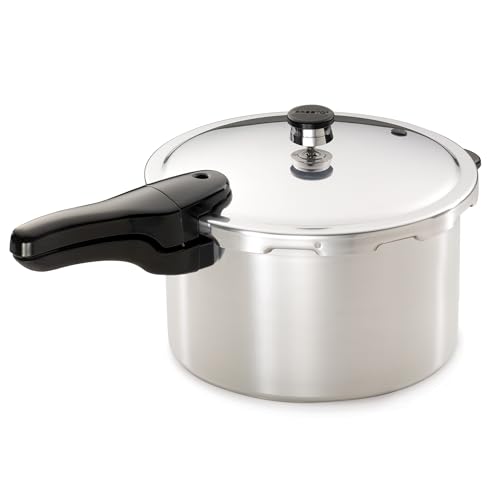
Presto 01282 8-Quart Aluminum Pressure Cooker — Best Stovetop Value
Presto has made pressure cookers since before pressure cooking was fashionable, feared or fashionable again, and the 8-quart aluminium cooker is that heritage at family scale. Aluminium heats fast and evenly enough, keeps the big pot liftable, and the design’s simplicity is its safety story: a regulator that rocks, a gasket that seals, a vent that is either clear or visibly not. Generations of cooks learned pressure on exactly this machine, and the knowledge base for it is bottomless.
Strengths
- Presto’s long-running 8-quart aluminium design: light for its size, quick to heat, simple to regulate
- The friendliest entry tier in this guide to real 8-quart pressure cooking
- Wear parts — gaskets, regulators — are standard, cheap and permanently available
Trade-offs
- Aluminium is not induction-compatible and dislikes long acidic simmers compared with steel
- You are the control system: pressure regulation is a burner adjustment, not a button
- No timer, no warm hold, no second functions — it is a pot, gloriously and only
Key specs: 8-quart capacity; aluminium body; stovetop pressure cooker (per Amazon listing title).
Living with it means being the thermostat. You bring it to pressure over high heat, ease the burner down until the regulator’s rhythm is steady, and time the cook yourself. Experienced stovetop cooks find this meditative and precise — burner control gives a sear and a pressure responsiveness no electric matches. New cooks should expect a learning batch or two, ideally the water test and then beans, before a costly roast depends on their regulator ear.
At its tier it has no serious rival for buyers who want the stovetop civilisation: canning-adjacent households (within the limits of tested guidance for its size), cabin and camp kitchens, and anyone buying a pot their grandchildren can re-gasket. Aluminium’s limits — no induction, gentler handling — are stated plainly, and for gas and electric coil kitchens they rarely bind.
Best for: best stovetop value / Not suited for: households where this matters most — aluminium is not induction-compatible and dislikes long acidic simmers compared with steel.
Check on Amazon — check the current price on Amazon before you decide, because configurations and included accessories vary by listing.
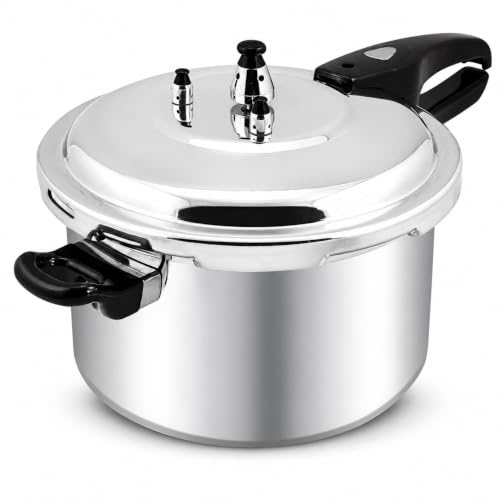
Barton 8-Quart Aluminum Stovetop Pressure Cooker & Canner — Best Stovetop for Big Batches
The Barton 8-quart speaks directly to the stock-and-store household: heavy-duty aluminium, a locking lid, a pressure release valve, and marketing that names stewing, soups, meats and home canning as its home ground. It is the workhorse pick — the pot for the autumn weekend when tomatoes, stock and a shoulder all need pressure on the same day.
Strengths
- Heavy-duty aluminium construction aimed at fast cooking, stewing and home-canning households
- Secure locking lid with a pressure release valve — the classic stovetop safety pairing
- 8-quart batch capacity sized for soups, meats and stock-and-store cooking days
Trade-offs
- Heavier-duty means heavier: a full 8-quart stovetop pot is a committed lift
- As with all stovetops, regulation and timing are the cook’s job
- Confirm canning suitability against current tested guidance for your altitude and jar load before canning
Key specs: 8-quart capacity; aluminium body; pressure release valve; secure locking lid (per Amazon listing title).
In the kitchen its virtues are mass and simplicity. The heavy body holds heat steadily once regulated, the lid locks with the positive engagement canning households expect, and the whole machine cleans like the pot it is. There are no modes to learn because there is nothing to learn beyond pressure craft itself: heat, regulate, time, release.
A necessary honesty: canning safety is governed by tested processes, jar loads and altitude, not by a listing’s enthusiasm. Treat this cooker as a candidate for canning only within current authoritative guidance for its size and your situation, and as a pressure cooker for meals it needs no qualification at all. For big-batch cooks who want metal, mass and no electronics, it is the guide’s sturdy middle.
Best for: best stovetop for big batches / Not suited for: households where this matters most — heavier-duty means heavier.
Check on Amazon — check the current price on Amazon before you decide, because configurations and included accessories vary by listing.

T-Fal Secure Trendy Stainless Steel Pressure Cooker 8.5 qt — Best Premium Stovetop
The T-Fal Secure Trendy is what the stovetop format looks like with a modern engineering budget: 8.5 quarts of stainless steel that works on induction, shrugs off tomato-heavy loads, and layers a five-point safety system over the classic locking-lid design. Two cooking modes let you run gentler pressure for delicate loads and full pressure for the beans-and-bones work, a refinement the single-pressure classics do not offer.
Strengths
- 8.5 quarts of stainless steel: induction-ready, acid-friendly, and built for decades
- Five-point safety system and two cooking modes — the most engineered stovetop here
- Steam basket included and a dishwasher-safe body for a pot that will be used hard
Trade-offs
- Premium tier: the most expensive stovetop in this guide by a clear margin
- Stainless is heavier than aluminium and slower to heat
- Two modes still leave timing and regulation to the cook — it is assistance, not automation
Key specs: 8.5-quart capacity; stainless steel; induction compatible; 5-point safety system; 2 cooking modes; steam basket included; dishwasher-safe body (per Amazon listing title).
For induction households it is close to the only game in this guide’s stovetop half — aluminium cannot play there at all — and its dishwasher-safe body acknowledges that an 8.5-quart pot is nobody’s favourite hand-wash. The included steam basket extends it to vegetables, puddings and reheating in ways the basic pots improvise.
Pay its premium when your kitchen is induction, your loads are acidic and frequent, or your buying horizon is genuinely decades. Gas-stove cooks on a budget get the same dinners from the Presto for far less; the T-Fal’s buyer is purchasing material, safety engineering and compatibility, and getting all three.
Best for: best premium stovetop / Not suited for: households where this matters most — premium tier.
Check on Amazon — check the current price on Amazon before you decide, because configurations and included accessories vary by listing.

COMFEE’ 16-in-1 Electric Pressure Cooker 8 Quarts — Best Value Electric
Not every household choosing its civilisation wants the flagship. The COMFEE brings the electric format — programmed pressure, automatic warm, a repertoire of supporting functions — down to the value tier in an 8-quart body with a nonstick pot, from a manufacturer with real scale behind it. For the buyer who has decided ‘electric’ but not ‘premium,’ this is the sensible landing spot.
Strengths
- Sixteen functions and an 8-quart nonstick pot at the value end of the electric class
- A major manufacturer’s machine — the budget pick without the unknown-badge risk
- Easy-release pot keeps the big-batch cleanup to a rinse on bean and rice days
Trade-offs
- Coated pot ages where stainless does not; plan a replacement over a long life
- No benchmark ecosystem: recipes translate rather than match
- Fewer long-term ownership reports than the category leader
Key specs: 8-quart capacity; 16-in-1 functions; non-stick inner pot (per Amazon listing title).
Its daily character is convenience: saute, seal, pressure, and a pot that lets go of the rice. The sixteen functions will compress in practice to the five you love, which is true of every multi-cooker ever sold and no insult to this one.
Against the Duo Plus it trades ecosystem and pot longevity for the tier; against the stovetops it trades immortality for automation. Both trades are coherent. Households cooking big electric batches several times a week, on a budget that is a fact rather than a preference, should take it without a second thought.
Best for: best value electric / Not suited for: households where this matters most — coated pot ages where stainless does not; plan a replacement over a long life.
Check on Amazon — check the current price on Amazon before you decide, because configurations and included accessories vary by listing.

VAJ 12-in-1 Electric Pressure Cooker 8 QT — Best Electric for Schedules
The VAJ 8 QT’s headline is time — not cooking time, but yours. Twenty-four-hour preset flexibility means the batch can be loaded when the kitchen is free and finished when the household is hungry, and for the shift-working, commute-stretched households who batch-cook out of necessity, scheduling depth is the feature that decides whether the machine gets used. Twelve functions in a stainless body cover the repertoire around that core.
Strengths
- 24-hour preset flexibility: set the big batch around your day, not the reverse
- Stainless steel multi-cooker body with twelve functions including saute and canning among its cooking modes
- Full 8-quart capacity for the crowd and freezer loads this class exists for
Trade-offs
- Canning on an electric must follow the maker’s and current tested guidance precisely — it is not a stovetop canner substitute by default
- Newer name: ecosystem and spares trail the benchmark
- Preset depth rewards a manual-reading first week
Key specs: 8-quart capacity; 12-in-1 functions; stainless steel body; 24H cooking presets (per Amazon listing title).
Its listing includes canning among its functions; treat that exactly as seriously as it deserves. Electric canning claims must be matched against the maker’s instructions and current tested guidance for your altitude and load, every time — the stovetop section of this guide exists partly because canning households have traditionally, and often wisely, chosen heavy pots and authoritative process tables.
As a cooker pure and simple, it is a capable, schedule-friendly electric at full size. Buy it for the timer depth, verify any canning plan against proper guidance, and it will serve the batch household it was designed for.
Best for: best electric for schedules / Not suited for: households where this matters most — canning on an electric must follow the maker’s and current tested guidance precisely.
Check on Amazon — check the current price on Amazon before you decide, because configurations and included accessories vary by listing.
Comparison Table
| Pick | Badge | Key spec | Best for |
|---|---|---|---|
| Instant Pot Duo Plus 8 Quart 9-in-1 | Best Electric Overall | 8-quart capacity | Best Electric Overall |
| Presto 01282 8-Quart Aluminum Pressure Cooker | Best Stovetop Value | 8-quart capacity | Best Stovetop Value |
| Barton 8-Quart Aluminum Stovetop Pressure Cooker & Canner | Best Stovetop for Big Batches | 8-quart capacity | Best Stovetop for Big Batches |
| T-Fal Secure Trendy Stainless Steel Pressure Cooker 8.5 qt | Best Premium Stovetop | 8.5-quart capacity | Best Premium Stovetop |
| COMFEE’ 16-in-1 Electric Pressure Cooker 8 Quarts | Best Value Electric | 8-quart capacity | Best Value Electric |
| VAJ 12-in-1 Electric Pressure Cooker 8 QT | Best Electric for Schedules | 8-quart capacity | Best Electric for Schedules |
Electric vs Stovetop: Choosing Your 8Qt Civilisation
Choose electric if your scarce resource is attention. An electric pressures a shoulder while you leave the house, holds dinner warm against a late commute, and asks nothing but a loaded pot and a button. It also slow cooks, steams and makes rice, which is why electrics retired whole shelves of appliances. Its costs are a finite electronic lifespan, a slower climb to pressure at full load, gentler searing, and a firm line at canning.
Choose stovetop if your scarce resource is money over decades, or if your cooking includes the jobs electrics cannot do. A stovetop pot sears like the pan it is, reaches pressure at burner speed, works on any heat source its material allows (stainless adds induction; aluminium does not), and — maintained with gaskets and valves — cooks for thirty years. Canning households have historically lived here, under tested guidance. Its cost is you: regulating pressure, timing cooks, and being present for both.
The hybrid truth is that many serious batch kitchens own both: the electric for weeknight automation, the stovetop for canning days and sear-heavy projects. If the budget forces one, let your calendar decide — unpredictable days point electric; present, hands-on cooking points stovetop — and let the picks above settle the model.
Materials, Safety Systems and Wear Parts at 8 Quarts
Body and pot materials decide daily life. Aluminium stovetops are light, fast and affordable, but skip induction and prefer not to store acidic food. Stainless stovetops and electric inner pots are the forever materials — heavier, pricier, indifferent to tomatoes and metal spoons. Coated electric pots trade lifespan for release, which matters most to rice-and-bean households. None of these is a wrong answer; each is a different decade-long relationship with the same dinners.
Safety at this size is layered and, on modern machines of both formats, genuinely redundant: locking lids that cannot open under pressure, pressure regulators and release valves, over-pressure plugs, and — on electrics — sensors that cut heat on fault. The cook’s remaining duties are the procedural ones no engineer can remove: respect fill lines, keep vents and shields clean and clear, replace gaskets when they harden or crack, and never force a lid. Do those, and an 8-quart pressure cooker of either civilisation is among the safest hard-working tools in the kitchen.
How to Use an 8Qt Pressure Cooker Safely: The Universal Routine
Before every cook, run the same thirty-second inspection regardless of format: sealing ring or gasket seated and supple, vent and anti-block shield clear, valve moving freely, lid locking smoothly. Add liquid at least to the maker’s minimum — pressure is steam, and steam needs water — and load solids under the two-thirds line, or the half line for beans, grains and other foamers. These two numbers prevent nearly every pressure-cooking incident ever recorded.
During the cook, bring the pot to pressure by the format’s method — burner heat and a steady regulator rhythm on a stovetop, a programmed cycle on an electric — then time from full pressure, not from the start. When time ends, choose the release like a cook, not a habit: natural for large roasts, foaming pots and anything you would rather keep calm; quick for vegetables and delicate loads; and never, under any circumstances, force a lid that resists. A lid that will not turn is a pot still under pressure, and it is telling you so.
Afterwards, wash the lid’s working parts as carefully as the pot: the ring, the valve, the shield. Dry everything, store the lid ajar so the ring airs, and note the gasket’s condition for next time. That small liturgy — inspect, respect the lines, release with patience, clean the mechanism — is the whole safety culture of pressure cooking, and it scales from a 4-quart weeknight pot to the 8-quart batch machines in this guide.
Beans, Grains and Stocks: The Three Loads That Justify Eight Quarts
If a household cooks only three things under pressure, these are the three that repay an 8-quart machine. Dried beans first: no overnight soak, tender in well under an hour of pressure, at half-fill discipline — which at this size still means a freezer’s worth of beans in one run, seasoned your way, at a fraction of the canned cost and with the texture cans never achieve. Cook them plainly, freeze in their liquor in dinner portions, and weeknight cooking gains a permanent head start.
Grains second: brown rice, farro, wheat berries and steel-cut oats in sealed, timed batches that free the stovetop and end the boil-over era, again at a scale that turns one cook into a week’s bases. Stocks third, and perhaps first in value: a carcass, a bag of saved vegetable ends and ninety minutes of pressure produce a stock with the body of an all-day simmer, and eight quarts of it portioned into the freezer is the single highest-leverage cook in this entire guide. Master these three loads and the cooker has justified itself before a single celebratory roast is attempted.
Altitude, Timing and Other Adjustments Big-Pot Cooks Actually Need
Pressure cooking is altitude-sensitive in a way slow cooking is not, because the pressure inside the pot is relative to the air outside it. At elevation, the same setting delivers a lower absolute pressure and temperature, and cooks run long — the standard correction is to add time (roughly five percent per thousand feet above two thousand, as a working rule) and to favour natural releases, which effectively extend the cook gently. Electric machines with altitude settings apply this automatically where offered; stovetop cooks adjust by time and by testing texture rather than trusting sea-level tables. Either way, the first batches at altitude are calibration, and a notebook beats a memory.
Load size is the other quiet variable. A full 8-quart pot comes to pressure slowly and releases slowly, and both phases cook — so a full batch of beans effectively cooks longer than a half batch at the same set time. Experienced big-pot cooks trim a few minutes from the set time on brim-full loads and add them back on sparse ones, judging by the first batch’s texture. This is not imprecision; it is the craft layer of the format, and it is why the same recipe reads differently in every kitchen until the cook — not the book — owns the timings.
The Stovetop Learning Curve: Your First Month with a Regulator
New stovetop cooks consistently describe the same first month: the first cook is anxious, the third is competent, and by the sixth the regulator’s rhythm has become background music. The learning is genuinely that small. Bring the pot up over confident heat, watch for the first full pressure signal, then ease the burner down in small steps until the regulator settles into its steady, gentle motion — too violent wastes water and risks running dry on long cooks; too lazy loses pressure and stretches timing. Every stove and pot pair has its setting, and once your hand knows yours, it will find it in seconds for years. A cheap kitchen timer and a notebook of your first six cooks — load, burner setting, time, result — compress the month into a week.
The mistakes of the first month are equally predictable and equally harmless when anticipated. Scorching happens when thick sauces meet full heat before pressure — stir, layer and add thin liquid at the bottom. Steam at the rim in the first minutes is the gasket seating, not a failure, provided it stops as pressure builds. A cook that will not pressurise is almost always a vent, a gasket or a fill issue, in that order, and the inspection routine in this guide’s how-to finds it in a minute. Cooks who expect the learning curve — and budget two cheap practice batches of beans and water before the expensive roast — join the generations who regard the stovetop pot as the simplest machine in the kitchen, because after the first month, it is.
A Word on Canning, From the Cooker’s Side of the Fence
Because two picks in this guide live near the canning world, the subject deserves one clear paragraph rather than a scattering of caveats. Pressure canning is a safety-critical process governed by tested recipes, jar sizes, processing times and altitude adjustments issued by authoritative bodies — in the United States, the USDA’s Complete Guide and the National Center for Home Food Preservation are the references that matter. A cooker is suitable for canning only when the process you are following, from those sources, covers equipment of its type and size; many tested processes assume a canner of a minimum size that an 8-quart cooker may not meet, and electric multi-cookers are not covered as canners by those authorities at all.
None of that diminishes these machines as cookers — it clarifies the boundary of their job. Use the stovetop picks for pressure cooking with total confidence; approach canning as a separate discipline with its own equipment check against current guidance, your altitude and your jar load. The households that can safely are, without exception, the households that treat the guidance as the recipe and the equipment as a variable to be verified — never the reverse. This guide’s picks will cook a lifetime of dinners. Let the canning authorities, not a product page, decide what else they may do.
Electric and Stovetop on the Same Counter: A Peace Treaty
Owners who run both formats — more common than either camp admits — settle into a division of labour worth copying. The electric takes the scheduled week: the beans started before work, the shoulder that must finish unattended, the stock that simmers its pressure cycle while the house does other things. The stovetop takes the projects: the sear-heavy braise where burner power is a flavour ingredient, the canning-season weekends under proper guidance, the camp and cabin trips, and the power-cut days when gas and a heavy pot laugh at the grid. Neither machine resents the other; each covers the other’s honest weaknesses, and the household’s pressure cooking becomes a system with no gaps.
For buyers who must choose one today, the treaty suggests the deciding question is not which format is better but which gap is bigger. If your kitchen lacks unattended time, the electric fills the larger hole and the stovetop can join later at cookware prices — the Presto pair in this guide will still be there, unchanged, whenever later arrives. If your kitchen lacks power, speed and permanence, the stovetop is the foundation and the electric the later convenience. Either order ends at the same two-machine peace. Start with the gap, and this guide’s badges will do the rest.
Reading a Recipe for Either Format: Translating Times and Liquids
Recipes in the wild rarely specify your format, and translation is a small, learnable craft. Stovetop recipes assume a pot brought to full pressure on a burner and timed from the regulator’s rhythm; electrics build that come-up into their programs and count only the pressurised phase, so a stovetop time usually transfers directly as the electric’s set time, with the electric’s total clock running longer and its result matching. Liquids transfer almost unchanged — pressure cooking loses very little to evaporation in either format — with one caution: stovetop pots vent a little more across a long cook, so the scantest-liquid stovetop recipes deserve a small addition in an electric, and electric recipes with generous liquid may want a brief uncovered simmer after a stovetop cook to tighten a sauce.
Release instructions translate by intent rather than by word. A recipe calling for a natural release wants gentleness — resting meat, settling foam — and both formats deliver it by simply waiting. A quick release wants the cooking stopped now, and both deliver it, the stovetop under a careful hand at the valve or a cool-water assist on some designs, the electric at its button. Learn to read for intent and the entire library of pressure recipes, written across a century for both civilisations, opens to whichever machine is on your counter — which is the final argument for the peace treaty this guide proposed: the food was never divided, even when the pots were.
Storage, Transport and the Life of a Big Pot
An 8-quart pressure cooker is a large object with a long life, and its storage deserves the same thought as its purchase. Stovetop pots store like the cookware they are — in a low cabinet, lid inverted, gasket resting uncompressed so it keeps its shape for years rather than taking the set of the seal. Electrics want a counter or shelf where the lid can open fully without relocation, because a machine that must be moved before every use is a machine in slow retirement. Both formats travel reluctantly when full and hot; the wise batch cook portions into containers for transport and lets the cooker stay home, which is safer for the food, the car and the cook in equal measure.
Across years, the ownership rhythm settles into something almost monastic: cook, wash the working parts, dry, store ajar, inspect the gasket now and then, replace it when it asks. There are few appliances of which that is the whole manual, and fewer still that reward the rhythm with decades of identical performance. Buyers who choose from this guide with storage and ritual in mind are not being fussy — they are ensuring that the cooker they select this year is still, in the deepest sense, the cooker they selected, long after the listings that sold it have been forgotten.
The Verdict Before the Verdict
If this guide’s six picks were reduced to one sentence each, they would read as follows. The electric benchmark is for households buying time. The aluminium Presto is for households buying pressure itself, at its purest and cheapest. The Barton is for households buying mass and momentum for batch days. The T-Fal is for households buying the last stovetop pot they intend to own. The COMFEE is for households buying the electric format on a budget that is a fact. The VAJ is for households buying their schedule back. Somewhere in those six sentences is your kitchen, described accurately — and a purchase made from an accurate description of your own life is the only kind that never needs to be made twice.
One More Consideration: The Second Ring, the Spare Gasket
Whichever format you choose, buy its wear part on the same day: the spare sealing ring for the electric, the spare gasket for the stovetop. It is the cheapest purchase in this entire guide and the one that converts a future failure — discovered, inevitably, with a pot full of food — into a two-minute swap. Store the spare flat, labelled, where the machine lives. Owners of both formats describe the same small satisfaction years later, reaching for the spare without a thought while dinner proceeds uninterrupted: the sound of a household that understood, from the beginning, that pressure cooking’s permanence is not a property of pots but a habit of the people who keep them.
Common Buying Mistakes
Overfilling a foaming load. Beans and grains at two-thirds will find the valve. Half full for foamers is not a suggestion; it is the design limit.
Forcing or rushing the lid. If it resists, it is pressurised. Wait, release properly, and let the float or the silence tell you it is safe.
Assuming electric equals canner. Electric multi-cookers cook; canning requires tested processes and equipment rated for them. Do not let a preset name make that decision for you.
Neglecting the gasket. A hardened, cracked ring is a slow leak today and a failed seal tomorrow. They are cheap wear parts on every pick here — replace them on condition, not on hope.
Buying the format your kitchen cannot feed. An aluminium stovetop on an induction hob, or an electric with no counter to open its lid under the cabinets, is a return waiting to happen. Match format to kitchen first.
Final Recommendation
Decide the civilisation, and the model follows. Electric and busy: the Duo Plus 8 Quart. Electric and budgeting: the COMFEE. Stovetop and value: the Presto 8-quart aluminium. Stovetop and induction, steel or decades: the T-Fal 8.5. Big-batch stovetop muscle: the Barton. Schedule-driven electric flexibility: the VAJ. Every pick here was verified at size, and every one will turn the big, tough, cheap cuts and dried legumes of batch cooking into the fastest dinners in your repertoire.
Size and format neighbours worth a look before you buy: Best 8qt Electric Pressure Cookers, Best 6 Qt Pressure Cookers, Best 4 Quart Pressure Cookers, Best Affordable Pressure Cookers and Best 8 Qt Slow Cookers.
Short on time? Start with the top three: Instant Pot Duo Plus 8 Quart 9-in-1, Presto 01282 8-Quart Aluminum Pressure Cooker, Barton 8-Quart Aluminum Stovetop Pressure Cooker & Canner — each links to its listing so you can check the current price on Amazon and confirm the configuration before you buy.
Frequently Asked Questions
Are stovetop pressure cookers safe?
Modern stovetop cookers like the picks here carry multiple independent safety systems — locking lids, regulators, over-pressure releases — that their mid-century ancestors lacked. The remaining safety work is procedural: correct fill, clear vents, sound gaskets, and never forcing a lid. Follow those and the format’s record is excellent.
Which is faster, an 8qt electric or stovetop?
The stovetop, usually: a strong burner brings a big pot to pressure faster than an electric element, and it sears harder. The electric wins on unattended time — its total clock may be longer while your involvement is minutes. Choose which clock you are optimising.
Can I pressure can in an 8qt pressure cooker?
Only within current tested guidance for the specific equipment, load and your altitude — and electric multi-cookers are not a substitute for a tested pressure canner. Canning is the one job in this category where ‘the listing says so’ is never enough; follow authoritative process guidance.
What size load does an 8qt really hold under pressure?
About 5.3 quarts at the two-thirds maximum, and about 4 quarts for foaming foods limited to half. That is a whole chicken, a large shoulder, or a double batch of stock — the loads this size class exists for.
How often do gaskets and rings need replacing?
On condition rather than calendar: when they harden, crack, stretch or start leaking steam at the rim. Heavy users may replace yearly; occasional users get several years. Both formats treat them as cheap wear parts, and availability is one of the stovetop classics’ quiet advantages.
Is 8qt too big for everyday dinners?
For a household of two cooking fresh nightly, probably — minimum liquid requirements and a big pot make small loads awkward, and a 6-quart will serve you better. For batch cooks, families and freezer households, 8 quarts is the everyday size and the smaller pot is the awkward one.


