Disclosure: airfryerkitchensupply.com is reader-supported. When you buy through links on our site, we may earn an affiliate commission at no extra cost to you.
Where to buy
The fastest way to buy any pick in this guide is through Amazon, where stock and configurations change often, so check the current price on Amazon on the product page rather than relying on any number printed elsewhere. These are the verified picks for best affordable rice cookers:
- AROMA ARC-914SBD Digital Rice Cooker — Check on Amazon
- BLACK+DECKER 6-Cup Rice Cooker — Check on Amazon
- AROMA ARC-363NG Rice Cooker 3-Cup Uncooked — Check on Amazon
- Hamilton Beach 37518 Digital Rice Cooker — Check on Amazon
- AROMA ARC-150SB 20 Cup Cooked Digital Rice Cooker — Check on Amazon
- AROMA 6-Cup One-Touch Rice Cooker with CoreCoat — Check on Amazon
Rice cookers at the value tier are stocked deep and restocked often, but the same model appears under slightly different bundle names. Match the model number in the listing to the pick below and you have the right machine, whatever the bundle calls itself.
The best affordable rice cookers make a quietly radical claim: perfect rice is not a skill, it is an appliance, and the appliance does not need to be expensive. A rice cooker’s whole job is to boil, sense when the water is absorbed, and stop — and the value tier performs that job with the same reliability as machines many times its tier, because the underlying mechanism is a thermostat, not a computer. What money adds is fuzzy-logic refinement, induction evenness and exotic grain programs. What it does not add, for the jasmine and long-grain rotation of most households, is noticeably better rice.
This guide fields six verified picks across the size and style range of the affordable class: one-touch pot-style cookers for purists, digital models for households that want timers and grain settings, and capacities from a 6-cup-cooked compact for small kitchens to a 20-cup-cooked batch machine for big families and gatherings. Every model was confirmed in its own catalogue listing, capacities are stated in the cooked and uncooked terms the listings use — a distinction the buying guide untangles, because it confuses more buyers than any other in this category — and no prices are printed, per this series’ standing rule.
If you have been cooking rice on the stove and scorching one pot in three, or feeding a household that eats rice daily from a cooker that finally died, this is your page. The picks are ordered by badge, the guide sections cover sizing, pot coatings and the rinse question, and the how-to will have your first pot measured correctly — because the one thing even the best affordable cooker cannot fix is the wrong amount of water.
In this guide
Quick Picks
Best Overall — AROMA ARC-914SBD Digital Rice Cooker: The digital all-rounder: 4 cups uncooked, steamer tray, grain and multicooker functions in stainless dress. Check on Amazon
Best Simple Value — BLACK+DECKER 6-Cup Rice Cooker: The simplest value in the guide: one-touch 6-cup-cooked cooking with a steaming basket, from a household name. Check on Amazon
Best Compact Classic — AROMA ARC-363NG Rice Cooker 3-Cup Uncooked: The compact classic: 3 cups uncooked in the pot-style form that also handles oatmeal and soup without complaint. Check on Amazon
Best with Steamer — Hamilton Beach 37518 Digital Rice Cooker: The digital steamer pick: 8 cups cooked with a rinse-and-steam basket system for vegetables and proteins above the rice. Check on Amazon
Best for Big Households — AROMA ARC-150SB 20 Cup Cooked Digital Rice Cooker: The batch machine: 20 cups cooked with digital controls, slow-cook and steam functions for big households. Check on Amazon
Best PFAS-Free Pot — AROMA 6-Cup One-Touch Rice Cooker with CoreCoat: The coating-conscious compact: one-touch 6-cup cooking with AROMA’s CoreCoat PFAS-free ceramic surface. Check on Amazon
How These Picks Were Chosen
Every candidate was verified in its own listing for cooker type and capacity before selection — rice cookers are a category rife with capacity ambiguity, so the cooked-versus-uncooked basis of each model was recorded from its listing title and is stated in each review. From the verified affordable field, the six slots cover the class’s real variety: one-touch versus digital controls, compact versus batch capacities, and the two coating philosophies (conventional nonstick and PFAS-free ceramic) that divide value buyers.
Judging weighted the daily rice experience: how reliably the cooker stops at done rather than warm-scorching, whether the pot releases rice without a soak, how honest the capacity is for a real household, and how the steam tray performs for the cook-rice-and-something pattern that makes these machines weeknight systems rather than single-food appliances. Fuzzy-logic refinement was noted where present but weighted honestly: at this tier, it is not what separates good rice from bad.
The 6 Best Affordable Rice Cookers

AROMA ARC-914SBD Digital Rice Cooker — Best Overall
The AROMA ARC-914SBD is the affordable rice cooker for households that want a little more than a lever. Digital settings shape the cook for different grains, the steamer tray turns rice night into rice-and-vegetables night in one vessel, and the multicooker functions let it moonlight for oatmeal, soups and steamed proteins. At 4 cups uncooked — 8 cups cooked — it is sized for the family dinner plus tomorrow’s fried-rice leftovers, which is the exact centre of this category’s demand.
Strengths
- Digital controls with dedicated settings, a steamer function and multicooker range beyond rice
- 4-cup uncooked / 8-cup cooked capacity — the family-of-four sweet spot
- Stainless exterior wipes clean and suits a counter-resident appliance
Trade-offs
- Digital panel is more to learn than a one-touch lever — a weekend of familiarity
- Eight cooked cups is a ceiling big families will hit; they should take the 20-cup pick
- Nonstick pot asks for the usual gentle tools
Key specs: 4-cup (uncooked) / 8-cup (cooked) capacity; 2 Qt; steamer; grain cooker and multicooker functions; stainless steel (per Amazon listing title).
The rice itself is the reliable, repeatable result the format promises: measure with the included cup, fill to the pot’s line, press the setting, and the machine handles the rest, holding the finished rice warm without the scorching a forgotten stovetop pot guarantees. Day after day, that consistency is the product — not any single spectacular pot, but the absence of failed ones.
Choose it as the default digital pick. One-touch purists should take the BLACK+DECKER or the pot-style AROMA below; big households the 20-cup AROMA; coating-conscious buyers the CoreCoat model. For the mainstream family kitchen wanting settings and steam, this is the complete affordable answer.
Best for: best overall / Not suited for: households where this matters most — digital panel is more to learn than a one-touch lever.
Check on Amazon — check the current price on Amazon before you decide, because configurations and included accessories vary by listing.

BLACK+DECKER 6-Cup Rice Cooker — Best Simple Value
The BLACK+DECKER 6-cup is the rice cooker reduced to its essence, and for the right household that essence is plenty: a removable nonstick bowl, a steaming basket, a lever. It makes up to six cups of cooked rice — dinner for two or three with leftovers — steams vegetables above it, switches itself to warm, and asks absolutely nothing else of you. In a first apartment, a dorm-adjacent kitchen or a couple’s counter, it is difficult to argue for spending more.
Strengths
- One-touch operation: load, press, walk away — the rice cooker in its purest form
- Steaming basket included for vegetables, fish or dumplings over the rice
- Removable nonstick bowl and a household-name maker behind it
Trade-offs
- Six cups cooked is a small ceiling — couples and singles only
- No settings, no timer: white rice and steam are the repertoire
- Basic keep-warm only; rice held for many hours dries at the edges
Key specs: 6-cup (cooked) capacity; steaming basket; removable non-stick bowl (per Amazon listing title).
Its honesty is its charm. There are no grain programs to ignore, no display to fade, no settings to mis-press. The rice is good because the mechanism is proven; the cleanup is a rinsed bowl; the storage is a small cabinet corner. Machines like this are why the affordable tier of this category embarrasses the premium one so often.
The limits are capacity and repertoire, stated plainly: households of four or more, brown-rice devotees wanting a dedicated cycle, and batch cooks should step to the digital picks. For its sized-for household, it is the best simple value in this guide and one of the easiest recommendations on the page.
Best for: best simple value / Not suited for: households where this matters most — six cups cooked is a small ceiling.
Check on Amazon — check the current price on Amazon before you decide, because configurations and included accessories vary by listing.

AROMA ARC-363NG Rice Cooker 3-Cup Uncooked — Best Compact Classic
Before rice cookers had displays, they had this shape: a pot, a lid, a lever, and a thermostat that simply worked. The AROMA ARC-363NG keeps that tradition at 3 cups uncooked — six cups cooked — and adds the small-machine versatility its listing names: oatmeal in the morning, soup at lunch, rice at dinner, all from a footprint that fits the kitchens other appliances evict it from.
Strengths
- The pot-style classic: 3 cups uncooked / 6 cups cooked in the form factor that defined home rice cooking
- Doubles happily as an oatmeal cooker and soup maker — small-pot versatility beyond rice
- Auto keep-warm and a footprint a small kitchen can actually spare
Trade-offs
- Pot-style simplicity means one core setting — grain variety is managed by water, not programs
- Six cooked cups caps it at small households and side dishes
- Lid and pot are basic; no steamer sophistication beyond the basics
Key specs: 3-cup (uncooked) / 6-cup (cooked) capacity; oatmeal cooker and soup maker; auto keep warm (per Amazon listing title).
For singles, couples and side-dish duty in bigger kitchens, the size is the virtue. A compact cooker run at its proper fill makes better rice than a big cooker run nearly empty, stores in a drawer-adjacent cabinet, and cleans in a minute. The auto keep-warm holds the pot politely until the rest of dinner catches up.
Grain specialists who cook brown rice, mixed grains and porridge on distinct cycles should take a digital pick, where the programs earn their keep. Households whose rice life is white and jasmine, in small batches, with oatmeal on the side, will find this classic covers it entirely — as it has, in this form, for a very long time.
Best for: best compact classic / Not suited for: households where this matters most — pot-style simplicity means one core setting.
Check on Amazon — check the current price on Amazon before you decide, because configurations and included accessories vary by listing.

Hamilton Beach 37518 Digital Rice Cooker — Best with Steamer
The Hamilton Beach 37518 is built around a workflow: rinse the rice in its basket, cook, and steam the vegetables or protein above in the same cycle, so the one-pot dinner is a system rather than a hope. Digital programmability shapes the cook for different grains, and the 8-cup cooked capacity lands in the family sweet spot alongside the AROMA digital — the choice between them is basket philosophy and brand preference more than rice quality.
Strengths
- Digital programmability with a steam-and-rinse basket system — rinse the rice, then steam above it
- 8 cups cooked: family capacity with one-pot dinner ambitions
- Hamilton Beach’s clear controls and a stainless presentation
Trade-offs
- Basket system adds parts to wash on nights you only wanted rice
- Digital tier costs more than the one-touch picks for the same core rice
- Eight cooked cups is mid-size: batch households should look at the 20-cup pick
Key specs: 8 cups cooked (4 uncooked); digital programmable; steam and rinse basket included; stainless steel (per Amazon listing title).
In practice the rinse basket earns its storage space. Rinsing is the step home cooks skip and then wonder about texture; building it into the vessel makes it the path of least resistance, and the rice is better for it — cleaner grains, less gummy clumping, the result restaurants get by habit. Steaming above turns the appliance from a side-dish maker into the centre of a weeknight dinner for smaller households.
If your rice nights are rice-only, the simpler picks save money and washing-up. If your rice nights are dinners — grains below, greens and fish above, one vessel to wash — the Hamilton Beach is the affordable pick designed for exactly you.
Best for: best with steamer / Not suited for: households where this matters most — basket system adds parts to wash on nights you only wanted rice.
Check on Amazon — check the current price on Amazon before you decide, because configurations and included accessories vary by listing.

AROMA ARC-150SB 20 Cup Cooked Digital Rice Cooker — Best for Big Households
Some households do not need a rice cooker; they need a rice system — for a big family, a multi-generational table, a gathering, or a meal-prep day that cooks the week’s grains at once. The AROMA ARC-150SB is that system at the affordable tier: 20 cups cooked under digital control, with slow-cook and steam functions that let the big pot earn its footprint on non-rice days too.
Strengths
- 20 cups cooked / 10 cups uncooked: genuine batch and gathering capacity
- Digital controls with slow-cook and steam functions — a multi-role big pot
- Stainless exterior and the AROMA ecosystem behind the value tier’s biggest machine
Trade-offs
- Big footprint and a big pot to wash for small dinners — it is a batch tool
- Small loads cook less ideally; tiny households should not buy capacity they will not fill
- The most expensive pick in this guide, as the class’s ceiling usually is
Key specs: 20-cup (cooked) / 10-cup (uncooked) capacity; digital; slow cooker and food steamer functions; stainless exterior (per Amazon listing title).
Scale changes the virtues that matter. At 10 cups uncooked, even absorption and a reliable stop matter more than programs, and the digital control delivers the consistency that a stovetop pot of this size never could. The keep-warm holds a gathering’s rice through a long serving window, and the pot’s capacity turns rice from a side into infrastructure — the base for bowls, fried rice, and lunches all week.
Buy it at the size your life actually is. A couple will drown in it; a household of six or a weekly host will wonder how they cooked rice without it. In a guide about affordable machines, it is the reminder that affordable and small are not synonyms — sometimes the value is in the volume.
Best for: best for big households / Not suited for: households where this matters most — big footprint and a big pot to wash for small dinners.
Check on Amazon — check the current price on Amazon before you decide, because configurations and included accessories vary by listing.
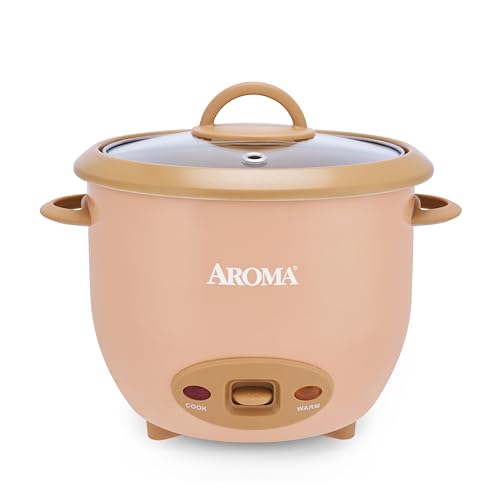
AROMA 6-Cup One-Touch Rice Cooker with CoreCoat — Best PFAS-Free Pot
The CoreCoat AROMA exists for a specific, growing household: the one replacing its nonstick cookware surface by surface and unwilling to make an exception for the rice cooker. Its CoreCoat surface is PFAS-free ceramic-style nonstick, in a one-touch pot-style cooker that makes six cups of cooked rice with the lever-and-thermostat simplicity this format has always offered. The coating preference costs nothing in rice quality and little in tier.
Strengths
- CoreCoat PFAS-free nonstick ceramic surface — the coating-conscious buyer’s one-touch pick
- 6 cups cooked in the compact pot-style form: load, press, done
- AROMA’s pot-style reliability with a modern surface
Trade-offs
- Ceramic-style coatings are the delicate ones: gentle tools and washing are the bargain
- One-touch repertoire: no grain programs, no timer
- Compact capacity suits small households and sides, not family mains
Key specs: 6-cup (cooked) capacity; one-touch; CoreCoat PFAS-free nonstick ceramic surface; 1.5 Qt (per Amazon listing title).
In daily service it behaves like the compact classic it is: fast to load, kind to clean — the ceramic surface releases rice without the soak conventional pots sometimes need — and small enough to live where it is used. Oatmeal and steamed sides ride along as they do in all these pot-style machines.
Treat the surface as ceramic cookware asks to be treated — soft tools, gentle washing — and it will serve for years. Buyers indifferent to coating chemistry get the same rice from the BLACK+DECKER for the simpler care story; buyers for whom PFAS-free is the first filter have, in this pick, their affordable answer.
Best for: best pfas-free pot / Not suited for: households where this matters most — ceramic-style coatings are the delicate ones.
Check on Amazon — check the current price on Amazon before you decide, because configurations and included accessories vary by listing.
Comparison Table
| Pick | Badge | Key spec | Best for |
|---|---|---|---|
| AROMA ARC-914SBD Digital Rice Cooker | Best Overall | 4-cup (uncooked) / 8-cup (cooked) capacity | Best Overall |
| BLACK+DECKER 6-Cup Rice Cooker | Best Simple Value | 6-cup (cooked) capacity | Best Simple Value |
| AROMA ARC-363NG Rice Cooker 3-Cup Uncooked | Best Compact Classic | 3-cup (uncooked) / 6-cup (cooked) capacity | Best Compact Classic |
| Hamilton Beach 37518 Digital Rice Cooker | Best with Steamer | 8 cups cooked (4 uncooked) | Best with Steamer |
| AROMA ARC-150SB 20 Cup Cooked Digital Rice Cooker | Best for Big Households | 20-cup (cooked) / 10-cup (uncooked) capacity | Best for Big Households |
| AROMA 6-Cup One-Touch Rice Cooker with CoreCoat | Best PFAS-Free Pot | 6-cup (cooked) capacity | Best PFAS-Free Pot |
How to Choose an Affordable Rice Cooker: Size, in Cooked and Uncooked
Capacity is this category’s trap, because brands quote two different numbers. Uncooked capacity counts the dry rice the pot holds; cooked capacity counts the finished rice, roughly double. A ’10-cup’ cooker may mean ten cups uncooked (twenty cooked — a batch machine) or ten cooked (a family machine), and the difference is a factor of two in your kitchen. Every review in this guide states both figures as its listing gives them; do the same check on any model you consider elsewhere, and size by cooked cups: about 3–4 cooked cups per meal for a couple with leftovers, 6–8 for a family of four, and 16–20 for big households and gatherings.
Then choose controls by your grains. White and jasmine rice — the majority rotation — cook identically on a one-touch lever and a digital flagship; buy the lever and save. Brown rice, mixed grains, steel-cut oats and porridge genuinely benefit from digital programs that extend the soak-and-cook cycle, and daily brown-rice households should take a digital pick for that reason alone. Finally, the pot: conventional nonstick for carefree release, PFAS-free ceramic surfaces for coating-conscious kitchens, with the gentle-handling bargain ceramic always carries. None of these choices changes white rice. All of them change ownership.
Water, Rinsing and the Knuckle Rule: Getting Affordable Rice Right
The cooker handles heat; you handle water, and water is where rice is won. Use the cup that came with the cooker (it is a standard rice cup, smaller than a measuring cup) and the water lines moulded in the pot — the system is calibrated as a set, and substituting a kitchen measuring cup without adjusting is the most common cause of mushy or hard results in a machine that was blamed unfairly. For most white rice the pot line for the number of cups is the whole instruction.
Rinsing is the second lever: rinse jasmine and long-grain until the water runs mostly clear and you remove the surface starch that makes rice gummy and clumped. The Hamilton Beach pick builds the rinse into its basket; every other pick asks for thirty seconds at the sink, repaid in texture every time. The old knuckle rule — water to the first knuckle above the rice — works as a field check, but the pot’s own lines are more accurate. And let the finished rice rest, lid on, for ten minutes before fluffing: the affordable cooker and the flagship alike produce their best texture after that rest, and impatience is the last variable no machine can control.
How to Cook Perfect Rice in an Affordable Rice Cooker, Step by Step
Measure the rice with the cooker’s own cup, rinse it until the water runs mostly clear, and add it to the pot. Add water to the moulded line matching your cup count — for most white rice that line is the recipe. Wipe the outside of the pot dry (a wet pot base is unkind to the heating plate), set it in the cooker, close the lid, and press cook or choose the white-rice setting on digital models. Then leave it alone: the lid stays shut, because the steam you would release is part of the measurement.
When the cooker clicks to warm, start a ten-minute rest with the lid still closed. This is not dead time — the surface moisture equalises through the pot, and rice fluffed immediately steams itself gummy on top and wet at the bottom. After the rest, open, fluff gently with the paddle from the bottom up, and serve. Rice held on warm stays pleasant for a few hours; beyond that, refrigerate it and reheat with a sprinkle of water, or turn it into tomorrow’s fried rice, where day-old rice is not a compromise but the correct ingredient.
Cleanup closes the loop while it is easy: soak the pot briefly if any grains cling, wash the lid and the steam vent parts — starch builds there quietly — and dry the pot before it returns to the base. Run that routine and an affordable cooker will make the same good rice in year three as in week one, which is the entire promise of the format.
Brown Rice, Mixed Grains and Porridge in a Value Cooker
Brown rice is where affordable cookers are most often misjudged, because it plays by different rules: the bran layer that makes it nutritious also slows absorption, so it wants more water and a longer, gentler cycle than white rice. Digital picks in this guide with a brown-rice setting handle the timing automatically and are the right choice for daily brown-rice households. On a one-touch cooker, the method is patience — a little extra water, a full cycle, a proper rest, and if the result is firmer than you like, a second short cycle after a sprinkle of water — and many households cook their brown rice this way happily for years.
Mixed grains and porridge follow the same philosophy: the cooker provides steady, sealed, unattended heat, and the cook provides the ratio. Steel-cut oats on a digital porridge setting (or a one-touch cycle started the night before on models whose warm hold suits it) turn breakfast into a served fact rather than a stirred chore, and mixed-grain bowls — rice with quinoa, barley or lentils folded in — cook as one pot with the water set for the thirstiest grain. The affordable tier does not lack the capability; it lacks the automation of the guesswork, and a small notebook of your own ratios closes that gap in three cooks.
Rice Beyond the Side Dish: One-Pot Meals in an Affordable Cooker
The rice cooker’s second career is the one-pot meal, and it is where steamer-tray picks in this guide quietly out-earn their tier. The pattern is constant: rice and liquid below, seasoned protein and vegetables in the steamer above, one cycle — the rice perfumed by everything steaming over it, the protein cooked by the rice’s own steam. Fish and greens, chicken and broccoli, dumplings and cabbage: the combinations rotate with the market, and the cleanup never exceeds one pot and one tray.
Heartier one-pot cooking works directly in the pot itself. Rice cooked with beans, sausage, tomatoes and spice becomes a jambalaya-style dinner; rice with coconut milk, curry paste and vegetables becomes the base of a Thai-leaning bowl; yesterday’s roast folded into today’s rice with peas and soy becomes fried-rice’s gentler cousin. The cooker’s sealed, even heat is forgiving of all of it, provided the total load respects the pot’s fill and the liquid ratio stays close to the rice’s own needs. Households that learn three of these patterns find their affordable cooker has quietly become the weeknight default — not because it makes the best rice, though it does, but because it makes dinner.
Keeping an Affordable Cooker Cooking Like New
Rice cookers fail slowly and mostly in one place: the lid and vent, where starch-laden steam condenses cook after cook into a film that eventually flavours the rice and fouls the seal. The counter-habit is a weekly rhythm rather than a deep clean — wash the inner lid plate and steam vent with the pot, wipe the heating plate dry and crumb-free, and leave the cooker open for an hour after washing so every seal dries fully. The pot itself wants the gentle treatment its coating asks: the rice paddle or a soft spatula, never a metal spoon, and a brief soak rather than a scour when grains cling after a held-warm evening.
Two smaller habits protect the rice rather than the machine. Keep the measuring cup with the cooker — a lost cup is how ratio errors creep back into a kitchen that had solved them — and descale occasionally in hard-water homes, running a cycle of water with a splash of vinegar, then a plain-water cycle, when mineral film appears on the pot. None of this is onerous; all of it together is the difference between the affordable cooker that tastes faintly of its own history in year two and the one that makes the same clean pot of rice in year five. At this tier, longevity is not bought — it is maintained, and it is cheap at the price of a weekly wipe.
The Fried Rice Dividend and Other Second-Day Strategies
An affordable rice cooker pays a dividend no other appliance offers: it manufactures the correct raw material for fried rice, which is rice that has been cooked, chilled and rested until its grains separate and fry rather than steam. Cook a full pot for dinner, refrigerate the extra spread on a tray or in a shallow container, and the next day’s fried rice — with egg, frozen peas, scallion and whatever protein the fridge offers — takes ten minutes and tastes like a deliberate plan rather than a leftover’s apology. Households that eat rice several times a week find this two-day rhythm becomes the backbone of their cooking: fresh rice tonight, fried rice tomorrow, rice soup or congee from the last cup on the third day.
The same forward-thinking applies to grains beyond rice. A Sunday pot of brown rice or mixed grains, portioned into the week’s lunch bowls, costs one cycle and a few containers; a morning pot of steel-cut oats, held warm, serves a household in shifts. None of this requires a premium machine — it requires a reliable one and a household rhythm, which is precisely the combination this guide’s picks were chosen for. The affordable cooker’s deepest value was never the single pot of rice. It is the system of easy meals that a dependable pot of rice, always available, quietly makes possible around it.
White, Jasmine, Basmati, Sushi: One Cooker, Four Rices
The affordable cooker meets four different rices in a typical household, and each asks one small adjustment rather than a new machine. Jasmine wants the standard line and the rinse, served after its rest with nothing done to it at all — it is the rice these machines were born making. Basmati rewards a brief soak before the cycle and a full rest after, its long grains separating into the distinct strands the variety promises; the cooker’s sealed environment does the rest. Sushi rice wants slightly less water for a firmer finish, then seasoning folded in while warm, off the heat, with the paddle’s cutting motion rather than a stir.
Plain long-grain white — the supermarket staple — is the most forgiving of all and the benchmark against which to calibrate a new machine: if a cooker makes good long-grain at its own lines, its thermostat is honest and every other variety is a ratio away. That calibration cook, done once with notes, is worth more than any program list. It is also the deepest truth of the affordable tier: rice cookery is a handful of ratios and rests, and a machine that simply boils, senses and stops — which is every pick in this guide — puts all of them within any cook’s reach.
Congee, Oatmeal and the Morning Shift
The rice cooker’s morning shift deserves its own paragraph in any honest guide, because for many households it ends up rivalling the evening one. Congee — rice cooked down in abundant water into a silky porridge — is the cooker’s ancestral second job across Asia, and even the one-touch picks here produce it credibly with a generous water ratio and a full cycle, ready to be topped with egg, scallion, ginger or century-old family preference. Oatmeal follows the same logic: steel-cut oats with water or milk, fruit and spice, cooked on a digital porridge setting where offered or a standard cycle on the pot-style machines, emerging with a texture stovetop oats achieve only under supervision.
The morning shift changes the appliance’s economics. A cooker used twice a day, for the two meals households most often rush, justifies itself in weeks rather than seasons — and at the affordable tier, that justification arrives almost immediately. Set the digital picks’ timers where offered, load the pot-style machines as the first act of the morning, and breakfast becomes a served fact. It is fitting that the simplest serious appliance in the kitchen should bookend the day this way: rice at night, porridge at dawn, and a household that has quietly stopped skipping either.
A Short Word on Warm Holds and Leftover Rice Safety
Rice deserves one careful paragraph, because it is the rare cooked food with a specific storage reputation. Cooked rice should not linger warm for endless hours or sit at room temperature: the prudent pattern, followed in rice-eating households worldwide, is to serve what you need, then cool the remainder promptly in shallow containers and refrigerate it. The warm hold on every pick in this guide is a serving convenience measured in a few hours, not a storage method — and within that window it performs beautifully, keeping the pot at the table’s temperature without further cooking the grains.
Reheated properly — sprinkled with water, covered, brought back to steaming — refrigerated rice is excellent, and chilled rice is, as this guide has noted, the correct raw material for fried rice besides. Treat the cooker as a maker and the fridge as the keeper, and rice remains what it has been for centuries of households with far simpler equipment than these picks: the safest, cheapest and most reliable foundation a kitchen can cook on.
The Last Word: Rice Is a System, Not a Side
Households that eat rice daily already know what this guide has been circling: rice is not a side dish but a system — the base that turns a piece of fish into dinner, a handful of vegetables into a meal, yesterday’s roast into tonight’s bowl. A dependable cooker is that system’s engine, and at the affordable tier the engine costs less than the ingredients it will cook in its first month. Choose the pick whose size, controls and pot match your household’s version of the system, run the calibration cook, write down your ratios — and then enjoy the particular peace of a kitchen where the most important question of the evening has already been answered by a machine that simply, reliably, makes the rice.
One More Consideration: The Cup Lives with the Cooker
Keep the measuring cup in the cooker, the paddle beside it, and the cord loosely coiled — three tiny habits that protect the ratio system this guide built its advice on. A lost cup is how mushy rice returns to a kitchen that had solved it; a paddle in the drawer is how pots get scratched by spoons. The affordable cooker’s whole promise is a small, complete, self-consistent system: pot, lines, cup, thermostat. Keep the system together and it will keep its promise back, pot after pot, year after year, at a tier that asks almost nothing for the keeping.
Common Buying Mistakes
Mixing cup systems. A kitchen measuring cup of rice with the pot’s water lines gives you the wrong ratio and a blamed cooker. Use the included cup with the included lines, as a set.
Skipping the rinse for jasmine and long-grain. Surface starch is the difference between distinct grains and a gummy mass. Thirty seconds at the sink is the cheapest upgrade in rice.
Fluffing the second it clicks to warm. The ten-minute rest is part of the cook. Open early and you serve the steam that should have finished the texture.
Buying cooked capacity by the uncooked number (or the reverse). The factor-of-two error is this category’s classic. Check which number the listing quotes before the cooker arrives twice as big — or half as big — as your life.
Holding rice on warm all day. Warm is a serving window, not storage. After a few hours, refrigerate; reheated rice with a sprinkle of water beats day-old warm-pot rice every time.
Final Recommendation
Start with the AROMA ARC-914SBD if you want the complete affordable digital package. Take the BLACK+DECKER for one-touch purity, the AROMA ARC-363NG for a compact classic, the Hamilton Beach for its rinse-and-steam system, the AROMA ARC-150SB for genuine batch scale, and the CoreCoat AROMA if a PFAS-free pot is your first filter. Every one of them turns the daily rice question from a stovetop gamble into a button press — which is why this unglamorous category quietly improves more dinners than any flagship appliance in the kitchen.
Round out the affordable cluster: Best Affordable Pressure Cookers, Best Affordable Programmable Slow Cookers, Best 3 Cup Rice Cookers, Best 4 Cup Rice Cookers and Best 6 Cup Rice Cookers.
Short on time? Start with the top three: AROMA ARC-914SBD Digital Rice Cooker, BLACK+DECKER 6-Cup Rice Cooker, AROMA ARC-363NG Rice Cooker 3-Cup Uncooked — each links to its listing so you can check the current price on Amazon and confirm the configuration before you buy.
Frequently Asked Questions
Do affordable rice cookers make rice as good as expensive ones?
For white and jasmine rice, yes — the boil-and-stop mechanism is the same, and blind pots from value cookers hold their own. Expensive machines earn their tier on brown rice and mixed grains (fuzzy-logic cycles), induction evenness, and build refinement, not on the Tuesday jasmine pot.
How many cups do I need?
Size in cooked cups: roughly 6 cooked cups covers a couple or small family with leftovers, 8 covers a family of four, and 16–20 serves big households and gatherings. Check whether a listing quotes cooked or uncooked capacity — they differ by about double — before comparing models.
Should I rinse rice?
For jasmine and long-grain, yes: rinsing removes surface starch and gives distinct, non-gummy grains. Some enriched and specialty rices advise against it on their packaging; follow the rice’s own guidance where it differs, and use the pot lines for water either way.
Can an affordable rice cooker cook brown rice?
Yes, with more water and more time than white rice. Digital picks with a brown-rice setting handle the longer cycle automatically; one-touch models manage it with added water and patience, though results vary more. Daily brown-rice households should choose a digital pick.
How long can rice stay on warm?
A few hours at serving quality. Beyond that it dries and the texture declines. Refrigerate leftovers, and reheat with a sprinkle of water — or save them for fried rice, where chilled, day-old rice is the preferred ingredient.
What else can a rice cooker cook?
Oatmeal and porridge, steamed vegetables, fish and dumplings (especially with a steamer tray or basket), soups in the pot-style models, and even one-pot pasta and grain bowls with care. The steamer picks in this guide — AROMA digital, BLACK+DECKER and Hamilton Beach — are built for that second career.


