Disclosure: airfryerkitchensupply.com is reader-supported. When you buy through links on our site, we may earn an affiliate commission at no extra cost to you.
Where to buy
The fastest way to buy any pick in this guide is through Amazon, where stock and configurations change often, so check the current price on Amazon on the product page rather than relying on any number printed elsewhere. These are the six verified picks in this guide:
- Zojirushi 3 Cup Rice Cooker/Steamer (White) — Check on Amazon
- AROMA ARC-363NG Rice Cooker, 3-Cup (Uncooked) — Check on Amazon
- Toshiba Mini Rice Cooker, 3 Cups Uncooked — Check on Amazon
- Tiger JNP-S55U 3 Cup Rice Cooker (Black) — Check on Amazon
- Panasonic SR-G06FGL Rice Cooker, 3-Cups (Uncooked) — Check on Amazon
- CUCKOO CR-0375FW Micom Rice Cooker, 3-Cup Uncooked — Check on Amazon
Availability in this category moves quickly, especially for seasonal colors and smaller brands. If a first choice is out of stock, the alternatives in the same guide are ranked so that the next pick down is a sensible substitute, not a compromise.
The best 3 cup rice cookers are the right size for one to three people, and this class contains the most respected names in rice cooking: Zojirushi and Tiger from Japan, Cuckoo from Korea, plus Toshiba, Panasonic and the American value champion, Aroma. Capacity here is stated in uncooked cups for every pick in this guide — 3 cups uncooked makes roughly 6 cups cooked — and each spec box confirms the basis from the maker’s own listing, because cup ratings are the most gamed number in this entire category.
The real divide at this size is not brand but brains. Simple lever cookers from Zojirushi, Tiger and Aroma cook white rice beautifully with almost nothing to learn or to break. Fuzzy logic models from Toshiba and Cuckoo adjust heat and time as cooking progresses, and they earn their premium on brown rice, mixed grains, porridge and texture consistency. Neither side is wrong; they suit different cooks, and the badges in this guide are assigned accordingly rather than by price.
Small rice cookers are also harder to engineer than big ones, because a small batch has little thermal mass and cheap controls overshoot, scorching the bottom layer. The picks below were chosen because their verified designs take that problem seriously. Read the buying guide for the measuring discipline that matters more than any feature — the supplied cup and the pot’s own lines — and the how-to section for the rinsing and resting routine that separates good rice from great rice at this size.
In this guide
Quick Picks
If you only read one section, read this one. These are the six best 3 cup rice cookers worth your money, each with a distinct badge so you can match the pick to your situation in seconds:
- Zojirushi 3 Cup Rice Cooker/Steamer (White) — Best Overall. Small households that want decades-proven Japanese rice cooking. Check on Amazon
- AROMA ARC-363NG Rice Cooker, 3-Cup (Uncooked) — Best Value Pick. Budget buyers who want honest capacity and multi-use cooking. Check on Amazon
- Toshiba Mini Rice Cooker, 3 Cups Uncooked — Best Smart Pick. Grain variety and schedule cooking in a small footprint. Check on Amazon
- Tiger JNP-S55U 3 Cup Rice Cooker (Black) — Best Premium Simple Pick. Buyers who want Japanese quality without digital complexity. Check on Amazon
- Panasonic SR-G06FGL Rice Cooker, 3-Cups (Uncooked) — Best With Steamer Basket Versatility. Small meals where rice and steamed food cook together. Check on Amazon
- CUCKOO CR-0375FW Micom Rice Cooker, 3-Cup Uncooked — Best for Grain Variety. Cooks who rotate grains and want modes in a compact cooker. Check on Amazon
How These Picks Were Chosen
Every product in this guide was verified against Amazon’s own catalog data for this site before it was written about: the model name, capacity and headline features in each review come from the maker’s verified listing, not from memory or third-party summaries. Products that could not be verified were written about without a purchase link or left out entirely, and this guide says so where that happened.
The criteria, in order, were: honest capacity for the 3 cup class named in the search; the features that decide daily satisfaction in this category, as set out in the buying guide below; build and care practicality, including whether the parts you wash are dishwasher safe; and a spread of badges so that different households — not just the average one — can find their pick. Where this size class is thin or confusing in the real market, the reviews say that plainly rather than padding the list with products that do not belong.
The 6 Best 3 Cup Rice Cookers
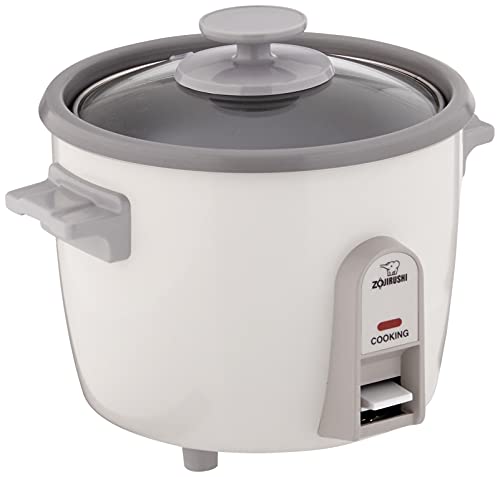
Zojirushi 3 Cup Rice Cooker/Steamer (White) — Best Overall
Zojirushi is the name experienced rice cooks reach for, and its 3-cup cooker and steamer is the small-format classic: a simple, durable machine from a maker that has refined rice cooking for generations. It steams as well as cooks, handles the daily rhythm of one to three people, and is built to be used thousands of times rather than to impress on a spec sheet. If you buy one 3-cup cooker and keep it for years, this is the safest pair of hands.
Strengths
- Proven design from the most respected name in rice cookers
- Doubles as a steamer for vegetables and small portions
- Simple operation with very little to go wrong
Trade-offs
- Basic feature set compared with fuzzy logic rivals
- White finish shows age and stains over years of use
- Costs more than simple rivals of the same capacity
| Capacity | 3 cup (per listing title) |
| Functions | Rice cooker and steamer |
| Brand | Zojirushi |
| Finish | White |
The Zojirushi 3 Cup Rice Cooker/Steamer (White) earns its place by doing the small things consistently: even cooking across a small batch, a clean switch to Warm, and rice that releases from the pot without a fight. Small rice cookers are actually the hardest size to engineer well, because a single cup of rice has very little thermal mass and cheap thermostats overshoot. Models in this guide were chosen because their verified designs address that reality, whether through better sensors, fuzzy logic control, or simply a well-proven heating pattern refined over many product generations.
Technique still matters more than machinery, and the Zojirushi 3 Cup Rice Cooker/Steamer (White) rewards good technique visibly. Rice rinsed until the water runs mostly clear, measured with the supplied cup against the pot’s own lines, and rested with the lid closed for ten minutes after cooking will come out well from any pick in this guide. Skipping those steps makes even the smartest fuzzy logic model look ordinary. That is why the how-to section of this guide is written as a routine to adopt wholesale for the first month, after which it becomes automatic.
Best for: Rice-focused households of one to three people / Not suited for: Feature hunters who want timers and multiple grain programs

AROMA ARC-363NG Rice Cooker, 3-Cup (Uncooked) — Best Value Pick
Aroma’s ARC-363NG states its capacity both ways — 3 cups uncooked, 6 cups cooked — which already puts it ahead of confusingly rated rivals. It also cooks oatmeal and soup and keeps rice warm automatically, in a 1.5-quart body sized for small households. Aroma owns the value end of American rice cookers for a reason: this model covers the real jobs at a price that makes it an easy first cooker or a dorm and apartment staple.
Strengths
- Capacity stated honestly in both uncooked and cooked terms
- Also handles oatmeal and soup, widening its usefulness
- Automatic Keep Warm suits unpredictable meal times
Trade-offs
- Simple one-lever style control, no fuzzy logic finesse
- Basic pot coating needs gentle, non-metal utensils
- Plain styling next to design-led rivals
| Capacity | 3-cup (uncooked) / 6-cup (cooked), 1.5 qt (per listing) |
| Functions | Rice, oatmeal, soup (per listing) |
| Feature | Auto Keep Warm (per listing) |
| Finish | White |
| Model | ARC-363NG |
Ownership of the AROMA ARC-363NG Rice Cooker, 3-Cup (Uncooked) is mostly about rhythm. It is the appliance you load without thinking, and its value compounds across hundreds of unremarkable, perfect batches rather than one impressive one. The inner pot’s coating is the long-term story: treat it gently and the cooker serves for years; abuse it with metal utensils and every batch slowly gets worse. At the 3 cup end of the market, replacement pots are not always sold separately, so gentle care is effectively part of the purchase price.
Consider also what the AROMA ARC-363NG Rice Cooker, 3-Cup (Uncooked) replaces. For a small household, a dedicated rice cooker frees a stove burner at the busiest moment of cooking dinner, removes the one pot that needs watching, and holds rice warm safely while the rest of the meal catches up. In dorms, studios and RVs it can be the difference between cooking rice properly and not cooking it at all. Judged as a single-purpose appliance it looks like a luxury; judged as the thing that makes rice a default rather than a decision, it earns its counter space.
Best for: Budget buyers, students and first-apartment kitchens / Not suited for: Texture perfectionists cooking varied grains daily
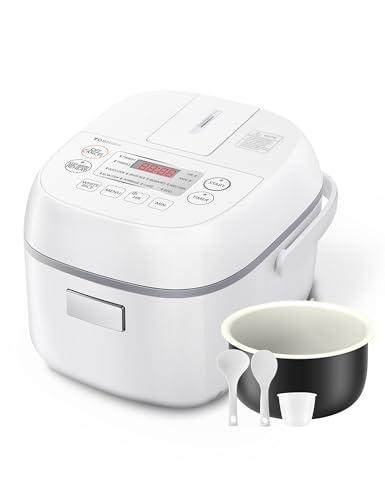
Toshiba Mini Rice Cooker, 3 Cups Uncooked — Best Smart Pick
Toshiba’s mini cooker brings the smart features down to 3-cup size: fuzzy logic control that adjusts as cooking progresses, one-touch cooking, a 24-hour delay timer and automatic Keep Warm, plus steaming. It is sized for one to three people and aimed squarely at cooks who rotate white rice, brown rice and other grains and want consistent results without supervision. If features matter more to you than simplicity, this is the pick.
Strengths
- Fuzzy logic adjusts cooking for better texture across grains
- Delay timer means rice or oatmeal ready when you are
- Steamer function adds complete-meal capability
Trade-offs
- More electronics to learn and, eventually, to fail than a lever cooker
- Small display and buttons are fiddly for some users
- Premium positioning within this small size class
| Capacity | 3 cups uncooked, for 1-3 people (per listing) |
| Control | Fuzzy logic (per listing) |
| Timer | 24-hour delay timer (per listing) |
| Features | One-touch cooking, steamer, Auto Keep Warm (per listing) |
| Finish | White |
For households of one to three, the Toshiba Mini Rice Cooker, 3 Cups Uncooked hits the size where rice is always fresh rather than reheated from a big batch cooked days ago. That freshness is the real luxury of a small cooker. It also doubles, within reason, as a grain and oatmeal cooker and, where a steamer basket is included, as a compact way to put vegetables or eggs on the table at the same moment as the rice. It will not replace a full stove, and it does not pretend to.
The longer view on the Toshiba Mini Rice Cooker, 3 Cups Uncooked is about consistency across hundreds of batches. Rice cookers live or die on whether Tuesday’s rice matches Saturday’s, and that consistency comes from boring virtues: a pot that seats properly on the heating plate, a lid that seals evenly, and a thermostat or processor that behaves the same way every time. The models in this guide were picked because their designs have those virtues in their verified construction, not because of novelty features that fade after the first month of ownership at the 3 cup size.
Best for: Grain rotators and schedule-driven cooks in small households / Not suited for: Anyone who wants a cooker with a single lever and nothing else

Tiger JNP-S55U 3 Cup Rice Cooker (Black) — Best Premium Simple Pick
Tiger, like Zojirushi, is a Japanese maker with a long rice cooker pedigree, and the JNP-S55U is its straightforward 3-cup machine: a non-stick inner pot, a retractable power cord that keeps counters tidy, and Keep Warm listed for up to 12 hours. There are no programs to scroll through — it cooks rice, keeps it warm, and does both with the quiet competence that built the brand. The black finish suits modern counters better than the usual white.
Strengths
- Japanese build quality in a deliberately simple machine
- Retractable cord makes counter storage unusually tidy
- Generous listed Keep Warm window for flexible serving
Trade-offs
- No timer or fuzzy logic programs for varied grains
- Non-stick pot requires gentle utensils and washing
- Premium price for a simple feature set
| Capacity | 3 cup (per listing) |
| Pot | Non-stick inner pot (per listing) |
| Cord | Retractable power cord (per listing) |
| Keep Warm | Up to 12 hours (per listing) |
| Finish | Black |
The Tiger JNP-S55U 3 Cup Rice Cooker (Black) earns its place by doing the small things consistently: even cooking across a small batch, a clean switch to Warm, and rice that releases from the pot without a fight. Small rice cookers are actually the hardest size to engineer well, because a single cup of rice has very little thermal mass and cheap thermostats overshoot. Models in this guide were chosen because their verified designs address that reality, whether through better sensors, fuzzy logic control, or simply a well-proven heating pattern refined over many product generations.
Technique still matters more than machinery, and the Tiger JNP-S55U 3 Cup Rice Cooker (Black) rewards good technique visibly. Rice rinsed until the water runs mostly clear, measured with the supplied cup against the pot’s own lines, and rested with the lid closed for ten minutes after cooking will come out well from any pick in this guide. Skipping those steps makes even the smartest fuzzy logic model look ordinary. That is why the how-to section of this guide is written as a routine to adopt wholesale for the first month, after which it becomes automatic.
Best for: Quality-first buyers who dislike digital controls / Not suited for: Cooks who need delay timers and grain programs

Panasonic SR-G06FGL Rice Cooker, 3-Cups (Uncooked) — Best With Steamer Basket Versatility
Panasonic’s SR-G06FGL is listed as a rice cooker, steamer and multi-cooker with 3 cups uncooked and 6 cups cooked capacity, which makes it the versatility pick in this size. The steamer arrangement lets vegetables, eggs or fish cook over the rice for a complete small meal in one appliance. Panasonic’s small-appliance engineering is consistently solid, and this model’s silver finish suits it to permanent counter residence in a small kitchen.
Strengths
- Steamer function turns rice into a complete small meal
- Capacity stated both ways for honest comparison
- Trusted small-appliance brand with good parts support
Trade-offs
- Simple control style rather than fuzzy logic programs
- Silver finish shows water spots in hard-water areas
- Fewer rice-specific refinements than the Zojirushi
| Capacity | 3-cups (uncooked) / 6-cups (cooked) (per listing) |
| Functions | Rice cooker, steamer and multi-cooker (per listing) |
| Model | SR-G06FGL |
| Finish | Silver |
Ownership of the Panasonic SR-G06FGL Rice Cooker, 3-Cups (Uncooked) is mostly about rhythm. It is the appliance you load without thinking, and its value compounds across hundreds of unremarkable, perfect batches rather than one impressive one. The inner pot’s coating is the long-term story: treat it gently and the cooker serves for years; abuse it with metal utensils and every batch slowly gets worse. At the 3 cup end of the market, replacement pots are not always sold separately, so gentle care is effectively part of the purchase price.
Consider also what the Panasonic SR-G06FGL Rice Cooker, 3-Cups (Uncooked) replaces. For a small household, a dedicated rice cooker frees a stove burner at the busiest moment of cooking dinner, removes the one pot that needs watching, and holds rice warm safely while the rest of the meal catches up. In dorms, studios and RVs it can be the difference between cooking rice properly and not cooking it at all. Judged as a single-purpose appliance it looks like a luxury; judged as the thing that makes rice a default rather than a decision, it earns its counter space.
Best for: Small households cooking rice plus steamed sides together / Not suited for: Purists who only ever cook plain white rice

CUCKOO CR-0375FW Micom Rice Cooker, 3-Cup Uncooked — Best for Grain Variety
Cuckoo is Korea’s rice cooker specialist, and the CR-0375FW packs its Micom fuzzy logic into a 3-cup uncooked body with 9 cooking modes, a nonstick inner pot and an auto clean function, with quick white rice listed at under half an hour. For small households that cook quinoa, brown rice, porridge and mixed grains as often as white rice, those modes are the difference between experimenting and succeeding. It is the most capable compact cooker in this guide.
Strengths
- Nine modes cover grains and porridge a lever cooker cannot
- Fuzzy logic adjusts for consistent texture in small batches
- Auto clean function tackles the starchy lid residue problem
Trade-offs
- Most complex controls in this guide; expect a learning curve
- Premium positioning for the size class
- Small capacity is strictly for one to three people
| Capacity | 3-cup uncooked / 6-cup cooked (per listing) |
| Modes | 9 cooking modes (per listing) |
| Control | Micom fuzzy logic (per listing) |
| Pot | Nonstick inner pot (per listing) |
| Features | Auto clean; quick white rice in 26-28 minutes (per listing) |
For households of one to three, the CUCKOO CR-0375FW Micom Rice Cooker, 3-Cup Uncooked hits the size where rice is always fresh rather than reheated from a big batch cooked days ago. That freshness is the real luxury of a small cooker. It also doubles, within reason, as a grain and oatmeal cooker and, where a steamer basket is included, as a compact way to put vegetables or eggs on the table at the same moment as the rice. It will not replace a full stove, and it does not pretend to.
The longer view on the CUCKOO CR-0375FW Micom Rice Cooker, 3-Cup Uncooked is about consistency across hundreds of batches. Rice cookers live or die on whether Tuesday’s rice matches Saturday’s, and that consistency comes from boring virtues: a pot that seats properly on the heating plate, a lid that seals evenly, and a thermostat or processor that behaves the same way every time. The models in this guide were picked because their designs have those virtues in their verified construction, not because of novelty features that fade after the first month of ownership at the 3 cup size.
Best for: Grain explorers and texture-focused cooks in small households / Not suited for: Set-and-forget minimalists who only cook white rice
Comparison Table
All six picks side by side. Capacity and feature claims are taken from each maker’s verified listing, and where a pick sits deliberately outside the headline size, the table says so rather than hiding it.
| Pick | Badge | Key spec | Best for |
|---|---|---|---|
| Zojirushi 3 Cup Rice Cooker/Steamer (White) (Check on Amazon) | Best Overall | 3 cup, cooker and steamer | Small households that want decades-proven Japanese rice cooking |
| AROMA ARC-363NG Rice Cooker, 3-Cup (Uncooked) (Check on Amazon) | Best Value Pick | 3-cup uncooked / 6-cup cooked, 1.5 qt | Budget buyers who want honest capacity and multi-use cooking |
| Toshiba Mini Rice Cooker, 3 Cups Uncooked (Check on Amazon) | Best Smart Pick | 3 cups uncooked, fuzzy logic, delay timer | Grain variety and schedule cooking in a small footprint |
| Tiger JNP-S55U 3 Cup Rice Cooker (Black) (Check on Amazon) | Best Premium Simple Pick | 3 cup, non-stick pot, retractable cord | Buyers who want Japanese quality without digital complexity |
| Panasonic SR-G06FGL Rice Cooker, 3-Cups (Uncooked) (Check on Amazon) | Best With Steamer Basket Versatility | 3-cup uncooked / 6-cup cooked, multi-cooker | Small meals where rice and steamed food cook together |
| CUCKOO CR-0375FW Micom Rice Cooker, 3-Cup Uncooked (Check on Amazon) | Best for Grain Variety | 3-cup uncooked, 9 cooking modes, fuzzy logic | Cooks who rotate grains and want modes in a compact cooker |
How to Choose the Right 3 Cup Rice Cooker
Uncooked versus cooked cups: read the rating twice
The most confusing thing about 3 cup rice cookers is that the number can mean uncooked or cooked capacity depending on the brand. A model rated in uncooked cups makes roughly twice that volume of cooked rice. Every spec box in this guide states the basis exactly as the maker’s verified listing states it, and the comparison table repeats it, so you can compare honestly. Decide how much cooked rice you serve at a typical meal, then work backwards to the rating style you are looking at.
Simple one-switch versus fuzzy logic
Basic cookers use a single lever: press it down, and a thermostat flips the cooker to Warm when the water is absorbed. They are cheap, durable and perfectly good for plain white rice. Fuzzy logic models use a microprocessor to adjust heat and time, and they pull ahead on brown rice, mixed grains, porridge and texture consistency. At this small size, the price gap between the two styles is the main decision: pay it if you cook varied grains weekly; skip it if rice means white rice beside dinner.
Inner pot material and coating
Most small rice cookers use a nonstick-coated aluminum pot. It is light and releases rice well, but the coating is the wear item: use the supplied paddle, wash with a soft sponge, and expect to replace the pot or cooker when the coating is badly scratched. Ceramic-style coatings, offered on a few picks here, trade a little slickness for a different care profile. A removable inner lid plate matters just as much, because that is where starchy residue hides.
The features that actually get used
A steamer basket that sits over the rice turns a 3 cup cooker into a small complete-meal machine: vegetables, eggs or fish steam while the rice cooks. A delay timer is genuinely useful for oatmeal in the morning or rice ready when you get home. Keep Warm duration matters too; some models list a maximum warm time in their verified details, and rice held too long dries out regardless of brand. Beyond those three, most extra programs on small cookers go unused.
Footprint and storage
Small rice cookers earn their place by disappearing into a cupboard or sitting unobtrusively on the counter. Check the footprint against your storage space, look for a retractable or detachable cord if you will pack it away after every use, and consider whether the lid opens fully in the space under your cabinets. Dorm rooms, studio apartments and RV kitchens are exactly where this size class shines, so physical fit is a first-order criterion, not an afterthought.
How to Cook Perfect Rice in a 3 Cup Rice Cooker
Step 1: Rinse until the water runs mostly clear
Rinsing removes loose surface starch that makes small batches gluey. Swirl the rice in the cooking pot or a fine strainer, drain, and repeat a few times. In a 3 cup cooker the starch-to-water ratio is concentrated, so this step has an outsized effect on texture.
Step 2: Measure with the cup and lines the maker intended
Use the measuring cup supplied with the cooker and the water lines inside the pot for that amount. Mixing a standard kitchen cup with the pot’s own markings is the most common reason small rice cookers produce wet or underdone rice.
Step 3: Rest the rice before opening
When the cooker switches to warm, leave the lid closed for about 10 minutes. The rest lets moisture redistribute so the bottom is not wet and the top is not dry. Fluff gently with the paddle afterwards instead of stirring hard, which breaks grains and releases more starch.
Step 4: Adjust water in small steps
If a batch comes out firm, add a small amount more water next time; if it comes out soft, use slightly less. Change one variable at a time and write the ratio that worked on a note inside the cabinet door, because rice variety and age change absorption.
Step 5: Clean the lid plate and steam vent
Starchy steam condenses under the lid and around the vent. Wipe those parts after every few uses so old starch water does not drip back into fresh rice or cause sputtering. Wash the inner pot with a soft sponge to protect its coating.
Common Buying Mistakes
Mixing measuring systems
Using a standard kitchen cup while following the pot’s water lines, which are calibrated for the supplied cup, is the number one cause of bad rice in a 3 cup cooker. Pick one system: the supplied cup plus the pot lines, or weighed rice and water. Never blend the two.
Skipping the rinse and the rest
Unrinsed rice turns gluey and a cooker opened the second it clicks to Warm serves wet-bottomed, dry-topped rice. Rinse until the water runs mostly clear and give the rice ten minutes of closed-lid rest. These two free steps do more for texture than any premium feature.
Buying cooked-cup capacity thinking it is uncooked
Shoppers regularly buy a cooker half the size they wanted because the headline number was cooked capacity. Check the spec box basis for every model, including in this guide, and work out your cooked-rice needs first.
Scraping the pot with metal utensils
Metal spoons destroy nonstick coatings, and a damaged coating makes every later batch stick. Use the supplied paddle or a wooden or silicone spoon, and wash the pot with a soft sponge.
Holding rice on Warm all day
Rice dries, yellows and eventually becomes a food-safety question when held warm for many hours. Cook closer to serving time, use a delay timer if your model has one, and refrigerate leftovers promptly.
Before You Buy: A Final Checklist
- Confirm the size basis. Check the exact capacity statement in the pick’s spec box above, because this category’s headline numbers are not all measured the same way.
- Measure your space. Check the footprint against your counter and the storage spot you actually have, including room for the lid to open or lift clear.
- Match the pick to your three most common meals. Not the most ambitious meal you can imagine — the ordinary ones you cook every week.
- Plan the cleanup. Confirm which parts are dishwasher safe in the verified listing, and be honest about whether you will hand-wash a pot every time.
- Check the current price on Amazon on the product page. Prices and stock in this category move often, and the listing is the only number that counts.
Run through those five checks and the right pick in this guide usually identifies itself. If two picks still tie, choose the one whose trade-offs you mind least — you will live with the trade-offs daily, while the strengths quickly become invisible.
What 3 cup of rice looks like on the plate
Translate capacity into meals before anything else. Cooked rice roughly doubles to triples in volume depending on variety, and a typical serving is about a cup of cooked rice as a side or more as a main. A cooker in this class is therefore a one-to-three-person or small-family tool, depending on the rating basis, which is exactly why this guide states the basis for every pick. Fresh small batches also taste better than a large batch reheated across several days, which is the quiet argument for owning the smaller cooker.
Rice varieties and water adjustments
Long-grain white rice is the forgiving default. Brown rice needs more water and much more time, which is where fuzzy logic models earn their premium. Jasmine benefits from slightly less water than standard long grain if you like distinct grains; short-grain sushi rice wants a brief soak and a full rest. Keep a small notebook or phone note of the ratio that worked for each variety in your cooker, because the pot’s own lines are calibrated for standard white rice and every variety negotiates its own terms.
Beyond rice: the small cooker as a meal machine
Oatmeal cooked overnight on a timer, quinoa for grain bowls, steamed eggs, and vegetables steamed over rice are the jobs that turn a 3 cup rice cooker from a single-purpose gadget into a daily appliance. Porridge and soup functions, where present, extend that further. The limit is browning: nothing in a rice cooker sears, so build flavor with stock instead of water, toasted spices added at the start, and fresh finishes — herbs, oils, citrus — stirred through after the rest.
Storing and reheating cooked rice safely
Cool leftover rice quickly, refrigerate it in shallow containers, and use it within a few days. Reheat until steaming throughout, adding a sprinkle of water to restore the moisture the fridge took. Fried rice is the classic second-day use and actually prefers day-old refrigerated rice, whose drier grains separate in the pan instead of clumping. Never leave cooked rice sitting warm or at room temperature for long stretches; rice is one of the foods where storage discipline genuinely matters.
White, brown and everything between
A 3 cup rice cooker that handles white rice well has passed only the first test. Brown rice needs more water and a much longer cycle, and it is where simple lever cookers are most likely to leave a firm core, because their single thermostat was tuned for white rice. If brown and mixed grains are weekly foods in your house, weight the fuzzy logic picks in this guide heavily; if they are monthly experiments, a basic model plus a longer soak before cooking will serve you honestly. Sushi rice, porridge and steel-cut oats each negotiate their own water and time, and the notebook habit recommended earlier pays for itself within a month.
Rice cookers in dorms, offices and RVs
Small rice cookers are among the few cooking appliances tolerated in dorm rooms and many offices, because they are self-contained, thermostatically controlled and switch themselves to warm. In an RV or a studio, a 3 cup cooker plus an electric kettle covers a surprising share of real cooking: rice, grains, oatmeal, steamed vegetables and eggs, soups and reheating. Check the rules of your building or park before relying on one, keep the cooker on a stable surface away from bedding and paper, and the small cooker becomes the foundation of eating properly in a small space.
When a rice cooker needs replacing
Replace the inner pot or the cooker when the pot’s coating is scratched through, flaking or persistently sticking despite correct water and rinsing — damaged coatings only get worse and make every batch harder to clean. Replace the whole cooker when it starts switching to warm early, leaving rice undercooked, which signals a tired thermostat or sensor. Lid seals and steam vents that no longer clean up properly are another end-of-life sign. At this size, replacement is inexpensive, and a fresh pot surface alone can make rice taste new again.
A note on rice freshness and small batches
The deepest argument for a 3 cup rice cooker is freshness. Rice cooked in small batches and eaten the same day tastes noticeably better than rice cooked in bulk and reheated across a week, and small households are exactly the ones who suffer the bulk pattern when they own an oversized cooker. A right-sized cooker turns rice back into a fresh food: measured in minutes, cooked while the rest of dinner comes together, and finished without a container of leftovers aging in the fridge. If your household eats rice often but in small quantities, that freshness — not any feature — is what you are buying.
Counter space, cords and living with a small rice cooker
A 3 cup rice cooker earns permanent counter residence in many small kitchens, and the details that decide whether that works are mundane: a footprint that fits beside the kettle, a cord that does not drape across the sink, and a lid that opens fully under your cabinets. Models with retractable cords, like the Tiger pick in this guide, are unusually tidy in this respect. In storage, keep the measuring cup and paddle inside the pot so the system stays together, and never store the cooker with the lid sealed tight after a wash — a crack of air prevents stale smells.
Adapting recipes and ratios from larger cookers
Rice recipes written for big cookers or stovetop pots translate to a 3 cup cooker with one golden rule: trust the pot’s own lines over the recipe’s water volume for plain rice, because the lines encode the cooker’s evaporation rate. For flavored rice — cooked in stock, with coconut milk, or with vegetables mixed in — expect to experiment once: juicy additions contribute liquid, dried fruits and legumes absorb it. Write the winning ratio on the recipe itself. Within a few weeks you will have a personal ratio card for every grain your household actually eats, which is worth more than any preset program.
Final Recommendation
Start with the Zojirushi 3 Cup Rice Cooker/Steamer (White), our Best Overall pick: it is the model we would buy for the widest range of households searching for best 3 cup rice cookers. If its particular strengths do not match your situation, the AROMA ARC-363NG Rice Cooker, 3-Cup (Uncooked) (Best Value Pick) is the alternative we would choose next, and every other pick in this guide exists because it serves a specific household better than either of those two. Check on Amazon / Check on Amazon
Still deciding between neighboring sizes or formats? Compare the related guides in this series: Best 4 Cup Rice Cookers. Sizes in this category sit close together, and ten minutes with the comparison tables in those guides is the cheapest way to avoid buying the wrong capacity.
Frequently Asked Questions
What does ‘3 cup’ actually mean for a rice cooker?
Rice cooker capacity is stated in cups, but brands are not consistent about whether the number means uncooked or cooked cups, and the measuring cup supplied is usually a Japanese-style cup rather than a standard US cup. This guide flags the basis for every pick in its spec box using the maker’s own listing, so compare like with like: a cooker rated in uncooked cups produces roughly double that volume of cooked rice.
Can a 3 cup rice cooker cook other grains and foods?
Yes, within limits. Oatmeal, quinoa, millet and other small grains cook well with adjusted water ratios, and many of these models include a steamer basket for vegetables, eggs or dumplings while rice cooks below. Porridge and soup settings, where present, handle wetter dishes. Avoid anything that foams heavily or needs browning, and expect to experiment once or twice to dial in water levels for non-rice grains.
Why does rice stick or burn at the bottom?
A thin scorched layer usually means too little water, rice that was not rinsed, or a cooker left on Warm for many hours so the bottom dries out. Rinse until the water runs mostly clear, use the pot’s own water lines, rest the rice with the lid closed, then fluff and unplug if you will not serve within the hour. A damaged or scratched inner pot coating also causes sticking and is a reason to replace the pot or the cooker.
Is fuzzy logic worth it in a small rice cooker?
Fuzzy logic models adjust time and temperature as cooking progresses, which helps most with brown rice, mixed grains and porridge, and with small batches where a simple on-off cooker can overshoot. If you cook plain white rice a few times a week, a basic one-switch model is honestly enough. If you rotate grains, cook oatmeal overnight on a timer, or care about consistent texture, the smarter models in this guide earn their keep.
How long can rice stay on Keep Warm?
Cooked rice should not sit warm indefinitely. For best texture and food safety, serve within a few hours, and refrigerate leftovers promptly in shallow containers. Several picks here list a maximum warm period in their verified product details; treat that as an outer limit, not a target. Reheat refrigerated rice until steaming throughout, adding a sprinkle of water to restore moisture.
How do I clean a rice cooker properly?
Unplug and let it cool, then wash the inner pot with a soft sponge to protect the coating. Remove and wash the inner lid plate and steam vent where the design allows, because starchy residue builds up there and can cause sputtering or off flavors. Wipe the heating plate dry and never immerse the cooker body. A cooker that smells stale usually just needs the lid parts washed and a cycle run with plain water.


