Disclosure: airfryerkitchensupply.com is reader-supported. When you buy through links on our site, we may earn an affiliate commission at no extra cost to you.
Where to Buy
This guide covers the best 15 000 btu 220 volt air conditioner — what actually exists, what we verified, and which picks fit which rooms and budgets. Start with the fact this entire guide is organized around: in verified current listings, a window air conditioner that is exactly 15,000 BTU and wired for 220–230 volts is effectively not a product you can buy. The 15,000 BTU class is real — Whirlpool, Amana, and Friedrich all sell one — but every verified example runs on 115 volts. Meanwhile genuine 230V window units cluster at 12,000 BTU with heat and at 18,000 BTU and above. The six picks below are those two honest groups, clearly labeled, so you can choose your compromise with your eyes open. Every linked model was verified against Amazon’s product data; use the links to check the current price on Amazon and to confirm the voltage printed on the listing.
- Whirlpool 15,000 BTU Window Air Conditioner with Dehumidifier (Best Exact Capacity — Standard 115V Power) — Check on Amazon
- Amana 15,000 BTU Window Air Conditioner (Best Value Exact Capacity — Standard 115V Power) — Check on Amazon
- Friedrich Chill Premier 15,000 BTU Window & Wall Unit (Best Build Exact Capacity — Standard 115V Power) — Check on Amazon
- Frigidaire 18,000 BTU Smart Window Air Conditioner with Heater, 208/230V (Best True 230V Step-Up) — Check on Amazon
- LG 18,000 BTU Dual Inverter Window Air Conditioner, 230V (Best Quiet True 230V Step-Up) — Check on Amazon
- Keystone 12,000 BTU Window Air Conditioner with Supplemental Heat, 230V (Best True 230V Step-Down) — Check on Amazon
If you came here looking for the best 15 000 btu 220 volt air conditioner, you deserve a straight answer before a shopping list: that exact product barely exists, and any guide that hands you six of them without blinking is making at least one of the two numbers up. We verified the category model by model. The 15,000 BTU window class is alive and well — but it is a 115-volt class, built for big standard outlets in large rooms. The 230-volt window class is equally real — but it jumps from 12,000 BTU heat-and-cool units straight to 18,000 BTU and beyond. The intersection is, for practical purposes, empty.
That is not a dead end; it is a fork, and which branch is right depends on which number in the search is actually fixed in your life. If the fixed fact is your room — roughly 700 to 800 square feet that needs 15,000 BTU of cooling — and your wiring is ordinary household wiring, then the 115V picks in this guide are not compromises at all; they are simply the correct product, and the ‘220 volt’ part of the search was a wrong assumption worth discarding. If the fixed fact is your circuit — a 230V receptacle already installed in the room — then the right move is one capacity step in either direction: down to a verified 12,000 BTU 230V unit with heat, or up to the 18,000 BTU 230V class where the selection is deep.
This guide therefore does something unusual: it reviews both branches properly. The three exact-capacity 115V units get full reviews because for most searchers they are the real answer. The three genuine 230V units get full reviews because for the rest, they are. What no pick in this guide does is mislabel its voltage. Every spec box states the verified voltage in plain type, and the buying guide walks through how to decide which branch is yours before you spend anything.
In this guide
Quick Picks
Picks one to three are exactly 15,000 BTU on standard 115V power. Picks four to six are genuine 230V window units one step up or down. The badge on each pick tells you which branch it belongs to.
- Best Exact Capacity — Standard 115V Power: Whirlpool 15,000 BTU Window Air Conditioner with Dehumidifier — exactly 15,000 BTU for rooms up to 700 square feet, with a dehumidifier mode, remote, auto-restart, and a 24-hour timer — on a standard 115V outlet, stated plainly. — Check on Amazon
- Best Value Exact Capacity — Standard 115V Power: Amana 15,000 BTU Window Air Conditioner — the same exact 15,000 BTU capacity with a remote, 24-hour timer, three speeds, auto-restart, and a digital display, in a simpler, value-leaning package — also 115V. — Check on Amazon
- Best Build Exact Capacity — Standard 115V Power: Friedrich Chill Premier 15,000 BTU Window & Wall Unit — Friedrich’s premium-built 15,000 BTU unit, cool-only on 115V, in a window-and-wall chassis from the brand commercial buildings have used for decades. — Check on Amazon
- Best True 230V Step-Up: Frigidaire 18,000 BTU Smart Window Air Conditioner with Heater, 208/230V — genuine 208/230V window power with 18,000 BTU of cooling, a 16,000 BTU heater, dehumidification, Wi-Fi, and a remote — the closest full-featured 230V answer to this brief. — Check on Amazon
- Best Quiet True 230V Step-Up: LG 18,000 BTU Dual Inverter Window Air Conditioner, 230V — dual-inverter efficiency and steadiness on confirmed 230V power, with Wi-Fi, voice control, and an Energy Star listing claim — the refined step-up. — Check on Amazon
- Best True 230V Step-Down: Keystone 12,000 BTU Window Air Conditioner with Supplemental Heat, 230V — the verified 230V window option below the target: 12,000 BTU of cooling with 11,000 BTU of supplemental heat and dehumidification, for rooms at the smaller end of the range. — Check on Amazon
How These Picks Were Chosen
Verification came first, as it does in every guide in this program: each model below was cross-checked against its Amazon listing, and the specifications quoted in the spec boxes — capacity, voltage, coverage, controls — are the listing’s own words, not brochure copy or retailer summaries. That discipline is exactly how the central fact of this article was established: we searched for the 15,000 BTU 230V combination directly, in several phrasings, and the verified results consistently split into the two groups this guide is built around.
Within the exact-capacity group, we ranked on the things that separate otherwise similar big window units: coverage rating, control sophistication, timer and auto-restart behavior, and brand support depth. Within the 230V group, we ranked on closeness of fit to a 700–800 square foot brief — the step-up 18,000 BTU units bracket the target from above, and the 12,000 BTU step-down is included because it is the only verified 230V window unit below the target, and because its supplemental heat makes it a legitimate four-season answer for rooms at the smaller end of the range.
One more methodological note: we did not include portable or through-the-wall units to pad this list. Portables in the ‘14,000–16,000 BTU’ marketing class deliver substantially less real cooling under the current SACC rating system, and through-the-wall units answer a different installation question. Six honest window picks, correctly labeled, beat ten padded ones.
The 6 Best 15 000 BTU 220 Volt Air Conditioner Alternatives, Verified
Read the voltage line in each spec box before anything else. It is the most important line in this article, and it is verified, not estimated.

Whirlpool 15,000 BTU Window Air Conditioner with Dehumidifier — Best Exact Capacity — Standard 115V Power
If your room needs 15,000 BTU and your outlet is an ordinary one, this Whirlpool is the most direct answer in the guide: exactly the target capacity, a 700 square foot coverage rating, a dehumidifier mode, a remote, auto-restart after power cuts, and a 24-hour timer. It is the pick that treats the search’s capacity as the fixed requirement and its voltage as the mistaken assumption — which, for the majority of homes, it is.
The dehumidifier mode is worth more than its bullet point suggests at this size class. Rooms that need 15,000 BTU are usually the big, lived-in ones — family rooms, open-plan spaces — and in humid weather their comfort problem is often moisture as much as temperature. A dry mode that wrings out the air without overcooling is the feature owners of big units end up using on the muggiest evenings, when full cooling makes the room cold and sticky at the same time.
Strengths
- Exactly 15,000 BTU — no sizing compromise in either direction
- Dehumidifier mode plus auto-restart and a 24-hour timer cover the practical bases
- Runs on a standard 115V outlet, so no electrical work for most rooms
Trade-offs
- 115V power — it cannot use a 230V receptacle and must never be adapted to one
- At 15,000 BTU on 115V it draws heavy current; it wants a lightly loaded circuit
- No supplemental heat — cooling and drying only
| Capacity | 15,000 BTU (listing title) |
| Voltage | 115V (listing title) |
| Coverage | Rooms up to 700 sq. ft. (listing title) |
| Controls | Remote control, auto-restart, 24-hour timer (listing title) |
The electrical trade-off deserves a full paragraph because it is the mirror image of the 230V story. A 15,000 BTU unit on 115 volts pulls close to the practical limit of a standard household circuit. It will run happily on a dedicated or lightly shared 15-amp circuit and trip breakers on a circuit shared with a microwave, a space heater, or a second large appliance. Before ordering, inventory what else lives on the circuit you intend to use. That five-minute check is the difference between a boring installation and a summer of nuisance trips.
Within the exact-capacity group, the Whirlpool is the balanced default: mainstream brand, mainstream controls, the full practical feature set, no premium experiments. Buy it when the room measures out at 650–750 square feet and the circuit can carry it.
Best for: rooms of roughly 650–750 sq. ft. on ordinary wiring with a circuit that can carry a large 115V load / Not suited for: rooms with only a 230V receptacle available, or circuits already shared with other heavy appliances
Check the current price on Amazon

Amana 15,000 BTU Window Air Conditioner — Best Value Exact Capacity — Standard 115V Power
The Amana covers the same ground as the Whirlpool — exactly 15,000 BTU, standard 115V power, remote control, 24-hour timer, auto-restart — and adds a digital display and a third fan speed while leaning simpler and typically more value-oriented in its tier. Amana’s window-unit line descends from one of the oldest names in room air conditioning, and this model has the specification of a unit designed to be bought on capacity and features rather than brand theater.
Three speeds rather than two is a small specification with an outsized daily effect: the middle setting is where a big unit spends most of its life, and having a genuine middle — not just ‘loud’ and ‘slightly less loud’ — makes the unit easier to live with in a room where people also watch television, talk, and sleep in the next room. The digital display similarly earns its place the first time you set a precise overnight temperature instead of guessing at a dial.
Strengths
- Exact 15,000 BTU capacity with a full control set: remote, timer, auto-restart
- Three speeds and a digital display make daily adjustment easier than basic rivals
- Value-leaning positioning within the exact-capacity group
Trade-offs
- 115V only — same circuit cautions as the Whirlpool, and no 230V option
- No dehumidifier-specific mode is claimed in the verified listing
- No heat — a cooling-season appliance
| Capacity | 15,000 BTU (listing title) |
| Voltage | 115V (listing title) |
| Controls | Remote control, 24H timer, 3-speed, auto-restart, digital display (listing title) |
Choose between the Amana and the Whirlpool on two questions: is humidity a headline problem in your room, and how much do you value control granularity? The Whirlpool’s dehumidifier mode answers the first; the Amana’s three speeds and display answer the second. On raw cooling they are peers, and both need the same electrical homework — a circuit that can carry a large 115V appliance without sharing it with another heavy load.
Amana also has a quiet practical advantage: its parent company’s window units are a high-volume, long-running line, which historically translates into filters, remotes, and parts being easy to find years later. For a machine you intend to keep for a decade, that boring virtue counts.
Best for: value-focused buyers who want exact capacity and better-than-basic controls on standard wiring / Not suited for: anyone who needs 230V operation, a dedicated dry mode, or supplemental heat
Check the current price on Amazon

Friedrich Chill Premier 15,000 BTU Window & Wall Unit — Best Build Exact Capacity — Standard 115V Power
Friedrich is the connoisseur’s name in room air conditioners — the brand specified in hotels, offices, and apartment buildings where units run for decades — and the Chill Premier is its residential flagship line. This 15,000 BTU model is cool-only, runs on 115V, and uses a window-and-wall chassis: it can mount in a window, and its slide-out design also suits through-the-wall installation with the appropriate sleeve, which gives it an installation flexibility the other exact-capacity picks do not claim.
The premium here buys build rather than features. Friedrich’s reputation rests on heavier-gauge construction, better vibration isolation, and compressors that survive commercial duty cycles. The verified listing is terse — capacity, voltage, cool-only operation — and that terseness is itself on-brand: this is a machine sold on how it is made, not on a smart-home feature list. There is no app story to tell because that is not the product.
Strengths
- Commercial-grade build heritage — the durability pick of the exact-capacity group
- Window-and-wall chassis offers installation flexibility the others lack
- Cool-only focus: no heating hardware you will never use
Trade-offs
- Premium tier pricing within its class — check price on Amazon
- 115V only, with the same heavy circuit draw as its exact-capacity peers
- Feature list is deliberately basic next to smart rivals
| Capacity | 15,000 BTU (listing title) |
| Voltage | 115V (listing title) |
| Operation | Cooling only (listing title) |
| Chassis | Window & wall unit (listing title) |
Who pays the Friedrich premium rationally? Owners installing into a difficult location — a high window, a sleeve in a masonry wall, a rental property across town — where a service call costs more than the price difference between brands. Landlords and building managers have made exactly this calculation for decades, which is why the brand persists in commercial channels. If your unit will be installed once and expected to run for fifteen summers, the math is respectable.
If, on the other hand, you re-install a window unit every spring in an easy opening and enjoy upgrading, the Whirlpool or Amana delivers the same verified capacity and more features for less commitment. The Friedrich is the end of the exact-capacity branch, not its default.
Best for: permanent installations, landlords, and buyers who prioritize build life over features / Not suited for: feature shoppers, smart-home households, or anyone who needs 230V or heat
Check the current price on Amazon
Frigidaire 18,000 BTU Smart Window Air Conditioner with Heater, 208/230V — Best True 230V Step-Up
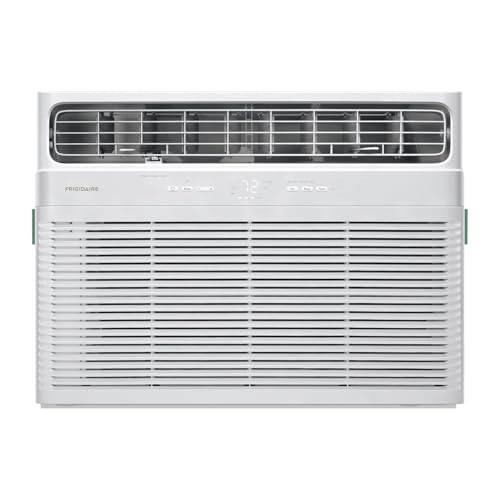
Now the other branch. If the fixed fact in your life is a 230V receptacle, this Frigidaire is the most complete verified window unit that can use it: 18,000 BTU of cooling — one step above the target — a genuinely substantial 16,000 BTU supplemental heater, a dehumidifier mode, Wi-Fi control, and a remote. It is the unit that turns ‘the exact product does not exist’ from a problem into an upgrade, provided your room is big enough to absorb the extra capacity.
That proviso is the whole review. In a 750–1,000 square foot space, 18,000 BTU is not oversizing — it is correct or even conservative sizing, and the 15,000 BTU figure in the search was an underestimate. In a 600 square foot room, a conventional 18,000 BTU unit will short-cycle and leave humidity behind. The heater, notably, has no such downside: supplemental heat does not create a comfort problem when oversized in the same way, and 16,000 BTU of it makes this a legitimate four-season appliance for outlying rooms.
Strengths
- True 208/230V operation — the real article for rooms wired for it
- The strongest supplemental heater in this guide, plus dehumidification
- Smart control and remote suit a large, permanently installed unit
Trade-offs
- One capacity step up: too much cooling for rooms under roughly 700 sq. ft.
- Electric heat is expensive as a primary winter heat source
- Premium tier within the category — check price on Amazon
| Cooling | 18,000 BTU (listing title) |
| Heating | 16,000 BTU heater (listing title) |
| Voltage | 208V/230V (listing title) |
| Extras | Dehumidifier, Wi-Fi and remote control (listing title) |
Compare this Frigidaire with the LG dual inverter pick below and you are really choosing a philosophy. The Frigidaire is the versatile workhorse: more heat, a dehumidifier, smart controls, conventional drive. The LG is the refinement play: inverter smoothness and efficiency, no comparable heating punch. Households in cold-shoulder-season climates — where the room needs warming as many weeks as it needs cooling — should take the Frigidaire seriously as the single-appliance answer.
Installation and electrical notes are the standard 230V ones: dedicated circuit, matching receptacle configuration, direct plug-in with no cords or adapters, and a window and sill that can carry a large chassis. Do that homework once and this unit settles the room’s climate for years.
Best for: 230V rooms of 750 sq. ft. and up, especially outlying spaces that also need real supplemental heat / Not suited for: smaller rooms, cooling-only briefs on a budget, or 115V-only households
Check the current price on Amazon
LG 18,000 BTU Dual Inverter Window Air Conditioner, 230V — Best Quiet True 230V Step-Up
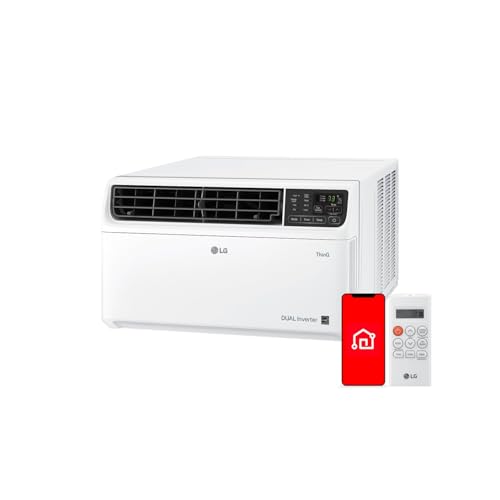
LG’s dual inverter model is the connoisseur’s step-up: the same confirmed 230V window format and 18,000 BTU class as the Frigidaire, but built around a continuously variable compressor instead of a conventional fixed-speed one. The practical results are a steadier room temperature, better humidity control at part load, lower consumption in the mild-weather hours that make up most of the season, and the quietest operation this category of machine can offer — the listing positions it as ultra-quiet, and the underlying technology supports the claim’s direction even though we do not print unverified decibel figures.
The inverter also softens the oversizing penalty that haunts this branch of the guide. A conventional 18,000 BTU unit in a 700 square foot room blasts and idles; the LG can throttle down and run gently at something closer to the room’s actual load, which is precisely the borderline case — a room sized for 15,000 BTU on a 230V circuit — that this search describes. Of all six picks, this is the one whose technology most directly forgives the capacity mismatch.
Strengths
- Inverter drive mitigates the step-up’s oversizing risk better than any conventional unit
- Confirmed 230V, full smart control, Energy Star designation in the listing
- Steady, quiet operation suits living rooms and bedroom suites
Trade-offs
- No supplemental heat — cooling only
- Premium pricing, and the premium buys refinement rather than features
- Still a large, heavy chassis with the usual installation demands
| Capacity | 18,000 BTU (listing title) |
| Voltage | 230V (listing title) |
| Drive | Dual Inverter (listing title) |
| Smart | Wi-Fi and remote, LG ThinQ, Alexa and Google Assistant compatible (listing title) |
The ownership case is about the 90 percent of hours that are not the hottest afternoon of the year. In those hours a fixed-speed unit cycles; the inverter cruises. Cruising is quieter, steadier, and cheaper per hour of comfort, and across a whole season in a primary living space that difference is felt daily. If the unit will live in a workshop or a rental where nobody savors refinement, the premium is wasted. If it will live where your family actually sits, it is the best-spent money in this guide.
One caution applies to every inverter pick: they reward correct installation and clean filters even more than conventional units, because their efficiency advantage lives in sustained, unobstructed operation. Seal the window gaps properly and keep the filter clean, and the machine will do the rest.
Best for: 230V households whose room sits between 700 and 1,000 sq. ft. and who value quiet, steady cooling / Not suited for: anyone who needs heat from the same unit, or who will not feel a premium unit’s refinement in a utility space
Check the current price on Amazon

Keystone 12,000 BTU Window Air Conditioner with Supplemental Heat, 230V — Best True 230V Step-Down
Completing the 230V branch from below: this Keystone pairs 12,000 BTU of cooling with 11,000 BTU of supplemental heat and dehumidification, on confirmed 230V power, in a window chassis with a smart remote. It is included because it is a genuinely verified 230V window unit — a rarer thing than this search’s searcher might expect — and because there is a real room for which it is the right answer: a 450–550 square foot space whose owner overestimated at 15,000 BTU, wired with a 230V receptacle, that also runs cold in the shoulder seasons.
The heat figure deserves the same emphasis as the Frigidaire’s: 11,000 BTU of supplemental heat is a working heater for a room this size, not a token. Combined with dehumidification, this is a three-function appliance — cool, warm, dry — in the class of room where a single wall of glass or a basement-adjacent floor makes all three necessary across a year.
Strengths
- Confirmed 230V window unit — no adapters, no ambiguity
- Balanced package: cooling, real supplemental heat, and dehumidification
- Correct sizing for rooms the 15,000 BTU estimate overshot
Trade-offs
- Undersized for a true 700–800 sq. ft. room — it will run constantly on hot days
- Value-brand support network is thinner than LG or Frigidaire
- Step-down only makes sense if your room measurement honestly shrank
| Cooling | 12,000 BTU (listing title) |
| Heating | 11,000 BTU supplemental heating (listing title) |
| Voltage | 230V (listing title) |
| Extras | Dehumidification, smart remote control (listing title) |
Be rigorous with yourself before choosing the step-down. Measure the room, account for sun and ceiling height, and only land here if the honest number is at or below about 550 square feet. The penalty for undersizing is asymmetric: an oversized inverter runs a bit clumsily, but an undersized conventional unit simply loses — running flat-out through every hot afternoon, wearing itself harder, and still leaving the room warm at dinner time.
If the measurement does land small, though, this Keystone is a tidy answer: right capacity, right voltage, heat and dry modes included, and a tier position that leaves budget for the electrician to check your circuit or for the support bracket the window deserves. Sometimes the correct pick in a guide is the one that talks you out of the search’s number, and this is that pick.
Best for: 230V rooms honestly sized at 450–550 sq. ft. that also need shoulder-season heat / Not suited for: any room that genuinely needs 15,000 BTU — take a step-up pick or an exact-capacity 115V model instead
Check the current price on Amazon
Comparison Table
| Pick | Badge | Key Spec | Best For |
|---|---|---|---|
| Whirlpool 15,000 BTU Window Air Conditioner with Dehumidifier Check on Amazon | Best Exact Capacity — Standard 115V Power | 15,000 BTU, 115V, up to 700 sq. ft., dehumidifier, remote | rooms of roughly 650–750 sq. ft. on ordinary wiring with a circuit that can carry a large 115V load |
| Amana 15,000 BTU Window Air Conditioner Check on Amazon | Best Value Exact Capacity — Standard 115V Power | 15,000 BTU, 115V, remote, 24H timer, 3 speeds, digital display | value-focused buyers who want exact capacity and better-than-basic controls on standard wiring |
| Friedrich Chill Premier 15,000 BTU Window & Wall Unit Check on Amazon | Best Build Exact Capacity — Standard 115V Power | 15,000 BTU, 115V, cooling only, window & wall chassis | permanent installations, landlords, and buyers who prioritize build life over features |
| Frigidaire 18,000 BTU Smart Window Air Conditioner with Heater, 208/230V Check on Amazon | Best True 230V Step-Up | 18,000 BTU cooling, 16,000 BTU heat, 208/230V, Wi-Fi | 230V rooms of 750 sq. ft. and up, especially outlying spaces that also need real supplemental heat |
| LG 18,000 BTU Dual Inverter Window Air Conditioner, 230V Check on Amazon | Best Quiet True 230V Step-Up | 18,000 BTU, 230V, dual inverter, Wi-Fi and voice control | 230V households whose room sits between 700 and 1,000 sq. ft. and who value quiet, steady cooling |
| Keystone 12,000 BTU Window Air Conditioner with Supplemental Heat, 230V Check on Amazon | Best True 230V Step-Down | 12,000 BTU cooling, 11,000 BTU heat, 230V, dehumidification | 230V rooms honestly sized at 450–550 sq. ft. that also need shoulder-season heat |
How to Choose Between the 115V Exact Fit and the 230V Step
Decide which number is actually fixed
Every buyer of this search has one fixed constraint and one estimate, and the first job is knowing which is which. The circuit is a physical fact: walk to the room, look at the receptacle. A standard outlet with two parallel blades and a ground pin is 115V service. A larger receptacle with horizontal or tandem blades is 208/230V service. That thirty-second inspection decides your branch more reliably than any product research, and doing it first will save you from falling in love with a unit your wall cannot feed.
The capacity, by contrast, is an estimate with honest error bars. Square footage times a climate-and-exposure factor gives a range, not a point: the same 750 square feet can want 14,000 BTU in a shaded, well-insulated house and 18,000 on a sun-beaten top floor. That is why stepping one size in either direction, within the correct voltage, is a normal engineering decision rather than a failure of the brief — while crossing voltages is never available at all.
The electrical reality of 15,000 BTU on 115 volts
The exact-capacity picks carry a caveat that surprises people: at 115 volts, a 15,000 BTU air conditioner draws current close to the practical ceiling of a household circuit. It needs a circuit that is dedicated or shared only with trivial loads. Plug it into a circuit that also feeds a kitchen counter, a hair dryer outlet, or a second cooling appliance, and you will meet your breaker panel repeatedly all summer.
This is, historically, exactly why larger units moved to 230V: halving the current for the same power keeps everything — wire, plug, breaker — in a comfortable range. If you are choosing between adding a dedicated 115V circuit for an exact-capacity unit and using an existing 230V receptacle with a step-up unit, price both honestly; the electrician visit is often the smaller number, and it permanently improves the room’s infrastructure.
Sizing the step: when 18,000 is right and when 12,000 is
Step up to 18,000 BTU when your measured need is 750 square feet or more, when the room has serious sun load or a kitchen’s worth of appliances, or when you choose the inverter model whose turndown forgives borderline oversizing. Step down to 12,000 BTU only when a careful re-measurement puts the room at 550 square feet or below — and be suspicious of your own optimism here, because the wish to spend less has ended more summers in warm rooms than any product defect.
Remember also that supplemental heat does not follow the same sizing anxiety. Both 230V picks with heat carry heaters sized generously for their cooling class, and an oversized heater in a window unit simply cycles less often; it does not create the clammy discomfort of oversized cooling. If four-season duty is part of your real brief, weight the heat specification as heavily as the cooling one.
Why the Exact Product Is Missing: A Short Market Explanation
It is worth understanding why ‘15,000 BTU, 220 volt, window’ is an empty shelf, because the explanation tells you the gap is permanent rather than a stock shortage. North American manufacturers design window units around the receptacles homes actually have. Below roughly 15,000 BTU, standard 115V outlets suffice, so that is what gets built — in volume, at low prices. Above that threshold, current draw pushes the category to 230V, and product lines jump to 18,000 BTU and beyond, where commercial and large-room demand justifies the tooling. Fifteen thousand sits exactly on the seam: close enough to the 115V ceiling that no major line builds a 230V variant, and the few historical exceptions have been discontinued as lines consolidated.
The practical consequence is that waiting, hunting, or paying import premiums for the exact combination is a poor strategy. The two branches in this guide are the market’s actual answers, and both are good ones. Choose by your receptacle and your tape measure, and the compromise disappears into a correct installation.
Two adjacent categories deserve an explicit dismissal, because searchers meet them constantly. Portable air conditioners advertise DOE and SACC numbers that are not comparable to window ratings — a portable sold in this size class delivers markedly less real cooling, exhausts through a hose that leaks heat back, and occupies floor space permanently. Through-the-wall units, meanwhile, are excellent machines answering a different question: they require a sleeve, and no sleeve means construction. If your opening is a window and your decision is among window units, both categories are distractions wearing relevant-looking numbers, and this guide’s six picks are the honest field.
How to Prepare a Room and Circuit for a Large Window Air Conditioner
Whether your pick is a 115V exact-capacity unit or a 230V step, the preparation sequence is the same — and it happens before the box arrives.
- Inspect the receptacle and identify the circuit at the breaker panel. Label the breaker, note its amperage, and list everything else on the circuit. For a 115V 15,000 BTU unit, clear the circuit of other heavy loads or have a dedicated circuit added. For a 230V unit, confirm the receptacle configuration matches the unit’s plug exactly.
- Measure the window opening — width, and the height the window can raise — and compare with the chassis dimensions on the listing, including side panels. Measure the room itself while you are at it, and write down ceiling height and the direction the glass faces; if the numbers change your sizing branch, better now than after delivery.
- Check the sill and sash for rot or weakness. Units in the 12,000–18,000 BTU class are heavy; reinforce or repair weak wood, and buy the support bracket the manufacturer recommends rather than improvising one.
- Plan the lift: two adults, a clear path, and a padded surface to rest the unit on. Clear the floor under the window and move furniture before the delivery, not during it.
- Gather sealing materials in advance — foam weatherstripping, insulation panels for the side gaps, and a level to set the slight outward tilt for drainage.
- After installation, run every mode, confirm condensate drains outside, and check the breaker after an hour of full-load cooling. A breaker that trips in the first hour is telling you the circuit homework needs an electrician, not a reset-and-hope routine.
The last preparation is a habit, not a task: put filter cleaning on a monthly calendar reminder for the cooling season. Large units move large volumes of air, their filters load quickly, and a clean filter is the cheapest capacity you will ever buy back.
Common Buying Mistakes
Trusting a headline that promises the exact combination. If a listing or guide claims a mainstream 15,000 BTU 230V window unit, treat it as an error until the specification section proves otherwise. Our verified searches consistently found the shelf empty; plan around that fact.
Ordering before inspecting the receptacle. The outlet in the room is the first specification of this purchase. Thirty seconds with a flashlight decides which half of this guide applies to you.
Sharing a circuit with a 15,000 BTU 115V unit. At this size on standard voltage, the unit needs the circuit nearly to itself. Breaker trips are the symptom; the cure is a dedicated circuit, not a bigger breaker fitted by guesswork.
Stepping down in capacity to save money without re-measuring. Undersizing is the one sizing error with no forgiveness: the unit runs constantly and the room stays warm. Step down only on the evidence of a tape measure.
Ignoring supplemental heat when comparing 230V picks. In an outlying room, the heater half of a combination unit can matter as many weeks per year as the cooling half. Compare both specifications, not just the BTU in the search.
Final Recommendation
Decide by receptacle, then by tape measure. If the room has standard wiring and honestly needs 15,000 BTU, the Whirlpool is the balanced default, the Amana the value alternative with better controls, and the Friedrich the build-quality pick for permanent installations. If the room is wired for 230V, the Frigidaire step-up is the versatile four-season answer, the LG dual inverter is the quiet, refined one whose turndown forgives the extra capacity, and the Keystone step-down is correct only for rooms that re-measure at 550 square feet or below.
And if your situation matches neither branch — a 230V-only room that truly needs exactly 15,000 BTU, or standard wiring that cannot carry it — the remaining move is electrical, not commercial: a modest electrician job to give the room the circuit its size demands. That is a better purchase than any adapter, any mislabeled listing, or any summer spent compromising with the wrong machine.
- Whirlpool 15,000 BTU Window Air Conditioner with Dehumidifier — Check on Amazon
- Frigidaire 18,000 BTU Smart Window Air Conditioner with Heater, 208/230V — Check on Amazon
- LG 18,000 BTU Dual Inverter Window Air Conditioner, 230V — Check on Amazon
Best 14000 Btu 220 Volt Window Air Conditioner Best 120 Volt Window Air Conditioner Best 12000 Btu 550 Sq Ft 115 Volt Window Air Conditioner Energy Star Best 18 Volt Handheld Vacuum Best 18 Volt Electric Vacuum
Frequently Asked Questions
Does a 15,000 BTU 220 volt window air conditioner exist?
Not as a current, mainstream, verifiable product. Our listing-verified searches found the 15,000 BTU window class to be entirely 115V — Whirlpool, Amana, and Friedrich included — while genuine 230V window units are built at 12,000 BTU with heat and at 18,000 BTU and above. Buyers must choose one branch: exact capacity on standard power, or a one-step capacity move on 230V power.
Which matters more, matching the BTU or matching the voltage?
Voltage, and it is not close. A voltage mismatch is absolute — the unit cannot be safely or legally adapted to the wrong receptacle. A one-step capacity difference, by contrast, is a sizing judgment with workable answers in both directions, especially with an inverter model that can turn its output down.
Can a 15,000 BTU unit run on a normal household circuit?
Yes, with respect for its appetite. At 115V it draws near the practical limit of a standard circuit, so it should be dedicated or shared only with trivial loads. If your panel cannot offer that, a dedicated circuit installation is a modest, permanent fix — and often cheaper than the price gap between the tiers in this guide.
Is stepping up to 18,000 BTU wasteful?
Only if the room is small. In a 750–1,000 square foot space it is correct sizing. In a smaller room, a conventional 18,000 BTU unit short-cycles and dehumidifies poorly; the dual inverter pick is the exception, because it can idle down to something close to the room’s real load on ordinary days.
Why not buy a portable air conditioner rated at 15,000 BTU instead?
Because portable ratings changed standards: under the current SACC system, a portable marketed in this class delivers substantially less real-world cooling than a 15,000 BTU window unit, and it occupies floor space while exhausting through a hose. For a fixed room with a usable window, the window unit is the stronger tool in every branch of this guide.
What should I check on the listing before ordering any pick here?
Three things: the voltage in the specification section — confirm it matches your receptacle; the chassis dimensions against your measured window opening; and the plug configuration against your outlet. Those three checks, done on the listing page through the links in this guide, prevent nearly every failed installation in this category.