Disclosure: airfryerkitchensupply.com is reader-supported. When you buy through links on our site, we may earn an affiliate commission at no extra cost to you.
Where to Buy
This guide covers the best 18 volt electric vacuum — what actually exists, what we verified, and which picks fit which rooms and budgets. All six picks in this guide run on an 18-volt-class battery platform — Makita’s 18V LXT, Milwaukee’s M18, or the 20V MAX platform whose nominal voltage is 18 volts — and every one was verified against Amazon’s product data before earning its link. Use the links to check the current price on Amazon, and pay attention to the words ‘tool only’: most professional-platform vacuums are sold without a battery, which is a bargain if you own the platform and a trap if you do not.
- Makita XLC02ZW 18V LXT Compact Cordless Vacuum (Best Overall) — Check on Amazon
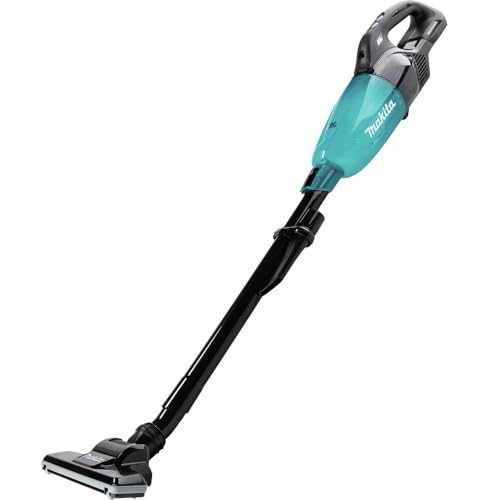
- Makita XLC09ZB 18V LXT Brushless 4-Speed Vacuum (Best Premium) — Check on Amazon
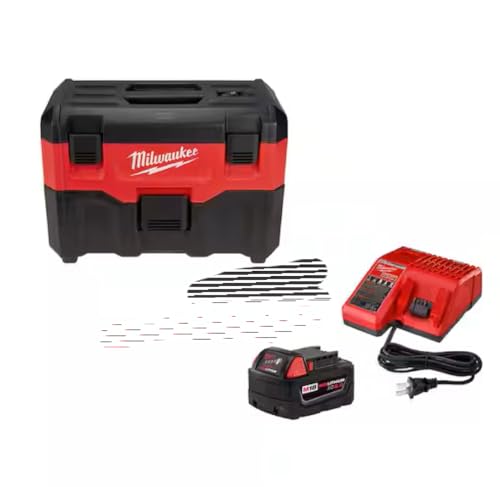
- Milwaukee 0880-20P M18 Wet/Dry Vacuum with XC5.0 Starter Kit (Best Wet/Dry Kit) — Check on Amazon
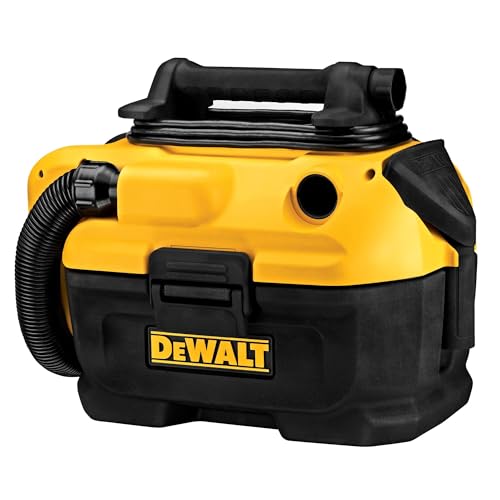
- DEWALT DCV581H 20V MAX Cordless/Corded Wet Dry Vacuum (Best Hybrid Power) — Check on Amazon
- Makita XLC11ZW 18V LXT Brushless Cyclonic Stick Vacuum (Best Stick Format) — Check on Amazon
- ONEAND 18V Cordless Multi-Surface Handheld Vacuum Kit with 2.0Ah Battery and Charger (Best Complete Kit for Beginners) — Check on Amazon
The best 18 volt electric vacuum is not one product category but a meeting point of three: the compact canister vacuums that tool brands build for job sites and workshops, the wet/dry machines that swallow sawdust and spilled coolant with equal indifference, and the stick formats that borrow the platform’s batteries for household duty. What unites them is the battery. An 18-volt platform pack — the same one that drives your drill, your impact driver, your circular saw — turns a vacuum into another tool in the system, and for the millions of households and tradespeople already invested in Makita LXT, Milwaukee M18, or DEWALT 20V MAX, that compatibility is the first and sometimes only specification that matters.
A naming note, because this search depends on it: DEWALT’s ’20V MAX’ platform is an 18-volt nominal system — 20 volts is the pack’s peak fresh-charge figure, 18 volts its working nominal, exactly as a ’16V MAX’ hand vac is a lower-voltage nominal class. This guide treats 20V MAX machines as members of the 18-volt class, because electrically they are, and because excluding the largest tool platform in North America from an ’18 volt vacuum’ guide on a labeling technicality would serve nobody. Each DEWALT pick states the relationship in its spec box so the accounting is transparent.
What an 18-volt vacuum will not do is replace a corded shop vac for marathon sessions or a good household vacuum for deep carpet work. What it will do — superbly — is live where the messes are: the workshop bench, the garage, the job site, the car, the basement stairs, with no cord to drag and no hunt for an outlet. The six picks below are organized by the jobs they serve, from the compact all-rounder that defines the class to the complete budget kit for buyers starting from zero.
In this guide
Quick Picks
Six verified platform vacuums: three Makita LXT formats, Milwaukee’s M18 wet/dry kit, DEWALT’s corded-cordless hybrid, and a complete 18V kit with battery included. Badges repeat in the full reviews.
- Best Overall: Makita XLC02ZW 18V LXT Compact Cordless Vacuum — Makita’s compact LXT canister in white — the class-defining grab-and-go vacuum for workshops, benches, and quick household duty, sold as a bare tool. — Check on Amazon
- Best Premium: Makita XLC09ZB 18V LXT Brushless 4-Speed Vacuum — the brushless, four-speed evolution of Makita’s compact vacuum — push-button speed control and a more efficient motor for LXT owners who want the refined version. — Check on Amazon
- Best Wet/Dry Kit: Milwaukee 0880-20P M18 Wet/Dry Vacuum with XC5.0 Starter Kit — Milwaukee’s M18 wet/dry vacuum bundled with an XC5.0 starter kit — the liquid-capable pick, and unusually, one that arrives with a battery solution in the box. — Check on Amazon
- Best Hybrid Power: DEWALT DCV581H 20V MAX Cordless/Corded Wet Dry Vacuum — DEWALT’s 2-gallon wet/dry that runs on a 20V MAX battery or plugs into the wall — the 18-volt-nominal platform’s answer to runtime anxiety. — Check on Amazon
- Best Stick Format: Makita XLC11ZW 18V LXT Brushless Cyclonic Stick Vacuum — Makita’s cyclonic stick on the LXT platform — brushless, four speeds, and a household silhouette powered by tool batteries. — Check on Amazon
- Best Complete Kit for Beginners: ONEAND 18V Cordless Multi-Surface Handheld Vacuum Kit with 2.0Ah Battery and Charger — the starter-kit answer: an 18V multi-surface handheld vacuum sold with a 2.0Ah battery and charger included, so the box contains a working system. — Check on Amazon
How These Picks Were Chosen
Verification followed this program’s standing rule: every model was cross-checked against its live Amazon listing, and the mini spec boxes quote only what those listings state — platform, format, kit contents, and the features in each title. Where a listing says ‘tool only’, the review says it in the first paragraph, not the fine print, because the battery question is the most common source of disappointed purchases in this entire category.
Ranking weighed platform logic first: a vacuum is a battery accessory, and its value depends on the packs you already own. Within that frame we weighed format fit — compact canister versus wet/dry versus stick — filtration, whether the machine can also run corded, and kit completeness for buyers starting from zero. Suction figures, where brands publish them, were treated as secondary evidence; format and filtration decide real-world satisfaction in this class far more reliably.
We also made one deliberate inclusion decision: the budget kit pick is a lesser-known brand built around the 18V class rather than a fourth model from the big three platforms. It is included because ‘I own no batteries at all’ is a real and common position, and a complete kit with battery and charger answers it in a way a bare professional tool cannot. Its trade-offs are stated as plainly as its virtues.
The 6 Best 18 Volt Electric Vacuum Options, Verified
Read the kit line in each spec box before the feature list. In this category, what is not in the box — battery, charger — matters as much as what is.

Makita XLC02ZW 18V LXT Compact Cordless Vacuum — Best Overall
If the 18-volt vacuum class has a default answer, this is it. Makita’s XLC02 is a compact canister vacuum built on the LXT platform — the largest 18V tool system in the world by model count — and its proposition is pure platform logic: click in the same battery that runs your drill, and clean the bench, the truck cab, the stair treads, and the workshop floor’s daily accumulation without a cord in sight. The white finish signals its second life in janitorial and household service, where it has quietly become a favorite of people who clean for a living.
The format deserves a sentence of appreciation. A compact canister with a floor nozzle and extension handles both modes of cordless cleaning — upright for floors, handheld-with-wand for benches and shelves — without the top-heavy feel of a stick or the bulk of a wet/dry tub. It is the shape a vacuum takes when it is designed by a tool company for people who move around while they clean.
Strengths
- LXT platform: shares batteries with the world’s largest 18V tool system
- Canister-with-wand format works upright and at the bench equally well
- Proven, widely stocked model with deep parts and filter availability
Trade-offs
- Tool only — the price assumes you already own LXT batteries and a charger
- Dry pickup only; not a wet/dry machine
- Compact capacity means frequent emptying on big cleanups
| Platform | 18V LXT lithium-ion (listing title) |
| Format | Compact cordless vacuum (listing title) |
| Kit | Tool only — battery and charger not included (listing title) |
| Finish | White (listing title) |
The XLC02’s real competition is not another vacuum but the broom, the dustpan, and the corded machine that stays in the closet because setup is a production. Cordless platform vacuums win by frequency: they get used for the two-minute messes, and two-minute messes are most of the messes there are. Owners consistently report the same arc — bought for the workshop, colonized the house — because a vacuum that is always thirty seconds from running changes what ‘clean enough to bother’ means.
Buy it if you own LXT batteries. If you do not, price the battery and charger into the comparison honestly — or scroll to the complete-kit pick at the end of this guide, which exists precisely for your situation.
Best for: Makita LXT owners who want the class’s default compact vacuum for shop and home / Not suited for: wet messes, buyers with no batteries, or deep-carpet household duty
Check the current price on Amazon
Makita XLC09ZB 18V LXT Brushless 4-Speed Vacuum — Best Premium
The XLC09 is what happens when the default answer gets an engineering budget: a brushless motor and four speeds with push-button control, in the same compact LXT vacuum format. Brushless drive is not a spec-sheet vanity in a vacuum — it is efficiency, and efficiency in a battery appliance converts directly into runtime per charge and sustained suction as the pack drains. Four speeds let you match the machine to the mess: low and quiet for the office or the baby’s floor, high for the workshop’s embedded grit.
Push-button control sounds trivial until you have used a vacuum whose speed dial lives in an awkward place and gets bumped by your grip. In a tool you operate one-handed while the other hand moves objects, control placement is ergonomics, and ergonomics is whether the tool gets used at full capability or at whatever setting it was left in.
Strengths
- Brushless motor: better runtime and sustained performance per charge
- Four speeds cover quiet maintenance cleaning and heavy pickup in one machine
- Same LXT batteries and the same compact format as the class default
Trade-offs
- Premium tier over the XLC02 — check price on Amazon
- Still tool only, still dry pickup
- Refinement is wasted on purely occasional use
| Platform | 18V LXT lithium-ion (listing title) |
| Motor | Brushless (listing title) |
| Speeds | 4-speed with push button (listing title) |
| Kit | Tool only (listing title) |
Choose between this and the XLC02 on usage intensity. A vacuum that runs daily — in a shop that cleans every evening, a household that treats it as the primary quick-clean machine, a janitorial route — repays brushless efficiency and speed control in runtime and comfort every single week. A vacuum that runs monthly repays nothing; the basic model’s simplicity wins.
There is also a noise dimension worth naming: lower speeds on a brushless platform are genuinely civilized, and in homes where the vacuum shares space with sleeping children, calls, or customers, the ability to clean quietly at reduced power is a feature with daily cash value. The premium pick earns its badge on accumulated small superiorities rather than one headline — which is usually what premium means in mature tool categories.
Best for: daily-use LXT owners, professional cleaners, and noise-sensitive homes / Not suited for: occasional users, wet/dry needs, or buyers without LXT batteries
Check the current price on Amazon
Milwaukee 0880-20P M18 Wet/Dry Vacuum with XC5.0 Starter Kit — Best Wet/Dry Kit
Milwaukee’s M18 wet/dry entry answers the two objections that dog this category in a single box: it handles liquids as well as dry debris, and this particular bundle includes an XC5.0 starter kit, so the battery question that haunts every ‘tool only’ listing is settled before checkout. For a buyer entering the M18 platform through this vacuum — a defensible move, since M18 is one of the two great professional ecosystems — the kit makes the arithmetic honest and the machine usable on day one.
Wet/dry capability changes the job list fundamentally. The garage floor’s oil-dry and meltwater, the basement’s minor flood, the workshop’s spilled coolant, the car wash bay’s standing water: a dry-only vacuum watches all of it from the shelf. A wet/dry machine with a tub format also swallows the bulky, awkward debris — wood offcuts’ shavings, demolition grit, leaf litter — that compact canisters choke on.
Strengths
- Wet and dry pickup — the only format here that handles liquids
- Starter kit in the box removes the bare-tool battery trap
- M18 platform depth for buyers building a professional system
Trade-offs
- Tub format is bulkier to store and carry than the compact picks
- Heavier in the hand for quick spot jobs — it is a floor machine, not a hand vac
- Kit pricing reflects the included battery gear — check price on Amazon
| Platform | M18 (listing title) |
| Format | Wet/dry vacuum (listing title) |
| Kit | XC5.0 starter kit included (listing title) |
The right mental model for this pick is ‘small shop vac, freed from the cord’. It will not out-suck a large corded wet/dry on a flooded basement marathon — runtime is the tax batteries levy — but for the ninety percent of wet/dry work that is measured in minutes and gallons rather than hours, cordless freedom wins outright. Tradespeople keep these on trucks for a reason: the cleanup at the end of a job is where professionalism shows, and a machine that runs anywhere shows it best.
If your messes are dry, fine, and frequent, the Makita compacts are the better daily tools. If your messes are sometimes wet, bulky, or outdoors, this is the pick — and if you are new to M18, the starter kit makes it the platform’s front door.
Best for: garages, workshops, trucks, and anyone whose messes are sometimes liquid / Not suited for: apartment spot-cleaning, hand-vac duty, or buyers who prize compact storage
Check the current price on Amazon
DEWALT DCV581H 20V MAX Cordless/Corded Wet Dry Vacuum — Best Hybrid Power
The DCV581H carries this guide’s most quietly radical feature: it does not care where its power comes from. Run it on a 20V MAX battery — the 18-volt nominal platform, as the spec box states — for grab-and-go work, or plug it into the wall for the long session, with the same machine, the same 2-gallon tub, and the same HEPA filter. Every other pick in this guide makes you choose between cordless freedom and corded endurance at purchase time; this one defers the choice to each individual job.
Two gallons is the considered size for this hybrid role: big enough for a real cleanup, small enough to carry by its handle and store on a shelf. The HEPA filter lifts it above the wet/dry class’s usual ‘good enough’ filtration, which matters when the debris is drywall dust, old insulation, or anything else you would rather capture than redistribute.
Strengths
- Dual power: battery for mobility, cord for endurance — no runtime cliff
- HEPA filtration in a wet/dry format is uncommon and valuable
- 2-gallon tub balances capacity against carry-ability
Trade-offs
- Tool only on the battery side — the cord is included logic, the pack is not
- 20V MAX naming requires the nominal-voltage translation explained above
- Jack of two power trades: bulkier than a pure hand vac, less tub than a pure shop vac
| Platform | 20V MAX — 18V nominal class (listing title) |
| Format | 2-gallon wet/dry vacuum (listing title) |
| Power | Cordless and corded operation (listing title) |
| Filtration | HEPA filter (listing title) |
| Kit | Tool only (listing title) |
This is the pick for the buyer who has been burned by runtime before — the fence-line cleanup that died at 80 percent, the car detail that ended with a cord dragged out anyway. Hybrid power converts the battery from a countdown timer into a convenience: use it when the outlet is far, ignore it when the outlet is near. In workshops with a fixed bench, it can live plugged in as the bench vac and unplug for the truck, the attic, and the yard.
DEWALT platform owners will find the usual virtues: the packs they own fit, the filter is a stocked part, and the machine’s controls are glove-friendly. New buyers should simply note the kit line — a battery and charger join the cart if the cordless half of the proposition is to exist.
Best for: workshops and mixed indoor-outdoor duty where some jobs outlast a battery / Not suited for: buyers who want the lightest possible tool, or pure household stick duty
Check the current price on Amazon

Makita XLC11ZW 18V LXT Brushless Cyclonic Stick Vacuum — Best Stick Format
The XLC11 takes the LXT platform into the stick format — the household shape — with two upgrades that matter: cyclonic separation and a brushless motor with four speeds. Cyclonic action spins debris out of the airstream before it reaches the filter, which is the technology that keeps suction steady as the cup fills; in small vacuums, whose filters clog fast and whose suction falls off a cliff when they do, that steadiness is the difference between a machine that feels strong for a whole job and one that feels strong for a whole minute.
Why buy a stick from a tool brand at all? Because of the battery drawer. A household with LXT packs for its tools already owns the expensive half of a cordless stick vacuum, in multiples, with a fast charger. The XLC11 converts that sunk investment into a household appliance — and when a pack eventually tires, it is replaced from the tool shelf rather than a proprietary parts catalog.
Strengths
- Cyclonic separation holds suction steady as the cup fills
- Brushless motor and four speeds, shared with the premium compact pick
- Turns existing LXT batteries into a household stick at bare-tool cost
Trade-offs
- Tool only — the household price is real only for LXT owners
- Stick format trades the canister’s bench versatility for floor convenience
- Not a wet/dry machine
| Platform | 18V LXT lithium-ion (listing title) |
| Format | Cyclonic stick vacuum (listing title) |
| Motor | Brushless (listing title) |
| Speeds | 4-speed (listing title) |
Set this beside the XLC02 and XLC09 and the choice is about posture, not power. The canisters are workshop natives that visit the house; the stick is a household native that borrows workshop batteries. Homes that want one vacuum for daily floors, stairs, and quick kitchen duty — and that happen to run LXT tools in the garage — will find this the most natural fit in the guide.
The four speeds deserve the same note as on the XLC09: most household cleaning lives at the middle settings, where the machine is quiet and the runtime stretches, and the top setting exists for the entryway grit emergency. Used that way, a single mid-size LXT pack covers a small home’s daily rounds with charge to spare.
Best for: LXT households wanting a daily stick for floors and stairs / Not suited for: wet pickup, bench-and-tool work, or homes with no Makita batteries
Check the current price on Amazon

ONEAND 18V Cordless Multi-Surface Handheld Vacuum Kit with 2.0Ah Battery and Charger — Best Complete Kit for Beginners
Every other pick in this guide assumes a battery drawer. This one assumes nothing: the verified listing is a complete kit — vacuum, 2.0Ah battery, and charger — which makes it the only pick a first-time buyer can use the day it arrives without a second purchase. For renters, new homeowners, and anyone outfitting a car or a small workshop from zero, that completeness is not a detail; it is the product.
The honest framing matters here. This is a value-tier machine from a lesser-known brand, and its ecosystem is itself: the battery fits this vacuum and its siblings, not the great professional platforms. What you are buying is a self-contained appliance at a kit price, not the first installment of a tool system. Judged on those terms — handheld format, multi-surface intent, everything included — it is a rational purchase that the bare professional tools, for all their superiority, simply do not answer.
Strengths
- Complete system in one box: battery and charger included
- Lowest total cost of entry in this guide
- Handheld format suits cars, stairs, and spot duty
Trade-offs
- Closed ecosystem: its battery does not join a professional platform
- Value-tier build and support network versus the major brands
- 2.0Ah is a modest pack — sized for spot jobs, not marathons
| Platform | 18V (listing title) |
| Format | Cordless multi-surface handheld vacuum (listing title) |
| Kit | 2.0Ah battery and charger included (listing title) |
The decision between this kit and a bare Makita or Milwaukee is really a decision about your next five years of tools. If a drill, a saw, and a yard tool are in your future, buy into a platform now and let the vacuum ride along — the bare-tool picks above will look cheap in hindsight. If your tool ambitions begin and end with keeping a car and a hallway clean, the platform logic is an upsell, and this kit’s self-contained honesty wins.
Either way, the kit performs the guide’s most useful service: it prices the battery question into the open. Compare its total against any bare tool plus battery plus charger, and you will know exactly what professional-platform membership costs — and can decide, with real numbers, whether it is worth it to you.
Best for: first-time buyers, renters, and car kits with no existing battery platform / Not suited for: anyone already invested in a professional platform, or planning to be
Check the current price on Amazon
Comparison Table
| Pick | Badge | Key Spec | Best For |
|---|---|---|---|
| Makita XLC02ZW 18V LXT Compact Cordless Vacuum Check on Amazon | Best Overall | 18V LXT, compact cordless vacuum, tool only | Makita LXT owners who want the class’s default compact vacuum for shop and home |
| Makita XLC09ZB 18V LXT Brushless 4-Speed Vacuum Check on Amazon | Best Premium | 18V LXT brushless, 4-speed, push button, tool only | daily-use LXT owners, professional cleaners, and noise-sensitive homes |
| Milwaukee 0880-20P M18 Wet/Dry Vacuum with XC5.0 Starter Kit Check on Amazon | Best Wet/Dry Kit | M18 wet/dry vacuum, XC5.0 starter kit included | garages, workshops, trucks, and anyone whose messes are sometimes liquid |
| DEWALT DCV581H 20V MAX Cordless/Corded Wet Dry Vacuum Check on Amazon | Best Hybrid Power | 20V MAX (18V nominal), 2-gallon wet/dry, cordless and corded, HEPA filter | workshops and mixed indoor-outdoor duty where some jobs outlast a battery |
| Makita XLC11ZW 18V LXT Brushless Cyclonic Stick Vacuum Check on Amazon | Best Stick Format | 18V LXT brushless cyclonic stick, 4-speed, tool only | LXT households wanting a daily stick for floors and stairs |
| ONEAND 18V Cordless Multi-Surface Handheld Vacuum Kit with 2.0Ah Battery and Charger Check on Amazon | Best Complete Kit for Beginners | 18V handheld kit, 2.0Ah battery and charger included | first-time buyers, renters, and car kits with no existing battery platform |
How to Choose an 18 Volt Electric Vacuum
Start with the platform you already own
In this category the battery is the system and the vacuum is an accessory, so the first question is inventory: open the garage drawer and see whose packs you have. Makita LXT, Milwaukee M18, and DEWALT 20V MAX (the 18-volt nominal class) each offer vacuums that click onto the batteries on your shelf, and a vacuum that uses batteries you own is effectively discounted by the price of a battery and charger you do not have to buy. Cross-platform purchases should be deliberate — a new ecosystem entry — never accidental, which is why every spec box in this guide names its platform in the first line.
If you own no platform, the decision widens: choose the ecosystem whose other tools you are likeliest to want, or choose the complete-kit pick and opt out of ecosystems entirely. Both are respectable answers. The disreputable answer is buying a bare tool on a headline price and discovering the battery costs half as much again — the single most common regret in this category, and an entirely avoidable one.
Match the format to the mess
Compact canisters like the Makitas are the generalists: floors, benches, vehicles, stairs, in a shape that follows you around. Wet/dry tubs — the Milwaukee and the DEWALT — are the specialists for liquids, bulky debris, and dirty environments, trading carry-ability for appetite. Sticks are the household format, optimized for daily floors and quick deployment. Handheld kits are for spot duty and cars. Almost every disappointment in this category is a format mismatch wearing a spec sheet’s clothing: the buyer who needed wet pickup bought a dry canister, or the buyer who needed a daily floor tool bought a tub.
Filtration is the format’s silent partner. Drywall dust, concrete dust, and allergen-heavy household debris argue for HEPA-level filtration like the DEWALT’s; sawdust and gravel forgive basic filters. Check what the filter costs and whether it is washable before you buy — in a vacuum’s third year, the filter is the product.
Runtime: think in jobs, not minutes
Published runtimes are measured on settings you may not use, with packs you may not own. Translate instead by job: a compact vacuum on a mid-size pack handles a workshop’s daily cleanup or a car’s full interior as one job; a wet/dry on the same class of pack handles one spill or one bay, not a flooded basement. The hybrid DEWALT exists for the buyer whose jobs refuse to be sized in advance — when in doubt, dual power is the honest engineering answer to runtime uncertainty.
Carrying a second pack is the platform owner’s quiet superpower: two batteries in rotation make runtime a solved problem for every format in this guide except true marathon wet/dry work. If your cleaning style is ‘big Saturday session’, budget the second pack at purchase and the category’s one real limitation mostly evaporates.
18 Volt, 20V MAX, and Other Labeling Honesty
A short field guide to battery labels, because this category runs on them. Lithium platforms are named for their maximum voltage — the pack’s voltage fresh off the charger — while the nominal voltage that describes most of the discharge curve is lower. The industry’s two conventions coexist: Makita and Milwaukee print the nominal class (18V, M18), while DEWALT and others print the maximum (20V MAX). The underlying packs are the same class of device, which is why this guide includes 20V MAX machines in an 18-volt roundup and flags the equivalence in each spec box.
What the equivalence does not mean is compatibility. A 20V MAX pack fits only its own platform’s tools; an 18V LXT pack fits only LXT. Voltage class is a description, not an interface. Buy the label that matches your shelf, and let the nominal-versus-max translation reassure you that no brand is secretly a class above the others.
Filtration, Dust, and What ‘Workshop Clean’ Should Mean
A vacuum’s real product is not suction; it is captured dust — the difference between debris that leaves the building in the bin and debris that is merely relocated into the air and onto every horizontal surface, finer than before. This is where the formats in this guide quietly diverge. Basic platform vacuums filter adequately for coarse shop debris. The HEPA-equipped hybrid pick exists for the dusts that are not coarse: drywall sanding dust, concrete drilling dust, the fine fraction of wood dust, and household allergen loads. If your work produces fine dust regularly, filtration is not an upgrade to consider after purchase; it is the purchase, and the rest of the machine is its delivery vehicle.
Filter maintenance is the unglamorous discipline that decides whether that capture survives the year. A loaded filter does not merely weaken suction — it raises the motor’s workload and heat, shortens the session, and tempts owners into the category’s saddest habit: shaking a clogged filter out indoors, re-aerosolizing exactly what it captured. Tap filters outdoors, wash washable ones on schedule, let them dry fully, and keep a spare so the vacuum is never down waiting on a damp filter. The owners who describe these machines as ‘still strong after five years’ are, without exception, describing their filter habits.
There is also a house-versus-shop boundary worth drawing. A platform vacuum that lives in the workshop will eventually be borrowed for the house, and one that lives in the house will be borrowed for the garage. The canister formats cross that border most gracefully; the wet/dry tubs cross it with more authority and more noise; the stick refuses to cross it at all and is happier for the honesty. Buy for the side of the border where the machine will spend eighty percent of its life, and let the other twenty percent be the compromise.
How to Get the Most From a Cordless Platform Vacuum
The techniques are simple; the discipline is doing them every time rather than eventually.
- Start every job with an empty bin and a clean filter. Cordless vacuums have suction to spare when unobstructed and none when clogged; the filter check is worth more than any setting on the machine.
- Match speed to surface: low for dust on hard surfaces and quiet environments, high for embedded grit, mats, and upholstery. Runtime lives at the low settings; extraction lives at the top.
- Work in slow, overlapping passes on carpet and mats, and empty the bin the moment debris reaches the fill line — cyclonic and filtered systems alike lose efficiency past it.
- For wet pickup on the wet/dry models, remove or configure the filter exactly as the manual directs, empty the tub before it reaches the float shutoff, and let the tub dry open after use to keep odors out of the machine.
- Rotate two batteries if you own them, and store packs indoors at moderate temperature. Lithium packs age fastest when stored fully depleted or in hot sheds — the two states garage tools most often endure.
- Keep a spare filter on the shelf. Washing the working filter is good practice; having a dry spare means the vacuum never sits disassembled waiting to dry.
The meta-lesson of the platform vacuum is deployment frequency: it earns its place by being grabbed daily. Store it where the messes happen, on a charged battery, with its nozzle attached — every layer of storage friction you remove is cleaning you will actually do.
One deployment pattern deserves explicit recommendation: stage the vacuum where the mess is born, not where vacuums are traditionally stored. A platform vacuum on a charged battery, hung by the workshop door or kept in the garage’s cleaning corner, gets used at the moment of the spill, the sawdust pile, the tracked-in gravel — which is the only moment its cordless design fully pays for itself. The same machine stored in a hall closet behind the ironing board becomes a weekly appliance, and a weekly appliance might as well have a cord. Placement is a feature; buy it with the same deliberation as filtration, and the platform system’s promise — cleaning at the speed of the mess — actually comes true.
Common Buying Mistakes
Buying a bare tool with no battery plan. The headline price of a tool-only vacuum is half a price. Add the pack and charger before comparing anything, or choose the complete kit.
Crossing platforms by accident. An 18V badge does not mean your batteries fit. Platform is an interface, not a voltage class — match the brand system exactly.
Using a dry vacuum on liquids. Dry-only machines and water are an expensive combination. If your messes are sometimes wet, the wet/dry picks exist; buy the format that matches the mess.
Judging by suction claims alone. Format, filtration, and battery logic decide satisfaction. A perfectly strong vacuum in the wrong shape for your work will be resold within the year.
Storing packs in a hot shed, fully drained. That is the two-factor recipe for premature battery death. Indoors, partially charged, rotated into use — platform packs then last for years.
Final Recommendation
For most readers the answer is the platform default: Makita owners take the XLC02 — or the brushless XLC09 if the vacuum will run daily — Milwaukee owners take the M18 wet/dry kit, and DEWALT owners take the hybrid DCV581H whose cord ends runtime anxiety. The XLC11 converts LXT batteries into the household’s daily stick, and the ONEAND kit serves the buyer starting from zero with a complete, honest system.
Notice what the recommendations have in common: none of them begins with the vacuum. Begin with your batteries, your messes, and your storage shelf, and the right machine in this guide selects itself. That is the platform era’s real bargain — the vacuum is the easy part.
- Makita XLC02ZW 18V LXT Compact Cordless Vacuum — Check on Amazon
- Milwaukee 0880-20P M18 Wet/Dry Vacuum with XC5.0 Starter Kit — Check on Amazon
- DEWALT DCV581H 20V MAX Cordless/Corded Wet Dry Vacuum — Check on Amazon
Best 18 Volt Handheld Vacuum Best 16 Volt Lithium Cordless Hand Vac Best 14000 Btu 220 Volt Window Air Conditioner Best 15 000 Btu 220 Volt Air Conditioner Best 120 Volt Window Air Conditioner
Frequently Asked Questions
Is a 20V MAX vacuum the same class as an 18 volt vacuum?
Yes. 20V MAX is the platform’s peak-voltage label; its nominal working voltage is 18 volts, the same class as Makita’s 18V LXT and Milwaukee’s M18. The labels differ by marketing convention, not by electrical class. What never crosses over is physical compatibility — each platform’s packs fit only its own tools.
Are these vacuums sold with batteries?
Usually not. Professional platform vacuums are typically ‘tool only’, priced for owners who already have packs and chargers — every spec box in this guide states the kit contents. The exceptions here are the Milwaukee bundle with its XC5.0 starter kit and the ONEAND complete kit; both say so in their names.
Can an 18V vacuum replace a corded shop vac?
For daily cleanup, vehicle work, and spill-sized wet/dry jobs, yes — and the cordless freedom means it will be used more. For marathon sessions, flood duty, or all-day renovation cleanup, corded capacity and unlimited runtime still win; the hybrid DEWALT pick splits the difference by running on either power source.
Which format is best for a workshop?
A compact canister for the daily bench-and-floor routine, or a wet/dry tub if liquids and bulky debris are part of the work. Many serious workshops end with both shapes on the same platform — the batteries make the second machine cheap, which is the platform system’s deepest advantage.
How long does a battery last on these vacuums?
It depends on the pack size, the speed setting, and the format — treat any single number with suspicion. Plan by job instead: one mid-size pack per ordinary cleanup job is a reliable rule of thumb, and a second pack in rotation removes runtime from the list of things you think about.
Do I need HEPA filtration?
If your debris includes drywall dust, concrete dust, or allergen-heavy household dust, yes — capture matters more than suction for fine particles. For sawdust, grit, and general shop debris, standard filtration with disciplined cleaning serves well. The DEWALT pick is this guide’s HEPA option.
Can I use an 18V vacuum for drywall dust?
Yes, with filtration discipline: choose a HEPA-equipped model like the hybrid pick, empty the bin frequently so fine dust does not pack the filter, and clean the filter outdoors after the job. For full-room drywall sanding, a corded machine with a dust bag is still the professional answer; for patch-and-repair scale work, the platform vacuum with HEPA is entirely respectable.
How do I know if my batteries are compatible with a vacuum I am eyeing?
Match the platform name exactly — LXT to LXT, M18 to M18, 20V MAX to 20V MAX — and then check the listing’s compatibility line, because a few tools within a platform have exceptions for pack size or age. The voltage number alone never guarantees a fit: rival 18V packs are deliberately keyed differently. When in doubt, the vacuum’s listing and the battery’s own product page should name each other’s families; if neither does, treat the pairing as unconfirmed.