Disclosure: airfryerkitchensupply.com is reader-supported. When you buy through links on our site, we may earn an affiliate commission at no extra cost to you.
Where to buy
Shopping for the best 12000 110 volt ductless a c? The fastest way to buy any pick in this guide is through Amazon, where stock, delivery options and returns are handled in one place. Start with our top recommendation, the Pioneer Diamante Pro 12,000 BTU Mini Split (Check the current price on Amazon), then compare it with the DELLA Vita 12,000 BTU Mini Split (Check the current price on Amazon) if your needs lean the other way. Every product named below was cross-checked against the manufacturer listings available through Amazon’s catalog data before it earned a place here, and prices are deliberately not printed in this article because they change too often to stay honest — use the check-price links to see today’s figure before you decide.
Shopping for the best 12000 110 volt ductless a c means you want real, installed air conditioning — a mini split with an outdoor condenser and a quiet indoor wall unit — without upgrading to a higher-voltage circuit. The 12,000 BTU (one-ton) class at 115/110V is the sweet spot of that brief: big enough for a living room, large bedroom, studio or small open plan, efficient inverter-driven heat pumps that heat as well as cool, and all verified here in Amazon’s catalog data from Pioneer, DELLA, COSTWAY, Senville and ROVSUN.
A mini split is a project, not an appliance purchase, and this guide treats it that way. The kits below include the indoor and outdoor units and line sets; most are marketed as DIY-friendly with pre-charged condensers, but the electrical connection, the wall penetration, torque-correct flare fittings and vacuum discipline decide whether the system runs for fifteen years or fails in two. The guide sections cover that honestly, including when to hand the job to an HVAC technician even with a DIY-branded kit.
One sizing note before the names: several excellent 115V systems in this class are 9,000 BTU rather than 12,000, and for a single bedroom that smaller size is often the better, quieter, better-dehumidifying choice. Two such models are included and clearly labeled, because recommending a slightly smaller correct unit beats pretending every room needs a full ton.
In this guide
Quick Picks
Pioneer Diamante Pro 12,000 BTU Mini Split — Best Overall. The complete one-ton package: 12,000 BTU at 115V with 19 SEER2 efficiency, a 16-foot installation kit and Pioneer’s long mini-split track record. Check the current price on Amazon.
DELLA Vita 12,000 BTU Mini Split — Best Efficiency Value. 20 SEER2 efficiency with WiFi and Alexa control at the full one-ton size — the efficiency-per-dollar challenger in this class. Check the current price on Amazon.
COSTWAY 12,000 BTU Mini Split — Best Coverage Claim. A 20 SEER2 one-ton system whose maker claims coverage up to 750 square feet — the open-plan and large-space contender. Check the current price on Amazon.
Pioneer Quantum Ultra 9,000 BTU Mini Split — Best for Single Bedrooms. The efficiency champion of the whole guide: a 9,000 BTU, 24 SEER2 ENERGY STAR system — the right size for one bedroom, at flagship efficiency. Check the current price on Amazon.
Senville LETO 9,000 BTU Mini Split — Best Proven Value. The long-running LETO: a 9,000 BTU, 110/120V heat pump with Alexa compatibility and years of North American installs behind it. Check the current price on Amazon.
ROVSUN 9,000 BTU Mini Split — Best Budget Entry. A 20 SEER2, 9,000 BTU system with a pre-charged condenser at the entry tier — the lowest-cost door into real ductless comfort. Check the current price on Amazon.
How These Picks Were Chosen
Picks required listing-confirmed 115/110V-class operation, ductless mini-split format with heat pump (cooling and heating), and inverter efficiency figures stated by the maker. Within the filter, ranking favored published SEER2 ratings, kit completeness (line set length, pre-charge), and brand track record in the North American DIY and contractor market.
Spec boxes repeat only listing-stated facts — BTU class, SEER2 where the listing states it, voltage and coverage claims as the maker phrases them. No prices and no fixed ratings are printed anywhere in this guide; mini-split pricing moves with season and promotions, so use the check-price links, and always confirm the current kit contents against the listing before ordering.
The 6 Best 12000 110 Volt Ductless A C Systems (12,000 BTU Mini Splits)

Pioneer Diamante Pro 12,000 BTU Mini Split — Best Overall
Pioneer is one of the most established names in North American ductless, and the Diamante Pro is its current one-ton, 115V answer: a full 12,000 BTU inverter heat pump at 19 SEER2, supplied as a complete system with a 16-foot line set kit. For a living room, studio or large bedroom that needs genuine heating and cooling from household voltage, this is the benchmark pick.
Strengths
- Full 12,000 BTU at 115V with strong 19 SEER2 efficiency
- Complete kit with 16 ft line set included
- Established ductless specialist with deep parts and support channels
Trade-offs
- Installation is a real project — tools, vacuum discipline, or a technician
- 19 SEER2 trails the 20 SEER2 rivals slightly on paper
- Wall unit placement constrains furniture and art more than a window unit
| Capacity | 12,000 BTU |
| Voltage | 115V |
| Efficiency | 19 SEER2 |
| Kit | 16 ft installation kit, heat pump |
The Diamante Pro earns the top spot on completeness and credibility: the kit contains what an install actually needs, the efficiency is strong, and the brand will still be answering the phone in ten years — a nontrivial point for a system hard-installed into your wall. In operation, the inverter drive gives mini splits their signature virtues: near-silent indoor air movement, temperature held within a narrow band, and heat-pump warmth that carries a room through all but serious cold.
Buy it as the anchor of a room you intend to keep comfortable for a decade — a primary living space, a studio apartment, a primary bedroom suite. For a rarely used guest room, the value picks below make more sense; for the main room of a home, this is the one to beat.
Ownership of the Pioneer Diamante Pro 12,000 BTU Mini Split settles into a predictable rhythm after the first month. The buyers who stay happiest with it are the ones whose daily pattern matches its stated strength — main living spaces and studios needing full heating and cooling — and who set it up once, properly, instead of adjusting it constantly. Keep the documentation and purchase record with the house paperwork, follow the maker’s maintenance schedule rather than your memory of it, and the 19 SEER2 specification that justified the purchase keeps delivering quietly in the background.
Best for: main living spaces and studios needing full heating and cooling / Not suited for: occasional-use rooms or install-averse buyers
Check on Amazon — and remember to check price on Amazon on the day you buy, because this category is discounted in waves rather than all at once.

DELLA Vita 12,000 BTU Mini Split — Best Efficiency Value
DELLA’s Vita series competes by giving the efficiency headline away less expensively: a 12,000 BTU, 115V heat pump at 20 SEER2 — the best efficiency figure among the true 12,000 BTU picks here — with WiFi and Alexa control and a pre-charged condenser aimed at straightforward installation. For a room used every day, that SEER2 edge compounds quietly on every power bill.
Strengths
- 20 SEER2 — top efficiency among the full-size picks
- WiFi and Alexa control for scheduling and pre-cooling
- Pre-charged system aimed at simpler installation
Trade-offs
- Brand track record is shorter than Pioneer’s
- Real-world efficiency still depends on install quality
- Confirm current kit contents — DELLA packages vary by listing
| Capacity | 12,000 BTU |
| Voltage | 115V |
| Efficiency | 20 SEER2 |
| Control | WiFi, Alexa compatible |
Efficiency is the mini-split argument in miniature: these systems run for thousands of hours, so a SEER2 point is not a spec-sheet vanity but a decade of slightly smaller bills, and the DELLA offers the class’s best figure without surrendering smart control or the full one-ton capacity. Its app scheduling also suits the mini-split rhythm — condition the room before you enter it, idle it when you leave.
The trade is institutional: DELLA is a younger presence than Pioneer or Senville, so weigh support longevity against the efficiency and value edge. For a daily-used room where running costs dominate the lifetime math, the Vita makes a strong, rational case.
Living with the DELLA Vita 12,000 BTU Mini Split long-term is mostly about respecting what it is not. It was chosen here for daily-used rooms where efficiency compounds; asked to serve instead as a solution for buyers prioritizing the longest brand track record, it would feel like a lesser product through no fault of its own. Within its brief, expect the ordinary virtues of a well-matched purchase: no drama, no recurring expense beyond normal upkeep, and no reason to think about the category again for years. That uneventfulness is the real product in mature appliance categories, and it is what the verification work behind this guide — checking the listing, the specification and the fit — was designed to buy you.
Best for: daily-used rooms where efficiency compounds / Not suited for: buyers prioritizing the longest brand track record
Check on Amazon — and remember to check price on Amazon on the day you buy, because this category is discounted in waves rather than all at once.

COSTWAY 12,000 BTU Mini Split — Best Coverage Claim
COSTWAY’s 12,000 BTU mini split pairs the class’s joint-best 20 SEER2 efficiency with the boldest coverage claim in this guide — up to 750 square feet, a figure to read as ‘open-plan friendly under favorable conditions’ rather than a promise for every floor plan. As a complete inverter heat-pump system at 115V, it is the pick aimed at studios, great rooms and open layouts where air actually circulates.
Strengths
- 20 SEER2 efficiency at full one-ton capacity
- Maker’s coverage claim suits open-plan spaces
- Complete ductless inverter heat-pump system
Trade-offs
- Coverage claims assume open layouts and decent insulation — closed rooms differ
- Brand is a generalist rather than a ductless specialist
- Install quality decides real-world results as with every split
| Capacity | 12,000 BTU |
| Voltage | 115V |
| Efficiency | 20 SEER2 |
| Coverage | Up to 750 sq ft (maker claim) |
Open plans are where mini splits shine relative to window units: one well-placed wall unit can wash conditioned air across a combined living and dining space, and the COSTWAY’s efficiency and coverage positioning aim squarely at that job. In a studio apartment it can be the entire HVAC system — cooling all summer, heating through the shoulder seasons and much of winter depending on climate.
Keep the coverage claim in proportion. A 750-square-foot space chopped into closed bedrooms is three rooms, not one zone, and no single wall unit conditions closed rooms. For genuinely open space, though, this is a capable, efficient one-ton option at a competitive tier.
A practical note for COSTWAY 12,000 BTU Mini Split owners: the first season teaches you the settings and habits that suit your household, and they are rarely the factory defaults or the reviewer’s guesses. Take the small time to learn its responses — how it behaves on the hottest, coldest or busiest days, depending on the category — and record what works. Households that do this stop fiddling and start simply enjoying the purchase, which is the point at which a well-chosen product disappears into daily life and earns the word ‘best’ in the only sense that finally matters.
Best for: studios and open-plan living spaces / Not suited for: multi-room layouts with closed doors
Check on Amazon — and remember to check price on Amazon on the day you buy, because this category is discounted in waves rather than all at once.

Pioneer Quantum Ultra 9,000 BTU Mini Split — Best for Single Bedrooms
This pick deliberately breaks the search’s number, because for a single bedroom the correct mini split is usually 9,000 BTU — and Pioneer’s Quantum Ultra runs that size at a remarkable 24 SEER2 with an ENERGY STAR badge. Oversizing a mini split wastes its inverter virtues; this unit is the guide’s standing reminder that the best 12,000 BTU answer for a small room is sometimes a smaller system.
Strengths
- 24 SEER2 — the highest efficiency figure in this guide
- ENERGY STAR certified with full heat-pump heating
- Right-sized for bedrooms: quieter, better dehumidification
Trade-offs
- 9,000 BTU will not carry a large living room — size honestly
- Premium efficiency comes at a premium tier
- Same full installation project as any split system
| Capacity | 9,000 BTU |
| Voltage | 115V |
| Efficiency | 24 SEER2 |
| Certification | ENERGY STAR |
Bedrooms reward everything this unit is: inverter splits are already quiet, and a right-sized one runs at its lowest, calmest speeds through the night while holding humidity down with long gentle cycles. The efficiency figure is not a marginal win — at 24 SEER2 it sips power in a way that makes conditioning a bedroom all summer a minor line in the power bill.
The discipline is sizing honesty in the other direction: a 300-plus-square-foot living room or a sun-baked studio will outrun it. Confine it to the single-room duty it is built for and it is, hour for hour, the finest system in this guide.
The Pioneer Quantum Ultra 9,000 BTU Mini Split also rewards a moment’s thought about its place in the wider home. Products in this category interact with circuits, rooms, routines and other appliances, and the owners who plan those interactions — rather than discovering them — report the smoothest years. Its 24 SEER2 headline specification is only the beginning of the fit; the rest is your household’s pattern, which no manufacturer can design for and which this guide’s buying sections exist to help you match. Chosen with that match in mind, this is a pick you should expect to recommend to a neighbor without qualifiers.
Best for: single bedrooms and small offices wanting flagship efficiency / Not suited for: living rooms or spaces beyond its capacity
Check on Amazon — and remember to check price on Amazon on the day you buy, because this category is discounted in waves rather than all at once.
Senville LETO 9,000 BTU Mini Split — Best Proven Value
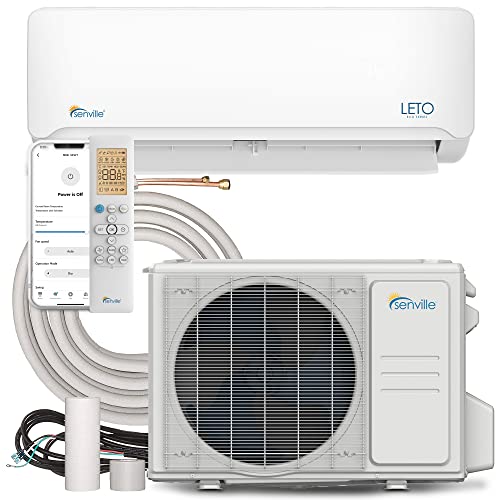
Senville’s LETO series is one of the most installed ductless lines in North America, and the 9,000 BTU LETO brings that track record to the single-room, 110/120V brief: a quiet wall unit, a heat pump for year-round duty, and Alexa compatibility for voice and app routines. It is the value-and-provenance pick — the system thousands of cottages, additions and bedrooms already run.
Strengths
- Long market history and a large installed base
- 110/120V operation suits standard household circuits
- Alexa compatibility for routines and voice control
Trade-offs
- Efficiency trails the newest 20+ SEER2 models
- 9,000 BTU class limits it to single modest rooms
- Design is functional rather than flagship
| Capacity | 9,000 BTU |
| Voltage | 110/120V |
| Type | Ductless heat pump, wall mounted |
| Control | Alexa compatible |
There is a deep comfort in buying the system your HVAC technician has already installed fifty times: parts exist, quirks are known, and help is a phone call away in most regions. The LETO’s years on the market also mean its real-world behavior — cold-climate heating limits, noise character, remote logic — is documented by owners rather than promised by marketers.
It concedes the efficiency crown to the newer Pioneer and DELLA models, and on a daily-used room that gap is worth money over a decade. For a cottage, an addition, a garage apartment or a bedroom where proven value outranks spec-sheet glory, the LETO remains a thoroughly sensible buy.
Durability in this category is less about drama than about accumulation: small correct behaviors, repeated. For the Senville LETO 9,000 BTU Mini Split, that means the maintenance the manual specifies, the operating pattern its design assumes, and prompt attention to the first odd noise, smell or behavior change rather than the tenth. Products asked to work within their design envelope, and maintained on schedule, routinely outlast their expected service life; products ignored or misapplied just as routinely do not. The gap between those outcomes is owner behavior, and it is entirely within your control from the day the box arrives.
Best for: cottages, additions and proven-value single rooms / Not suited for: efficiency maximalists or larger spaces
Check on Amazon — and remember to check price on Amazon on the day you buy, because this category is discounted in waves rather than all at once.

ROVSUN 9,000 BTU Mini Split — Best Budget Entry
ROVSUN’s 9,000 BTU system is the budget door into this category that still respects the fundamentals: a genuine 20 SEER2 inverter rating on paper, a pre-charged condenser to simplify installation, and full heat-pump function at 115V. For a workshop, garage conversion, rental unit or first mini-split experiment, it lowers the stakes without leaving the ductless world for a lesser appliance.
Strengths
- Strong paper efficiency for the entry tier
- Pre-charged condenser simplifies the install path
- Full heating and cooling for one modest room
Trade-offs
- Support and longevity are the open questions at this tier
- 9,000 BTU single-room scope, firmly
- Paper ratings deserve a careful, correct install to approach in practice
| Capacity | 9,000 BTU |
| Voltage | 115V |
| Efficiency | 20 SEER2 |
| System | Pre-charged condenser, inverter |
Budget mini splits live or die on installation: a carefully mounted, properly evacuated and leak-checked ROVSUN will condition a room pleasantly for years, while a sloppy install of a premium brand will not. That makes this pick best suited to the handy buyer who will follow the manual like scripture — or who will pocket the hardware savings and spend them on a professional install, which is honestly the smartest budget strategy in this whole category.
Set support expectations accordingly: you are trading institutional depth for entry price. For a secondary space where that trade is rational, the ROVSUN is a legitimate way into ductless comfort.
Finally, a word on value over time for the ROVSUN 9,000 BTU Mini Split. The purchase figure — which you should check on the day you buy, since this guide deliberately prints none — is only the first term in the real cost: energy or consumables, maintenance, and the cost of a wrong first choice replaced early. A pick matched to workshops, rentals and handy first-time split buyers, bought once and kept for its full service life, is almost always the cheapest way to own anything in this category. That long view, rather than any single feature, is the standard this guide applied when ranking it among the six.
Best for: workshops, rentals and handy first-time split buyers / Not suited for: primary living spaces wanting flagship support
Check on Amazon — and remember to check price on Amazon on the day you buy, because this category is discounted in waves rather than all at once.
Comparison Table
Use this table to shortlist, not to decide on its own. The differences that matter most in daily use — the ones covered in the buying-guide sections after the table — are rarely the headline numbers, so read the row for any pick you are serious about alongside its full review above (Check the current price on Amazon for the top pick).
| Pick | Badge | Key spec | Best for |
|---|---|---|---|
| Pioneer Diamante Pro 12,000 BTU Mini Split (Check on Amazon) | Best Overall | 12,000 BTU, 115V, 19 SEER2, 16 ft kit, heat pump | main living spaces and studios needing full heating and cooling |
| DELLA Vita 12,000 BTU Mini Split (Check on Amazon) | Best Efficiency Value | 12,000 BTU, 115V, 20 SEER2, Alexa/WiFi, 550 sq ft | daily-used rooms where efficiency compounds |
| COSTWAY 12,000 BTU Mini Split (Check on Amazon) | Best Coverage Claim | 12,000 BTU, 115V, 20 SEER2, cools up to 750 sq ft claim | studios and open-plan living spaces |
| Pioneer Quantum Ultra 9,000 BTU Mini Split (Check on Amazon) | Best for Single Bedrooms | 9,000 BTU, 115V, 24 SEER2, ENERGY STAR, heat pump | single bedrooms and small offices wanting flagship efficiency |
| Senville LETO 9,000 BTU Mini Split (Check on Amazon) | Best Proven Value | 9,000 BTU, 110/120V, Alexa compatible, heat pump | cottages, additions and proven-value single rooms |
| ROVSUN 9,000 BTU Mini Split (Check on Amazon) | Best Budget Entry | 9,000 BTU, 115V, 20 SEER2, pre-charged condenser | workshops, rentals and handy first-time split buyers |
How to Choose a 110/115V Ductless Mini Split
Size by the room, then respect the voltage class. One ton (12,000 BTU) suits roughly a large bedroom through a modest living room or studio; 9,000 BTU suits a single standard bedroom better than an oversized ton ever will, with quieter nights and better humidity control. The 115V class itself caps practical capacity around this range — larger multi-ton systems move to higher-voltage circuits — so if a heat-load calculation says your space needs substantially more than a ton, the honest answer is a second zone or a different system class, not a strained single unit.
Then weigh efficiency against usage. SEER2 differences of a few points are minor for a guest room and major for a system running twelve hours a day all summer; the guide’s picks span 19 to 24 SEER2 for exactly that reason. Finally, decide the installation model before ordering: true DIY with rented vacuum and torque tools, DIY with a technician hired for the refrigerant connections, or full professional installation. The kit you buy and the warranty you keep both depend on that decision.
The Installation Reality: DIY Kits and Professional Truths
Mini-split kits marketed as DIY typically arrive with pre-charged condensers and line sets, which removes refrigerant handling from the job — but not the craft. The indoor unit needs a level bracket and a correctly drilled, sleeved wall penetration with a condensate drain that falls continuously. Flare connections must be clean, aligned and torqued to specification; the lines should be pressure-tested and evacuated to remove air and moisture before the valves open. Skipping the vacuum is the classic false economy: the system will cool, measurably worse, and die measurably sooner.
Electrical work is the other non-negotiable: a dedicated circuit per the nameplate, a disconnect by the outdoor unit, and surge protection worth adding in storm country. Local codes and permits apply in most places, and some manufacturers tie warranty terms to licensed installation — read yours before choosing the DIY path. A hybrid route many owners love: mount everything yourself, hire a technician for evacuation, charging checks and startup. It costs a fraction of a full install and buys professional assurance at the exact steps where it matters.
Mini Split vs Window AC vs Portable: Choosing the Category
A mini split wins on quiet, efficiency, heating and permanence: it is the only option here that heats properly, the quietest by a wide margin, and the most efficient — at the highest upfront cost and the only real installation. A window AC wins on price, reversibility and renter-friendliness, at the cost of noise, a blocked window and no real heating. A portable loses on almost every technical measure and wins only when nothing can touch a window or wall at all.
The decision usually resolves by tenure and room importance. Renting, or cooling a spare room for one summer: window unit, correctly sized — the companion window-AC guide in this series covers that ladder. Owning, and conditioning a room you live in daily for the next decade: the mini split’s comfort and efficiency repay its install many times over, and the heat pump quietly replaces space heaters and window units in a single stroke.
How to Plan a Mini Split Installation, Step by Step
Whether you install fully, partially or professionally, the planning sequence is the same — and most mini-split misery is born in skipped planning, not in the hardware. Work through these steps before the kit arrives.
- Confirm the room’s size and heat load, and choose 9,000 or 12,000 BTU on that evidence — not on the bigger-is-safer instinct.
- Walk the site: pick the indoor wall (high, central, away from direct sun on its sensor) and the outdoor pad location within the line set’s reach.
- Check the condensate path: the drain must fall continuously to its exit — plan the route before drilling anything.
- Have an electrician confirm the dedicated 115V circuit, disconnect and breaker the nameplate requires.
- Decide DIY, hybrid or professional installation now, and book the technician before the kit ships if one is involved.
- Stage the tools the manual demands: torque wrench for flares, vacuum pump and gauges if self-evacuating, level, hole saw and sleeve.
- Mount the indoor bracket dead level, drill the sleeved penetration with a slight outward fall, and hang the unit.
- Set the outdoor unit on a level pad, connect and torque the line set, insulate the lines, and route the drain.
- Pressure-test, evacuate to the manual’s target, open the service valves, and verify heating and cooling through a full cycle before closing up the wall work.
In the first weeks, learn your system’s quiet habits: splits are happiest holding a steady set point rather than being switched off and asked for heroic recoveries. Set a sane temperature, let the inverter idle there, and clean the indoor filters monthly — a mini split’s efficiency and air quality both live in those washable screens.
Heat-Pump Heating From a Mini Split: What Winter Really Looks Like
Every system in this guide heats as well as cools, and for many owners the heating becomes the headline act: a heat pump moves heat rather than making it, delivering two to three units of warmth per unit of electricity across much of the year — a multiple no resistance heater can approach. The honest limits are climatic. Output and efficiency decline as outdoor temperature falls, and in genuinely cold snaps a single-zone split may hold a room at a reduced comfort level or hand over to backup heat. That profile suits the shoulder seasons everywhere and full winter in mild and moderate climates; in severe-winter regions, the split is best planned as the primary heat for most of the season with an honest backup for the coldest weeks. Owners who buy with that map in mind — rather than a brochure’s promise — consistently report the lowest heating bills of any electric option and a room that is simply, quietly warm from October to April.
Multi-Room Temptation and the Single-Zone Truth
A successful first mini split creates an immediate temptation: condition the whole house the same way. Resist the shortcut version of that idea — a single indoor unit, however powerful, conditions the air volume it can reach, and closed doors defeat it completely. The real paths to whole-home ductless are multiple single zones, added room by room as budget allows, or a multi-zone system designed as such from the start, with its own outdoor unit and capacity math. The 115V class in this guide is a single-zone world; larger multi-zone systems live in a different electrical class and a different guide. Plan your first zone for the room where the household actually lives — the room whose comfort changes daily life — and let later zones be later decisions, informed by a season of living with the first. That sequence also spreads the installation learning curve kindly: by the second unit, you know your walls, your electrician and your own preferences.
Living With a Split: Sound, Air and the Settled-In Season
New owners notice a mini split constantly for about two weeks — the gentle air movement, the outdoor unit’s hum on the pad, the remote’s logic — and then, if the install was right, they stop noticing it for years, which is the highest praise in home comfort. Protect that invisibility with the small disciplines: washable indoor filters cleaned monthly, because a split’s quiet efficiency is an airflow story; the outdoor coil kept clear of leaves, dryer lint and snow drifts; the condensate drain confirmed free each spring. Inside, resist temperature yo-yoing — splits are marathoners, happiest holding a set point with the inverter idling, and a household that sets 72 and leaves it will use less energy and feel more comfortable than one chasing the weather hourly. Book a professional service every year or two to check refrigerant-side health and electrical connections, and the system should repay its installation with a decade or more of unremarkable, excellent service.
Permits, Codes and the Paperwork of a Permanent Installation
A mini split is the only product in this guide that becomes part of the house, and its paperwork deserves the same care as its flare fittings. Most jurisdictions treat a split installation as mechanical and electrical work requiring permits, and the permit is not mere bureaucracy: the inspection verifies the disconnect, the circuit and the condensate handling that protect the house long after the installer leaves. Keep the permit record, the install documentation and the model and serial numbers with the house file — they matter at resale, where a permitted, documented system is an asset and an undocumented one is a question. Warranty paperwork belongs in the same folder, read once, carefully: several manufacturers distinguish between DIY and licensed installation in their terms, and knowing which coverage you hold is worth the ten minutes before the work begins, not after the first fault. Finally, photograph the installation — indoor unit placement, line routing, outdoor pad — before walls and covers close. The next technician, perhaps a decade from now, will thank the person who made the system’s hidden parts visible on paper.
Choosing the Installer: Questions That Predict a Good Job
Whether you hire the whole installation or only the refrigerant-side steps, three questions predict the outcome. Ask how the lines will be evacuated and to what standard — a specific answer involving a vacuum gauge and a target is what competence sounds like; a shrug is a warning. Ask who handles the permit and the electrical disconnect, because a tidy answer means the paperwork and the safety hardware are part of the quote, not surprises. And ask what the first-year service arrangement is — who returns if the system faults in its first season, and how quickly. A mini split is a fifteen-year relationship with both a machine and, ideally, the people who installed it. The cheapest quote that cannot answer these questions is rarely the cheapest installation by the second year, and the answers cost nothing to request before anyone drills a hole in your wall.
One last practical habit ties the whole ownership picture together: keep a simple log for the first season — the set points you settled on, the outdoor temperatures on the days the room felt perfect or imperfect, and any sounds or behaviors you noticed. That single page of notes turns the second season’s adjustments from guesswork into tuning, helps any future technician understand the system’s history in minutes, and tells you, with evidence instead of impressions, whether a second zone belongs in next year’s plans and exactly which room has earned it.
Common Buying Mistakes
Oversizing to a full ton for a small bedroom
An oversized split short-cycles its way through the night, dehumidifies poorly and wastes the inverter’s whole purpose. The 9,000 BTU picks in this guide exist because many ‘12,000 BTU’ searches are really bedroom searches. Size the room, not the keyword.
Skipping the vacuum and pressure test
Air and moisture left in the lines corrode the system from inside and quietly tax its efficiency forever. Evacuation is not a professional upsell — it is the step the system’s lifespan is built on, whoever performs it.
Draining condensate uphill, somehow
Water does not negotiate. A drain without continuous fall will back up into the wall unit and eventually through your wall. Plan the drain route first; it constrains placement more than the refrigerant lines do.
Ignoring the electrical requirements
A one-ton split is a serious continuous load with a compressor’s startup demands. It belongs on the dedicated circuit its nameplate specifies, with a proper disconnect — not on whatever outlet was nearest the pad.
Mounting the indoor unit where it blows at the bed or sofa
Splits move a lot of air gently, but a unit aimed at occupants creates draft complaints that get blamed on the brand. Place it to wash air across the room, not at the people in it.
Final Recommendation
For the full one-ton brief, the Pioneer Diamante Pro is the default recommendation — complete kit, strong efficiency, specialist backing — with the DELLA Vita pressing it hard on SEER2 and smart value, and the COSTWAY aimed at open plans. If your room is really a single bedroom, do not let the keyword bully you: the Pioneer Quantum Ultra at 9,000 BTU and 24 SEER2 is the finest system in this guide, and the Senville LETO and ROVSUN cover the proven-value and entry tiers honestly.
Decide the installation path before you order, size by the room in front of you, and a 115V mini split will quietly become the best climate decision in the house.
Keep researching the wider category with these related guides from our Batteries & Voltage coverage: Best 120 Volt Window Air Conditioner Best 12000 Btu 550 Sq Ft 115 Volt Window Air Conditioner Energy Star Best 120 Volt Thermostat Best 120 Volt Underfloor Heating System Best 120 Volt Ventless Dryer
Shortlist for a final comparison: check price on Amazon for the Pioneer Diamante Pro 12,000 BTU Mini Split; check price on Amazon for the DELLA Vita 12,000 BTU Mini Split; check price on Amazon for the COSTWAY 12,000 BTU Mini Split; check price on Amazon for the Pioneer Quantum Ultra 9,000 BTU Mini Split; check price on Amazon for the Senville LETO 9,000 BTU Mini Split; check price on Amazon for the ROVSUN 9,000 BTU Mini Split; — one link per pick, so you can compare today’s terms across the full shortlist before deciding.
Frequently Asked Questions
Can a 12,000 BTU mini split really run on 110/115V?
Yes — the one-ton class is specifically where 115V mini splits live, and every full-size pick in this guide is a 115/110V-listed system. Larger capacities generally require higher-voltage circuits, which is why this class tops out around a ton. The unit still needs its own dedicated circuit per the nameplate.
Is a mini split better than a window AC for the same room?
On comfort, quiet, efficiency and heating, yes, decisively — and it should be, costing several times more installed. On price, reversibility and renter-friendliness, the window unit wins. Own the home and live in the room daily: split. Rent, or cool occasionally: window.
Can I install a DIY mini split kit myself?
Many owners do, successfully, with pre-charged kits — provided they follow the torque, pressure-test and evacuation steps without shortcuts and handle the electrical work to code. The popular middle path is self-mounting plus a technician for evacuation and startup. Check your kit’s warranty terms, since some depend on licensed installation.
Does a mini split heat as well as it cools?
Heat-pump splits heat efficiently down to outdoor temperatures that vary by model, with output declining as it gets colder outside. In mild and moderate climates a split can be a room’s only heat source; in severe cold, plan on supplemental heat for the coldest days and check the specific model’s low-temperature ratings.
How long do mini splits last?
A correctly installed, filter-maintained split commonly serves well beyond a decade — installation quality is the biggest lifespan variable, ahead of brand. That is why this guide repeats the evacuation and torque discipline so insistently: the install is half the product.
What maintenance does a mini split need?
Wash the indoor filters monthly in season, keep the outdoor coil clear of leaves and snow, confirm the condensate drain flows freely, and schedule a professional check every year or two. None of it is heavy — and all of it protects the efficiency you paid for.