Disclosure: airfryerkitchensupply.com is reader-supported. When you buy through links on our site, we may earn an affiliate commission at no extra cost to you.
Where to buy
Shopping for the best 120 volt ventless dryer? The fastest way to buy any pick in this guide is through Amazon, where stock, delivery options and returns are handled in one place. Start with our top recommendation, the Kenmore 4.0 cu. ft. Ventless Condensing Dryer (Check the current price on Amazon), then compare it with the Midea Heat Pump Ventless Dryer 4.4 Cu.ft (Check the current price on Amazon) if your needs lean the other way. Every product named below was cross-checked against the manufacturer listings available through Amazon’s catalog data before it earned a place here, and prices are deliberately not printed in this article because they change too often to stay honest — use the check-price links to see today’s figure before you decide.
The best 120 volt ventless dryer search starts with a market truth most listings will not tell you plainly: true standalone ventless dryers that run on an ordinary 120V household outlet are rare, because drying is one of the most power-hungry jobs in the home. The ventless category — condenser and heat-pump dryers that collect water in a tank or drain instead of blowing hot air through a wall vent — is dominated by 24-inch compact models, and the wider ventless world also includes the ventless washer-dryer combos that dominate 120V laundry. This guide covers the verified ventless machines in Amazon’s catalog data honestly, flags exactly which type each pick is, and explains the voltage question in the buying-guide sections instead of hiding it.
Why go ventless at all? Because the vent is the problem: apartments and condos that forbid new wall penetrations, interior laundry closets with no exterior wall, historic homes, and additions where a vent run would be long, ugly or against code. A ventless dryer trades some drying speed for total placement freedom — if it drains or its tank is emptied, it can live almost anywhere with power and a few inches of clearance.
The six picks below span the real options: full-size-capacity compact condenser and heat-pump dryers from Kenmore, Electrolux and Midea, a long-running Avanti compact, and — clearly labeled — the ventless all-in-one route for buyers whose 120V outlet is a hard constraint. Read the voltage and type notes in each review before falling in love with a drum size; in this category, the installation facts decide satisfaction more than any cycle menu.
In this guide
Quick Picks
Kenmore 4.0 cu. ft. Ventless Condensing Dryer — Best Overall. The most complete ventless package verified here: a family-usable 4.0 cu ft condensing drum, sensor drying, Wrinkle Guard and an ENERGY STAR badge. Check the current price on Amazon.
Midea Heat Pump Ventless Dryer 4.4 Cu.ft — Best Efficiency. The capacity and efficiency leader: a 4.4 cu ft heat-pump drum that dries with recycled heat instead of brute force, in a stackable ventless body. Check the current price on Amazon.
Electrolux ELFE4222AW Ventless Dryer — Best Premium Compact. Electrolux’s refined 24-inch ventless dryer with Instant Refresh — the premium compact for laundry pairs and design-conscious small spaces. Check the current price on Amazon.
Avanti Front Load Compact Dryer 4.0 Cu. Ft. — Best Established Compact. A long-running compact front-loader with 15 drying cycles, digital controls and anti-wrinkle — the proven, no-drama ventless-class compact. Check the current price on Amazon.
Contoure 2.7 Cu Ft Ventless Washer Dryer Combo — Best True-120V All-in-One. For buyers whose 120V outlet is non-negotiable: a ventless washer-dryer combo that washes and dries in one drum, explicitly rated 120V in its listing. Check the current price on Amazon.
KoolMore 2-in-1 Washer and Dryer Combo — Best Combo Capacity Features. A feature-rich ventless combo: 16 wash and 4 dry cycles in a 2.7 cu ft, 120V-listed drum for apartments, dorms and RVs. Check the current price on Amazon.
How These Picks Were Chosen
Picks were filtered first on the defining trait: ventless operation, stated in the verified listing — condensing, heat-pump or non-vented drying that needs no external duct. Machines that merely call themselves portable while requiring a vent hose were excluded from the top ranks even when they are popular, because they do not solve the no-vent problem this search is about. Within the ventless filter, picks were ranked on capacity, drying technology (heat pump ahead of condenser for efficiency), and brand support.
Spec boxes repeat only listing-stated facts — capacity, ventless technology and named features. Where a listing does not state voltage, this guide does not invent it: several compact ventless dryers in the wider market are specified for higher-voltage laundry circuits, so the final check before purchase is always the nameplate and manual for the exact unit, and the guide sections explain how to verify. No prices or fixed ratings are printed; use the check-price links for the current figure.
The 6 Best 120 Volt Ventless Dryers

Kenmore 4.0 cu. ft. Ventless Condensing Dryer — Best Overall
Kenmore’s compact ventless dryer is the pick that asks the fewest compromises of a household: a genuine 4.0 cubic foot drum — large for the 24-inch class — condensing drying that needs no vent, sensor cycles that stop when clothes are dry rather than when a timer guesses, and Wrinkle Guard to keep finished loads from setting into creases while they wait for you.
Strengths
- Largest practical drum among the true ventless picks here
- Sensor drying protects clothes and energy bills alike
- ENERGY STAR certified, unusual and welcome in compact dryers
Trade-offs
- Condenser drying is slower than vented drying — plan longer cycles
- Water tank needs emptying unless you plumb the drain
- Compact width still needs a true 24-inch laundry plan
| Capacity | 4.0 cu ft |
| Type | Ventless condensing, front load |
| Features | Wrinkle Guard, smart sensor drying |
| Certification | ENERGY STAR certified |
For an apartment, condo or interior closet that cannot vent, this is the machine that behaves most like a ‘real’ dryer: loads sized for a couple or small family, cycles that adapt, and no lint-and-steam hose snaking to a window. The condensing system collects water in a reservoir (or a drain, if you connect it), and the room stays free of the heat and humidity a vented portable would dump into it.
Set expectations on time, not results: ventless condensing cycles run longer than vented equivalents, especially on towels and denim. Households that wash in the evening and fold the next morning will never notice; households doing back-to-back Saturday loads should read the heat-pump pick below and the combo discussion in the guide before deciding.
Ownership of the Kenmore 4.0 cu. ft. Ventless Condensing Dryer settles into a predictable rhythm after the first month. The buyers who stay happiest with it are the ones whose daily pattern matches its stated strength — apartments and condos needing a real ventless dryer — and who set it up once, properly, instead of adjusting it constantly. Keep the documentation and purchase record with the house paperwork, follow the maker’s maintenance schedule rather than your memory of it, and the Wrinkle Guard, smart sensor drying specification that justified the purchase keeps delivering quietly in the background.
Best for: apartments and condos needing a real ventless dryer / Not suited for: high-volume laundry rooms needing rapid back-to-back loads
Check on Amazon — and remember to check price on Amazon on the day you buy, because this category is discounted in waves rather than all at once.

Midea Heat Pump Ventless Dryer 4.4 Cu.ft — Best Efficiency
Heat-pump drying is the best technology in the ventless world — a sealed refrigeration loop that reuses its own heat, drying gently at lower temperatures with far less energy than resistance-heated condensers. Midea’s 4.4 cubic foot ventless model brings that technology in the largest drum in this guide, stackable with a matching washer for a full laundry tower in a closet footprint.
Strengths
- Heat-pump efficiency — the gentlest, cheapest-to-run ventless drying
- Largest drum here at 4.4 cu ft for family-size loads
- Stackable design builds a full laundry in a closet footprint
Trade-offs
- Heat-pump cycles are the slowest here on heavy loads
- Higher tier within this category’s pricing landscape
- Heat pumps dislike freezing garages — placement matters
| Capacity | 4.4 cu ft |
| Type | Heat pump ventless, front load |
| Design | Stackable |
| Positioning | Energy efficient, space saving |
Choose the Midea when laundry volume and running cost both matter. The bigger drum swallows a week’s towels without the split loads compact owners learn to hate, and the heat pump’s low temperatures are noticeably kinder to elastic, prints and anything that has ever shrunk in a hot vented dryer. Over years of weekly use, the efficiency gap versus condenser models is the quiet financial story of this category.
The patience trade is real: heat pumps trade minutes for watts, and a max load of denim will take its time. If your household rhythm is one or two loads a day rather than six on Sunday, that trade disappears into the background and the Midea is simply the best ventless dryer in this guide at everything except raw speed.
Living with the Midea Heat Pump Ventless Dryer 4.4 Cu.ft long-term is mostly about respecting what it is not. It was chosen here for families wanting efficient ventless drying at real capacity; asked to serve instead as a solution for marathon laundry days or unheated freezing spaces, it would feel like a lesser product through no fault of its own. Within its brief, expect the ordinary virtues of a well-matched purchase: no drama, no recurring expense beyond normal upkeep, and no reason to think about the category again for years. That uneventfulness is the real product in mature appliance categories, and it is what the verification work behind this guide — checking the listing, the specification and the fit — was designed to buy you.
Best for: families wanting efficient ventless drying at real capacity / Not suited for: marathon laundry days or unheated freezing spaces
Check on Amazon — and remember to check price on Amazon on the day you buy, because this category is discounted in waves rather than all at once.

Electrolux ELFE4222AW Ventless Dryer — Best Premium Compact
Electrolux’s compact laundry line is the connoisseur’s corner of the 24-inch world, and this 4.0 cubic foot ventless dryer carries the badge features: a clean stackable design that pairs with the matching compact washer, and Instant Refresh, a short cycle that revives worn-once clothes without a full wash-and-dry. For condos and primary-suite laundry closets, it is the most polished ventless package here.
Strengths
- Premium compact design that stacks into a tidy laundry tower
- Instant Refresh cycle handles worn-once clothes quickly
- 4.0 cu ft drum is generous for the 24-inch class
Trade-offs
- Premium tier pricing within compact laundry
- Ventless cycles still run longer than vented equivalents
- Best experienced as a matched pair — a consideration if replacing one machine
| Width class | 24 in compact |
| Capacity | 4.0 cu ft |
| Type | Ventless, stackable |
| Feature | Instant Refresh (ELFE4222AW) |
The Electrolux case is integration: in a designed laundry closet or a stacked pair, fit, finish and cycle polish matter daily, and this machine delivers the most grown-up experience in the ventless class — quiet manners, sensible cycles, and a refresh option that genuinely reduces washing for office clothes and evening wear. Owners replacing a European compact pair will feel immediately at home.
It does not beat the Kenmore on all-round value or the Midea on capacity and efficiency, which is why it sits third. But if the laundry lives in a visible, finished space and the budget allows the premium tier, this is the ventless dryer that feels like an appliance choice rather than a compromise.
A practical note for Electrolux ELFE4222AW Ventless Dryer owners: the first season teaches you the settings and habits that suit your household, and they are rarely the factory defaults or the reviewer’s guesses. Take the small time to learn its responses — how it behaves on the hottest, coldest or busiest days, depending on the category — and record what works. Households that do this stop fiddling and start simply enjoying the purchase, which is the point at which a well-chosen product disappears into daily life and earns the word ‘best’ in the only sense that finally matters.
Best for: condo laundry closets and matched compact pairs / Not suited for: budget-first buyers or maximum-capacity seekers
Check on Amazon — and remember to check price on Amazon on the day you buy, because this category is discounted in waves rather than all at once.

Avanti Front Load Compact Dryer 4.0 Cu. Ft. — Best Established Compact
Avanti has sold compact laundry to apartments, dorms and small homes for decades, and this 4.0 cubic foot front-load dryer is its established answer: digital controls, fifteen drying cycles to cover everything from delicates to bedding, anti-wrinkle care, and an ENERGY STAR badge. It is the pick for buyers who value a model with a long market history over the newest badge.
Strengths
- 15 cycles cover more fabric situations than most compacts
- ENERGY STAR certified with digital controls
- Long-running model with an established support footprint
Trade-offs
- Design and interface feel a generation behind the newest picks
- Confirm the exact unit’s venting configuration and voltage in the manual before purchase
- Compact-class cycle times apply
| Capacity | 4.0 cu ft |
| Cycles | 15 drying cycles |
| Controls | Digital, anti-wrinkle |
| Certification | ENERGY STAR certified |
There is comfort in a model that has been bought, installed and serviced for years: questions have known answers, parts channels exist, and the surprises have already been discovered by earlier owners. The Avanti’s cycle breadth is its quiet strength — small households dry everything in one machine, and fifteen honest programs beat five programs and a prayer when the load is silk, sportswear or a duvet cover.
Do the final-verification step this category demands with any long-running listing: confirm the shipped unit’s configuration and electrical requirements against the current manual before it arrives. With that box ticked, the Avanti is a steady, proven compact choice.
The Avanti Front Load Compact Dryer 4.0 Cu. Ft. also rewards a moment’s thought about its place in the wider home. Products in this category interact with circuits, rooms, routines and other appliances, and the owners who plan those interactions — rather than discovering them — report the smoothest years. Its Digital, anti-wrinkle headline specification is only the beginning of the fit; the rest is your household’s pattern, which no manufacturer can design for and which this guide’s buying sections exist to help you match. Chosen with that match in mind, this is a pick you should expect to recommend to a neighbor without qualifiers.
Best for: proven-model buyers and varied-fabric households / Not suited for: buyers wanting the newest heat-pump technology
Check on Amazon — and remember to check price on Amazon on the day you buy, because this category is discounted in waves rather than all at once.

Contoure 2.7 Cu Ft Ventless Washer Dryer Combo — Best True-120V All-in-One
This is the honest answer to the strictest reading of the keyword: a machine whose listing states 120V, that dries ventlessly, and that fits the RV, apartment and tiny-home brief in its title. The Contoure combo washes and dries in a single 2.7 cubic foot drum with steam — one machine, one outlet, no vent, no moving loads between drums — at the price of combo cycle times, which are measured in hours, not minutes.
Strengths
- Explicit 120V ventless operation — the true plug-in brief
- One machine washes and dries; no transfer, no second footprint
- Steam feature and an RV/apartment design brief
Trade-offs
- Combo cycles are long — wash-and-dry can take several hours
- Drying capacity is effectively smaller than the wash drum suggests
- Singles and couples only; families will outgrow it
| Capacity | 2.7 cu ft |
| Voltage | 120V (per listing) |
| Type | Ventless washer dryer combo |
| Feature | Steam |
Judge the Contoure as a lifestyle machine: load it in the morning, return to clean dry clothes, and never think about laundry logistics in between. For RV living, studio apartments and tiny homes — the uses its own listing names — that rhythm is perfect, and the 120V rating means it asks nothing of the building. The steam cycle is a genuine bonus for refreshing and for households without ironing patience.
The discipline is load size: dry loads should be partial drums, because a combo dries by tumbling in the same space it washed, and an overfilled drum dries slowly and wrinkly. Singles and couples who run small, frequent loads are delighted by these machines; families doing weekend mountains are not. Know which household you are.
Durability in this category is less about drama than about accumulation: small correct behaviors, repeated. For the Contoure 2.7 Cu Ft Ventless Washer Dryer Combo, that means the maintenance the manual specifies, the operating pattern its design assumes, and prompt attention to the first odd noise, smell or behavior change rather than the tenth. Products asked to work within their design envelope, and maintained on schedule, routinely outlast their expected service life; products ignored or misapplied just as routinely do not. The gap between those outcomes is owner behavior, and it is entirely within your control from the day the box arrives.
Best for: RV, studio and tiny-home laundry on a standard outlet / Not suited for: families or anyone in a hurry on laundry day
Check on Amazon — and remember to check price on Amazon on the day you buy, because this category is discounted in waves rather than all at once.
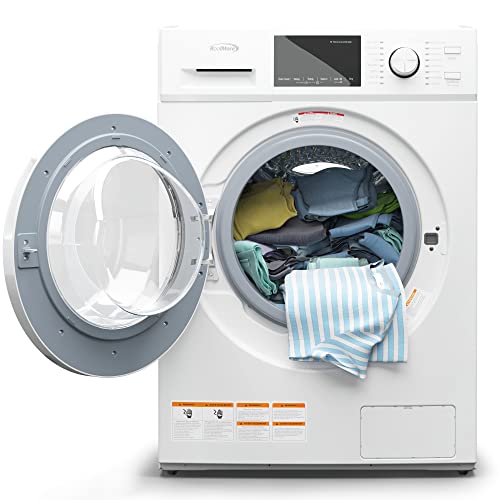
KoolMore 2-in-1 Washer and Dryer Combo — Best Combo Capacity Features
KoolMore’s combo competes on program breadth: sixteen wash cycles and four dry cycles give small-space households the sorting flexibility that basic combos lack, in the same ventless, single-drum, 120V-listed format as the Contoure. For dorms, apartments and RVs where one machine must handle everything from gym kit to bedding, that menu depth is the differentiator.
Strengths
- Broadest cycle menu among the combo picks
- Ventless single-drum format with a 120V listing
- Apartment, dorm and RV brief matches real combo use cases
Trade-offs
- Same combo physics: long total cycles, modest dry loads
- Feature breadth cannot change drum capacity
- Support footprint is smaller than the legacy brands above
| Capacity | 2.7 cu ft |
| Cycles | 16 wash, 4 dry |
| Voltage | 120V (per listing) |
| Type | 2-in-1 front load combo |
If the combo format is your answer — because the outlet is 120V, the space is one machine wide, or the building forbids vents — the KoolMore argues it should be the combo you pick on the strength of its programs. Delicates, quick washes, heavy-duty and dedicated dry settings mean fewer compromises per fabric type, which is where minimalist laundry setups usually pinch.
It shares the format’s laws: plan loads small, expect hours, and let the machine work while you do anything else. Within those laws, and especially for a dorm or first apartment where the alternative is a laundromat, it is a liberating machine at a sensible tier.
Finally, a word on value over time for the KoolMore 2-in-1 Washer and Dryer Combo. The purchase figure — which you should check on the day you buy, since this guide deliberately prints none — is only the first term in the real cost: energy or consumables, maintenance, and the cost of a wrong first choice replaced early. A pick matched to cycle-conscious singles and couples in small spaces, bought once and kept for its full service life, is almost always the cheapest way to own anything in this category. That long view, rather than any single feature, is the standard this guide applied when ranking it among the six.
Best for: cycle-conscious singles and couples in small spaces / Not suited for: anyone needing separate wash and dry at the same time
Check on Amazon — and remember to check price on Amazon on the day you buy, because this category is discounted in waves rather than all at once.
Comparison Table
Use this table to shortlist, not to decide on its own. The differences that matter most in daily use — the ones covered in the buying-guide sections after the table — are rarely the headline numbers, so read the row for any pick you are serious about alongside its full review above (Check the current price on Amazon for the top pick).
| Pick | Badge | Key spec | Best for |
|---|---|---|---|
| Kenmore 4.0 cu. ft. Ventless Condensing Dryer (Check on Amazon) | Best Overall | 4.0 cu ft, ventless condensing, ENERGY STAR certified | apartments and condos needing a real ventless dryer |
| Midea Heat Pump Ventless Dryer 4.4 Cu.ft (Check on Amazon) | Best Efficiency | 4.4 cu ft, heat pump ventless, stackable | families wanting efficient ventless drying at real capacity |
| Electrolux ELFE4222AW Ventless Dryer (Check on Amazon) | Best Premium Compact | 24in, 4.0 cu ft, ventless, Instant Refresh, stackable | condo laundry closets and matched compact pairs |
| Avanti Front Load Compact Dryer 4.0 Cu. Ft. (Check on Amazon) | Best Established Compact | 4.0 cu ft, ENERGY STAR, 15 cycles, digital controls | proven-model buyers and varied-fabric households |
| Contoure 2.7 Cu Ft Ventless Washer Dryer Combo (Check on Amazon) | Best True-120V All-in-One | 2.7 cu ft, ventless combo with steam, 120V | RV, studio and tiny-home laundry on a standard outlet |
| KoolMore 2-in-1 Washer and Dryer Combo (Check on Amazon) | Best Combo Capacity Features | 2.7 cu ft, 16 wash and 4 dry cycles, 120V per listing | cycle-conscious singles and couples in small spaces |
How to Choose a 120 Volt Ventless Dryer — Starting With the Voltage Truth
Verify the electrical requirement of the exact unit before anything else, because this category’s listings are easy to misread. Ventless describes how a dryer handles moist air, not what it plugs into. Some compact ventless dryers are built for higher-voltage laundry circuits; the combos in this guide carry explicit 120V listings; and many ‘portable’ dryers that appear in searches are actually vented models with a hose. The nameplate and manual of the specific model — not the search snippet — are the authority. If your space only has a standard 120V outlet, shop from the picks whose listings state 120V, and confirm again at checkout.
Then choose the drying technology. Condenser dryers (the Kenmore pattern) are the straightforward ventless mainstream: effective, simpler, slower than vented. Heat-pump dryers (the Midea) recycle heat for the best efficiency and gentlest fabric care, at the slowest speeds and a higher tier. Combos trade everything for footprint and outlet simplicity. There is no wrong answer — there is only the answer matched to your volume, your outlet and your patience, in that order.
Capacity, Cycle Time and the Rhythm of Ventless Laundry
Ventless laundry rewards a rhythm change. Vented households often save laundry for one big day; ventless households do better with smaller, more frequent loads, because every ventless technology dries more slowly than a vented dryer and because combo drums dry best at partial loads. A 4.0–4.4 cubic foot standalone ventless dryer handles a couple’s week comfortably on that rhythm; a 2.7 cubic foot combo suits singles and couples who run a load every other day without thinking about it.
Water handling is the other daily reality. Condenser and combo machines collect water in a tank you empty, or drain via a hose to a sink or standpipe if you set that up once. Plumbing the drain at installation is the single best quality-of-life decision in ventless ownership — do it if your space allows. Also budget clearance: ventless dryers still move room air and dislike being sealed in airless boxes, so follow the manual’s spacing even though no vent duct is needed.
Where Ventless Dryers Earn Their Keep
The classic wins are apartments and condos where the lease or the building forbids vent penetrations, interior closets in the middle of a floor plan, basement corners far from an exterior wall, and historic homes where cutting a vent is unthinkable. In all four, ventless is not a compromise purchase — it is the only purchase that makes in-unit laundry possible at all, and against the laundromat baseline, even a slow dryer is a triumph of convenience.
They also pair naturally with the other 120V laundry route: if a full ventless dryer will not fit or the circuit will not feed it, the ventless combo keeps the whole laundry in one 24-inch footprint. Read the companion guide to 120V washer-dryer combos alongside this one if your space is genuinely tiny — the overlap between the two categories is where the right answer for small homes usually hides.
How to Set Up a Ventless Dryer for Best Results
Ventless installation is mercifully light — no duct to run — but the details below separate the owners who love these machines from the owners who review them angrily. None of it is hard; all of it matters.
- Confirm the exact unit’s voltage and circuit requirement from its manual before it arrives, and have the correct outlet ready.
- Level the machine carefully on a solid floor; front-load drums vibrate more visibly when a corner is floating.
- Decide water handling on day one: fit the drain hose to a sink or standpipe if possible, rather than relying on the tank forever.
- Leave the manual’s clearances around the cabinet — ventless dryers breathe room air and need to.
- Clean the lint filter after every load; ventless systems punish neglected filters with dramatically longer cycles.
- For condenser and heat-pump models, clean the condenser or secondary filter on the schedule in the manual — this is the ventless equivalent of a vent duct cleaning.
- Sort loads by fabric weight; ventless cycles dry mixed loads unevenly, and towels with synthetics is the classic frustration.
- Load combos to roughly half the drum for drying, even if the wash handled more — drying space is the limiting factor.
- Run a first empty or old-towel cycle and check the tank or drain behaves before trusting it with good clothes.
After a month, most ventless owners settle into the rhythm: smaller loads, filter discipline, and a condenser clean on the calendar. Judge your dryer after that month, not after the first impatient Saturday — these machines reward households that adapt to them, and punish households that demand vented-dryer speed from ventless physics.
The Physics of Ventless Drying, Explained Once
A vented dryer takes room air, heats it, blows it through tumbling clothes and throws the hot, wet result outside — simple, fast and wasteful. A ventless dryer keeps the air in a loop: moisture is pulled from the airstream by condensation on a cooled surface (condenser models) or by a refrigeration cycle that recycles the heat itself (heat-pump models), and the water leaves as liquid, into a tank or drain, instead of as steam through a wall. The consequences flow directly from that loop. Drying is slower, because condensing moisture is gentler work than exhausting it. Room air stays comfortable, because the heat and humidity stay in the machine. Energy use falls, dramatically in the heat-pump case, because heat is reused rather than discarded. And placement becomes free, because the wall penetration that defined laundry rooms for a century is simply gone. Every trade reviewed in this guide is one of those four consequences wearing a brand badge — which is why the guide ranks by technology and fit rather than by cycle-menu length.
Ventless in Rentals, Condos and Historic Homes
Three housing situations make ventless less a choice than the only door. In rentals, the lease decides: no new penetrations in exterior walls is a standard clause, and a ventless machine — or a ventless combo — is the difference between in-unit laundry and the laundromat, negotiated without asking the landlord for anything but an outlet and a drain. In condos, the building decides: vent runs through common walls and façades are governed by association rules that rarely bend for one owner’s dryer. In historic homes, preservation decides: a four-inch hole through original masonry or siding is a small act of vandalism against the house itself. In all three, the correct shopping question is not ‘is ventless as fast as vented’ — it is ‘which ventless machine fits my space, circuit and volume’, and that is the question this guide’s picks, from the Kenmore condenser to the 120V combos, are arranged to answer in order of how most households ask it.
Extending Ventless Dryer Life: The Unglamorous Essentials
Ventless dryers die of lint and neglect more often than of defects. The lint filter is obvious and still skipped; the secondary filter and condenser surfaces are less obvious and skipped more, with cycle times creeping upward so gradually that owners blame the technology instead of the calendar. Build the manual’s cleaning intervals into the same routine as the load itself — filter every load, secondary filter monthly, condenser care on the maker’s schedule — and a ventless dryer holds its day-one performance for years. Placement helps too: room to breathe around the cabinet, a level solid floor that does not amplify vibration, and a drain connection that removes the full-tank shutdowns which interrupt cycles and sour owners on the format. None of this is skilled work. It is five recurring minutes, and it is the entire difference between the households that praise these machines and the households that replace them early.
Sizing the Purchase to the Household: A Final Sanity Check
Before ordering, run the three-question audit this category demands. First, the outlet audit: state, out loud, the exact electrical requirement of the exact model you are buying, from its manual — not from the search result that led you here. If the answer is a standard 120V outlet, confirm the machine is one of the explicitly 120V-listed picks; if it is a higher-voltage compact, confirm the circuit exists or budget its installation. Second, the volume audit: count your household’s weekly loads honestly, and match them to the format — standalone ventless for steady family volume, a combo for singles and couples with a background rhythm. Third, the patience audit: ventless drying takes longer, every cycle, forever — decide now that the placement freedom is worth those minutes, because deciding it after delivery is called a return. Households that pass all three audits before purchase are, in this category’s long owner history, the ones still praising their dryers years later. The machine itself is the easy part; the fit between machine, building and household is the purchase.
A Word on Noise, Vibration and Neighbors
Compact ventless dryers live closer to people than laundry-room machines do — in bathroom alcoves, kitchen corners and closet stacks — so their manners matter. A level machine on a solid floor is the foundation; most vibration complaints trace back to a floating corner or a springy subfloor, not to the drum. Spin and tumble noise in this class is modest, but a hollow closet door can turn a closet into a speaker cabinet, which is why the clearance and door advice in this guide’s setup section deserves its five minutes. Neighbors enter the calculation in apartments too: an overnight condenser cycle is a gentle hum, while an unbalanced load at midnight is a building event, so sort loads by weight and let the machine’s own balance do the rest. None of this requires spending more — it requires installing once, carefully, in the space the machine will actually live in.
Common Buying Mistakes
Assuming ventless means 120V
Ventless is about air, not electricity. Buyers order a compact ventless dryer, discover its circuit requirement at delivery, and start a return. Read the exact model’s manual or nameplate specification first — or choose a pick whose listing states 120V explicitly, like the combos in this guide.
Buying a vented portable by mistake
Many compact ‘portable’ dryers still exhaust hot moist air through a hose and are not ventless at all. If the listing mentions an exhaust pipe as the drying method, it does not solve a no-vent problem — it relocates it to a window.
Overloading for drying
A drum that washed a load happily may dry it badly. Ventless and combo drying need air space; halving the dry load is the single most effective speed and wrinkle fix, and it costs nothing.
Neglecting the condenser and filters
Lint filters, secondary filters and condenser coils are the maintenance trio of ventless ownership. Skip them and cycle times balloon while results sag — the machine gets blamed for the owner’s skipped five minutes.
Sealing it in an airless closet
Ventless dryers exchange heat with room air. A tightly sealed, unventilated cupboard makes them slower and the cupboard clammy. Follow the clearance guidance and give the closet air a path.
Final Recommendation
If your space can feed and fit a standalone ventless dryer, start with the Kenmore condensing model for all-round balance, or the Midea heat pump if capacity and efficiency lead your list; the Electrolux is the premium compact-pair choice and the Avanti the proven alternative. If a standard 120V outlet is a hard rule, the honest answer in today’s market is a ventless combo — the Contoure for its steam and RV brief, the KoolMore for cycle breadth.
Whichever route you take, verify the exact unit’s electrical specification before it ships. In this category, that one unglamorous check is the difference between a dryer that transforms a small home and a very heavy return.
Keep researching the wider category with these related guides from our Batteries & Voltage coverage: Best 120 Volt Washer And Dryer Combo Best 120 Volt Thermostat Best 120 Volt Underfloor Heating System Best 120 Volt Tankless Water Heater For Shower Best 120 Volt Window Air Conditioner
Shortlist for a final comparison: check price on Amazon for the Kenmore 4.0 cu. ft. Ventless Condensing Dryer; check price on Amazon for the Midea Heat Pump Ventless Dryer 4.4 Cu.ft; check price on Amazon for the Electrolux ELFE4222AW Ventless Dryer; check price on Amazon for the Avanti Front Load Compact Dryer 4.0 Cu. Ft.; check price on Amazon for the Contoure 2.7 Cu Ft Ventless Washer Dryer Combo; check price on Amazon for the KoolMore 2-in-1 Washer and Dryer Combo; — one link per pick, so you can compare today’s terms across the full shortlist before deciding.
Frequently Asked Questions
Are there really standalone dryers that are both ventless and 120V?
They are rare, which is why this guide is explicit about types. Most standalone ventless dryers are 24-inch compacts whose electrical requirements you must confirm per model; the machines with explicit 120V listings in this category are predominantly ventless washer-dryer combos. Always verify the exact unit’s nameplate and manual before buying.
How much slower is a ventless dryer than a vented one?
Noticeably — condensing cycles commonly run substantially longer than vented equivalents, heat-pump cycles longer still, and combo wash-and-dry programs can take several hours end to end. The trade buys total placement freedom and, with heat pumps, much lower energy use and gentler fabric care.
Where does the water go in a ventless dryer?
Into a removable tank you empty, or out through a drain hose to a sink or standpipe if you connect it. Plumbing the drain at installation is strongly recommended — it removes the only recurring chore ventless ownership adds.
Heat pump or condenser: which ventless type is better?
Heat pump wins on efficiency and fabric gentleness; condenser wins on simplicity and a lower tier. For heavy weekly use, the heat pump’s running-cost and fabric-care advantages compound. For occasional use in a second property, a condenser is entirely sufficient.
Can a ventless dryer go in a closet?
Yes — that is one of its main purposes — provided you respect the manufacturer’s clearances and give the closet some air exchange. Do not seal it in an airtight box, and prefer a louvered or gapped door where possible.
Is a washer-dryer combo a good substitute for a ventless dryer?
For singles and couples in small spaces, often yes: one footprint, one outlet, no load transfer. For families, no: the long cycles and partial-drum drying cannot keep up with high volume. Match the format to the household’s laundry rhythm, not just its floor plan.