Disclosure: airfryerkitchensupply.com is reader-supported. When you buy through links on our site, we may earn an affiliate commission at no extra cost to you.
Where to Buy
If you are shopping for the best espresso cappuccino machines, start with the verified shortlist below. A cappuccino is a ratio before it is a drink — roughly equal thirds of espresso, steamed milk and airy foam — so this guide ranks machines by how reliably they build that foam cap and hold the ratio. Every linked pick was verified in Amazon’s catalog first. Note the deliberate split in this list: automatic machines that froth and dose for you, and manual-wand machines for drinkers who want the dry, lofty foam only hands-on steaming produces.
- Mr. Coffee Café Barista (Best One-Touch Cappuccino) — Check the current price on Amazon
- De’Longhi Dinamica LatteCrema (ECAM35075SI) (Best Foam Control, Automatic) — Check the current price on Amazon
- Philips 5500 Series with LatteGo (EP5544/94) (Best for a Big Drink Menu) — Check the current price on Amazon
- CASABREWS 3700 Essential (Best Budget Wand for Dry Foam) — Check the current price on Amazon
- Breville Oracle Touch (BES990) (Best Premium Automatic Wand) — Check the current price on Amazon
- De’Longhi Eletta Explore (Best for Hot and Cold Foam) — Check the current price on Amazon
The best espresso cappuccino machines succeed or fail on foam architecture. Where a latte wants dense, glossy microfoam folded through milk, a classic cappuccino wants volume: a deep cap of light, airy foam sitting over a smaller measure of steamed milk, dusted with cocoa, holding its shape when the cup moves. Machines build that foam three different ways — automatic carafes that inject air through a venturi, one-touch frothing systems with a foam-density control, and manual steam wands in the hands of a practiced user — and each produces a recognizably different cap.
This guide is written from the cappuccino drinker’s chair, which makes its judgments different from a latte guide on purpose. Automatic systems earn their places by delivering the ratio repeatably at a button press, with the Mr. Coffee Café Barista and De’Longhi’s LatteCrema machines as the standouts. Manual machines earn theirs by producing the driest, most structured foam: the CASABREWS and Gaggia-style wand technique that stretches milk further. All six picks were verified, and the how-to section teaches the cappuccino-specific steaming method — more air, earlier — that most latte instructions get wrong for this drink.
A note on cup size before the picks, because it shapes every judgment that follows: this guide evaluates cappuccinos at their classic scale — a double shot in a small cup, built in thirds. Machines are therefore judged on the foam they make for that drink, not on their ability to fill a travel mug with milky coffee and call it by the same name. If your household’s cappuccino is a large drink, the latte guide’s picks will serve you better, and no cappuccino machine ranked here should be blamed for the mismatch.
In this guide
Quick Picks
The Café Barista is the one-touch cappuccino specialist, LatteCrema’s dial is the automatic foam-control champion, and the wand machines below make the driest caps for traditionalists.
- Best One-Touch Cappuccino: Mr. Coffee Café Barista — a dedicated cappuccino button and an automatic milk frother with its own reservoir — the ratio, handled for you. — Check price on Amazon
- Best Foam Control, Automatic: De’Longhi Dinamica LatteCrema (ECAM35075SI) — the carafe lid dial sets foam density — turn it up and the same machine pours a true dry cappuccino cap. — Check price on Amazon
- Best for a Big Drink Menu: Philips 5500 Series with LatteGo (EP5544/94) — twenty hot and iced presets including cappuccino variants, on the tube-free LatteGo milk system with quick start. — Check price on Amazon
- Best Budget Wand for Dry Foam: CASABREWS 3700 Essential — a manual steam wand and a 20-bar pump — learn the stretch-heavy cappuccino technique and make the driest caps in this guide. — Check price on Amazon
- Best Premium Automatic Wand: Breville Oracle Touch (BES990) — automatic grinding, tamping and milk texturing on a dual-boiler platform — cappuccinos with café foam, chosen on a touchscreen. — Check price on Amazon
- Best for Hot and Cold Foam: De’Longhi Eletta Explore — hot and cold frothing systems and fifty-plus recipes across four user profiles — the cappuccino menu, expanded in both temperatures. — Check price on Amazon
How These Picks Were Chosen
Selection started from the drink’s definition: each candidate had to produce a genuine foam cap — not merely hot milk — and hold a one-third foam proportion across repeated drinks. We verified every model through its Amazon listing, then weighted foam adjustability (can the user make it drier or wetter?), milk-system cleaning, and shot quality underneath, since a cappuccino’s espresso third still has to taste like something through the foam.
We included exactly one capsule-free budget wand machine and one premium automatic flagship so the list spans the real market: push-button households, mixed latte-and-cappuccino households, and traditionalists. Machines whose ‘cappuccino’ was a recipe name over a latte-style milk system with no foam control were cut — the drink deserves better than a label.
The 6 Best Espresso Cappuccino Machines
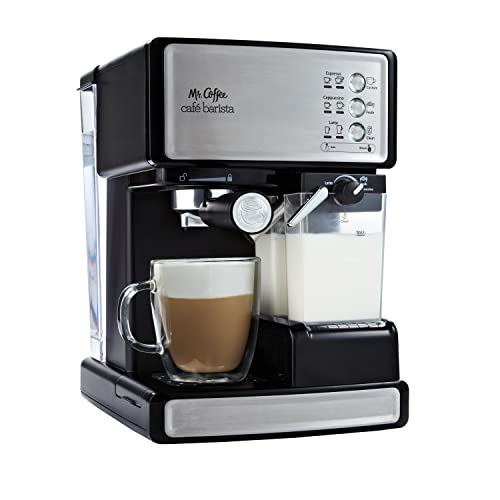
Mr. Coffee Café Barista — Best One-Touch Cappuccino
The Café Barista is built around the cappuccino button. Its automatic milk frother draws from a removable milk reservoir, froths to a cappuccino consistency, and dispenses into the cup before the espresso extracts — the order cafés use — while the one-touch panel lets you choose cappuccino or latte strength with a dial on the reservoir setting the foam. For a machine at its tier, that is an unusually complete answer to this specific drink.
It suits households that drink cappuccinos daily and want them without technique. The trade-offs are the pressurized-basket ceiling on shot refinement and a milk reservoir that must live in the fridge and be cleaned on schedule — automatic convenience always bills you in hygiene chores instead of skill.
Strengths
- Dedicated one-touch cappuccino with automatic frothing and dispensing
- Milk reservoir dial adjusts foam between latte and cappuccino styles
- 15-bar pump system gives genuine espresso underneath the foam
Trade-offs
- Pressurized baskets cap how refined the espresso third can taste
- Milk reservoir needs fridge storage and regular deep cleaning
- Semi-automatic workflow still asks you to load and lock the portafilter
| Specification | Detail |
|---|---|
| Pump | 15-bar pump system, per Amazon listing title |
| Milk | Automatic milk frother, per Amazon listing title |
| Controls | One-touch control panel, per Amazon listing title |
What the Café Barista gets right is sequence and proportion. Frothing first and extracting over the foam keeps the cap structured, and the reservoir dial produces a visibly drier foam on the cappuccino setting than the latte setting — a distinction many pricier automatics blur. The resulting drink reads as a cappuccino to anyone who knows the drink, which at this tier is a genuine achievement.
The espresso underneath is honest pressurized-basket quality: full-bodied with medium and dark roasts, not built for delicate light-roast nuance. Keep the reservoir clean — milk systems punish neglect faster than any other part — and the machine repays with the most cappuccino-focused convenience per dollar in this guide.
The Café Barista’s reservoir deserves one more note: because it detaches and refrigerates, a household can keep it loaded for the morning and empty for the wash at night, and the frothing it produces stays consistent across that cycle in a way wand beginners rarely match in month one. Its cappuccino is not the equal of a skilled wand drink — no automatic at this tier is — but it is the same drink every day, and for the households this machine serves, sameness at 7 a.m. beats brilliance at noon.
Best for: daily cappuccino drinkers who want the ratio handled automatically at a budget tier / Not suited for: espresso purists who rank shot nuance above foam convenience
Check the current price on Amazon

De’Longhi Dinamica LatteCrema (ECAM35075SI) — Best Foam Control, Automatic
Most automatic milk systems make one foam and call it everything. LatteCrema’s carafe has a physical dial that meters the air in the froth, so the cappuccino setting produces the lighter, drier cap the drink demands while the latte setting stays dense. On the Dinamica platform — built-in grinder, one-touch recipes — that single control makes it the automatic we recommend to households that take the cappuccino ratio seriously.
It suits mixed households and cappuccino drinkers who refuse manual steaming. The milk path has more parts than tube-free rivals, and the foam, while adjustable, remains carafe-textured rather than wand-sculpted — traditionalists chasing the driest possible cap should read the wand picks below.
Strengths
- Foam-density dial on the carafe genuinely separates cappuccino foam from latte milk
- One-touch cappuccinos with a self-cleaning milk carafe routine
- Built-in grinder keeps the whole drink bean-to-cup automatic
Trade-offs
- Carafe has more components to rinse than the simplest rival systems
- Automatic foam texture is airy-soft rather than the stiffest dry cap
- Premium tier pricing over manual-frother Dinamica variants
| Specification | Detail |
|---|---|
| Milk system | LatteCrema automatic milk frother, per Amazon listing title |
| Grinder | Built-in grinder, per Amazon listing title |
| Drinks | Latte and cappuccino, per Amazon listing title |
Dial the carafe to its cappuccino end and the difference is visible before you taste: the cap stands higher, holds a cocoa dusting without sinking, and spoons like a foam rather than pouring like milk. That is the correct cappuccino architecture from a fully automatic machine, and it is why this Dinamica outranks other automatics here even though several make smoother latte milk.
The espresso side is the consistent De’Longhi bean-to-cup profile, which suits the drink — cappuccino forgives extraction nuance under foam but punishes thin, sour shots, and the Dinamica’s shots are reliably full. Ownership is the standard carafe discipline: fridge storage, clean cycle, weekly wash. Do that, and this is the automatic cappuccino benchmark in the guide.
Ownership reporting on LatteCrema systems converges on one habit: run the carafe’s clean dial after the last drink of the session, every session, and the milk path stays sweet indefinitely; skip it for a weekend and the system tells you about it in the next drink. That thirty-second discipline is the entire maintenance personality of this machine. The Dinamica underneath asks only the standard automatic rhythm — rinse the brew group, empty the pucks, descale on prompt — making the whole package one of the lowest-attention routes to daily lattes in this guide.
Best for: households wanting automatic cappuccinos with real foam-density control / Not suited for: traditionalists who want a wand-sculpted dry cap
Check the current price on Amazon

Philips 5500 Series with LatteGo (EP5544/94) — Best for a Big Drink Menu
The Philips 5500 is the menu maximalist’s cappuccino machine: twenty hot and iced presets with adjustable strength, milk volume and cup size, delivered through the LatteGo carafe that made the system famous — no tubes, fridge storage, a rinse under the tap. Its cappuccino presets build a proper foam layer, and QuickStart trims the wait that usually separates automatics from the first drink of the day.
It suits households whose order board changes daily — cappuccino at breakfast, iced drinks later, espresso after dinner. Single-drink households pay for a library they will not open, and dry-cap traditionalists will still find carafe foam softer than wand foam.
Strengths
- 20 hot and iced presets with per-drink strength, milk and size customization
- LatteGo carafe is the easiest milk system here to keep clean
- QuickStart and a ceramic grinder suit fast, quiet household routines
Trade-offs
- LatteGo foam leans soft and fine — a wetter cap than cappuccino purists prefer
- Flagship pricing buys breadth of menu more than depth of control
- Preset drinks leave little room for manual extraction play
| Specification | Detail |
|---|---|
| Milk system | LatteGo milk system, per Amazon listing title |
| Presets | 20 hot & iced coffee pre-sets, per Amazon listing title |
| Pump | 15 bars, per Amazon listing title |
Judged purely as a cappuccino appliance, the 5500’s strengths are consistency and customization: set the cappuccino’s milk volume and strength once, and the machine repeats your version exactly, which matters in households where ‘cappuccino’ means a specific personal ratio. The LatteGo foam is fine-textured and stable, if wetter than a traditional dry cap — most modern drinkers prefer it that way, and the guide counts it a style difference rather than a flaw.
The machine’s real tax is price-for-breadth. If your household’s menu is genuinely twenty drinks deep, nothing here serves it better. If it is two drinks deep, the same money buys a wand machine with better foam architecture. Read your household honestly and the choice makes itself.
For cappuccino specifically, the 5500’s customization cuts both ways and the guide should say so. Set the milk volume low and the strength high, and its cappuccino preset produces a properly coffee-forward drink with a fine foam cap; leave the defaults and it pours something closer to a small latte. The machine rewards the five minutes spent tuning the preset once — after that, the drink is a button press, and the tuning is the difference between owning a cappuccino machine and owning a machine with a cappuccino label.
Best for: households with a wide, changing drink menu who want one-touch cappuccinos in the rotation / Not suited for: dry-cap traditionalists or two-drink households
Check the current price on Amazon

CASABREWS 3700 Essential — Best Budget Wand for Dry Foam
The driest cappuccino foam does not come from a carafe; it comes from a wand, a cold pitcher and thirty seconds of deliberate air incorporation. The 3700 Essential is the budget machine that lets you do it properly: a 20-bar Italian pump for the shot, a steam wand with enough pressure to stretch milk hard in the first seconds, and a pressure gauge to keep the espresso third honest while you learn.
It suits the hands-on beginner whose target drink is specifically the cappuccino. It asks for technique — there is no automatic anything — and its steam is single-drink paced, so households wanting four cappuccinos at a button press belong with the Café Barista above.
Strengths
- Manual wand produces the dry, structured foam classic cappuccinos require
- Pressure gauge teaches extraction while you master steaming
- Large 43.9oz tank and stainless body at a budget tier
Trade-offs
- Every drink is manual — no one-touch route on a tired morning
- Steam recovery paces drinks for more than two people
- Younger brand, thinner long-term parts network
| Specification | Detail |
|---|---|
| Pump | 20-bar Italian pump, per Amazon listing title |
| Tank | 43.9oz removable water tank, per Amazon listing title |
| Steam wand | Fitted, for cappuccino and latte, per Amazon listing title |
Cappuccino technique on a wand is the inverse of latte technique: introduce most of the air early, while the milk is cold, with the tip at the surface making a louder, longer stretch, then sink the tip only briefly to heat through without folding all that air back down. The 3700’s wand has the pressure to do this convincingly, and the foam it makes stands in soft peaks that hold cocoa — the result carafe systems approximate but do not equal.
The espresso third benefits from the gauge: cappuccino hides many sins, but a channeled, sour shot still sours the cup, and the needle keeps a learner honest. As a package, this is the budget traditionalist’s machine — the one that teaches the actual craft of this specific drink for the least money.
Two ownership traits stand out after the first month. The removable tank’s size changes behavior: owners refill weekly rather than daily, and machines that are easy to keep watered get descaled less desperately and used more often. And the gauge keeps paying rent — every new bag of beans dials in within a shot or two because the needle reports what changed. For a budget machine, that combination of low chore load and high feedback is exactly the profile that turns a trial purchase into a settled habit.
Best for: hands-on learners who want classic dry cappuccino foam on a budget / Not suited for: households wanting push-button drinks for several people
Check the current price on Amazon
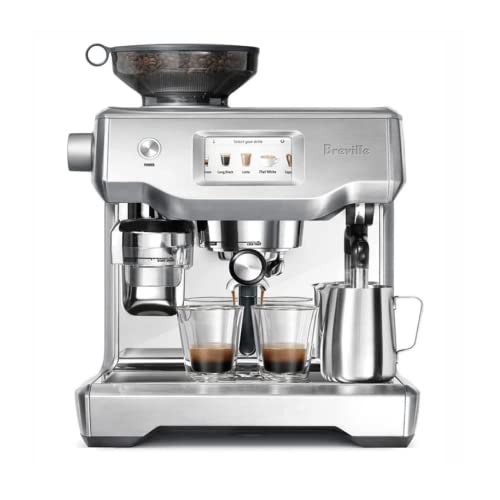
Breville Oracle Touch (BES990) — Best Premium Automatic Wand
The Oracle Touch automates the wand instead of replacing it: it grinds, doses and tamps automatically, extracts on a dual-boiler platform, then textures milk on a real steam wand with automatic temperature and texture control. For cappuccinos that means a genuine foam cap — set the texture toward the drier end — produced with café mechanics and none of the learning curve, selected from a touchscreen drink menu.
It suits households that want café cappuccinos daily and will pay flagship money to skip the apprenticeship. It is a large, expensive machine whose automation will frustrate hands-on hobbyists who enjoy the process it removes.
Strengths
- Automatic milk texturing on a real wand makes true cappuccino foam at a touch
- Dual boilers steam and extract simultaneously for back-to-back drinks
- Automatic dose and tamp remove the two most variable manual steps
Trade-offs
- Flagship pricing and a footprint to match
- Automation hides technique — skills do not transfer if you later go manual
- More systems to descale and service than any other pick here
| Specification | Detail |
|---|---|
| Platform | Automatic espresso machine with built-in grinder, per Amazon listing title |
| Drinks | Espresso, lattes and cappuccinos, per Amazon listing title |
| Format | Brushed stainless steel, per Amazon listing title |
The Oracle’s cappuccino is the automatic benchmark for foam architecture: because a wand does the work, the cap has the dry structure carafes imitate, and the texture setting lets a household standardize its preferred dryness. Underneath, dual boilers keep extraction temperature stable while steam runs — the combination produces drinks that survive comparison with a good café’s, repeatedly, by users with no training.
What you surrender is involvement and money. Owners who love the ritual will feel like supervisors of a machine that has their job; owners who love the drink will feel liberated. The guide’s verdict is simple: this is the most capable cappuccino machine here, priced like it, and worth it precisely for households that make cappuccinos every single day.
The Oracle Touch’s cappuccino workflow has one more advantage worth recording: because dosing and tamping are automatic, the espresso third is the most consistent in this guide, and cappuccino is the drink where a consistent base matters most — foam hides many sins but not a sour shot. Households upgrading from a carafe automatic will notice the difference in the first week: the cap is drier, the base is steadier, and the drink survives being carried to another room, which is the cappuccino’s oldest practical test.
Best for: daily cappuccino households wanting café foam without learning to steam / Not suited for: hobbyists who enjoy manual technique, or modest budgets
Check the current price on Amazon

De’Longhi Eletta Explore — Best for Hot and Cold Foam
The Eletta Explore treats the cappuccino as a family of drinks rather than a single recipe: hot cappuccinos from its hot frother, cold-foam variants from its cold frothing system, and fifty-plus one-touch recipes spread across four user profiles so each household member’s version is saved. A travel-mug-friendly design acknowledges that some of those cappuccinos leave the house.
It suits varied households and cold-coffee drinkers who still start the day with a classic hot cappuccino. It is a premium, feature-dense machine; a two-drink household will use a tenth of it and should buy accordingly.
Strengths
- Separate hot and cold frothing systems cover classic and iced cappuccino styles
- 50+ one-touch recipes with four savable user profiles
- Built-in grinder and travel-mug clearance suit busy households
Trade-offs
- Feature breadth is wasted on households with a short fixed menu
- Two milk systems mean two sets of parts to keep clean
- Premium pricing tier
| Specification | Detail |
|---|---|
| Recipes | 50+ one-touch recipes, per Amazon listing title |
| Frothers | Hot & cold frother, per Amazon listing title |
| Profiles | 4 user profiles, per Amazon listing title |
Cold foam is the Explore’s genuine innovation for this category: a cappuccino-style cap over iced espresso, frothed cold so it holds its structure instead of melting into the drink. It will not replace the classic for traditionalists, but as an additional drink it is executed properly rather than as a gimmick, and the hot side of the machine remains a fully competent automatic cappuccino maker with profile-saved ratios.
The ownership proposition is breadth with memory: the machine remembers how each person takes the drink, which quietly eliminates the morning negotiation that makes households abandon shared machines. If your household’s tastes genuinely diverge — in temperature, size and foam — the Explore is the cappuccino machine designed for you, and its premium reflects that specificity.
The Explore’s profiles solve a cappuccino argument most households have silently: foam level is personal, and a shared machine usually enforces one person’s setting on everyone. Four profiles end that. Its cold-foam cappuccino variants also deserve a fair hearing from skeptics — over a double shot with the cold cap, the drink reads as a legitimate summer cappuccino rather than a novelty, because the foam architecture, not just the temperature, was engineered for it.
Best for: varied households wanting hot and cold cappuccino styles with saved profiles / Not suited for: traditionalists with one fixed drink and no use for cold foam
Check the current price on Amazon
Comparison Table
| Pick | Badge | Key Spec | Best For |
|---|---|---|---|
| Mr. Coffee Café Barista | Best One-Touch Cappuccino | One-touch cappuccino + automatic milk frother | daily cappuccino drinkers who want the ratio handled automatically at a budget tier |
| De’Longhi Dinamica LatteCrema (ECAM35075SI) | Best Foam Control, Automatic | LatteCrema carafe with foam-density dial | households wanting automatic cappuccinos with real foam-density control |
| Philips 5500 Series with LatteGo (EP5544/94) | Best for a Big Drink Menu | LatteGo + 20 customizable presets | households with a wide, changing drink menu who want one-touch cappuccinos in the rotation |
| CASABREWS 3700 Essential | Best Budget Wand for Dry Foam | 20-bar pump + manual steam wand | hands-on learners who want classic dry cappuccino foam on a budget |
| Breville Oracle Touch (BES990) | Best Premium Automatic Wand | Dual boiler + automatic wand texturing | daily cappuccino households wanting café foam without learning to steam |
| De’Longhi Eletta Explore | Best for Hot and Cold Foam | Hot & cold frothing + 50+ recipes | varied households wanting hot and cold cappuccino styles with saved profiles |
How to Choose the Best Espresso Cappuccino Machines for Your Household
Start from the foam you actually like. A traditional cappuccino cap is dry, light and voluminous — it mounds slightly and holds a dusting. A modern café cappuccino is wetter, with microfoam folded through. Dry caps favor manual wands (CASABREWS) or wand-automation (Oracle Touch); wetter, integrated foam is where carafe systems (LatteCrema, LatteGo) shine. Neither is more correct, but buying across that line is the most common disappointment in this category.
Next, count drinkers and drinks. One-touch automatics scale gracefully to a household’s varied orders; a manual wand scales with the operator’s patience. If four people want cappuccinos at 7:30, the automatic wins regardless of foam philosophy. If one person savors one cappuccino slowly, the wand machine’s craft is a feature, not a cost.
Finally, audit the milk system’s cleaning reality. Reservoirs and carafes must be refrigerated and washed; wands must be wiped and purged every drink. Both routines take under a minute when habitual and become genuinely unpleasant when skipped for days. Choose the chore you will keep, because sour milk residue ruins more cappuccino machines than mechanical failure ever will.
The Cappuccino Ratio and Foam Science, in Plain Terms
The classic cappuccino is built in thirds: a double espresso, an equal measure of steamed milk, and an equal measure of foam. The foam is not decoration — it insulates the drink, moderates the first sip’s intensity, and carries the cocoa or cinnamon dusting. When a machine pours mostly steamed milk with a whisper of foam, it has made a latte in a smaller cup, whatever the button says, which is why this guide weighted foam architecture so heavily.
Foam volume comes from air introduced while the milk is cold. On a wand, that means a longer, louder stretch phase than a latte gets; in a carafe, it means the system’s air metering — the LatteCrema dial, the Café Barista’s reservoir setting — turned toward its dry end. Heat then sets the foam: proteins stabilize the bubbles, and overshooting the temperature collapses them into thin, scalded milk. Every system here manages the heat; the user’s job is choosing the air.
Cup choice matters more than machines admit. A cappuccino belongs in a small, thick-walled cup — roughly the volume of the three thirds combined — which keeps the ratio honest and the drink hot. Pour the same drink into a large mug and top it up with milk, and you have quietly ordered a latte instead.
How to Steam Milk for a Cappuccino (Drier Than a Latte)
- Use cold milk, less of it. A cappuccino needs roughly half the milk volume of a latte; the rest of the cup is foam the milk will become.
- Purge, then stretch early and long. Wand tip at the surface from the start, with a pronounced tearing sound while the milk is still cold. This early air is the entire difference from latte technique — aim to raise the milk level visibly, by a third or more.
- Sink briefly to heat. Once the volume is there, submerge the tip just enough to stop the tearing and bring the milk to hand-hot. Do not keep folding — over-rolling collapses a cappuccino’s cap back toward latte texture.
- Rest ten seconds, then pour boldly. A short rest lets the foam separate slightly. Pour in one confident motion so the foam lands as a cap over the milk, not mixed through it.
- Dust and serve immediately. Cocoa or cinnamon over the cap, in a small warm cup. Cappuccino foam waits for no one — it begins breaking down within minutes.
On automatic systems, translate the same ideas: choose the cappuccino preset or the driest foam setting, use the small cup, and resist topping up with extra steamed milk. On the Café Barista, that is the reservoir dial at its cappuccino end; on LatteCrema machines, the carafe dial toward maximum foam. The machine handles the stretch; you handle the ratio discipline.
Cappuccino Variations Worth Knowing: Dry, Wet, and the Modern Third Wave
The classic cappuccino of this guide — equal thirds, dry cap — is one point on a spectrum your machine should let you travel. A dry cappuccino pushes further: more foam, less steamed milk, a lighter cup that drinks like espresso under a meringue. A wet cappuccino moves toward the latte: more milk, foam integrated, the drink richer and milder. Neither is a failed version of the other; they are settings, and the machines here with foam control — the LatteCrema dial, the Café Barista’s reservoir setting, a wand in practiced hands — exist to let a household find its point on that line.
The modern café cappuccino, smaller and wetter than the classic, deserves its reputation when made well: a double shot in a small cup, milk textured as microfoam but aerated slightly more than a latte’s, dusted or not. Wand owners make it by shortening the latte stretch only slightly; automatic owners make it by choosing the cappuccino preset and the smaller cup. The difference between it and a small latte is real but narrow — a matter of foam proportion, which is why this guide keeps returning to architecture over labels.
Iced and cold-foam cappuccinos, the Eletta Explore’s specialty, are the newest branch: the foam is built cold so it survives the ice, and the drink drinks like a dessert course of the family rather than an impostor. Traditionalists may abstain; households in warm climates will understand immediately. The cappuccino has survived a century by adapting its foam to its century — the machines here simply continue that negotiation.
The Espresso Third: Why the Shot Still Matters Under All That Foam
Foam forgives texture sins and hides weak crema, but it cannot repair a sour or channelled shot — it amplifies it, because milk’s sweetness sets off the shot’s acidity like a frame. Cappuccino blends therefore reward a slightly different extraction than straight espresso: a touch more body, medium and medium-dark roasts whose chocolate and nut notes are built to marry with milk fat, and a shot pulled to the fuller end of its window. Every machine in this guide can deliver that shot; the pressurized-basket models do it most reliably with exactly those roast levels, which is a quiet argument for their place here.
Dose discipline matters more in cappuccinos than in lattes for a simple arithmetic reason: the cup is smaller and the milk is less, so the espresso is a third of the drink rather than a fifth. A gram of dose error or five seconds of extraction error shows up proportionally larger. Automatic owners should set the strength once, deliberately, with the small cup in hand; wand owners should weigh or time with the same care they would give a straight shot.
Decaf deserves a mention, because cappuccino is the decaf drinker’s best format: the foam and milk carry the drink’s pleasure, and a good decaf shot — fresh, properly extracted — loses less here than in any other espresso drink. Households with an evening cappuccino habit should keep a dedicated decaf their machine handles well; it extends the machine’s useful hours more than any accessory.
Cappuccino Cups, Cocoa and Service: The Details Around the Drink
The classic cappuccino cup is thick-walled porcelain, roughly 150–180ml, with a rounded interior that lets the foam pour and settle as one cap. Thick walls are functional: they hold the drink’s heat through the slower drinking a cappuccino invites, and their thermal mass stops the first sip scalding. Glass shows the layers prettily and loses heat fastest; steel travel mugs keep heat and murder the foam’s texture against their walls. For the drink this guide has spent its length defining, porcelain is not nostalgia — it is equipment.
The dusting is the drink’s signature and its most abused detail. Cocoa — unsweetened, fine — belongs over the finished cap in a light snowfall, applied through a small shaker after the pour, never mixed into the milk. Cinnamon is the accepted variation; chocolate shavings are a dessert’s business. Sweetened cocoa mixes pre-sweeten a drink whose balance the maker already set, and households that care about the ratio in the cup usually care about this one too.
Service timing completes the picture: a cappuccino’s foam begins its slow collapse the moment it is poured, so the drink is made last in any sequence and carried promptly. Hosts making several should steam in small batches rather than holding finished drinks. The machines in this guide can all produce the drink; the cup, the dusting and the minute it is served are the parts of the recipe that arrive in no box.
Common Buying Mistakes
- Buying a latte machine for cappuccinos. Smooth microfoam systems make wonderful lattes and disappointing cappuccinos. Check that the machine can make foam drier, not just milk hotter.
- Trusting the button label. A ‘cappuccino’ preset that pours latte-style milk is marketing. Look for foam control — a dial, a texture setting, or a wand.
- Using a mug. Oversized cups destroy the ratio. Buy proper small cappuccino cups with the machine.
- Neglecting the milk reservoir. Automatic frothers are hygiene devices as much as drink devices. Fridge storage and scheduled cleaning are part of the purchase.
- Steaming like a latte. If you own a wand machine, the cappuccino’s long early stretch is the skill. Latte technique makes latte foam, whatever drink you intended.
Final Recommendation
For one-touch cappuccinos at a sane price, the Mr. Coffee Café Barista remains the specialist: it froths, dispenses and proportions the drink for you. Households that also drink lattes should step to the De’Longhi Dinamica LatteCrema and its foam dial, or to the Philips 5500 if a twenty-drink menu and the easiest carafe cleaning matter more. Traditionalists should learn on the CASABREWS 3700’s wand — the driest caps in this guide — while households wanting café foam without the learning curve should look at the Oracle Touch, and variety-seekers at the hot-and-cold Eletta Explore.
Whatever you buy, serve the drink small, dust the cap, and drink it promptly. The cappuccino is the most ratio-sensitive drink in the espresso canon, and every machine here rewards the drinker who respects that.
A closing note on expectations, because cappuccino drinkers are traditionalists and traditionalists deserve honesty: no machine in this guide, at any price, makes the drink entirely by itself in the way a kettle makes tea. The automatics come close — a button, a carafe, a consistent cap — and the wand machines ask for thirty seconds of practiced hands. What every pick here guarantees is the architecture: the right foam, in the right proportion, over a sound shot, repeatable on a weekday. The rest — the small cup, the dusting, the prompt service — is the drinker’s half of the recipe, and it is the half that makes guests ask which café the beans came from.
The shortlist, if you are deciding today: Mr. Coffee Café Barista, De’Longhi Dinamica LatteCrema (ECAM35075SI), Philips 5500 Series with LatteGo (EP5544/94) — check price on Amazon for each before you buy, as espresso pricing moves with promotions.
Best Espresso And Latte Machines Best Espresso And Steamer Machines Best Electric Pump Espresso Machines Best Entry Level Espresso Machines Best Espresso Capsule Machines
Frequently Asked Questions
What is the correct ratio for a cappuccino?
Classically, equal thirds: one part espresso, one part steamed milk, one part foam. Modern cafés often pour a slightly wetter version with more integrated milk, but a drink that is mostly steamed milk with a thin foam layer is a latte by construction, regardless of cup or label.
Can an automatic machine make a real cappuccino?
Yes — provided its milk system can make genuinely airy foam and let you control it. Machines with foam-density adjustment like LatteCrema, or a dedicated cappuccino frothing system like the Café Barista’s, produce the correct architecture. Automatics whose only milk mode is latte-style microfoam cannot, and we excluded them.
Why is my cappuccino foam collapsing?
Usually overheated milk or foam that was rolled too long. Milk stretched while cold and heated gently holds its structure; milk taken past hand-hot, or folded in a whirlpool like a latte, breaks down into thin liquid. On carafe systems, also check the carafe is seated and the foam setting is at its dry end.
Is a cappuccino stronger than a latte?
It tastes stronger because the same espresso is diluted by less milk and insulated by foam, but the caffeine is identical if both drinks use the same shot. The difference is proportion and texture, not dose.
What cup should I use for cappuccinos at home?
A small, thick-walled cup sized for the drink — roughly 150–180ml for a double-shot cappuccino. Thick walls hold heat, and the correct volume keeps the thirds honest. Large mugs invite extra milk and quietly convert the drink into a latte.
Do I need a separate frother if my machine has a steam wand?
No. A steam wand is the most capable frothing tool there is — it makes both latte microfoam and cappuccino foam depending on technique. Separate electric frothers suit pod machines and wand-less setups, and are covered in our capsule and frother guides.
Should a cappuccino be stirred before drinking?
Purists drink it as built — foam first, then the milk and espresso together as the cup tilts — and the layered experience is part of the drink’s design. Stirring homogenizes it into something closer to a small latte, which some drinkers honestly prefer. There is no rule worth enforcing at home; but try it un-stirred first, in the small cup, because that is the drink the machine’s foam work was designed to produce.
Can I make a cappuccino with plant milk?
Yes, with the barista editions of plant milks, which are formulated with the fats and proteins foam needs. Oat barista editions foam closest to dairy and suit the cappuccino’s cap; almond and soy barista versions work with a gentler stretch and slightly cooler finish, since several plant milks split when pushed to dairy temperatures. On automatic systems, run the cappuccino setting with the cup ready — plant foams set faster and pour best immediately. Standard, non-barista plant milks will disappoint in any machine in this guide.


