Disclosure: airfryerkitchensupply.com is reader-supported. When you buy through links on our site, we may earn an affiliate commission at no extra cost to you.
Where to Buy
If you are shopping for the best espresso capsule machines, start with the verified shortlist below. Capsule espresso is a system purchase, not a machine purchase: the machine is the cheap part, the capsules are the subscription. Every pick below was verified in Amazon’s catalog before earning a link, and this guide is explicit about the two ecosystems on sale — Nespresso Original capsules, a mature format with wide third-party choice, and Nespresso Vertuo capsules, a closed format that brews everything from a single shot to a full mug. They are not interchangeable, and choosing between them matters more than choosing between machines.
- Nespresso Essenza Mini by Breville (Best Overall Capsule Machine) — Check the current price on Amazon
- Nespresso Pixie by De’Longhi (Best Premium Compact) — Check the current price on Amazon
- Nespresso CitiZ by De’Longhi (Best Mid-Size Original) — Check the current price on Amazon
- Nespresso Lattissima Pro by De’Longhi (Best Capsule Machine for Milk Drinks) — Check the current price on Amazon
- Nespresso Vertuo Pop+ by De’Longhi (Best Vertuo for Small Spaces) — Check the current price on Amazon
- Nespresso Vertuo Next Deluxe with Aeroccino (Best Vertuo Bundle for Milk Drinkers) — Check the current price on Amazon
The best espresso capsule machines make a promise no pump machine can: the same drink, in under a minute, with no grinder, no tamping, no dialing in and almost no cleaning, on the worst morning of your year. The price of that promise is paid per capsule, forever, and in a flavor ceiling set by coffee ground and sealed weeks or months before you drink it. Neither side of that trade is a secret, and this guide’s job is to help you choose the right capsule system — and then the right machine inside it — with both costs in plain view.
System first, then. Original-line machines (Essenza Mini, Pixie, CitiZ, Lattissima Pro) brew espresso and lungo sizes from the classic small capsule, with the deepest capsule catalog in the industry including roaster and supermarket brands. Vertuo machines (Vertuo Pop+, Vertuo Next) read a barcode on a larger capsule and spin it at speed, brewing anything from a single espresso to a full carafe-style mug — but only with Nespresso’s own Vertuo capsules. All six picks were verified. If milk drinks rule your mornings, note which picks carry integrated milk and which need a separate frother; that detail decides more mornings than any other in this category.
One more piece of framing: capsule machines are the only category in this cluster where the manufacturer sells you the coffee forever, and that relationship cuts both ways. It buys you consistency, a curated menu and a machine priced below its hardware cost; it costs you freedom, per-drink money and any say in the coffee’s origin beyond the menu offered. This guide treats that relationship as the product being bought, and every review below is written from inside that understanding rather than despite it.
And a small assurance about how the picks were sequenced: within each system, the machines are ranked by how completely they serve that system’s purpose — simplicity, capacity, milk or range — not by price ascending or descending. The cheapest pick in this guide is also its most recommended, which is a sentence capsule marketing rarely permits and honest reviewing occasionally gets to write.
In this guide
Quick Picks
The Essenza Mini is the capsule distilled to its essence, the Pixie is its metal-bodied upgrade, the Lattissima Pro is the milk-drink flagship, and the Vertuo pair serve households that want mugs as well as shots.
- Best Overall Capsule Machine: Nespresso Essenza Mini by Breville — 19-bar extraction, a 25-second heat-up and two cup sizes in the smallest serious capsule footprint made. — Check price on Amazon
- Best Premium Compact: Nespresso Pixie by De’Longhi — the Original system in an aluminum body — compact like the Mini, built like equipment. — Check price on Amazon
- Best Mid-Size Original: Nespresso CitiZ by De’Longhi — a larger tank, a proper cup platform and the full Original formula in a city-sized body. — Check price on Amazon
- Best Capsule Machine for Milk Drinks: Nespresso Lattissima Pro by De’Longhi — an integrated milk carafe on the Original system — one-touch lattes and cappuccinos from capsules. — Check price on Amazon
- Best Vertuo for Small Spaces: Nespresso Vertuo Pop+ by De’Longhi — the Vertuo system — espresso through full mugs from barcoded capsules — in a compact body with a 30-second heat-up. — Check price on Amazon
- Best Vertuo Bundle for Milk Drinkers: Nespresso Vertuo Next Deluxe with Aeroccino — the Vertuo platform in a deluxe chrome build, bundled with the Aeroccino frother for the milk half of the menu. — Check price on Amazon
How These Picks Were Chosen
Machines were chosen to represent each capsule system’s honest best, verified model by model: the minimal Original machine, the premium compact Original, the mid-size Original with cup sizes and build quality, the integrated-milk Original flagship, and the two Vertuo formats for espresso-plus-coffee households. We weighted heat-up speed, capsule ecosystem depth, milk provision and footprint — the variables that actually differentiate machines whose extraction is standardized by the capsule itself.
We excluded generic pod machines that imitate the format without the extraction consistency, and we state the format lock-in of every pick in its review rather than in fine print. Prices of machines move with promotions and capsule prices change by market, so the guide positions each machine by tier and discusses running costs qualitatively instead of printing numbers that would age badly.
The 6 Best Espresso Capsule Machines
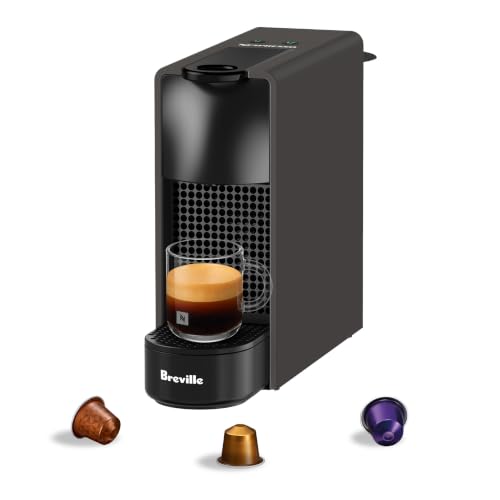
Nespresso Essenza Mini by Breville — Best Overall Capsule Machine
The Essenza Mini is the capsule idea with everything removable removed: a 19-bar pump, a 25-second heat-up, two programmable cup sizes — espresso and lungo — and a body barely wider than the cup it fills. What remains is the part that matters, the extraction, which is the same standardized Nespresso Original performance as machines costing several times more, because in a capsule system the coffee, not the machine, sets the ceiling.
It suits the drinker who wants espresso and lungo, drinks them black or with a splash, and values counter space and simplicity over ceremony. Milk drinkers must add a separate frother, and coffee drinkers wanting full mugs should look at the Vertuo picks — the Mini’s world is deliberately two cup sizes deep.
Strengths
- Full 19-bar Original extraction in the category’s smallest footprint
- 25-second heat-up — capsule convenience at its most immediate
- Two programmable cup sizes cover espresso and lungo honestly
Trade-offs
- No milk system — lattes require a separate frother
- Original capsules only brew espresso and lungo sizes, never full mugs
- Minimalist build and small water tank match its minimalist brief
| Specification | Detail |
|---|---|
| Pressure | 19 bar, per Amazon listing title |
| Heat-up | 25 second heat-up, per Amazon listing title |
| Cup sizes | 2 programmable cup sizes: Espresso, Lungo, per Amazon listing title |
The Mini exposes the capsule category’s open secret: since the capsule defines dose, grind and freshness, extraction differences between Original machines are marginal, and what you buy with more money is build, features and milk — not better espresso. Judged that way, the Mini is the rational default: the same shot as the flagship, at the category’s entry price and footprint, ready before a kettle boils.
Its ownership experience is pure routine: fill the small tank, keep capsules stocked, empty the capsule bin weekly, descale occasionally. For offices, studios, caravans and second homes it is close to unbeatable, and as a household’s espresso-only satellite beside a separate coffee brewer it makes more sense than most hybrids.
A practical footnote on the Mini’s two producers: the machine exists in Breville and De’Longhi builds with the same extraction and near-identical operation, differing in styling details and regional availability. Buy whichever your market stocks with the better support — the coffee will not know the difference, because the capsule system, not the badge, governs the shot. That interchangeability is itself a small virtue of the Original ecosystem: the entry machine is a commodity, and commodities compete on price and service rather than on lock-in.
Best for: espresso and lungo drinkers wanting maximum simplicity and minimum footprint / Not suited for: milk drinkers or households wanting full coffee mugs from the same machine
Check the current price on Amazon

Nespresso Pixie by De’Longhi — Best Premium Compact
The Pixie answers the one fair criticism of the Essenza Mini — that it feels like an appliance — by rebuilding the same compact Original formula in aluminum. The extraction is the system’s standard 19-bar performance across two cup sizes and the full espresso range, but the body is metal, the lever is satisfying, and the whole machine feels like it was made to be kept rather than replaced.
It suits the capsule drinker who values build and design and plans to keep the machine for years. It shares the Mini’s boundaries — espresso and lungo only, no milk system — so its premium buys longevity and feel, not new drinks, and buyers should choose it on exactly those terms.
Strengths
- Aluminum body gives compact capsule brewing a genuinely premium build
- 19-bar extraction across the full Original espresso range
- Fast heat-up and a small footprint suit design-conscious kitchens
Trade-offs
- Premium buys materials, not additional capability, over the Essenza Mini
- No integrated milk — a frother is a separate purchase
- Original format still stops at lungo size
| Specification | Detail |
|---|---|
| Pressure | 19-bar pressure, per Amazon listing title |
| Cup sizes | 2 cup sizes, per Amazon listing title |
| Body | Aluminum, per product name and Amazon listing title |
In a category where machines are often treated as disposable, the Pixie is the keeper: metal where rivals use plastic, a mechanism that feels machined, and a decade-long presence in the range that signals manufacturer confidence. Daily use is identical to the Mini’s — capsule in, button, espresso — with a tactile quality that makes the ritual feel less like vending.
Buy it as the compact Original machine for a kitchen you care about, and its premium divides across years of mornings. Buy it expecting better espresso than the Mini and you will be disappointed, because the capsule, not the chassis, is the flavor author — a truth this guide repeats because the category’s marketing works hard to obscure it.
The Pixie’s aluminum shell has one more practical consequence: it shrugs off the knocks of a working kitchen — the portafilter-free capsule ritual involves levers, cups and capsule bins in daily motion — and it wipes clean without the micro-scratching that dulls plastic machines within a year. In a format where the machine may sit beside a stove for a decade, that durability of appearance is part of why owners describe the Pixie as the Original machine they stopped thinking about replacing.
Best for: capsule drinkers who want a compact machine built to keep / Not suited for: buyers expecting a flavor upgrade over cheaper Original machines
Check the current price on Amazon
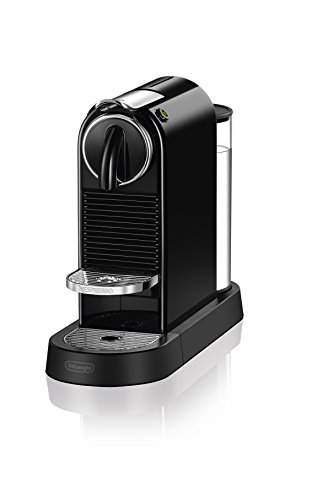
Nespresso CitiZ by De’Longhi — Best Mid-Size Original
The CitiZ is the Original system grown into a household appliance: a 19-bar pump, fast heat-up, espresso and lungo at a button press, and the practical upgrades the compacts skip — a bigger water tank, a folding cup platform that fits taller glasses, and a used-capsule container that does not demand daily emptying. Its retro city styling has kept it in the range for years.
It suits households making several capsule drinks daily who find the Mini’s tank and bin too small. It still brews only Original sizes and carries no milk system, so mug drinkers and latte households should route to the Vertuo and Lattissima picks respectively.
Strengths
- Household-sized tank and capsule container reduce daily chores
- Folding cup support fits espresso cups and taller lungo glasses
- Same 19-bar Original extraction with one-touch operation
Trade-offs
- Larger footprint than the Mini and Pixie it otherwise resembles in capability
- No milk provision — frother sold separately
- Original format ceiling: espresso and lungo sizes only
| Specification | Detail |
|---|---|
| Pump | 19 bar pump, per Amazon listing title |
| Drinks | Espresso and lungo at the touch of a button, per Amazon listing title |
| Finish | Limousine black, per Amazon listing title |
The CitiZ’s case is operational. Capsule machines live or die on friction, and the compacts’ friction is refilling and emptying; the CitiZ stretches both intervals to household scale while keeping the one-touch extraction identical. For a two-drinker home making four drinks a day, that difference is the whole ownership experience.
It is also the Original machine that looks most at home on a permanent counter — designed as furniture-grade appliance rather than gadget. If your capsule household has graduated from the Mini’s minimalism but not to milk integration or mug sizes, the CitiZ is the natural landing spot.
The CitiZ also handles the small ergonomics capsule machines often fumble: the lever requires a satisfying but light press, the cup platform folds away for a tall glass without tools, and the machine’s alerts for water and capsules are unambiguous. In a category where every machine extracts the same, those daily-touch details are the product — and the CitiZ, refined over a long production run, gets more of them right than rivals that chase novelty instead.
Best for: multi-drink capsule households wanting fewer refills and a permanent-counter presence / Not suited for: milk drinkers or mug-size coffee drinkers
Check the current price on Amazon
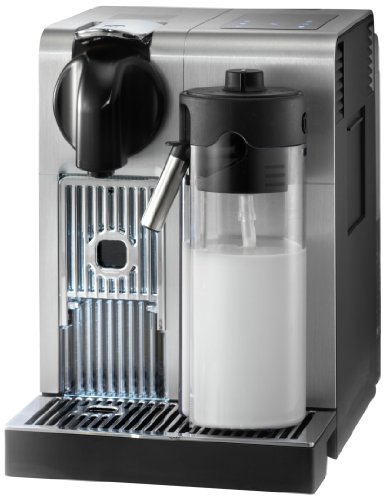
Nespresso Lattissima Pro by De’Longhi — Best Capsule Machine for Milk Drinks
The Lattissima Pro solves the capsule category’s milk problem properly: a detachable milk carafe that stores in the fridge, docks on the machine, and produces one-touch lattes and cappuccinos with adjustable foam from the Original extraction underneath. A brushed metal body and a sensor touch interface complete the flagship brief — this is the capsule machine for milk drinkers who will not compromise on either convenience or the drink menu.
It suits capsule households whose drinks are mostly milk-based. The carafe brings the usual milk-system discipline — fridge storage, regular washing — and the machine’s premium buys integration, not extraction, which remains the standard Original performance every machine in this guide shares.
Strengths
- Integrated milk carafe makes true one-touch lattes and cappuccinos
- Foam adjustment on the carafe adapts to latte and cappuccino styles
- Metal body and touch interface give it flagship build and feel
Trade-offs
- Milk carafe needs fridge storage and scheduled deep cleaning
- Premium pricing for integration rather than better espresso extraction
- Original sizes only — no mug-size coffee from this system
| Specification | Detail |
|---|---|
| Milk | Integrated milk frother (carafe system), per Amazon listing title |
| Body | Silver metal finish, per Amazon listing title |
| System | Nespresso Original, per product line |
The Pro’s milk is the best in the capsule world this side of the Creatista’s wand: fine, hot, adjustable foam dispensed in the right order at a touch, from a carafe that goes back in the fridge when you are done. For a capsule household, that removes the last errand — no separate frother to fill, heat, wash and store — and the drinks genuinely resemble café output.
Ownership follows the automatic milk rules: the carafe is a food container and must be treated like one. Households that keep that discipline get the most complete capsule experience available on the Original system; households that know they will not should buy the Essenza Mini and a standalone frother they can throw in the dishwasher.
One more Pro advantage: its carafe’s foam adjustment is mechanical and repeatable, so a household can mark its preferred setting and return to it exactly — a small thing that separates a machine that makes your cappuccino from one that makes a cappuccino. Paired with the Original system’s capsule breadth, including decaf and half-caffeine options many households rely on, the Pro covers the widest real-world menu of any single-format machine in this guide.
Best for: capsule households whose main drinks are lattes and cappuccinos / Not suited for: black-espresso drinkers paying for milk integration they will not use
Check the current price on Amazon

Nespresso Vertuo Pop+ by De’Longhi — Best Vertuo for Small Spaces
Vertuo rewrites the capsule bargain: the machine reads a barcode on each capsule’s rim and spins the capsule while brewing, adjusting water and extraction to sizes from a single espresso up to a full mug of coffee. The Pop+ packages that system compactly — a 25 fl. oz. side-access tank, a 30-second heat-up, one-touch brewing — at the format’s friendliest machine price.
It suits households that want espresso and real coffee sizes from one capsule machine. The lock-in is total: Vertuo capsules come only from Nespresso, cost more per drink than Original, and third-party alternatives effectively do not exist — buy this system for its size range, with that subscription understood.
Strengths
- Brews espresso through full mug sizes from one capsule system
- Barcode-based brewing sets parameters per capsule automatically
- Compact body, side tank access and 30-second heat-up
Trade-offs
- Vertuo capsules are a closed, single-source ecosystem
- Per-capsule cost is the highest of the systems in this guide
- No milk system — milk drinks need a separate frother
| Specification | Detail |
|---|---|
| Tank | 25 fl. oz. side tank, per Amazon listing title |
| Heat-up | 30 second heat-up, per Amazon listing title |
| Brewing | One touch brewing, per Amazon listing title |
The Vertuo extraction is genuinely different: centrifugal force plus barcode-set parameters produces a thick, crema-like foam layer and, in the larger sizes, a mug of coffee that tastes brewed rather than diluted — the thing Original machines simply cannot do. For the household that wants one capsule machine for the whole menu, the Pop+ is the efficient way in.
Judge the purchase as a subscription decision. The machine is inexpensive because the capsules carry the business model, and a heavy-drinking household should multiply its daily capsule count by its per-capsule cost before falling for the hardware price. Households comfortable with that arithmetic get the most versatile capsule system made; households that are not should stay Original, where capsule competition keeps running costs honest.
The Pop+ has one more household role worth naming: it is the capsule machine most easily relocated. Its compact body and side tank suit a home office desk, a guest room or a rental in a way full-size systems do not, and its one-button operation needs no instruction card for visitors. Households often buy it as the second machine and discover it becomes the weekday primary — the Vertuo sizes cover the morning mug, and the big pump machine rests until the weekend.
Best for: households wanting espresso and mug coffee from one compact capsule machine / Not suited for: budget-per-cup drinkers or anyone wanting third-party capsule choice
Check the current price on Amazon

Nespresso Vertuo Next Deluxe with Aeroccino — Best Vertuo Bundle for Milk Drinkers
The Vertuo Next Deluxe pairs the barcode-brewed Vertuo range — espresso to full coffee sizes — with the missing piece most Vertuo machines leave out: an Aeroccino milk frother in the box. The Aeroccino heats and froths milk at a button press, hot or cold, so the bundle covers lattes and cappuccinos without a steam wand or a second purchase decision, in a chrome-accented build with a larger 1.1 liter tank.
It suits Vertuo households that drink milk drinks regularly and want the complete kit in one purchase. The Aeroccino’s foam is frother-style — airy and pleasant, not wand microfoam — and the Vertuo capsule lock-in applies in full.
Strengths
- Aeroccino frother included — hot and cold milk foam from day one
- Full Vertuo size range from espresso to mugs in one machine
- Larger 1.1 liter tank and deluxe chrome build suit household use
Trade-offs
- Frother foam is airier than steam-wand microfoam — fine for cappuccinos, looser for lattes
- Closed Vertuo capsule ecosystem with premium per-drink cost
- Two appliances to clean — machine and frother — rather than one integrated system
| Specification | Detail |
|---|---|
| Tank | 1.1 liter, per Amazon listing title |
| Frother | Aeroccino milk frother included, per Amazon listing title |
| Finish | Pure Chrome / Black, Dark Chrome, per Amazon listing title |
As a bundle, the Deluxe is the Vertuo system with its homework done: the frother question answered, the tank sized for households, the build upgraded. The Aeroccino deserves its reputation — it is quiet, fast, dishwasher-friendly and produces the consistent foam that makes capsule milk drinks genuinely enjoyable rather than approximate.
Compared with the Lattissima Pro’s integrated carafe, the bundle trades elegance for flexibility: the Aeroccino also froths for hot chocolate and matcha, and washes more easily than any carafe. Compared with the Pop+, it trades money for completeness. Vertuo households with milk in the menu should buy the bundle once rather than assembling it later at retail prices.
The Deluxe’s chrome build also buys thermal and tactile quality the basic Vertuo models skip: the lever action is weightier, the cup support steadier, and the whole machine feels planted when capsules are loaded. In a format where the machine is partly furniture, those qualities decide whether owners keep it on the counter for five years or closet it in two — and a machine on the counter is a machine that gets used, which is the only metric that ultimately matters.
Best for: Vertuo households wanting milk drinks covered in one purchase / Not suited for: drinkers wanting integrated one-touch milk or third-party capsules
Check the current price on Amazon
Comparison Table
| Pick | Badge | Key Spec | Best For |
|---|---|---|---|
| Nespresso Essenza Mini by Breville | Best Overall Capsule Machine | 19-bar Original extraction, 25-second heat-up | espresso and lungo drinkers wanting maximum simplicity and minimum footprint |
| Nespresso Pixie by De’Longhi | Best Premium Compact | Aluminum body + 19-bar Original extraction | capsule drinkers who want a compact machine built to keep |
| Nespresso CitiZ by De’Longhi | Best Mid-Size Original | 19-bar Original + household capacity | multi-drink capsule households wanting fewer refills and a permanent-counter presence |
| Nespresso Lattissima Pro by De’Longhi | Best Capsule Machine for Milk Drinks | Original extraction + integrated milk carafe | capsule households whose main drinks are lattes and cappuccinos |
| Nespresso Vertuo Pop+ by De’Longhi | Best Vertuo for Small Spaces | Vertuo barcode brewing, espresso-to-mug sizes | households wanting espresso and mug coffee from one compact capsule machine |
| Nespresso Vertuo Next Deluxe with Aeroccino | Best Vertuo Bundle for Milk Drinkers | Vertuo brewing + Aeroccino frother bundle | Vertuo households wanting milk drinks covered in one purchase |
How to Choose the Best Espresso Capsule Machines: System Before Machine
Choose the capsule system first, because it decides your drinks menu and your running costs for the machine’s whole life. Nespresso Original is espresso-focused: two sizes, the deepest capsule catalog anywhere, third-party capsules from roasters and supermarkets competing on price and variety, and machines from several makers. Nespresso Vertuo is range-focused: espresso through full mugs from one machine, barcode-tuned brewing, and a catalog only Nespresso sells. Households that drink mugs need Vertuo or a second brewer; households that drink espresso and care about capsule cost and choice belong on Original.
Then decide the milk question. Integrated carafes (Lattissima Pro) make milk drinks one-touch but add a fridge-and-washing routine. Bundled or separate frothers (Aeroccino) are more flexible and easier to clean but make milk a second step. Wand-equipped capsule machines exist at the premium end — the Vertuo Creatista in our latte guide — for drinkers who want capsule coffee with café milk. Black-espresso households should skip milk hardware entirely and take the Mini or Pixie.
Finally, do the running-cost arithmetic honestly. Estimate your household’s drinks per day and multiply by the per-capsule cost of the system you are considering; over a machine’s life that figure dwarfs the hardware price difference between any two picks in this guide. Capsule machines are a convenience subscription with a machine attached — a perfectly good purchase when chosen with the subscription in view.
Original vs Vertuo Capsules: The Incompatibility That Matters
The two Nespresso formats share a brand and nothing else. Original capsules are small, standardized, and inserted into machines that puncture and pump at 19 bars. Vertuo capsules are larger, domed, barcoded, and spun during extraction; an Original machine cannot read or brew them, and a Vertuo machine cannot accept Original capsules. There is no adapter that changes this in any way worth using. Every year, households buy the wrong capsules for a new machine — check the format on the box against your machine’s line before stocking up.
The practical consequences run deeper than fit. Original’s open-ish ecosystem means capsule prices face competition and specialty roasters sell into the format; your espresso menu is effectively the whole coffee aisle. Vertuo’s closed catalog is curated and consistent, with sizes Original cannot match, but when Nespresso retires a Vertuo variety or raises a price, there is no alternative shelf to walk to.
Environmental handling differs too. Both formats are aluminum and recyclable through Nespresso’s programs rather than household bins; third-party Original capsules vary by material. Households for whom waste is a deciding factor should factor the recycling routine — bag, drop-off, repeat — into the convenience calculation, because a capsule system whose recycling is skipped is a heavier footprint than its marketing suggests.
How to Get the Best From a Capsule Machine
- Preheat the cup. Capsule shots are small and lose heat fast. Run a water-only cycle into your cup first, discard, then brew — the single biggest free upgrade in capsule espresso.
- Use fresh water, and the right amount. Fill the tank daily rather than topping up a week-old reservoir, and program your cup size to the capsule maker’s intended volume — over-extracting a capsule by running it long makes it bitter, not stronger.
- Match capsule to drink. Intense capsules stand up in milk; delicate ones disappear. Keep a stronger line for lattes and cappuccinos and save the subtle single-origins for black espresso.
- Eject capsules promptly. Leaving a spent capsule in the chamber breeds stale flavors and drips. Empty the bin before it compacts, and wipe the outlet weekly.
- Descale on schedule. Capsule machines hide scale until extraction slows. Follow the machine’s descale prompt or a calendar reminder — the pump and thermoblock inside are real espresso hardware and scale kills them the same way.
One more habit separates good capsule households from disappointed ones: rotate stock. Capsules are shelf-stable, not immortal, and a drawer of year-old capsules brews like it. Buy a month or two at a time, store them away from heat, and your ‘convenience’ machine will also be a consistent one.
Capsule Freshness and Storage: Getting the Most From a Sealed Coffee
A capsule’s coffee was ground before it was sealed, and everything about capsule quality is the management of that fact. The seal — aluminum, nitrogen-flushed in the better brands — slows staling dramatically, which is why a two-month-old capsule can taste fresher than a two-week-old open bag of ground coffee. But the seal is not immortality: heat accelerates everything, so capsules stored above a warm machine or in a sunny drawer age faster than the same box in a cool cupboard, and a household stock beyond a few months is inventory working against you.
Variety management matters as much as storage. Capsule households drift into owning eleven open boxes, each going slowly stale in the open air after the sleeve is breached. A tighter rotation — two or three varieties in service, finished before the next sleeve opens — tastes noticeably better and costs nothing. Keep the intense line for milk drinks and the delicate line for black espresso, as the how-to section advises, and the rotation enforces itself.
Finally, respect the machine’s part of freshness: eject spent capsules promptly, empty the bin before it compacts into a science project, and keep the outlet and drip tray washed. Capsule coffee’s great promise is that the system removes variables; the few variables it leaves you are exactly these, and they are the difference between a capsule household that loves its machine in year three and one that quietly stops using it.
Capsules vs Beans: The Honest Long-Term Comparison
On cost per drink, beans win and it is not close: even premium whole-bean coffee, ground at home, undercuts capsule pricing severalfold, and the gap compounds across a household’s daily drinks into serious money over a machine’s life. On time and consistency, capsules win with equal clarity: no grinder to buy, dial or clean; no dose to weigh; no bad-shot mornings; a drink in under a minute by any member of the household, including the ones who will never read a guide like this one.
On quality ceiling, beans win at the top — a fresh, well-extracted shot from a good pump machine is a drink no capsule has matched — while capsules win on quality floor, because their worst drink is still their standard drink. Households should locate themselves on those two axes honestly. The capsule purchase is rational for time-poor, consistency-valuing, moderate-volume drinkers; it is irrational for hobbyists, who will feel the ceiling within a month, and for very high-volume households, for whom the per-drink arithmetic becomes a rent payment.
There is no shame in either answer, and this guide’s capsule picks were chosen to be the best version of their bargain. What we argue against is only the unexamined version: the capsule machine bought as a cheap machine, by a household that never priced the subscription. Run the numbers in the buying-guide section, and if the convenience is worth its price to you, buy any pick here with confidence.
Capsule Machines in Offices, Rentals and Second Homes
Capsule systems dominate shared and occasional spaces for structural reasons this guide should acknowledge, because many readers are buying for exactly those spaces. In an office, the capsule removes the three failure points of shared espresso: no grinder settings for a colleague to ruin, no dose for a guest to botch, no grounds in the sink. The machine’s consistency is social as much as technical — everyone gets the same drink, and nobody’s morning depends on another person’s technique.
In rentals and second homes, the calculus is the idle week: a capsule machine sits for a month and makes a perfect drink on arrival, with no stale beans in a hopper, no grinder to re-dial, no ritual to remember. Pump machines punish absence with stale coffee and forgotten settings; capsule machines simply wait. For a holiday property, that reliability across absence is worth more than any extraction nuance the guests would never detect.
The shared-space rules still apply: stock a tight rotation, keep the recycling route real — an office capsule habit without a recycling bag is a visible waste stream — and descale on a calendar, because shared machines are nobody’s maintenance responsibility by default. Assign the descale to a named human and the capsule office runs for years; leave it to everyone and it runs for months.
Common Buying Mistakes
- Buying the machine, ignoring the system. The machine is a one-time cost; the capsule ecosystem is the product. Choose Original vs Vertuo deliberately.
- Assuming the formats interchange. They do not — not between machines, not with adapters worth using.
- Skipping the milk plan. Half the machines here have no milk provision. Decide how lattes happen before the machine arrives.
- Judging by hardware price. The cheapest machine on the most expensive capsule system costs the most over three years. Run the per-drink arithmetic.
- Stockpiling a year of capsules. They stale, and tastes change. A month or two of stock is the sweet spot.
Final Recommendation
Most capsule buyers should start with the Essenza Mini: the full Original extraction, the smallest footprint, the least money spent on the part of the system that does not decide flavor. Step up to the Pixie for build quality, the CitiZ for household capacity, and the Lattissima Pro when milk drinks are the point. Households that want mugs as well as shots should choose Vertuo knowingly — the Pop+ for compact value, the Next Deluxe with Aeroccino when milk joins the menu — accepting the closed capsule catalog as the price of the size range.
Whichever system you choose, preheat the cup, eject the capsule, and keep the stock fresh. Capsule espresso rewards those three habits out of all proportion to their effort.
A last word for the reader torn between this guide and the pump-machine guides in the cluster: the choice is not really about coffee. It is about which scarce resource your household would rather spend — money per drink, or minutes and attention per drink. Capsules spend money to save attention; pump machines spend attention to save money and raise the ceiling. Both trades are honorable, both produce households that love their mornings, and both are represented in this cluster by machines we recommend without reservation. Price your own attention honestly, pick the system that respects it, and the capsule machine you buy on that basis will still be earning its counter space when the next format war arrives.
The shortlist, if you are deciding today: Nespresso Essenza Mini by Breville, Nespresso Pixie by De’Longhi, Nespresso CitiZ by De’Longhi — check price on Amazon for each before you buy, as espresso pricing moves with promotions.
Best Espresso And Single Serve Coffee Machines Best Espresso And Latte Machines Best Automated Nespresso Machines Best Entry Level Espresso Machines Best Espresso Cappuccino Machines
Frequently Asked Questions
Are Nespresso Original and Vertuo capsules interchangeable?
No. The formats are physically different, the machines brew them differently — pressure extraction versus barcode-read centrifugal brewing — and neither machine accepts the other’s capsules. Choose your system first, then buy capsules in that format only.
Do more expensive capsule machines make better espresso?
Within a system, barely. The capsule fixes the coffee, dose and grind, so extraction is standardized; premium machines buy build quality, capacity, milk integration and features. That is why this guide recommends the Essenza Mini so confidently and frames upgrades as lifestyle choices, not flavor ones.
How much do capsule machines cost to run?
More per drink than any other format in this cluster — that is the convenience subscription. Vertuo capsules sit at the premium end, branded Original capsules in the middle, and third-party Original capsules at the lowest capsule cost. Multiply your household’s daily drinks by the per-capsule price of the system before choosing; over years it outweighs every hardware difference here.
Can capsule machines make real lattes and cappuccinos?
Yes, with the right milk provision. Integrated carafe machines like the Lattissima Pro make them one-touch; frother bundles like the Vertuo Next Deluxe with Aeroccino make them in two steps; wand-equipped capsule machines like the Vertuo Creatista make them with café texture. Machines with no milk system need a separate frother.
How long do capsule machines last?
The extraction hardware is real espresso hardware — pumps and thermoblocks — and lasts for years with descaling. The common failure is neglect of that descaling, followed by worn seals. Treat a capsule machine like the appliance it is, not a disposable gadget, and it will outlast several generations of capsules.
Are coffee capsules recyclable?
Nespresso’s aluminum capsules are recyclable through the brand’s own collection programs in most markets, not through household bins. Third-party capsules vary — compostable and recyclable options exist on the Original format. The footprint of a capsule habit depends heavily on whether the household actually uses the recycling route.
Can I use third-party capsules in a Nespresso machine?
On the Original system, yes — third-party and roaster capsules are widely sold for it and are a legitimate part of the format’s value, though fit and quality vary by maker and Nespresso’s warranty language should be read if that concerns you. On Vertuo, effectively no: the barcode system ties brewing to Nespresso’s own capsules, which is the format’s central trade and should be accepted before purchase, not discovered after.
How many capsules should a household keep in stock?
Roughly a month to six weeks of your household’s actual consumption, in two or three varieties. Less risks the empty-drawer morning that sends someone to a café; more risks stale stock and a drawer of open sleeves aging at different rates. Track one month of real usage before setting the number — households consistently overestimate variety-seeking and underestimate the two staple capsules that carry ninety percent of their drinking.


