Disclosure: airfryerkitchensupply.com is reader-supported. When you buy through links on our site, we may earn an affiliate commission at no extra cost to you.
Where to buy
Every grill below was confirmed against the maker’s range before it earned a link, so the model names and headline specs in this guide match live listings rather than catalogue folklore. Pellet grills are heavy freight items, so check delivery terms and whether assembly is offered before you order.
Traeger Woodridge Pro Wood Pellet Grill & Smoker (Best Overall): check price on Amazon
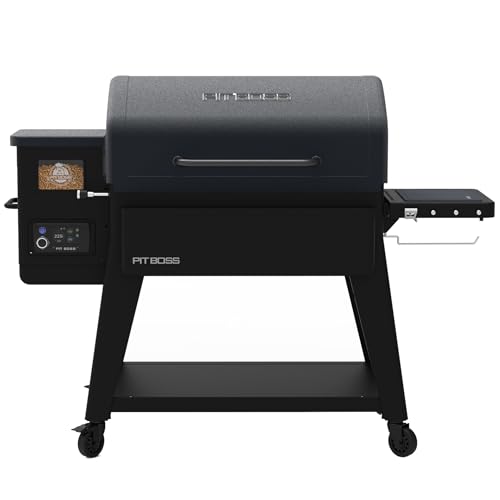
Pit Boss 1600 Navigator Series Pellet Grill (Best for Big Cooks): check price on Amazon
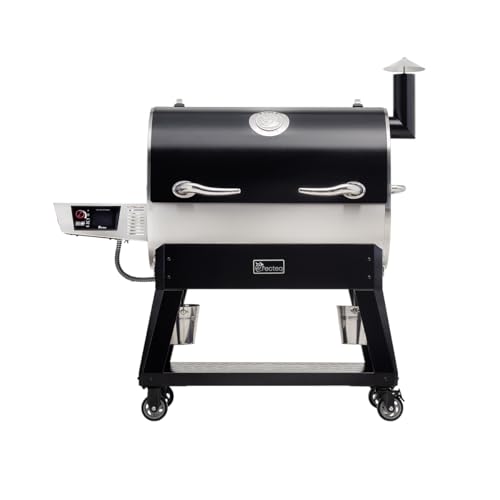
recteq Flagship 1600 Pellet Grill Smoker (Best Premium Build): check price on Amazon
Traeger Ironwood 885 Wood Pellet Grill & Smoker (Best for Smoke Flavor): check price on Amazon
recteq Patio Legend 600 Pellet Smoker Grill (Best Compact WiFi): check price on Amazon
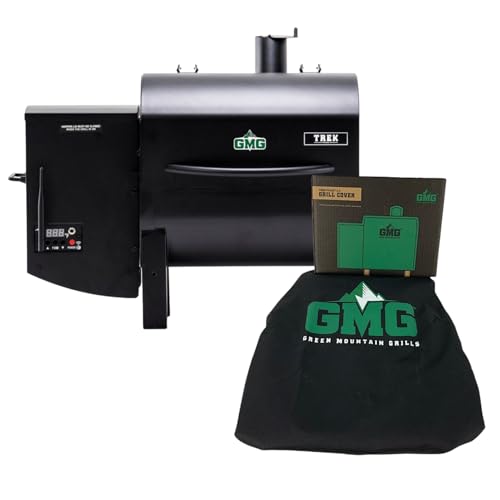
Green Mountain Grills Trek Prime 2.0 Portable WiFi Pellet Grill (Best Portable): check price on Amazon
If you are shopping for the best wifi pellet grills, you are really shopping for two things at once: a pellet grill that cooks well, and a radio that keeps you connected to it from the sofa, the store, or the school run. The cooking half is mature technology — auger, firepot, PID controller — but the WiFi half varies enormously. Some grills hold a connection through a brick wall and a winter storm; others drop off the network every time the microwave runs. This guide separates the two questions, because a grill with a superb app and a mediocre firepot is still a mediocre grill.
One honest point up front: WiFi does not make smoke taste better. What it buys you is freedom of movement and a temperature log. On an overnight brisket, the difference between checking a graph on your phone and walking outside in the rain at 3 a.m. is the difference between a hobby you keep and one you quietly abandon. Buy WiFi for the cooks you actually do — if everything you grill is a 20-minute weeknight sear, the connected features below matter far less than grate quality and hopper size.
All six picks below are genuine WiFi models, not Bluetooth-only grills wearing a WiFi badge in the headline. Where a grill also offers Bluetooth, that is noted as a fallback for setup, not counted as its connection.
In this guide
Quick Picks
Traeger Woodridge Pro Wood Pellet Grill & Smoker — Best Overall. The most balanced connected pellet grill in this roundup: 970 square inches, WiFIRE app control, Super Smoke mode and a 500°F ceiling in a footprint that still fits a normal patio.
Pit Boss 1600 Navigator Series Pellet Grill — Best for Big Cooks. A genuinely large connected grill — 1,593 square inches and a 30 lb hopper — with Pit Boss’s Flame Broiler for direct-flame searing that most pellet grills cannot do.
recteq Flagship 1600 Pellet Grill Smoker — Best Premium Build. The heavy-metal option: 1,667 square inches, a 40 lb hopper and recteq’s reputation for stainless construction and temperature control that barely wanders.
Traeger Ironwood 885 Wood Pellet Grill & Smoker — Best for Smoke Flavor. The smoke specialist of the Traeger line: D2 drive, Super Smoke, downdraft exhaust and double sidewall insulation in an 885 sq in package.
recteq Patio Legend 600 Pellet Smoker Grill — Best Compact WiFi. Recteq’s build quality in a patio-friendly size, with an unusual party trick: a temperature range that runs from 180°F smoking to over 700°F for pizza-oven heat.
Green Mountain Grills Trek Prime 2.0 Portable WiFi Pellet Grill — Best Portable. The tailgate and campsite option: a WiFi pellet grill that runs on 12V as happily as mains power, folds down for transport and still cooks like a real smoker.
How These Picks Were Chosen
Picks were verified one by one against each maker’s current range: model name, cooking area, hopper capacity and controller type all had to match the live listing before a buy link was added. Models that appeared only as covers, parts or third-party bundles were excluded.
Beyond verification, each grill was judged on four things: how stable its WiFi connection is in a normal backyard (router indoors, grill outdoors, one wall between), how honest its temperature control is at smoking temperatures, how much food it genuinely holds with room for air to circulate, and how painful it is to clean after a greasy cook. Marketing cooking-area figures count every rack at once; the reviews below talk about usable space instead.
Finally, no prices and no fixed ratings appear anywhere in this guide. Pellet grill pricing swings hard with seasons and bundles, so each pick is positioned by tier — budget, mid-range or premium — and the links let you check the current price on Amazon at the moment you are actually buying.
The 6 Best WiFi Pellet Grills

Traeger Woodridge Pro Wood Pellet Grill & Smoker — Best Overall
The Woodridge Pro sits in the sweet spot of Traeger’s range where the connected features stop being a demo and start being the way you cook. WiFIRE pairs once and then simply stays paired — set a brisket going in the morning, and the app graph is still updating when you check it from work. Super Smoke mode earns its name at 225°F and below, cycling the auger to keep thin blue smoke rolling instead of the white, acrid puffs you get from a lazy fire.
Strengths
- WiFIRE connection is stable through a house wall at typical patio distances
- Super Smoke mode produces visibly better bark on brisket and pork shoulder
- 970 sq in over two tiers fits a full packer brisket plus sides without crowding
Trade-offs
- 500°F ceiling sears adequately but will not match a gas grill’s crust
- Side shelf is useful but the front workspace still feels tight when trimming
- Grease management needs attention on long fatty cooks — empty the bucket on schedule
| Detail | Verified from the listing |
|---|---|
| Cooking area | 970 sq in (per Amazon title) |
| Max temperature | 500°F |
| Controller | WiFIRE app control with digital sensor |
| Modes | Super Smoke Mode, 6-in-1 versatility |
In day-to-day use the digital sensor is the quiet hero: the grill recovers temperature after you open the lid to spritz, without the 40-degree overshoot older controllers were famous for. The hopper is sized for an overnight cook without a 2 a.m. refill on all but the coldest nights, and pellets feed cleanly even with the fines that settle at the bottom of a bag. Assembly is a two-person job — the barrel is awkward rather than heavy — and the first burn-off genuinely matters, because manufacturing oils will otherwise season your first rack of ribs in a way you did not ask for. For most households this is the grill to beat: connected properly, sized honestly, and priced in the mid-to-premium tier rather than the flagship tier.
Best for: Most households wanting one connected grill that smokes and grills well / Not suited for: High-heat searing purists who want 600°F+ crusts
Check the current price on Amazon
Pit Boss 1600 Navigator Series Pellet Grill — Best for Big Cooks
Most pellet grills ask you to choose between size and searing; the Navigator 1600 refuses both compromises. The cooking chamber swallows four pork shoulders or a competition-style spread of ribs without stacking, and the sliding Flame Broiler plate exposes the firepot for a direct-flame finish that puts real char on steaks and burgers. WiFi and Bluetooth both live in the touchscreen controller, so the grill stays reachable whether your phone is on the home network or standing next to it.
Strengths
- 1,593 sq in cook space handles event-sized cooks without batching
- Flame Broiler gives genuine direct-flame searing, rare in pellet grills
- 30 lb hopper supports very long cooks with minimal refills
Trade-offs
- Footprint and weight demand a permanent patio spot, not shed storage
- Large chamber uses more pellets to hold temperature in cold weather
- Touchscreen is gloves-off only — winter cooks mean bare fingers
| Detail | Verified from the listing |
|---|---|
| Cooking area | 1,593 sq in (per Amazon title) |
| Hopper | 30 lb |
| Controller | Touchscreen, WiFi & Bluetooth |
| Temperature range | From 180°F (per Amazon title) |
The honest cost of all that space is pellet consumption and warm-up time: there is simply more steel and air to heat. Budget a few extra minutes to reach temperature and accept that a small Tuesday-night cook for two is not this grill’s natural habitat — it can do it, but you are heating a ballroom to toast a sandwich. Where it shines is the Saturday cook for twelve, the holiday turkey with room to spare, and the meal-prep session that fills a freezer. The WiFi app covers the essentials — set temperature, probe readouts, alerts — without the polish of Traeger’s software, but it has proved dependable, which matters more at hour nine of a brisket than a prettier graph.
Best for: Large families, entertainers and batch cooks / Not suited for: Small patios or anyone who moves their grill often
Check the current price on Amazon
recteq Flagship 1600 Pellet Grill Smoker — Best Premium Build
Recteq built its name on two promises — stainless steel where rivals use painted mild steel, and temperature control that holds within a few degrees for hours — and the Flagship 1600 is that philosophy at full size. The 40 lb hopper is the largest in this roundup, which turns an overnight brisket into a genuinely set-and-forget cook. WiFi control is dual-band, a detail that matters more than it sounds: many grills only speak 2.4GHz and fall over during setup when a phone insists on staying on 5GHz.
Strengths
- Stainless construction shrugs off weather and seasons of grease
- 40 lb hopper is the longest-legged fuel supply here
- Temperature stability is the benchmark the rest of this list is judged against
Trade-offs
- Premium tier pricing — this is a buy-once decision, not an experiment
- Size and weight make it effectively a permanent installation
- The utilitarian styling divides opinion next to sleeker rivals
| Detail | Verified from the listing |
|---|---|
| Cooking area | 1,667 sq in (per Amazon title) |
| Hopper | 40 lb |
| Controller | Wi-Fi Smart Grill control |
| Build | Stainless steel construction |
What you feel using the Flagship is absence of drama. The lid closes with a machined thunk, the controller does not hunt, and the app reports temperatures that a separate probe thermometer agrees with. That trust compounds: you start cooking things you would not risk on a flakier grill — a whole salmon side, a prime rib for guests, the Christmas brisket. The trade-off is entirely financial and spatial. If your budget tops out in the mid tier, the Woodridge Pro above cooks 90 percent as well for notably less commitment; if you are replacing a rusted-out grill for the second time and intend this to be the last one, the Flagship’s arithmetic starts to make sense.
Best for: Buy-once buyers and serious regular smokers / Not suited for: First-time pellet buyers unsure they will stick with it
Check the current price on Amazon

Traeger Ironwood 885 Wood Pellet Grill & Smoker — Best for Smoke Flavor
The Ironwood 885 is the Traeger for people who taste the difference between smoke and merely being near smoke. Its downdraft exhaust keeps smoke circulating around the food instead of letting it escape straight up the stack, and Super Smoke mode at low temperatures produces the deep mahogany bark that wins arguments at the table. Double sidewall insulation is the unglamorous upgrade you appreciate in January, when the grill holds 225°F in wind that would have a thinner barrel swinging wildly.
Strengths
- Downdraft exhaust plus Super Smoke gives the deepest smoke profile here
- Insulated sidewalls hold temperature and save pellets in cold weather
- D2 drive system starts fast and recovers quickly after lid openings
Trade-offs
- 885 sq in is generous but the second tier is shallower than it looks
- Pellet sensor warns you about low fuel, but only if you keep the app notifications on
- Premium-mid pricing puts it close to larger grills on this list
| Detail | Verified from the listing |
|---|---|
| Cooking area | 885 sq in (per Amazon title) |
| Max temperature | 500°F |
| Controller | D2 Controller with WiFi app control |
| Modes | Super Smoke Mode |
Living with the Ironwood means cooking by the app graph almost without thinking about it: the pellet-level sensor, the probe readouts and the temperature history are all in one place, and the grill’s own behaviour is predictable enough that you stop babysitting. It is not the biggest grill here and it does not pretend to sear like the Pit Boss — the 500°F ceiling is shared with the Woodridge. Choose it when your menu leans toward ribs, shoulders, brisket and fish, and when your climate includes a real winter. Choose the Woodridge Pro instead if you want more space per dollar and slightly simpler running gear.
Best for: Smoke-first cooks and cold-climate grillers / Not suited for: Anyone regularly cooking for more than ten people
Check the current price on Amazon

recteq Patio Legend 600 Pellet Smoker Grill — Best Compact WiFi
Compact WiFi pellet grills usually mean compromises — thin steel, twitchy controllers, toy wheels. The Patio Legend 600 is recteq refusing to make a small grill badly. The headline number is the range: 180°F at the smoking end and beyond 700°F at the top, which no other grill in this roundup attempts. That top end changes what the grill is for — weeknight pizzas and flatbreads with genuine leopard-spotted crusts come off the same machine that smoked Saturday’s ribs.
Strengths
- 180°F to 700°F+ range covers smoking and pizza heat in one unit
- Recteq temperature stability in a footprint balconies can handle
- WiFi and app connectivity, not a Bluetooth-only cut-down
Trade-offs
- 600-class cooking area means briskets go on one at a time
- High-heat runs burn through pellets quickly
- Smaller hopper than the big recteq models — check it on long cooks
| Detail | Verified from the listing |
|---|---|
| Temperature range | 180° to 700+° (per Amazon title) |
| Controller | WiFi & App Connectivity |
| Class | 600-series patio size |
| Fuel | Wood pellet |
The Legend suits a particular household: two to six people, a modest patio, and a cook who wants one connected machine rather than a fleet. Temperature recovery is quick because the chamber is small, and the app experience mirrors the bigger recteqs rather than a stripped-down version. Its limits are honest ones — capacity, and a hopper you should glance at before an overnight cook rather than assume. If you regularly cook for a crowd, step up to the Flagship or the Navigator; if your constraint is space rather than ambition, this is the compact pick that does not feel like a compromise.
Best for: Small patios and couples who cook ambitiously / Not suited for: Crowd cooking or very long unattended smokes
Check the current price on Amazon
Green Mountain Grills Trek Prime 2.0 Portable WiFi Pellet Grill — Best Portable
Portability usually kills WiFi first — the assumption is that a grill in a truck bed does not need an app. Green Mountain Grills disagrees, and the Trek Prime 2.0 is better for it: at a campsite or a tailgate, being able to check the ribs from the cooler, the lake or the stadium seat is exactly when remote monitoring earns its keep. It runs from a wall outlet, a vehicle 12V socket or a battery setup, and the legs fold to make it a genuine lift-in, lift-out unit rather than a small grill you regret moving.
Strengths
- True portability: folding legs, 12V or mains power, cover included
- WiFi control works at campsites and tailgates, not just at home
- Cooks with real pellet smoke flavour despite the compact chamber
Trade-offs
- Cooking area suits a rack or two of ribs, not a whole brisket spread
- Small hopper needs topping up on cooks past four or five hours
- Portable grills live harder lives — budget for the cover and gentle handling
| Detail | Verified from the listing |
|---|---|
| Power | 12V and mains (per Amazon title) |
| Controller | WiFi-enabled |
| Extras | Cover included |
| Design | Portable, folding legs |
Think of the Trek as the second grill for people who already love pellet cooking, or the only grill for people whose cooking happens away from a patio — van lifers, boaters, competition helpers, apartment dwellers with a balcony and understanding neighbours. Temperature control is a step simpler than the big PID machines here, and wind matters more to a small chamber, so site it out of the breeze. Within those honest limits it is a delight: real smoke, real app control, and a pack-away size nothing else in this roundup can touch.
Best for: Tailgaters, campers and small-space cooks / Not suited for: Home cooks who never move their grill
Check the current price on Amazon
Comparison Table
| Pick | Badge | Key spec | Best for |
|---|---|---|---|
| Traeger Woodridge Pro Wood Pellet Grill & Smoker | Best Overall | 970 sq in, WiFIRE, Super Smoke, 500°F max | Most households wanting one connected grill that smokes and grills well |
| Pit Boss 1600 Navigator Series Pellet Grill | Best for Big Cooks | 1,593 sq in, 30 lb hopper, Flame Broiler, touchscreen | Large families, entertainers and batch cooks |
| recteq Flagship 1600 Pellet Grill Smoker | Best Premium Build | 1,667 sq in, 40 lb hopper, stainless build | Buy-once buyers and serious regular smokers |
| Traeger Ironwood 885 Wood Pellet Grill & Smoker | Best for Smoke Flavor | 885 sq in, D2 drive, Super Smoke, insulated walls | Smoke-first cooks and cold-climate grillers |
| recteq Patio Legend 600 Pellet Smoker Grill | Best Compact WiFi | 180–700°F+ range, WiFi, compact footprint | Small patios and couples who cook ambitiously |
| Green Mountain Grills Trek Prime 2.0 Portable WiFi Pellet Grill | Best Portable | Portable, 12V capable, WiFi, cover included | Tailgaters, campers and small-space cooks |
How to Choose a WiFi Pellet Grill
Start with the connection, because it is the feature you are paying extra for. True WiFi means the grill joins your home network and your phone talks to it from anywhere with internet — the office, the shops, another country. Bluetooth means your phone must stay within roughly a room or two of the grill, which is fine for a patio cook and useless for an overnight brisket you want to check from bed. Every pick in this guide is true WiFi; treat any grill advertised as ‘wireless’ without the word WiFi in its verified spec as Bluetooth until proven otherwise.
Next, test your backyard signal before the grill arrives. Stand where the grill will live, phone in hand, and check your home WiFi strength there. Most grills use the 2.4GHz band, which travels through walls better than 5GHz but is shared with every smart bulb and baby monitor you own. If the signal is marginal, a cheap outdoor access point or mesh node near the back door fixes more ‘faulty grill WiFi’ complaints than any firmware update.
Size the cooking area by your biggest regular cook, not your biggest imaginable one. A whole packer brisket needs roughly 550–700 square inches of main-grate space to lie flat; two shoulders or three racks of ribs fit in 800–1,000. Manufacturers quote total area including every tier, and upper tiers run cooler and shallower — fine for beans and wings, wrong for the main event. The reviews above flag where a headline number flatters the grill.
Hopper capacity decides whether ‘overnight’ is a plan or a hope. As a working rule, a pellet grill burns roughly a pound of pellets an hour at smoking temperatures in mild weather, and up to twice that in cold wind. A 18–20 lb hopper therefore covers most overnight cooks; the 30 and 40 lb hoppers on the Pit Boss and recteq Flagship remove the question entirely. Whatever you buy, keep pellets dry — swollen, damp pellets are the number one cause of auger jams and mystery shutdowns.
What WiFi Actually Does During a Cook
The useful features are unglamorous: remote temperature setting, probe readouts, low-pellet and temperature-deviation alerts, and a cook history graph. The graph matters more than beginners expect. A brisket’s stall, a shoulder’s plateau, a chicken that cooked faster than planned — the graph teaches you your grill’s personality across cooks, and it is the fastest route from following recipes to understanding them.
Alerts deserve ten minutes of setup. A deviation alert that fires when the chamber drops or spikes beyond your band will wake you for a flameout at 4 a.m. — rare, but exactly the failure that ruins a brisket silently. A probe alert set a few degrees below target gives you time to get outside, wrap, and rest meat properly instead of discovering it finished while you were in the shower.
What WiFi does not do is tend the fire for you in any physical sense. It cannot add pellets to an empty hopper, clear a jammed auger, or rescue meat from a power cut. Treat it as an excellent lookout, not a crew — the grill still needs a human who checks the hopper, keeps the grease bucket honest and knows where the extension lead is.
Pellet Choice and Smoke Quality on a WiFi Grill
The grill gets the credit, but the pellets do the flavouring, and connected grills make pellet experiments easier because the app graph shows you exactly what each cook did. Hardwood pellets are not interchangeable: oak is the neutral workhorse, hickory is the boldest common choice, apple and cherry are sweeter and gentler, and mesquite is strong enough to dominate a long cook if you run it neat. Most experienced owners settle on a base pellet for temperature-stable everyday cooking and keep one or two character pellets for specific meats — cherry on pork, oak or hickory on brisket, a fruitwood on salmon.
Quality matters in a way that shows up in the machine, not just the meat. Good pellets are dense, shiny, and snap cleanly; they produce little dust in the bag and burn to a fine, pale ash. Cheap pellets with high bark content or filler burn dirtier, leave more ash in the firepot, and — the connected-grill tell — make the temperature graph work harder, with the auger cycling more to hold the same line. If your WiFi grill suddenly starts swinging after a pellet change, suspect the bag before the controller.
Storage closes the loop. Pellets live best in a sealed, lidded container indoors or under proper cover, off the ground. A bag left open in a damp garage through winter will still burn, but it will burn like it is tired — slower ignition, lazier smoke, more ash. Rotate stock, use the oldest bag first, and sift or discard the dusty final cup of each bag rather than tipping it into the hopper, because fines are what augers jam on.
Running Costs and Ownership Over Five Years
A WiFi pellet grill’s purchase price is the beginning of its budget, and planning the rest honestly is what separates a happy owner from a surprised one. The recurring cost is pellets: a household grilling weekly and smoking monthly will work through a meaningful stack of bags in a year, more in cold climates where the grill burns extra fuel to hold temperature. Buying pellets on seasonal promotion and storing them dry is the single easiest saving in the whole ownership picture.
Consumables and wear items form the second layer: foil liners or grease management supplies if you use them, a cover that actually fits (a cheap cover that traps moisture costs more than it saves), replacement igniters and temperature probes over a long life, and the occasional gasket or wheel. None of these is dramatic individually; together they argue for choosing a grill whose parts ecosystem is healthy — one more reason this guide favours established lines like Traeger, Pit Boss and recteq, whose components remain findable years later.
Set against that, weigh what the grill replaces. A connected pellet grill that genuinely gets used displaces takeaway nights, a separate smoker, and often a tired gas grill as well. Owners who cook on theirs twice a week routinely conclude it is the cheapest appliance they own per meal. The arithmetic only fails when the grill is bought as patio furniture — which is why the sizing and fuel-honesty advice in this guide matters more than any single feature.
Troubleshooting the Three Failures WiFi Owners Actually Meet
Problem: the grill drops off the network mid-cook. The cook itself is safe — the controller holds the set temperature locally — so do not open the lid or restart anything in a panic. Check the app after a few minutes; most drops are the phone roaming between networks or a momentary router wobble. If drops repeat, the fix is almost always signal: move a mesh node nearer the back door, confirm the grill is on the 2.4GHz band, and make sure a firmware update is not half-finished in the background.
Problem: temperature swings that were not there last month. Work in order: vacuum the firepot, because ash insulation around the igniter causes lazy, overshooting burns; check the pellet quality and hopper fines; inspect the chamber probe for grease build-up, which insulates it and makes the controller chase a false reading. Nine times out of ten the graph calms down after that fifteen-minute service, and the app history lets you prove it on the next cook.
Problem: a flameout on an overnight cook, caught by your deviation alert. Resist the urge to simply relight and carry on without thinking: a firepot that died may hold unburned pellets that can ignite all at once. Follow the maker’s restart procedure — usually clearing the firepot before reigniting — check the meat’s temperature history from the app graph to judge its time in the danger zone honestly, and finish the cook hot and fast if there is any doubt. The alert did its job; the procedure does the rest.
Accessories That Earn Their Space (and Those That Do Not)
Three accessories genuinely improve a WiFi pellet grill’s life. A fitted cover, because the electronics you paid for live outdoors and weather is patient. A second, independent probe thermometer — not because the grill lies, but because a second opinion at grate level is how you learn your grill’s true offsets, and it doubles as insurance if a probe fails mid-cook. And a pellet storage system you will actually use: a sealed bin with a scoop, living where the grill lives, because pellets stored ‘somewhere in the garage’ are pellets that get damp.
The maybes depend on your menu: a folding front shelf transforms prep if your model lacks workspace; griddle plates and sear grates extend weeknight usefulness; a cold-smoke attachment serves the cheese-and-salmon minority. The skip list is longer: novelty tool sets duplicate what your kitchen owns, cheap third-party covers trap the moisture they claim to shed, and any gadget that promises to make a pellet grill ‘also a gas grill’ misunderstands both appliances. Spend accessory money on pellets and meat until the core kit is complete — the grill you use weekly with no accessories beats the accessorised ornament every time.
Your First Five Cooks: A Confidence Curriculum
Cook one: chicken thighs at a moderate roast temperature. Forgiving, fast, and they teach you the app, the alerts and the grill’s recovery after lid openings. Cook two: a pork shoulder, the kindest long cook in barbecue — it tolerates temperature wander, teaches you the stall, and rewards you with pulled pork that makes the purchase feel wise. Cook three: ribs, where smoke quality and timing meet; use Super Smoke or its equivalent if your pick has it, and judge the bark honestly.
Cook four: something grilled hot and fast — burgers, sausages, vegetables — because a pellet grill that only smokes is half an appliance, and you should learn its searing manners (and their limits) on cheap food. Cook five: the first overnight brisket, now that the hopper, the alerts and your own graph-reading have all been rehearsed. Notice what this curriculum avoids: no expensive meat until the system — grill, app, fuel, cook — has been tested as a system. By cook five you will know your grill’s personality in a way no specification sheet can teach, and the WiFi features will have quietly become the way you cook rather than a feature you demonstrate.
A Note on Weather, Covers and Cold Mornings
Pellet grills are electrical appliances that live outdoors, and their connected brains deserve the same respect as their steel. A fitted cover that goes on a cool, dry grill — never a hot or wet one — is the difference between a controller that ages gracefully and one that meets condensation every dawn. In genuinely cold weather, expect longer preheats and higher pellet consumption, site the grill out of the wind, and let the app graph be your patience: the line will settle, and a grill opened repeatedly ‘to check’ in January is a grill fighting its owner as well as the season. Treat the electronics kindly and the WiFi that sold you the grill will still be working, boringly and reliably, in year five — which is all anyone ever wanted from it.
What the Warranty and Support Really Cover
Read a pellet grill warranty the way an owner experiences it: the electronics — controller, auger motor, fan, igniter — are the parts that live the hardest life, and their coverage period matters more than the headline years attached to the barrel’s paint. The established makers in this guide support their grills with findable parts and humans who answer; that infrastructure is part of what the premium tiers buy, and it is worth more in year four than any launch-day feature. Keep your purchase record, register the grill if the maker asks, and do firmware updates on quiet days so a support call, if it ever comes, starts from a current machine.
Support quality shows in small ways long before a failure: a manual that actually explains the restart procedure after a flameout, an app that tells you an error code’s meaning instead of merely displaying it, a parts diagram you can order from without a phone call. Judge those things in the first month, while returns are still possible, and you will know what you own. The grills in this guide were chosen partly on this evidence — a connected appliance is a relationship with its maker, and the good ones behave like it.
How to Set Up WiFi on a Pellet Grill and Run Your First Remote Cook
Setup day decides whether your connected grill is a joy or a support ticket. Do these steps in order, with the grill empty, before any food is involved.
- Assemble the grill, then run the manufacturer’s burn-off cycle exactly as the manual describes — this seasons the steel and burns off factory oils before food ever enters the chamber.
- Update the grill’s firmware before pairing anything. Connect the controller to power, follow the app’s update prompt, and let it finish without unplugging; interrupted updates cause most ‘dead controller’ stories.
- Join the grill to your 2.4GHz home network. If your router merges bands under one name, temporarily enable the separate 2.4GHz network or use the app’s guided setup standing close to the grill.
- Walk the signal test: close the app, go to the furthest room you will cook-monitor from, reopen it, and confirm live temperatures update within a few seconds.
- Calibrate with a cheap second thermometer. Clip it at grate level next to the grill’s own probe during a 225°F test run and note any offset — most grills let you apply a correction in the app.
- Run a short first cook — sausages or chicken thighs for an hour — monitoring entirely from the app. Practise changing the temperature remotely and setting a probe alert before a brisket depends on it.
- Set your alerts: chamber deviation band, probe target a few degrees early, and low-pellet warning if your model offers it. Then fill the hopper, and your first overnight cook is a plan rather than a gamble.
After the first few cooks, spend two minutes on the unglamorous maintenance that keeps WiFi grills honest: vacuum the firepot, scrape the grease channel, and empty the bucket. A grill that flames out from an ash-choked firepot will still faithfully report its failure to your phone — the app is a messenger, and clean grills simply send better news.
Common Buying Mistakes
Buying Bluetooth and calling it WiFi. The two are sold side by side and the boxes look alike. If remote monitoring from anywhere matters to you, confirm the verified spec says WiFi — as every pick in this guide does — before money changes hands.
Judging size by the headline number. Total cooking area counts every rack and warmer. Ask what fits on the main grate: that is where briskets and shoulders actually cook.
Storing pellets in a damp garage. Pellets are compressed sawdust; they drink humidity, swell, and jam augers. Keep them sealed, dry and off concrete, and sift the dusty bottom of each bag.
Ignoring the grease bucket until it overflows. On a long fatty cook the bucket fills faster than intuition says. A grease fire inside a connected grill is still just a fire — empty it on a schedule, not on a hunch.
Skipping the burn-off to save an hour. Factory oils do not taste like smoke. The first thing your new grill cooks should be nothing at all.
Placing the grill where the WiFi is weakest. Ten feet of patio can be the difference between a rock-solid connection and hourly dropouts. Site the grill for signal as well as for smoke drift and fire safety.
Final Recommendation
For most buyers, the Traeger Woodridge Pro is the answer: proper WiFIRE, honest size, Super Smoke, and running costs that stay sensible. If you cook for crowds, the Pit Boss 1600 Navigator adds real searing and serious space; if you are buying once and buying well, the recteq Flagship 1600 is the premium step. Smoke-first cooks should look hard at the Ironwood 885, small patios at the Patio Legend 600, and anyone who cooks away from home at the Trek Prime 2.0.
Whichever you choose, do the setup-day steps in order and run one short app-monitored cook before anything expensive goes on the grate. A connected grill rewards an hour of preparation with years of cooks you can follow from wherever you happen to be.
Related reading: Best Wifi Grills · Best Wifi Pellet Smokers · Best Wifi Smokers · Best Entry Level Pellet Grills · Best Traeger Pellet Grills · Best Backyard Pellet Grills
Frequently Asked Questions
Do WiFi pellet grills work when I am away from home?
Yes — that is the point of WiFi over Bluetooth. As long as the grill is connected to your home network and your phone has internet, you can monitor and adjust the cook from anywhere. Keep in mind the grill still needs pellets, power and a clean firepot; the app reports problems, it cannot fix them.
Why does my grill only connect to 2.4GHz WiFi?
Most grill controllers use 2.4GHz because it passes through walls and reaches patios better than 5GHz. If your router combines both bands under one name, your phone may need to be on the 2.4GHz band during setup. Once paired, the grill stays on 2.4GHz and your phone can return to its usual network.
How long will a hopper of pellets last?
At smoking temperatures in mild weather, expect roughly a pound per hour, rising in cold or wind. A typical 18–20 lb hopper therefore covers an overnight brisket, while the 30 lb and 40 lb hoppers on the largest picks here remove refills from the equation almost entirely.
Can a WiFi pellet grill sear a steak properly?
It depends on the design. Most pellet grills top out near 500°F and give you a respectable but not steakhouse crust. The Pit Boss Navigator’s Flame Broiler exposes direct flame and sears genuinely well, and the recteq Patio Legend’s 700°F+ ceiling handles high heat differently again. If searing is your main event, weight those two picks heavily.
What happens if the WiFi drops mid-cook?
The grill keeps cooking at its last set temperature — the controller is in the grill, not in the cloud. You lose remote monitoring and alerts until the connection returns, but the food is safe. A dropped connection is an inconvenience, not a ruined brisket.
Are pellet grills expensive to run?
Running cost is pellets plus modest electricity for the auger, fan and controller. Pellets are bought by the bag and the per-cook cost compares well with charcoal for long cooks, especially since a PID grill only burns what it needs to hold temperature. Buy food-grade pellets and store them dry to avoid waste from jams.


