Disclosure: airfryerkitchensupply.com is reader-supported. When you buy through links on our site, we may earn an affiliate commission at no extra cost to you.
Where to buy
Every pellet grill in this guide is a current-production model sold on Amazon, and every ASIN was verified against the live Amazon catalog before this guide was written. Pellet grills are heavy, powered appliances — confirm the delivery and setup details on the listing, plan a dry spot with an outlet, and check price on Amazon at the listing, since we never print static prices and this category sees constant seasonal movement.
- Traeger Ironwood 885 Wood Pellet Grill & Smoker (Best Overall) — Check the current price on Amazon
- Traeger Pro 22 Wood Pellet Grill & Smoker (Best Value in the Traeger Line) — Check the current price on Amazon
- Z Grills ZPG-7002B Pellet Smoker Grill (Best Budget Pellet Grill) — Check the current price on Amazon
- Pit Boss 850 Navigator Series Wood Pellet Grill & Smoker (Best for Direct-Flame Searing) — Check the current price on Amazon
- recteq Flagship 1600 Pellet Grill Smoker (Best Premium Capacity) — Check the current price on Amazon
- recteq Patio Legend 600 Pellet Smoker Grill (Best Compact Pellet Grill) — Check the current price on Amazon
The best backyard pellet grills promise the oldest flavor in cooking — wood smoke — with the newest convenience: a thermostat. An auger feeds hardwood pellets into a fire pot, a controller holds your set temperature within a narrow band, and you get brisket that tastes like a day’s work with roughly the effort of using an oven. The six picks below cover the real market, from a budget PID-controlled value play to a 1,667-square-inch flagship, and they were chosen for the things that separate good pellet grills from frustrating ones: temperature stability, build weight, hopper capacity and honest searing ability.
Pellet grilling has one honest limitation to state up front: smoke flavor is gentler than a stick-burner’s, and top-end searing varies enormously by model — from a polite 450°F to the recteq Legend’s 700-plus. Neither fact should scare you off. For the way most households actually cook — ribs, pork shoulders, whole chickens, weeknight thighs with a kiss of smoke — a pellet grill is the most forgiving path to excellent food ever sold. Choose by capacity and controller quality first, and the rest of the spec sheet second.
In this guide
Quick Picks
Best Overall — Traeger Ironwood 885 Wood Pellet Grill & Smoker. The Ironwood 885 is the pellet grill we recommend when the budget allows the good one: 885 square inches, WiFi control, Super Smoke mode, the D2 drive system and a 500°F ceiling in Traeger’s best-built mainstream body. Check price on Amazon.
Best Value in the Traeger Line — Traeger Pro 22 Wood Pellet Grill & Smoker. The Pro 22 is the classic entry into Traeger ownership: 572 square inches, an 18 lb hopper, a meat probe and a 450°F ceiling — the full pellet experience without flagship pricing. Check price on Amazon.
Best Budget Pellet Grill — Z Grills ZPG-7002B Pellet Smoker Grill. Z Grills built its name undercutting the big brands, and the 7002B is the proof: PID temperature control, 700 square inches of cooking area and a rain cover included, at a budget tier. Check price on Amazon.
Best for Direct-Flame Searing — Pit Boss 850 Navigator Series Wood Pellet Grill & Smoker. Pit Boss answers the pellet grill’s oldest criticism — where is the sear? — with the 850 Navigator: WiFi and Bluetooth control, an LCD digital controller and the Flame Broiler lever that opens the fire to the grate. Check price on Amazon.
Best Premium Capacity — recteq Flagship 1600 Pellet Grill Smoker. The recteq Flagship 1600 is the connoisseur’s big grill: 1,667 square inches of cook space, a 40 lb hopper and WiFi control in the heaviest-built body in this guide. Check price on Amazon.
Best Compact Pellet Grill — recteq Patio Legend 600 Pellet Smoker Grill. The Patio Legend 600 shrinks the recteq formula for smaller spaces — WiFi and app control with a temperature range from 180° to over 700°, the widest range in this guide. Check price on Amazon.
How These Picks Were Chosen
Every candidate was verified against the live Amazon catalog on the airfry site, with ASINs and titles taken from Amazon’s own responses; models that could not be confirmed were excluded. Specs in the mini spec lines — cooking areas, hopper sizes, temperature ceilings, connectivity — come only from those verified listing titles, never from marketing pages we could not confirm.
From the verified shortlist we weighted temperature control first (controller type, stability reputation, insulation), then capacity matched to household size, then build weight and materials, then connectivity and support ecosystems. We deliberately included three brands’ philosophies — Traeger’s mainstream polish, Pit Boss’s value and flame-searing answer, recteq’s heavy enthusiast build, and Z Grills’ budget disruption — because pellet buyers are really choosing a philosophy, not just a grill.
The 6 Best Backyard Pellet Grills

Traeger Ironwood 885 Wood Pellet Grill & Smoker — Best Overall
The Ironwood line is where Traeger stops being a smoker that grills and becomes a complete outdoor oven that also smokes beautifully. The verified spec tells the story: 885 square inches of cooking space, WiFi app control through the D2 controller, Super Smoke mode for deeper smoke at low temperatures, and a 500°F maximum that covers roasting and respectable grilling. The body is the other half of the appeal — double-sidewall insulation in the firebox area keeps temperatures steady and pellet consumption sane when the weather turns.
- Strengths: WiFi D2 controller with Super Smoke mode — monitor and adjust from the couch, with deeper smoke on demand.
- Strengths: 885 sq. in. swallows a brisket, three chickens or a party’s worth of ribs without stacking tricks.
- Strengths: Insulated construction holds temperature and stretches pellets in wind and cold.
- Trade-offs: Premium tier — this is a considered purchase, not an impulse one.
- Trade-offs: Even at 500°F, searing is good rather than kettle-fierce; a cast-iron pan finish helps steaks.
- Trade-offs: It is a large, heavy appliance; give it a permanent patio spot and a cover.
Mini spec: 885 sq. in. cooking area; WiFi app control; Super Smoke Mode; D2 controller; 500°F max; 6-in-1 versatility (verified from Amazon listing title). Check the current price on Amazon
What owners love about the Ironwood is the disappearance of effort. Set the brisket at night, check the probe from bed, and wake up to a cook that simply proceeded. The app control is not a gimmick at this level — it is the difference between hosting your guests and visiting your smoker every twenty minutes. Pellet consumption is reasonable for its size thanks to the insulation, and the build quality justifies the tier every time you lift the lid. If pellet grilling is your main backyard method rather than a side hobby, this is the machine the rest of the category is measured against.
Best for: serious pellet cooks who want capacity, insulation and app control in one flagship / Not suited for: casual grillers who only smoke twice a year
Check the current price on Amazon

Traeger Pro 22 Wood Pellet Grill & Smoker — Best Value in the Traeger Line
If the Ironwood is the flagship, the Pro 22 is the folk hero — the model that put pellet grills into ordinary backyards. The formula is Traeger’s 6-in-1 versatility in a manageable footprint: 572 square inches of grate, an 18 lb hopper that carries long cooks, a wired meat probe, and a 450°F top end. There is no WiFi and no insulation upgrade, and that honesty is the point: everything you need for genuine wood-fired cooking, nothing you pay for and never touch.
- Strengths: The complete pellet cooking experience — smoke, grill, bake, roast — at a mid tier.
- Strengths: 18 lb hopper supports overnight brisket cooks without refills.
- Strengths: Simple, proven controller with a huge base of shared recipes and knowledge.
- Trade-offs: No WiFi — you check the cook by walking to the grill, like our ancestors.
- Trade-offs: 450°F ceiling makes it a roaster first and a searer second.
- Trade-offs: Uninsulated body burns more pellets in cold and wind than the Ironwood.
Mini spec: 572 sq. in. cooking area; 18 lb hopper; meat probe; 450°F max; 6-in-1 versatility (verified from Amazon listing title). Check the current price on Amazon
The Pro 22 remains the easiest pellet recommendation for a first-time buyer because its compromises are the right ones. Most home cooks smoke low and slow or roast at moderate temperatures, and there the Pro 22 performs essentially like its expensive sibling. The money saved buys a cover, a pellet supply and a lot of brisket. Owners who later catch the competition bug can upgrade; owners who simply wanted great smoked food at home tend to keep the Pro 22 for years and wonder what the fuss at the flagship tier was about.
Best for: first-time pellet buyers and value-focused smokers / Not suited for: cooks who want app control and maximum searing heat
Check the current price on Amazon

Z Grills ZPG-7002B Pellet Smoker Grill — Best Budget Pellet Grill
Z Grills is the value disruptor of the pellet world, and the ZPG-7002B shows why it has a following. The verified listing leads with the feature that matters most at any price: PID control, the smarter controller logic that holds set temperatures tightly instead of swinging around them. Around it you get 700 square inches of cooking area — larger than the Pro 22 — in a straightforward barrel body, with a rain cover in the box rather than on the accessories page.
- Strengths: PID controller holds temperatures with a precision budget rivals rarely match.
- Strengths: 700 sq. in. of cooking space beats several mid-tier competitors outright.
- Strengths: Rain cover included — a small thing that signals the brand understands ownership.
- Trade-offs: Fit, finish and materials are a step below Traeger and recteq; it feels built to a price.
- Trade-offs: Brand support network is thinner; expect online-first service.
- Trade-offs: Top-end heat and searing are modest — plan cast-iron finishes for steaks.
Mini spec: 700 sq. in. cooking area; PID control; rain cover included (verified from Amazon listing title). Check the current price on Amazon
The 7002B is the pellet grill for the spreadsheet buyer: line up capacity and controller quality against the tier and it wins its row. The ownership experience is more utilitarian — the lid is lighter, the hardware simpler — but the food coming off a PID-controlled fire does not know what the grill cost. For a household that wants to learn whether pellet cooking fits their life, or a second home that needs a capable smoker without flagship money, the Z Grills is the rational buy in this guide.
Best for: budget buyers who prioritize controller quality and capacity / Not suited for: buyers who want premium materials and white-glove support
Check the current price on Amazon

Pit Boss 850 Navigator Series Wood Pellet Grill & Smoker — Best for Direct-Flame Searing
Every pellet grill owner hears the same taunt: nice smoker, shame about the sear. The Pit Boss 850 Navigator is built around the rebuttal. Its Flame Broiler system slides a plate aside to expose the cooking grate to direct flame from the fire pot, giving pellet cooking a genuine open-flame mode for burgers and steaks. Around that signature feature sits a modern control package — WiFi and Bluetooth connectivity with an LCD digital controller — in Pit Boss’s characteristically heavy, value-loaded body.
- Strengths: Flame Broiler direct-flame mode delivers the searing other pellet grills only promise.
- Strengths: WiFi and Bluetooth with an LCD controller — full remote control at a mid tier.
- Strengths: Heavy Pit Boss construction feels substantial for the money.
- Trade-offs: Direct-flame mode needs watching — it is real fire, with real flare-up potential over fatty food.
- Trade-offs: Pellet consumption rises in flame-broiler use; keep the hopper topped up.
- Trade-offs: The app ecosystem is functional rather than class-leading.
Mini spec: WiFi & Bluetooth connectivity; Flame Broiler; LCD digital controller (verified from Amazon listing title). Check the current price on Amazon
Choose the Navigator if your household grills as much as it smokes. Weeknight burgers get actual flame character, weekend ribs get the set-and-forget treatment, and the same machine does both without apology. That dual personality is rare in this category — most pellet grills are smokers that tolerate grilling, while the Pit Boss genuinely splits the difference. Add the strong value positioning typical of the brand, and the 850 Navigator is the easiest pellet grill to recommend to a mixed-menu household.
Best for: households that grill and smoke in equal measure / Not suited for: purists who want a smoker and nothing but a smoker
Check the current price on Amazon
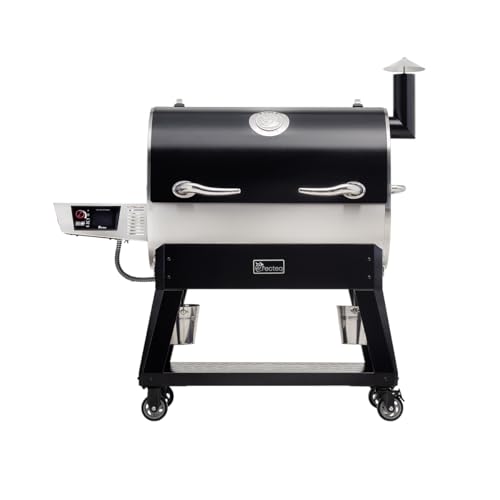
recteq Flagship 1600 Pellet Grill Smoker — Best Premium Capacity
recteq occupies the enthusiast tier of pellet grilling — the brand owners graduate to — and the Flagship 1600 is its statement piece. The verified numbers are emphatic: 1,667 square inches of cooking space and a 40 lb hopper, wrapped in recteq’s signature heavy stainless-accented construction with WiFi smart control. This is a grill built for the cook who does whole packer briskets two at a time, caters the family reunion from the backyard, and expects the machine to feel like equipment rather than an appliance.
- Strengths: Enormous 1,667 sq. in. capacity with a 40 lb hopper for marathon cooks.
- Strengths: Heaviest build quality in this guide — the lid, grates and body feel industrial.
- Strengths: WiFi control and recteq’s reputation for temperature stability at low settings.
- Trade-offs: Premium tier pricing and a footprint to match — this is a patio anchor.
- Trade-offs: Capacity this large is wasted on a household of two; pellets and preheat serve the size.
- Trade-offs: Availability runs through the brand’s own channels more than big-box shelves.
Mini spec: 1,667 sq. in. cook space; 40 lb hopper; WiFi smart grill control (verified from Amazon listing title). Check the current price on Amazon
The Flagship justifies itself in two currencies: space and stability. Low-and-slow cooks are where recteq built its reputation, and the Flagship holds a smoking temperature with the calm of a much more expensive machine, for as many hours as a 40 lb hopper allows — which is to say, longer than any single cook requires. If you cook for crowds, compete, or simply believe in buying the heavy version of a thing once, this is the pellet grill at the top of the backyard market, and it wears the position comfortably.
Best for: enthusiasts, competitors and crowd cooks who want maximum capacity and build / Not suited for: small households watching budget or patio space
Check the current price on Amazon

recteq Patio Legend 600 Pellet Smoker Grill — Best Compact Pellet Grill
Not every backyard has room for a Flagship, and recteq’s Patio Legend 600 is the answer for the ones that do not. It keeps the brand’s essentials — WiFi and app connectivity, serious build quality — and adds the most interesting spec in this guide: a verified temperature range from 180° to over 700°. That top end changes what a pellet grill is. At 700-plus degrees the Legend sears with conviction and handles pizza-style cooking that leaves most pellet grills behind, while the 180° floor does proper cold-end smoking.
- Strengths: 180° to 700+° range — the only pick here that truly smokes low and sears high.
- Strengths: recteq build quality and WiFi control in a patio-friendly footprint.
- Strengths: Ideal second grill beside a gas unit for couples and small families.
- Trade-offs: Cooking area suits households, not reunions — plan capacity honestly.
- Trade-offs: Premium per-square-inch pricing; you pay for the brand and the range.
- Trade-offs: High-heat pellet cooking consumes fuel briskly — that 700° fire is hungry.
Mini spec: WiFi & app connectivity; temperature range 180° to 700+° (verified from Amazon listing title). Check the current price on Amazon
The Legend 600 is the pellet grill for the cook who refused to choose between a smoker and a searing grill and has the patio of a normal human being. Its range is not a brochure trick — the same machine that holds a gentle smoke for salmon will, an hour later, put a legitimate crust on a ribeye. For small households that cook seriously, it may be the most complete single pellet grill in this guide, and it is certainly the one with the fewest apologies attached.
Best for: small households that want one pellet grill with no weak end / Not suited for: crowd cooks who need maximum grate area
Check the current price on Amazon
Comparison Table
| Pick | Badge | Key spec | Best for |
|---|---|---|---|
| Traeger Ironwood 885 Wood Pellet Grill & Smoker | Best Overall | 885 sq. in., WiFi, Super Smoke | Serious pellet cooks |
| Traeger Pro 22 Wood Pellet Grill & Smoker | Best Value Traeger | 572 sq. in., 18 lb hopper | First-time pellet buyers |
| Z Grills ZPG-7002B Pellet Smoker Grill | Best Budget | 700 sq. in., PID control | Budget + capacity |
| Pit Boss 850 Navigator Series Wood Pellet Grill & Smoker | Best for Searing | Flame Broiler, WiFi/BT | Grill-and-smoke households |
| recteq Flagship 1600 Pellet Grill Smoker | Best Premium Capacity | 1,667 sq. in., 40 lb hopper | Crowds, enthusiasts |
| recteq Patio Legend 600 Pellet Smoker Grill | Best Compact | 180° to 700+° range, WiFi | Small spaces, no compromise |
How to Choose a Backyard Pellet Grill: Controller, Capacity, Hopper
The controller is the grill. A basic thermostat controller cycles around your set point in wide swings; a PID controller — like the Z Grills unit in this guide — samples and adjusts constantly and holds a tight line. Tight control matters most at smoking temperatures, where a thirty-degree swing changes bark and timing. WiFi control, offered by the Ironwood, Navigator and both recteq models here, adds remote monitoring and adjustment, which sounds like luxury until your first overnight brisket, when it becomes the feature you would not give back.
Capacity and hopper size work as a pair. Grate area should fit your biggest regular cook with room for air to circulate — overcrowding a pellet grill hurts smoke flow and evenness — while the hopper decides how long you can walk away. An 18 lb hopper covers an overnight cook; the Flagship’s 40 lb hopper covers a weekend. Buy the pair that matches your real cooking: a compact grill with a big hopper is a fine combination for small households that cook low and slow, while crowd cooks need grate area first and everything else second.
Searing on a Pellet Grill: Managing the Category’s Weak Spot
Pellet grills cook by convection — hot, smoky air — which is wonderful for roasting and inherently limited for searing, because there is no radiant fire under the food. Manufacturers answer three ways, all represented in this guide. Raw temperature is the recteq Legend’s answer: at over 700°, the grates themselves store enough energy to crust a steak. Direct flame access is Pit Boss’s answer: the Flame Broiler opens the fire pot to the grate. And the pragmatic third answer is a cast-iron pan or griddle plate inside any pellet grill, preheated with the grill — the pan stores the heat the air cannot deliver, and the crust follows.
Whichever route you choose, technique closes the remaining gap: dry the meat’s surface, preheat fully, and do not crowd the grate. And be honest about frequency — if steakhouse searing is your weekly headline act, a pellet grill may be your second cooker rather than your only one. If searing is an occasional need inside a smoking-and-roasting life, every pick in this guide handles it with one of the methods above, and the convenience everywhere else will more than repay the small compromise.
Pellets: Wood Choice, Storage and Running Costs
Pellets are both fuel and seasoning, so wood choice is a cooking decision. Hickory and mesquite are the assertive end — brisket and beef territory. Oak is the versatile middle. Apple and cherry are the gentle end, made for poultry, pork and fish. Blends split the difference and are what most households end up burning for everything, which is a perfectly respectable outcome. What matters more than the species debate is pellet quality and dryness: buy food-grade pellets from reputable makers, and treat moisture as the enemy — damp pellets crumble, jam augers and burn dirty.
Storage is therefore part of the purchase: a sealed container or lidded bin, kept off a damp floor, ideally indoors. Running costs are moderate — pellet grills sip fuel at smoking temperatures and drink it at searing temperatures, so your cooking style sets your pellet bill more than the grill does. Keep a buffer bag beyond the hopper’s contents, because the one certainty of pellet ownership is that the hopper empties during the cook you cared about most, and a spare bag in the bin is the cheapest insurance in this entire guide.
Setting Up a Pellet Grill: Burn-In and First Cook
A pellet grill’s first hour decides its manners. Assemble it, then prime the auger per the manual so pellets reach the fire pot, and run the initial burn-in at a high temperature with the lid closed to burn off manufacturing oils — the grill will smoke oddly and smell industrial, and that is the point of doing it before food is involved. While it runs, pair the app if your model has one, update any firmware, and check that the temperature readout settles near the set point. Finish by oiling the grates lightly and letting them season at temperature.
Choose a forgiving first cook. A pork shoulder is the classic: hours of low-and-slow that season the cooking chamber, teach you the controller’s personality, and forgive every beginner error with pulled pork. Watch how the grill behaves when the lid opens, how fast it recovers, and how the hopper level falls per hour at smoking temperature — those three observations are your operating manual for every future cook. Take a note of them. Pellet grills reward owners who learn their machine’s habits in week one and coast on that knowledge for years.
Maintenance: The Auger, the Fire Pot and the Grease Path
Pellet grill maintenance is light but specific. Ash accumulates in and around the fire pot and slowly insulates it, so vacuum the fire pot and interior on a rhythm — every few cooks, and always before a long one. Keep the grease path honest: drip bucket emptied, grease channel clear, because a pellet grill full of old grease is a fire waiting for a hot day. Check the auger tunnel if the grill will sit unused in humid weather; pellets left in the tube can swell and jam, which is why long storage is best done with the hopper emptied.
Once a season, do the deeper pass: inspect the igniter rod, the fan and the temperature probe for buildup, and confirm the lid seals well. None of this requires more than a shop vacuum, a scraper and twenty minutes, and all of it together is what separates a pellet grill that holds temperature like new from one that wanders and frustrates by year three. The picks in this guide all reward this minimal care with long service — the technology is mature, and neglect, not design, is the usual cause of failure.
Pellet Grill vs Offset Smoker vs Gas: An Honest Comparison
Against an offset smoker, the pellet grill trades intensity for ease. A stick-burner lays down deeper smoke and demands a fire manager’s full attention; a pellet grill lays down a cleaner, gentler smoke and demands a power outlet. Most blind tasters prefer offset brisket; most Tuesday evenings prefer the pellet grill, and both preferences are rational. Against gas, the pellet grill trades speed for flavor: gas is hot in ten minutes and neutral-tasting forever, while the pellet grill takes longer to heat and gives everything a wood-kissed depth gas cannot imitate. The households that cook happiest tend to own the pellet grill for weekends and either gas or a griddle for weekdays — or accept the pellet grill’s slower starts as the price of flavor and run it for everything, which plenty of owners contentedly do.
Cold Weather and Wind: Pellet Grilling Beyond Summer
Pellet grills cook year-round, but winter exposes the design differences in this guide. An uninsulated barrel in a cold wind burns noticeably more pellets and swings wider around the set point, because the controller is fighting the weather as well as cooking the food. Insulated models like the Ironwood, and heavy builds like the recteq pair, shrug off conditions that visibly tax lighter grills. Whatever you own, winter technique helps: position the grill out of the wind, preheat longer, open the lid less, and keep the pellet supply dry and room-temperature where you can. An insulating blanket made for your model is the one accessory cold-climate owners swear by, and for a grill that cooks through January it earns its cost in saved pellets and steadier cooks.
How to Smoke a Pork Shoulder on a Pellet Grill, Step by Step
Start the night before or early in the morning: a pork shoulder rewards patience and forgives everything else. Trim only the hardest fat, season generously with your rub, and let it sit uncovered in the fridge so the surface dries — a dry surface builds bark. Fill the hopper with a mid-strength wood like oak or a competition blend, set the grill to a low smoking temperature, and put the shoulder on fat-side toward the heat source per your grill’s layout. Insert the probe, close the lid, and then practice the pellet griller’s core discipline: leave it alone.
Through the cook, spritz if you like after the bark sets, wrap when the bark is dark and the temperature stalls — or do not wrap at all if you prize bark over speed. The shoulder is done not at a number but at a feel: the probe slides in with almost no resistance in several spots. Rest it wrapped in a cooler for at least an hour, then pull it by hand, discarding hard fat and mixing the bark through the meat. Taste what your grill did while you slept, and understand that this forgiving, magnificent cook is exactly what every machine in this guide was built to make ordinary.
Troubleshooting: Flameouts, Swings and Auger Jams
Three problems account for nearly every pellet grill complaint, and all three are diagnosable at home. A flameout mid-cook — temperature falling off a cliff — usually means the fire pot choked on its own ash or the hopper ran dry and the auger fed air. Vacuum the pot, confirm the pellet supply, and restart; prevention is the cleaning rhythm and a pre-cook hopper check. Wide temperature swings point first to weather fighting an uninsulated body, second to a dirty temperature probe reading its own buildup rather than the chamber, and third to poor pellets that burn inconsistently. Clean the probe gently, shelter the grill, and try a fresh bag before blaming the controller.
An auger jam — the grill powers on but no pellets fall — is almost always moisture: pellets in the tube absorbed humidity, swelled and set like concrete. The fix is mechanical and unglamorous: empty the hopper, clear the tube per the manual, and refill with dry pellets. The prevention is everything this guide has said about storage, plus emptying the hopper before long humid layoffs. Notice the pattern across all three problems: pellets, ash and weather explain nearly everything, and the electronics that owners instinctively blame are rarely guilty. A pellet grill is a simple machine wearing a smart controller, and it troubleshoots like one.
Accessories That Earn Their Place Beside a Pellet Grill
The pellet grill accessory list worth owning is short. A fitted cover is first, because the electronics and the pellet supply both hate weather. A sealed pellet storage bin is second, for the same reason. A cast-iron pan or griddle plate is third — it is the searing upgrade that makes any model in this guide a complete cooker. After that, buy by menu: a rib rack if ribs crowd your grate, a cold-smoking tube if you want to smoke cheese and nuts at the very low end, and a front shelf if your model lacks landing space, because hot pans need somewhere to go.
Skip the rest until a real cook asks for it. Elaborate tool sets duplicate your tongs, novelty rubs expire in the cupboard, and most gadgetry solves problems the grill does not have. The pellet lifestyle is supposed to be the low-friction one; keep the kit as simple as the cooking and the whole setup stays a pleasure rather than becoming a second hobby of maintaining accessories for your accessory.
Pellet Grills and Your Neighbors: Smoke, Noise and Etiquette
One underrated virtue of pellet grilling is that it is the most neighborly form of live-fire cooking ever sold. The smoke is thin and clean compared with a charcoal chimney or a stick-burner settling in, the fan hum is quieter than most air conditioners, and there are no lighter-fluid fumes at startup to announce your dinner plans to the street. If you have close neighbors and a conscience, a pellet grill threads the needle: real wood flavor, minimal imposition. A little courtesy still helps — position the grill so the exhaust drifts toward your own yard where the layout allows, and avoid the 6 a.m. startup on a still Sunday if the brisket can go on at midnight instead, which, with a pellet grill, it conveniently can.
The same qualities make pellet grills the easiest live-fire option for households in denser areas where charcoal smoke draws complaints. Rules vary by locality and by housing association, and a pellet grill is still an outdoor cooking appliance subject to the same placement and clearance sense as any grill — but in practice, its clean burn and contained design cause fewer conflicts than any other smoker in this series. When in doubt, the friendly move is also the effective one: tell the neighbors what the smell is, and let the first brisket make your case for you. Barbecue diplomacy has a long and successful history.
Common Buying Mistakes
Buying capacity before controller quality. A huge grill with a sloppy controller cooks worse than a modest one that holds temperature. Storing pellets in the bag on a damp floor. Moisture ruins pellets and jams augers; a sealed bin is mandatory equipment. Opening the lid to admire the cook. Every peek dumps heat and smoke; if you are looking, you are not cooking — use the probe and the app. Expecting stick-burner smoke. Pellet smoke is cleaner and gentler by design; judge it on its own terms. Skipping the fire-pot vacuum. Ash buildup is the leading cause of temperature weirdness and flameouts. Running the hopper dry mid-cook. Check the level before every long cook, every time.
One more ownership note before the verdicts: pellet grills hold their value and their usefulness in proportion to how dry they are kept. The single most common story in pellet grill ownership is not a dramatic failure but a slow decline traced back to a grill stored uncovered through one wet season — a rusted fire pot, a swollen auger tube, a controller board that never quite dries out. Every pick in this guide is built to cook for years, and every one of them can be humbled by weather alone. Put the cover on, every time, and the rest of this guide stays true for a very long time.
Final Recommendation
For most buyers, the Traeger Ironwood 885 is the pellet grill to own: capacity, insulation, WiFi control and build in one complete package. The Pro 22 delivers the same cooking philosophy for less, the Z Grills 7002B wins the budget argument with its PID controller, the Pit Boss 850 Navigator is the pick for grillers who sear as much as they smoke, and the two recteq models bookend the range — Flagship for maximum capacity and build, Patio Legend for the widest temperature range in a compact body. Pick by household size and searing habits, keep the pellets dry, and the wood-fired life is yours. Related reading in this series: Best Backyard Grills, Best Backyard Gas Grills, Best Backyard Smoker Grills, Best Backyard Brick Grills, Best Bang For Buck Grills, Best Balcony Grills.
Frequently Asked Questions
Do pellet grills produce enough smoke flavor?
Yes — a clean, balanced wood smoke that most people prefer for everyday cooking. It is gentler than an offset stick-burner’s heavier smoke, which is a matter of taste, not quality. Models with a super-smoke style mode, like the Ironwood in this guide, deepen it further at low temperatures.
How long does a hopper of pellets last?
At smoking temperatures a full hopper typically carries an overnight cook and beyond; at high grilling temperatures consumption rises sharply. The 18 lb hopper on the Pro 22 and the 40 lb hopper on the recteq Flagship bracket the range in this guide.
Can a pellet grill sear a steak properly?
It depends on the model. High-ceiling grills like the recteq Patio Legend (700+°) and direct-flame designs like the Pit Boss Flame Broiler sear genuinely well. Others benefit from a preheated cast-iron pan, which delivers an excellent crust on any pellet grill.
Do pellet grills work in winter?
Yes, with more pellet consumption and wider temperature swings on uninsulated models. Insulated and heavy-built grills — the Ironwood and the recteq pair here — handle cold best. Sheltering the grill from wind and preheating longer helps every model.
What pellets should I buy?
Food-grade hardwood pellets from a reputable maker, in a wood that suits your menu: oak or blends for versatility, hickory for beef, apple or cherry for poultry and pork. Freshness and dryness matter more than brand debates — store them sealed and dry.
How much maintenance does a pellet grill need?
Light but regular: vacuum the fire pot and interior every few cooks, keep the grease path clear, empty the hopper before long humid storage, and do a seasonal check of the igniter, fan and probe. Twenty minutes of routine care prevents nearly all common problems.
Can I leave a pellet grill running overnight?
That is one of its main attractions — with a full hopper, a clean fire pot and the grill placed safely outdoors away from combustibles, overnight cooks are standard practice. WiFi models let you monitor temperature and probe readings from bed.
Pellet grill or offset smoker: which is better for brisket?
The offset gives deeper smoke and demands constant fire tending; the pellet grill gives very good brisket with almost no tending. Choose by how you want to spend the cook — as a fire manager or as a host.
Are pellet grills allowed on apartment balconies?
Often not, because they involve an open flame and a fan-driven fire, and many leases and local codes treat them like charcoal grills rather than electric ones. Check your lease and local rules before buying; our balcony grill guide in this series covers the electric options that are usually permitted instead.
How long do pellet grills last?
With a cover, dry pellet storage and the light maintenance described in this guide, the major-brand models here should serve for many seasons. Wear items — igniter rods, fire pots, gaskets — are replaceable on the brands in this guide, which is what separates a long-lived grill from a disposable one in every fuel category we test, year after year, without exception or close competition. It is the same reason the warranties and parts catalogs of the brands in this guide run so deep: they expect their grills to be repaired, not replaced, and they stock accordingly for owners.


