Disclosure: airfryerkitchensupply.com is reader-supported. When you buy through links on our site, we may earn an affiliate commission at no extra cost to you.
Where to buy
All six picks below are sold through Amazon, and each one was confirmed as a current listing before this guide was written. Pellet grills are heavy freight items, so check the delivery terms on the listing itself, and confirm whether assembly is included or on you. If a model here shows as a marketplace listing rather than a manufacturer listing, buy from the listing whose seller is the brand or Amazon itself where possible.
Quick links to the verified picks in this guide: Traeger Ironwood 885 · Traeger Timberline 1300 · Pit Boss 850 Navigator Series · recteq Flagship 1600 · Green Mountain Grills Ledge Prime 2.0 · Green Mountain Grills Trek Prime 2.0. Every product link in this article points to a listing we confirmed before writing; anything we could not confirm is discussed in plain text only, with no link.
The best wifi pellet smokers solve the one real problem of low-and-slow cooking: being chained to the pit. A brisket does not care that you have errands, a job, or a desire to sleep through the stall, and a connected pellet grill lets you watch the pit temperature, watch the meat probe, and adjust the set point from your phone instead of hovering over the hopper every forty minutes. That is the honest promise of this category — not better smoke flavor by magic, but control and information at a distance. Every pick below burns real wood pellets, holds a set temperature with a PID-style controller, and talks to an app over your home Wi-Fi network. They differ in the things that actually matter once the novelty wears off: cooking area, hopper size, insulation, top temperature for searing, and how mature the app is. We verified each model against Amazon’s own product data before writing, and we flagged the one famous name in this space — the Camp Chef Woodwind Pro — that we could not confirm as a current Amazon listing, so it appears in this guide as a mention without a link rather than a linked pick.
In this guide
Quick Picks
Traeger Ironwood 885 — Best Overall: 885 square inches, WiFIRE app control, Super Smoke mode and a 500°F ceiling — the most complete all-round package in this class. — Check the current price on Amazon
Traeger Timberline 1300 — Best Premium: 1,300 square inches across three tiers, full insulation and WiFIRE — the flagship for cooks who feed crowds and cook year-round. — Check the current price on Amazon
Pit Boss 850 Navigator Series — Best Value: 932 square inches, Wi-Fi plus Bluetooth, and a Flame Broiler lever for direct-flame searing — the most cooking per dollar here. — Check the current price on Amazon
recteq Flagship 1600 — Best for Serious Pitmasters: 1,667 square inches and a 40 lb hopper with Wi-Fi control — built for unattended marathon cooks and very large loads. — Check the current price on Amazon
Green Mountain Grills Ledge Prime 2.0 — Best Mid-Size All-Rounder: GMG’s Prime 2.0 platform with Wi-Fi control and a peaked lid for larger cuts — a strong mid-size alternative to the Traeger default. — Check the current price on Amazon
Green Mountain Grills Trek Prime 2.0 — Best Portable WiFi Pellet Grill: A genuinely portable Wi-Fi pellet grill that runs on 12V — for tailgates, campsites and RV life, with a cover included. — Check the current price on Amazon
How These Picks Were Chosen
The first filter was simple: the grill had to be a true pellet grill with genuine Wi-Fi control — not Bluetooth-only, and not a grill with an optional Wi-Fi accessory sold separately. Bluetooth-only controllers are fine across a patio and useless from the grocery store, and since the keyword here is Wi-Fi, anything that could not hold a connection to a home network and report to a phone app was cut, however good the grill itself was.
Second, every candidate was checked on this site’s own Amazon integration: we searched by brand and model, matched the returned title to the grill we intended to recommend, and only then took the ASIN. That is why one well-known model is not linked in this guide — the listed covers and parts for it, not the grill — and we would rather tell you that plainly than link you to a cover and call it a grill.
Third, we weighed the unglamorous specs that decide long cooks: hopper capacity against realistic pellet burn rates, insulation for winter cooking, grate material, and whether the controller supports multiple meat probes. App quality was judged on what owners actually use — remote temperature adjustment, probe alerts, and shutdown from the phone — not on recipe libraries nobody opens twice.
A note on what we did not do: we did not rank these grills by star ratings, review counts or headline prices, because all three move constantly and tell you little about cooking. A grill with a thousand happy owners can still be wrong for you if its hopper is too small for your brisket habit, and a grill with a vocal minority of app complaints can still be the right tool if your patio signal is strong and your cooks are simple. The rankings here follow fit, capacity, fuel and control — the things that decide whether you still love the grill in year three.
The 6 Best WiFi Pellet Smokers

Traeger Ironwood 885 — Best Overall
The Ironwood 885 is the grill we would hand to most people asking this question, because it gets the balance right on every axis that matters. The cooking area is genuinely family-and-party sized without turning the grill into a patio monument, the D2 controller with WiFIRE connectivity is the most mature app ecosystem in pellet cooking, and Super Smoke mode gives you a real, usable tool for the first hours of a low cook when meat takes on smoke most readily.
It suits the cook who does a bit of everything: weekend ribs and pork shoulders, weeknight chicken at higher heat, the occasional brisket that runs overnight. It is less suited to the dedicated sear enthusiast — 500°F will finish a steak, but it will not produce the hard crust of a screaming-hot cast iron pan or a charcoal chimney — and it is not the cheapest way into Wi-Fi pellet cooking by a wide margin.
Ownership notes: the Ironwood’s pellet sensor earns its keep on overnight cooks, warning your phone before the hopper runs dry rather than after the temperature graph falls off a cliff. Grease management is a foil liner on the drip tray plus a bucket liner — cheap consumables that keep the barrel clean. Plan on a cover if the grill lives outdoors; the electronics are weather-resistant, not weatherproof, and a cover is cheap insurance for the controller that makes this grill what it is.
Strengths
- WiFIRE app is stable, full-featured and lets you change temperature, watch probes and shut down remotely
- Super Smoke mode noticeably deepens smoke flavor on long low cooks
- 885 sq in fits multiple briskets or a full party load of ribs
Trade-offs
- Premium-tier pricing; the value case is weaker than Pit Boss or Z Grills rivals
- 500°F ceiling is adequate, not exceptional, for searing
- Pellet sensor and features add complexity some owners never use
| Cooking area | 885 sq in (per Amazon title) |
| Max temperature | 500°F (per Amazon title) |
| Controller | D2 with WiFIRE Wi-Fi app control |
| Special mode | Super Smoke |
What separates the Ironwood from cheaper connected grills is not any single feature but the absence of friction. The app pairing works, the temperature swings are modest, the pellet feed is consistent, and the shutdown cycle is a button press in the app rather than a walk outside in the rain. Over a season of cooking, that reliability is what you are paying for. The double-wall insulation on the sides also helps in shoulder-season weather, holding temperature with fewer pellets than single-wall barrels. If your cooks are mostly low-and-slow with occasional grilling, this is the benchmark the rest of this list is measured against.
Best for: most households wanting one connected pellet grill that does everything well / Not suited for: budget buyers or anyone whose priority is hard searing
Check the current price on Amazon

Traeger Timberline 1300 — Best Premium
The Timberline 1300 is Traeger’s statement piece: three stainless tiers of cooking space, a fully insulated body, and the same WiFIRE control as the Ironwood wrapped in a heavier, more weatherproof package. If you regularly cook for extended family, church groups, or a small catering sideline, the extra area is not a luxury — it is the difference between one cook and two batches.
It suits high-volume cooks and cold-climate owners most. The insulation is the real headline: winter briskets stop being a pellet-burning ordeal because the barrel holds heat instead of radiating it into January air. It does not suit small patios, small households, or anyone who will feel the purchase every time they look at it — this is firmly premium-tier, and its size makes it a commitment to place and to clean.
Ownership notes: the Timberline’s three tiers are not just area — they are temperature zones. The top rack runs gentler and collects less direct heat, which makes it the natural home for sides, beans and anything you want kissed with smoke rather than cooked hard. Learn which tier suits which food and the big chamber starts to feel like a system rather than a space. Its grease management is also the most civilized in the Traeger line, with a contained trap that empties without a mess.
Strengths
- Huge three-tier capacity for batch cooking and events
- Full insulation makes winter and windy-day cooks far more efficient
- WiFIRE control with Super Smoke, same proven app as the Ironwood line
Trade-offs
- Premium-tier cost and a footprint that dominates smaller patios
- Heavy; placement is close to permanent once assembled
- More grate area to clean and more pellets burned heating empty space on small cooks
| Cooking area | 1,300 sq in (per Amazon title) |
| Max temperature | 500°F (per Amazon title) |
| Controller | WiFIRE Wi-Fi app control |
| Special mode | Super Smoke |
Think of the Timberline as buying capacity and weather insurance rather than better food. A pork shoulder cooked on the Timberline and one cooked on the Ironwood taste the same; what changes is how many shoulders fit, and how calmly the grill holds 225°F when it is sleeting. For competition practice cooks and holiday production — two turkeys, four butts, trays of sides on the upper racks — that calm is worth money. For a couple cooking two racks of ribs on Saturdays, it is overkill, and the Ironwood below it in price is the smarter buy.
Best for: crowd cooking, competition practice and cold-climate owners / Not suited for: small patios, small households or tight budgets
Check the current price on Amazon

Pit Boss 850 Navigator Series — Best Value
Pit Boss built its name on giving you more grill for the money, and the Navigator 850 is that formula with proper connectivity. You get a large cooking area, both Wi-Fi and Bluetooth on the controller, and the feature Traeger owners quietly envy: a sliding Flame Broiler plate that exposes the grates to direct flame for a genuine sear.
It suits value-driven buyers who grill as much as they smoke — burgers and steaks during the week, butts and ribs on weekends. The trade is refinement: the app is functional rather than polished, temperature control is a step looser than the best PID systems, and fit-and-finish details like paint and hardware feel built to a price. None of that stops it cooking very well, which is why it earns this badge.
Ownership notes: the Navigator rewards a little mechanical sympathy. Keep the Flame Broiler plate scraped so it slides freely, vacuum the fire pot on the same schedule as the Traegers, and check the temperature against a standalone probe thermometer a few times a season — value controllers can drift, and knowing your grill’s offset is free accuracy. The big hopper and the sear plate together make it the most versatile weeknight-to-weekend machine in this guide.
Strengths
- Flame Broiler gives real direct-flame searing most pellet grills cannot match
- Wi-Fi and Bluetooth both on board, with a clear LCD controller
- Large 932 sq in cook space at a mid-range tier price position
Trade-offs
- App experience is basic next to Traeger’s WiFIRE
- Temperature swings are wider than premium PID rivals
- Heavier ash and grease cleanup routine than sealed designs
| Cooking area | 932 sq in (per Amazon title) |
| Controller | LCD digital, Wi-Fi & Bluetooth |
| Special feature | Flame Broiler direct-flame plate |
The Navigator is the pick for the buyer who reads spec sheets. On paper it beats grills costing far more — area, connectivity, searing — and in practice it delivers about ninety percent of the cooking experience. The remaining ten percent is polish: app alerts that are less elegant, a controller that hunts a little more around the set point, and components you will replace sooner. If that trade sounds fair, it is the best value in this guide by a clear margin. Keep the fire pot vacuumed and the Flame Broiler plate scraped, and it will run for years.
Best for: value buyers who want searing ability and big capacity / Not suited for: buyers who want the most polished app and tightest temperature control
Check the current price on Amazon
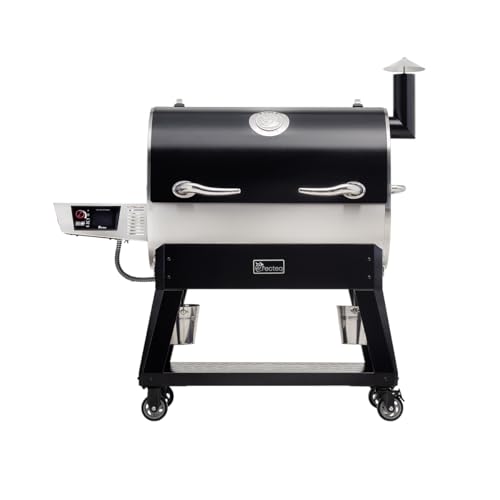
recteq Flagship 1600 — Best for Serious Pitmasters
recteq has a cult following for a reason: heavy steel, tight temperature control, and customer support owners rave about. The Flagship 1600 is the biggest expression of that formula — a genuinely enormous cooking chamber fed by a 40-pound hopper, which at typical low-and-slow burn rates means a full brisket cook, start to finish, without a single refill or a 3 a.m. low-pellet alarm.
It suits serious hobbyists, competition teams and anyone whose cooks regularly fill multiple shelves. The Wi-Fi app handles dual meat probes and remote adjustment cleanly. It does not suit casual buyers: the grill is big, heavy and priced in the premium tier, and lighting it to cook four burgers is like commuting in a freight truck. Buy it because your cooking volume demands it, not as a starter grill.
Ownership notes: recteq’s support culture is part of the product — owners consistently report reaching humans who cook on the same machines. The Flagship’s size also makes it a natural fit for a dedicated spot with power nearby; this is not a grill you wheel in and out of a garage weekly. With a 40 lb hopper, buy pellets by the multi-bag load when your preferred brand is available, store them dry, and you will think about fuel a few times a year instead of a few times a month.
Strengths
- 40 lb hopper enables true start-to-finish unattended long cooks
- Massive 1,667 sq in chamber for whole-event cooking
- recteq’s PID control is known for unusually tight temperature holding
Trade-offs
- Premium tier and a very large footprint
- Overkill for everyday family dinners
- Assembly and placement are two-person jobs
| Cooking area | 1,667 sq in (per Amazon title) |
| Hopper | 40 lb (per Amazon title) |
| Controller | Wi-Fi smart grill control with app |
The Flagship’s party trick is boring in the best way: you set 225°F at 9 p.m., the app graph at 7 a.m. is a nearly flat line, and the hopper still has pellets in it. That combination — capacity plus stability plus fuel — is what competitive cooks pay for, because it removes variables. Recteq also leans into stainless construction in places rivals use painted steel, which matters for longevity near coasts. If you are upgrading from a first pellet grill and know exactly why you need more room and more runtime, this is the endgame purchase.
Best for: competition cooks, big families and marathon unattended cooks / Not suited for: first-time buyers or small spaces
Check the current price on Amazon

Green Mountain Grills Ledge Prime 2.0 — Best Mid-Size All-Rounder
Green Mountain Grills has quietly built one of the best control systems in the business, and the Ledge Prime 2.0 is its full-size patio model. The peaked lid is a practical detail owners love: whole chickens, beer-can birds and tall rib racks fit without the lid kissing the food, which is a real annoyance on flat-lid barrels of similar footprint.
It suits the cook who wants something a little different from the default orange-brand choice and values the GMG app, which handles server-mode remote control well and has a loyal following. It is less suited to buyers who want the largest accessory ecosystem — Traeger’s shelf of add-ons and covers is deeper — and GMG’s dealer-style model means some parts and support flow differently than the big-box brands.
Ownership notes: GMG’s app includes a server mode that owners use for true away-from-home control, and the grill’s firmware updates have historically added features rather than just fixing bugs. The peaked lid also makes the Ledge a rotisserie-friendly and Dutch-oven-friendly cooker — tall cookware fits where flat-lid rivals foul the lid. If you cook a lot of poultry, that clearance quietly becomes your favorite spec.
Strengths
- Peaked lid fits tall cuts that foul flat-lid rivals
- Mature Wi-Fi app with good remote monitoring
- Prime 2.0 platform brings updated racking and convenience features
Trade-offs
- Smaller accessory and cover ecosystem than Traeger
- Fewer retail touchpoints; much support is online or dealer-based
- Mid-to-premium tier pricing without the flagship capacity of the Timberline
| Controller | Wi-Fi controlled (per Amazon title) |
| Lid | Peaked profile for tall cuts |
| Platform | Prime 2.0 |
The Ledge is the connoisseur’s alternative: not the biggest, not the cheapest, but thoughtfully designed in ways that show up weekly — the lid clearance, the solid app, the way the rack system slides. GMG owners tend to be repeat buyers, which tells you something about living with the product after the honeymoon. If you are cross-shopping the Ironwood, put the Ledge on the same list and decide on the details: lid shape, app feel, and which brand’s ownership style you prefer. On cooking performance alone, they are close enough that those details should decide it.
Best for: mid-size households wanting a polished non-Traeger alternative / Not suited for: accessory collectors or maximum-capacity seekers
Check the current price on Amazon
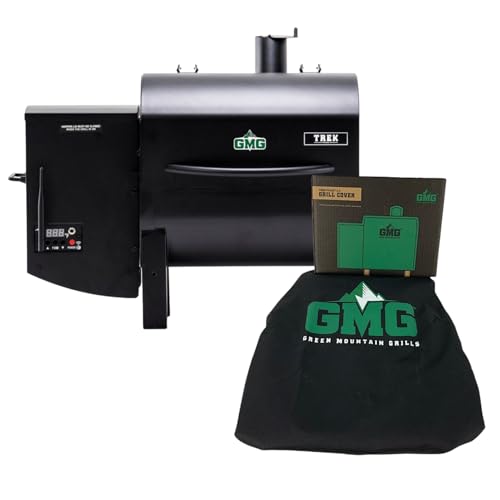
Green Mountain Grills Trek Prime 2.0 — Best Portable WiFi Pellet Grill
Every other pick in this guide lives on a patio. The Trek Prime 2.0 goes in the truck. It is a compact pellet grill with real Wi-Fi control and the ability to run from a 12V source — a vehicle battery or adapter — which makes it the only honest answer for smoked food at a tailgate, a campsite or an RV park where the big grills simply cannot follow.
It suits travelers, tailgaters, apartment dwellers with small balconies (where local rules allow pellet grills), and as a second grill for small cooks at home. The compromises are inherent to the size: the cooking area handles a couple of racks of ribs or a small butt, not a whole brisket packer with room to spare, and the hopper is sized for hours, not marathons. Within those limits, it cooks like a real pellet grill, because it is one.
Ownership notes: the Trek sips pellets compared with full-size grills, and its 12V capability means a day of smoking at a campsite costs a vehicle battery surprisingly little when managed sensibly — run the vehicle periodically on very long cooks, or use a portable power station. At home it shines as the weeknight grill: preheating a small chamber is fast, and two chicken breasts do not need a 900-degree barrel of hot air around them. Keep the included cover on in transit and it travels without complaint.
Strengths
- True portability with 12V power option for vehicles and RVs
- Full Wi-Fi control in a compact body — rare in this size class
- Cover included, per the Amazon listing
Trade-offs
- Small cooking area caps you at modest loads
- Small hopper needs topping up on longer cooks
- Not a whole-household primary grill for big families
| Power | 12V capable plus standard power (per Amazon title) |
| Controller | Wi-Fi enabled (per Amazon title) |
| Included | Cover (per Amazon title) |
The Trek’s existence changes what is possible away from home: ribs finishing while you watch the game from the parking lot, a pork butt running at the campsite while you hike, monitored from your phone the whole time. Owners also use it at home more than expected, because firing a small grill for two chicken breasts wastes fewer pellets than heating a full-size barrel. Treat it as a specialist that does its specialty brilliantly, and as a surprisingly useful second grill the rest of the year.
Best for: tailgaters, campers, RVers and small-space cooks / Not suited for: large families needing a single primary grill
Check the current price on Amazon
Comparison Table
| Pick | Badge | Key spec | Best for |
|---|---|---|---|
| Traeger Ironwood 885 | Best Overall | 885 sq in, WiFIRE, 500°F max | most households wanting one connected pellet grill that does everything well |
| Traeger Timberline 1300 | Best Premium | 1,300 sq in, three tiers, insulated | crowd cooking, competition practice and cold-climate owners |
| Pit Boss 850 Navigator Series | Best Value | 932 sq in, Flame Broiler, Wi-Fi + Bluetooth | value buyers who want searing ability and big capacity |
| recteq Flagship 1600 | Best for Serious Pitmasters | 1,667 sq in, 40 lb hopper, Wi-Fi | competition cooks, big families and marathon unattended cooks |
| Green Mountain Grills Ledge Prime 2.0 | Best Mid-Size All-Rounder | Wi-Fi control, peaked lid, Prime 2.0 | mid-size households wanting a polished non-Traeger alternative |
| Green Mountain Grills Trek Prime 2.0 | Best Portable WiFi Pellet Grill | Portable, 12V + Wi-Fi, cover included | tailgaters, campers, RVers and small-space cooks |
How to Choose a WiFi Pellet Smoker
Start with honesty about load size. Count your biggest realistic cook — not Thanksgiving once a year, but the biggest cook you do monthly. A grill in the 850–970 sq in class covers most families including parties; 1,300 sq in and up is for people who batch-cook, cater informally, or compete. Buying too big costs you pellets on every small cook, because you heat empty air; buying too small costs you a second batch on the days that matter.
Then look at the hopper. Pellet consumption at smoking temperatures is commonly around a pound an hour, more in cold or wind, less in summer. A 20 lb hopper is an overnight cook with margin; a 40 lb hopper is a weekend. If your signature cook is an overnight brisket, hopper size and a low-pellet alarm in the app are worth more than a fancier display.
Finally, decide how much the app matters to you. Everyone uses remote temperature checks. Fewer people use recipe programs. The features worth paying for are multiple probe support with alerts, remote shutdown, and a connection that stays up — ask owners about dropouts, because a Wi-Fi grill that loses the network mid-cook is just a grill with extra steps.
One more sizing consideration that spec sheets hide: grate area is measured across all tiers, but not all tiers cook alike. The main grate over the fire pot is where grilling and hard smoking happen; upper racks are gentler and better for sides, jerky and delicate items. When you compare a 1,300 sq in three-tier grill with a 900 sq in two-tier grill, the usable difference for a brisket-and-ribs cook is smaller than the headline numbers suggest — which is another reason to size by your real cooks, not by the biggest number on the page.
- Size for your monthly biggest cook, not your yearly biggest
- Hopper: ~20 lb for overnight cooks, 40 lb for marathon weekends
- Two meat probes minimum if you cook mixed loads
- Check whether control is true Wi-Fi or Bluetooth-only before buying
- Insulation matters if you cook through winter
Wi-Fi Range, Apps and What Remote Control Really Gets You
A pellet grill’s Wi-Fi is only as good as your patio signal. These grills connect on the 2.4 GHz band, which travels farther through walls than 5 GHz but is also more crowded. Before blaming any grill, stand where it will live, check your phone’s 2.4 GHz signal there, and if it is weak, a mesh node or extender near the patio door fixes more problems than any grill brand can. Thick stucco, metal siding and a grill placed behind a masonry chimney are the classic dead zones.
What remote control genuinely buys you: starting a cook and confirming ignition before you leave the store, dropping the temperature when a cook runs fast, raising it when the stall breaks late, getting a probe alert at the table instead of on the patio, and shutting down from bed. What it does not buy you: smoke flavor, bark, or tenderness — those still come from time, temperature and the meat. Buy Wi-Fi for logistics, and judge the grill underneath it as a grill first.
Pellet Quality and Running Costs
Pellets are your fuel, your smoke and your biggest running cost, so treat them like an ingredient. Use food-grade hardwood pellets from reputable makers, store them bone-dry in a sealed bin — a humidity-swollen pellet crumbles to dust, jams augers and burns dirty — and match wood to food the way you would with a stick burner: fruitwoods for pork and poultry, hickory and oak for beef, mesquite sparingly for short hot cooks.
Running cost varies with weather and temperature more than with brand of grill. Insulated models and thermal blankets cut consumption sharply in winter. Whatever you cook on, budget pellets as a per-cook cost the way a charcoal cook budgets lump, and keep a spare bag: running out of pellets at hour nine of a brisket is a rite of passage you only want once.
Temperature Control: Why PID and Insulation Matter More Than Peak Heat
Every grill in this guide advertises a temperature range, but the number that decides your results is not the maximum — it is how tightly the grill holds 225°F at 2 a.m. in a crosswind. Modern controllers use PID logic, constantly adjusting pellet feed against measured temperature, and the good ones hold within a narrow band for hours. The app graph on a well-tuned grill looks almost boring, and boring is exactly what you want to see.
Insulation is the silent partner in that stability. A double-wall or fully insulated barrel loses less heat to the night air, so the controller feeds fewer pellets and cycles less, which smooths the graph further and cuts fuel use. This is why two grills with identical controllers can behave differently in January, and why cold-climate buyers should weight insulation as heavily as cooking area. A fitted thermal blanket is the budget version of the same idea for single-wall grills.
WiFi Pellet Smoker vs Offset, Kamado and Electric Smokers
Against an offset stick burner, the pellet grill trades a measure of smoke intensity for a night’s sleep. The offset makes the deepest smoke flavor in barbecue and demands feeding every 45 minutes; the pellet grill makes very good smoke and demands almost nothing. Most home cooks, honestly assessed, are better served by the pellet grill’s consistency — competition results on pellet cookers prove the ceiling is high.
Against a kamado, the pellet grill wins on capacity, convenience and remote control, and loses on peak searing heat and charcoal flavor. Against a simple electric smoker, the pellet grill wins on flavor and versatility — it grills as well as smokes — and loses on price and simplicity. The Wi-Fi layer does not change these fundamentals; it just makes the pellet grill’s convenience advantage bigger, which is why this category keeps growing.
How to Set Up and Run Your First Overnight Cook on a WiFi Pellet Smoker
An overnight brisket is the cook these grills exist for. Set it up methodically the first time and it becomes routine.
- Charge through the burn-in first: every new pellet grill needs an initial high-heat burn to cure paint and burn off manufacturing oils, following the manual’s procedure, before any food goes on.
- Connect the grill to your home Wi-Fi in daylight, not at 10 p.m. with a brisket in hand. Update the firmware if the app offers it, and confirm you can change the temperature from your phone inside the house.
- Fill the hopper completely with dry pellets, and place a drip liner or foil on the grease tray — overnight cooks produce hours of rendered fat you do not want baking on for a month.
- Season and trim the brisket in the early evening. Insert the meat probe into the thickest part of the flat, put the meat on fat-side as your method dictates, and set the pit to your smoking temperature.
- Turn on Super Smoke or the equivalent low-temperature smoke mode for the first hours if your grill offers it, confirm the app shows the probe and pit temperatures, and set probe alerts rather than waking to check.
- In the morning, manage the stall by wrapping if that is your method, keep the hopper topped up, and use the app to nudge temperature for your timeline. Rest the brisket properly before slicing — the grill did the patience, do not rush the finish.
After the cook, run the shutdown cycle from the app, let the grill cool fully, vacuum the fire pot before the next cook, and empty ash from the barrel regularly. Five minutes of ash management is the difference between a pellet grill that ignites reliably for years and one that flames out mid-cook in year two.
Keep a simple cook log for your first season — wood type, temperature, wrap time, result. Pellet grills are so repeatable that a log turns quickly into your own playbook: you will learn that your grill runs a few degrees cool at the grate compared with the display, that a particular pellet brand burns faster, and that your family’s preferred bark comes from one extra hour unwrapped. That knowledge, not any feature, is what makes the second year of cooks better than the first.
Common Buying Mistakes
Mistake 1: Buying Bluetooth and calling it Wi-Fi. Bluetooth range is a patio, not a house. If remote monitoring from work, the store or bed is the point — and for this category it is — confirm the spec says Wi-Fi and that the app supports remote (not just local-network) control.
Mistake 2: Oversizing the grill. A 1,600 sq in grill cooking two burgers burns more pellets, takes longer to heat, and is more work to clean than an 850 sq in grill doing the same job. Match the grill to your real cooking pattern.
Mistake 3: Storing pellets in the bag in the garage. Humidity ruins pellets silently. Swollen, dusty pellets cause auger jams, temperature swings and dirty smoke, and owners blame the grill. Sealed bin, dry place, no exceptions.
Mistake 4: Never vacuuming the fire pot. Ash insulates the igniter and chokes airflow. The result is failed ignitions and flameouts blamed on electronics. A shop vac and five minutes every few cooks prevents nearly all of it.
Mistake 5: Trusting one probe in one spot. A single probe in the thickest part of the flat tells you about that spot only. Use the grill’s second probe for a second cut or a second location, and verify doneness by tenderness — probe sliding in like butter — not by temperature alone.
Mistake 6: Ignoring your patio Wi-Fi signal. If the grill drops offline, check signal strength at the grill’s location before returning anything. Most ‘bad Wi-Fi grill’ stories are actually bad patio coverage stories, fixed with one mesh node.
Mistake 7: Judging smoke by the chimney. Pellet grills burn efficiently, so their smoke is thin and blue rather than billowing white — and thin blue smoke is the good kind. New owners who chase thick smoke by running dirty, smoldering settings get bitter food. Trust the process and the meat’s color, not the cloud.
Final Recommendation
Whichever model you choose, budget for the unglamorous extras in the same order if you can: a sealed pellet storage bin, a small shop vacuum dedicated to ash, a cover that actually fits, and a second probe if the grill ships with one. Together they cost a fraction of the grill and they are the difference between a machine that feels effortless and one that feels fussy.
If you buy one grill from this page, buy the Traeger Ironwood 885: it is the most complete, best-supported connected pellet grill for the widest range of households. If your cooks are bigger or your winters are colder, step up to the Timberline 1300 or the recteq Flagship 1600 and enjoy never thinking about capacity or fuel again. If the budget is the boss, the Pit Boss Navigator 850 gives you the most cooking and a real sear for the money, and if your life happens in parking lots and campgrounds, the little GMG Trek Prime 2.0 is in a class of one.
One honest note: the Camp Chef Woodwind Pro line, with its Smoke Box for extra wood-fired flavor, is a favorite of many reviewers and worth a look at Camp Chef’s own channels — we simply could not confirm the grill itself as a current Amazon listing when this guide was verified, so it carries no link here rather than a link to the wrong product.
Related guides on this site:
Best Electric Smokers With Bluetooth Best Electric Wood Pellet Smokers Best Wifi Smokers Best Gas Grill Smokers Pellet Grill Black Friday Deals
Frequently Asked Questions
Does Wi-Fi actually improve the food from a pellet smoker?
Not directly. Wi-Fi improves information and timing — you catch a fast cook early, you rest meat on time, you stop guessing. The food improves because your process improves. The smoke, bark and tenderness still come from the grill, the pellets and the cook.
How far can I control a WiFi pellet grill from?
If the grill is on your home network and your phone has internet, most major apps let you monitor and adjust from anywhere. The grill must stay connected to your home Wi-Fi; your phone does not need to be on the same network once the grill is set up in server or cloud mode.
What happens if the Wi-Fi drops mid-cook?
The grill keeps cooking at its last set temperature — the controller is in the grill, not the cloud. You lose monitoring and remote adjustment until it reconnects. A dropped connection is an inconvenience, not a ruined brisket.
How many pellets does an overnight cook use?
Roughly a pound an hour at smoking temperatures in mild weather is a fair planning figure, rising in cold and wind and falling in summer. A full 20 lb hopper therefore covers an overnight brisket with margin on most grills in this guide.
Can a pellet grill really sear a steak?
Most top out around 500°F, which finishes a steak respectably but without a deep crust. Models with a direct-flame feature like the Pit Boss Flame Broiler do better. Many owners keep a cast iron pan or a small charcoal chimney for the final sear — the hybrid approach works well.
Are WiFi pellet smokers safe to run overnight?
They are designed for long unattended cooks, and owners run them overnight routinely. Use common sense: place the grill away from structures and combustibles, keep the grease tray clean, make sure the hopper is full, and follow the manufacturer’s clearances. A clean grill is a safe grill.
Do WiFi pellet grills work in the rain and cold?
The cooking chamber handles weather like any grill, and controllers are built for outdoor use, but heavy rain on electronics is never a friend — a cover between cooks and a sheltered spot during cooks are wise. Cold is the bigger factor: expect higher pellet consumption and slower preheats below freezing, and favor insulated models or a thermal blanket if winter cooking is a habit rather than an exception. The Wi-Fi itself is unaffected by cold; if anything, remote monitoring matters most when the weather makes patio trips miserable.


