Disclosure: airfryerkitchensupply.com is reader-supported. When you buy through links on our site, we may earn an affiliate commission at no extra cost to you.
Where to buy
Every pick in this guide to the best water vacuums was verified against Amazon’s catalog before it earned a link. Start with CRAFTSMAN 16 Gallon Wet Dry Vac with Detachable Blower, DEWALT 9 Gallon Wet/Dry Vacuum and Shop-Vac 12 Gallon Stainless Wet/Dry Vacuum. Check the current price on Amazon from any pick’s link, and confirm the tank size and accessory kit on the listing itself, because these models are sold in several capacities that look identical in photos.
The best water vacuums are the machines that can pick up water without dying in the attempt — and that phrase needs defining before any list makes sense, because “water vacuum” means two different things in the real market. The first and far more common meaning is the wet/dry vacuum: a shop-style machine with a sealed motor path, a float that shuts off suction when the tank fills with liquid, and a tank you can empty down a drain. These machines vacuum water off garage floors, out of basements, and off workshop concrete, and they handle dry debris the rest of the year. The second meaning is the water-filtration vacuum, a household canister that traps dust in a basin of water instead of a bag or a dry filter. Both are legitimate answers to this search, so this guide covers both — five wet/dry machines across the useful size range, and one true water-filtration vacuum for readers who meant the second thing.
What we excluded matters as much as what we included. Dry-only vacuums were left out no matter how powerful, because a dry-only motor path and water are a genuinely bad combination. Accessories were left out too — pumps, hose adapters and drain attachments that surface in water-vacuum searches are add-ons for machines, not machines, and a guide that pads its picks with adapters is not doing its job. Carpet spot cleaners and floor-washing mops are their own categories with their own guides; the picks below are complete vacuum machines that pick up water as a primary function.
Key Takeaways
- “Water vacuum” means a wet/dry shop vacuum for most buyers, and a water-filtration canister for some. This guide covers both and labels each pick clearly.
- Tank size is the first decision: 4–6 gallons for cars and small spills, 9–12 for garages and workshops, 16 for basements and big cleanups.
- Peak horsepower is a loose industry number; tank capacity, hose diameter and whether the machine has a drain port matter more in daily use.
- A bottom drain port is the feature you will thank yourself for — lifting a tank holding gallons of water is the worst part of wet pickup.
- Every linked pick was verified; capacities and horsepower figures below come from the listings themselves.
- Store the machine empty, dry and on the same floor as your water risk — the best water vacuum is the one working in the first five minutes of a leak.
In this guide
Quick Picks
Best Overall — CRAFTSMAN CMXEVBE17607 16 Gallon Wet Dry Vac. A 16-gallon, 6.5 peak HP machine with a detachable blower, filter, dust bag, hose and attachments — the big-tank answer for garages, basements and outdoor cleanup.
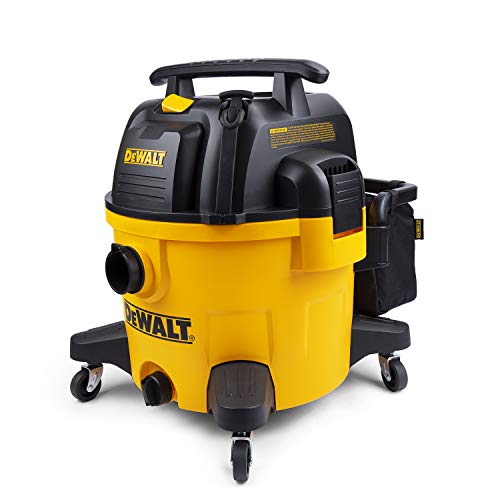
Best Mid-Size — DEWALT 9 Gallon Wet/Dry Vacuum DXV09PA. A heavy-duty 9-gallon, 5 peak HP shop vacuum with attachments and a blower function — the balanced size most workshops actually need.
Best Stainless Tank — Shop-Vac 12 Gallon Stainless Wet/Dry Vacuum. A 12-gallon, 6.0 peak HP 3-in-1 machine with a durable stainless tank and — critically for water work — a drain port.
Best Compact — STANLEY 4 Gallon Wet Dry Vacuum. A 4-gallon, 4 peak HP stainless 3-in-1 with a top handle, sized for cars, small spills and tight storage.
Best Value Garage Size — Stanley SL18116P 6 Gallon Wet/Dry Vacuum. A straightforward 6-gallon, 4 horsepower machine for the garage corner — big enough for real spills, small enough to carry with one hand when empty.
Best True Water Filtration — Sirena Water Filtration Vacuum Cleaner. A bagless canister that traps debris in water, with wet and dry pickup and pet hair tools — the premium pick for readers who meant a water-filtering household vacuum.
How These Picks Were Chosen
We filtered the catalog on one hard rule: the machine must pick up water as a designed function, stated in its own listing. That removed dry-only shop vacs, ordinary household vacuums, and a long tail of accessories — external pumps, hose adapters and drain fittings — that are sold for water vacuums but are not vacuums. We then spread the picks across the capacity range a buyer actually chooses between, because a water vacuum is bought by the job: the right answer for a flooded basement is wrong for a car interior. Brand and model for every pick were searched on this site’s own account, the returned title was matched to the machine we intended to recommend, and only listing-confirmed listings received links. Capacities and peak horsepower figures in this guide are the figures in those verified titles — we did not round them, convert them or borrow them from other models in the same line.
A second honesty note on language: listings in this category use “water vacuum,” “wet dry vac,” “wet/dry vacuum” and “shop vac” almost interchangeably, and the differences in wording carry no technical meaning. What carries meaning is the specification underneath — a sealed liquid path, a float shut-off, and a tank designed to be emptied of water. Every pick in this guide was checked for those three things in its verified listing, which is why a handful of high-horsepower machines that are dry-only by design did not make the list despite ranking well in generic searches.
One honesty note on horsepower: “peak HP” in this category is a laboratory maximum, not a working figure, and every brand plays the same game. We report it because the listings state it and it gives a rough sense of motor class, but the comparison that matters is tank size against your floor space, hose reach against your room, and a drain port against your willingness to lift dirty water.
The 6 Best Water Vacuums

CRAFTSMAN CMXEVBE17607 16 Gallon Wet Dry Vac — Best Overall
Sixteen gallons is a lot of vacuum, and that is precisely the point. When water is the job — a basement that took on rain, a water heater that gave up, a garage floor under an inch of melt — small tanks turn the job into a relay race of emptying trips. The CRAFTSMAN pairs that big tank with a 6.5 peak HP motor, a filter and dust bag for dry work, a hose and attachments in the box, and a detachable blower, so the same machine that vacuums the flood can blow the leaves off the porch in October. It is the most complete single answer to “water vacuum” we verified.
Strengths
- 16-gallon tank means fewer emptying trips during big water jobs.
- Detachable blower adds a second tool without a second purchase.
- Ships with filter, dust bag, hose and attachments for both wet and dry work.
Trade-offs
- Full of water, this tank is extremely heavy — plan your drain route before you start.
- The footprint is large; apartment and closet storage are not its strengths.
- More machine than a car interior or a single sink spill will ever need.
Spec box
- Capacity: 16 gallons
- Motor: 6.5 peak HP (as listed)
- Type: wet/dry shop vacuum with detachable blower
- Includes: filter, dust bag, hose and attachments
For scale, picture the jobs this tank size exists for: a standard water heater holds roughly this machine’s capacity several times over, and a burst washing-machine hose can put this tank’s worth of water on a floor in minutes. The CRAFTSMAN will not prevent the mess, but it is the difference between a cleanup measured in trips counted on one hand and one measured in dozens. The ownership detail that separates a good big vac from a frustrating one is emptying. Sixteen gallons of water weighs well over a hundred pounds, so you will not carry this tank anywhere full — you will wheel it to a floor drain, a sump or a sloped driveway, and the job will go exactly as well as that route allows. Walk the route before the emergency, not during it. For dry work, keep the dust bag in for fine debris like drywall dust and take it out for wet pickup, and rinse the tank after dirty water rather than letting it dry in place. Treated that way, a machine in this class is a decade-long appliance. Check the current price on Amazon.
Best for: homeowners with basements, big garages and real flood risk. / Not suited for: small-space storage or anyone who only ever cleans a car.
DEWALT 9 Gallon Wet/Dry Vacuum DXV09PA — Best Mid-Size
Nine gallons is the size workshops actually live with: large enough that a serious spill is one trip, small enough that the machine still tucks under a bench. The DEWALT DXV09PA is a heavy-duty build at 5 peak HP with attachments included and a blower function, from a brand whose shop equipment is designed to be knocked around. For a garage that does double duty — cars, projects, the occasional plumbing disaster — this is the balanced pick.
Strengths
- 9-gallon capacity hits the garage/workshop sweet spot.
- Heavy-duty construction suited to jobsite-style knocks.
- Blower function plus included attachments cover dry cleanup as well as water.
Trade-offs
- Still heavy when full of water — nine gallons is roughly seventy-five pounds of liquid.
- Too large to live in a car trunk or a small closet.
- Basement-scale flooding will still mean multiple emptying trips.
Spec box
- Capacity: 9 gallons
- Motor: 5 peak HP (as listed)
- Type: wet/dry shop vacuum with blower function
- Includes: attachments (as listed)
What we like about the mid-size class is honesty of purpose. The 16-gallon machines sell on worst-case thinking, but most water events in most homes are a few gallons: a washing machine hose, a toilet supply line, a window well. A 9-gallon machine swallows those whole, stores in half the space, and is the one you will actually grab for dry messes too, because it is not a production to get out. If your water risk is a basement with a history, size up to the CRAFTSMAN; if your risk is the ordinary accidents of a house with plumbing, this is the right scale. Check the current price on Amazon.
Best for: garages and workshops that want one machine for spills and projects alike. / Not suited for: repeated large-volume flooding.

Shop-Vac 12 Gallon Stainless Wet/Dry Vacuum — Best Stainless Tank
Shop-Vac is the name that became the category, and this 12-gallon stainless model shows why the brand endures: 6.0 peak HP, a 3-in-1 design, attachments included, and a durable stainless steel tank. But the feature that earns it this slot in a water guide is the drain port. A drain port turns emptying twelve gallons of dirty water from a lifting problem into a hose-and-gravity problem, and anyone who has tipped a full plastic tank into a utility sink will understand that this is not a small thing.
Strengths
- Drain port makes wet emptying dramatically easier and safer.
- Stainless tank shrugs off dents and does not hold odors the way plastic can.
- 12-gallon capacity with 6.0 peak HP covers big jobs without the 16-gallon footprint.
Trade-offs
- Stainless shows every scratch and dent cosmetically, even though it works fine.
- Still a large machine to store and to move between floors.
- The drain sits low; you still need a floor-level drain or slope to use it well.
Spec box
- Capacity: 12 gallons
- Motor: 6.0 peak HP (as listed)
- Tank: stainless steel, with drain port
- Type: 3-in-1 wet/dry vacuum with attachments
The stainless question deserves a straight answer: plastic tanks are lighter and cheaper, stainless tanks are tougher and easier to truly clean after foul water — flood water, pet accidents, workshop runoff. If your water vacuum will mostly meet clean water, plastic is fine and this pick’s premium buys you little. If it will meet the dirty kind, stainless plus a drain port is the combination that keeps the machine pleasant to own in year three. Position matters too: store it near the drain you will use, on the same floor as the risk. Check the current price on Amazon.
Best for: workshops, farms and homes where the water being vacuumed is dirty. / Not suited for: buyers who need to carry the machine up and down stairs routinely.

STANLEY 4 Gallon Wet Dry Vacuum — Best Compact
Not every water job is a flood. A leaking sink trap, a car footwell after a spilled cooler, a dehumidifier that overflowed — these are one-to-three-gallon events, and dragging out a 16-gallon machine for them is why big vacuums end up unused. The STANLEY 4-gallon is a stainless 3-in-1 (vacuum, wet pickup, blower) at 4 peak HP with a top handle, built for job sites, garages and basements but sized like something you can keep in a closet and carry in one hand.
Strengths
- Compact 4-gallon size stores anywhere and carries easily.
- Stainless tank in a small machine is unusual and genuinely durable.
- 3-in-1 design covers dry messes and blowing, not just water.
Trade-offs
- Four gallons fills fast — real flooding means constant emptying.
- Smaller hose and tools are slower on large floor areas.
- Not the pick for drywall dust or renovation debris volumes.
Spec box
- Capacity: 4 gallons
- Motor: 4 peak HP (as listed)
- Tank: stainless steel
- Type: 3-in-1 wet/dry vacuum and blower, top handle
Compact wet/dry vacs earn their keep in the first month: the aquarium water-change spill, the cooler in the trunk, the bathroom leak caught early. Because it is small, you will reach for it for dry jobs too — car interiors especially, where its size and handle make it a better tool than a full-size shop vac on an extension cord. Just buy it with clear eyes: it is a spill machine, not a flood machine, and pairing it with a household’s worth of water risk means knowing the difference. Check the current price on Amazon.
Best for: cars, apartments, small spills and tight storage. / Not suited for: basements with flooding history.

Stanley SL18116P 6 Gallon Wet/Dry Vacuum — Best Value Garage Size
The SL18116P is the unglamorous middle: 6 gallons, 4 horsepower, black tank, no detachable blower theatrics. It is also, for a great many garages, exactly enough machine. Six gallons covers the water heater drip pan, the freezer defrost accident and the entryway melt puddle, and the machine stays light enough to hang on a wall hook or slide under a workbench. If the compact STANLEY is a touch small and the 9-gallon DEWALT is more than your space allows, this is the size between.
Strengths
- 6-gallon size balances spill capacity against storage and weight.
- Simple, proven shop-vac format with widely available filters and bags.
- Light enough empty to move between garage, basement and driveway without planning.
Trade-offs
- No drain port at this size — emptying means tipping the tank.
- Basic accessory package compared with the larger picks.
- Plastic tank needs a rinse-and-dry habit after dirty water.
Spec box
- Capacity: 6 gallons
- Motor: 4 horsepower (as listed)
- Type: wet/dry vacuum
Six gallons of water is about fifty pounds, which is the practical ceiling for tipping a tank into a sink or over a driveway edge without drama — that, more than any spec, is why this size exists. Our advice for this class is storage discipline: keep it empty, dry and coiled near where water accidents happen, because a wet/dry vac stored full of last month’s water, in the far corner, behind the paint cans, will not be the machine you grab when the pipe bursts. Check the current price on Amazon.
Best for: ordinary garages and basements with ordinary spill risk. / Not suited for: workshops generating heavy dry debris daily.

Sirena Water Filtration Vacuum Cleaner — Best True Water Filtration
The Sirena is the other meaning of “water vacuum,” done properly: a bagless canister whose dirt chamber is a basin of water, so dust and debris are trapped in water instead of a bag or dry filter. The verified listing is the Premium Pack, with wet and dry pickup, pet hair tools, two Twister air purifiers in the bundle and a turbo brush. This is a household vacuum for floors and furnishings — it will pick up a spill, but its purpose is daily cleaning with water-based filtration, and it sits at a premium tier compared with every shop vac above.
Strengths
- Water-basin filtration — no bags, and dirt leaves the house in the water you pour away.
- Wet and dry pickup in a household canister format.
- Pet hair tools and turbo brush included in the verified Premium Pack.
Trade-offs
- Premium tier pricing; this is not a garage utility purchase.
- The water basin must be emptied and rinsed after every use — a real routine commitment.
- Not built for construction debris, large floods or workshop abuse.
Spec box
- Type: water-filtration canister vacuum, bagless
- Pickup: wet and dry
- Bundle: Premium Pack with pet hair tools and turbo brush (as listed)
Who should buy this? The reader who typed “water vacuum” meaning the filtration kind — typically someone managing dust sensitivity in the household, or who dislikes bags and dry filters on principle. The Sirena’s routine is its character: fill the basin, vacuum, pour the dirty water away, rinse. Owners who keep that routine get a machine that never loses its filter to clogging because the filter is water. Owners who will not keep the routine should buy a shop vac from the five picks above and be happier. We include it because a guide to water vacuums that ignored the filtration meaning would fail half its readers. Check the current price on Amazon.
Best for: households that specifically want water-based filtration for daily cleaning. / Not suited for: garages, workshops, floods or anyone who will skip the basin routine.
Comparison Table
| Pick | Badge | Key spec | Best for |
|---|---|---|---|
| CRAFTSMAN 16 Gal Wet Dry Vac | Best Overall | 16 gal, 6.5 peak HP, detachable blower | Basements and big water jobs |
| DEWALT 9 Gal Wet/Dry DXV09PA | Best Mid-Size | 9 gal, 5 peak HP, blower function | Garages and workshops |
| Shop-Vac 12 Gal Stainless | Best Stainless Tank | 12 gal, 6.0 peak HP, drain port | Dirty water and heavy use |
| STANLEY 4 Gal Wet Dry | Best Compact | 4 gal, 4 peak HP, stainless | Cars and small spills |
| Stanley SL18116P 6 Gal | Best Value Garage Size | 6 gal, 4 HP | Everyday garage spills |
| Sirena Water Filtration | Best True Water Filtration | Water-basin canister, wet and dry | Daily household cleaning |
How to Choose a Water Vacuum
Decide the meaning first. If your problem is water where it should not be — floors, basements, garages — you want a wet/dry shop vacuum, and the rest of this section is about sizing it. If your problem is dust in a home and you want filtration that uses water, you want the Sirena’s category, and tank gallons are irrelevant to you. Confusing the two is the most common and most expensive mistake in this category: a shop vac is a miserable daily household vacuum, and a filtration canister is a miserable flood tool.
For wet/dry machines, size by the largest plausible spill, not the average one. A toilet or sink leak is a gallon or two; a washing machine or water heater failure is five to fifteen; a flooded basement is “however much is down there.” Then be honest about emptying: every gallon is about eight pounds, and a tank you cannot move when full must have a drain port or a wheeled path to a drain. Hose diameter matters for debris — wider hoses clog less on leaves, insulation and workshop waste — while hose length matters for reach from a dry corner into a wet room. Finally, look at the float and filter arrangement in the listing: wet pickup requires the float to be free-moving and, on most machines, the dry filter removed or swapped, which the how-to section below covers.
Wet/Dry Vacuums vs Water-Filtration Vacuums: The Honest Difference
A wet/dry vacuum moves water. Its tank is a bucket with a motor on top, its genius is indestructibility, and its filtration is an afterthought designed to protect the motor. A water-filtration vacuum cleans with water: the basin is the filter, suction pulls air through it, and debris stays in the water. It cannot move meaningful volumes of standing water, and it should never meet construction debris. Neither machine is a carpet extractor — machines that spray solution and recover it from carpet are a third category — and neither replaces a pump when a basement is under inches of water; a vacuum fills its tank and stops, while a pump runs continuously. Knowing which of the three jobs you actually have is most of choosing well.
How to Vacuum Water Safely, Step by Step
First, make the area electrically safe: water and cords are a bad mix, so plug into a GFCI-protected outlet and keep the machine itself on the driest ground available. Second, prepare the machine — remove the dust bag, and follow your model’s guidance on the filter (many machines want the foam sleeve or wet filter in place and the dry cartridge out for liquid pickup; the listings and manuals for the picks above state their own arrangement). Third, work from the edge of the water toward the deepest part, moving the floor tool slowly; water needs dwell time to enter the hose, and rushing skates over the surface. Fourth, listen for the pitch change and watch the tank level: when the float rises and shuts off suction, stop and empty — forcing past the float risks pulling water into the motor. Fifth, empty promptly, rinse the tank, and let the machine dry with the lid off before storage. A wet/dry vac put away wet is a mildew farm by the next emergency. Never vacuum flammable liquids, hot ashes or hazardous spills with any machine in this guide — water capability is not hazard capability.
Capacity, Translated: What the Gallons Mean in Real Rooms
Numbers on a box are abstract until you map them to water you have actually seen. Four gallons is a large bucket — a spilled cooler, a leaking trap caught in time, a car footwell. Six gallons is a mop bucket and a half, and it covers most single-appliance accidents. Nine to twelve gallons is where machine size starts helping more than it hinders for garage and basement owners: a water heater’s drip pan plus its surrounding floor, a sump pit bailed by vacuum, a section of flooded utility room. Sixteen gallons is flood equipment — the size you buy when the question is not whether the basement will take water but how often. Buy for the event you plausibly face, then check the stored size against your actual shelf, because the best water vacuum is the one that is empty, dry and reachable when the pipe bursts at midnight.
Filters, Bags and the Float: The Hardware That Makes Wet Pickup Work
Three parts decide whether a shop vacuum is genuinely a water vacuum or merely a dry machine with ambitions. The first is the float: a buoyant valve in the intake cage that rises with the water level and seals the motor path when the tank is full. It is the entire safety system of wet pickup, and it only works if it moves freely — a float gummed with last season’s debris is a float that fails during this season’s flood. Check it when you empty the tank; it takes ten seconds and it is the difference between a stopped vacuum and a drowned motor.
The second is the filter arrangement. Dry pickup wants fine filtration — a cartridge, often helped by a dust bag that keeps the cartridge clean and makes emptying tidy. Wet pickup wants the opposite philosophy: water must reach the tank without soaking a paper filter into a plug, so most machines ask you to remove the bag and either run a foam sleeve or the wet-rated filter the maker specifies. The third part is the tank itself: seams, lid seal and drain. A lid seal that leaks under sloshing load will mist dirty water out of the machine on the way to the drain, which is why the stainless Shop-Vac’s build and drain port matter in practice, not just on paper. None of these parts is glamorous, and all three together are the actual product you are buying.
Matching the Machine to the Job: Five Real Scenarios
The car. Spilled coolers, melted snow, wet dogs and the occasional forgotten window in a rainstorm. Volumes are small, access is tight, and the machine lives in the garage, not the trunk. The 4-gallon STANLEY is the honest pick; anything bigger is friction you will avoid by not cleaning at all.
The laundry and utility room. Appliance leaks are the most common household water event, and they reward proximity: the machine stored in the same room gets used in the first five minutes, when a gallon on the floor is still a nuisance instead of a subfloor problem. A 6-gallon machine like the Stanley SL18116P, kept empty and dry in that room, is worth more than a 16-gallon machine kept in the garage.
The workshop. Coolant spills, wet sawdust, the mop bucket knocked over, plus daily dry debris. This is the 9-to-12-gallon class — the DEWALT or the stainless Shop-Vac — where the drain port and tank material start paying rent, because workshop water is dirty water.
The basement with a history. If the floor has flooded before, it will flood again, and the vacuum’s role is the edges: window wells, corners, the last half-inch a pump cannot take, and the first response to a water heater failure. The 16-gallon CRAFTSMAN is sized for this, paired with the discipline of a walked drain route.
The whole house, daily. If your “water” interest is filtration rather than flooding, none of the shop vacs is your machine — they are loud, coarse and joyless on carpet. The Sirena’s water-basin canister is the pick, with its daily basin routine accepted as the price of bagless water filtration.
Care and Storage: The Difference Between a Decade and a Season
Wet/dry vacuums are famously durable and quietly easy to ruin, and the ruining is almost always storage. The rules are simple. Empty water the same day — dirty water left in a tank corrodes, stains and grows. Rinse after dirty jobs and dry with the lid off; a machine stored sealed and damp will smell like a swamp at the next use and will aerosolize that smell across the room you are cleaning. Keep the dry filter dry: a cartridge that got wet during a rushed changeover should be replaced, not dried and trusted. Coil the hose without kinks, because a kinked hose is a permanent weak point in suction. And once a season, do the two-minute service: check the float moves, check the lid seal is supple, check the cord for nicks — shop vacs live around water and electricity, and the cord is the part everyone ignores. Follow that much and any machine in this guide should serve for years; ignore it and the best machine here will disappoint you by its second flood.
Common Buying Mistakes
The first mistake is buying a dry-only vacuum for wet work because the listing photos show it in a garage; if wet pickup is not a stated function, the motor path is not protected and the float is not there. The second is buying by peak horsepower, a number every brand inflates the same way, instead of by capacity and drain arrangements. The third is ignoring the emptying problem — a 16-gallon tank without a drain plan is a 130-pound problem you created for yourself. The fourth is storing the machine wet, which grows mildew and corrodes, and guarantees the next use starts with cleaning the cleaner. The fifth is expecting a vacuum to do a pump’s job in deep water. And the sixth is padding the purchase with accessory pumps and adapters before owning the machine a month — learn your actual jobs first; the drain port you chose at purchase will matter more than any adapter you bolt on later.
Accessories: What Is Worth Owning and What Can Wait
Because accessory listings crowd this category, a short guide to them belongs in an honest roundup. Worth owning from day one: a wet floor nozzle with a squeegee edge, which moves water far faster than a utility nozzle; spare foam sleeves or wet filters for your model, because the day you need the machine is the wrong day to discover the filter is soaked from last time; and, for workshop owners, a muffler diffuser if your model accepts one — it takes the edge off the noise that makes these machines antisocial. Worth owning eventually: a longer hose if your basement geometry demands it, and a crevice tool for car work. Safe to skip until a real job demands it: external pump attachments, specialty drain adapters and conversion kits — they solve specific plumbing puzzles, and buying them speculatively mostly buys clutter. The through-line of this guide applies to accessories too: the machine, sized and drained correctly, does the work; accessories only polish the edges of a decision you already got right.
What You Get at Each Tier
Wet/dry vacuums divide cleanly by tier, and the tiers buy different things than most buyers expect. The budget tier buys capacity and a motor — the Stanley 6-gallon class — and what it leaves out is refinement: no drain port, basic tools, a plastic tank. That is a rational purchase for spill duty, because spills do not care about refinement. The mid tier buys build: heavier housings, better wheels and latches, blower functions and accessory kits that cover a workshop’s dry work as well as its wet accidents — the DEWALT’s territory. The upper shop tier buys emptying and endurance — stainless tanks, drain ports, capacities that treat flooding as a normal Tuesday — which is the Shop-Vac 12-gallon and CRAFTSMAN 16-gallon class. The Sirena sits outside this ladder entirely: its premium buys a different technology, water filtration for daily home cleaning, and comparing its price against shop vacs is comparing a dishwasher against a mop bucket. Choose your ladder first — spill, workshop, flood or filtration — then choose within it, and you will not overpay for capacity you will never fill or underbuy for the one night the basement floods.
A Short Word on Noise and Power Draw
Two practicalities rarely appear in listings and always appear in ownership. Shop vacuums are loud — genuinely, wear-hearing-protection-in-a-small-room loud — and the big motors are the loudest. If your water risk lives in a finished basement below bedrooms, plan wet work accordingly and keep protection with the machine. The same motors draw serious current, so a big vac and a freezer and a space heater on one circuit will find the breaker for you; give the machine its own circuit during flood work, when you least need a second problem. Neither point is a reason to avoid the category — they are reasons the compact picks exist, and why the right-sized machine is usually the one that gets used.
Final Recommendation
Most readers should buy the DEWALT 9 Gallon for a garage or workshop, or the CRAFTSMAN 16 Gallon if a basement with water history is part of the house. Choose the Shop-Vac 12 Gallon Stainless when the water is dirty and a drain port will save your back, the STANLEY 4 Gallon for cars and small spaces, and the Stanley 6 Gallon for the ordinary garage middle. If you meant filtration rather than flood duty, the Sirena is the one true water-filtration pick we verified. For narrower jobs, see our guides to Best Bissell Wet Dry Vacuums, Best Cordless Wet Dry Vacuums, Best Wet Dry Vacuum For Hardwood Floors And Area Rugs, Best Vacuums For Wet Floors and Best Standing Wet Dry Vacuums.
Related guides
Frequently Asked Questions
Can a wet/dry vacuum replace a water pump in a flooded basement?
No. A vacuum fills its tank and stops — even a 16-gallon machine is many trips against a real flood — while a pump discharges continuously through a hose. Use the vacuum for shallow water, corners and the final cleanup after a pump has done the bulk work.
Do I need to remove the filter before vacuuming water?
On most shop vacs, you remove the dust bag and either remove the dry cartridge filter or swap to the wet/foam arrangement your model specifies. The float valve is what protects the motor when the tank fills. Check your model’s listing or manual — each pick above states its own setup.
What does “peak HP” actually mean?
It is a laboratory maximum measured at the motor, not the suction you experience at the hose. Every brand uses it, so it roughly indicates motor class within the category, but capacity, hose size and drain design will affect your daily use far more.
Where should I store a wet/dry vacuum?
On the same floor as the water risk, near the drain you will empty it into, empty and dry. A vacuum stored upstairs for a basement problem, or full and sealed from the last job, fails the only test that matters — whether it is working in the first five minutes of the next leak.
Can I vacuum water off carpet with a shop vac?
A wet/dry vac will pull surface water and a surprising amount from padding, which is genuinely useful in an emergency, but it does not wash carpet and it is not an extractor. For solution-and-recovery carpet cleaning, that is a separate machine category.
How do I stop a wet/dry vac from smelling after water use?
Empty it the same day, rinse the tank, wipe the float and lid underside, and store it with the lid ajar until everything is dry. The smell is almost always mildew from a machine put away wet, not the machine itself.
Can I use a wet/dry vacuum for aquarium water changes?
Many owners do use small shop vacs to drain aquariums and sumps, and a compact machine like the 4-gallon STANLEY suits the volumes involved. Rinse the tank before and after — whatever the tank last held should not meet your fish — and never use a machine for an aquarium if it has ever vacuumed chemicals, solvents or workshop runoff. A dedicated, clean machine is the safe version of this idea.
Stainless or plastic tank — does it matter?
For clean water and occasional use, plastic is lighter, cheaper and entirely adequate. For dirty water, daily workshop use or a machine you intend to keep for a decade, stainless resists odor absorption, cleans up more completely and tolerates dents that would crack an aging plastic tank. It is a durability and hygiene choice, not a performance one — suction does not care what the tank is made of.
How long a hose do I need?
Long enough to keep the machine on dry ground while the tool reaches the wettest corner — that principle beats any number. For most garages and utility rooms the hose included with the picks above is sufficient; for basements, measure from your likely outlet and drain positions before assuming you need an extension, because every added hose length costs suction.
Is a water-filtration vacuum better for allergies?
Water-basin filtration traps debris in water so emptying does not puff dust back into the room, which many households prefer. This guide makes no medical claims — if dust sensitivity is a health concern in your home, treat the Sirena’s design as a cleaning preference and discuss the health side with your clinician.


