Disclosure: airfryerkitchensupply.com is reader-supported. When you buy through links on our site, we may earn an affiliate commission at no extra cost to you.
Where to Buy
The best vacuums for water removal are the ones ready when the water is. Water does not wait for shipping, so a note before the links: every vacuum below was confirmed in Amazon’s catalog, with tank sizes and horsepower figures quoted from the listings themselves, and with each machine’s wet capability stated in its own catalog record rather than assumed from its shape or its marketing photographs. If you are reading this with a wet basement, buy for the tank size your worst day needs, check the current price on Amazon, and confirm the model is in stock near you — the best water vacuum is the one that arrives before the next rain:
- DEWALT 9 Gallon Wet/Dry VAC, DXV09PA — check price on Amazon
- CRAFTSMAN 16 Gallon Wet Dry Vac, CMXEVBE17607 — check price on Amazon
- Shop-Vac 12 Gallon Stainless Wet/Dry Vacuum — check price on Amazon
- STANLEY 6 Gallon Wet/Dry Vacuum, SL18116P — check price on Amazon
- Armor All 2.5 Gallon Wet/Dry Utility Vac, AA255W — check price on Amazon
- DEWALT 20V MAX 2 Gallon Wet/Dry Shop Vacuum, DCV581H — check price on Amazon
Introduction
The best vacuums for water removal are wet/dry shop vacuums, and the reason is simple physics: a household vacuum — upright, canister or robot — is built for dry debris and will be damaged, sometimes dangerously, by standing water. A wet/dry vac is built for the opposite day: the burst washing-machine hose, the sump pit that lost its race with the storm, the water heater that gave up at 2 a.m. Its sealed motor path, foam sleeve and float shut-off let it drink water by the gallon and hold it in a tank you can wheel to a drain. Choosing one is mostly about capacity and emptying: how much water your worst plausible day delivers, and how you will get it out of the tank when the tank is full and weighs as much as a person.
Every pick in this guide was verified, and the spread is deliberate: a 16-gallon flood fighter, a 12-gallon stainless model with a drain port, a balanced 9-gallon all-rounder, a 6-gallon mid-size, a 2.5-gallon spill specialist, and a 2-gallon cordless for the jobs where the power is out or the water is somewhere a cord should not go. Along the way this guide will be honest about the category’s limits — a shop vac moves water off a floor and out of a carpet; it is not a pump that runs unattended, and for a basement that floods to depth, the buying guide explains the pump-accessory route that pairs with these machines.
Safety belongs in the introduction, not the footnotes, because water and electricity share this entire category: work from dry ground where you can, use a GFCI-protected outlet, never let the vacuum’s own cord or plug sit in the water you are removing, and if the water may be contaminated — sewage, chemicals, floodwater that has crossed a yard — treat the cleanup as a hazmat job in gloves and mask, or call professionals. The machines below are the right tools; the guidance in the how-to section is how to stay the right operator.
Key Takeaways
- Only wet/dry vacuums belong in standing water — a household dry vacuum can be damaged and can shock; there is no exception worth testing, not even for one small puddle by the door.
- Tank size is the headline spec: 2.5 gallons for spills, 6–9 for appliances and rooms, 12–16 for basements and true floods that arrive with the weather.
- A full tank is a heavy tank — a gallon of water weighs over eight pounds all by itself, so drain ports and wheel-ability matter as much as suction.
- Peak horsepower figures are the listings’ own; treat them as rough size classes only, and judge water work by tank, hose diameter and float shut-off instead.
- For deep or recurring basement water, pair the vac with a pump accessory or a dedicated pump — a shop vac is a batch tool worked by hand, not an unattended drain.
- After any wet job: empty, rinse, and dry the tank and filter, or the vacuum becomes a mildew farm by next weekend.
- Store the machine assembled for wet work, near the water it serves — a vacuum that needs twenty minutes of setup arrives twenty minutes into the emergency.
- The float valve cutting suction is the tank-full signal, not a breakdown: empty, and the machine is ready again.
In this guide
Quick Picks
Best Overall — DEWALT 9 Gallon Wet/Dry VAC, DXV09PA. Five peak HP, a 9-gallon tank and a blower function in the size class that handles a room, an appliance failure or a modest basement corner without drama. Check the current price on Amazon
Best for Big Floods — CRAFTSMAN 16 Gallon Wet Dry Vac, CMXEVBE17607. The largest tank in this guide at 6.5 peak HP, with attachments and a detachable blower — the machine for a basement that means it. Check the current price on Amazon
Best with Drain Port — Shop-Vac 12 Gallon Stainless Wet/Dry Vacuum. A stainless 12-gallon tank at 6.0 peak HP with a drain port, so emptying happens through a hose instead of by tipping a hundredweight of water. Check the current price on Amazon
Best Mid-Size — STANLEY 6 Gallon Wet/Dry Vacuum, SL18116P. Four horsepower and six gallons: the water heater, laundry room and garage size, light enough to carry upstairs empty and big enough to matter. Check the current price on Amazon
Best for Small Spills — Armor All 2.5 Gallon Wet/Dry Utility Vac, AA255W. A compact 2.5-gallon, 2 peak HP utility vac that lives in a closet and answers sink overflows, pet accidents and car footwell floods. Check the current price on Amazon
Best Cordless — DEWALT 20V MAX 2 Gallon Shop Vacuum, DCV581H. Runs cordless or corded, with a HEPA filter and wide nozzle — the pick for power outages, boats, vehicles and anywhere a cord and water should not meet. Check the current price on Amazon
How These Picks Were Chosen
The first filter was categorical: only true wet/dry vacuums — machines whose listings state wet capability — were eligible. That excluded the hard-floor wet mops that share shelf space in search results (they wash floors with clean water; they do not remove flood water), dry-only shop vacuums, and pump accessories standing alone, though one verified pump accessory is discussed in the buying guide as the partner these machines sometimes need. Every survivor was verified: ASIN, brand, tank capacity and the listing’s own horsepower figure all read from Amazon’s catalog data, drawn from this program’s verified cache.
Capacity drove the slot allocation, because in water work the tank is destiny: too small and you spend the flood walking loads to a drain; too large and the full machine cannot be moved by the person who owns it. We therefore built the guide as a ladder — 2, 2.5, 6, 9, 12 and 16 gallons — with each rung justified by the jobs it actually serves, and we flagged the emptying method (carry, wheel, or drain port) in every review, because a full 16-gallon tank is a two-person or drain-port proposition and buyers deserve to know that before the water is inside it.
Horsepower is handled honestly: peak HP is a laboratory maximum quoted by each listing, useful as a size class and useless as a promise, so this guide reports the figures as stated and judges the machines on capacity, build and emptying instead. Prices were never a filter and are never printed; check the current price on Amazon for the rung of the ladder you need.
The ladder also explains what is not here. Cordless handhelds and car vacuums with token wet capability were passed over for every rung above the smallest: their tanks are measured in cups, and water removal is a gallons game. They appear in this guide only where cordlessness itself is the requirement — the DEWALT 2-gallon, whose mobility is a genuine water feature in outages and on boats — and the Armor All takes the small-spill slot on tank size and utility build rather than on novelty. Every slot, in other words, is a machine we would hand a neighbor at midnight without an apology attached.
The 6 Best Vacuums for Water Removal
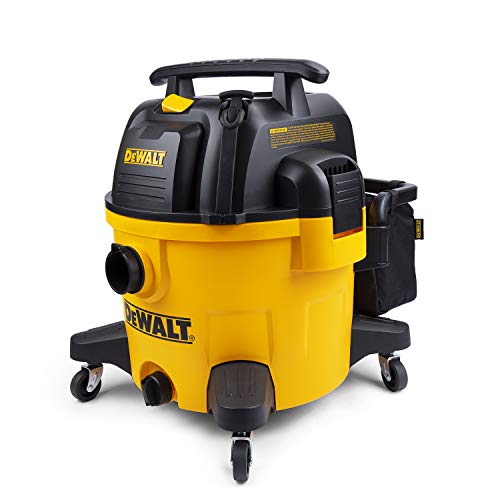
DEWALT 9 Gallon Wet/Dry VAC, DXV09PA — Best Overall
Nine gallons is the size class where a wet/dry vac stops being an appliance accessory and becomes household infrastructure, and DEWALT’s version is the balanced execution of it: a verified 9-gallon tank, 5 peak HP, attachments included, and a blower function for the second half of flood day, when you are pushing water toward the vac and drying what remains. It is big enough to take a water heater’s surrender or a laundry room flood in one or two tanks, small enough for one person to wheel, empty and store in a garage corner. For the median homeowner’s worst water day, this is the machine that matches the day.
Strengths
- The balanced capacity: one tank handles most appliance floods; two handle a room.
- Blower function doubles the machine’s usefulness on cleanup day — moving water, leaves and dust with the same motor.
- DEWALT’s build and attachment ecosystem suit owners who will also use it as their garage shop vac year-round.
Trade-offs
- No drain port is claimed in the listing — emptying means tipping or lifting a tank that, full, weighs like a full suitcase and then some.
- For a true basement flood it will make many trips; the 16-gallon CRAFTSMAN exists for that day.
- Corded only: in a power outage, this machine waits with everyone else.
| Spec | Verified detail |
|---|---|
| Tank | 9 gallons |
| Power | 5 peak HP (per listing) |
| Extras | Blower function, attachments included |
| Model | DXV09PA |
Judge this pick as the household’s one-vacuum answer: water removal is its emergency role, but the same machine will vacuum the car, the workshop and the renovation dust for a decade, which is how a purchase like this justifies its garage footprint. Keep it stored with the wet setup ready — foam sleeve fitted, hose attached — because flood day is not the day to learn where the attachments live. Paired with a water alarm by the heater and the washer, the DXV09PA turns the two most common household floods from insurance claims into annoying afternoons.
Best for: most homeowners — the one wet/dry vac that covers appliance floods, rooms and year-round shop duty. / Not suited for: deep basement floods or outage-prone homes needing cordless backup.

CRAFTSMAN 16 Gallon Wet Dry Vac, CMXEVBE17607 — Best for Big Floods
When the water is measured in rooms rather than gallons, tank size stops being a spec and becomes the whole strategy. The CRAFTSMAN is the biggest verified machine in this guide: a 16-gallon tank, 6.5 peak HP, a full attachment set, and a detachable blower. Sixteen gallons between emptying trips is the difference between a basement recovery that progresses and one that treads water — literally — while the operator ferries buckets. This is the vac for houses with flood history, big basements, sump pits with ambitions, and workshops where a roof leak meets a floor drain that lost.
Strengths
- Largest tank here — fewest emptying trips on the worst days.
- 6.5 peak HP is the strongest listing figure in the guide, matched to the big tank’s workload.
- Detachable blower and full attachments make it a complete jobsite-class machine beyond water duty.
Trade-offs
- A full 16-gallon tank holds well over a hundred pounds of water. It must be wheeled to a drain or emptied in stages — nobody is lifting it, and the listing claims no drain port.
- Its storage footprint is the largest here; small garages will feel it.
- For a mere sink overflow it is comically oversized — the small picks exist for a reason.
| Spec | Verified detail |
|---|---|
| Tank | 16 gallons |
| Power | 6.5 peak HP (per listing) |
| Extras | Detachable blower, filter, dust bag, hose and attachments |
| Model | CMXEVBE17607 |
The operating doctrine for this machine is positioning: park it at the lowest point of the work, run the hose to the water rather than dragging a filling tank across the floor, and plan the emptying route — floor drain, sump pit, or a doorway with a downhill run — before the first gallon goes in. Owners in genuinely flood-prone homes should also read the pump section of the buying guide: at some depth and duration, the right answer becomes vac-plus-pump, and this CRAFTSMAN is the vac half of that pairing. For everyone else, it is insurance with a motor, bought once and cursed never.
Best for: flood-prone homes, large basements and serious workshops. / Not suited for: small homes, upstairs storage, or anyone who cannot wheel a very heavy full tank.

Shop-Vac 12 Gallon Stainless Wet/Dry Vacuum — Best with Drain Port
The Shop-Vac’s headline is a small fitting with enormous consequences: a drain port. Twelve gallons of water is roughly a hundred pounds; with a drain port, emptying means attaching a hose, opening the port and letting gravity file the paperwork, instead of tipping a stainless drum and hoping. The listing confirms the rest of the package — 12-gallon stainless steel tank, 6.0 peak HP, 3-in-1 function with attachments — aimed at jobsite, garage and workshop duty. Stainless matters in water service specifically: it does not hold odors the way plastic can, it rinses clean, and it shrugs off the dents that wet work distributes.
Strengths
- Drain port emptying — the single most valuable water-removal feature after the tank itself.
- Stainless tank resists odor retention and corrosion across years of wet jobs.
- 12 gallons is the sweet spot between the 9-gallon all-rounder and the flood-class 16.
Trade-offs
- Draining still needs somewhere for the water to go — a floor drain or a downhill hose run; the port moves water, it does not vanish it.
- Stainless and size make it a substantial machine to store.
- Like the CRAFTSMAN, it is corded and full-weight when loaded, even if the port spares you the lift.
| Spec | Verified detail |
|---|---|
| Tank | 12 gallons, stainless steel |
| Power | 6.0 peak HP (per listing) |
| Key feature | Drain port |
| Function | 3-in-1 with attachments |
This is the pick for the experienced buyer — the one who has emptied a shop vac by tipping it exactly once. Workshops with a floor drain, garages with a sloped apron, and basements with a sump pit all convert the drain port from a bullet point into the machine’s whole personality. It is also the best choice here for recurring water: rental properties, wash-down work areas, and any site where water removal is a weekly task rather than an annual emergency, because tasks done weekly are won or lost on exactly this kind of friction.
Best for: workshops and basements with a drain, recurring water work, and anyone who has tipped a full tank before. / Not suited for: homes with nowhere to drain to, or minimal storage.

STANLEY 6 Gallon Wet/Dry Vacuum, SL18116P — Best Mid-Size
Six gallons is the honest middle: enough for a dishwasher’s betrayal, a toilet tank failure, a water heater’s drip pan overflow or a serious tracked-in slush event, in a machine one person can carry upstairs empty and store in a utility closet. The STANLEY SL18116P is verified at 6 gallons and 4 horsepower in black — a straightforward, no-drama specification aimed at the garage and the home. It will not win a basement flood alone, and this guide will not claim otherwise; it will win the ten smaller water days that happen for every one flood, and it will win them without a wrestling match.
Strengths
- The carry-it-yourself size class: real capacity, apartment-and-closet-friendly storage.
- 4 HP is a sensible match for the tank — the machine empties its own size class quickly.
- STANLEY’s distribution makes filters and bags easy to source when the wet job is done.
Trade-offs
- Six gallons means multiple trips on room-scale water; it is a helper in a flood, not the answer.
- No drain port is claimed — full-tank emptying is a lift-and-tip at sink or tub height.
- Homeowners with flood history should buy up a class; this is the no-history size.
| Spec | Verified detail |
|---|---|
| Tank | 6 gallons |
| Power | 4 HP (per listing) |
| Model | SL18116P |
The STANLEY is also the natural second machine for houses that already own a flood-class vac: the big CRAFTSMAN lives in the garage for the basement’s sake, and the 6-gallon lives near the laundry room for everything else, because the vac that gets used is the vac that is close. Condo and townhouse owners, for whom a 16-gallon machine is a storage impossibility, should read this pick as their Best Overall and size their expectations accordingly: it handles the water events that actually happen in attached housing, which are appliance events, not river events.
Best for: apartments, condos, laundry-room duty and as a second, handy vac in larger homes. / Not suited for: flood-prone basements as the only line of defense.
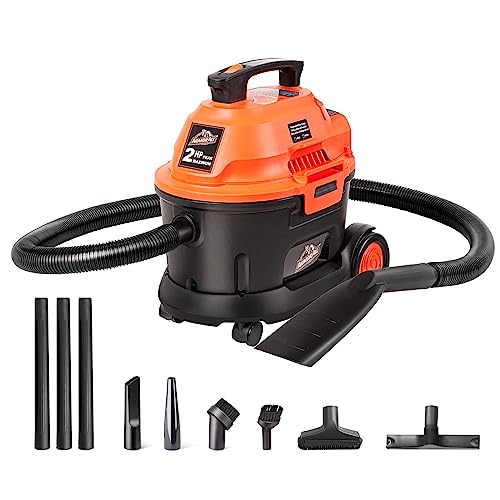
Armor All 2.5 Gallon Wet/Dry Utility Vac, AA255W — Best for Small Spills
Most household water is not a flood; it is a spill with ambitions — the sink that overflowed during a phone call, the aquarium incident, the pet bowl tsunami, the car footwell after a window left cracked in the rain. The Armor All AA255W is built for that scale: a verified 2.5-gallon tank at 2 peak HP in a compact utility body that stores in a closet, carries in one hand, and deploys in the time a bigger machine takes to unroll its cord. Its brand heritage is automotive, which shows in the right way: this is the vac that lives where small water happens, including the garage and the car itself.
Strengths
- Fastest deployment in the guide — small water is a race, and this machine is already at the scene.
- Closet-scale storage makes it the only realistic wet vac for small apartments.
- Equally at home on car interiors, where its size and utility shape beat every bigger pick.
Trade-offs
- 2.5 gallons is a spill tool, full stop: a burst hose will outpace it in minutes.
- Small tanks mean frequent emptying even within its intended jobs.
- It is a supplement in a flood-prone home, never the plan.
| Spec | Verified detail |
|---|---|
| Tank | 2.5 gallons |
| Power | 2 peak HP (per listing) |
| Model | AA255W |
There is a behavioral truth in this pick’s favor: the tool that is present gets used, and small water left to “dry on its own” is how baseboards swell and subfloors mildew. A 2.5-gallon vac in the closet converts a spill from a towel-and-regret event into a five-minute non-event, dozens of times a year. Buy it as the household’s first responder, keep a big sibling in mind if your home has flood exposure, and let each machine do the work its tank was sized for.
Best for: spills, cars, aquariums, pet water and small-space living. / Not suited for: any event involving a hose, a heater tank or a weather forecast.
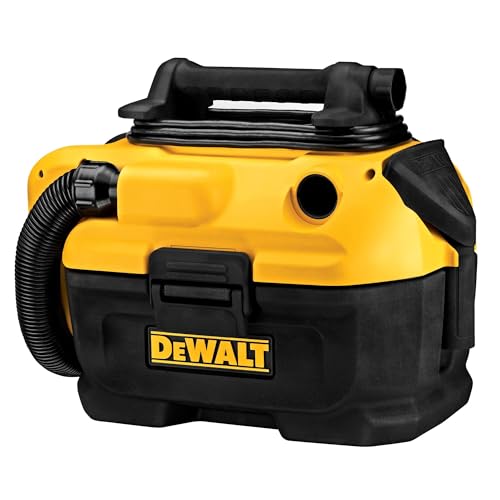
DEWALT 20V MAX 2 Gallon Shop Vacuum, DCV581H — Best Cordless
The DCV581H answers the scenario the corded picks cannot: the power is out, the storm is still overhead, and water is coming in — or the water is in a boat, an RV, a truck bed or a crawl space where dragging a cord through water is a bad idea on its face. DEWALT’s 2-gallon machine runs on the 20V MAX battery platform or plugged in, with a wide nozzle, a HEPA filter per the listing, and — the detail that matters — it is sold as tool only, so it suits the many households already carrying DEWALT batteries. Two gallons is small; the freedom is the product.
Strengths
- Cordless or corded operation — the only pick that works in a blackout or a boat.
- HEPA filtration, per the listing, is a genuine step up for the dry work between water jobs.
- Shares batteries with the enormous 20V MAX tool family many garages already own.
Trade-offs
- Tool only: buyers without a 20V MAX battery and charger must add them, changing the real cost entirely.
- Two gallons empties fast under real inflow; it buys time and mobility, not capacity.
- Battery runtime bounds a flood shift — this is a sprinter beside the corded marathoners.
| Spec | Verified detail |
|---|---|
| Tank | 2 gallons |
| Power | 20V MAX battery or corded |
| Filter | HEPA (per listing) |
| Model | DCV581H, tool only |
Position this machine correctly and it is invaluable: the first-response vac that reaches the water while the corded machine is still being fetched, the outage vac, the vehicle and vessel vac. DEWALT households will find it the easiest purchase in this guide — it slots into a battery drawer that already exists. Everyone else should do the honest arithmetic of tool-plus-battery before comparing it against the Armor All’s simplicity, and flood-prone homes should treat it as the cordless partner to a corded main machine, not as a replacement for one.
Best for: DEWALT battery owners, boats and RVs, outage-prone homes and first response. / Not suited for: sustained flooding, or buyers starting a battery platform from zero for this alone.
Comparison Table
| Pick | Badge | Key spec | Best for |
|---|---|---|---|
| DEWALT 9 Gal DXV09PA | Best Overall | 9 gal, 5 peak HP, blower | The one-vac household |
| CRAFTSMAN 16 Gal | Best for Big Floods | 16 gal, 6.5 peak HP, detach blower | Basements, flood history |
| Shop-Vac 12 Gal Stainless | Best with Drain Port | 12 gal stainless, 6.0 peak HP, drain port | Workshops, recurring water |
| STANLEY 6 Gal SL18116P | Best Mid-Size | 6 gal, 4 HP | Condos, laundry rooms |
| Armor All 2.5 Gal AA255W | Best for Small Spills | 2.5 gal, 2 peak HP | Spills, cars, closets |
| DEWALT 20V 2 Gal DCV581H | Best Cordless | 2 gal, battery or corded, HEPA | Outages, boats, first response |
How to Choose a Vacuum for Water Removal
Size the tank to your water, not your optimism. Inventory your home’s water risks honestly: a washing machine and a water heater are 40-to-50-gallon events if they let go fully, but in practice you will catch them mid-event, and a 9-gallon vac making steady trips beats a 16-gallon vac you cannot store. Basements below the water table, homes with sump history, and properties that have flooded before should skip the optimism entirely and buy the 12-to-16-gallon class, with the drain-port question settled in favor of the Shop-Vac if a floor drain exists.
Then plan the emptying before you plan the sucking. Water weighs about eight pounds a gallon: a full 9-gallon tank is a heavy carry, a full 16 is a team lift or a staged drain. Ask where the water goes — floor drain, sump pit, toilet, or a doorway with fall — and whether you will tip, wheel or drain-port it there. The right machine is the one whose full state you can still manage at hour two of a bad night, tired and in slippers.
Consider also where the machine will live, because readiness is a feature. A wet/dry vac stored disassembled in a distant shed is, on flood night, a rumor. The households that handle water well keep the vac near the risk — basement corner, laundry room, garage bay by the water heater — assembled for wet work with the hose on. That logic favors the mid-size picks more often than spec sheets suggest: a 9-gallon machine stored beside the heater beats a 16-gallon machine stored across the property, right up until the night the basement truly floods, which is why flood-history homes should find the big machine a near-the-risk home as a deliberate act of interior planning.
Finally, know the category boundary: a wet/dry vac removes water in batches, under your hand. If your basement takes on water faster than a person can ferry tanks, or floods while nobody is home, the vac needs a partner — a pump. Verified options exist in the same catalog ecosystem, including Vacmaster’s Wet/Dry Pump Accessory (PE401), which is designed to work with wet/dry vacuums to move water out continuously; this guide did not make it a pick because it is an accessory, not a vacuum, but for genuinely wet basements it is the correct next purchase after the CRAFTSMAN or Shop-Vac, and a dedicated submersible pump is the step beyond that.
How to Remove Water With a Wet/Dry Vacuum, Safely
- Step 1: Make the scene safe first. Kill power to flooded circuits if water is near outlets, work from the driest ground available, plug the vac into a GFCI outlet, and keep its cord and plug out of the water at all times.
- Step 2: Set the machine up for wet work per its manual — typically the foam sleeve or wet filter arrangement, with any dry dust bag removed. A paper dry bag left in during water pickup disintegrates and clogs the works.
- Step 3: Start at the deepest water and work toward the drain or door, using slow, overlapping passes with the floor nozzle. The float valve will shut suction off when the tank is full — that sound is your cue to empty, not to shake the machine and continue.
- Step 4: Empty by your plan: drain port to the floor drain, wheel to the sump, or tip at a tub. Never carry a brim-full large tank on stairs.
- Step 5: Once the standing water is gone, switch to extraction passes on carpet and rugs — slow pulls that draw water up from the pad — then run fans and a dehumidifier for days, not hours. The vac removes water; only airflow removes damp.
- Step 6: Clean the machine the same day: empty, rinse the tank, wash and fully dry the filter and sleeve before storage. A wet vac stored wet grows the mildew you will smell at its next use.
Inside the Machine: The Three Parts That Decide Water Work
A wet/dry vac is a simple machine, and three components decide whether it is good at water specifically. The float is the quiet hero: a ball or cage that rises with the tank’s water level and seals the suction path before water can reach the motor. It is why the machine suddenly loses suction at a full tank — a feature announcing itself — and it should move freely; a float stuck with grit after a dirty job is the most common cause of a vac that “died” in water. Rinse it when you rinse the tank. The foam sleeve is the wet-work filter: where dry work uses a paper filter or bag to catch dust, wet pickup typically runs on the foam sleeve alone, because paper disintegrates in water. Every bad wet-vac story that ends with a clogged, pulpy mess began with a dry bag left in place.
The hose is the third decider, and the least discussed. Water work rewards a wide hose: narrow hoses clog on the grit, leaves and debris that travel with real flood water, and every clog costs minutes with a full tank standing by. When you compare machines within a size class, the one with the stouter hose and the floor nozzle that seals well to hard floors will clear a room measurably faster, whatever the peak horsepower sticker says. None of the listings in this guide’s verification stated hose diameters, so we do not rank on them — but in the store or on the product page, it is the spec to check after tank and drain.
After the Water: Drying the Room, Not Just the Floor
Removing standing water is the dramatic half of the job; drying is the half that decides whether the room recovers or mildews. The clock is unforgiving: porous materials that stay damp for a day or two become a mold project, so the hours after the last tank is emptied are for airflow, not admiration. Run every fan you own across the wet surfaces, dehumidify the room with the doors closed if you have the machine, and lift what can be lifted — rugs to a dry surface, carpet edges where the pad is soaked, furniture onto blocks or foil squares so legs do not wick water for a week.
Baseboards and wall bottoms deserve suspicion: water wicks up drywall well above the visible line, and a room can look dry while the wall’s first inches are quietly soaked. A moisture meter is a modest purchase that answers the question honestly, and in a serious flood, cutting a small inspection opening at the baseboard is cheaper than the alternative discovered in spring. The vacuum’s role ends at the floor’s surface — this guide’s picks do that job at six scales — but the homeowner who treats the vac’s last pass as the finish line learns the difference between dry and dry-looking exactly once.
Document as you dry, if insurance may ever be involved: photographs of the water at its worst, of the source once found, and of the drying setup in place are worth more than any recollection offered weeks later. Keep the failed part — the split hose, the dead water heater’s data plate — until the claim story is closed. None of this is the vacuum’s job, but all of it belongs to the same bad day, and the household that handles the paperwork half as well as the water half recovers faster in every sense that matters.
Common Buying Mistakes
- Using a household vacuum on water. Uprights, canisters, sticks and robots are dry machines. Water in them means damage at best and a shock hazard at worst. There is no “just a little water” exception.
- Buying by peak horsepower. Peak HP is a lab figure, quoted differently across brands. Tank size, emptying method and hose setup decide real water work; the listings’ HP figures in this guide are reported as size classes, not promises.
- Ignoring the full-tank problem. A 16-gallon vac is a wonderful machine and a hundred-plus pounds full. If you cannot wheel or drain it where it will work, buy the size you can empty.
- Expecting a vac to be a pump. A shop vac works in batches while you attend it. Recurring or unattended water needs a pump or a pump accessory; pretending otherwise is how basements lose.
- Storing it wet. The post-job rinse-and-dry takes ten minutes and is the difference between a machine that lasts a decade and one that smells like a swamp by its second flood.
Final Recommendation
Most homes should buy the DEWALT 9-gallon and stop deliberating: it covers the realistic worst day and earns its keep the other 364 days. Homes with flood history should go straight to the CRAFTSMAN 16-gallon — or the Shop-Vac 12-gallon with drain port if a floor drain makes its emptying effortless — and small homes should take the STANLEY and the Armor All as a pair. For brand-specific wet/dry shopping, see Best Bissell Wet Dry Vacuums; for floor-level water specifically, Best Vacuums For Wet Floors narrows the field; and the wider water family is covered by Best Water Vacuums. Garage-first buyers can compare Best Large Shop Vacuums, and anyone who liked the cordless idea should browse Best Cordless Wet Dry Vacuums.
Related guides
Frequently Asked Questions
Can I use my regular vacuum to pick up water?
No. Household vacuums are dry machines: water can ruin the motor and filter and creates a shock risk, and their warranties will not be sympathetic. Only a vacuum whose listing states wet/dry capability — every pick in this guide — belongs in standing water, set up for wet work as its manual directs.
What size wet/dry vac do I need for a basement?
For a basement with any flood history, buy the 12-to-16-gallon class: the Shop-Vac 12 with its drain port if you have a floor drain, the CRAFTSMAN 16 if you do not and can wheel it. For a dry-history basement that might see an appliance leak, the 9-gallon DEWALT is the proportionate choice. Size for the emptying as much as the filling — a full big tank is very heavy.
How do I empty a full wet/dry vacuum?
Three ways, in order of dignity: through a drain port into a floor drain or hose run (the Shop-Vac’s advantage), by wheeling the tank to a sump pit or doorway and tipping it with control, or — for small tanks only — by lifting and pouring at a tub or utility sink. Never carry a large full tank on stairs, and never tip a full tank toward yourself. If the water came from anywhere questionable — a sewer backup, a flooded yard, a chemical spill — empty it where it will not re-enter the house’s clean plumbing story, and disinfect the tank before its next dry job.
Is a bigger tank always better?
No — bigger is better only at the moment of the flood, and worse at every other moment: storage, carrying, cleaning, and the price of the machine all scale with the tank, and a full big tank is the heaviest object in this guide. The right tank is the largest one you can store near the risk, wheel when full, and empty without heroics. For most homes that is the 9-gallon class; the 16 earns its size only where water history says it will be used.
Will a wet/dry vac get water out of carpet?
Yes, with technique: after the standing water is gone, make slow extraction passes that pull water up from the carpet and pad, working from the edges toward the room’s low point, emptying as the float demands. Then the real drying begins — fans, dehumidifier, and lifting carpet edges if the pad is soaked. The vac removes the water it can reach; airflow finishes what suction starts.
When do I need a pump instead of a vacuum?
When water arrives faster than you can ferry tanks, when it pools deeper than a few inches over a wide area, or when it comes in while nobody is home to work. A pump — or a pump accessory made for wet/dry vacuums, like the Vacmaster PE401 noted in the buying guide — moves water continuously through a hose. Think of the vac as your hands and the pump as your plumbing; bad basements eventually need both.
Can a wet/dry vac handle dirty or debris-filled water?
Within reason, yes — that tolerance is the category’s point. Shop vacs swallow the grit, leaves and small debris that travel with real flood water, which is why the foam sleeve and float exist. What they cannot do is pass large solids or construction rubble, and sewage-contaminated water changes the job entirely: gloves, mask, disinfection of the machine afterward, and a low threshold for calling professionals instead. When in doubt about what is in the water, treat it as contaminated.
Should I keep the vacuum set up for wet work all the time?
If your home has any flood exposure, yes: foam sleeve fitted, hose attached, stored near the water risks it serves — by the water heater, in the basement corner, in the laundry room’s reach. A wet/dry vac stored in dry configuration with its attachments in a lost box is a machine that arrives twenty minutes into the emergency. The ten minutes of setup belong to a calm afternoon, not to the night the hose bursts.
What should I do with the vacuum after a water job?
Empty it, rinse the tank, wash the filter and foam sleeve, and let everything dry fully before reassembly and storage — the same day, not next weekend. Check the float moves freely, coil the hose dry, and store the machine ready for wet work. Ten minutes of this is what separates a ten-year machine from a mildew farm with a cord.


