Disclosure: airfryerkitchensupply.com is reader-supported. When you buy through links on our site, we may earn an affiliate commission at no extra cost to you.
Where to Buy
Every linked pick below was cross-checked against Amazon’s own catalog data before it earned a link. Use the shortcuts here, or keep reading for the full reviews.
- DEWALT 20V MAX Cordless Shop Vac, 2 Gallon (DCV580H) — Best Overall (check price on Amazon)
- CRAFTSMAN V20 Cordless Wet/Dry Vacuum, 2 Gallon (CMCV002B) — Best Value on a Tool Battery (check price on Amazon)
- Milwaukee M18 Wet/Dry Vacuum (0880-20P) with XC5.0 Starter Kit — Best for M18 Owners and Job Sites (check price on Amazon)
- RYOBI 18V ONE+ Cordless Wet/Dry Hand Vacuum (PCL702B) — Best Compact Handheld (check price on Amazon)
- Vacmaster 2.5-Gal 20V Cordless Portable Wet/Dry Vac (DVOM202P 1101) — Best Budget Capacity (check price on Amazon)
- Tineco iFLOOR 2 Complete Cordless Wet Dry Vacuum — Best for Hard Floors (Washer Type) (check price on Amazon)
The best cordless wet dry vacuums solve the two messes that defeat ordinary vacuums: liquid and heavy debris. A spilled bucket in the basement, a leaking water heater, a car full of beach sand and melted-ice water, a workshop floor of screws and sawdust — a dry-only vacuum must not touch the first two and chokes on the last. A wet/dry vacuum is built with a sealed motor path, a tank instead of a bag or cup, and the ability to swallow water, grit and chunky debris without complaint. Cutting the cord matters more here than in any other vacuum category, because wet messes happen where outlets are not: at the far end of a basement, in a driveway, on a job site, beside a pool pump.
This roundup covers the cordless wet/dry market in its two real forms. The first five picks are tank machines — cordless shop-vac-style vacuums from the big tool-battery platforms (DEWALT 20V MAX, CRAFTSMAN V20, Milwaukee M18, RYOBI 18V) plus a Vacmaster — which vacuum dry debris and liquids alike and run on the same batteries as your drills. The sixth pick, Tineco’s iFLOOR 2, is the other species: a cordless floor washer that vacuums and washes hard floors in one pass. It does not do what the tank machines do, and they do not do what it does; we include it, clearly labeled, because many shoppers typing this search actually want their kitchen floor washed, not their basement drained.
Every pick was verified — four of the tank machines in a fresh verification run for this guide, the rest from this site’s verified cache — and specifications are quoted only from those verified listings. Most of these machines are sold as bare tools, and the listings say so; read the badges with your battery shelf in mind, because the best wet/dry vacuum is the one whose battery you already own.
Key Takeaways
- Battery platform is the first decision: five of six picks run on tool batteries (DEWALT 20V MAX, CRAFTSMAN V20, Milwaukee M18, RYOBI 18V, Vacmaster 20V) — buy into the platform already on your shelf.
- Tank size in this roundup runs from a half-gallon-class handheld (RYOBI) to 2.5 gallons (Vacmaster); bigger tanks mean fewer trips to empty water, which is heavy.
- Most tank picks are bare tools — battery and charger not included — and their listings say so. Budget for a battery if you are new to the platform.
- The DEWALT DCV580H is the only pick whose verified listing names a HEPA filter; keep filter claims at exactly the level each listing states.
- The Tineco iFLOOR 2 is a floor washer, not a shop vac: it vacuums and washes hard floors but will not drain a basement or pick up screws.
- Wet pickup rule for all tank picks: remove or configure the filter as the maker directs before vacuuming liquid, and empty and dry the tank after — a wet/dry vac stored wet smells like it.
In this guide
Quick Picks
Best Overall: DEWALT 20V MAX Cordless Shop Vac, 2 Gallon (DCV580H) — check price on Amazon
Best Value on a Tool Battery: CRAFTSMAN V20 Cordless Wet/Dry Vacuum, 2 Gallon (CMCV002B) — check price on Amazon
Best for M18 Owners and Job Sites: Milwaukee M18 Wet/Dry Vacuum (0880-20P) with XC5.0 Starter Kit — check price on Amazon
Best Compact Handheld: RYOBI 18V ONE+ Cordless Wet/Dry Hand Vacuum (PCL702B) — check price on Amazon
Best Budget Capacity: Vacmaster 2.5-Gal 20V Cordless Portable Wet/Dry Vac (DVOM202P 1101) — check price on Amazon
Best for Hard Floors (Washer Type): Tineco iFLOOR 2 Complete Cordless Wet Dry Vacuum — check price on Amazon
How These Picks Were Chosen
We split the search’s intent before shortlisting, because ‘cordless wet dry vacuum’ hides two different products: tank machines that vacuum liquid and debris, and floor washers that vacuum and mop hard floors. Both are represented, labeled, and never blurred. For the tank machines we required verified listings confirming cordless operation, wet/dry capability and tank or format data; we cut corded shop vacs (the keyword says cordless), wet/dry accessories and pump attachments (parts, not vacuums), and 12V car-only plug-in models.
Verification ran: the DEWALT 2-gallon, CRAFTSMAN V20, Vacmaster and the poolside of alternatives were confirmed in a fresh search run for this guide, and the Milwaukee and RYOBI come from this site’s verified API cache. Four of the six were therefore confirmed on the day this guide was written, and every specification in the review boxes traces to a verified listing — including the inconvenient ones, like bare-tool packaging, which the reviews state rather than soften.
Badges were assigned by platform and by job, because in this category the platform is half the purchase. A technically excellent vacuum on a battery system you do not own is an ecosystem decision wearing a vacuum costume, and the guide treats it that way throughout.
The 6 Best Cordless Wet Dry Vacuums

DEWALT 20V MAX Cordless Shop Vac, 2 Gallon (DCV580H) — Best Overall
The DCV580H is the cordless wet/dry vacuum we would hand to most people, because it is the most complete package in the class: a real 2-gallon tank, a hose-based shop-vac format that reaches under benches and into car footwells, and — unique in this roundup — a HEPA filter named right in the verified listing. That filter matters for the dry half of the job: drywall dust, fine sawdust and the gritty dust of a garage are exactly the particles a basic foam sleeve lets through, and a HEPA-equipped machine keeps them in the tank.
Two gallons is the sweet spot for a cordless tank. It holds a meaningful amount of water — a mop bucket’s worth of spill, a drained appliance tray, a wet car carpet’s extracted moisture — without becoming a two-handed carry when full of liquid. Water is heavy, and every gallon above two is a gallon you lift at arm’s length to a sink. For flooded rooms you will make trips; for the ninety percent of wet/dry work that is spills, leaks and vehicles, two gallons is right.
The honest cost is the platform buy-in: the listing states plainly that the battery is not included. If your shelf already holds DEWALT 20V MAX batteries, this is the easiest recommendation in the guide. If it does not, price a battery and charger into the comparison — or look at the CRAFTSMAN and Vacmaster picks, which play the same bare-tool game at friendlier entry points.
Strengths
- HEPA filter named in the listing — the strongest filtration claim in this roundup
- 2-gallon tank is the practical sweet spot for spills and vehicles
- DEWALT 20V MAX platform means batteries shared with a huge tool range
Trade-offs
- Battery and charger not included — real cost if you are new to the platform
- 2 gallons means trips on genuinely flooded rooms
- Shop-vac format is bulkier to store than the handheld RYOBI
| Spec | Detail (from the verified listing) |
|---|---|
| Tank | 2 gallon |
| Filter | HEPA filter (as named in the verified listing) |
| Platform | DEWALT 20V MAX |
| In the box per listing | Battery not included — bare tool |
Best for: homeowners and DEWALT owners who want one machine for spills, cars, garages and workshops / Not suited for: anyone without 20V MAX batteries who is not willing to buy into the platform
Check the current price on Amazon

CRAFTSMAN V20 Cordless Wet/Dry Vacuum, 2 Gallon (CMCV002B) — Best Value on a Tool Battery
The CRAFTSMAN CMCV002B is the same idea as the DEWALT — a 2-gallon cordless tank vac on a tool-battery platform — executed for the V20 ecosystem and, characteristically for CRAFTSMAN, aimed at the value end of the shelf. The specification that stands out in its verified listing is the 7-foot hose. Hose reach is the unglamorous spec that decides real-world usefulness in a shop vac: it is the difference between vacuuming out a car from outside it and climbing in with the tank, and between reaching a sump corner and moving the machine into the puddle with you.
As a wet machine, the 2-gallon tank matches the DEWALT’s practical class: spills, leaks, wet vehicles, drained fixtures. As a dry machine it takes the workshop debris — screws, offcuts, gravel — that bagless home vacuums refuse. The V20 platform is the deciding context: households that already run CRAFTSMAN V20 drills and garden tools get a wet/dry vac for the price of a bare tool, which is the cheapest legitimate way to own this category.
The listing is a bare-tool listing and says so; if you own no V20 batteries, the starter cost narrows the gap to the DEWALT. And the verified listing does not name a HEPA filter for this model, so fine-dust work should be planned accordingly — it is a debris and liquid machine first. Judged as value inside its platform, it is excellent; judged outside it, the platform is the product.
Strengths
- 7 ft hose gives the best working reach in this roundup
- 2-gallon tank matches the class leaders for spills and vehicles
- Outstanding value for households already on CRAFTSMAN V20 batteries
Trade-offs
- Bare tool only — battery and charger are extra for new V20 owners
- No HEPA filter named in the verified listing
- Value case depends entirely on owning the platform
| Spec | Detail (from the verified listing) |
|---|---|
| Tank | 2 gallon |
| Hose | 7 ft (per verified listing) |
| Platform | CRAFTSMAN V20 |
| In the box per listing | Bare tool only |
Best for: CRAFTSMAN V20 households wanting wet/dry capability at bare-tool cost / Not suited for: fine-dust work where HEPA filtration is the priority
Check the current price on Amazon
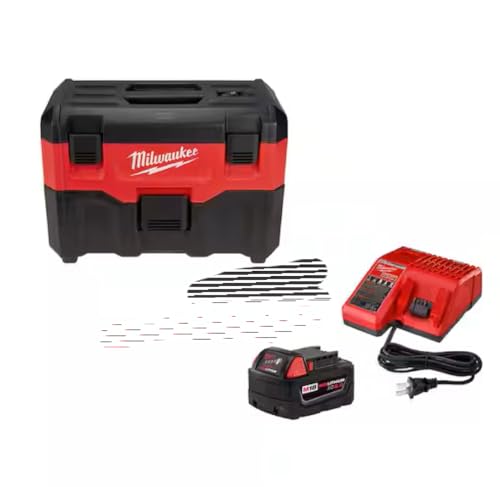
Milwaukee M18 Wet/Dry Vacuum (0880-20P) with XC5.0 Starter Kit — Best for M18 Owners and Job Sites
Milwaukee’s M18 wet/dry vacuum is the job-site pick, and its listing makes one decision easier than the other bare tools here: it is sold with an XC5.0 starter kit, so the box addresses the battery question that the DEWALT and CRAFTSMAN leave open. For an M18 household that is a convenience; for a tradesperson it is a spare high-capacity pack in the rotation, which is how pros actually value bundles.
The M18 platform context is the deepest in the tool world, and this vacuum is built for the environments that platform serves: sites without convenient power, wet cuts and core-drill slurry nearby, vehicles and plant rooms. A cordless wet/dry on site is not a luxury — water and trailing cables are a bad combination, and the cordless machine goes to the spill instead of the spill’s extension cord coming to it.
The verified cache listing for this model is brief — it confirms the model, the platform and the starter kit — so we do not print a tank size or filter specification for it, and buyers comparing gallon-for-gallon should confirm the tank figure on the product page. What is not in doubt is the proposition: if your batteries are red, this is your wet/dry vacuum, and the bundle makes it the simplest purchase in the roundup.
Strengths
- Starter kit in the box removes the bare-tool battery problem
- M18 is the deepest tool platform in this roundup
- Job-site logic: no trailing cable near water
Trade-offs
- Verified listing data is brief — tank size not stated in the data we confirmed
- Premium platform pricing applies if you are buying in from zero
- Overkill for a household that only wants car spills cleaned
| Spec | Detail (from the verified listing) |
|---|---|
| Platform | Milwaukee M18 |
| Model | 0880-20P |
| In the box per listing | XC5.0 starter kit (battery kit) included |
Best for: Milwaukee M18 owners, tradespeople and site work where water and cables must not mix / Not suited for: budget shoppers or buyers who need a fully documented tank spec before ordering
Check the current price on Amazon

RYOBI 18V ONE+ Cordless Wet/Dry Hand Vacuum (PCL702B) — Best Compact Handheld
The RYOBI PCL702B shrinks the wet/dry idea into a hand vacuum, and that format change is its whole argument. The tank machines above are the right answer to a flooded corner; they are the wrong answer to a spilled drink, a knocked-over plant saucer, a pet bowl incident or the gritty water that pools by a back door — jobs where fetching a shop vac means the spill gets a towel instead. A wet/dry hand vac that lives on the ONE+ platform is already charged, already in the house, and sized for the spill in front of you.
RYOBI’s ONE+ platform is the most consumer-friendly of the tool ecosystems — a vast range of tools and garden gear on one battery — so the odds that a household already owns a compatible battery are high, which matters because this is a tool-only listing. The hand format also makes it the natural car companion of the group: wet mats, sand, and the melted-snow slush of winter footwells are exactly its scale.
Respect its scale, though. A hand vacuum’s tank is measured in cups and pints, not gallons; it is a spill tool, not a flood tool, and using it as one means emptying it a dozen times and resenting it. Pair it mentally with a tank machine for the big water, or accept it as the only wet/dry tool in a small home whose water problems are honestly spill-sized.
Strengths
- Hand-vac format means it gets used for the spills that actually happen daily
- ONE+ platform gives it the widest consumer battery compatibility here
- Doubles as the car wet/dry tool for mats and footwells
Trade-offs
- Small tank — a spill tool, not a flood tool
- Tool only; needs an ONE+ battery you may have to buy
- Cannot match a tank machine’s hose reach or debris capacity
| Spec | Detail (from the verified listing) |
|---|---|
| Type | Cordless wet/dry hand vacuum |
| Platform | RYOBI 18V ONE+ |
| In the box per listing | Tool only |
Best for: apartments and ONE+ households whose wet messes are spills, not floods / Not suited for: basements, garages and anyone draining real volumes of water
Check the current price on Amazon
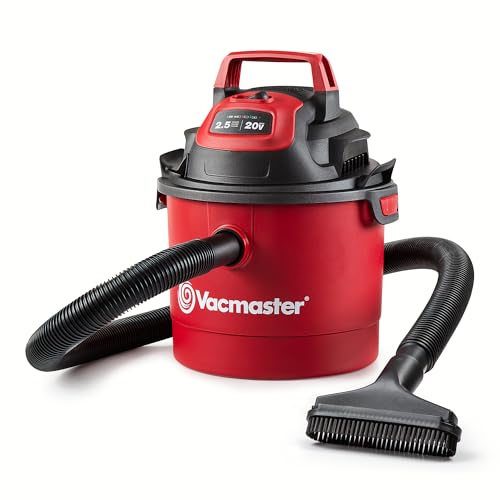
Vacmaster 2.5-Gal 20V Cordless Portable Wet/Dry Vac (DVOM202P 1101) — Best Budget Capacity
Vacmaster is the vacuum specialist in a roundup of tool brands, and its cordless entry competes on the simplest possible proposition: the biggest tank in this guide, 2.5 gallons, on a 20V cordless platform, at the budget end of the category. Half a gallon sounds like a rounding difference until you are emptying water: it is several pounds of water you are not carrying to the sink mid-job, and on a garage cleanout or a big spill it is one full trip saved in every three.
The portable format keeps it in the same working class as the DEWALT and CRAFTSMAN — a hose-and-tank machine for vehicles, garages, basements and workshops, dry debris and liquid alike. For a household that owns no tool platform at all, a vacuum-brand machine is a rational first buy: you are purchasing a vacuum, not enlisting in an ecosystem, and the tank-per-dollar math is the best in this roundup.
The trade-offs are platform depth and documentation. Vacmaster’s 20V battery does not run a drill or a leaf blower, so the battery investment serves one tool; and the verified listing is brief, naming the tank and platform but no filter type, so fine-dust buyers should confirm filtration on the product page. For gross debris and liquid at a fair entry cost, those are acceptable trades — this is the pick for the platform-free household.
Strengths
- 2.5-gallon tank is the largest in this roundup — fewer emptying trips
- Vacuum-specialist brand with the best tank-per-dollar proposition
- The rational first wet/dry vac for households with no tool batteries
Trade-offs
- Its 20V battery runs no other tools — no ecosystem benefit
- Verified listing names no filter specification
- Brief listing data overall; confirm accessory bundle on the product page
| Spec | Detail (from the verified listing) |
|---|---|
| Tank | 2.5 gallon |
| Platform | 20V (Vacmaster) |
| Type | Cordless portable wet/dry vac |
Best for: platform-free households wanting maximum tank capacity at a budget entry / Not suited for: tool owners who want one battery for everything, or fine-dust specialists
Check the current price on Amazon

Tineco iFLOOR 2 Complete Cordless Wet Dry Vacuum — Best for Hard Floors (Washer Type)
The iFLOOR 2 is included with a clear label: it is not a shop vac. It is a cordless hard-floor washer that vacuums and washes in a single pass, with a dual-tank system that keeps clean water and solution separate from the dirty water it recovers — the listing claims 90% water recovery — so you are always washing with clean water and the floor dries fast behind you. For the household whose ‘wet mess’ is a kitchen floor of tracked-in mud, spilled juice and pet pawprints, this machine, not a tank vac, is the actual answer.
The self-propelled drive and self-cleaning cycle address the two traditional objections to floor washers: they were heavy to push and disgusting to clean afterward. A machine that rinses its own brush roll on its dock gets used; one that must be disassembled over a sink gets used twice. If your floors are mostly tile, vinyl, laminate or sealed hard surfaces and your messes are daily-life films and spills, this is the most satisfying tool in the guide.
Now the boundaries, stated plainly. It will not pick up screws, drain a water heater, vacuum a car or touch carpet beyond a light pass — it is a hard-floor appliance. Its tanks are floor-washing-sized, not flood-sized. Buy it as the floor-care machine it is, alongside or instead of a mop, and let the tank picks above handle the workshop and the basement. Confusing the two species is the most common buying error in this search, and this badge exists to prevent it.
Strengths
- Vacuums and washes hard floors in one pass — no mop bucket at all
- Dual tanks keep clean and dirty water separate; floors dry fast
- Self-cleaning cycle removes the worst part of floor-washer ownership
Trade-offs
- Not a shop vac: no hose, no debris tank, no flood duty
- Hard floors only — not a carpet or vehicle machine
- A second species entirely; does not replace a tank vac for garages and basements
| Spec | Detail (from the verified listing) |
|---|---|
| Type | Cordless wet/dry floor washer for hard floors |
| System | Dual-tank (clean and dirty water separate) |
| Named in listing | Vacuums and washes simultaneously, 90% water recovery, self-propelled, self-cleaning |
Best for: hard-floor homes whose wet problem is daily dirt, spills and pawprints / Not suited for: workshops, flooded rooms, cars or carpet cleaning
Check the current price on Amazon
Comparison Table
| Pick | Badge | Key Spec | Best For |
|---|---|---|---|
| DEWALT 20V MAX Cordless Shop Vac, 2 Gallon (DCV580H) | Best Overall | 2-gallon tank; HEPA filter named in listing; 20V MAX platform | homeowners and DEWALT owners who want one machine for spills, cars, garages and workshops |
| CRAFTSMAN V20 Cordless Wet/Dry Vacuum, 2 Gallon (CMCV002B) | Best Value on a Tool Battery | 2-gallon tank; 7 ft hose; V20 platform; bare tool | CRAFTSMAN V20 households wanting wet/dry capability at bare-tool cost |
| Milwaukee M18 Wet/Dry Vacuum (0880-20P) with XC5.0 Starter Kit | Best for M18 Owners and Job Sites | M18 platform; sold with XC5.0 starter kit per listing | Milwaukee M18 owners, tradespeople and site work where water and cables must not mix |
| RYOBI 18V ONE+ Cordless Wet/Dry Hand Vacuum (PCL702B) | Best Compact Handheld | Hand-vacuum format; wet/dry; tool only; ONE+ platform | apartments and ONE+ households whose wet messes are spills, not floods |
| Vacmaster 2.5-Gal 20V Cordless Portable Wet/Dry Vac (DVOM202P 1101) | Best Budget Capacity | 2.5-gallon tank — largest here; 20V platform | platform-free households wanting maximum tank capacity at a budget entry |
| Tineco iFLOOR 2 Complete Cordless Wet Dry Vacuum | Best for Hard Floors (Washer Type) | Vacuums and washes simultaneously; dual-tank; self-cleaning | hard-floor homes whose wet problem is daily dirt, spills and pawprints |
Tank Machines vs Floor Washers: The Distinction That Decides Everything
A tank wet/dry vacuum is a canister with a powerful, sealed motor, a hose, and a filter you configure for wet or dry work. It does not care what it swallows: water, slurry, sawdust, screws, gravel, broken pottery. It is a cleanup and utility machine, judged on tank size, hose reach, filtration and how it handles the wet-to-dry transition. It does not wash anything; a floor cleaned by a shop vac is vacuumed, not mopped.
A floor washer is a hard-floor appliance: it lays down clean water and solution, scrubs with a brush roll, and vacuums the dirty water back into a separate tank. It leaves a floor genuinely washed and nearly dry. It cannot swallow a screw, drain a tank or survive a workshop. The two machines share a keyword and nothing else.
Most households that buy one eventually understand they wanted the other for at least some jobs — the classic case is the buyer who purchases a floor washer and then faces a leaking water heater with it. Decide by your worst mess, not your most frequent one: frequent messes can be handled imperfectly, but a flood with the wrong machine is a genuine problem. If both messes are real in your home, the honest answer is one of each, bought in the order of your worst mess first.
Battery Platforms: The Real Price of a Cordless Wet/Dry Vac
Four of the five tank picks are bare tools or platform machines, and that is not a sales trick — it is the economics of the category. A cordless wet/dry vac draws hard on its battery, and the makers assume the professional and serious-DIY buyers already own packs and chargers from their drill kits. If you do, a bare-tool wet/dry vac is the cheapest capable machine you will ever buy. If you do not, the true price is the tool plus a battery plus a charger, and comparisons must be made at that total.
Platform choice has a second dimension: what else the battery runs. DEWALT 20V MAX, Milwaukee M18, CRAFTSMAN V20 and RYOBI ONE+ all span drills, saws, garden tools and lights, so a battery bought for the vacuum earns its keep across the shelf. Vacmaster’s 20V runs the vacuum alone — a worse ecosystem deal, offset by the machine’s tank-per-dollar value. Neither answer is wrong; they are answers for different households, and the reviews mark which is which.
Runtime expectations should be set by physics. Moving water and debris takes power, and a 2-gallon tank of wet work is a reasonable match for one high-capacity pack. For long sessions — a full garage cleanout — platform owners simply swap packs, which is the deepest practical advantage of the tool-battery machines over any built-in-battery rival.
Tank Size, Hoses and Filters: Reading the Specs That Matter
Tank size is quoted in gallons and spent in trips. A half-gallon-class handheld like the RYOBI is a spill tool; 2 gallons is the all-round class; 2.5 gallons, the Vacmaster, buys margin on big jobs. Remember that a gallon of water weighs over eight pounds: a ‘bigger is better’ instinct that ends with a 5-gallon cordless tank is an instinct that has never carried one up basement stairs. Match the tank to the water you will actually move.
Hose reach is the second spec. The CRAFTSMAN’s stated 7-foot hose is the longest confirmed in this roundup, and reach decides whether the machine stays on dry ground while its hose works in the wet — a safety and convenience point at once. Short-hose and handheld machines work closer to the mess, which is fine for vehicles and spills and wrong for sumps and flooded corners.
Filtration is where honesty matters most. The DEWALT’s verified listing names a HEPA filter; the other listings do not name their filter types in the data we verified, so this guide claims nothing for them. In wet/dry practice you will also meet foam sleeves and paper filters: the working rule is that fine dry dust wants the best filter the machine offers, liquid pickup wants the configuration the maker specifies for wet work, and confusing the two — paper filter, meet bucket of water — destroys filters and sometimes motors. Read your machine’s wet-mode instructions once and follow them every time.
What Cordless Wet/Dry Vacuums Do Best: A Job Tour
Water incidents lead the list: the split hose, the overflowing toilet, the water heater’s last act, the basement corner after a storm. A cordless tank vac is the first tool to the scene because it needs no outlet in a wet room and starts swallowing water immediately. Vehicles are the second home: a cordless vac walks to the driveway, takes sand, grit, spilled drinks and wet mats in one session, and the hose reaches the footwells a handheld cannot.
Workshops and garages are the third: screws, offcuts, metal shavings and sawdust are one pass for a tank machine and a death sentence for a home vacuum’s brush roll. Renovations add a fourth — the cordless vac follows the work room to room, handling the debris-and-water mixture of plumbing and tiling jobs where a corded machine’s cable would live in the slurry.
Outdoor and utility work rounds it out: pool pump areas, clogged outdoor drains within hose reach, greenhouse and patio cleanup, boat bilges and RV incidents while traveling — the RYOBI handheld in particular earns its place in a camper. Notice the pattern: the jobs share water, distance from outlets, or debris too crude for household machines. That pattern, not raw power, is the category’s identity.
Wet/Dry Vacuum Care: The Ten Minutes That Decide Its Lifespan
A wet/dry vac lives a harder life than any other vacuum — it drinks dirty water and eats construction debris — and its lifespan is decided almost entirely by what happens in the ten minutes after each job. The rules are few and absolute. Empty the tank the same day, every time; dirty water left standing grows odor that no later cleaning fully removes, and grit left in a damp tank sets like concrete. Rinse the tank after wet work and let it dry with the lid off or ajar. Check the float valve — the little cage or ball that cuts suction when the tank fills — moves freely, because a stuck float is the failure that lets water reach the motor.
Filters need a split routine. Dry filters want tapping out after dusty work and replacement when they stay grey after cleaning. Wet-work foam sleeves want rinsing and full drying before storage. Never store the machine with a damp filter sealed inside a damp tank; that sealed, wet, dark box is a mold incubator, and the smell greets you at the next job. Hoses should be drained after wet work — hold them in a U and let gravity finish — and stored without tight kinks, which become permanent restrictions.
Finally, treat the battery like the tool battery it is: click it off the machine for storage if it will sit for weeks, keep it out of freezing garages and hot sheds, and run the machine occasionally rather than letting it sleep for a year. A wet/dry vac maintained this way is a decade-long tool; neglected, it is a two-season smell with a motor attached.
Safety Around Water and Electricity: Why Cordless Wins Here
The safety case for cordless in this category deserves its own section, because it is the rare case where the cordless version is not merely more convenient but genuinely safer. Wet cleanup puts water, people and electricity in the same square meters. A corded vacuum in a flooded room means a cable lying in the water you are standing in, an outlet that may itself be wet, and a machine you drag by its cord through puddles. A battery machine removes the mains connection from the wet zone entirely — the only electricity present is the sealed low-voltage pack on the tool.
Cordless does not mean careless. Do not vacuum flammable liquids — fuel, solvents, spirits — with any machine in this roundup; their motors are not rated for explosive vapor, and this is the single most dangerous misuse of a wet/dry vac. Do not pick up hot ash or smoldering material. Keep the machine itself out of standing water deeper than its base, work from the driest ground available, and if a room’s outlets or wiring are underwater, the correct tool is an electrician, not a vacuum.
Within those boundaries, the cordless tank vac is the safest powered way to move water indoors, and it is no accident that the tool platforms built their wet/dry machines early: the people who clean up water professionally reached for battery power for exactly these reasons.
How to Use a Cordless Wet/Dry Vacuum for Wet and Dry Jobs
Before wet pickup. Configure the machine as its maker directs for liquid: on most tank vacs this means removing the paper or cartridge filter or fitting the foam sleeve, so the filter is not destroyed by water. Confirm the tank is empty and the drain or lid seals are seated.
Working a spill or flood. Start at the edge nearest you and pull water toward the machine, keeping the tank on the driest ground available and letting the hose do the reaching. Move slowly — water needs a moment to travel the hose — and stop when the motor note changes or the tank reaches its fill line; most machines have a float that cuts suction at full, and pushing past it sprays mist from the exhaust.
Emptying. Water is heavy: carry the tank by its handle with two hands when full, empty into a sink, drain or outside grade, and rinse slurry and grit out before it dries into cement. Never leave dirty water sitting in the tank.
Switching back to dry. Dry the tank, refit the dry filter only when everything is dry, and check the filter for dampness — a damp paper filter returned to dry duty clogs and smells. Store the machine with the lid ajar so the tank airs out.
Dry debris technique. For screws, gravel and workshop debris, work in short passes and empty before the tank is brim-full; debris machines lose suction gradually as they fill, and the last third of the tank is the slowest third of the job.
Common Buying Mistakes
Buying a floor washer for flood duty (or a shop vac for mopping). The two species share a keyword and no abilities. Decide by your worst mess and buy that species first.
Forgetting the battery math. A bare-tool price is not the price. If you own no platform batteries, total the tool, battery and charger before comparing against a bundled rival like the Milwaukee kit.
Vacuuming liquid with the dry filter fitted. The fastest way to destroy a filter and strain a motor. Configure for wet work first, every time.
Storing the tank wet. A wet/dry vac put away with dirty water in it becomes a smell generator and a mold farm. Empty, rinse, dry, store with the lid ajar.
Oversizing the tank. Water weighs over eight pounds a gallon. A tank you cannot carry full is a tank you will empty by bailing, resenting the machine each time.
Expecting published runtimes that listings do not give. Several verified listings here omit runtime and filter specifications. Treat missing specs as unknown and confirm on the manufacturer’s page when they are decisive.
Final Recommendation
If you own DEWALT batteries — or are willing to buy in — the DEWALT DCV580H is the best overall cordless wet/dry vacuum here, with the only HEPA filter claim in the roundup. CRAFTSMAN V20 households get the same class of machine for bare-tool money with the CMCV002B, M18 owners should take the bundled Milwaukee, and platform-free buyers should take the Vacmaster’s bigger tank. The RYOBI is the spill-sized handheld, and the Tineco is the answer only if your real problem is a dirty hard floor.
Related guides in this program: Best Bissell Wet Dry Vacuums, Best Battery Powered Vacuums, Best All Around Vacuums, and Best Cordless Hand Held Vacuums For Stairs. Each of those guides was built to the same standard as this one — verified listings only, specifications quoted from the listing data, and gaps stated rather than filled with guesses.
Frequently Asked Questions
Can a cordless wet/dry vacuum really handle a flooded basement?
It can handle the water, in trips. A 2-gallon tank moving a flooded room means many carries, and each gallon weighs over eight pounds — but the machine needs no outlet in a wet room, which is a genuine safety advantage. For a serious flood, a cordless vac is the right first response for corners, appliances and vehicles while a larger corded machine or a pump does the bulk work. Start with the water nearest the things that must not stay wet — flooring edges, appliance bases, stored boxes — and work outward; the first half hour with any wet/dry vacuum is worth more than the following two hours, because standing water is damaging finishes and feeding mold the whole time it sits.
Do I need to remove the filter before vacuuming water?
On most tank machines, yes — or fit the foam sleeve the maker specifies for wet pickup. A paper or cartridge dry filter soaked in water is ruined and can strain the motor. The exact configuration varies by model, so follow your machine’s wet-mode instructions; the reviews here note where a listing names its filter and where it does not.
Are bare-tool vacuums a bad deal?
They are the best deal in the category if you already own the platform’s batteries, and a misleading one if you do not. The honest comparison is total cost: tool plus battery plus charger versus a bundled kit like the Milwaukee’s starter-kit package. Decide the platform question first and the vacuum question second.
What is the difference between these and a Tineco-style floor washer?
Tank vacs vacuum liquid and debris through a hose into a tank; they do not wash. Floor washers like the iFLOOR 2 lay down clean water, scrub hard floors and recover the dirty water; they cannot pick up screws, drain anything or clean a car. They share a keyword and solve different problems, which is why this guide labels the Tineco as a washer type.
Which battery platform should I choose if I own none?
Choose by the other tools you will plausibly buy. DEWALT 20V MAX and Milwaukee M18 are the deepest professional ecosystems, CRAFTSMAN V20 and RYOBI ONE+ are the friendliest consumer ones, and Vacmaster’s battery serves its vacuum alone. If you truly will never buy another cordless tool, the Vacmaster’s tank value wins; otherwise, let the ecosystem decide.
Can I vacuum drywall dust and fine powder with a wet/dry vac?
Yes, with the right filter fitted and the understanding that fine dust loads filters fast. The DEWALT in this roundup is the pick whose verified listing names a HEPA filter; for the others, confirm the filter specification on the product page before planning fine-dust work, and expect to clean or change filters often during a renovation.


