Disclosure: airfryerkitchensupply.com is reader-supported. When you buy through links on our site, we may earn an affiliate commission at no extra cost to you.
Where to buy
Quick map of this guide: Eureka 3670H Bagged Canister Vacuum; Bissell Zing Bagged Canister Vacuum 2154A; Oreck HEPA Upright Bagged Vacuum; Kenmore 81214 200 Series Bagged Canister; Kenmore 81414 400 Series Bagged Canister; Oreck Commercial XL Bagged Upright. Each verified name links to its Amazon listing — check the current price on Amazon there before you order. Unlinked entries, where present, carry no link by design.
All six machines below are sold through Amazon, and each name links to its listing so you can check the current price on Amazon and confirm the exact configuration before you buy: the Eureka 3670H canister for the best all-round balance, the Bissell Zing for the value tier, the Oreck HEPA upright for carpet-led homes, the Kenmore 200 Series for pet owners on a budget, the Kenmore 400 Series for stairs and reach, and the Oreck Commercial XL for heavy workloads. Bagged models sometimes ship in more than one configuration, so check that the listing you land on matches the model number named in each review.
The best lightweight vacuums with bags solve two problems at once. Bagless design won the marketing war, but a sealed bag still does something a dust cup cannot: it traps what you picked up, leaves the machine with you instead of in a cloud over the bin, and restores full suction the moment you fit a fresh one. The catch was always weight — classic bagged machines were furniture in their own right. The six machines in this guide are the modern answer: bagged canisters and uprights whose listings describe them, accurately, as lightweight, from brands — Eureka, Bissell, Kenmore, and Oreck — that have built bagged machines for decades.
A note on what lightweight means here, because the word gets abused. With a canister, the motor and bag sit in a body that rolls behind you, so the weight in your hand is only the wand and floor head; with a lightweight upright, the whole machine is engineered down so pushing and carrying it does not become the workout before the workout. Both approaches are represented below, and the right one depends on your floors and your stairs, not on a number on a box. Every pick was confirmed through the airfryerkitchensupply.com Amazon listing before it earned a link, and the specs quoted are the ones those listings state.
One honest warning before the picks: bags are a running cost and a running errand. They are inexpensive and widely available for every machine here, but a bagged vacuum with no spare bags in the closet is a vacuum you cannot use at full strength. The buying guide below covers bag discipline, filtration, and the canister-versus-upright decision in detail, so you can match a machine to your home instead of to an advertisement.
In this guide
Quick Picks
- Best Overall — Eureka 3670H Bagged Canister Vacuum: a simple, genuinely light bagged canister with a blower function, two bags in the box, and no complicated controls to learn.
- Best Budget — Bissell Zing Bagged Canister Vacuum 2154A: the value entry in bagged canisters: light, compact, and easy to store in a small closet or apartment.
- Best Lightweight Upright — Oreck HEPA Upright Bagged Vacuum: a true upright that stays light, with HEPA media filtration and two speeds for homes that dislike canisters.
- Best for Pet Owners on a Budget — Kenmore 81214 200 Series Bagged Canister: a pet-friendly lightweight canister with HEPA filtration, a two-motor system, and three cleaning tools in the box.
- Best for Stairs and Reach — Kenmore 81414 400 Series Bagged Canister: an extended telescoping wand, retractable cord, HEPA filtration, and four tools make this the reach specialist.
- Best Heavy-Duty Lightweight — Oreck Commercial XL Bagged Upright: a commercial-grade lightweight upright with automatic height adjustment and a high-speed brushroll, built for big jobs.
How These Picks Were Chosen
Every machine in this guide had to pass four filters before it was written up. First, it had to be a true bagged design — sealed disposable bags, not a bagless bin with a filter. Second, its own listing had to support the lightweight claim, either in its name or its stated design, because we do not hand out that label on vibes. Third, it had to come from a maker with a real bag supply chain, so replacement bags are a routine purchase rather than a treasure hunt. Fourth, it had to be confirmed through Amazon listing for this site, with the title and features checked against what we print. Machines that failed any filter — including several famous bagless models people assume are bagged — were left out.
- True sealed-bag design with bags that are easy to source
- A lightweight format the listing itself supports: canister or engineered-down upright
- Filtration appropriate to the home, with HEPA options where the listing states them
- Tools and floor heads matched to real floor mixes, not showroom carpet only
- A brand with a long bagged-vacuum track record and replaceable parts
The 6 Best Lightweight Vacuums With Bags

Eureka 3670H Bagged Canister Vacuum — Best Overall
The Eureka 3670H is the pick that best explains why this category still exists. It is a bagged canister that the manufacturer itself describes as lightweight, it arrives with two bags so you can start cleaning the day it lands, and it covers the floor mix most homes actually have: hardwood, carpet, and the everyday grit that collects around pet areas and car mats. The canister body does the travelling on its own wheels while you hold only the wand and floor head, which is exactly the weight split that makes a bagged canister feel lighter in use than a full-size upright of similar power. For anyone whose main complaint about vacuuming is hauling a heavy machine out of the closet, that split is the whole point.
Strengths
- Canister design keeps the weight you actually lift down to the wand and head
- Blower function adds a second job: clearing leaves and dust from a garage or porch
- Ships with two bags, so there is no separate first purchase before you can use it
Trade-offs
- A basic, no-frills machine: expect dial-and-go simplicity rather than premium fittings
- Bagged canisters trail a cord and a body behind you, which takes a session or two to get used to
- Best suited to homes that value light weight over powered brushroll deep-cleaning
| Detail | From the listing |
|---|---|
| Format | Bagged canister |
| In the box | Vacuum plus 2 bags |
| Floor types (per listing) | Hardwood, carpet, pet areas, car |
| Special function | Blower |
What earns the 3670H the top spot is balance rather than any single headline feature. The suction is described by its maker as power suction, and in a bagged design that suction stays consistent far longer than in a small bagless bin, because the bag itself is the filter and a fresh bag restores full airflow in seconds. The blower port is more useful than it sounds: the same machine that cleans the hallway can push dust out of a garage corner or clear a patio mat without a second tool. Owners of mostly hard floors with a few rugs will feel best served here; the canister follows willingly, the head is easy to push, and emptying day never involves shaking a dust cup over a bin. If your home is wall-to-wall thick carpet, read the Kenmore and Oreck reviews below before deciding, because a powered head matters more there.
Ownership is where the 3670H quietly wins friends. Bags are a standard, widely stocked Eureka type, the canister wipes clean, and there are no washable filters on a monthly rota — the bag is the filter, and changing it is the whole maintenance liturgy besides an occasional brushroll check. Owners who keep a multi-pack of bags in the same cupboard report the rhythm becomes invisible within a month: clean as usual, swap a bag a few times a year, done. The blower port also tends to get adopted for jobs nobody bought it for — clearing the tumble-dryer vent area, dusting the car boot, pushing leaves off the step — which is how a basic canister becomes the house’s default air tool.
Best for: Mixed-floor homes that want the lightest, simplest bagged clean / Not suited for: Deep-pile carpet homes that need a powered brushroll first
Check on Amazon — check the current price on Amazon for the exact configuration described above.
Bissell Zing Bagged Canister Vacuum 2154A — Best Budget
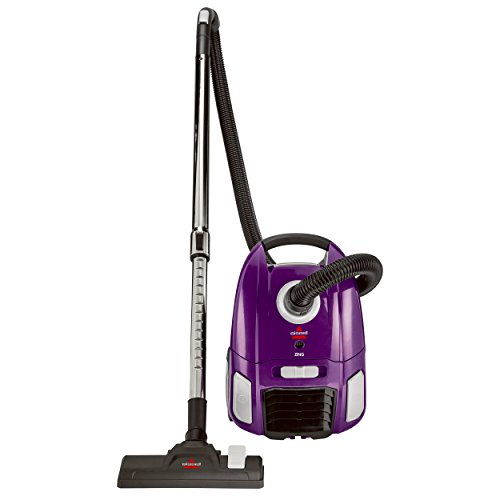
The Bissell Zing 2154A is the lightweight bagged canister for buyers who want the bagged advantage — sealed dirt disposal, no dust cup to wash — without paying for a premium badge. Bissell sells this exact model as a lightweight bagged canister in a purple finish, and its compact canister footprint is the appeal: it tucks into an apartment closet, carries up a flight of stairs without a rest stop, and comes out for quick whole-room cleans rather than scheduled deep-clean events. If you are furnishing a first apartment, a dorm-adjacent rental, or a small home with mostly hard floors and low-pile rugs, this is the shape of machine that actually gets used.
Strengths
- Compact canister body stores easily in small homes and apartments
- Lightweight format makes stairs and multi-room carries manageable
- Bagged disposal keeps emptying hygienic and mess-free
Trade-offs
- A budget canister: keep expectations set for light-to-moderate duty
- Smaller bags fill faster in large, pet-heavy homes
- Fewer included tools than the step-up Kenmore canisters below
| Detail | From the listing |
|---|---|
| Format | Bagged canister |
| Model | 2154A |
| Finish | Purple |
Budget vacuums earn their keep or lose it on one question: will you still be using it weekly a year from now? The Zing’s case is that its size removes the friction that makes people skip vacuuming. It is light enough to grab for a single room, the bag system means maintenance is a thirty-second swap rather than a filter-washing afternoon, and the canister layout handles furniture legs and under-bed runs more gracefully than a budget upright. The honest limits are capacity and carpet ambition: big homes will change bags more often, and thick carpet wants a powered head this class of machine does not pretend to be. Matched to the right home — small, mostly hard floors, some rugs — it is the sensible spend.
The Zing’s ownership story is about storage and spontaneity. It lives small — a shelf, a closet corner, the gap beside a washing machine — and that smallness changes behaviour: a vacuum that is visible and reachable gets used for the five-minute mess, not just the Saturday event. Bag changes are the same sealed, thirty-second routine as its pricier siblings, and because the machine is light, it is the one lent to neighbours, taken to a rental clean, or carried to an elderly parent’s flat. Budget machines sometimes feel like compromises you tolerate; this one feels like a tool sized correctly for the homes it was designed for, and owners tend to keep it even after upgrading, as the second vacuum for the second floor.
Best for: Apartments, small homes, and first bagged-vacuum buyers / Not suited for: Large homes with heavy pet hair and thick carpet throughout
Check on Amazon — check the current price on Amazon for the exact configuration described above.

Oreck HEPA Upright Bagged Vacuum — Best Lightweight Upright
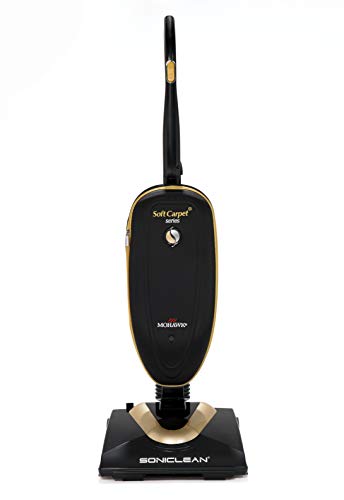
Not everyone wants a canister trailing behind them, and the Oreck HEPA Upright exists for those buyers. Oreck built its reputation on uprights that weigh far less than the category average, and this model pairs that lightweight bagged upright format with HEPA media filtration that, in the maker’s words, traps debris and locks in dirt. Two-speed control lets you calm the machine down on hard floors and give carpet the full treatment. If your floors are mostly carpet, your storage is a single closet, and your arms have vetoed every heavy upright you have tried in a store, this is the bagged upright to shortlist first.
Strengths
- Upright format with no canister to tow — park it and go
- HEPA media filtration suits buyers who choose bags for cleaner air handling
- Two-speed control adapts the clean to carpet and hard floors
Trade-offs
- An upright still puts more weight in your hand than a canister wand does
- Bagged upright bags are a recurring purchase to budget for
- Less nimble under low furniture than a canister with a slim floor head
| Detail | From the listing |
|---|---|
| Format | Bagged upright |
| Filtration | HEPA media |
| Speeds | Two-speed control |
| Power | Corded |
The Oreck argument is about posture and habit. A lightweight upright stands in a closet, rolls out in one motion, and covers open carpet faster than a canister you have to guide around table legs. The HEPA media bag system is the second half of the appeal: everything the brushroll lifts goes into a sealed bag, and the bag leaves the house without a dust cloud. Two speeds sound minor until you clean a mixed floor plan daily — hard floors on the gentler setting scatter less debris ahead of the head. Where the canisters in this guide win is stairs and under-furniture reach; where the Oreck wins is the classic, one-piece, carpet-first clean. Choose by the shape of your home, not by spec sheets.
Oreck ownership revolves around the brand’s long support culture: bags, belts, and service for Oreck uprights are a mature ecosystem, and a lightweight upright that a local shop will happily maintain is a different ownership proposition from a sealed disposable appliance. In the home, the routine is upright-simple — park it, plug it, clean, park it — and the two-speed control becomes second nature within a week: quieter and gentler on the hard floors, full commitment on carpet. The HEPA media bags are the recurring purchase to plan for; buying them in multi-packs when you buy the machine keeps the per-clean cost boring, which is exactly what you want from a consumable.
Best for: Carpet-led homes that want an upright and have ruled out heavy models / Not suited for: Stair-heavy homes that would rather carry a wand than a whole upright
Check on Amazon — check the current price on Amazon for the exact configuration described above.

Kenmore 81214 200 Series Bagged Canister — Best for Pet Owners on a Budget
Kenmore’s 200 Series 81214 is the lightweight bagged canister aimed squarely at pet homes watching their spend. The listing describes it as pet friendly and lightweight, with HEPA filtration, a two-motor system, and three cleaning tools included. That combination matters because pet hair is not one job: it is floor hair, furniture hair, and stair hair, and the tool count decides how many of those jobs the same machine can finish in one session. The orange finish is easy to spot in a crowded closet, and the canister layout keeps the pushing weight low while the wand and tools do the detailed work.
Strengths
- Pet-friendly positioning with tools for more than just floors
- HEPA filtration pairs well with the sealed-bag system for dander control
- Two-motor system separates suction from brush action
Trade-offs
- Pet homes fill bags faster — keep spares on hand from day one
- Canister cord management takes a little practice
- Buyers wanting a powered pet brush should compare the 400 and 600 Series below
| Detail | From the listing |
|---|---|
| Format | Bagged canister |
| Series | 200 Series (81214) |
| Filtration | HEPA |
| Tools included | 3 cleaning tools |
| Motors | 2-motor system |
Pet ownership changes the vacuum math in two ways: hair volume and emptying frequency. Bags help on both counts when you use them correctly — a bag holds a surprising amount of hair before airflow drops, and swapping it is a sealed, sneeze-free job. The 200 Series adds the right supporting cast: HEPA filtration for the fine dander that rides along with hair, and enough tools to move from floor to upholstery without a second appliance. It is not the most powerful Kenmore in this guide, and it does not try to be; it is the one that covers a pet home’s weekly reality at the friendliest tier. If pet hair is your dominant problem and your floors are mixed, start here and step up only if your carpet is genuinely thick.
The 200 Series asks one thing of pet owners: stay ahead of the bag. Hair fills volume faster than dust does, so the household rhythm is a bag check every few weeks and a standing spare supply — a small discipline that buys you the sealed, sneeze-free disposal that made you choose bagged in the first place. The three tools earn their storage space in pet homes specifically: the upholstery tool becomes the sofa tool, the crevice tool becomes the car-seat tool, and the floor head stays on floors. Owners who run that rotation find one machine genuinely covers the pet-home brief without a second handheld living in a drawer.
Best for: Pet owners with mixed floors who want bagged hygiene at a value tier / Not suited for: Homes wanting a powered Pet PowerMate head for deep carpet work
Check on Amazon — check the current price on Amazon for the exact configuration described above.
Kenmore 81414 400 Series Bagged Canister — Best for Stairs and Reach
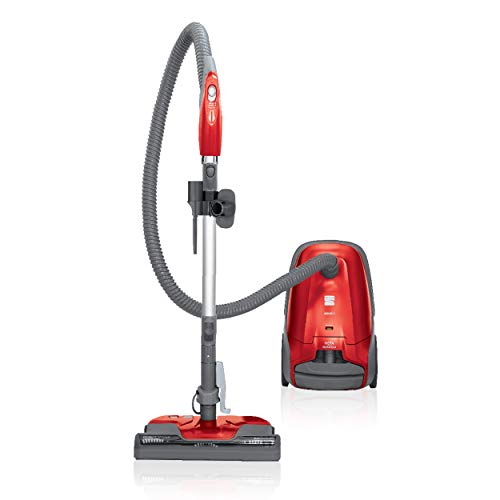
The Kenmore 400 Series 81414 is described by its listing as a pet friendly, lightweight bagged canister with an extended telescoping wand, HEPA filtration, a retractable cord, and four cleaning tools. Read that list again and you can see the design brief: reach. The telescoping wand extends your working radius for cobwebbed corners, stair treads, and the tops of curtains; the retractable cord removes the wrap-it-around-your-arm ritual at the end of every clean; and four tools mean the wand tip can become a crevice tool, a dusting brush, or an upholstery nozzle without a trip back to the closet. For two-story homes, this is the canister that respects your time.
Strengths
- Extended telescoping wand for stairs, ceilings, and tall furniture
- Retractable cord makes pack-away fast and tidy
- Four included tools cover floors, upholstery, and detail work
Trade-offs
- More features means a slightly larger canister than the minimalist picks
- Pet PowerMate deep-cleaning is the 600 Series’ party trick, not this one’s
- Telescoping wands reward a quick lock-check before each session
| Detail | From the listing |
|---|---|
| Format | Bagged canister |
| Series | 400 Series (81414) |
| Wand | Extended telescoping |
| Cord | Retractable |
| Filtration | HEPA |
| Tools included | 4 cleaning tools |
Stairs are where lightweight stops being a marketing word and becomes a safety feature. With a canister, the body can rest on a landing or a tread while the wand does the climbing, and the 400 Series’ extended wand stretches that advantage further than the basic models. The retractable cord sounds like a convenience until you count how many times a year you wrap and unwrap a cord; small frictions are exactly what make a vacuum live in the closet. Add HEPA filtration and a real tool set, and the 81414 becomes the most complete mid-tier answer in this guide for homes with levels, drapes, and furniture that all need attention in the same session.
With the 400 Series, ownership pleasure is mostly about endings: the cleaning session ends with a button-press cord retract instead of a wrapping ritual, the wand collapses to its storage length, and the canister parks smaller than it works. The telescoping wand also changes who can use the machine comfortably — shorter and taller household members adjust it to themselves in seconds, which quietly makes the vacuum everyone’s tool rather than one person’s. Keep the four tools aboard or in one pouch so the reach advantage is always assembled, and check the wand lock monthly; a telescoping wand that is checked stays tight for years.
Best for: Two-story homes and anyone who cleans stairs, drapes, and upholstery often / Not suited for: Minimalists who want the smallest, simplest canister available
Check on Amazon — check the current price on Amazon for the exact configuration described above.

Oreck Commercial XL Bagged Upright — Best Heavy-Duty Lightweight
The Oreck Commercial XL is the pick for buyers whose ‘lightweight’ requirement comes with a workload attached: a large home, a rental property, a church hall, a small business. Its listing describes a bagged upright that is lightweight, built for carpets and hard floors, with automatic height adjustment and a high-speed brushroll, made for commercial use. Automatic height adjustment is the quiet hero — the machine adapts as you cross from carpet to hard floor instead of asking you to stop and dial. If you clean big areas often and want a bagged upright that treats that as its normal day, this is the durable end of the lightweight category.
Strengths
- Commercial build intent for frequent, large-area cleaning
- Automatic height adjustment moves between carpet and hard floor hands-free
- High-speed brushroll for assertive carpet agitation
Trade-offs
- Commercial focus means fewer home comfort frills
- A workhorse upright is still an upright on stairs
- Replacement bags are an ongoing cost of the format
| Detail | From the listing |
|---|---|
| Format | Bagged upright |
| Height adjustment | Automatic |
| Brushroll | High-speed |
| Floor types (per listing) | Carpets and hard floor |
| Intended use | Commercial |
There is a specific buyer this machine serves better than any other in the guide: the person who cleans a lot of floor, often, and has worn out a consumer vacuum doing it. Commercial machines are engineered around serviceability and uptime — bags that swap fast, a brushroll that keeps its pace, and height adjustment that does not need babysitting across mixed surfaces. The trade is refinement: expect a tool’s manners, not a boutique appliance’s. In a big family home with heavy traffic, a rental turnover routine, or a small business floor, those priorities are the right way round, and the lightweight frame keeps the workload from becoming a workout.
Commercial ownership is a different mindset: this Oreck is bought the way a tradesperson buys a tool, and maintained the same way — bags stocked like supplies, brushroll inspected on a schedule, and no sentimentality when a wear part needs replacing. In return it delivers the thing domestic machines ration: sustained, repeated, large-area cleaning without complaint. Landlords running turnover cleans and families with big, busy floor plans both report the same discovery — the machine’s lightness matters more, not less, as the area grows, because the last room of a big clean is where heavy vacuums get abandoned mid-job.
Best for: Large homes, landlords, and small businesses cleaning big areas often / Not suited for: Small apartments where the compact canisters above are a better fit
Check on Amazon — check the current price on Amazon for the exact configuration described above.
Comparison Table
| Pick | Badge | Key spec | Best for |
|---|---|---|---|
| Eureka 3670H Bagged Canister Vacuum | Best Overall | Bagged canister | Mixed-floor homes that want the lightest, simplest bagged clean |
| Bissell Zing Bagged Canister Vacuum 2154A | Best Budget | Bagged canister | Apartments, small homes, and first bagged-vacuum buyers |
| Oreck HEPA Upright Bagged Vacuum | Best Lightweight Upright | Bagged upright | Carpet-led homes that want an upright and have ruled out heavy models |
| Kenmore 81214 200 Series Bagged Canister | Best for Pet Owners on a Budget | Bagged canister | Pet owners with mixed floors who want bagged hygiene at a value tier |
| Kenmore 81414 400 Series Bagged Canister | Best for Stairs and Reach | Bagged canister | Two-story homes and anyone who cleans stairs, drapes, and upholstery often |
| Oreck Commercial XL Bagged Upright | Best Heavy-Duty Lightweight | Bagged upright | Large homes, landlords, and small businesses cleaning big areas often |
How to Choose a Lightweight Vacuum With Bags
Canister or Upright: The Decision That Decides Everything Else
Canisters win on carried weight and reach. The motor, bag, and cord live in a rolling body, so your arm manages a wand while the machine follows. That makes canisters the natural choice for stairs, under-furniture work, drapes, and mixed floors where you change tools often. The cost is choreography: you guide a body around furniture legs and through doorways, which feels odd for the first two sessions and automatic after that.
Lightweight uprights win on simplicity and carpet pace. One piece, one motion, out of the closet and across the room, with a brushroll doing assertive work on carpet the whole way. They ask more of your arm over a long session and they are clumsier on stairs, but for open, carpet-led floor plans nothing here is faster. Be honest about your home’s shape: the vacuum that matches it is the one you will use twice a week instead of twice a month.
Bags, Filtration, and the Allergy Question
A bag is the first filter in the system, and a good one is doing quiet, important work. As a bag fills, its walls catch finer and finer particles; when you remove it, the dirt leaves sealed. That is why bagged machines remain the default recommendation for homes managing dust sensitivity — not because bagless machines filter badly, but because emptying them re-exposes you to what you just collected. Where a listing states HEPA filtration or HEPA media, as the Oreck upright and both Kenmores here do, the exhaust side is covered as well.
Bag discipline is simple: change the bag when it is around two-thirds full or when suction noticeably softens, whichever comes first, and keep spares where the vacuum lives. Pet homes and renovation homes fill bags faster than they expect. Buying bags in multi-packs when you buy the machine removes the only real friction in bagged ownership.
Matching the Machine to Your Floors
Mostly hard floors with area rugs: any canister here will serve you, and the Eureka and Bissell are the lightest-touch options. Mixed floors with real carpet: look at the Kenmore canisters’ motor systems and tool sets, or the Oreck upright’s two speeds. Mostly carpet, large areas, frequent cleaning: the Oreck Commercial XL’s automatic height adjustment and high-speed brushroll were designed for exactly that brief.
Stairs deserve their own sentence in every vacuum decision. If your home has them, either choose a canister whose body can rest safely while the wand works, or accept that an upright will be carried, not rolled, between floors — and let that settle canister versus upright before any other feature tempts you.
How to Set Up and Maintain a Bagged Vacuum So It Stays Light and Strong
A bagged vacuum stays light and strong for years if the first setup is right and the bag routine becomes habit. Work through these steps when your machine arrives, and repeat the maintenance steps on the rhythm described.
Step 1: Fit the first bag correctly
Open the bag compartment, slide the bag collar fully onto the inlet so it seats flat, and close the lid without forcing it. A bag that is half-seated leaks dust into the compartment and quietly coats the motor — the single most common cause of a bagged vacuum ‘losing power’ that was never the motor’s fault.
Step 2: Assemble the wand and head in order
Connect hose to body, wand to hose, and floor head to wand, checking each joint clicks or seats firmly. Air leaks at any joint cost suction everywhere, so a ten-second check now saves a frustrated deep-clean later.
Step 3: Test on one room, both floor types
Run the machine across your main hard floor and your main carpet. Adjust height or speed settings — automatic on the Oreck Commercial XL, two-speed on the Oreck HEPA upright — and note which setting you used where. That note becomes your routine.
Step 4: Set your bag-change trigger
Check the bag after the first few sessions to learn how fast your home fills it. Pet hair and fine dust pack differently; once you know your rhythm, mark it — most homes land between monthly and every few months — and keep spare bags in the same closet.
Step 5: Store it ready, not buried
A lightweight vacuum only saves effort if it is reachable. Give it a parking spot with the cord managed — retractable on the Kenmore 400 Series — and the main tools aboard, so a quick clean starts in under a minute.
Bag Types, Costs, and the Spares Drawer
Every bagged vacuum in this guide uses model-family bags, and the first ownership task is learning your exact type and writing it on a note inside the storage closet — future you, standing in a shop aisle, will be grateful. Bags are sold singly and in multi-packs; multi-packs are the rational purchase, dropping the per-bag cost and removing the ‘we are out of bags’ failure that is the format’s only real frustration. A healthy spares drawer holds at least two bags beyond the one in the machine, plus the machine’s belt if it uses one.
Cost honesty belongs here: bags are a real, recurring expense that bagless machines do not charge. What they buy is consistent suction, sealed disposal, and filters you never wash and wait to dry. Over a machine’s life the sums stay modest against the purchase price of the vacuum itself, and they buy back the half-hours bagless owners spend tapping dust cups and rinsing foam. Count it as a subscription to convenience, priced in bags.
When a Bagged Vacuum Feels Weak: A Two-Minute Diagnosis
Bagged machines almost never lose suction mysteriously; they lose it mechanically, in one of four places. First, the bag: overfull or badly seated bags are the cause in most cases — change it and seat the collar flat. Second, the joints: a wand or hose connection a few millimetres loose leaks air silently, so reseat every connection. Third, the hose itself: a sock, a toy, or packed hair can lodge mid-hose; detach it and check against the light. Fourth, the brushroll or floor head: wound hair strangles rotation on uprights and powered heads.
Work that list in order before concluding anything about the motor, and you will fix nearly every ‘my vacuum died’ moment in under two minutes with no tools. It is the hidden advantage of these mature designs: everything that commonly goes wrong is user-serviceable, in the open, with parts that are still sold. A vacuum you can diagnose is a vacuum you keep — and keeping a lightweight bagged machine for a decade is the cheapest cleaning there is.
Apartment, House, or In-Between: Sizing the Machine to the Life
Apartment living rewards the compact canisters twice over: storage is scarce, so a machine that parks in a closet corner or beside the washer earns its place daily, and hard floors dominate, so the lightest-touch tools do most of the work. The Bissell Zing and the Eureka were practically designed in this brief, and their bags — changed a few times a year in a small home — are the smallest of small prices for sealed, quiet cleaning that neighbours through thin walls will never hear you perform at midnight.
The family house inverts every term: more carpet, more stairs, more hair, more area per session. That is Kenmore and Oreck country — the canisters with their tool sets and telescoping reach, the uprights with their carpet pace and capacity for punishment. The right mental model is workload per week, not rooms per se: count your carpeted area, your stair count, and your pet count, and buy the machine whose review paragraph sounds like your Saturday. Undersizing is the expensive mistake here, because a too-small machine gets replaced, and two purchases always cost more than the right one.
Noise, Storage, and Living With the Machine
Bagged canisters and uprights of this mature type are not silent, but they are predictable: a steady motor note rather than the pitch-wandering whine of small bagless machines working against clogging filters. Because suction stays consistent as the bag fills, the sound stays consistent too, which households read as calm. Storage completes the livability picture — canisters park in low cupboards an upright cannot use, uprights stand in a hand’s breadth of closet. Whichever format you choose, give it a permanent, reachable home the day it arrives; a vacuum with an address gets used, and a vacuum that gets used is the only kind that keeps a house clean.
Common Buying Mistakes
Buying bagless out of habit
Many shoppers default to bagless because it is familiar, then rediscover dust-cloud emptying and filter washing. If sealed disposal is why you came to this category, do not let a showroom demo talk you out of it.
Running a bag until it is packed solid
An overfilled bag strangles airflow, strains the motor, and makes a light vacuum feel weak. Two-thirds full is the change point, not ‘when nothing more fits.’
Ignoring the stairs test
A vacuum that is light on a flat showroom floor can be a misery carried up stairs daily. Match the format to your home’s levels before you fall for features.
Forgetting bags are model-specific
Bags are not interchangeable across brands or even across a brand’s lines. Confirm the bag type for your exact model and order spares with the machine.
Judging suction on day one only
Bagged machines hold their suction as the bag fills far better than small bagless bins, but only if joints are seated and the bag is fitted right. Check the simple things before blaming the motor.
Final Recommendation
If you want one recommendation: the Eureka 3670H is the balanced default — light, bagged, versatile, with a blower bonus. Pet owners on a budget should take the Kenmore 200 Series; homes with stairs and tall reach work, the Kenmore 400 Series. Carpet-led homes that refuse canisters should choose between the Oreck HEPA upright for everyday ease and the Oreck Commercial XL for serious workloads, while small homes and apartments get the most machine per dollar from the Bissell Zing.
Still deciding between formats? Our related guides cover the neighbouring questions: Best Lightweight Vacuum For Hardwood Floors And Area Rugs, Best Upright Vacuums For Carpet And Hardwood Floors, Best Stick Vacuums For Bare Floors And Rugs, and Best Inexpensive Vacuum For Low Pile Rugs each take one of those angles in depth.
Related guides
Frequently Asked Questions
Are bagged vacuums better for allergies than bagless ones?
For most dust-sensitive homes, yes, in practice. The sealed bag removes collected dirt from the house without the dust cloud that emptying a bagless bin creates, and models here with stated HEPA filtration — the Oreck HEPA upright and the Kenmore canisters — add exhaust-side filtration on top. No vacuum is a medical device, but the bagged routine exposes you to less of what you just picked up.
How often will I change the bag?
It depends on home size, pets, and how much fine dust your floors generate. Many homes land on a change every one to three months; pet-heavy homes should check sooner. Change at roughly two-thirds full or when suction softens — the bag is doing filtration work, and an overfilled bag does it badly.
Do lightweight bagged vacuums clean carpet properly?
The right ones do. The Oreck uprights bring powered brushrolls and, on the Commercial XL, automatic height adjustment, while the Kenmore canisters use two-motor systems so the brush and suction each do their job. Very thick, high-pile carpet is the one case where you should prioritise the powered-head models over the simplest canisters.
Are replacement bags easy to find for these brands?
Yes — Eureka, Bissell, Kenmore, and Oreck all have long-running bag lines sold widely, including on Amazon alongside the machines. Confirm the exact bag type for your model number, and order a multi-pack with the vacuum so a full bag never stops a cleaning day.
Canister or upright: which is truly lighter to use?
In the hand, the canister: you carry a wand while the body rolls. On the clock, the upright: one piece, no towing, faster across open carpet. Stairs tip the answer firmly to canisters; open carpet-led rooms tip it to uprights. Your floor plan, not the spec sheet, decides.
What does the Eureka 3670H’s blower function actually do?
It reverses the machine’s airflow out through a port so you can blow dust and light debris out of corners, garages, and patios instead of chasing it with the suction head. It is a small feature that turns out to be genuinely handy for entryways and workshop corners.