Disclosure: airfryerkitchensupply.com is reader-supported. When you buy through links on our site, we may earn an affiliate commission at no extra cost to you.
Where to buy
Every pick below for the best teapots to buy is a verified, live Amazon listing matched to the exact teapot described. Teapots are sold in multiple sizes and colors under the same design name, so confirm the capacity on the listing before ordering — a 27-ounce and a 44-ounce version of the same pot brew for very different households. Prices shift often in this category, so each pick links to the live listing instead of quoting a number.
- HIWARE 1000ml Glass Teapot with Removable Infuser — the all-round glass pick — a 1000ml stovetop-safe pot with a removable infuser, equally at home with blooming teas and everyday loose leaf.
- Sweese Porcelain Teapot 27 oz with Stainless Steel Infuser — the classic porcelain everyday pot — 27 ounces of clean white porcelain with a fine stainless infuser, sized for one or two drinkers.
- Teabloom Stovetop & Microwave Safe Glass Teapot 40 oz — the blooming-tea specialist — a 40-ounce glass pot with a glass infuser and two blooming teas included, built to put on a show.
- Frieling 18/8 Stainless Steel Teapot with Infuser 34 oz — the indestructible pick — 34 ounces of 18/8 stainless steel with a fine infuser, built for kitchens where things get dropped.
- suyika Japanese Tetsubin Cast Iron Teapot 22 oz — the ritual pick — a 22-ounce enamel-lined cast iron tetsubin with a stainless infuser, holding heat longer than anything else here.
- Steinzeit Design Ceramic Teapot with Infuser 44 oz — the table-size ceramic — 44 ounces of matte black ceramic with a removable strainer, built for serving a group in style.
Working out the best teapots to buy starts with a question most listings never ask: how do you actually drink tea? A teapot is not a kettle — it does not heat water, it receives it — and the right pot depends on whether you brew loose leaf or bags, for one person or a table, and whether the pot will live on a tray as an object of pleasure or in a cupboard as a tool. The six verified picks below span the honest range of the market: glass for watching blooming teas unfold, porcelain and ceramic for heat-keeping everyday brewing, stainless steel for durability, and cast iron for the slow, ceremonial cup.
Material is the decision that drives everything else. Glass shows the brew and never holds flavors, but sheds heat fastest and asks for gentle handling. Porcelain and stoneware hold heat well, pour cleanly, and suit the daily pot of English breakfast or Earl Grey. Stainless steel is the indestructible commuter of the category — it dents rather than breaks and suits clumsy, busy kitchens. Cast iron tetsubin pots hold heat longest and brew with a ritual weight, but they are heavy, smaller, and their enamel interiors want a little care. Every pick here includes a removable infuser, because loose leaf is where a teapot justifies itself over a mug and a bag.
Size is the second decision, and it is simpler than shoppers make it. A cup of tea is roughly 8 ounces at the mug, so a 22- to 27-ounce pot serves one generous drinker or two modest cups, a 34- to 40-ounce pot serves two to three people comfortably, and anything larger is for tables and gatherings. Buy the size you will fill most days: tea brewed in a half-empty large pot steeps unevenly and cools fast, while a right-sized pot keeps the second cup worth drinking.
In this guide
Quick Picks
Six verified teapots across glass, porcelain, ceramic, steel, and cast iron. Match the material to your tea habit first, then the size to your table.
- Best Overall: HIWARE 1000ml Glass Teapot with Removable Infuser — the teapot most drinkers should buy first — versatile, watchable brewing, and stovetop safe in a pinch.
- Best Porcelain for One or Two: Sweese Porcelain Teapot 27 oz with Stainless Steel Infuser — the daily-drinking porcelain standard — right-sized, heat-keeping, and endlessly replaceable.
- Best for Blooming Tea: Teabloom Stovetop & Microwave Safe Glass Teapot 40 oz — buy it for the theater — blooming teas unfurling in a big glass pot is this one’s whole, delightful point.
- Best Stainless Steel: Frieling 18/8 Stainless Steel Teapot with Infuser 34 oz — the buy-it-for-decades teapot — steel shrugs off the accidents that end glass and porcelain pots.
- Best Cast Iron: suyika Japanese Tetsubin Cast Iron Teapot 22 oz — for the slow cup — iron’s heat retention turns one small pot into a long, warm session.
- Best Large Ceramic: Steinzeit Design Ceramic Teapot with Infuser 44 oz — the gathering pot — biggest capacity here, with looks that earn its place on the table.
How These Picks Were Chosen
Every teapot here was cross-checked against Amazon’s live catalog: searched by brand and model, matched by the returned listing title, and recorded only when the match was certain. That process filtered out the decorative novelty pots and mislabeled kettles that clutter this category — every pick is a genuine brewing teapot with a removable infuser, a pouring spout designed for tea, and a capacity stated by its own listing. Catalog prices were used only to place picks into honest tiers and are never printed.
Beyond verification, picks were judged on the things that decide whether a teapot gets used daily: an infuser basket fine enough for real loose leaf rather than a token strainer, a lid that stays put while pouring, a spout that pours in a clean stream instead of dribbling down the pot’s side, and a handle that stays cool and balanced when the pot is full. We deliberately spread the list across materials and sizes so the guide answers the actual question — which teapot, for which drinker — instead of ranking six near-identical pots.
One category honesty note: several famous teapot styles are represented here by their strongest verified examples rather than by exhaustive coverage. Gongfu and Yixing clay pots, for instance, are a specialist world of their own; the cast iron and glass picks below serve the drinkers this roundup is written for, and the internal links at the end point toward the style-specific guides.
What was excluded, and why: this roundup left out electric kettles with infusers (a different appliance, however tea-adjacent), novelty and character-shaped pots whose spouts pour poorly by design, and the deep specialist world of unglazed clay gongfu pots, which deserve — and have, elsewhere on this site — their own dedicated treatment. It also left out several attractive pots whose listings could not be verified to a certain model match. A teapot is a decade-long companion chosen partly by eye, and this guide would rather present six pots it can stand behind completely than twelve it can only mostly vouch for. The styles not covered here are reachable through the internal links below, each held to the same standard.
The 6 Best Teapots to Buy
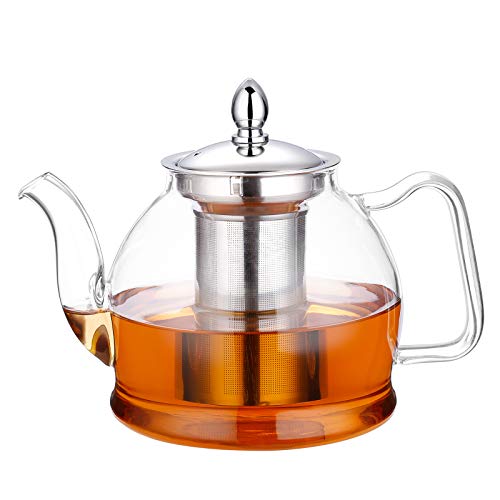
HIWARE 1000ml Glass Teapot with Removable Infuser — Best Overall
The HIWARE earns the top spot by being the teapot that fits the most tea drinkers. Its 1000ml capacity is the everyday sweet spot — enough for two generous mugs or a small table — and the glass construction turns brewing into something you can judge by eye. Watching the liquor deepen to the shade you like is not a gimmick; it is genuinely the most reliable strength gauge a tea drinker has, and for blooming teas, where a dried ball unfurls into a flower, glass is not optional but essential.
The removable infuser handles loose leaf properly, lifting out cleanly so the brew stops when you say it does — the difference between a controlled steep and tea that keeps darkening while you drink the first cup. Unusually for glass, the pot is stovetop safe, which gives it a second life warming or even heating water gently when a kettle is not at hand, though it should be treated as a brewer first and heated with care. Cleanup is the other glass dividend: no seasoning, no flavor memory, a rinse and it is ready for a completely different tea.
The honest costs are heat and fragility. Glass is the worst insulator in this roundup, so a long, slow second cup will need a tea cozy or a tolerance for warm-rather-than-hot. And while the glass is made for kitchen life, it will not survive the drop that a steel pot shrugs off. For the majority of drinkers — loose leaf on weekdays, blooming tea when guests come — those are the right trades, and this is the right pot.
Strengths
- You can watch the brew — color tells you strength better than any timer
- Stovetop safe glass gives it kettle flexibility most glass pots lack
- Glass never absorbs flavors, so green and black teas can share one pot
Trade-offs
- Glass sheds heat faster than ceramic or iron — the second cup cools sooner
- Borosilicate is tougher than it looks but still breakable
- The minimalist look will not satisfy traditionalists
| Capacity | 1000 ml (about 34 oz) |
| Material | Glass, stovetop safe |
| Infuser | Removable infuser included |
| Best uses from listing | Blooming and loose leaf tea |
Best for: most loose-leaf drinkers, blooming tea fans, and two-person tea households / Not suited for: drinkers who nurse a pot for an hour or need something unbreakable
Check the current price on Amazon
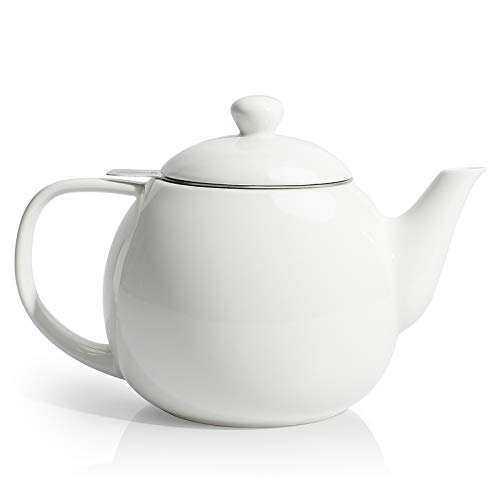
Sweese Porcelain Teapot 27 oz with Stainless Steel Infuser — Best Porcelain for One or Two
The Sweese is what most people mean by a teapot: white porcelain, a proper spout, a lid that sits where it should, and a size — 27 ounces — that maps exactly onto one generous drinker or two people sharing a pot of afternoon tea. Porcelain is the traditional material for a reason. It holds heat well enough that the second cup is still properly hot, it pours without flavoring the tea, and its smooth glaze releases cleanly in the wash, year after year.
The removable stainless steel infuser is the modern upgrade that makes this a loose-leaf pot rather than a bag pot. Its fine mesh keeps small leaves and rooibos where they belong while letting water circulate, and it lifts out to stop the steep on time. In daily service the pot is simply well-mannered: balanced when full, dripless in the pour, and sized so you brew it full — which is how teapots are meant to be used and how tea tastes best.
Its limits are the material’s limits. Porcelain is not stovetop safe, so water comes from a kettle, as it should. The white finish will gradually take on tea staining at the spout and lid line unless you give it an occasional soak — the price of a pot that shows you it is clean. And its looks are classic rather than characterful. For a daily pot that disappears into the ritual and lets the tea be the point, that is precisely the recommendation.
Strengths
- Porcelain holds heat noticeably better than glass for a relaxed second cup
- 27 oz is the honest one-to-two person size — brewed full, steeped evenly
- Fine stainless infuser handles small-leaf teas without leaking sediment
Trade-offs
- White porcelain shows tea stains and asks for occasional deep cleaning
- Not stovetop safe — it is a brewer, not a kettle
- Classic styling is safe rather than striking
| Capacity | 27 oz |
| Material | Porcelain |
| Infuser | Removable stainless steel infuser |
| Finish | White |
Best for: daily tea drinkers brewing for one or two, loose leaf and bags alike / Not suited for: stovetop brewers or anyone wanting a statement piece
Check the current price on Amazon

Teabloom Stovetop & Microwave Safe Glass Teapot 40 oz — Best for Blooming Tea
Some teapots are tools and some are occasions, and the Teabloom 40 oz is unabashedly an occasion. Blooming teas — hand-tied bundles of tea leaves and flowers that open in hot water — need two things: room and visibility. This pot provides both at scale. Forty ounces of clear glass gives a blooming ball the volume to unfurl completely, and the glass infuser, rather than a metal basket, keeps nothing between you and the show. Two blooming teas are included, so the first pot is an event straight out of the box.
It is also a legitimately flexible brewer. The glass is stovetop and microwave safe, making the pot a genuine two-in-one kettle and tea maker for small kitchens, dorms, and offices where one vessel must do both jobs. For ordinary loose leaf the glass infuser works well with larger leaves, and the 40-ounce capacity serves a table of three or four — this is the pot to bring out when tea is the entertainment.
The trade-offs track its specialty. Glass this size is the most delicate object in the roundup and sheds heat like all glass, so a long session wants a warmer. The glass infuser’s perforations are wider than fine steel mesh, so small-leaf teas and rooibos will shed some sediment into the cup. As a daily driver, the HIWARE above is the more practical glass pot; as the pot for guests, gifts, and slow weekend theater, the Teabloom has no rival here.
Strengths
- Generous 40 oz glass body gives blooming teas room to fully unfurl
- Glass infuser keeps the view unobstructed — no metal cage in the picture
- Two blooming teas in the box mean the first performance happens on day one
Trade-offs
- Largest glass pot here — the most fragile and the fastest to cool
- Glass infusers are more delicate than steel and filter fine leaf less tightly
- Its specialty is display; everyday drinkers may prefer the HIWARE
| Capacity | 40 oz |
| Material | Glass, stovetop and microwave safe |
| Infuser | Removable glass infuser |
| Included | 2 blooming teas |
Best for: blooming tea lovers, hosts, and gift buyers / Not suited for: daily drinkers who want fine filtration and maximum heat retention
Check the current price on Amazon

Frieling 18/8 Stainless Steel Teapot with Infuser 34 oz — Best Stainless Steel
The Frieling is the teapot for real kitchens — the ones with stone counters, busy mornings, children, dogs, and a dishwasher running twice a day. Its body is 18/8 stainless steel, the food-grade standard, and that single fact rearranges the ownership experience: no chipping at the spout, no crazing in the glaze, no heartbreaking crack when it meets the sink. It will dent if truly abused and then keep pouring, which is more than any other material in this roundup can promise.
As a brewer it is properly equipped. The included infuser handles loose leaf, the 34-ounce capacity is the classic two-to-three person size, and steel’s heat behavior is a reasonable middle path — it keeps tea hot respectably without the ritual care cast iron demands. The design is handsome in the way good tools are handsome, and it pairs naturally with a tea warmer for long sessions. Cleanup is the easiest here: steel does not hold tea stains the way porcelain does and forgives the dishwasher completely.
What you give up is visibility and a little ceremony. The brew’s color is hidden, so timing replaces eyes as your strength gauge, and the pot’s body gets hot to the touch — the handle is there for a reason. A minority of drinkers also feel steel flattens the most delicate green and white teas, which are better in glass or porcelain. For black teas, blends, and the daily household pot, the Frieling is the most worry-free purchase in this guide.
Strengths
- 18/8 stainless steel will not chip, crack, or shatter — it dents and carries on
- 34 oz serves two to three drinkers, the classic household size
- Steel suits modern and traditional kitchens and never stains like porcelain
Trade-offs
- You cannot see the brew — strength is judged by the timer, not the eye
- Steel conducts heat to the body of the pot; use the handle, not the pot
- Purists debate a faint metallic note with the most delicate teas
| Capacity | 34 oz |
| Material | 18/8 stainless steel |
| Infuser | Infuser included for loose tea |
Best for: busy households, clumsy kitchens, and anyone buying a teapot once / Not suited for: blooming tea fans or delicate-tea purists
Check the current price on Amazon

suyika Japanese Tetsubin Cast Iron Teapot 22 oz — Best Cast Iron
A tetsubin is bought with the heart as much as the head, and the suyika is an accessible way into that tradition. Cast iron’s thermal mass is the functional argument: once heated by the brew, the pot gives that heat back slowly, so a 22-ounce pot sipped over an hour stays genuinely hot in a way glass never will. The enameled interior is the modern refinement that makes an iron pot practical — it seals the iron from the water, prevents rust, and keeps the tea tasting like tea rather than metal.
The included stainless infuser makes it a true loose-leaf brewer, and the 650ml size suits the way tetsubin are actually used: one or two small cups, brewed attentively, often resteeped. It is listed as stovetop safe, though the respectful way to treat an enameled pot is to fill it with hot water from a kettle and let the iron do the keeping-warm it is famous for. On the table it has the presence of an object made to be looked at as much as used.
The compromises are weight, size, and care. It is heavy for a small pot, the exterior and handle heat through during use, and the enamel asks for gentle washing and a dry cloth afterward — a ritual, fittingly. Drinkers who want a big family pot or zero-maintenance ownership should choose steel or porcelain. Drinkers who want their tea to slow them down will understand exactly why this pot is in the guide.
Strengths
- Cast iron holds heat longest in this roundup — the last cup stays hot
- Enameled interior prevents rust issues and keeps flavors clean
- The weight and ritual of tetsubin brewing is the experience buyers want
Trade-offs
- 22 oz is a one-to-two cup pot — small by household standards
- Heavy for its size, and the iron body and handle get hot
- Enamel wants gentle treatment: no harsh scouring, dry after use
| Capacity | 22 oz / 650 ml |
| Material | Cast iron with enameled interior |
| Infuser | Stainless steel infuser included |
| Note from listing | Stovetop safe per listing; enamel interior |
Best for: solo ritual brewers, Japanese tea fans, and slow-session drinkers / Not suited for: families, large gatherings, or no-fuss households
Check the current price on Amazon
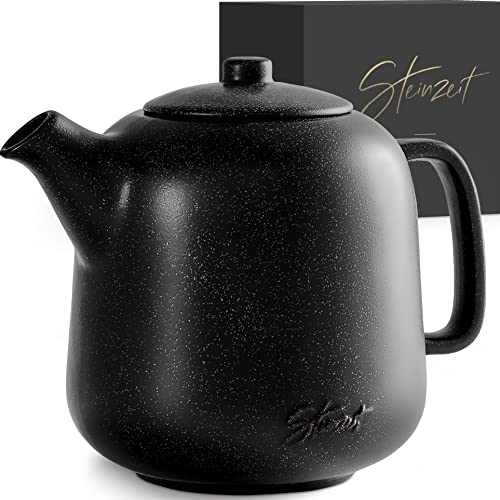
Steinzeit Design Ceramic Teapot with Infuser 44 oz — Best Large Ceramic
Every tea household eventually needs the big pot — for the brunch table, the book club, the family that all drinks tea at once — and the Steinzeit is this roundup’s answer. Forty-four ounces of ceramic capacity means five or six mugs from one brew, and ceramic’s heat retention keeps the later pours respectably hot, especially over a warmer. The matte black finish gives it a designed, contemporary presence that earns its place at the center of a table rather than hiding in the kitchen.
The removable strainer keeps it an honest loose-leaf pot at scale, which matters: big pots are often bag-only afterthoughts. Brewing a full pot of loose leaf for a group, lifting the strainer out on time, and serving a table from one vessel is a small ceremony this pot performs well. The ceramic body also treats tea kindly — neutral flavor, no metallic note, and a pour that feels substantial.
Size cuts both ways, and this guide will not pretend otherwise. A full 44-ounce ceramic pot is genuinely heavy, and pouring the last cup one-handed is a wrist workout; ceramic also breaks, and a pot this handsome is a sad thing to lose. On ordinary one-person days it is simply too much pot — tea for one belongs in the Sweese or the suyika. But for the household that regularly serves tea to a table, this is the pick, and its looks mean it will be reached for with pleasure.
Strengths
- 44 oz is the largest capacity in this roundup — a true table pot
- Ceramic holds heat well, keeping a group’s second round hot
- Matte black design looks intentional on any table setting
Trade-offs
- A full 44 oz ceramic pot is heavy — pour with two hands when full
- Ceramic is breakable, and a pot this size is an investment to drop
- Oversized for one or two drinkers on ordinary days
| Capacity | 44 oz |
| Material | Ceramic |
| Infuser | Removable strainer included |
| Finish | Black |
Best for: hosts and families serving tea to three or more drinkers / Not suited for: solo drinkers or anyone short on storage space
Check the current price on Amazon
Comparison Table
| Pick | Badge | Key spec | Best for |
|---|---|---|---|
| HIWARE 1000ml Glass Teapot with Removable Infuser | Best Overall | 1000ml capacity, stovetop safe glass, removable infuser | most loose-leaf drinkers, blooming tea fans, and two-person tea households |
| Sweese Porcelain Teapot 27 oz with Stainless Steel Infuser | Best Porcelain for One or Two | 27 oz porcelain, removable stainless steel infuser | daily tea drinkers brewing for one or two, loose leaf and bags alike |
| Teabloom Stovetop & Microwave Safe Glass Teapot 40 oz | Best for Blooming Tea | 40 oz glass, glass infuser, 2 blooming teas included | blooming tea lovers, hosts, and gift buyers |
| Frieling 18/8 Stainless Steel Teapot with Infuser 34 oz | Best Stainless Steel | 34 oz, 18/8 stainless steel | busy households, clumsy kitchens, and anyone buying a teapot once |
| suyika Japanese Tetsubin Cast Iron Teapot 22 oz | Best Cast Iron | 22 oz / 650 ml cast iron, enameled interior | solo ritual brewers, Japanese tea fans, and slow-session drinkers |
| Steinzeit Design Ceramic Teapot with Infuser 44 oz | Best Large Ceramic | 44 oz ceramic, removable strainer | hosts and families serving tea to three or more drinkers |
How to Choose the Best Teapot to Buy
Choose the material by your tea and your temperament. Glass is for drinkers who brew by eye and love blooming teas, and who accept fragility and faster cooling. Porcelain and ceramic are the all-rounders — good heat, clean flavor, traditional pouring — for the daily pot. Stainless steel is for durability-first households that want a pot to survive decades of real kitchen life. Cast iron is for ritual drinkers who sip slowly and value heat retention and presence over size. There is no wrong answer, but there is a wrong match: a blooming-tea lover in an opaque steel pot and a clumsy household with a glass pot will both be shopping again soon.
Choose the size by the session, not the guest list. Most teapots spend their lives serving one or two people, and a pot brewed half-full steeps poorly and cools quickly. Work in mugs: one mug is roughly 8 to 10 ounces of tea, so a 22- to 27-ounce pot is a one-to-two person pot, 34 to 40 ounces serves two to three, and 44 ounces and up is table service. If you regularly drink alone and host monthly, two pots — a small daily one and a large one like the Steinzeit — serve better than one compromise size that is always wrong.
Finally, inspect the working parts. The infuser should be fine-meshed stainless steel (or glass, for display pots) with room for leaves to expand — cramped leaves under-extract and taste thin. The lid should stay seated when the pot tilts to pour. The spout should be shaped to cut the stream cleanly; chronic dribblers are a design flaw, not a charm. And the handle must balance a full pot without cooking your knuckles against the body. Every pick in this roundup clears those bars; hold any other candidate to the same standard.
Teapot vs. Kettle: The Distinction That Prevents a Wrong Purchase
A surprising number of disappointed teapot buyers actually wanted a kettle. The kettle heats the water; the teapot brews the tea. They are different vessels with different design briefs, and while a few picks in this guide are stovetop safe as a convenience, a teapot’s spout, infuser, and lid are engineered for steeping and pouring, not for daily boiling duty. Boiling in a brewer subjects enamel, glass, and infuser fittings to thermal punishment they were not designed to take every day, and a pot used as a kettle is usually a pot replaced early.
The correct setup for loose-leaf tea is a chain: kettle heats fresh water to the temperature the tea wants — just off the boil for blacks and herbals, cooler for greens and whites — the water goes over the leaves in the teapot’s infuser, the infuser lifts out when the steep is done, and the pot serves. Each vessel does the job it is good at. Electric kettles with temperature settings make the first step effortless, and a simple kitchen thermometer covers the rest.
Why does the teapot step matter at all, versus brewing in the mug? Volume and control. A pot brews a consistent batch — every cup from the same steep tastes the same — the infuser gives leaves room that a cramped mug ball denies them, and the ritual of pot service keeps tea hot across a conversation in a way a single mug cannot. If you drink one mug of bagged tea at your desk, a pot is furniture. If tea is a shared, loose-leaf, more-than-one-cup pleasure, the pots in this guide are the upgrade that makes it taste like it should.
Teapot Materials Compared: Heat, Flavor, and Care
Heat retention follows mass and material. Cast iron holds heat longest — its heavy walls store the brew’s energy and return it slowly, which is why a small tetsubin can serve a long session. Ceramic and porcelain sit in the middle: a pre-warmed ceramic pot keeps a second cup properly hot, especially under a cozy or over a warmer. Stainless steel is respectable and depends on wall construction. Glass loses heat fastest, which is not a flaw so much as a personality: glass pots suit drinkers who brew, pour, and finish, or who reheat gently — and the stovetop-safe glass picks in this guide can return to low heat in a way no porcelain pot should.
Flavor neutrality runs the other way. Glass and glazed porcelain are the most neutral vessels in the category — they contribute nothing and remember nothing, so a collection of delicate teas can share one pot. Steel is nearly as neutral, with a minority of sensitive palates detecting a flattening in the most delicate greens and whites. Enameled cast iron is neutral by design, the enamel sealing the iron away from the tea. The true seasoning materials — unglazed clays like Yixing — belong to a specialist tradition where one pot is dedicated to one tea family for years; they are a hobby of their own and sit outside this general roundup by design, not by oversight.
Care is the third axis and the one that decides long-term happiness. Steel forgives everything: dishwashers, drops, neglect. Glass asks only for gentleness. Porcelain and ceramic ask for reasonable handling and an occasional soak against staining. Enameled iron asks for a small ritual — rinse, soft cloth, dry thoroughly — and repays it with decades of service. Match the material to the care you will actually give, and the teapot you buy will be the teapot you keep.
A Short History of the Teapot — and Why the Shapes Endure
The teapot’s design was settled centuries ago in China, where Yixing clay pots were prized for the way their unglazed walls seasoned to a single tea, and the form that emerged — a rounded body, a short spout set low, a handle opposite, a lid with a vent hole — turned out to be functionally near-perfect. The body gives leaves room and water circulation; the low spout draws from the clearest part of the brew; the vented lid lets the pot pour without glugging or locking. Every pick in this modern roundup, from the glass HIWARE to the steel Frieling, is a variation on that Ming-dynasty engineering, which is worth remembering when a novelty-shaped pot tempts you: novelty shapes pour badly for reasons that were understood five hundred years ago.
Europe industrialized the form — porcelain from Meissen and Staffordshire made the teapot a household standard and an art object at once, silver and later stainless steel made it durable and modern, and Japan refined the iron tetsubin and the side-handled kyusu into parallel traditions. The 20th century added borosilicate glass and the removable steel infuser, the two innovations that define the modern picks here: glass made the brew visible, and the infuser made loose leaf as convenient as a bag, which is why the contemporary teapot market is healthier than it has been in decades.
The practical moral of the history is that teapot design is a solved problem, and solved problems reward buyers who choose on material, size, and build rather than on shape novelty. A well-made pot in any of this guide’s materials will brew beautifully for years. The differences that remain — heat, care, ritual, looks — are personal, and the reviews above are organized to help you spend on the differences you will actually feel.
How to Brew Loose Leaf Tea in a Teapot, Step by Step
Most disappointing pots of tea are technique failures, not equipment failures. These steps work with every pick in this roundup and will make a bigger difference to your cup than any upgrade in pot.
- Warm the pot first. Swirl a little hot water inside and discard it. Cold ceramic, glass, or iron steals heat from the brew and under-extracts the leaves — the most common cause of a weak, flat pot.
- Measure the leaf: roughly one teaspoon of loose leaf per cup of water, plus one for the pot if you like it strong. Large-leaf teas need a heaped spoon; fine teas a level one.
- Use water at the right temperature. Black and herbal teas take water just off the boil; green and white teas want it cooler, around the point where small bubbles form, or they turn bitter.
- Pour the water over the leaves in the infuser and lid the pot. Steep to the tea, not the clock on the box alone: most black teas want three to five minutes, greens two to three, herbals five or more. Taste a spoonful near the end of the range.
- Lift the infuser out the moment the steep is right. This is the teapot’s core advantage — the brew stops. Leaving leaves in the pot is how the second cup becomes a bitter punishment for the first.
- Pour in one smooth motion per cup, and if the pot will sit, set it on a warmer or wrap it in a cozy. Many quality leaves resteep: refill the infuser with hot water for a second, lighter pot rather than wasting them.
Afterwards, empty the leaves, rinse the pot and infuser with hot water, and let them dry open. Tea pots — especially iron and unglazed interiors — prefer rinsing to detergent, and a pot stored dry and open never develops the stale smell that ruins a delicate tea. Good habits like these are why a modest pot, well used, outperforms an expensive one used carelessly.
Common Buying Mistakes
Buying a kettle when you wanted a teapot — or the reverse. They are different tools. A teapot brews and serves; a kettle heats. A few pots here tolerate a stovetop, but daily boiling belongs in a kettle, and steeping belongs in a pot with an infuser.
Choosing size by your biggest gathering. A pot bought for the twelve-person holiday will brew badly for the other 364 days. Size for your daily session and let the big-occasion problem be solved by brewing two pots.
Leaving the leaves in the pot. Tea keeps steeping until the infuser comes out. The bitter second cup that people blame on the tea is almost always this mistake. Lift the basket, then relax.
Using boiling water for every tea. Greens and whites scald at a rolling boil and turn harsh. Let the kettle stand a minute or two for delicate teas and the same leaves will taste sweet instead of stewed.
Scouring an enameled or seasoned pot. Cast iron enamel and any pot’s interior finish suffer under abrasive pads and harsh detergents. Hot water, a soft cloth, and thorough drying keep a teapot performing for years.
Final Recommendation
For most buyers, the answer is the HIWARE 1000ml glass teapot: versatile, honest, watchable brewing for the way most people actually drink loose leaf. Traditional daily drinkers should take the Sweese porcelain, hosts and blooming-tea fans the Teabloom or the big Steinzeit ceramic, durability-first households the Frieling steel, and ritual sippers the suyika tetsubin. Each is the best teapot to buy for a different drinker — which is the only honest way to answer the question.
Before ordering, confirm the capacity and color on the listing, since every design here is sold in variants, and check the current price on Amazon rather than trusting any figure quoted elsewhere. Then warm the pot, mind the water temperature, and lift the infuser on time — the teapot you chose well and use properly will quietly improve every cup from the first week onward.
One last piece of advice before you order: buy the pot for the tea you drank last week, not the tea you imagine drinking at a future, more ceremonial version of your life. The pot that matches your actual habit will be used daily and loved quietly for years — and that, not the shelf of aspirational alternatives, is what the best teapot to buy has always meant.
Keep exploring the cluster: Best Ceramic Teapots, Best British Teapots, Best Buy Teapots, Best Chinese Teapots, Best Classic English Teapots, Best Cute Teapots.
Frequently Asked Questions
What is the best teapot material?
It depends on the drinker. Porcelain and ceramic are the best all-rounders for heat and flavor neutrality. Glass is best for blooming teas and brewing by eye. Stainless steel is best for durability. Cast iron is best for heat retention and slow, ritual drinking. This guide’s picks cover each material with its strongest verified example.
What size teapot should I buy?
Size for your usual session: 22 to 27 ounces for one or two drinkers, 34 to 40 ounces for two or three, and 44 ounces or more for table service. A pot brewed at its intended fill level steeps more evenly and stays hotter than a large pot brewed half-full.
Do I need an infuser in a teapot?
If you brew loose leaf, yes — a removable infuser lets leaves expand, then lifts out to stop the steep precisely, which is the main quality advantage a teapot has over a mug. All six picks in this guide include one. Bag-only drinkers can use any pot without the infuser inserted.
Can I put a teapot on the stove?
Only if the listing says so. Two glass picks here are stovetop safe, and the tetsubin is listed as stovetop safe, but porcelain and ceramic pots like the Sweese and Steinzeit are brewers, not kettles. As a rule, heat water in a kettle and brew in the pot — both vessels last longer.
How do I stop my teapot from dripping?
Dribbling is mostly spout design, which is why this guide favored pots with clean-pouring reputations — but technique helps: pour decisively rather than hesitantly, and give the spout a small upward flick at the end of the pour to cut the stream. A pot that still dribbles after that is a design flaw, not your fault.
How should I clean a teapot?
Rinse with hot water after use and dry it open. Porcelain and steel tolerate dishwashers and occasional soaking for stains; glass rinses clean easily; enameled cast iron wants hot water, a soft cloth, and thorough drying — no scouring. Avoid strong detergents in any pot you brew delicate teas in.

