Disclosure: airfryerkitchensupply.com is reader-supported. When you buy through links on our site, we may earn an affiliate commission at no extra cost to you.
Where to buy
Chinese teapots are a category where Amazon listings vary enormously in honesty, so every linked pick below was verified against Amazon’s catalog data for this site before a link was added — the clay, capacity and form in each review come from the verified product title, not from a reseller’s description. Use the links to check price on Amazon, and read the capacity carefully: authentic gongfu teapots are deliberately small, often holding less than a single Western mug, because they are built for many short infusions of the same leaves rather than one large brew.
- SILINE Artisan Yixing Clay Tea Set, Xishi Zhuni Red, 7.8 oz with 2 Cups — Best Overall: Check the current price on Amazon
- YXHUPOT Yixing Qingshuini Clay Teapot, 10 oz / 320 ml — Best Value: Check the current price on Amazon
- Handmade Yixing Zisha Teapot, Wrinkled Zhu Clay Xi Pot, 150cc — Best for Serious Gongfu Sessions: Check the current price on Amazon
- HOHCNA Yixing Zisha Teapot, 10 oz Handmade Purple Clay — Best for Oolong and Pu-erh: Check the current price on Amazon
- CmengAo Yixing Teapot Set, 6 oz Zisha Purple Clay with 4 Cups — Best Complete Set: Check the current price on Amazon
- LURRIER Porcelain Chinese Gongfu Tea Set, Portable — Best Portable and for Beginners Exploring Teas: Check the current price on Amazon
The best chinese teapots belong to a brewing tradition that treats the teapot as an instrument, not a container. In gongfu brewing — the method developed in Chaozhou and Fujian and now practiced worldwide — a small pot, a high ratio of leaf to water, and many short infusions reveal layers of a tea that a single long steep in a large pot simply cannot. The pots built for this work are specific: Yixing zisha clay pots that season with use and soften a tea’s edges, porcelain gaiwans that brew with complete neutrality, and small clay and ceramic pots sized in milliliters, not quarts. Choosing among them is less about finding a pretty pot and more about matching clay, capacity and form to the teas you actually drink.
The six picks below were all verified through this site’s Amazon catalog check before earning a link, and they cover the genuine range of the category rather than its souvenir fringe. There is a handmade Yixing set from SILINE as the all-round anchor, a larger hand-carved Yixing pot from YXHUPOT as the value entry, a small artisan Zhu clay pot for serious gongfu sessions, an engraved purple clay pot that brews oolong and pu-erh beautifully, a complete Yixing set with cups for starting a tea practice from zero, and a portable porcelain gongfu set for the office or travel. Capacities run from a focused 150 milliliters to a more forgiving 320 — all small by Western standards, all correct by gongfu standards.
Two honest warnings frame the whole guide. First, the word “Yixing” is used loosely online; genuine zisha clay, correct firing and honest capacity are what you are paying for, and the buying guide below explains how to judge those claims from a listing. Second, clay pots are not universal pots: an unglazed Yixing pot absorbs the character of the tea brewed in it, which is a feature when you dedicate it to one tea family and a flaw when you brew everything in it. The reviews are blunt about both points, because a Chinese teapot bought with clear eyes becomes a decades-long companion, while one bought on a photograph becomes a shelf decoration.
In this guide
Quick Picks
Match the pot to your tea first: Yixing clay for oolong and pu-erh drinkers who brew often, porcelain for variety and travel, and a set with cups if you are starting from nothing.
SILINE Artisan Yixing Clay Tea Set, Xishi Zhuni Red, 7.8 oz with 2 Cups — Best Overall. Genuine Yixing zisha in the beloved Xishi form, in zhuni red clay, with two cups included — the complete, credible starting point for a real gongfu practice at a mid capacity that suits one or two drinkers. Check price on Amazon.
YXHUPOT Yixing Qingshuini Clay Teapot, 10 oz / 320 ml — Best Value. The largest pot in this roundup and the most accessible Yixing entry: hand-carved qingshuini clay at 320 milliliters, suited to small groups and to drinkers who prefer fewer, fuller rounds. Check price on Amazon.
Handmade Yixing Zisha Teapot, Wrinkled Zhu Clay Xi Pot, 150cc — Best for Serious Gongfu Sessions. A small, fully focused artisan pot: 150cc of wrinkled Zhu clay with a 9-hole outlet and inner push spout, attributed to a national-level artisan — built for concentrated, attentive brewing. Check price on Amazon.
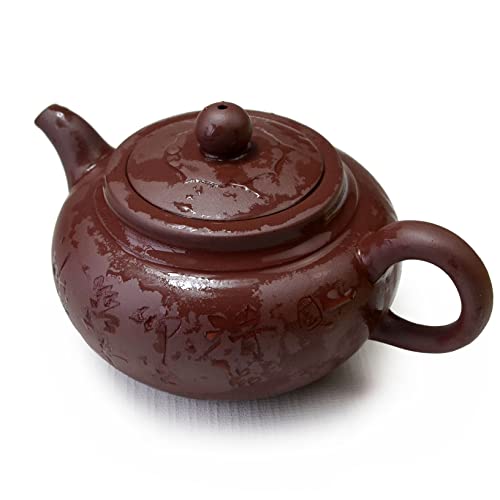
HOHCNA Yixing Zisha Teapot, 10 oz Handmade Purple Clay — Best for Oolong and Pu-erh. An unglazed purple clay pot whose verified title names oolong and pu-erh outright, with engraved calligraphy and a 10-ounce capacity that suits committed daily brewing for one or two. Check price on Amazon.
CmengAo Yixing Teapot Set, 6 oz Zisha Purple Clay with 4 Cups — Best Complete Set. A true gongfu-sized 6-ounce purple clay pot with four cups and a built-in filter, explicitly suited to oolong and pu-erh — the most complete small set here for starting a shared practice. Check price on Amazon.
LURRIER Porcelain Chinese Gongfu Tea Set, Portable — Best Portable and for Beginners Exploring Teas. A porcelain gongfu set with a 360-degree rotating tea maker and infuser in a travel gift bag — neutral porcelain brews any tea honestly, and the whole practice packs up for office or travel. Check price on Amazon.
How These Picks Were Chosen
We selected for brewing function before appearance. Every candidate was checked against Amazon’s catalog through this site’s verification system, and the ASIN, clay description and capacity were confirmed from the returned title before any link was added. Pots whose listings could not substantiate what they were — no clay named, no capacity stated, no form that corresponded to a real brewing tradition — were excluded, however attractive their photographs. What remained was then judged on the criteria that decide whether a Chinese teapot gets used daily or displayed briefly.
Capacity came first, because gongfu brewing lives in a narrow band: roughly 100 to 200 milliliters suits one or two drinkers doing repeated infusions, while 250 to 350 milliliters serves small groups or drinkers who prefer fewer, larger rounds. Pour speed came second — a gongfu pot must empty fast and cleanly, because a slow, dribbling pot over-extracts the very infusions the method exists to control. Filtration mattered next: built-in ball filters and multi-hole spout filters handle broken leaf and fannings far better than a single spout hole, especially with rolled oolongs that expand hard against the spout. Finally, we weighed honesty of positioning — artisan pots priced as artisan work, everyday pots priced as tools — and favored listings whose claims matched their tier.
A note on what is not here: large Western-style “Chinese” teapots of a liter or more, novelty color-changing pots bought as gifts rather than brewers, and cast-iron tetsubin, which are Japanese in origin however often they are miscategorized. Prices in this category move and listings change clay descriptions between production runs, so this guide prints no fixed prices — check price on Amazon on any pick, and re-read the clay and capacity on the listing itself before ordering.
The 6 Best Chinese Teapots
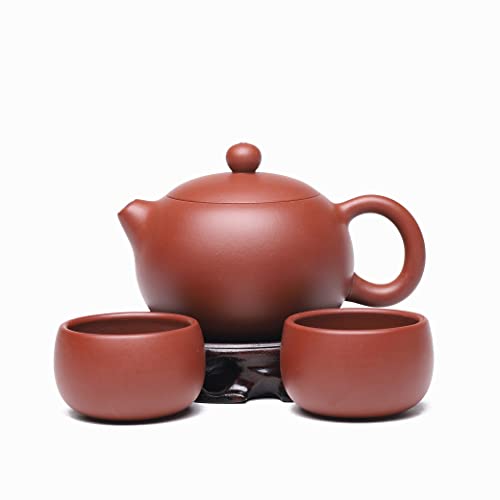
SILINE Artisan Yixing Clay Tea Set, Xishi Zhuni Red, 7.8 oz with 2 Cups — Best Overall
The SILINE Artisan set — Best Overall — is the rare starter set that does not need to be outgrown. Its verified title states the essentials plainly: genuine Yixing zisha, a handmade Xishi pot in zhuni red clay, and two cups included. The Xishi form — rounded, low and balanced, named for the classical beauty it is said to evoke — is the most beloved silhouette in Yixing pottery for practical reasons as much as aesthetic ones: it pours cleanly, handles comfortably, and suits the rolled oolongs and aromatic teas that zhuni clay flatters most.
Strengths
- Genuine Yixing zisha from a named artisan line, per the verified listing
- Classic Xishi form pours smoothly and sits comfortably in the hand
- Includes two cups, so the set brews a complete session out of the box
Trade-offs
- Zhuni clay rewards a dedicated tea family rather than variety
- 7.8 oz is a true gongfu capacity — too small for Western-style brewing
- Included cups start the practice; devoted drinkers will add their own
| Specification | Detail |
|---|---|
| Clay | Yixing zisha, zhuni red (per Amazon title) |
| Capacity | 7.8 oz (per Amazon title) |
| Form | Xishi (per Amazon title) |
| Includes | Teapot with 2 cups (per Amazon title) |
Zhuni is the connoisseur’s clay within the zisha family: dense, fine-grained and excellent at holding the temperature and aroma that fragrant teas live by. In this set it makes the pot a specialist in the best sense — dedicate it to oolong, whether a high-mountain Taiwanese style or a roasted Fujian rock tea, and across months of sessions the clay’s seasoning will quietly deepen exactly those cups. The 7.8-ounce capacity lands in the versatile middle of gongfu sizing, generous for a solo drinker who likes a fairness pitcher’s worth per round, and comfortable for two drinking together.
The inclusion of matched cups matters more than it appears. Gongfu cups are small because the method produces small, concentrated infusions meant to be sipped attentively, and drinking the first session from proper cups — rather than from a mug that drowns the liquor — teaches the method faster than any instruction. SILINE positions the set as artisan work with an official-artist lineage, and it is priced as a mid-tier craft set rather than a souvenir; judged on clay honesty, form and completeness, it earns that positioning. For a buyer who wants one purchase to stand as the foundation of a tea table, this is the foundation.
Best for: Beginners and regular brewers wanting one authentic clay pot and cups / Not suited for: Drinkers who brew many different tea families in a single pot
Check on Amazon to check price on Amazon and confirm the current configuration before you buy.
YXHUPOT Yixing Qingshuini Clay Teapot, 10 oz / 320 ml — Best Value
The YXHUPOT Qingshuini pot — Best Value — answers the two hesitations that stop most Western buyers at the threshold of Yixing ownership: the pots seem too small, and the good ones seem too expensive. At 320 milliliters it is the largest pot in this roundup, big enough to serve a small table without constant refilling, and its tier is the most accessible of the clay picks. The verified title names its clay honestly — qingshuini, a refined purple-clay variant — and notes the hand-carved finish, which puts it ahead of the vague listings that dominate the budget end of this category.
Strengths
- Generous 320 ml capacity serves two to four drinkers comfortably
- Named qingshuini clay and hand-carved detail, per the verified listing
- Accessible tier makes it the lowest-risk entry into Yixing ownership
Trade-offs
- Larger capacity dilutes the intensity purists seek from small pots
- Entry-tier finishing is honest rather than artisan-grade
- Too large for a solo drinker’s concentrated daily sessions
| Specification | Detail |
|---|---|
| Clay | Yixing qingshuini (per Amazon title) |
| Capacity | 10 oz / 320 ml (per Amazon title) |
| Detail | Hand-carved natural clay (per Amazon title) |
Used with gongfu intent, the size is a feature rather than a compromise. A 320-milliliter pot with a proportionate weight of leaf brews rounds that fill a fairness pitcher properly, which suits households where tea is shared and conversation matters more than stopwatch infusion times. It is also the most forgiving teacher in this list: timing errors that would over-extract a tiny pot’s concentrated brew land more gently here, so beginners learn the rhythm of rinse, infuse and decant without punishing cups.
The trade-offs are the honest ones of its tier. Finishing and refinement sit a step below the artisan picks, and the capacity that makes it sociable makes it wrong for the intense solo sessions that are gongfu’s other great pleasure. Dedicate it to one tea family as you would any zisha pot — qingshuini’s balanced character suits oolong and pu-erh households well — rinse it with hot water only, and it will season into a household fixture. As a first clay pot, it is the purchase least likely to be regretted and most likely to be joined later by a smaller, more specialized sibling.
Best for: New clay-pot buyers, small groups and gentler gongfu sessions / Not suited for: Purists wanting a small, single-purpose competition-style pot
Check on Amazon to check price on Amazon and confirm the current configuration before you buy.

Handmade Yixing Zisha Teapot, Wrinkled Zhu Clay Xi Pot, 150cc — Best for Serious Gongfu Sessions
This handmade Zhu clay pot — Best for Serious Gongfu Sessions — is the specialist of the roundup, and it makes no attempt to be anything else. The verified listing describes a 150cc Xi pot in wrinkled Zhu clay with a 9-hole outlet and inner push spout, made by a national-level artisan. Every element of that description is a functional choice: the small capacity concentrates the brew, the multi-hole outlet pours fast enough to control ten-second infusions, and the hand-worked surface gives the pot its grip and its character at once.
Strengths
- Small 150cc capacity delivers true gongfu concentration
- 9-hole outlet and inner push spout give fast, controlled pouring
- Artisan attribution and distinctive wrinkled Zhu clay finish
Trade-offs
- Premium positioning for a single small pot with no cups included
- Small capacity serves one or two drinkers only
- Demands practiced technique to show its best
| Specification | Detail |
|---|---|
| Clay | Zhu clay, wrinkled finish (per Amazon title) |
| Capacity | 150cc (per Amazon title) |
| Outlet | 9-hole, inner push spout (per Amazon title) |
Pots at this size and tier are bought by drinkers who already know their tea. A 150cc pot filled generously with a fine oolong produces a sequence of infusions with a clarity and intensity that larger pots physically cannot match, because the leaf-to-water ratio and the thermal stability of a small, dense clay body are the method’s engine. The 9-hole filter handles the fine broken leaf that high-grade teas include without clogging the spout mid-pour — a small detail that separates a session that flows from one that stutters.
It should be bought with the same clarity. There are no cups in the box, no forgiveness in the capacity, and no reason to own it as a first pot; its pleasures are refinements on a practice that the SILINE set or the YXHUPOT pot would teach more gently. As a second pot — the dedicated oolong pot, the pot for the best leaves in the cabinet, the pot whose making you can feel in your hand — it is exactly the kind of object that deepens a tea practice from a habit into a craft.
Best for: Experienced gongfu brewers and collectors wanting a small artisan pot / Not suited for: Beginners, groups or anyone wanting a forgiving all-rounder
Check on Amazon to check price on Amazon and confirm the current configuration before you buy.

HOHCNA Yixing Zisha Teapot, 10 oz Handmade Purple Clay — Best for Oolong and Pu-erh
The HOHCNA Zisha pot — Best for Oolong and Pu-erh — is the roundup’s most plainly purposeful clay pot. Its verified title describes an authentic unglazed Chinese teapot in handmade purple clay, engraved with calligraphy, and positions it directly as an oolong and pu-erh brewer. That is exactly the work purple zini-family clay does best: its porous, forgiving body takes the roasted edges off rock oolongs and rounds the deep earthiness of ripe pu-erh, improving with every month it is dedicated to those teas.
Strengths
- Positioned by its maker for oolong and pu-erh brewing, per the verified listing
- Authentic unglazed purple clay seasons properly with use
- Engraved calligraphy gives it presence as a tea-table piece
Trade-offs
- 10 oz capacity is generous for solo gongfu — best shared or pitcher-brewed
- Unglazed clay demands the no-soap, one-family discipline
- Engraved style is traditional; minimalists may prefer the plainer pots
| Specification | Detail |
|---|---|
| Clay | Yixing zisha purple clay, unglazed (per Amazon title) |
| Capacity | 10 oz (per Amazon title) |
| Detail | Engraved calligraphy (per Amazon title) |
| Positioning | Oolong and pu-erh brewer (per Amazon title) |
The 10-ounce capacity places it at the generous end of gongfu sizing, and the review is honest about what that means: brewed solo with a full leaf load, it produces more liquor per round than one drinker needs, which is why it shines brightest across a fairness pitcher, at a two-person table, or in the hands of a pu-erh drinker who brews a pot to work through over a morning of shorter top-ups. Pu-erh households in particular will appreciate the clay’s heat retention across those longer, relaxed sessions.
The engraved calligraphy divides opinion by taste rather than quality — it is executed as a traditional tea-table statement, and drinkers building a serene, classical setup will find it completes the scene, while minimalists should choose the SILINE or the plain YXHUPOT forms instead. Functionally there is no division: unglazed clay, honest capacity, correct discipline required. Dedicate it, rinse it with hot water only, dry it open, and it becomes the pot a pu-erh or oolong habit grows around.
Best for: Oolong and pu-erh drinkers wanting a dedicated, seasoned clay pot / Not suited for: Variety brewers or anyone unwilling to dedicate a pot to a tea family
Check on Amazon to check price on Amazon and confirm the current configuration before you buy.

CmengAo Yixing Teapot Set, 6 oz Zisha Purple Clay with 4 Cups — Best Complete Set
The CmengAo set — Best Complete Set — understands what a beginning gongfu table actually needs: not a large pot, but a correct one, with enough cups to share the session. Its verified listing describes a 6-ounce zisha purple clay pot with hand-carved characters, a built-in filter and four cups, positioned for the gongfu ceremony across oolong, pu-erh and loose leaf generally. Six ounces is a true practitioner’s capacity — concentrated, quick to infuse, quick to pour — and the built-in filter keeps the pour clean when rolled leaves swell against the spout.
Strengths
- Complete set: pot plus four cups for a shared session
- True 6 oz gongfu capacity with a built-in filter for clean pours
- Verified title names oolong and pu-erh suitability directly
Trade-offs
- 6 oz pot means frequent refills for a full table
- Set-tier cups are serviceable rather than artisan pieces
- Small pot and small cups are a deliberate method, not travel-friendly bulk
| Specification | Detail |
|---|---|
| Clay | Zisha purple clay (per Amazon title) |
| Capacity | 6 oz (per Amazon title) |
| Includes | Teapot with 4 cups (per Amazon title) |
| Filter | Built-in filter (per Amazon title) |
Sharing is this set’s quiet argument. Gongfu tea is a social method disguised as a solitary one: the small cups, the repeated rounds, the pitcher passing — all of it assumes company, and a set that arrives with four cups lets a new brewer host that experience on the first evening rather than after a second purchase. The purple clay suits the set’s stated teas well, and a household that settles on oolong or pu-erh will watch this pot season satisfyingly across its first season of use.
Its limits are arithmetic. Six ounces refilled ten times is a generous session, but each refill is a kettle trip, and drinkers who want a large personal pot beside a laptop should choose the HOHCNA or YXHUPOT instead. The cups are honest set pieces rather than artisan ceramics. None of that dents the core value: as a single purchase that contains an entire, correctly proportioned gongfu practice for a small group, nothing else in this roundup is as complete.
Best for: New gongfu drinkers who brew for two to four and want one complete box / Not suited for: Solo drinkers wanting a larger personal pot
Check on Amazon to check price on Amazon and confirm the current configuration before you buy.

LURRIER Porcelain Chinese Gongfu Tea Set, Portable — Best Portable and for Beginners Exploring Teas
The LURRIER set — Best Portable and for Beginners Exploring Teas — takes the opposite philosophy from every clay pot in this roundup, and the roundup is better for it. Porcelain holds no memory, so this set brews a green tea in the morning and a ripe pu-erh in the evening with equal honesty. Its verified title describes a portable gongfu set built around a 360-degree rotating tea maker with infuser, packed in a gift bag for travel, home and office — a modern, forgiving format for learning the method anywhere.
Strengths
- Porcelain neutrality suits every tea family with one vessel
- Rotating tea maker design simplifies gongfu pouring for beginners
- Complete portable set with gift bag for travel and office use
Trade-offs
- Porcelain offers no seasoning or clay character
- Rotating mechanism is a convenience design, not a traditional form
- Less thermal mass than clay for long, slow sessions
| Specification | Detail |
|---|---|
| Material | Porcelain (per Amazon title) |
| Design | 360 rotation tea maker with infuser (per Amazon title) |
| Portability | Gift bag included, travel positioning (per Amazon title) |
The rotating design deserves a plain explanation: it lets the brewer tilt and pour with a controlled motion that substitutes mechanism for the wrist technique a gaiwan or small clay pot demands. For beginners, that removes the two classic first-session failures — the scalded fingers and the spilled, over-steeped round — and lets attention go where it belongs, on leaf, temperature and timing. In an office, where it may be the most-used pick in this entire guide, that reliability is the difference between a daily practice and a drawer souvenir.
What it cannot do is season, and it will never give a tea the rounded depth a dedicated zisha pot develops. Porcelain’s neutrality is simultaneously its ceiling and its virtue. The sensible reading of this roundup is that the LURRIER and a clay pot are complements, not rivals: explore with porcelain, commit with clay. Buyers who travel, brew at work, or are still discovering which teas they love should start here without a moment’s hesitation — and many will find the exploration never needs to end.
Best for: Travelers, office brewers and beginners who brew many different teas / Not suited for: Clay devotees wanting a seasoning, dedicated pot
Check on Amazon to check price on Amazon and confirm the current configuration before you buy.
Comparison Table
Capacity and clay decide everything in this category, so the table leads with both — choose the row whose milliliters and material match your tea and your table before falling for any silhouette.
| Pick | Badge | Key spec | Best for |
|---|---|---|---|
| SILINE Artisan Yixing Clay Tea Set, Xishi Zhuni Red, 7.8 oz with 2 Cups | Best Overall | Yixing zisha, zhuni, 7.8 oz, teapot with 2 cups (per Amazon title) | Beginners and regular brewers wanting one authentic clay pot and cups |
| YXHUPOT Yixing Qingshuini Clay Teapot, 10 oz / 320 ml | Best Value | Yixing qingshuini clay, 10 oz / 320 ml (per Amazon title) | New clay-pot buyers, small groups and gentler gongfu sessions |
| Handmade Yixing Zisha Teapot, Wrinkled Zhu Clay Xi Pot, 150cc | Best for Serious Gongfu Sessions | Zhu clay, 150cc, 9-hole outlet (per Amazon title) | Experienced gongfu brewers and collectors wanting a small artisan pot |
| HOHCNA Yixing Zisha Teapot, 10 oz Handmade Purple Clay | Best for Oolong and Pu-erh | Yixing zisha purple clay, 10 oz, unglazed (per Amazon title) | Oolong and pu-erh drinkers wanting a dedicated, seasoned clay pot |
| CmengAo Yixing Teapot Set, 6 oz Zisha Purple Clay with 4 Cups | Best Complete Set | Zisha purple clay, 6 oz, 4 cups, built-in filter (per Amazon title) | New gongfu drinkers who brew for two to four and want one complete box |
| LURRIER Porcelain Chinese Gongfu Tea Set, Portable | Best Portable and for Beginners Exploring Teas | Porcelain, 360 rotation tea maker with infuser, portable bag (per Amazon title) | Travelers, office brewers and beginners who brew many different teas |
How to Choose the Best Chinese Teapots
Clay is the first decision, and it is really a decision about commitment. Yixing zisha — the purple, red and brown clays from Yixing in Jiangsu province — is unglazed and slightly porous. Brewed in repeatedly, it absorbs tea oils and develops a seasoning that rounds harsh edges and deepens familiar teas; that same absorption means one pot should serve one family of tea, so a zisha pot suits a drinker with a settled habit. Within zisha, the broad families behave differently: zini, the purple-brown clay, is the forgiving all-rounder and a classic match for pu-erh and roasted oolongs; zhuni, the dense red clay, holds heat and aroma precisely and rewards careful brewing of fragrant teas; duanni and other lighter clays brew cooler and suit greener teas. Porcelain and glazed ceramic sit at the opposite pole: completely neutral, endlessly versatile, one vessel for every tea you own, and the right choice while your tastes are still exploring.
Capacity is the second decision, and smaller is usually righter than Western instincts suggest. A 120 to 180 milliliter pot is not a toy or a sample size — filled with a generous weight of leaf and infused six to ten times, it produces a full session of tea for one or two people, with each infusion tasting distinct. Oversizing a gongfu pot dilutes the leaf-to-water ratio that makes the method work and produces one big, flat brew instead. Buy for your real table: solo drinkers belong at the small end, couples in the middle, and only regular small groups need the 300-milliliter class.
Then judge the working details. The pot should pour in a clean, fast stream and stop without dribbling, because infusion timing is the brewer’s main control. The lid should fit snugly — a well-made pot can often be lifted by its lid knob with the spout hole covered, a classic fit test. Filtration should match your leaf: ball filters and multi-hole spout filters for broken or tightly rolled leaf, simpler arrangements for large whole leaf. And the handle and knob must stay manageable with hot water inside, which sounds obvious and eliminates a surprising number of pretty pots.
Yixing Clay, Seasoning and Honest Expectations
Seasoning a Yixing pot is real, gradual and frequently oversold. A new zisha pot benefits from a first preparation — a thorough rinse and a soak or gentle simmer in the tea it will serve, or simply in plain water followed by its first real brews — and then improves across its first months of use as tea oils settle into the clay. What seasoning does is subtle: it softens astringency, rounds the cup, and makes a familiar tea taste more like itself. What it does not do is rescue poor leaf, fix careless brewing, or transfer flavor dramatically between sessions. Buyers who expect transformation will be disappointed; buyers who expect refinement will be pleased for years.
Dedication follows from the same chemistry. Because the clay holds the memory of what it brews, traditional practice assigns one pot to one tea family — a pot for roasted oolong, another for ripe pu-erh — and never washes zisha with soap, which the clay would absorb just as faithfully. Rinse with hot water, air dry with the lid off, and the pot maintains itself. If that discipline sounds like a pleasure, Yixing is your material. If it sounds like a burden, glazed porcelain delivers ninety percent of the cup with none of the rules, and this guide’s porcelain pick exists precisely for that drinker.
Finally, calibrate price expectations by tier rather than by hope. Machine-assisted and half-handmade zisha pots at accessible tiers brew genuinely well and are the correct starting point. Fully handmade pots by named artisans are craft objects whose cost reflects labor and reputation as much as function, and they reward collectors and devoted brewers. What no tier justifies is a listing that will not name its clay, state its capacity or show its filter — in a category this tradition-bound, vagueness is itself information.
Chinese Teapot Forms: Gaiwan, Side-Handle and Fairness Pitchers Explained
The teapot is the star of gongfu brewing, but it works within a small family of forms worth understanding before you spend. The gaiwan — a lidded bowl on a saucer — is the tradition’s other great brewer, and many experienced drinkers prefer it for evaluating new teas because porcelain or glazed interiors show the leaf and liquor honestly and never hold a previous tea’s memory. Brewing in a gaiwan takes a practiced grip to pour without burning fingers, which is its one real barrier; the payoff is total versatility in the smallest possible footprint. If the six pots in this roundup are the committed choice, a simple porcelain gaiwan is the explorer’s choice, and many tea tables end up owning both.
Two supporting pieces complete a working setup. A fairness pitcher — a small open pitcher into which the pot is decanted — equalizes strength across cups and stops infusion at exactly the moment you choose, which matters enormously when a pot is producing ten-second infusions. A tea tray with drainage contains the generous splashing that gongfu technique involves, since pots are warmed, rinsed and overflowed as a matter of routine. Neither is required on day one: a pot, small cups and any heatproof pitcher begin the practice perfectly well. But knowing the system the pot belongs to helps you buy the right pot once, sized for the sessions you will actually brew, rather than assembling a mismatched collection by accident.
How to Brew Gongfu Tea in a Chinese Teapot, Step by Step
Gongfu brewing is a learnable routine, not a ceremony reserved for experts. This sequence works with every pot in this roundup; adjust leaf quantity and timing to your tea as you learn its preferences.
Step 1: Warm everything. Fill the pot with hot water, pour it over the cups and into your fairness pitcher if you use one, and discard. Warm vessels keep the first infusion at temperature instead of donating its heat to cold clay.
Step 2: Add generous leaf. Gongfu uses far more leaf than Western brewing — as a starting point, fill roughly a quarter to a third of a small clay pot with rolled oolong, or use a generous layer of loose leaf for other teas. Add hot water at the temperature your tea wants: near-boiling for pu-erh and roasted oolong, slightly cooler for delicate teas.
Step 3: Wake the leaves. Pour the first brief infusion — five to ten seconds — and discard it or use it to warm the cups again. This rinse opens rolled leaves and washes away dust, and the fragrance from the lid tells you what the session holds.
Step 4: Brew short and often. Refill, steep briefly — often ten to twenty seconds for early infusions — and decant completely into the pitcher or cups. Complete decanting is essential; liquor left sitting on the leaves keeps extracting and steals the next round. Lengthen each subsequent infusion gradually as the leaves give less, and expect a good tea to reward you with many rounds.
Step 5: Rest the pot properly. Empty the spent leaves, rinse the pot with hot water only — never soap in unglazed clay — and let it dry fully with the lid off before storing. A zisha pot stored damp and sealed will stale; a dry, aired pot simply waits, seasoned, for its next session.
Common Buying Mistakes
Buying a pot that is too large. A liter-sized “gongfu” pot defeats the method it claims to serve. Match capacity to your table — small is correct — and let many infusions, not one big brew, provide the volume.
Brewing every tea in one clay pot. Unglazed zisha remembers. A pot seasoned on ripe pu-erh will ghost that earthiness into a delicate green tea. Dedicate clay pots to a tea family, and keep a porcelain vessel for everything else.
Washing Yixing clay with soap. The clay absorbs detergent as faithfully as tea, and the flavor lingers for many sessions. Hot water, a soft cloth and thorough air drying are the entire cleaning regime for zisha.
Ignoring the pour. A slow or dribbling spout is not a cosmetic flaw in gongfu brewing — it is lost control over every infusion. Favor pots whose listings show real filters and honest spout design, and test the pour with water the day a pot arrives.
Paying artisan prices for unnamed clay. If a listing will not state the clay family and capacity, it has told you what it is. In this category, specificity is the entry fee for premium tiers.
Final Recommendation
For most buyers starting or settling a gongfu practice, the SILINE Artisan Yixing Tea Set is the pot to buy: genuine zisha in the classic Xishi form, a workable capacity, and cups included to begin immediately. Drinkers who know pu-erh is their tea should look first at the HOHCNA Yixing Zisha Teapot, while anyone brewing at a desk or on the road is best served by the LURRIER Portable Gongfu Tea Set. Continue with our companion guides: Best Chinese Teapots For Pu Erh, Best Ceramic Teapots, Best Teapots, and Best Glass Teapots.
Frequently Asked Questions
What size Chinese teapot should a beginner buy?
A pot between 150 and 250 milliliters is the forgiving starting point: small enough to brew true gongfu-style with a proper leaf ratio, large enough to share with a second person and to tolerate imperfect technique. Solo drinkers who brew daily often graduate to a smaller dedicated pot later, but the mid-size pot remains useful for guests, which is why it is the right first purchase.
What is the difference between Yixing clay and porcelain teapots?
Yixing zisha clay is unglazed and porous: it seasons with use, softening and rounding the teas brewed in it, and it should be dedicated to one tea family and never washed with soap. Porcelain is glazed, completely neutral and versatile — one porcelain pot or gaiwan brews any tea without carrying flavors between them. Clay rewards commitment; porcelain rewards variety.
How many infusions should a gongfu session produce?
It depends on the leaf, but a good oolong or pu-erh brewed gongfu-style commonly gives six to ten worthwhile infusions, sometimes more, each with its own character as the leaves open and fade. That yield is exactly why the pots are small: the method trades one large brew for a progression of distinct cups from the same leaves.
Do I need to season a new Yixing teapot?
A new pot benefits from preparation — thorough rinsing and an initial soak or first brews in the tea it will serve — and then seasons naturally across its first months of regular use. Elaborate seasoning rituals are optional. What matters is the ongoing discipline: brew one tea family in it, rinse with hot water only, and dry it fully with the lid off between sessions.
Can I brew Western-style tea in a Chinese teapot?
You can brew any tea in any pot, but the result follows the method, not the vessel. A small clay pot used with a small amount of leaf and a long steep produces a weak, under-extracted cup. If your habit is a large mug brewed once, a larger glazed pot suits you better; if you are curious about gongfu, the small pot plus generous leaf and short infusions is the entire point.
Why do Chinese teapots cost so much more than ordinary teapots?
The range reflects clay, labor and honesty. Accessible half-handmade zisha pots brew excellently and cost what good tools cost. Fully handmade pots by recognized artisans add hours of skilled handwork and a maker’s reputation, and are priced as craft. What you are paying for at any tier should be named clay, stated capacity and sound construction — a listing offering none of those specifics has not earned a premium at any price.


