Disclosure: airfryerkitchensupply.com is reader-supported. When you buy through links on our site, we may earn an affiliate commission at no extra cost to you.
Where to buy
All six robot vacuums below were verified, and each earned its place on one of the two halves of this search: pet-hair handling stated in its listing, and a brush design a berber owner can live with. Berber is loop pile, and loops change the rules — the guide below explains why tangle-free suction ports and anti-tangle brushes matter more here than raw suction numbers. Use the links to check the current price on Amazon.
ILIFE V2 Robot Vacuum Cleaner, Tangle-Free Suction — check price on Amazon
Roborock Q7 L5 Robot Vacuum and Mop Combo — check price on Amazon
roborock Q7 M5+ Robot Vacuum and Mop with Self-Empty — check price on Amazon
Shark AV2501S AI Ultra Robot Vacuum with Self-Empty Base — check price on Amazon
Shark AI Ultra Robot Vacuum AV2511AE — check price on Amazon
Lefant M210 Pro Robot Vacuum — check price on Amazon
Best Robot Vacuums for Pet Hair and Berber Carpet: Power With a Gentle Brush
The best robot vacuums for pet hair and berber carpet have to satisfy two demands that pull in opposite directions. Pet hair wants aggression: strong suction, a brush that digs hair out of pile, and a bin — or a self-empty base — that does not clog by Tuesday. Berber carpet wants restraint: its looped pile can snag and fuzz under an aggressive beater bar, and a frayed loop is damage you cannot vacuum back. The six verified picks in this guide thread that needle in different ways — tangle-free suction ports with no rotating brush at all, anti-tangle brush systems designed to shed hair instead of wrapping it, and full-featured mapping robots whose carpet performance is stated in their own listings.
Understand the berber issue before the picks, because it decides which robot belongs in your home. Berber pile is made of uncut loops. A stiff, fast beater bar can catch a loop, pull it, and leave a run or a fuzzy patch — the risk is highest on wool and wool-blend berber and on any loop that is already loose. Suction-port designs, which have no main brush, are inherently the gentlest. Modern anti-tangle brushes reduce the risk substantially on synthetic berber in good condition. No robot in this guide is a guarantee for a delicate antique wool berber — for that floor, the honest answer is a suction-only model or a conversation with your carpet’s maker, and the reviews say so where it matters.
Every pick was matched to its Amazon title. Where a listing states a suction figure, a runtime or a self-empty period, we report it as the listing’s figure. Pet-hair claims below come from the listings themselves — several name pet hair and carpet explicitly — rather than from our optimism.
In this guide
Quick Picks
ILIFE V2 Robot Vacuum Cleaner, Tangle-Free Suction — Best for Berber Safety. The gentlest design in the guide: a tangle-free suction port with no main brush to catch a berber loop, a slim body, and a listing that names pet hair as its home turf. Check the current price on Amazon.
Roborock Q7 L5 Robot Vacuum and Mop Combo — Best Anti-Tangle All-Rounder. A LiDAR-mapping robot whose listing leads with a dual anti-tangle system — the modern answer for homes that want a real brush’s carpet cleaning without the hair-wrapped brushroll. Check the current price on Amazon.
roborock Q7 M5+ Robot Vacuum and Mop with Self-Empty — Best Self-Emptying for Pet Hair and Carpet. The listing says it plainly — a dual anti-tangle system ‘for Pet Hair & Carpet’ — with a self-empty base rated for up to seven to nine weeks and 10,000Pa suction on top. Check the current price on Amazon.
Shark AV2501S AI Ultra Robot Vacuum with Self-Empty Base — Best Bagless Self-Emptying. Shark’s pet-hair specialist with a bagless self-empty base holding a stated 30 days — no bags to buy — plus home mapping and a HEPA-filtered base. Check the current price on Amazon.
Shark AI Ultra Robot Vacuum AV2511AE — Best Carpet-Focused Shark. The carpet-named Shark: its listing puts carpet first, adds anti-hair wrap to the brush story and LiDAR mapping — without the self-empty base, for homes that empty a bin happily. Check the current price on Amazon.
Lefant M210 Pro Robot Vacuum — Best Budget Tangle-Free. A slim, quiet, budget-tier robot with six cleaning modes and a stated 120-minute runtime — the low-cost way to keep pet hair down between deeper cleans. Check the current price on Amazon.
How These Picks Were Chosen
We verified candidates across pet-hair and carpet searches, matching each ASIN to its returned title. Selection required the listing to speak to at least one half of the keyword directly — pet hair, carpet, anti-tangle or tangle-free design — and we spread the six across the berber-safety spectrum on purpose: two tangle-free or anti-tangle-first designs for cautious berber owners, two self-emptying pet-hair specialists for heavy shedding homes, and two full mapping robots for mixed-floor houses.
We excluded robot mops whose vacuum claims were vague, models with no carpet or pet relevance in their listings, and duplicate variants. A note on method: no listing can certify your specific carpet. Pile material, loop condition and age decide berber risk as much as the robot does, so the reviews grade each pick’s design risk honestly and the buying guide gives you the test protocol — run any new robot supervised on your berber first, and inspect the loops after the first passes.
The 6 Best Robot Vacuums for Pet Hair and Berber Carpet
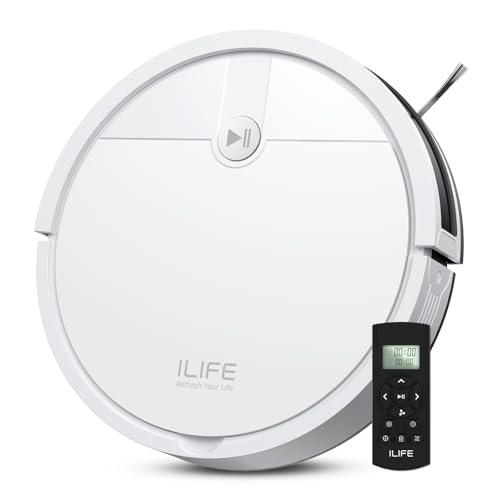
ILIFE V2 Robot Vacuum Cleaner, Tangle-Free Suction — Best for Berber Safety
Start with the design berber owners should start with. The ILIFE V2 cleans through a suction port rather than a rotating brushroll, which removes the snag mechanism entirely — there is no beater bar to catch and pull a loop. The listing calls the design tangle-free and names pet hair as its ideal use, and the pairing is logical: hair goes straight into the bin instead of wrapping around a brush you must cut clean weekly. Add a slim body for under-sofa work, a stated 120-minute runtime, scheduling and self-charging, and you have the cautious berber owner’s default answer.
Strengths
- No main brushroll — nothing to snag a berber loop
- Listing names pet hair as its ideal use
- Slim body reaches under furniture where hair collects
Trade-offs
- Suction-port cleaning is less agitating on deep pile than a brush
- No smart mapping — it covers by pattern, not by plan
- Bin needs regular emptying; no self-empty base
| Detail | What the listing confirms |
|---|---|
| Brush design | Tangle-free suction port (per Amazon title) |
| Runtime | 120 mins (per Amazon title) |
| Control | Remote control, schedule (per Amazon title) |
On berber, this is the pick we would hand a worried owner first — particularly on wool or older loop pile where the cost of a snag is real. The trade is deep-cleaning theatre: without a brush, it relies on suction and passes, so run it more often and let frequency do what agitation does on other robots. Pet hair on the surface and in low loop pile is exactly its brief; hair ground into plush carpet is not.
The remote-and-schedule control set is refreshingly simple — no app account, no mapping updates — and the self-charging habit means it lives ready. Supervise the first berber runs as with any robot, then let the schedule take over.
Best for: berber owners — especially wool or older loops — with shedding pets / Not suited for: deep plush carpets needing brush agitation

Roborock Q7 L5 Robot Vacuum and Mop Combo — Best Anti-Tangle All-Rounder
The Q7 L5 represents the engineered compromise. Its listing states 8,000Pa suction and a dual anti-tangle system, which is the feature berber-and-pet homes should read twice: anti-tangle brush design aims to move hair into the bin instead of winding it around the brush, reducing both the weekly scissor ritual and the brush’s tendency to drag and catch. Add LiDAR navigation with multi-level mapping and you get planned, repeatable coverage of the carpeted rooms rather than hopeful wandering.
Strengths
- Dual anti-tangle system stated in the listing
- LiDAR mapping for planned, room-by-room coverage
- Strong stated suction for carpet work
Trade-offs
- It still has a brush — supervise first runs on delicate berber
- Mop function is a bonus, not a reason to buy for berber
- Mapping robots need app setup and occasional map care
| Detail | What the listing confirms |
|---|---|
| Suction | 8,000Pa (per Amazon title) |
| Brush design | Dual anti-tangle system (per Amazon title) |
| Navigation | LiDAR, multi-level mapping (per Amazon title) |
For synthetic berber in good condition — the majority of berber installed today — an anti-tangle brush robot is a reasonable, modern choice, and this one’s mapping makes it the set-and-forget pick for mixed-floor homes: berber in the bedrooms, hard floors elsewhere, hair everywhere. Run the first berber sessions supervised and check the loops; if the carpet is happy, the schedule takes over.
The mop combo matters less for this search — keep mop pads away from berber entirely — but on the hard-floor half of a pet home it saves a second appliance. Check the current price on Amazon, and budget for the usual filter and brush consumables.
Best for: mixed-floor pet homes with synthetic berber in good condition / Not suited for: delicate wool berber where any brush is too much risk

roborock Q7 M5+ Robot Vacuum and Mop with Self-Empty — Best Self-Emptying for Pet Hair and Carpet
If the ILIFE is the cautious answer, the Q7 M5+ is the committed one. Its verified title is the only one in this guide that names pet hair and carpet together as the anti-tangle system’s purpose. The self-empty base, rated in the listing at up to seven to nine weeks, solves the pet home’s real problem: a robot bin fills with hair fast, and a full bin is a robot that has stopped cleaning while still driving around. Weeks of hands-free emptying keeps suction honest. PreciSense LiDAR and app control handle the planning.
Strengths
- Listing explicitly targets pet hair and carpet with its anti-tangle system
- Self-empty base rated up to 7–9 weeks in the listing
- 10,000Pa stated suction — the strongest carpet claim here
Trade-offs
- Brush-based cleaning still asks for supervised first berber runs
- Self-empty bases add floor footprint and bag or bin upkeep
- Premium tier within this guide
| Detail | What the listing confirms |
|---|---|
| Suction | 10,000Pa (per Amazon title) |
| Self-empty | Up to 7–9 weeks (per Amazon title) |
| Navigation | PreciSense LiDAR (per Amazon title) |
Heavy shedders are this robot’s constituency — the double-coated dog, the long-haired cat, the multi-pet house where hair is a weather system. On synthetic berber it pairs the strongest stated suction here with the anti-tangle design, and the base means the system keeps working between weekends. On wool berber, our advice stands: supervise, inspect, and let the ILIFE’s brushless design win if the loops look fragile.
Set the app up properly — carpet zones, no-go lines around the fragile rug, scheduled runs while you are home the first week. A mapping robot rewards an hour of setup with years of obedience.
Best for: heavy-shedding homes with synthetic berber and hard floors / Not suited for: wool berber owners avoiding brushes altogether

Shark AV2501S AI Ultra Robot Vacuum with Self-Empty Base — Best Bagless Self-Emptying
Shark builds for pet homes unapologetically, and the AV2501S listing leads with ‘Perfect for Pet Hair’. The differentiator is the base: bagless self-emptying with a stated 30-day capacity and HEPA filtration at the base, which removes the running cost and the bag-availability question that dock-based systems carry. Matrix Clean navigation and home mapping give it planned coverage, and Shark’s brushroll design is built around hair management — which on berber earns the usual advice: supervise the first runs and inspect your loops.
Strengths
- Bagless self-empty base — no bags to buy, stated 30-day capacity
- Listing leads with pet hair as its purpose
- Home mapping with Matrix Clean coverage
Trade-offs
- Brushroll design — berber owners should supervise early runs
- 30-day base capacity is shorter than bagged rivals’ stated spans
- Base footprint needs a permanent home by a wall
| Detail | What the listing confirms |
|---|---|
| Base | Bagless self-empty, 30-day capacity, HEPA (per Amazon title) |
| Navigation | Home mapping, Matrix Clean (per Amazon title) |
| Colour verified | Dark Grey |
The bagless base changes ownership economics: pet homes empty bases often, and a bagless system you tip into the bin beats a bag you must remember to reorder. For a synthetic berber household that sheds seriously, this is the low-friction choice — mapped cleaning, hair-focused design, and a base that keeps the robot honest for a month at a time.
Keep the base’s filter clean per the manual; a HEPA base only filters if air can move through it. And on berber, start with the supervised protocol in the buying guide — Shark’s cleaning is thorough, and thorough is exactly what a fragile loop does not want.
Best for: pet homes wanting self-emptying without bag costs / Not suited for: delicate loop pile where brush contact is unwelcome

Shark AI Ultra Robot Vacuum AV2511AE — Best Carpet-Focused Shark
Not every pet home wants a base. The AV2511AE keeps the Shark virtues — a listing that names carpet, hard floors and pet hair together, anti-hair wrap design so the brush sheds rather than strangles, LiDAR mapping and HEPA filtration — in a robot-only package. That suits homes where the robot lives in a cupboard, where a base has no wall to sit against, or where emptying a bin every few days is a fair trade for a lower purchase tier and one less appliance on the floor.
Strengths
- Listing names carpet and pet hair together
- Anti-hair wrap brush design, per the listing
- LiDAR mapping without base footprint
Trade-offs
- Bin fills fast in shedding season — you are the self-empty base
- Brush design still asks for supervised first berber runs
- No base means no HEPA base filtration stage
| Detail | What the listing confirms |
|---|---|
| Navigation | LiDAR mapping, Matrix Clean (per Amazon title) |
| Brush design | Anti-hair wrap (per Amazon title) |
| Filtration | HEPA (per Amazon title) |
On berber, anti-hair wrap matters beyond convenience: a brush that is not wound with hair keeps even pressure and is less likely to drag at loops unevenly. Pair that with LiDAR-planned passes and you get methodical carpet care — the opposite of the random-bounce robots that revisit one corner and miss the hair field under the sofa.
Your discipline replaces the base: empty the bin on a schedule tied to shedding, not to the robot’s complaints, and clean the brush ends monthly even with anti-wrap design. Do that, and this is the value route into mapped, carpet-first pet cleaning.
Best for: pet homes that prefer no base and lower running complexity / Not suited for: anyone who knows the bin will not get emptied manually

Lefant M210 Pro Robot Vacuum — Best Budget Tangle-Free
The Lefant M210 Pro is the honest budget entry: a slim robot whose listing promises powerful suction, six cleaning modes, 120 minutes of runtime, quiet operation and voice control, aimed at pet hair and hard floors. Its role in a berber home is maintenance, not heroics — daily passes that lift the hair before it works into the loops, so the weekly deep clean (by hand or a bigger machine) stays easy. Slim robots earn their keep under furniture, which is where pet hair retires to breed.
Strengths
- Slim body reaches the under-furniture hair fields
- Six modes and a stated 120-minute runtime
- Accessible tier for a second or maintenance robot
Trade-offs
- Listing leads with hard floors — berber work is maintenance duty
- No mapping; coverage is by pattern and persistence
- Budget build means budget bin capacity
| Detail | What the listing confirms |
|---|---|
| Runtime | 120 mins (per Amazon title) |
| Modes | 6 cleaning modes (per Amazon title) |
| Control | Voice control, self-charging (per Amazon title) |
Think of this as the daily tide that keeps the beach clean. Run it daily in the rooms the pets own, and berber never accumulates the embedded hair that demands aggressive cleaning later — which is itself a berber-protection strategy, because gentle-and-often beats strong-and-rarely on loop pile. For a first robot in a pet home, it is also the low-risk way to learn your floors’ habits.
Keep expectations in their lane: it will not replace a deep carpet clean, and its hard-floor billing is honest. But as an always-on hair patrol at this tier, it earns the slot. Check the current price on Amazon before comparing against the mapped robots above.
Best for: budget buyers and daily hair maintenance on low pile and berber / Not suited for: homes needing mapped, whole-house deep cleaning
Comparison Table
| Pick | Badge | Key spec | Best for |
|---|---|---|---|
| ILIFE V2 Robot Vacuum Cleaner, Tangle-Free Suction | Best for Berber Safety | Tangle-free suction, 120-min runtime | berber owners — especially wool or older loops — with shedding pets |
| Roborock Q7 L5 Robot Vacuum and Mop Combo | Best Anti-Tangle All-Rounder | 8,000Pa, dual anti-tangle, LiDAR | mixed-floor pet homes with synthetic berber in good condition |
| roborock Q7 M5+ Robot Vacuum and Mop with Self-Empty | Best Self-Emptying for Pet Hair and Carpet | 10,000Pa, self-empty 7–9 weeks | heavy-shedding homes with synthetic berber and hard floors |
| Shark AV2501S AI Ultra Robot Vacuum with Self-Empty Base | Best Bagless Self-Emptying | Bagless 30-day base, mapping | pet homes wanting self-emptying without bag costs |
| Shark AI Ultra Robot Vacuum AV2511AE | Best Carpet-Focused Shark | LiDAR, anti-hair wrap, HEPA | pet homes that prefer no base and lower running complexity |
| Lefant M210 Pro Robot Vacuum | Best Budget Tangle-Free | 120-min runtime, 6 modes, slim | budget buyers and daily hair maintenance on low pile and berber |
Berber Carpet and Robot Brushes: What Actually Goes Wrong
Berber’s loops are its beauty and its vulnerability. Unlike cut pile, where fibres stand as separate tufts, berber fibres loop over and return into the backing. A rotating brush that catches one loop can pull a run, and stiff bristles on a worn or loose loop can fuzz the surface — damage that shows as a pale, rough patch and cannot be reversed by cleaning. The risk is not equal everywhere: synthetic berber (olefin, nylon, polyester) in good condition tolerates modern brushes well; wool berber is softer, more valuable and less forgiving; any berber with an existing snag is a carpet a brush should not meet unsupervised.
Design is your protection. Suction-port robots like the ILIFE V2 have no main brush and therefore no snag mechanism — the safest architecture for loops. Anti-tangle and anti-wrap brushes, like the Roborock and Shark systems here, are engineered to shed hair rather than wind it, which keeps pressure even and reduces dragging. The protocol matters as much as the product: run any new robot on your berber supervised for the first sessions, inspect the loops where it turned and climbed transitions, check the brush for caught loops afterwards, and only then hand it a schedule.
- Loops snag: that is the whole risk, and it is design-dependent
- Suction-port robots are the safest architecture for berber
- Supervise first runs and inspect loops before scheduling
Pet Hair: Suction, Bins and the Self-Empty Question
Pet hair defeats robots in the bin, not at the brush. Hair is bulky and light; a small bin fills in days in a shedding home, and a full bin silently ends the cleaning while the robot keeps touring. That is why the self-empty picks matter: the Roborock Q7 M5+ base is rated in its listing at up to seven to nine weeks, and the Shark AV2501S base holds a stated 30 days without bags. If you choose a bin-only robot like the AV2511AE or the Lefant, your emptying discipline is the system — tie it to the laundry cycle or the bins’ day, not to when the robot complains.
Hair also wraps. Every brush robot needs its brush ends and axles checked regularly, anti-tangle design or not; hair migrates to the ends and cooks there. Suction figures, quoted in pascals by several listings here, indicate carpet pull but do not clean by themselves — airflow, brush design and bin state decide real pickup. Judge a pet robot as a system: brush, bin, base, filter, and your ten minutes a month keeping them honest.
Mapping, Modes and Running a Robot in a Pet Home
Mapping robots — the LiDAR Roborocks and Sharks here — earn their premium in pet homes because hair is not evenly distributed. The dog’s corner, the cat’s sunny patch and the hallway runway need more passes than the guest room, and a mapped robot can be sent exactly there, on schedule, with no-go zones protecting the fragile rug and the water bowl. Non-mapping robots compensate with persistence and slim bodies; they work best in smaller, simpler floor plans and as maintenance partners to a periodic deep clean.
Whichever you choose, set the home up for the robot: cords lifted, small toys binned, thresholds checked, and the berber protocol from the guide above followed for the first week. Run the robot while you are home until its habits are known — a robot that behaves for seven supervised runs will behave for seven hundred unsupervised ones, and the one surprise it finds in week one is a surprise you get to solve together.
Setting Up the House for the Robot: The Pet-Home Audit
A robot vacuum succeeds or fails on the house you give it, and pet homes need a fifteen-minute audit before the first run. Walk the robot’s territory at its height — kneel — and remove its three natural enemies: cables it can drag, small objects it can eat, and thresholds it can beach on. Pet toys are the classic ambush; a robot that swallows a cat toy mid-run cleans nothing and complains about everything. Water bowls deserve a no-go zone or a mat with a raised lip, because a robot that nudges a bowl daily will eventually wear the skirting board’s paint and your patience in equal measure.
Berber rooms get their own line in the audit. Check the transitions where berber meets hard floor: a frayed edge strip is exactly where a brush tests its luck, and a loose loop anywhere on the field should be noted, photographed and — if it is lifting — dealt with before the robot’s trial week rather than after. Note also where the pets actually live on the carpet: the dog’s corner and the cat’s sun patch are where the schedule should send extra passes, and a mapping robot can only be told this by an owner who has looked.
Finally, give the robot a home base with dignity: a wall spot with clearance, near the rooms it serves most, where a self-empty base can sit permanently rather than being moved for guests. Robots that live somewhere get maintained; robots that live nowhere get abandoned in a cupboard by February, and the hair wins.
Robot Vacuums and the Rest of the Pet-Home System
No robot is a pet-hair strategy by itself; it is the high-frequency layer of one. The system that actually wins looks like this: the robot handles daily surface hair so it never embeds; a weekly session with a regular vacuum — or a careful hand pass on berber — handles edges, stairs and the deep work; and grooming handles the source, because an hour of brushing a double-coated dog removes more hair than a week of vacuuming up after it. Owners who grasp the layers stop asking the robot to be a miracle and start enjoying it as infrastructure.
Litter and feeding areas deserve a mention, because they are where robots and pets negotiate hardest. A robot run before the morning feed keeps the litter scatter from being tracked through the house; a no-go zone at the litter box itself keeps the robot out of trouble it cannot clean its way out of. Scheduling around the animals’ rhythms — runs while the dog is walked, while the cat is fed — means the robot rarely meets its hair donors in person, which both parties prefer.
Judge the system monthly, not the robot daily. Is the berber’s surface hair staying down between deep cleans? Is the bin or base keeping pace? Is any loop on the carpet showing attention from the brush? Three yeses — or two yeses and a plan — mean the system works, and the robot has earned its dock.
Wool Berber, Synthetic Berber and Everything Between
Not all berber is one carpet, and the differences decide your robot shortlist more than any feature list. Synthetic berber — olefin, nylon and triexta loops — is the installed majority: hard-wearing, stain-forgiving and tolerant of modern anti-tangle brushes used with the supervised trial this guide prescribes. Wool berber is the connoisseur’s carpet: softer, pricier, naturally resilient and less forgiving of mechanical insult, which is why this guide routes wool owners to the brushless ILIFE first and asks everyone else to earn their brush robot through inspection.
Age and condition cut across material. A ten-year-old synthetic berber with a lifted loop at the door is a higher-risk carpet than a new wool one, because the robot’s danger is not the average loop but the one already waiting to be pulled. This is why the trial protocol inspects rather than assumes, and why a carpet’s history — pets’ favourite scratching corner, the chair-leg wear patch — belongs in the decision alongside the robot’s spec sheet. The robot is half the system; the carpet’s condition is the other half.
Blends and loop variations complicate happily: cut-and-loop carpets, where some tufts are cut, behave more like cut pile and tolerate brushes better; large-loop rustic berbers catch more easily than tight commercial loops. If you know your carpet’s name and maker, their guidance outranks any general guide — including this one — and if you do not, the trial week is your research, done on your floor, with your robot, which is the only research that was ever going to settle it.
The True Cost of a Pet Robot: Consumables and Years
A robot vacuum’s price is its first payment. The honest ledger adds filters on their replacement cycle, side brushes that splay, main brushes that wear — anti-tangle designs included — and, for bagged self-empty bases, the bags themselves. The Shark AV2501S’s bagless base deletes one line of that ledger permanently, which is a real argument in a pet home that fills bases quickly. None of these costs is large; all of them are predictable, and a buyer who prices three years of them at purchase is never surprised by the robot’s appetite.
Battery life is the slower cost. A robot run daily will ask for a battery in some years rather than months, and the models here come from makers with parts ecosystems — a consideration worth more than a suction figure, because a robot with an unavailable battery or brush in year three is landfill with a docking station. The Lefant and ILIFE end of the market answers differently: the unit itself is inexpensive enough that replacement is the parts strategy, which is its own coherent logic at that tier.
Set against the ledger, the return: hours of vacuuming not done by you, hair that never embeds, a berber carpet cleaned gently and often instead of rarely and hard. Pet homes that run the numbers usually find the robot the cheapest labour they employ — provided they bought the ecosystem, not just the appliance.
Living With the Robot: The First Month, Week by Week
Week one is the trial this guide has prescribed: supervised runs, loop inspections, the house audit made real as the robot finds the cable you swore was lifted. Expect to move one piece of furniture, retire one rug fringe and learn exactly where your berber’s vulnerable corner lives. By the week’s end you should know your carpet’s verdict on your robot — and if the verdict is no, it is a no learned cheaply, with the suction-port alternative already named in this guide.
Weeks two and three are the honeymoon audit. The schedule takes over, the bin or base establishes its rhythm, and the hair level in the house visibly drops to its new equilibrium — the state where visitors stop noticing you own a shedding animal. This is also when the small disciplines set: the monthly brush-end check pencilled into a calendar, the base emptied on its day, the map edited for the chair that moved. Owners who build these tiny habits in the honeymoon keep them for years; owners who postpone them meet them again as problems.
By week four the robot has become what it was bought to be: infrastructure, as unremarkable as the boiler and as missed when it stops. The berber looks better than it has in years — not because any single clean was heroic, but because thirty gentle cleans happened. That is the entire thesis of this guide in one month’s diary: for pet hair on loop pile, frequency with the right brush design beats force, every week, every month, for the life of the carpet.
Edges, Corners and the Places Robots Cannot Go
Every robot in this guide shares three blind spots, and a pet home should plan for them rather than discover them. Edges accumulate hair first — the skirting-board line where air currents deposit what the room sheds — and side brushes sweep some of it into the path and flick the rest along the wall. A weekly two-minute pass along the worst edges with a hand vacuum or the upright keeps the robot’s work looking finished. Corners are the same story at smaller scale: a round robot in a square corner is geometry’s oldest joke, and the corner behind the dog’s bed is precisely where the hair is.
Stairs and upholstery are simply not robot country, and the pet home that accepts this buys the robot a partner rather than a replacement: the handheld or the upright, used briefly and often, on the stairs, the sofa and the car’s boot. The division of labour is the system this guide has described from the start — the robot owns frequency and floor area, you own the exceptions, and the berber owns nothing but compliments. Owners who fight the division end up disappointed in a good robot; owners who adopt it stop thinking about pet hair as a chore at all, which was the purchase’s real object from the beginning.
How to Run a Robot Vacuum on Berber Carpet Safely
The first week decides whether a robot and a berber carpet become partners or a cautionary tale. Work through these steps in order, and do not skip the inspections — they take two minutes and they are the entire difference between confidence and a pulled loop.
- Before the first run, walk the berber and note any existing snags or loose loops
- Start the robot supervised, in the berber room, at a time you can watch it
- Watch transitions and turns — snags happen where the brush works hardest
- After the first run, inspect the loops and check the brush for caught fibres
- Repeat supervised for several runs across a week before scheduling freely
- Set no-go zones over any fragile area the inspections flagged
- Empty the bin or check the base weekly in shedding season
- Check brush ends and axles monthly for wound hair, even on anti-tangle designs
- Keep mop functions and pads away from berber entirely
If an inspection ever shows a caught or lifted loop, stop the robot on that carpet — not in disappointment, but in time. Press the loop back, consider a carpet repair for the spot, and move that room to the suction-port robot or to manual care. Berber rewards owners who treat the first week as a trial rather than a purchase ceremony, and a robot that passes the trial will keep that carpet clean for years.
Common Buying Mistakes
Running a new robot unsupervised on berber from day one. The first runs are a trial. Supervise, inspect the loops, check the brush — then schedule with confidence.
Chasing the biggest suction number. Pascals do not clean alone. Brush design, airflow and an unfilled bin decide pet-hair pickup on carpet.
Letting the bin fill with hair. A full bin means the robot tours without cleaning. Empty on your schedule — or buy the self-empty base.
Mopping berber. Loop pile and mop pads are a bad pairing: moisture sits in loops and pads drag. Keep berber vacuum-only.
Ignoring brush ends. Hair winds at the axles even on anti-tangle designs. A monthly two-minute check prevents the drag that endangers loops.
Final Recommendation
Choose by your carpet first and your dog second. Wool or fragile berber: the ILIFE V2’s brushless suction is the safe heart of this guide, with the Lefant M210 Pro as the budget maintenance partner. Synthetic berber in good condition: the Roborock Q7 L5 for mapped anti-tangle cleaning, the Q7 M5+ if shedding is heavy and you want weeks of self-emptying, the Shark AV2501S for bagless self-emptying, and the AV2511AE for mapped Shark cleaning without a base. Whichever you pick, run the supervised first week — it is the cheapest insurance in this entire guide. Check the current price on Amazon for your finalist.
More vacuum guides in this programme cover the neighbouring cases: Best Robot Vacuums For Dog Hair, Best Robot Vacuums For Bare Floors, Best Robot Vacuums For Tile Floors, Best Robot Vacuums Under $300 and Best Robot Vacuums That Transition From Hardwood To Carpet.
Best Robot Vacuums For Dog Hair Best Robot Vacuums For Bare Floors Best Robot Vacuums For Tile Floors Best Robot Vacuums Under $300 Best Robot Vacuums That Transition From Hardwood To Carpet
Related guides
Frequently Asked Questions
Will a robot vacuum damage berber carpet?
It depends on the design and the carpet. Suction-port robots with no main brush cannot snag loops and are the safest choice. Modern anti-tangle brushes are generally used on synthetic berber in good condition, but any brush robot should run supervised at first, with loop inspections, especially on wool berber or carpet with existing snags.
Which is better for pet hair: a brush or a suction port?
A brush agitates hair out of pile more effectively, which is why most pet specialists use one — with anti-tangle or anti-wrap design to manage the wrapping. A suction port is gentler and maintenance-free but relies on frequent passes. Heavy shedding on cut pile favours the brush; loop pile favours the port.
Do I need a self-empty base with pets?
It is the single biggest quality-of-life upgrade in a shedding home, because pet hair fills a robot bin in days. The bases here are rated in their listings at up to seven to nine weeks (Roborock) and 30 days bagless (Shark). Without one, empty the bin on a fixed schedule.
Can a robot vacuum replace my regular vacuum on carpet?
For maintenance, largely yes — daily or scheduled robot passes keep pet hair from embedding. Most homes still keep an upright for stairs, upholstery and the occasional deep clean. On berber, the robot’s gentle frequency is often the better primary tool, with deep cleans done carefully by hand.
Why does hair wrap around the brush ends?
Hair migrates along the brush as it spins and collects at the axles. Anti-tangle designs reduce the winding on the brush itself, but the ends still collect hair over time. A monthly check and pull-clean keeps pressure even and protects both the motor and your carpet.
Should I run a robot on berber every day?
Frequent gentle passes are exactly the berber strategy — they stop hair embedding, which is what forces aggressive cleaning later. A suction-port or anti-tangle robot on a daily or every-other-day schedule is kinder to loop pile than a weekly deep assault.


