Disclosure: airfryerkitchensupply.com is reader-supported. When you buy through links on our site, we may earn an affiliate commission at no extra cost to you.
Where to buy
Every pick in this guide to the best robot vacuums for dust was cross-checked against Amazon listing data cache of verified products before it earned a link, and only listing-confirmed listings carry one. Use the links below to check price on Amazon — we never print static prices, because robot vacuum prices swing hard with promotions. One definition up front: ‘for dust’ is a specific brief. Dust is the fine, light debris that settles everywhere and reappears within days, so this guide favours machines that run often, empty themselves into a sealed base where possible, and keep their suction on hard floors — not machines built mainly for deep carpet pile.
- ILIFE A30 Pro Robot Vacuum and Mop — check price on Amazon
- eufy C10 Robot Vacuum Self Emptying — check price on Amazon
- Roborock Q7 L5 Robot Vacuum and Mop Combo — check price on Amazon
- iRobot Roomba 105 Vac Robot Vacuum — check price on Amazon
- ILIFE V10 Robot Vacuum Cleaner — check price on Amazon
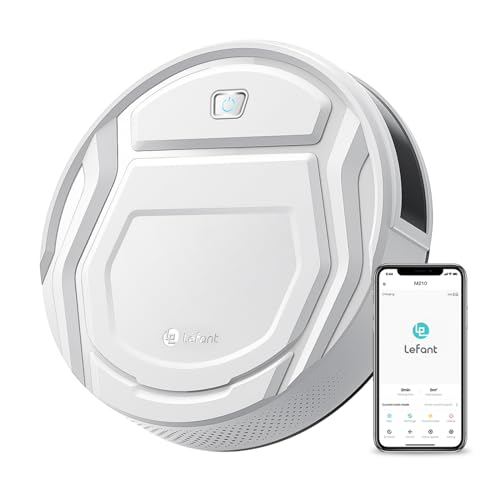
- Lefant M210 Robot Vacuum Cleaner — check price on Amazon
The best robot vacuums for dust win by frequency, not by force. Dust is not like a spilled bowl of rice: it arrives continuously, settles on hard floors and under furniture, and is mostly removed by a machine that passes often and lightly rather than rarely and powerfully. That is why this guide is organised around the ownership pattern dust actually demands — scheduled daily runs, a dustbin system that does not puff a cloud back into the room every time you empty it, and navigation that covers the whole floor instead of admiring one corner of it.
Suction figures still matter, and every pick below states its figure in its own listing title where the maker publishes one — from the ILIFE V10’s 5,000Pa to the A30 Pro’s 10,000Pa — but read them as the makers’ own measures, not as a laboratory league table; there is no single enforced standard behind a pascal claim. What the figures do tell you is intent: the higher-suction picks are built to lift fine debris from floorboard seams and low-pile rugs as well as from open tile, while the gentler picks trade force for price, quiet and simplicity.
The biggest dust-specific divide in the verified set is emptying. Two picks — the ILIFE A30 Pro and the eufy C10 — empty themselves into a base, the A30 Pro claiming a remarkable 280 days with five dust bags in its title. For a dust-focused household, self-emptying is not a luxury: the most allergen-loaded moment of robot ownership is tipping a full bin into the kitchen trash, and a sealed bag system removes that moment for months at a time. The other picks ask you to empty a small bin by hand, and their reviews say how often that really means.
All six machines were verified, and all six are stated by their listings to suit hard floors and pet hair — the two surfaces and the two debris types that dominate dusty homes. None is credited here with a HEPA filter, a runtime or a noise figure its title does not state. If your home is mostly deep carpet, this is the wrong guide; if it is mostly hard floor with dust that never quits, you are in the right place.
In this guide
Quick Picks
Six verified picks from self-emptying flagships to a simple budget runner. Badges match the reviews and the comparison table.
- Best Overall for Dust: ILIFE A30 Pro Robot Vacuum and Mop — 10,000Pa suction, LiDAR mapping, and a self-empty base the title credits with 280 days across 5 dust bags. — check price on Amazon
- Best Slim Self-Emptying: eufy C10 Robot Vacuum Self Emptying — self-emptying for 8 weeks in a 2.85-inch slim body with LiDAR mapping and an edge brush for the skirting boards. — check price on Amazon
- Best Vacuum-Mop Combo: Roborock Q7 L5 Robot Vacuum and Mop Combo — 8,000Pa, LiDAR, multi-level mapping and a dual anti-tangle system — the polished all-rounder with a mop. — check price on Amazon
- Best Mainstream Pick: iRobot Roomba 105 Vac Robot Vacuum — the Roomba name with LiDAR, neat-row cleaning and 7,000Pa — the mainstream route into mapped dust control. — check price on Amazon
- Best Mid-Priced Simplicity: ILIFE V10 Robot Vacuum Cleaner — 5,000Pa, gyro navigation, 120 minutes and a remote control — the straightforward mid-priced dust runner. — check price on Amazon
- Best Budget Pick: Lefant M210 Robot Vacuum Cleaner — the budget staple — slim, quiet, app-connected, 120 minutes — for daily dust duty in smaller homes. — check price on Amazon
How These Picks Were Chosen
Picks were chosen from listings confirmed cache, filtered for the dust brief in three passes. First, hard-floor competence: every pick’s title had to name hard floors as a home surface. Second, debris handling: stated suction figures were compared where published, and self-emptying systems were weighted heavily because bin-emptying is where a dust routine succeeds or fails in real homes. Third, navigation: LiDAR machines were favoured for whole-home coverage on a schedule, with gyroscope and random-navigation budget models included honestly at the value end, labelled for what they are.
The set spans the ownership patterns honestly. Two self-emptying machines for set-and-forget households; two LiDAR mid-range machines (one a vacuum-mop combo, one a pure vacuum) for mapped, room-by-room cleaning; and two simpler machines — a tangle-free budget vacuum and a slim mid-priced model — for smaller homes and tighter budgets. Accessory listings, replacement parts and handheld vacuums that appeared in the same cache were excluded: this guide is complete robots only.
A note on the mop functions: two picks mop as well as vacuum. For dust specifically, a light mop pass after vacuuming does lift the finest film that suction leaves, and the reviews credit that where it applies — but no pick here is sold as a mopping machine first, and wet functions are described as the secondary feature their titles present them as.
The 6 Best Robot Vacuums for Dust

ILIFE A30 Pro Robot Vacuum and Mop — Best Overall for Dust
The A30 Pro is the dust brief answered in full. Start with the emptying: the title claims 280 days of self-emptying capacity across five dust bags, which means the daily reality of this machine is that dust leaves your floors, travels into a sealed bag, and stays there — no bin-tipping cloud over the kitchen trash, for the better part of a year. For households where dust is an irritant rather than a nuisance, removing that exposure moment is the single most valuable feature a robot can offer, and nothing else in this guide offers it at this scale.
The cleaning hardware backs the promise. The stated 10,000Pa is the highest suction figure in the verified set, LiDAR navigation means mapped, systematic rows rather than hopeful wandering, and the stated 150-minute runtime covers a large floor plan on one charge. The mop function, secondary in the title, earns its place for dust: after the vacuum pass, a damp mop lifts the grey film that pure suction leaves on hard floors, which is the part of dust you see in sunlight.
Costs to accept: dust bags are a consumable you will reorder, the base needs a permanent home with clearance, and the white finish of the verified listing will show the very dust it collects if you park it somewhere visible. None of that dents the conclusion. For dust specifically, this is the most complete verified package — strongest stated suction, smartest navigation, and an emptying system measured in seasons.
Strengths
- 280-day self-emptying claim removes the dust-cloud bin moment for months
- Highest stated suction in the set at 10,000Pa, with LiDAR mapping
- 150-minute runtime plus a mop pass for the fine dust film
Trade-offs
- Dust bags are an ongoing consumable cost
- Self-empty base needs permanent floor space
- White finish shows dust between cleans
| Suction (per listing) | 10,000Pa |
| Emptying (per listing) | Self-emptying, 280-day with 5 dust bags |
| Navigation (per listing) | LiDAR |
| Runtime (per listing) | 150 mins |
| Colour of verified listing | White |
Best for: dust-heavy homes that want months between bin-emptying events / Not suited for: buyers who dislike buying replacement dust bags, or very small flats where a base is furniture too far

eufy C10 Robot Vacuum Self Emptying — Best Slim Self-Emptying
Dust’s favourite hiding place is under furniture, and the C10 is built to evict it from there. At 2.85 inches tall — the slimmest figure stated in this guide — it slides under sofas, beds and cabinets that stop taller robots at the threshold, which is precisely where dust accumulates undisturbed for months. The self-emptying base then keeps hands off the collected dust for a stated eight weeks at a time.
Two details in the title show dust-specific thinking. The edge expansion brush reaches toward skirting boards and corners, where dust lines up in that familiar grey fringe that a round robot’s main brush never touches. Carpet detection lets the machine adjust as it crosses from hard floor to rug, so a mapped run handles a real mixed-floor home without babysitting. LiDAR mapping, as with the A30 Pro, means systematic coverage you can schedule daily — and daily, remember, is how dust is beaten.
Against the ILIFE flagship, the C10 concedes emptying interval (eight weeks versus a claimed 280 days) and publishes no suction figure in its title, so we credit it only with ‘powerful suction’ in its maker’s words. What it returns is access: if your dust lives under low furniture, the slimmest self-emptying LiDAR machine in the set is the right tool, and eufy’s app polish is a quiet bonus the title does not need to claim.
Strengths
- 2.85-inch body reaches the under-furniture dust other robots miss
- Self-emptying with LiDAR mapping — the full dust feature set
- Edge expansion brush targets the skirting-board dust line
Trade-offs
- Eight-week emptying interval is shorter than the ILIFE flagship’s claim
- No suction figure stated in the title
- Slim body means a smaller onboard bin between base visits
| Emptying (per listing) | Self-emptying, 8 weeks hands free |
| Height (per listing) | 2.85 inches |
| Navigation (per listing) | LiDAR smart mapping |
| Detail (per listing) | Edge expansion brush, carpet detection |
Best for: homes with low furniture, where dust hides underneath and a tall robot cannot go / Not suited for: homes wanting the longest possible hands-free interval — the A30 Pro claims far longer

Roborock Q7 L5 Robot Vacuum and Mop Combo — Best Vacuum-Mop Combo
Roborock’s Q7 L5 is the engineer’s pick: the second-highest stated suction in the set at 8,000Pa, LiDAR navigation with multi-level mapping for homes whose dust lives on more than one floor, and a dual anti-tangle brush system whose value anyone with long hair or a shedding pet in the house will understand — a brush wound in hair stops lifting dust long before it stops spinning. The title notes it is upgraded from the Q5 Pro, a lineage that matters because Roborock’s mapping software is the product as much as the hardware is.
For dust, the combo format is the story. Suction removes the loose layer; the mop then takes the adhered film that makes hard floors look grey in raking light even after a good vacuum. Run the pair on a schedule — vacuum daily, mop a few times a week — and hard floors stay in the state that dust-prone households actually want, rather than being rescued weekly from visible buildup.
The honest gap is emptying: there is no self-empty base in this listing, so the dust you collect meets you again at the bin, regularly. Technique softens that — empty outdoors or into a bag, slowly — but it does not erase it, and it is why the Q7 sits below the two self-emptying picks for this specific keyword despite hardware that is otherwise the equal of either. Buy it for the mapping and the mop; accept the bin.
Strengths
- 8,000Pa with LiDAR and multi-level mapping — serious coverage
- Dual anti-tangle brushes keep dust pickup consistent in hairy homes
- Mop pass removes the adhered dust film suction leaves
Trade-offs
- No self-emptying — the bin is a regular manual job
- Mop pads need washing or the film just moves around
- Black finish shows dust on the machine itself
| Suction (per listing) | 8,000Pa |
| Navigation (per listing) | LiDAR, multi-level mapping |
| Brush system (per listing) | Dual anti-tangle |
| Colour of verified listing | Black |
Best for: multi-floor homes that want mapped vacuuming plus a real mop pass for dust film / Not suited for: buyers wanting self-emptying — this machine’s bin is emptied by hand

iRobot Roomba 105 Vac Robot Vacuum — Best Mainstream Pick
The Roomba 105 Vac is what happens when the brand that invented the category adopts the technology that improved it. The title’s key phrase is LiDAR navigation with cleaning in neat rows: the bump-and-turn randomness of early Roombas is gone, replaced by mapped, systematic passes — and for dust, systematic is everything, because dust does not concentrate where a random robot happens to wander twice. It concentrates everywhere, evenly, and only full coverage removes it.
The stated 7,000Pa ‘power-lifting’ suction sits mid-pack in this guide — above the budget picks, below the ILIFE and Roborock flagships — which matches the machine’s positioning: a pure vacuum (the ‘Vac’ in the name is honest; there is no mop here) for multi-surface homes that want dependable daily dust removal without paying for a self-empty base or a mop system they will not maintain.
Choose the Roomba for brand support, parts availability and the comfort of a known ecosystem, in a home that is mostly hard floor and low-pile rug. Empty its bin with the same care as the Roborock’s — slowly, bagged, ideally outdoors — and schedule it daily. It will not out-feature the picks above it; it will simply work, in neat rows, for years, which is a recommendation in itself.
Strengths
- LiDAR neat-row cleaning from the category’s founding brand
- Solid stated suction at 7,000Pa for hard floors and low pile
- Pure vacuum focus — no mop system to maintain
Trade-offs
- No self-emptying and no mopping in this model
- Suction figure trails the ILIFE and Roborock flagships
- Charging base only — plan a permanent parking spot
| Suction (per listing) | 7,000 Pa power-lifting |
| Navigation (per listing) | LiDAR, neat rows |
| Surfaces (per listing) | Multi-surface |
Best for: buyers who want the category’s best-known brand with modern LiDAR manners / Not suited for: homes needing mopping or self-emptying at this tier

ILIFE V10 Robot Vacuum Cleaner — Best Mid-Priced Simplicity
The V10 is the honest middle of this guide: a stated 5,000Pa of suction — genuinely strong for the tier — gyro navigation that keeps runs orderly without LiDAR’s mapping, a stated 120-minute runtime, and a physical remote control for households that would rather press a button than manage another app account. Its dual anti-tangle design addresses the same hair-wrap problem as the Roborock’s, at a simpler price point (check price on Amazon).
Gyro navigation deserves a plain explanation, because it decides who should buy this machine. A gyro robot knows its orientation and cleans in straighter, more predictable lines than a random-bounce model, but it does not build a map: no room selection, no no-go lines, no multi-floor memory. In a flat or a small house with a simple layout, that difference barely matters and the V10’s suction-per-cost is excellent. In a large, furniture-dense home, the LiDAR picks above will cover more methodically.
The slim body and self-charging complete a sensible package: it docks itself, it fits under most furniture, and it asks little of its owner beyond bin-emptying and brush checks. For dust in a modest home, run daily on its schedule, the V10 delivers most of the benefit of the flagship pattern at a fraction of the commitment.
Strengths
- 5,000Pa stated suction is strong for a mid-priced machine
- Remote control — no app account required
- 120-minute runtime with self-charging and a slim body
Trade-offs
- Gyro navigation is not mapping — no room targeting
- Manual bin emptying, as with all non-base picks
- No mop function for the fine dust film
| Suction (per listing) | 5,000Pa |
| Navigation (per listing) | Gyro navigation |
| Runtime (per listing) | 120 mins |
| Control (per listing) | Remote control |
| Colour of verified listing | Gray |
Best for: smaller homes that want strong suction and simple controls without app ecosystems / Not suited for: large or complex floor plans that need true mapping
Lefant M210 Robot Vacuum Cleaner — Best Budget Pick
The M210 is the machine that starts more robot-vacuum households than any other in this guide, and for dust that is a genuine virtue: the best dust robot is the one that exists in your home and runs daily, and the Lefant’s budget positioning (check price on Amazon) removes the barrier. Its title promises the daily-cleaning essentials — strong suction in the maker’s words (no pascal figure is published, and we will not invent one), a stated 120-minute runtime, a slim body for under-furniture work, low noise, and self-charging.
Control is better than the price suggests: Wi-Fi, app and Alexa control are all stated, so scheduling the daily run — the entire dust strategy — is fully supported. What is not here is mapping; the M210 navigates simply, covers a small home adequately over a long run, and will occasionally need rescuing from a cable or a chair leg forest. In a studio or a two-room flat, that is a fair trade. Across a family house, it is not, and the gyro V10 or a LiDAR pick is the honest step up.
Buy the M210 to find out whether robot ownership suits your home, or to put a second machine on a second floor. Keep its bin emptied and its brushes clear — budget machines forgive neglect least — and it will repay you in the only currency dust cares about: floors that never get the chance to look dusty.
Strengths
- Budget entry to daily scheduled dust control
- App and voice control stated — scheduling is fully supported
- Slim and quiet with a stated 120-minute runtime
Trade-offs
- No mapping and no published suction figure
- Small bin needs frequent emptying
- Simple navigation can miss or repeat areas in complex layouts
| Runtime (per listing) | 120 mins |
| Body (per listing) | Slim, low noise |
| Control (per listing) | Wi-Fi, app, Alexa |
| Use (per listing) | Pet hair, hard floor, daily cleaning |
Best for: first-time robot buyers and small homes wanting daily dust control on a budget / Not suited for: large homes or anyone expecting mapped, room-by-room cleaning
Comparison Table
| Pick | Badge | Key spec | Best for |
|---|---|---|---|
| ILIFE A30 Pro Robot Vacuum and Mop | Best Overall for Dust | 10,000Pa, 280-day self-emptying (5 bags), LiDAR, 150 mins runtime (per Amazon title) | dust-heavy homes that want months between bin-emptying events |
| eufy C10 Robot Vacuum Self Emptying | Best Slim Self-Emptying | Self-emptying (8 weeks), 2.85-inch slim, LiDAR mapping, edge expansion brush (per Amazon title) | homes with low furniture, where dust hides underneath and a tall robot cannot go |
| Roborock Q7 L5 Robot Vacuum and Mop Combo | Best Vacuum-Mop Combo | 8,000Pa, LiDAR, multi-level mapping, dual anti-tangle (per Amazon title) | multi-floor homes that want mapped vacuuming plus a real mop pass for dust film |
| iRobot Roomba 105 Vac Robot Vacuum | Best Mainstream Pick | 7,000Pa, LiDAR navigation, cleans in neat rows (per Amazon title) | buyers who want the category’s best-known brand with modern LiDAR manners |
| ILIFE V10 Robot Vacuum Cleaner | Best Mid-Priced Simplicity | 5,000Pa, gyro navigation, 120 mins runtime, dual anti-tangle (per Amazon title) | smaller homes that want strong suction and simple controls without app ecosystems |
| Lefant M210 Robot Vacuum Cleaner | Best Budget Pick | 120 mins runtime, slim, low noise, Wi-Fi/app/Alexa (per Amazon title) | first-time robot buyers and small homes wanting daily dust control on a budget |
The dust decision tree is short. If emptying the bin is your pain point, choose between the A30 Pro’s claimed 280-day base and the eufy C10’s slimmer, under-furniture reach. If you want mapped cleaning with a mop for the dust film, the Roborock is the pick; the Roomba is its mainstream, vacuum-only counterpart. The V10 and the Lefant serve smaller homes and budgets honestly — less navigation intelligence, the same daily-run strategy that actually defeats dust.
How to Choose a Robot Vacuum for Dust
Start with the emptying question, because it decides your weekly experience more than any specification. A conventional robot’s bin is small and fills with exactly the fine, floaty material you least want to handle; emptying it over a trash can returns a visible puff of dust to the room you just cleaned. Self-emptying bases — the ILIFE A30 Pro and eufy C10 here — seal that dust into a bag for weeks or, on the A30 Pro’s stated figures, months. If dust bothers anyone in your household beyond aesthetics, that feature is not a luxury; it is the point.
Navigation is the second filter. Dust settles uniformly, so coverage uniformity is cleaning quality: LiDAR machines (A30 Pro, C10, Roborock, Roomba) map and clean in rows, finishing a room completely and remembering where they have been. Gyro machines (the V10) clean in orderly lines without a map — fine in simple layouts. Simple-navigation machines (the Lefant) cover small spaces adequately over time. Match the navigation to your floor plan’s complexity, not to your ambitions.
Suction figures come third, and with a warning: pascal claims are the makers’ own, measured under no common standard, so treat them as within-brand signals rather than laboratory rankings. What matters practically is that the machine sustains pickup on your surfaces — hard floors are easy for any pick here; low-pile rugs reward the higher stated figures; and brush design (the anti-tangle systems on the Roborock and V10) decides whether performance survives contact with a hairy household.
- Self-emptying base if dust exposure at the bin bothers your household
- LiDAR mapping for large or complex floors; gyro or simple navigation honestly matched to small, simple ones
- Stated suction appropriate to your surfaces — hard floors need less than rugs do
- Slim body height checked against your furniture clearance
- A schedule you will actually set — daily runs are the entire dust strategy
Hard Floors, Rugs and the Dust Film
Most dust lives on hard floors, and hard floors are where every pick in this guide is stated to work. The technique point worth knowing is that vacuuming alone leaves a film: the finest particles adhere to the surface and show as a grey sheen in low sunlight even on a ‘clean’ floor. That is why two picks here mop. A damp mop pass after vacuuming — never instead of it, since mopping loose dust makes mud — is what returns hard floors to a genuinely finished state, and scheduling the mop two or three times a week is the difference between floors that are vacuumed and floors that look clean.
Rugs complicate the picture honestly. A robot crossing from hard floor to a low-pile rug (the eufy C10 states carpet detection for exactly this transition) will lift surface dust well; deep pile traps dust at its base where no robot in this guide truly reaches, and a periodic pass with a full-size vacuum remains part of life for carpeted homes. This guide’s picks are hard-floor-first machines, and a home that is mostly deep carpet should buy a different category of cleaner as its main tool.
Finally, help the robot help you. Dust collects where air is still — under beds, behind doors, along skirting boards. The edge brush on the C10 and the slim bodies across this guide exist for those zones, but a monthly five minutes moving the light furniture your robot cannot pass under will do more for total dust than any upgrade from one pick here to another.
Filters, Brushes and the Maintenance That Keeps Pickup Honest
A robot vacuum’s dust performance on month six is a maintenance story, not a purchase story. Every pick in this guide leaves the shop able to do its job; what separates the machines that still do it a year later is fifteen minutes a month from their owners. This section is that quarter-hour, in the order that matters.
Brushes first. The main brush and side brushes are where hair, thread and fibre accumulate, and a wound brush does two kinds of damage: it lifts less dust with every run, and it drags what it has collected back across clean floor. The anti-tangle designs on the Roborock Q7 L5 and the ILIFE V10 slow the process; they do not abolish it. Weekly, flip the machine, pull the brush, clear the windings from the ends where they hide, and check the side brush for the splayed, tired shape that means replacement. A robot whose brushes are clear will out-clean a neglected flagship — this is the least glamorous and most true sentence in the guide.
Filters second. Every robot here filters its exhaust air through a small filter that loads with exactly the fine dust this guide is about; a clogged filter chokes airflow, and suction figures become fiction. Tap the filter clean outdoors on the maker’s schedule, wash it only if the maker says it is washable, and replace it on schedule rather than on vibes. Self-emptying models move this discipline to the base: the bag is both the collection point and part of the filtration story, which is why using the correct bags — and changing them when full rather than when overflowing — keeps the A30 Pro’s and the C10’s performance where their titles promise it.
Sensors and wheels last. Dust films the cliff sensors and the navigation windows that LiDAR machines see through; a soft dry cloth across them monthly prevents the mysterious behaviour — missed rooms, phantom obstacles, docks fumbled — that owners misdiagnose as software failure. Check the front wheel’s axle for wound hair while you are there. None of this needs tools, products or talent. It needs a calendar entry, and it is the difference between a dust system and a dust ornament.
Dust, Allergies and Honest Expectations
Robot vacuums are often bought by households where dust is more than an aesthetic problem, so this section sets out — plainly, and without selling anything — what a machine in this guide can and cannot do for a dust-sensitive home. It is household information, not medical advice, and it does not replace anything a clinician has told you.
What a robot genuinely does is lower the amount of dust resting on floors, by removing it daily before it accumulates and before foot traffic grinds it into the air again. Floors are one reservoir among several — bedding, upholstery, curtains and clothing hold dust too — so a robot is one layer of dust control, alongside the washing, wiping and vacuuming routines any dust-sensitive household already knows. A household that runs a robot daily and changes nothing else should expect cleaner floors and somewhat less settled dust overall; it should not expect a medical outcome, and no listing in this guide is credited with one.
The emptying moment is where this category’s honesty matters most. A conventional robot concentrates the finest dust into a small bin and then asks you to tip it into a trash can at face height — the single most dust-intensive act of ownership. The self-emptying picks here (the ILIFE A30 Pro and the eufy C10) exist in this guide precisely because they seal that dust into a bag for weeks or months. For manual-bin models, technique is the mitigation: empty outdoors where possible, into a bag, slowly, and let the bin’s contents settle before you breathe over it. It is a small ritual that makes a measurable difference to the person doing it.
Filtration claims deserve the same discipline. None of the picks in this guide is credited with HEPA exhaust filtration, because none of their verified listing titles states it — and a guide that invented filter grades for dust-sensitive readers would be failing at its one job. If exhaust filtration is a deciding factor for your household, check the specific listing’s full specification before purchase and treat a silent listing as an unfiltered one. Honest expectations, a daily schedule and sealed emptying will do more for a dust-sensitive home than any single specification printed on a box.
How to Set Up a Daily Dust Routine With a Robot Vacuum
A robot vacuum defeats dust through rhythm, not intensity. Set the routine up once, properly, and the machine does the rest.
- Clear the floor properly before the first run — cables lifted, small objects up, chair legs given room — and note what stops the robot
- Set a daily schedule for when the home is awake or out; dust control is a daily habit, and every pick here supports scheduling
- For self-emptying models, check the bag monthly until you learn your home’s fill rate; for manual bins, empty after every run or two, slowly, into a bag, ideally outdoors
- Wipe the robot’s sensors and check the brushes weekly — a hair-wound brush stops lifting dust long before it stops spinning
- Add a mop pass two or three times a week if your model mops, always after a vacuum run, with a clean pad
- Every month, move the light furniture the robot cannot pass under and let it clean the still-air zones where dust settles deepest
The measure of success is not a dramatic before-and-after; it is the absence of one. When the routine is working, floors simply stop looking dusty between deep cleans, and the grey line along the skirting boards never gets the chance to form.
Common Buying Mistakes
- Buying on suction figures alone, when navigation and emptying decide real dust performance
- Emptying a manual bin indoors with a shake — returning the finest dust straight to the air
- Running the robot weekly like a substitute cleaner, when dust is defeated by daily passes
- Mopping before vacuuming, which turns loose dust into a smeared film
- Ignoring brush maintenance until pickup quietly collapses
- Expecting any robot to deep-clean deep-pile carpet — hard floors are this category’s home ground
Underneath all six mistakes sits the same misunderstanding: a robot vacuum is not a smaller version of a Saturday deep clean. It is a daily maintenance system whose entire value is that dust never accumulates — set it up that way and even the budget pick here outperforms a flagship run once a week.
Final Recommendation
If you buy one machine from this guide, buy the ILIFE A30 Pro: the strongest stated suction, LiDAR mapping and a self-emptying system whose claimed 280-day capacity removes the worst moment of dust ownership for most of a year. If your dust hides under low furniture, the eufy C10’s slim body and edge brush make it the smarter tool. The Roborock Q7 L5 is the pick for mapped homes that want the mop pass for dust film, the Roomba 105 Vac for mainstream dependability, and the ILIFE V10 and Lefant M210 serve smaller homes and first-time buyers honestly at their tiers.
Whichever you choose, set the daily schedule on day one, keep the brushes clear, and empty whatever needs emptying with a little ceremony. Dust never stops arriving — but with the right robot running daily, it never gets to stay.
One last practical word on ordering: before you pay, walk your home’s floor plan once with the pick in mind — measure the clearance under your lowest sofa against the machine’s height, count the thresholds it must cross, and decide where its dock or base will live permanently, because a robot that parks in a hallway gets unplugged, and an unplugged robot cleans nothing. Thirty seconds with a tape measure, done before the order rather than after the delivery, is the difference between a dust system that runs daily for years and an expensive guest in a cupboard.
And if you are buying for a household where someone is genuinely dust-sensitive, revisit the self-emptying decision one final time before you economise it away. The difference between sealing dust into a bag for months and tipping it into a bin twice a week is, over a year of ownership, the difference between a machine that reduces your contact with dust and a machine that merely relocates it on a schedule. For many homes the manual-bin picks here are the right, honest value. For the dust-sensitive home, the base is not the upgrade — it is the point of the purchase, and it is worth choosing deliberately rather than by default.
- ILIFE A30 Pro Robot Vacuum and Mop — check price on Amazon
- eufy C10 Robot Vacuum Self Emptying — check price on Amazon
- Roborock Q7 L5 Robot Vacuum and Mop Combo — check price on Amazon
- iRobot Roomba 105 Vac Robot Vacuum — check price on Amazon
- ILIFE V10 Robot Vacuum Cleaner — check price on Amazon
- Lefant M210 Robot Vacuum Cleaner — check price on Amazon
Best Robot Vacuums For Pet Hair And Berber Carpet
Best Robot Vacuums For Bare Floors
Best Robot Vacuums For Wood Floors
Related guides
Frequently Asked Questions
What matters most in a robot vacuum for dust — suction or navigation?
Navigation and routine, for most homes. Dust settles everywhere evenly, so a machine that covers the whole floor systematically on a daily schedule removes more dust than a stronger machine that wanders. Suction figures — which are the makers’ own measures, not a common standard — matter most when rugs enter the picture. The picks here state their figures in their titles; treat them as signals, not laboratory rankings.
Is a self-emptying robot worth it for dust?
For dust specifically, it is the feature with the strongest case. Emptying a small bin releases a puff of the finest dust back into the room; a self-emptying base seals collections into a bag for weeks — a stated eight weeks on the eufy C10 and a claimed 280 days across five bags on the ILIFE A30 Pro. If anyone in the home is bothered by dust beyond looks, that difference is the purchase.
How often should a robot vacuum run in a dusty home?
Daily. Dust arrives continuously, and a robot’s advantage over a conventional vacuum is frequency, not power. A daily scheduled run keeps floors ahead of visible buildup; a weekly run turns the robot into an underpowered substitute for a real vacuum and disappoints everyone. Every pick in this guide supports scheduling.
Does the mop function actually help with dust?
Yes, as the second step. Vacuuming removes the loose layer but leaves a fine adhered film on hard floors; a damp mop pass after vacuuming lifts that film. Never mop first — wetting loose dust makes a smear that is harder to remove. Two or three mop passes a week, always after a vacuum run and with a clean pad, is the rhythm that keeps hard floors looking finished.
Can a robot vacuum replace a regular vacuum in a dusty home?
On hard floors, largely yes, provided it runs daily and you maintain its brushes and filters. On deep-pile carpet, no — robots lift surface dust but cannot reach the base of deep pile, so a periodic full-size vacuum pass remains necessary. Most of the picks here are hard-floor-first machines, and their listings say so.
Why does dust come back so quickly after cleaning?
Because most household dust is continuously generated — skin cells, fabric fibres, tracked-in soil and outdoor particles settling from the air. No single clean removes the sources. That is precisely why this guide favours scheduled daily machines and sealed emptying over occasional powerful cleans: the strategy that matches how dust behaves is frequency plus containment.


