Disclosure: airfryerkitchensupply.com is reader-supported. When you buy through links on our site, we may earn an affiliate commission at no extra cost to you.
Where to buy
The fastest way to shop this shortlist is Amazon, where every verified pick below is listed with its full specifications, size and color options, and current availability. Start with the JA COMFORTS Duck Feather Down Bed Pillows if you want the safest first click, and use the comparison table further down to narrow the field before you buy. Prices move around, so check the current price on Amazon on the listing itself rather than relying on any number quoted second-hand.
- JA COMFORTS Duck Feather Down Bed Pillows (2-Pack) — Best Overall
- White Duck Down & Feather Pillow (2-Pack) — Best Soft-Medium Natural Fill
- Utopia Bedding Gusset Bed Pillows, King (Set of 2) — Best Down-Alternative King
- EIUE Hotel Collection Bed Pillows, Queen (2-Pack) — Best Down-Alternative Queen
- Saatva Latex Pillow — Best Latex Alternative
- Beans72 Organic Buckwheat Pillow, Queen — Best Adjustable and Firmest
Plenty of sleepers go looking for the best pillows not memory foam for honest reasons: memory foam sleeps warm, responds slowly when you change position, has a smell some people never get past, and its molded shapes either fit your neck or fight it. The good news is that the pillow world did not begin with foam. Down, feather blends, shredded latex and modern down-alternative microfiber all support the head in completely different ways, and one of them will suit you better than foam ever did. Every pick below was confirmed, and not one of them contains a memory foam core — that was the first filter, applied before anything else.
The six picks cover the real alternatives: two natural down and feather pillows at different firmness levels, a hotel-style down-alternative pair in queen and king formats, a shredded natural latex pillow for sleepers who still want contouring without foam, and an organic buckwheat pillow — the firmest, most adjustable and most old-fashioned option of all. Loft and firmness guidance runs through the guide sections, because with non-foam pillows, choosing the right fill is only half the decision; choosing the right loft for your sleep position is the other half.
Key Takeaways
- Fill family decides feel: down/feather, microfiber, shredded latex and buckwheat behave completely differently.
- Match loft to sleep position before brand or price.
- Every pick here was verified foam-free from its Amazon listing title.
- Fluff daily, use a protector, and give any new fill the better part of a week.
In this guide
Quick Picks
JA COMFORTS Duck Feather Down Bed Pillows (2-Pack) — Best Overall. A feather-and-down two-pack with a high filling weight, a 600 thread count cotton cover and a double-layer downproof design — natural fill done properly. Check price on Amazon
White Duck Down & Feather Pillow (2-Pack) — Best Soft-Medium Natural Fill. A soft-medium white duck down and feather two-pack aimed at side and back sleepers who found feather pillows too firm in the past. Check price on Amazon
Utopia Bedding Gusset Bed Pillows, King (Set of 2) — Best Down-Alternative King. A gusseted king two-pack with a cotton-blended shell and down alternative fill — the hotel-pillow formula at a household scale. Check price on Amazon
EIUE Hotel Collection Bed Pillows, Queen (2-Pack) — Best Down-Alternative Queen. A queen two-pack of down alternative microfiber pillows, 20 by 30 inches, pitched at side and back sleepers — the straightforward hotel-pillow choice. Check price on Amazon
Saatva Latex Pillow — Best Latex Alternative. A shredded natural latex core gives contouring support with instant response — the closest feel to foam’s support without foam’s heat and lag. Check price on Amazon
Beans72 Organic Buckwheat Pillow, Queen — Best Adjustable and Firmest. An organic buckwheat hull pillow in queen size, 20 by 30 inches — fully adjustable, firmly supportive, and about as far from memory foam as a pillow can get. Check price on Amazon
How These Picks Were Chosen
The first and hardest filter was the search itself: no memory foam in any form — no solid foam cores, no shredded foam blends, no gel-foam hybrids. Several popular adjustable pillows failed that test and were excluded even though they are well made.
We then balanced the six slots across fill families and sleep positions: soft natural down for back and stomach sleepers, firmer feather blends and gusseted down-alternative for side sleepers, latex for contouring without foam, and buckwheat for sleepers who want to sculpt their own shape. Pack sizes and sizes quoted are exactly as the Amazon titles state them.
The 6 Best Pillows That Are Not Memory Foam
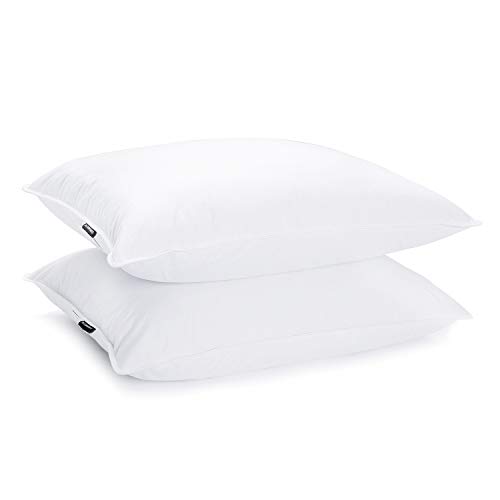
JA COMFORTS Duck Feather Down Bed Pillows (2-Pack) — Best Overall
The JA COMFORTS two-pack leads this list because it shows what natural fill does better than any foam: it breathes, it reshapes instantly when you move, and it compresses under the head while still supporting the neck. The listing-confirmed title specifies a high filling weight, a 600 thread count cotton cover, a double-layer downproof fabric design to keep feathers inside, and a 10% duck down blend — the down softens the surface while the feather majority provides the structure.
Strengths
- Natural feather-down fill sleeps cool and reshapes instantly, unlike slow-response foam
- Double-layer downproof fabric and a 600 thread count cotton cover keep quills contained
- Two-pack in Standard/Queen covers a full bed in one purchase
Trade-offs
- Feather pillows need regular fluffing to restore loft — a daily habit, not a defect
- Natural fill is not the pick for anyone avoiding animal-derived materials
- 10% down means a supportive, feather-led feel rather than a cloud-soft down pillow
| Fill | Duck feather and down (10% duck down, per listing) |
| Cover | 600 thread count cotton, double-layer downproof |
| Pack | 2 pillows |
| Size | Standard/Queen |
Feather-led pillows like this one suit back and side sleepers who move during the night: the fill migrates away from pressure and returns when you roll, so the pillow never holds a crater the way foam can. Expect a supportive, slightly springy feel rather than sink-in softness. Fluff it each morning — thirty seconds of punching and shaking is the entire maintenance ritual — and use a pillow protector, because natural fills prefer not to be washed often. For sleepers leaving memory foam because of heat, this is the most traditional and most convincing alternative.
A note on the 10% down figure, because it confuses shoppers: it is a feature, not a shortfall. Feather provides the springy structure that makes this pillow supportive; the down portion softens the surface and fills the gaps between quills. Pillows with much higher down percentages feel plusher and cost considerably more, while compressing flatter under the head — lovely for stomach sleepers, less ideal for the back and side sleepers this pick serves. The double-layer downproof fabric is the other detail to value: feather quills escape through single-layer shells over time, and the small indignity of a quill through the pillowcase at 3 a.m. is how cheap feather pillows announce themselves. JA COMFORTS has engineered against it, and the 600 thread count shell gives the fill a smooth, quiet housing.
Best for: Back and side sleepers who want natural, breathable fill / Not suited for: Vegans and anyone who prefers to avoid natural down and feather
Check on Amazon — check the current price on Amazon before you decide.
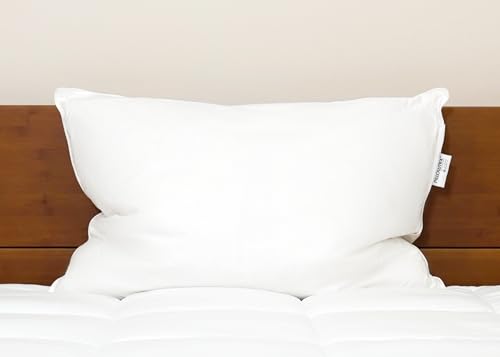
White Duck Down & Feather Pillow (2-Pack) — Best Soft-Medium Natural Fill
Where the JA COMFORTS pick is feather-led and structured, this white duck down and feather two-pack is tuned softer: the Amazon title describes soft-medium support for side and back sleepers in a standard size two-pack. That makes it the natural-fill entry point for stomach-leaning and combination sleepers, and for anyone whose complaint about feather pillows has always been that they feel like sleeping on a folded towel.
Strengths
- Soft-medium support suits back sleepers and combination sleepers who change position
- Natural down and feather fill stays cool through the night
- Two-pack value in a standard size that fits existing pillowcases
Trade-offs
- Softer fill compresses more — dedicated side sleepers with broad shoulders may want the firmer JA COMFORTS
- Natural fill requires fluffing and a protector
- Standard size only in this confirmed listing
| Fill | White duck down and feather |
| Support | Soft-medium (per listing) |
| Pack | 2 pillows |
| Size | Standard |
Soft-medium is the most forgiving firmness in pillows: enough fill to keep the head from bottoming out, enough give to keep the neck neutral for back sleeping. In this two-pack you get that profile in a natural fill that will out-respond any foam — turn over and the pillow is simply there, at temperature, in shape. Pair the two across a bed or stack both for reading; feather blends stack more comfortably than foam slabs. If you are leaving memory foam because it felt like a mold you had to fit into, this is the opposite philosophy in the same price conversation.
This two-pack also serves as the natural-fill trial balloon: if you have never slept on feather and down, a soft-medium two-pack at a household tier tells you within a week whether natural fill is your material — without committing to premium down prices to learn it. Most converts cite the same two discoveries: the pillow is cool when you arrive and still cool at 4 a.m., and it never holds the shape of last night’s position against this night’s. Combination sleepers, who rotate through every position before dawn, benefit most from that amnesia. Keep expectations calibrated — this is a soft-medium pillow, and it will not prop you up for reading like a foam wedge — and it delivers exactly the gentle, breathable support its listing describes.
Best for: Back and combination sleepers leaving memory foam for natural fill / Not suited for: Broad-shouldered side sleepers who need maximum loft
Check on Amazon — check the current price on Amazon before you decide.

Utopia Bedding Gusset Bed Pillows, King (Set of 2) — Best Down-Alternative King
Utopia Bedding’s gusseted king pillows are the down-alternative benchmark in this list. The listing-confirmed title describes hotel pillows in a king size set of two, with a cotton-blended shell and down alternative filling aimed at back, side and stomach sleepers. The gusset — the fabric band around the edge — is the design detail that matters: it keeps the fill distributed to the corners and holds a consistent loft across the pillow instead of letting it peak in the middle and vanish at the edges.
Strengths
- Gusseted construction holds even loft edge to edge, which side sleepers feel immediately
- Down alternative fill: no animal products, easy care, no foam
- King size set of two suits wide beds and tall sleepers
Trade-offs
- Polyester-based fills sleep slightly warmer than natural down
- King size needs king pillowcases — check your linen cupboard first
- Plump hotel feel compresses over years of use like all microfiber fills
| Fill | Down alternative (per listing) |
| Shell | Cotton blend |
| Construction | Gusseted |
| Pack / Size | Set of 2, King |
This is the pick for the guest-room test: it feels like the pillow in a good hotel, because it uses the same recipe — microfiber clusters that mimic down, a breathable cotton-blend shell, and a gusset to keep the shape honest. For foam refugees, the revelation is responsiveness: the pillow compresses where your head lands and springs back when you lift it, with none of foam’s slow rebound or retained heat. It is also the easiest-care pick on this page alongside the EIUE queen set. Choose king if your bed is king or if you are tall; the extra length is genuinely useful for side sleepers who hug the top corner.
King size deserves a sentence of its own: on a queen bed, two king pillows span the width completely, and tall sleepers gain the length to keep shoulders and head on the same surface. The gusset’s edge band also makes this the best pick here for sleepers who use the pillow’s corner under the neck — the corner holds its fill instead of collapsing, because the gusset feeds fill into it. Care is the microfiber routine: washable, dryable, forgiving. Over years the loft will relax gradually; a tumble dry with dryer balls restores much of it, and the honest lifespan of a hard-used microfiber pillow is measured in years, not decades. At this tier, that arithmetic is entirely fair, and the nightly comfort per dollar is why hotel-formula pillows dominate real bedrooms.
Best for: Side sleepers and hotel-pillow fans who want a non-foam, non-down option / Not suited for: Sleepers who run very hot and want natural fill instead
Check on Amazon — check the current price on Amazon before you decide.

EIUE Hotel Collection Bed Pillows, Queen (2-Pack) — Best Down-Alternative Queen
The EIUE two-pack is the queen-size counterpart to the Utopia king pick: hotel collection pillows for side and back sleepers, filled with super soft down alternative microfiber, at 20 by 30 inches per the listing-confirmed title. Queen is the size most beds actually need, and this set delivers the familiar plump, forgiving hotel profile without foam and without natural fill — a useful middle path for households where one partner avoids down and the other avoids foam.
Strengths
- Queen 20 x 30 inch size fits standard household bedding
- Microfiber down alternative: no foam, no animal fill, simple care
- Soft, plump profile suits back sleepers and combination sleepers
Trade-offs
- Side sleepers with broad shoulders may prefer a gusseted or firmer pick
- Microfiber loft relaxes over time and benefits from regular fluffing
- Two-pack only in this listing
| Fill | Down alternative microfiber |
| Size | 20 x 30 inches (Queen) |
| Pack | 2 pillows |
| Positioning | Side and back sleepers (per listing) |
Judge this set by how unremarkable it is — in the best sense. It does not ask you to learn a new fill, sculpt anything, or adapt your sleep to the pillow; it simply provides the plump, cool-enough, instantly responsive surface that most people actually want when they say they want a normal pillow again after a foam experiment. For couples converting a whole bed away from memory foam, a queen two-pack at this tier is the lowest-friction way to do it, and the microfiber fill tolerates machine washing far better than natural fills when life happens.
The EIUE set’s virtue is calibration: queen size, medium-plump loft, soft microfiber fill — the statistical center of what most sleepers mean by a good pillow. That makes it the safest gift, guest-room and household-conversion purchase on this page. It also pairs well in mixed beds: one partner on the EIUE, another on the firmer JA COMFORTS, and both have left the same memory foam behind for different reasons. The microfiber fill’s easy washing matters in real households with children, pets and the occasional 2 a.m. spill; a pillow you can simply wash is a pillow that stays in service. If your foam complaint was complexity — special shapes, special cases, special care — this set is the return to simplicity, executed properly.
Best for: Couples and households converting a bed away from memory foam / Not suited for: Sleepers who want the sculptable firmness of buckwheat or latex
Check on Amazon — check the current price on Amazon before you decide.

Saatva Latex Pillow — Best Latex Alternative
Some sleepers leave memory foam reluctantly: they liked the contouring and only hated the heat and the slow rebound. Shredded latex is the answer to that exact complaint, and the Saatva pillow is this list’s latex representative. The Amazon title — which survives in the cache in partly truncated form, so we rely only on its intact portion — confirms a hypoallergenic pillow with a shredded latex core. Shredded latex contours like foam but springs back instantly and sleeps noticeably cooler, because the fill is a loose, airy cluster rather than a solid block.
Strengths
- Shredded latex contours without foam’s slow response or heat retention
- Loose fill can be redistributed to tune loft by hand
- Hypoallergenic positioning per the listing suits sensitive sleepers
Trade-offs
- Latex has a springy, buoyant feel that devoted down lovers may find too lively
- Premium positioning within this category
- Full title is truncated in the source cache record; only the intact portion is relied on here
| Fill | Shredded latex core (per listing) |
| Positioning | Hypoallergenic (per listing) |
| Loft detail | High loft noted in the truncated portion of the source title — not relied on |
Latex is the connoisseur’s foam alternative: supportive, durable, and temperature-neutral, with a buoyant quality that either delights you or feels like sleeping on a very polite trampoline. The shredded format softens the classic latex firmness and lets you push fill toward the neck edge for support or away for a lower profile. It is also among the longest-lived fills in pillows — latex resists the permanent compression that retires microfiber and tires feather blends. If your foam complaint was heat and lag rather than support itself, start here.
Latex sourcing is worth a line: the listing confirms a shredded latex core and hypoallergenic positioning, and shredded formats generally use trimmings from solid latex production — one reason they deliver latex performance at a friendlier tier than solid cores. The feel is the thing to prepare for: press a latex pillow and it presses back, immediately and with opinions. Side sleepers tend to love the way it fills the shoulder gap and stays there; stomach sleepers should look to the soft-medium down pick instead, because latex loft does not squash thin. For the foam refugee whose complaint list reads heat, lag, smell — in that order — this is the most direct answer the non-foam world offers, and its durability means the answer lasts.
Best for: Sleepers who liked foam support but hated its heat and slow rebound / Not suited for: Anyone who wants the soft, nestling feel of down
Check on Amazon — check the current price on Amazon before you decide.
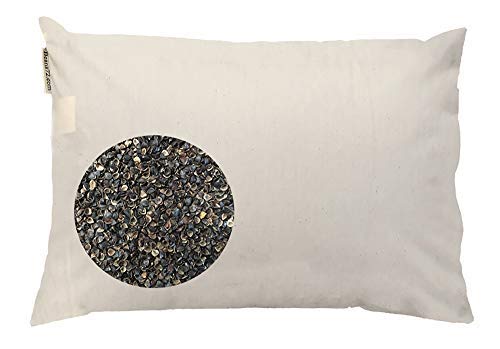
Beans72 Organic Buckwheat Pillow, Queen — Best Adjustable and Firmest
Buckwheat is the oldest fill on this page and the most radical departure from foam: a pillow of hulls that you sculpt with your hands into exactly the shape your head and neck need, and which then holds that shape all night. The Beans72 listing confirms an organic buckwheat pillow in queen size, 20 by 30 inches. Hulls flow like sand, support like a firm mattress, and circulate air freely — a buckwheat pillow is genuinely cool to the touch in a way no foam or fiberfill can match.
Strengths
- Fully adjustable: add or remove hulls to set your exact loft
- Firm, sculptable support that holds its shape instead of rebounding
- Hulls circulate air, making this the coolest-sleeping pick on the page
Trade-offs
- Firm feel is a real adjustment — allow a week to adapt
- Hulls rustle softly when you move, which light sleepers notice
- Heavier than any other pick here; not a travel pillow
| Fill | Organic buckwheat hulls (per listing) |
| Size | Queen, 20 x 30 inches |
| Adjustability | Add or remove fill |
The buckwheat learning curve is real but short: spend the first nights adding or removing handfuls of hulls until your spine runs straight in your main sleep position, then stop fiddling and enjoy a pillow that fits you exactly because you made it fit. Side sleepers typically run it fuller, back sleepers scoop a hollow for the head with a supportive roll under the neck. It will not feel luxurious in the hotel sense — it feels purposeful, like a good tool. For foam refugees whose core complaint is heat, nothing else on this page is as decisively cool.
Buckwheat ownership comes with small rituals that owners grow fond of: the soft rustle as you settle, the handful adjustment when the seasons change your mattress topper, the sheer coolness of the hull side on a hot night. The organic designation in the listing refers to the buckwheat itself — a meaningful detail in a fill that sits inches from your face for a third of your life. Keep the hulls dry, air the pillow in sunlight occasionally, and never wash the fill itself; the case is what launders. Queen sizing at 20 by 30 inches means standard cases fit, though a snug case keeps the sculpted shape tidier. This is the connoisseur’s pick: not the easiest first night, but for the sleepers it suits, the last pillow style they ever shop for.
Best for: Firm-support seekers and very hot sleepers willing to tune their pillow / Not suited for: Anyone who wants a soft, plush, hotel-style sink-in feel
Check on Amazon — check the current price on Amazon before you decide.
Comparison Table
| Pick | Badge | Key spec | Best for |
|---|---|---|---|
| JA COMFORTS Duck Feather Down Bed Pillows (2-Pack) | Best Overall | 10% duck down, 600 thread count cotton cover, Standard/Queen | Back and side sleepers who want natural, breathable fill |
| White Duck Down & Feather Pillow (2-Pack) | Best Soft-Medium Natural Fill | Soft-medium support, Standard size, side and back sleepers | Back and combination sleepers leaving memory foam for natural fill |
| Utopia Bedding Gusset Bed Pillows, King (Set of 2) | Best Down-Alternative King | Gusseted king size, cotton blend shell, down alternative fill | Side sleepers and hotel-pillow fans who want a non-foam, non-down option |
| EIUE Hotel Collection Bed Pillows, Queen (2-Pack) | Best Down-Alternative Queen | Down alternative microfiber fill, 20 x 30 inches, queen | Couples and households converting a bed away from memory foam |
| Saatva Latex Pillow | Best Latex Alternative | Shredded latex core, hypoallergenic (per listing) | Sleepers who liked foam support but hated its heat and slow rebound |
| Beans72 Organic Buckwheat Pillow, Queen | Best Adjustable and Firmest | Organic buckwheat hulls, Queen 20 x 30 inches | Firm-support seekers and very hot sleepers willing to tune their pillow |
Read the table as a filter, not a ranking. The right pillows that are not memory foam for you is the one whose key spec matches the way you will actually use it week after week, and the sections below explain how to judge that fit before any money changes hands. See the top pick on Amazon.
How to Choose the Best Pillows Not Memory Foam
Choose the fill family first, because each one behaves differently all night. Down and feather compress and cradle, respond instantly, and sleep cool, but need fluffing and suit sleepers who move. Down-alternative microfiber imitates that plushness with easier care and no animal products, at the cost of slightly warmer sleep and loft that relaxes over the years. Shredded latex contours like foam but rebounds instantly and lasts longer than almost anything. Buckwheat is its own category: firm, sculptable, cool, and adjustable by the handful.
Then match loft to position. Side sleepers need the most loft — the pillow must fill the shoulder-to-head gap to keep the spine straight, which is why gusseted and fuller pillows anchor that role above. Back sleepers need medium loft with support under the neck curve. Stomach sleepers need the least: a soft, compressible pillow like the soft-medium down blend, squashed thin, keeps the neck from craning. Combination sleepers should favor responsive fills — feather, microfiber, shredded latex — that reshape the moment they turn, which is precisely where memory foam frustrates them.
Finally, be suspicious of any non-foam claim you cannot verify. Blends hide foam under friendly names, and shredded-foam products market themselves beside shredded latex. In this guide every pick’s fill comes from its confirmed listing title; when you shop beyond this page, read the fill specification with the same skepticism, and treat any pillow that will not state its fill plainly as a pillow that has something to hide.
Down vs Feather vs Down Alternative: What the Words Mean
Down is the soft cluster beneath feathers: light, insulating, and the plushest natural fill. Feathers are the structured quills that give a pillow its spring and support. Most natural pillows blend them, and the ratio is the firmness dial — a 10% down pillow like the JA COMFORTS pick is feather-led and supportive, while down-led pillows feel softer and cost more. When a listing states its ratio, as that one does, it is telling you exactly where it sits on that dial.
Down alternative is polyester microfiber engineered to imitate down’s cluster structure. It is hypoallergenic in the practical sense that it carries no animal proteins, it washes easily, and it costs less — the Utopia and EIUE picks are the type specimens. Its honest weaknesses are warmth and lifespan: microfiber traps a little more heat than natural fill and its loft relaxes gradually over years of nightly compression. None of that makes it a poor choice; it makes it a choice to make with open eyes.
Caring for Non-Foam Pillows So They Last
Fluffing is not a ritual, it is maintenance: feather and microfiber pillows restore their working loft when you shake and punch them each morning, and they die early deaths when left compressed. Use a pillow protector on every fill type — it keeps oils and moisture out of fills that prefer not to be washed, especially down, feather and buckwheat. Latex and buckwheat should essentially never be soaked; spot-clean covers instead.
Wash what is washable — most microfiber pillows — on a gentle cycle, dry thoroughly with dryer balls or clean tennis balls to break up clumps, and never put a damp pillow back on the bed. Replace pillows when they fail the fold test: fold the pillow in half and if it does not spring back to shape, its fill has retired regardless of what it is made of. A good non-foam pillow should give you years; the habits above are how you collect them.
How to Find Your Loft with a Non-Foam Pillow
Test in your real sleep position, on your real mattress, because loft is relative to how deeply your shoulder sinks into the bed. Lie on your side: your nose should align with the center of your chest and your spine should run straight — if your head tips down toward the mattress, add loft (a fuller pillow, a folded hand towel under the pillow as a temporary test); if it tips up, remove loft or choose a softer fill that compresses more.
Back sleepers should feel the pillow support the neck curve with the head resting back, not pushed forward: if your chin tucks toward your chest, the pillow is too high or too firm under the head. Stomach sleepers should use the thinnest, softest option they own and consider placing it under the forehead rather than the whole head. Give any new fill three to five nights before judging — your neck has habits, and it complains about change before it admits improvement.
With adjustable fills the process is literal: buckwheat owners add and remove hulls by the handful across the first week; shredded latex owners push fill toward or away from the neck edge. Keep a small notebook note of what you changed and how you slept — unglamorous, but it converges on your exact loft faster than any amount of guessing.
A Short History of Sleeping Without Foam
Memory foam is younger than most of the people sleeping on it. For centuries the pillow menu was exactly the fills on this page — down, feathers, wool, cotton, buckwheat — and the craft of matching fill to sleeper was ordinary knowledge. Foam changed the conversation by offering a single engineered answer, and for some sleepers it is the right one. But the older fills never stopped working; they simply stopped being marketed. Down still breathes better. Buckwheat still shapes more precisely. Latex still rebounds faster and lasts longer.
The practical consequence for shoppers is that non-foam pillows reward a little knowledge. You are choosing a material with a personality, not a product with a firmness number, and the match between that personality and your sleep — your position, your temperature, your tolerance for maintenance rituals like fluffing — decides satisfaction more than any brand name. Use the fill guide in this article as your map, be honest about your habits, and the pillow you choose will feel less like a purchase and more like a correction.
Pillowcases, Protectors and the Layer System
A pillow is a system of layers, and the layers around your chosen fill matter almost as much as the fill. The protector — a zippered, washable shell — is the non-negotiable layer for natural fills and buckwheat, standing between your pillow and the oils, moisture and allergens that shorten fill life. Wash protectors monthly; they are doing the job so the pillow does not have to. Above that, the pillowcase is a feel decision: smooth cotton percale keeps feather and down pillows feeling crisp and cool, while sateen adds a slight warmth and slide that shredded latex owners often prefer because it lets the buoyant fill move.
Case sizing is the quiet mistake in this layer system. A case too small compresses a pillow into a firmer, higher version of itself — sometimes usefully, often accidentally — while a case too large lets fill migrate into corners and leaves the center thin. Match the case to the pillow’s stated size (the queen picks here are 20 by 30 inches, the Utopia set is king), and if you want to tune a pillow’s feel, do it deliberately: a snug case to firm a soft down pillow is a legitimate trick, as long as you chose it rather than discovered it. Layers are how a good fill becomes a good pillow, night after night, for years.
Non-Foam Pillow Buying Checklist
Seven checks, in the order they should eliminate candidates:
- Fill verified in the listing specification — down, feather, microfiber, latex or buckwheat stated plainly, with no foam hiding under a friendly blend name.
- Fill family matched to your temperament: instant-response natural fills, easy-care microfiber, buoyant latex, or sculptable buckwheat.
- Loft matched to your main sleep position — fullest for side sleepers, medium for back sleepers, thinnest and softest for stomach sleepers.
- Size matched to your bed and your existing cases: standard, queen at 20 by 30 inches, or king, bought deliberately rather than discovered.
- Construction details read: gussets for edge-to-edge loft, downproof double layers for feather, zippered access for adjustable fills.
- Care plan accepted before purchase: fluffing ritual for natural and microfiber fills, protector for everything, washing only what is washable.
- A trial mindset for the first week — any new fill feels wrong for three nights and right by seven, unless it hurts, which ends the trial immediately.
A pillow that passes this list has been chosen the way pillows were chosen for the century before foam: by material, by loft, by the sleeper’s honest habits. That is not nostalgia; it is fit. The fills in this guide have each survived a hundred product cycles because each of them is genuinely the best answer for somebody, and the checklist exists to work out whether that somebody is you before the pillow is on your bed rather than after.
Common Buying Mistakes
Assuming all non-foam pillows are soft. Buckwheat is firmer than most foam, and feather-led pillows are springier than sleepers expect. Fill family decides feel — read it before you buy.
Buying loft for the wrong position. A plump side-sleeper pillow under a stomach sleeper’s head is a neck ache with good intentions. Match loft to your main position first.
Skipping the protector. Natural fills and buckwheat dislike washing. A protector is the difference between a pillow that lasts years and one that lasts a season.
Judging on night one. Every fill change feels wrong for a few nights. Give a new pillow the better part of a week unless it is actively painful.
Falling for a hidden foam blend. Shredded foam wears the same marketing clothes as shredded latex. Verify the fill in the listing specification, as we did for every pick here.
Final Recommendation
Start with the JA COMFORTS feather-down two-pack if you want the classic natural alternative — breathable, responsive, supportive. Choose the Utopia king or EIUE queen sets if you want the hotel formula without animal fill, the Saatva latex if you liked foam’s contour but not its heat, and the Beans72 buckwheat if you want to sculpt a firm, cool pillow to your exact shape. The soft-medium duck down two-pack is the gentle on-ramp for back and combination sleepers.
Leaving memory foam is not a compromise; for many sleepers it is a homecoming. Pick the fill that matches how you actually sleep, set the loft honestly, and the pillow will do the rest.
A last word for the undecided, because pillow shopping paralyzes more people than mattress shopping ever did. If you cannot choose, choose by your loudest complaint. Heat wakes you up? Buckwheat or feather-down, in that order. You toss and turn and hate waiting for your pillow to reshape? Any natural or microfiber fill here, because all of them respond instantly. You miss contouring but not the foam itself? Shredded latex. You simply want a normal, good, washable pillow and an end to the research? The EIUE queen set or the Utopia king set, depending on your bed. Every one of those paths was verified foam-free from its listing before it earned a place here, so the only wrong answer left is another month on the foam pillow you already know you dislike. Sleep is a third of your life; the pillow is the cheapest third-of-your-life upgrade that exists. Choose tonight, fluff it in the morning, and give it the week it asks for.
Start with the JA COMFORTS Duck Feather Down Bed Pillows (2-Pack) if you want the safest first choice, or compare it with the White Duck Down & Feather Pillow (2-Pack) before you decide — and check the current price on Amazon for whichever you choose.
Keep exploring the same corner of the catalog with these related guides from our team: Best 100 Down Pillows Best 50 50 Down Pillows Sterilized Best Affordable Pillows Best Buckwheat Pillows Under $50 Best Hotel Pillows You Can Buy
Frequently Asked Questions
Why do people avoid memory foam pillows?
The common reasons are heat retention, slow response when changing position, an initial odor some sleepers dislike, and molded shapes that either fit or fight an individual neck. Non-foam fills answer each complaint differently, which is why this guide is organized by fill family.
What is the coolest non-foam pillow fill?
Buckwheat hulls circulate air freely and feel genuinely cool; feather and down fills are close behind because they breathe and do not hold a warm mold around the head. Microfiber sleeps the warmest of the non-foam fills, though still cooler for most people than a solid foam block.
Are down alternative pillows as good as down?
They imitate down’s plushness well and win on price, easy care and avoiding animal products. Natural down and feather win on breathability, responsiveness and long-term resilience. Both are legitimate; the better choice depends on which of those lists sounds like your priorities.
How firm is a buckwheat pillow, really?
Firm — closer to a supportive mattress than to a hotel pillow. Its advantage is that the firmness is sculptable: you shape the hulls to your head and neck and they hold the shape. Allow several nights to adapt and to tune the fill level.
Can latex pillows help if I liked memory foam support?
Yes — shredded latex is the closest non-foam analogue to foam’s contouring, with instant rebound and better airflow. The feel is springier and more buoyant than foam, which most converts come to prefer.
How long do non-foam pillows last?
It varies by fill: latex is among the longest-lived, quality feather and down last for years with protectors and fluffing, and microfiber loft relaxes soonest. Use the fold test — a pillow that no longer springs back when folded has reached the end regardless of fill.

