Disclosure: airfryerkitchensupply.com is reader-supported. When you buy through links on our site, we may earn an affiliate commission at no extra cost to you.
Where to buy
All six robot vacuums in this guide are sold on Amazon. Robot models are sold in dock and no-dock variants more often than any other appliance category, so use the Check on Amazon link under each review and confirm the dock described in the review — self-emptying, mop-washing, or simple charging — is the configuration in the listing you select. Before ordering, measure your lowest furniture clearance if you have a height in mind, and plan where the dock will live: it needs wall clearance and a permanent spot, because a robot whose dock moves is a robot whose map confuses itself.
Introduction
The best overall automated floor vacuums are the machines that quietly changed what “clean floors” means: not a weekly event but a daily background state. A good robot vacuum will not replace deep cleaning — our canister guide exists because of everything a robot cannot do — but it will keep hard floors and carpets at a level of everyday cleanliness that manual routines rarely sustain, and the current generation adds self-emptying docks, mopping with self-cleaning pads, LiDAR mapping, and obstacle avoidance that earlier robots promised and rarely delivered. The six picks below span that generation honestly: a flagship roborock with a full-service dock, Shark’s self-emptying mop combo, iRobot’s straightforward Roomba 105, eufy’s slim self-emptying C10, roborock’s mid-range Q7 L5, and Lefant’s budget M210. Every one was confirmed against Amazon’s catalog data before inclusion, and every specification quoted — suction figures, runtimes, self-empty capacities — is the manufacturer’s figure as stated in its listing, because robot suction numbers in particular are marketing units that cannot be compared across brands with a straight face. What can be compared, and what this guide judges, is the system: navigation quality, dock services, maintenance burden, and fit for your floors and household.
A note on model years, since this category actually has them: robot lines refresh faster than any other appliance in this program, and several picks here are their makers’ current-generation designs — the Qrevo S Pro carries a 2026 designation in its listing family, and the Roomba 105 and eufy C10 are current entry lines rather than clearance stock. Where a pick is an established model rather than the newest release — the Lefant M210 is the senior citizen of this guide — the review says so by implication of its tier, and its value case rests on price and simplicity rather than novelty. In a category that moves this fast, buying the current generation of a supported ecosystem matters more than chasing any single launch.
The honest framing matters because this category oversells. A robot vacuum is a maintenance appliance: it excels at daily pickup of dust, crumbs, and pet hair on hard floors and low carpet, it is genuinely useful on medium carpet, and it is not a deep-cleaning machine for embedded carpet grit, stairs, upholstery, or the corners a wand reaches. Bought with that understanding, the right robot is one of the highest-satisfaction appliances in the home — floors that are simply always fine, with minutes of human effort per week. Bought as a replacement for ever vacuuming properly, it disappoints. This guide assumes you want the real thing: automation for the daily work, chosen with clear eyes.
In this guide
Quick Picks
- Best Overall: roborock Qrevo S Pro Robot Vacuum and Mop — 18,500Pa suction with a multifunctional dock that washes mops with hot water. Check the current price on Amazon
- Best Self-Emptying Mop Combo: Shark Stratos Robot Vacuum & Mop Combo (AV2700ZE) — 60-day self-empty base with sonic mopping and LiDAR mapping. Check the current price on Amazon
- Best Simple Vacuum-Only: iRobot Roomba 105 Vac Robot Vacuum — 7,000 Pa suction, LiDAR navigation, neat-row cleaning, no mop complexity. Check the current price on Amazon
- Best Slim Self-Emptying: eufy C10 Robot Vacuum Self Emptying — a 2.85-inch slim body with LiDAR mapping and weeks of hands-free emptying. Check the current price on Amazon
- Best Mid-Range: roborock Q7 L5 Robot Vacuum and Mop — 8,000Pa, dual anti-tangle, LiDAR multi-level mapping. Check the current price on Amazon
- Best Budget: Lefant M210 Robot Vacuum — 120-minute runtime, slim and quiet, app and Alexa control for hard floors and daily pickup. Check the current price on Amazon
How These Picks Were Chosen
Every candidate was cross-checked against Amazon’s catalog data to confirm the model, its dock configuration, and its stated capabilities from the listing itself. We then judged the systems on the criteria that decide robot satisfaction over years, not unboxings. Navigation: LiDAR-based mapping — present in five of the six picks — produces methodical, repeatable cleaning and room-level control; the budget pick’s simpler navigation is priced accordingly and described honestly. Dock services: self-emptying capacity stated in days, and for mop models, whether the dock washes the pads or merely stores the robot. Maintenance burden: anti-tangle brush designs, dustbag versus bagless bases, and how much weekly attention the machine returns to you. Floor fit: suction and brush design matched to hard floors, low carpet, and pet hair, with no pick oversold as a deep-carpet machine. Brand support and consumables availability complete the picture, because a robot is a small appliance ecosystem of bags, filters, brushes, and pads. Anonymous no-name robots with spectacular suction claims were excluded regardless of price — in this category, the app, the maps, and the parts supply are the product, and they come from makers who will still exist next year.
The 6 Best Overall Automated Floor Vacuums
roborock Qrevo S Pro Robot Vacuum and Mop — Best Overall
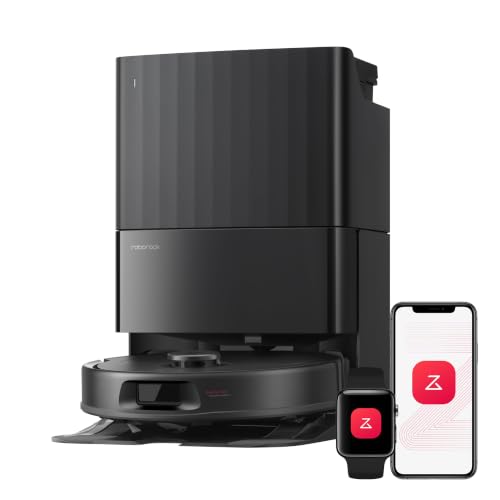
The Qrevo S Pro is the current full-expression of the category: a robot vacuum and mop with a manufacturer-stated 18,500Pa suction, smart obstacle avoidance, an anti-tangle brush, liftable spinning mops, and a multifunctional dock that self-cleans the mops with 167°F water per the listing. That dock is the story — mopping robots live or die by what happens to the pads afterward, and a dock that hot-washes them converts mopping from a chore you manage into a service the system performs. LiDAR navigation and multi-room mapping come standard at this level. It suits hard-floor-heavy homes that want genuine daily vacuuming and real mopping with minimal weekly human effort, and pet households that need the suction and anti-tangle design. It is the premium tier, the dock needs a permanent home with water-changing access, and carpet-dominant homes will use only half its talents. As the best overall automated floor vacuum in this guide, it is the benchmark the others are priced against.
Strengths
- Multifunctional dock with hot-water mop self-cleaning — the lowest-maintenance mopping system here.
- Flagship stated suction (18,500Pa) with anti-tangle brush and obstacle avoidance.
- Liftable spinning mops handle the hard-floor/carpet mix intelligently.
Trade-offs
- Premium tier, including dock consumables over time.
- The dock’s footprint and water service require a planned, permanent spot.
- Carpet-heavy homes pay for mopping capability they will rarely use.
Key specs: Robot vacuum and mop; 18,500Pa stated suction; multifunctional dock, 167°F mop self-cleaning; LiDAR navigation; anti-tangle brush (per listing).
Living with the Qrevo S Pro recalibrates expectations: the robot vacuums and mops on schedule, returns to have its pads washed and its dust handled, and asks you for water changes and occasional dock attention rather than daily management. The floors simply stay done. That is the promise this entire category has been chasing for a decade, and this machine is where it currently lands most completely.
Best for: hard-floor homes wanting full automation including mopping / Not suited for: carpet-dominant homes or tight budgets
Check the current price on Amazon

Shark Stratos Robot Vacuum & Mop Combo (AV2700ZE) — Best Self-Emptying Mop Combo
Shark’s Stratos pairs a robot vacuum and mop with a 60-day self-empty base, LiDAR mapping, sonic mopping, HEPA filtration at the base, edge and object detection, and — per its listing — self-refill and self-clean behaviors around the mop system. The 60-day bagless-style capacity is the headline for busy households: two months between emptying interventions is a genuinely different ownership rhythm from weekly bin duty. Sonic mopping — scrubbing action rather than a passive wet pad — suits kitchens and entryways where floors need more than a damp wipe. It suits families who want vacuum-plus-mop automation with the longest hands-free interval in this guide. The full dock system shares the flagship class’s footprint considerations, and Shark’s app ecosystem is a step behind roborock’s polish. For hands-free duration per dollar of effort, it is a compelling alternative flagship.
Strengths
- 60-day self-empty capacity — the longest hands-free interval here.
- Sonic mopping scrubs rather than wipes, with LiDAR mapping and object detection.
- HEPA filtration at the base suits pet and dust-conscious households.
Trade-offs
- Full-size dock system needs its planned permanent spot.
- App and mapping polish trail the roborock flagship slightly.
- Premium tier, like all full-service dock systems.
Key specs: Robot vacuum and mop combo; 60-day self-empty base; LiDAR mapping; sonic mopping; HEPA base filtration; model AV2700ZE (per listing).
The Stratos is the pick for the household whose robot failed socially rather than mechanically — the one that was always full, always beeping for attention, always needing something. Sixty days of self-emptying changes the relationship: the robot becomes infrastructure. Add real scrubbing mopping for the kitchen zone and you have the family-logistics flagship of this guide.
Best for: busy families wanting the longest hands-free intervals / Not suited for: small spaces without dock room
Check the current price on Amazon

iRobot Roomba 105 Vac Robot Vacuum — Best Simple Vacuum-Only
The Roomba 105 Vac is the disciplined pick: a vacuum-only robot with a manufacturer-stated 7,000 Pa of power-lifting suction, LiDAR navigation, multi-surface cleaning, and neat-row methodical coverage, on a simple charging base. No mop, no giant dock, no water to manage — just the original robot promise, executed with modern navigation. iRobot’s two decades in the category show in the cleaning logic and the support ecosystem behind the machine. It suits carpet-and-hard-floor homes that want daily vacuuming without mopping complexity, buyers who prefer to mop properly by hand or machine on their own schedule, and anyone wary of dock footprints. You empty its bin yourself, which is the honest trade for the simplicity and the tier. For vacuum-only buyers, it is the name-brand answer.
Strengths
- Modern LiDAR navigation and neat-row cleaning in a simple, vacuum-only package.
- iRobot’s category-defining experience, parts, and support ecosystem.
- No dock footprint or water management — the lowest-friction ownership here.
Trade-offs
- Manual bin emptying; no self-empty base in this configuration.
- No mopping at all — hard floors get vacuumed, not washed.
- Vacuum-only focus will not satisfy buyers wanting the full automated system.
Key specs: Robot vacuum; 7,000 Pa stated suction; LiDAR navigation; charging base; model Roomba 105 Vac (per listing).
There is a real elegance in a machine that does one job completely. The 105 Vac will keep a home’s floors at the daily standard, return to its small base, and never ask you to plumb, fill, or wash anything. For apartments, carpet-led homes, and robot skeptics who want the core benefit without the ecosystem, it is the most sensible robot in this guide.
Best for: vacuum-only simplicity, apartments, carpet-led homes / Not suited for: buyers wanting self-emptying or mopping
Check the current price on Amazon

eufy C10 Robot Vacuum Self Emptying — Best Slim Self-Emptying
The eufy C10 solves a geometry problem: at a stated 2.85 inches tall, it slides under furniture that stops standard robots, and it pairs that slim body with a self-emptying base rated in its listing for eight weeks of hands-free operation, LiDAR smart mapping, strong suction, an edge-expansion brush for pet hair, and carpet detection. Under-bed and under-sofa territory is where household dust actually retires to, and a robot that can go there changes what “the whole floor” means. It suits homes with low-clearance furniture, pet owners who want self-emptying without a flagship price, and anyone whose previous robot kept bouncing off the sofa skirt. The slim body necessarily carries a smaller onboard bin — mitigated by the self-empty base — and eufy’s ecosystem, while capable, is less expansive than roborock’s. For low furniture and hands-free value, it is the cleverest package here.
Strengths
- 2.85-inch slim profile cleans under furniture other robots cannot reach.
- Self-emptying base with weeks of hands-free capacity at a mid tier.
- LiDAR mapping and carpet detection bring flagship navigation behaviors down in price.
Trade-offs
- Small onboard bin depends on the self-empty base doing its job.
- Vacuum-focused; not a full mop system like the flagship picks.
- Slim designs can struggle with very high thresholds and deep pile transitions.
Key specs: Robot vacuum; self-emptying base (8 weeks per listing); 2.85-in height; LiDAR navigation; edge brush; carpet detection (per listing).
The C10 is the robot for the home as it is actually furnished. Most dust does not live in the middle of rooms; it migrates to the edges and the under-furniture dark, and a slim robot with real navigation and a self-empty base patrols exactly that territory for weeks at a time. If your previous robot’s map had sofa-shaped holes in it, this is the correction.
Best for: low-clearance furniture, pet hair, hands-free value / Not suited for: buyers wanting full mop automation
Check the current price on Amazon

roborock Q7 L5 Robot Vacuum and Mop — Best Mid-Range
The Q7 L5 is roborock’s mid-range formula: a vacuum and mop combo with a manufacturer-stated 8,000Pa suction, a dual anti-tangle system, LiDAR navigation with multi-level mapping, and self-charging — positioned in its listing as the upgrade from the Q5 Pro generation. The anti-tangle design deserves emphasis for pet and long-hair households, because brush maintenance is the hidden weekly tax of robot ownership, and a system engineered against it pays you back every single week. Multi-level mapping suits two-story homes that carry the robot between floors. It suits buyers who want the roborock ecosystem and real navigation without flagship dock pricing — this configuration charges simply, so you empty the bin yourself. Households wanting hands-free emptying should step up to the docked picks. As the mid-range standard, it is where most buyers’ shortlists should start.
Strengths
- Dual anti-tangle system minimizes the brush-cleaning chore in hair-heavy homes.
- LiDAR multi-level mapping at a mid-range tier, from the category’s leading ecosystem.
- Vacuum and mop combo flexibility for mixed floors.
Trade-offs
- No self-empty dock in this configuration — manual bin duty.
- Mopping is pad-based without dock washing; manage expectations accordingly.
- Mid-range suction is ample for daily work, not a deep-clean substitute.
Key specs: Robot vacuum and mop; 8,000Pa stated suction; dual anti-tangle; LiDAR multi-level mapping; self-charging (per listing).
The Q7 L5 is the rational robot: the navigation and brush engineering of the flagship line, the mop for hard-floor maintenance, and a price tier that does not require a dock the size of a nightstand. Run it daily, empty the bin in seconds, cut hair from the brush rarely thanks to the anti-tangle design, and your floors hold a standard that weekly manual vacuuming rarely matches.
Best for: mid-range buyers, pet hair, two-story homes / Not suited for: hands-free-everything buyers
Check the current price on Amazon
Lefant M210 Robot Vacuum — Best Budget
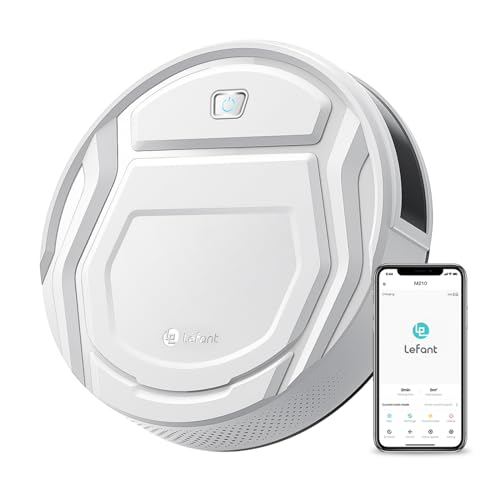
The Lefant M210 is the budget door into the category, and it opens it honestly: strong suction for its class, a stated 120 minutes of runtime, a slim low-noise body, automatic self-charging, and Wi-Fi/app/Alexa control, positioned for pet hair, hard floors, and daily cleaning. What the budget tier does not buy is LiDAR mapping — the M210 navigates with simpler logic, covering floors adequately rather than methodically — and there is no self-empty base or mopping. It suits first-time robot buyers, hard-floor apartments, and households adding daily pickup in one zone (the kitchen-dining orbit is the classic deployment). Carpet is a light-duty brief here, and large homes will see the coverage logic’s limits. As an inexpensive way to learn whether robot life suits your household, it has introduced more families to the category than any flagship.
Strengths
- Budget tier with the essentials: 120-minute stated runtime, self-charging, app and voice control.
- Slim, quiet operation suits apartments and daily background cleaning.
- Simple ownership — no dock, no bags, no ecosystem lock-in.
Trade-offs
- Non-mapping navigation is less methodical and can miss or revisit areas.
- No self-emptying, no mopping, modest carpet ability.
- Budget build and support ecosystem compared with the name brands above.
Key specs: Robot vacuum; 120 min stated runtime; slim body; Wi-Fi/app/Alexa control; self-charging (per listing).
Judge the M210 by its brief and it succeeds completely: hard floors kept daily, pet hair collected before it becomes tumbleweeds, and a price that makes the experiment painless. Households that discover they love robot life will eventually graduate to a mapping model — and will do so knowing exactly which features they are paying for, which is the M210’s final service.
Best for: first robot, hard-floor apartments, single-zone daily pickup / Not suited for: large homes, mapping precision, carpet-heavy floors
Check the current price on Amazon
Comparison Table
| Pick | Badge | Key spec | Best for |
|---|---|---|---|
| roborock Qrevo S Pro | Best Overall | 18,500Pa stated, hot-wash mop dock | Full automation incl. mopping |
| Shark Stratos AV2700ZE | Best Self-Empty Mop Combo | 60-day self-empty, sonic mop | Longest hands-free intervals |
| iRobot Roomba 105 Vac | Best Simple Vacuum-Only | 7,000 Pa stated, LiDAR, neat rows | Simple daily vacuuming |
| eufy C10 | Best Slim Self-Emptying | 2.85-in body, self-empty base | Low furniture, pet hair |
| roborock Q7 L5 | Best Mid-Range | 8,000Pa stated, anti-tangle, LiDAR | Balanced value, pet homes |
| Lefant M210 | Best Budget | 120-min runtime, app control | First robot, hard floors |
Key Takeaways
- Robots are maintenance machines: they keep floors at a daily standard and pair with — not replace — periodic deep cleaning.
- One LiDAR robot covers most single-floor homes with recharge-and-resume; size is a scheduling question, clutter is the real limit.
- The dock is half the product: self-emptying capacity and mop-washing decide how hands-free ownership really is.
- Buy the tier by its dock services, not its suction headline — if you cannot name the dock feature you are paying for, step down.
- LiDAR navigation is the dividing line between methodical cleaning and random coverage; five of six picks here have it.
- Read the first week’s map in the app — it is a diagnostic of your floors, and fixing what it reveals improves every run after.
- Stated suction figures are manufacturer numbers that do not compare cleanly across brands — judge navigation, brushes, and dock services instead.
- Frequency is the superpower: a mid-range robot run daily keeps floors cleaner than a flagship run weekly.
- Previous-generation mapping robots from supported ecosystems are the smart bargain; current-generation picks buy the longest support runway.
- Prep is part of the product: a sixty-second floor sweep and fixed no-go zones are what let any robot look smart.
How to Choose an Automated Floor Vacuum
Start with your floors and your furniture, not with suction figures. Hard-floor-dominant homes get the most from this category and can use the mop combos fully; carpet-led homes should buy vacuum-focused models and treat mopping as irrelevant. Measure your lowest furniture clearance — if the sofa sits at three inches, the eufy C10’s slim body is not a luxury but the difference between cleaned and uncleaned territory. Next, decide your hands-free ambition honestly. A simple charging base (Roomba 105, Q7 L5, M210) means you empty a bin every few days — seconds of work, but a rhythm you must keep. A self-empty base stretches that to weeks (eufy) or two months (Shark). A full-service dock (roborock Qrevo) adds mop washing and asks for water service instead. None is best in the abstract; the right one matches the maintenance you will actually do. Budget tiers deserve a clear map in this category because the spread is wide. The budget tier (Lefant’s class) buys daily pickup on simple floors and nothing else — a legitimate product. The mid tier (Q7 L5, eufy C10) is where the category’s real value concentrates: LiDAR mapping, anti-tangle engineering, and in eufy’s case self-emptying, at prices that do not require justification. The flagship tier (Qrevo S Pro, Shark Stratos) buys the dock services — mop washing, months of self-emptying, obstacle avoidance polish — and should be bought for those services specifically, not for suction numbers. If you cannot name the dock feature you are paying for, step down a tier; the floors will be nearly as clean, and your satisfaction will rest on features you actually use. Then navigation: LiDAR mapping brings room selection, no-go zones, and repeatable coverage, and it is worth prioritizing over raw suction claims at any tier. Pet households should add anti-tangle brushes and base filtration to the checklist. Finally, place the dock before you buy: a clear, permanent, accessible spot with the clearance the maker specifies — dock placement is the unglamorous decision that determines whether the robot’s map, and your satisfaction, stays stable.
How to Set Up and Run a Robot Vacuum Well
- Step 1: Place the dock against a wall with the maker’s specified clear space around it, on the floor the robot will clean most, and leave it there permanently.
- Step 2: Prep the floor for the mapping run: pick up cables, small toys, and loose items; open the doors you want mapped.
- Step 3: Let the robot map, then label rooms in the app and set no-go zones for pet bowls, delicate rugs, and cable nests.
- Step 4: Schedule daily or every-other-day runs at a time the house is calm — frequency is the robot’s superpower; short, often beats rare and heroic.
- Step 5: Keep the five-minute weekly rhythm: check the bin or bag status, wipe the sensors, and glance at the brush for wrapped hair (less often with anti-tangle designs).
- Step 6: For mop models, service the water and pads on the dock’s rhythm, not your memory — set the app reminders and obey them.
- Step 7: Deep-clean on your own schedule — edges, corners, stairs, and carpet depth with a canister or upright — and let the robot hold the standard in between.
- Step 8: Review the app’s cleaning map after the first week: it shows you, honestly, where the robot struggles — a chair forest, a threshold, a rug fringe — and every fix you make there pays off on every future run.
Navigation, Honestly: LiDAR, Camera, and Random
Navigation is the feature that most separates a satisfying robot from a frustrating one, and it comes in three generations that all appear in this guide’s price range. LiDAR robots — the roborock pair, the Shark, the Roomba 105, and the eufy — spin a laser turret to build a true map of your home, then clean in efficient rows, remember rooms, respect no-go zones, and return to exactly where they left off after charging. This is the current standard, and it is why five of our six picks carry it: the cleaning is verifiable on the map, the coverage is complete, and the behavior is calm rather than pinball. Camera-based systems navigate by landmarks and can add object recognition; they work well in good light. The budget generation — the Lefant M210’s class — navigates by bumpers and gyros, covering a space statistically over a long run: adequate for a single open zone, visibly less methodical in a multi-room home. The practical advice is simple: if your home has more than two rooms to clean, buy LiDAR; if your robot will live in one apartment zone, the budget logic is defensible. What you should not do is pay mid-range money for bumper navigation — the tier above buys the map, and the map is the product.
The Dock Economy: Bags, Water, and Five Minutes a Week
Every robot sells you a small ongoing economy, and satisfaction depends on choosing the one whose chores you mind least. Self-empty bases come in bagged and bagless forms: bags cost a little per change and seal the dust away (the allergy-friendly choice, especially with HEPA base filtration like the Shark’s), while bagless bases trade consumable cost for a dustier emptying moment. Mop docks add water service: clean water in, dirty water out, on a rhythm set by your floor size — the Qrevo’s hot-water pad washing reduces that burden but does not abolish the water tanks. Simple-base robots have the smallest economy of all: a bin to empty and a filter to tap out. Across all of them, budget five minutes a week for the human tasks — sensors wiped, brush checked, dock area tidied — and the automation will feel like automation. Skip those five minutes for a month and any robot in this guide will eventually remind you, with a full bin or a hair-wrapped brush, that “automated” means “mostly.” Choose the tier whose reminders you will answer cheerfully.
Robots and Real Life: Kids, Pets, and Clutter
Robots clean the home you have, not the one in the advertisement, and three realities decide success. Clutter first: a floor with cables, socks, and toy scatter will defeat any navigation system — not permanently, but per run. The households that love their robots adopt a sixty-second floor sweep before scheduled runs, or run the robot in the rooms that stay tidy (kitchen, halls, bedrooms) and accept manual duty elsewhere. Kids second: children are, counterintuitively, a robot’s friend — the daily crumb production of a family is exactly the load robots exist to eat, and a robot that runs during school or nap hours returns a floor that resets the room. Teach small children that the robot is a working appliance, not a ride or a pet, and it will survive them. Pets third: most animals habituate within a week; the genuine cautions are pet waste (obstacle-avoidance systems, like the flagships’ here, reduce but do not eliminate the risk — check the floor before running when a pet is unwell) and water bowls, which belong inside a no-go zone from day one. None of this is a reason not to automate; it is the operating manual that separates the delighted majority from the disappointed minority.
What a Robot Cannot Do (and What to Pair It With)
Completeness requires the negative space. A robot cannot clean stairs — any of them. It cannot do upholstery, curtains, mattresses, or car interiors. It cannot reach the last inch at every wall the way a crevice tool does, though edge brushes narrow the gap. It cannot deep-extract grit from carpet pile; its carpet work is surface maintenance, however diligent. And it cannot tidy — it cleans around the life on your floor, never instead of it. The complete floor-care system for a real home is therefore a partnership: the robot for daily maintenance across the main floors, and a canister or upright for the periodic deep work — our canister guide covers that half, including the above-floor jobs robots cannot touch. Buy the robot expecting partnership and it will feel like a miracle of consistency; buy it expecting replacement and physics will correct you within a month. The picks in this guide are the strongest partners available at their tiers — which is the honest superlative this category supports.
Common Buying Mistakes
- Comparing suction numbers across brands. Stated Pa figures are not measured on a shared standard; navigation, brushes, and dock services predict satisfaction far better.
- Expecting a robot to replace deep cleaning. Robots maintain; they do not deep-clean carpet, stairs, upholstery, or edges. Pair them with a real vacuum — see our canister guide.
- Buying a mop flagship for a carpet home. Half the machine’s talents — and its dock’s footprint — go unused; vacuum-focused picks serve carpet homes better.
- Ignoring dock placement. A dock squeezed into a corner or moved weekly produces bad maps and a “stupid” robot that is actually a homeless one.
- Paying mid-range money without LiDAR. At that tier the map is the product; bumper navigation belongs to the budget class.
- Forgetting consumables. Bags, filters, brushes, and pads are the robot’s running costs — check their price and availability before the robot, not after.
- Running it rarely and judging it harshly. A robot run twice a month is a gadget; run daily, the same machine is a system. Schedule first, evaluate after a fortnight of real use.
- Skipping the no-go zones. Pet bowls, cable nests, and fringe rugs cause most “robot got stuck” stories — five minutes of zoning on day one prevents a year of rescues.
Reading Runtime and Suction Claims Like an Engineer
Two numbers dominate robot listings, and both need translation. Runtime — 120 minutes on the Lefant, for instance — is measured on hard floors at standard power; engage maximum suction on carpet and the real figure drops meaningfully. For most homes this matters less than it appears: mapping robots recharge and resume, so a large home is a scheduling question, not a battery crisis. Suction, stated in pascals, is measured at the intake under conditions each brand chooses; an 18,500Pa flagship figure and an 8,000Pa mid-range figure do not mean the flagship picks up twice as much dirt from your floor — pickup depends on brush design, sealing, and airflow at the head, and in daily maintenance all of this guide’s picks collect what daily floors offer. What the flagship money genuinely buys is elsewhere: the dock’s services, the navigation’s polish, the obstacle avoidance, and the build. Read runtime as “long enough, with resume, for homes of this class” and suction as “the maker’s tier signal,” and spend your attention on the system features this guide compares — that is where the lived difference is.
Final Recommendation
For the fullest automation — vacuuming, mopping, and a dock that washes its own mops — the roborock Qrevo S Pro is the best overall automated floor vacuum in this guide. Families who prize the longest hands-free interval should choose the Shark Stratos and its 60-day base. If you want daily vacuuming with zero ecosystem fuss, the Roomba 105 Vac is the disciplined pick; if your furniture sits low, the eufy C10 is the one that actually cleans beneath it; if you want the leading ecosystem at a mid-range tier, the roborock Q7 L5; and if you are robot-curious on a budget, the Lefant M210 is the honest first step. Match the dock to the maintenance you will actually do, give it a permanent home, and run the robot often — that is the whole secret. For narrower briefs, see Best Economy Robot Vacuums, Best Robot Vacuums For Wood Floors, and Best Robot Vacuums Mops. Pet-heavy homes should also compare Best Robot Vacuums For Dog Hair.
Frequently Asked Questions
Are refurbished or older-generation robots a good deal?
They can be, with eyes open: a previous-generation mapping robot from a supported ecosystem — the roborock and Roomba lines especially — often delivers most of the daily experience at a reduced tier, provided bags, brushes, and batteries remain stocked. The risks are app support horizons and battery age, which no listing photographs. New buyers who value the longest support runway should buy the current generation, as this guide’s picks do; bargain hunters who accept a shorter runway can shop the generation behind deliberately.
Can a robot vacuum replace my regular vacuum?
Not completely. A robot maintains floors at a daily standard — dust, crumbs, surface pet hair — and does it more consistently than most manual routines. Deep carpet cleaning, stairs, upholstery, and edges still need a canister or upright. The satisfying setup is both: the robot for the week, the real vacuum for the deep clean.
Is a self-emptying dock worth it?
For most households, yes — it converts the robot’s most frequent chore from every few days to every few weeks or months (eight weeks for the eufy C10, sixty days for the Shark Stratos, per their listings), and bagged bases seal dust away, which allergy-conscious homes value. If your home is small and the bin is steps away, a simple base like the Roomba 105’s is perfectly rational.
What size home can one robot handle?
With mapping and recharge-and-resume, a single LiDAR robot handles most single-floor homes regardless of size — it simply takes longer and may recharge mid-job. Practical limits are clutter and doors, not square footage. Very large or split-level homes sometimes justify a second robot, and two-story homes need the carrying routine described above. The budget navigation class is the exception: keep it to one open zone where its coverage logic can succeed.
Do robot mops actually clean, or just wipe?
Between the two, honestly: pad mopping maintains hard floors well against daily film and footprints, and scrubbing designs like Shark’s sonic mopping do more. None replaces an occasional real mop of a genuinely dirty floor. The flagship difference is the dock: the Qrevo’s hot-water pad washing keeps the pads themselves clean, which is what makes daily mopping hygienic rather than redistributive.
Should I buy a robot vacuum or a better upright or canister first?
If you own no capable vacuum at all, buy the real vacuum first — it does everything, including the deep work — and add the robot when budget allows; our canister guide is the companion read. If you already own a decent vacuum that you use reluctantly and rarely, the robot is the higher-impact purchase, because it converts existing capability into daily results. The order matters less than the pairing: the households with the cleanest floors own both and use each for what it is.
How well do these robots handle pet hair?
Daily pet hair is their best use case — frequent passes prevent accumulation entirely. Look for anti-tangle brush designs (both roborock picks), edge brushes for where hair collects (eufy C10), and base filtration if dander matters (Shark’s HEPA base). Long hair still wraps eventually; the anti-tangle systems stretch the interval from days to weeks.
How long do robot vacuums last?
With the five-minute weekly rhythm and periodic consumables — filters, brushes, and mop pads on their cycles — a name-brand robot from this guide should serve for years of daily work; the battery is the usual first major wear item, typically after a few years of daily runs, and the supported ecosystems here stock replacements. Budget models trade some of that longevity for their price, which is a fair exchange for a first robot bought as an experiment.
Will a robot vacuum work in a two-story home?
Yes, with carrying. Robots cannot climb stairs, but multi-level mapping — the Q7 L5 states it — lets one robot hold maps for several floors; you carry it up, it cleans, you carry it (and ideally its base is on the main floor). Many two-story homes eventually buy a second, simpler robot for the secondary floor.
How loud are robot vacuums, and when should I run one?
Robots are quieter than full-size vacuums — the motor is small and the work is spread across a long, slow run — and the slim budget picks like the Lefant advertise low noise specifically. Most households run them during work or school hours, or during dinner prep when kitchen noise covers them. Self-emptying bases produce a short, loud transfer blast; schedule it away from nap times if that matters in your house.
Do I need Wi-Fi and an app for a robot vacuum?
For mapping models, practically yes: room labeling, no-go zones, scheduling, and suction settings live in the app, and without it you own half the machine. The budget Lefant also offers app and Alexa control alongside physical operation. If you want a no-app appliance, run a mapping robot from its buttons for basic whole-home cleans — but the app is where this category’s value lives, so plan on it.
What maintenance does a robot vacuum need?
About five minutes a week: empty or check the bin or base, wipe sensors and contacts, glance at the brush and side brush, and service mop water and pads on docked models. Filters and brushes are periodic consumables. That small rhythm is the difference between a robot that feels autonomous for years and one that slowly becomes a project.


