Disclosure: airfryerkitchensupply.com is reader-supported. When you buy through links on our site, we may earn an affiliate commission at no extra cost to you.
Where to buy
Every robot below is sold on Amazon. This guide deliberately contains no prices — robot vacuum pricing swings with promotions more than almost any category in the home — so use the links to check the current price on Amazon for each finalist and compare them on the same day. What ‘economy’ means here is defined in the introduction: the lowest total cost of a robot that genuinely cleans, navigates, and lasts, not the lowest sticker in the store.
- Lefant Robot Vacuum Cleaner (Wi-Fi/App/Alexa, Slim) — Best Overall Economy: Check the current price on Amazon
- ILIFE V2 Robot Vacuum Cleaner (Tangle-Free Suction) — Best for Pet Hair on a Budget: Check the current price on Amazon
- eufy C10 Robot Vacuum (Self-Emptying, LiDAR) — Best Self-Emptying Value: Check the current price on Amazon
- iRobot Roomba 105 Vac Robot Vacuum (LiDAR) — Best Brand-Name Entry: Check the current price on Amazon
- Roborock Q7 L5 Robot Vacuum and Mop Combo — Best Economy Vacuum-Mop Combo: Check the current price on Amazon
- Lefant M210 Pro Robot Vacuum — Best for Small Apartments: Check the current price on Amazon
The best economy robot vacuums are not the cheapest robot vacuums, and the difference is the whole subject of this guide. Below a certain quality floor, a robot vacuum stops being a labor-saving appliance and becomes a random-wandering disc that pushes dust around, gets stuck under the sofa daily, and retires to a closet within the year. The economy sweet spot sits just above that floor: robots with real suction, a sane navigation method, a battery that finishes a home, and parts you can replace — at the lowest prices the category honestly offers.
What ‘economy’ buys and gives up has changed recently, in buyers’ favor. Features that were premium two product generations ago — LiDAR room mapping, self-emptying docks, app-drawn no-go zones — have migrated down into the value tier, and several picks below include them. What economy still gives up, honestly: the strongest suction figures, the smartest obstacle avoidance around cables and pet messes, mopping that scrubs rather than wipes, and the polish of flagship apps. For hard floors and short-pile carpet in a typical home, those give-ups matter less than the marketing suggests.
Navigation is the economy decision that matters most, so learn the three tiers before the picks. Random-bounce robots wander and eventually cover a room; they are the cheapest and the most likely to miss spots and need rescuing. Gyroscope and row-by-row robots clean in orderly lines within a room but do not remember your home. LiDAR robots map the home, clean room by room, and return to exactly where they left off after charging. This guide includes all three tiers but labels each pick’s tier plainly, because at economy prices the navigation tier — not the suction number — predicts whether you will still be using the robot in a year.
The second economy truth is running cost. A robot is cheap to buy and then charges rent: filters, side brushes, main brushes, mop pads, and, on self-emptying models, dust bags. The picks below favor designs whose consumables are standard and widely available, and the buying guide shows how to count total cost before the sticker price seduces you.
Finally, a note about who economy robots serve best, because it is nearly everyone. The households that extract the most from this tier share a pattern: hard floors or low-pile carpet, a daily-light-dirt problem rather than a weekly-deep-dirt one, and floors that can be kept reasonably clear. Construction sites of toddlerhood — crumbs, pet hair, tracked-in grit — are exactly the daily-light-dirt pattern, which is why young families and pet households dominate the happy-owner population of this category. If your home matches that description, the economy tier is not a compromise you are settling for; it is the correct tool, and the flagship premium would buy you features your floors cannot use.
In this guide
Quick Picks
Lefant Robot Vacuum Cleaner (Wi-Fi/App/Alexa, Slim) — Best Overall Economy. The balanced value default: strong suction for the tier, a 120-minute runtime, a slim body that gets under furniture, self-charging, and Wi-Fi/app/Alexa control — aimed squarely at pet hair and hard floors. Check the current price on Amazon.
ILIFE V2 Robot Vacuum Cleaner (Tangle-Free Suction) — Best for Pet Hair on a Budget. A suction-port robot with no main brush to tangle: pet hair goes straight into the bin instead of wrapping around a roller, with a 120-minute runtime, remote control, scheduling, and self-charging. Check the current price on Amazon.
eufy C10 Robot Vacuum (Self-Emptying, LiDAR) — Best Self-Emptying Value. The feature raid: a self-emptying dock rated for weeks of hands-free use, LiDAR smart mapping, and a 2.85-inch slim body — flagship conveniences at an economy position. Check the current price on Amazon.
iRobot Roomba 105 Vac Robot Vacuum (LiDAR) — Best Brand-Name Entry. Roomba’s entry model with modern bones: 7,000 Pa power-lifting suction per the listing, LiDAR navigation, and multi-surface cleaning — the name-brand ecosystem at its most accessible point. Check the current price on Amazon.
Roborock Q7 L5 Robot Vacuum and Mop Combo — Best Economy Vacuum-Mop Combo. A LiDAR vacuum-mop with 8,000 Pa listed suction, a dual anti-tangle brush system for pet hair, and multi-level mapping — the economy way to get mopping into the same run. Check the current price on Amazon.
Lefant M210 Pro Robot Vacuum — Best for Small Apartments. A compact, quiet Lefant with six cleaning modes, 120-minute runtime, self-charging, and voice control — sized and priced for apartments, studios, and second robots. Check the current price on Amazon.
How These Picks Were Chosen
Every pick was verified against this site’the Amazon catalogue data during this session, so model names, suction figures, runtimes, and navigation claims in this guide come from the actual current Amazon listings. Robot vacuum listings are notorious for headline numbers that describe a maximum mode you will use twice; where a figure appears below, it is the listing’s own specification, and the reviews discuss what it means in a real home rather than treating it as a score.
The criteria for an economy pick were strict. First, cleaning substance: suction and brush design appropriate to the floors it claims, with tangle management if it claims pet hair. Second, navigation honesty: the method is stated and matched to home size — no random-bounce robot is recommended here for a large multi-room home. Third, battery adequacy: a runtime that finishes a typical apartment or floor in one charge, or honest recharge-and-resume on mapping models. Fourth, ownership economics: available, reasonably priced consumables and a dock design that does not create a new subscription. Fifth, the rescue rate, judged by design: slim enough to fit under furniture or tall enough not to try, sensors to avoid the worst traps, and a shape that does not beach itself on every threshold.
Excluded: no-name robots whose listings could not be verified, robots whose suction figures exist only in their marketing images, and premium flagships wearing an ‘economy’ costume for the season. Six picks survived, covering the realistic economy briefs: apartments, pet hair, self-emptying value, brand-name trust, and vacuum-mop duty.
The 6 Best Economy Robot Vacuums
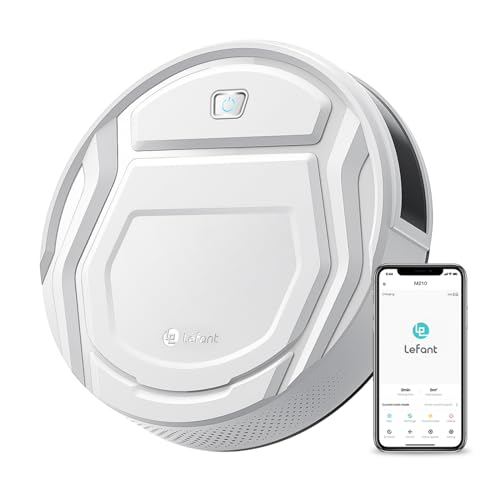
Lefant Robot Vacuum Cleaner (Wi-Fi/App/Alexa, Slim) — Best Overall Economy
Buy the Lefant if you want one robot that covers the typical apartment or single floor without a dock, a hub, or a learning project. Its slim profile is its signature: it cleans under sofas and beds where dust actually accumulates, its runtime finishes real homes, and app control gives you scheduling and remote starts. It suits first-time robot owners who want the modern basics done properly at an economy price.
Strengths
- 120-minute runtime covers a full apartment or floor in one run
- Slim body reaches under furniture that taller LiDAR robots cannot enter
- Wi-Fi, app, and Alexa control at an economy tier where remotes alone are common
Trade-offs
- Navigation is systematic-within-a-run rather than a saved multi-room map — it will not clean ‘just the kitchen’ by name
- No self-emptying dock; the bin is emptied by hand every few runs
- Mopping is not its job — this is a vacuum, honestly specced
| Runtime (listing) | 120 minutes |
| Control (listing) | Wi-Fi / app / Alexa |
| Design (listing) | Slim, low-noise, automatic self-charging |
| Positioning (listing) | Ideal for pet hair, hard floors |
The Lefant’s design starts from where dirt lives. In most homes the dirtiest square footage is the strip under the sofa, under the bed, and along the kitchen kickboards — exactly where a tall robot with a LiDAR turret cannot go. A slim robot trades the map for access, and for smaller homes that trade is often correct: the robot covers the whole apartment in a run, including the under-furniture zones a mapping robot must skip, and returns to its charger when done.
Suction and runtime are specced for the brief. Pet hair on hard floors and low-pile rugs is the economy robot’s main real-world job, and the listing positions this model directly at it, with a runtime long enough that the robot finishes rather than dying mid-room — the small humiliation that kills owners’ enthusiasm for cheap robots. Low-noise operation matters more than it sounds: a robot you can run during a work call gets run daily, and daily light cleaning is how robot vacuums actually keep a home clean.
Accept its tier honestly: without a saved map, you cannot send it to one named room, and without a self-empty dock, bin duty is yours. Owners who want those features should look at the eufy and Roborock picks below and pay the difference knowingly. For the large group whose brief is ‘keep my floors visibly clean without thinking about it,’ this is the economy answer.
Best for: First-time owners, apartments, and pet-hair hard floors on a strict budget / Not suited for: Large multi-room homes wanting named-room cleaning and self-emptying
Check on Amazon — check price on Amazon before you decide, because configurations and included accessories change between listings.
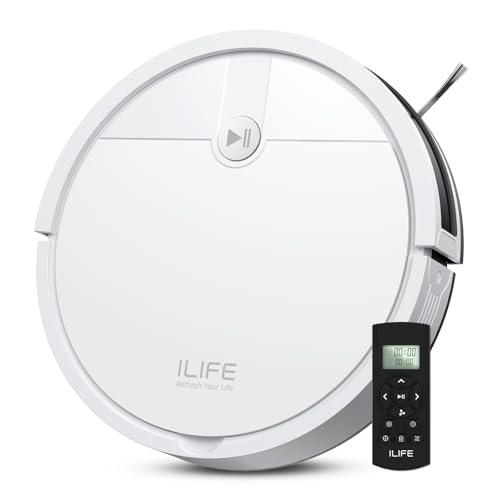
ILIFE V2 Robot Vacuum Cleaner (Tangle-Free Suction) — Best for Pet Hair on a Budget
Choose the ILIFE V2 if pet hair is your floor’s main crop and your budget is firm. Its tangle-free suction design deletes the single most annoying maintenance job of brush robots — cutting wound hair off a roller — by having no roller. It is controlled by remote and schedule rather than an app ecosystem, which suits buyers who want the robot to clean, not to be managed.
Strengths
- Tangle-free suction port: hair cannot wrap around a brush that does not exist
- 120-minute runtime with self-charging and scheduling
- Remote control simplicity — no account, no app, no Wi-Fi setup
Trade-offs
- Suction-port designs are less aggressive on carpet than brush robots; best on hard floors and low pile
- No app, no map, no voice control
- Random-systematic navigation needs a tidy floor to do its best work
| Suction design (listing) | Tangle-free suction port |
| Runtime (listing) | 120 minutes |
| Control (listing) | Remote control, schedule |
| Color (listing) | White |
Every owner of a brush-roll robot knows the ritual: flip the robot, find the scissors, cut the hair sleeve off the roller, wonder why they bought a labor-saving device. The V2’s answer is architectural. With a suction port instead of a roller, hair, fur, and string travel straight to the bin. For households with shedding dogs, long-haired humans, or both, that single design decision can halve the robot’s maintenance burden.
The trade is carpet aggression. A brush roll’s job is to beat and lift debris out of carpet pile; a suction port skims the surface. On hard floors — where pet hair actually accumulates in visible tumbleweeds — the V2 is in its element. On medium-pile carpet, expect it to maintain rather than deep-clean, and keep a conventional vacuum for the weekly pass. The guide’s position is that this honesty makes it more recommendable, not less: it is the right tool priced for the floors it suits.
The remote-and-schedule control scheme deserves a defense in an app-everything market. Scheduling a daily run takes one minute with the remote, and then the robot simply cleans every day without accounts, passwords, firmware updates, or a phone’s permission. For a second robot — a bedroom floor, a parent’s apartment — that simplicity is a feature buyers consistently underrate until they live with both kinds.
Best for: Shedding pets on hard floors, and buyers who prefer a remote to an app / Not suited for: Homes relying on the robot for medium or high-pile carpet cleaning
Check on Amazon — check price on Amazon before you decide, because configurations and included accessories change between listings.

eufy C10 Robot Vacuum (Self-Emptying, LiDAR) — Best Self-Emptying Value
Buy the eufy C10 if emptying a dustbin is the chore you are actually trying to delete. Its self-empty station holds weeks of debris, its LiDAR maps your home for room-by-room cleaning, and at 2.85 inches tall it still slides under most furniture — a combination that used to cost flagship money. It suits busy households and pet owners whose bins fill fast.
Strengths
- Self-emptying station: weeks between bin duties instead of days
- LiDAR navigation with smart mapping for named-room cleaning
- 2.85-inch slim body keeps under-furniture access despite the mapping turret class
Trade-offs
- Self-empty stations use bags or a bag system — an ongoing consumable cost to count
- The dock needs floor space and a permanent spot
- Vacuum-only focus: mopping is not this model’s headline
| Dock (listing) | Self-emptying, weeks of hands-free capacity |
| Navigation (listing) | LiDAR smart mapping |
| Height (listing) | 2.85 inches, slim |
Self-emptying changes robot ownership more than any other single feature, because it removes the last recurring contact with the dirt. A robot whose bin you empty every second run is an appliance you maintain; a robot whose station you empty every few weeks is a service your home receives. The C10 brings that service into the economy tier, and the consumable math — bags across a year — is laid out in the buying guide so you can judge the trade with open eyes.
LiDAR mapping is the second flagship habit it imports: the robot learns the floor plan, cleans in efficient rows room by room, and can be sent to the room that needs it. Combined with the slim body — many mapping robots are too tall for sofa clearance — the C10 covers both failure modes of cheap robots: getting lost, and never reaching the dirt under furniture.
Who should skip it: the buyer whose home is one open room, where mapping adds little, and the buyer who objects on principle to bag consumables. For a multi-room home with pets, though, this is the pick that delivers the modern robot experience at the economy end — and the one most likely to still be running daily in year two, because nothing about using it is a chore.
Best for: Busy and pet-owning households wanting weeks of hands-free operation / Not suited for: Single-room homes, or buyers avoiding dock consumables on principle
Check on Amazon — check price on Amazon before you decide, because configurations and included accessories change between listings.

iRobot Roomba 105 Vac Robot Vacuum (LiDAR) — Best Brand-Name Entry
Choose the Roomba 105 if brand infrastructure matters to you: iRobot’s parts availability, app maturity, and support network are the deepest in the category, and this is the least expensive way to buy into them with current-generation navigation. It suits buyers who keep appliances for years and value being able to buy a genuine brush or battery long after purchase.
Strengths
- LiDAR navigation and multi-surface cleaning in the entry Roomba
- Listing-rated 7,000 Pa suction is strong for the economy tier
- The category’s deepest parts, accessory, and support ecosystem
Trade-offs
- This base version charges on a standard base — the self-emptying dock is a different, pricier bundle
- iRobot’s consumables are priced like the premium brand they are
- Mopping belongs to the Combo sibling, not this Vac model
| Suction (listing) | 7,000 Pa power-lifting suction |
| Navigation (listing) | LiDAR |
| Surfaces (listing) | Multi-surface cleaning |
| Included (listing) | Charging base |
There is a rational case for buying the brand, and it is not the logo. Robot vacuums are wear-item machines: brushes abrade, batteries fade, wheels accumulate hair in their axles. The value of a manufacturer with a decade-deep parts catalog and a support line is paid out in year three, when a robot from a vanished brand becomes e-waste over a small part. The Roomba 105 is the economy door into that infrastructure, and it does not ask you to accept obsolete technology to use it — LiDAR navigation and strong listed suction are current-generation equipment.
In the home, the 105 behaves like what it is: a competent mapping vacuum for hard floors and carpets, cleaning room by room and returning to its base. The ‘power-lifting’ suction language in the listing refers to its carpet response — suction that asserts itself on soft surfaces — which is the economy tier’s usual weakness addressed directly.
Be clear-eyed about the bundle structure: this listing is the vacuum with a charging base, and the self-emptying version is a separate model at a higher tier. Buyers who know they want hands-free emptying should compare this plus the eufy C10 above before deciding where the value sits for them. Buyers who empty a bin without resentment get Roomba ownership at its most economical.
Best for: Long-term owners who value parts, support, and app maturity / Not suited for: Buyers who specifically want self-emptying included at this tier
Check on Amazon — check price on Amazon before you decide, because configurations and included accessories change between listings.

Roborock Q7 L5 Robot Vacuum and Mop Combo — Best Economy Vacuum-Mop Combo
Buy the Q7 L5 if your floors are mostly hard and you want one pass to vacuum and damp-mop together. Roborock’s mapping is among the most capable at any price, the dual anti-tangle design answers the pet-hair maintenance problem from the brush side rather than the suction-port side, and the listed suction is the strongest in this guide. It suits mixed-floor homes that want a genuine combo without flagship money.
Strengths
- 8,000 Pa listed suction — the strongest figure in this economy guide
- Dual anti-tangle system tackles pet hair while keeping a real brush for carpet
- LiDAR multi-level mapping suits houses with more than one floor
Trade-offs
- Robot mopping is maintenance mopping — it keeps hard floors fresh, it does not scrub dried spills
- No self-empty dock in this configuration; bin and mop pad duties are yours
- Combo robots ask for a small routine: fill the tank, wash the pad, empty the bin
| Suction (listing) | 8,000 Pa |
| Brush (listing) | Dual anti-tangle system |
| Navigation (listing) | LiDAR, multi-level mapping |
| Type (listing) | Vacuum and mop combo, upgraded from Q5 Pro |
The Q7 L5 is where the economy tier stops apologizing. Its listed suction leads this guide, its navigation is the full LiDAR implementation with multi-level maps — one robot serving two floors, carried between them — and its brush system is engineered against the category’s pet-hair weakness without surrendering carpet performance the way suction-port designs must. As an upgrade of the Q5 Pro line, it also inherits a mature app and accessory channel.
The mopping needs the standard honest calibration. A robot mop drags a damp pad with light pressure: excellent at removing the daily film of dust and paw prints, keeping hard floors barefoot-clean between real mops, and no substitute for scrubbing a dried juice spill. Owners who understand it as maintenance mopping are delighted; owners who expected a steam mop are not. Set the expectation and the Q7’s combo duty is the most labor it is possible to remove at this tier.
The ownership routine is the real price: bin, tank, and pad form a small weekly liturgy. In exchange you get the closest thing here to a flagship’s daily result. For hard-floor homes with pets — the exact homes that need daily attention most — that trade is the best value equation in the guide.
Best for: Hard-floor and mixed homes wanting vacuum and maintenance mopping in one robot / Not suited for: Buyers wanting a dock-based, zero-routine setup
Check on Amazon — check price on Amazon before you decide, because configurations and included accessories change between listings.

Lefant M210 Pro Robot Vacuum — Best for Small Apartments
Choose the M210 Pro if your space is small and your floors are mostly hard with a rug or two. Six cleaning modes let you match the run to the job — spot for the entryway, edge for the kitchen, auto for the whole studio — and its quiet operation suits thin-walled buildings and work-from-home days. It is also the natural second robot: one for the bedroom level while a bigger machine works downstairs.
Strengths
- Six cleaning modes cover spot, edge, and whole-home jobs
- Quiet operation suits apartments and daytime running
- Voice control plus self-charging at a small-home price position
Trade-offs
- No saved mapping — modes, not named rooms
- Bin capacity matches its size; pet-heavy homes will empty it often
- Not the pick for large or heavily carpeted homes
| Modes (listing) | 6 cleaning modes |
| Runtime (listing) | 120 minutes |
| Control (listing) | Voice control, self-charging |
| Positioning (listing) | Ideal for pet hair and hard floors |
Small homes are where economy robots make the most sense, and the M210 Pro is designed for them without condescension. In a studio or one-bedroom, a mapping robot’s intelligence is mostly wasted — there are only so many rooms to name — while modes, runtime, and noise decide daily satisfaction. Two hours of runtime in a small home means the robot finishes, re-docks, and can go again the same day after a cooking disaster.
The six modes are more than a list. Edge mode handles the kitchen perimeter where crumbs collect against cabinets; spot mode concentrates on the litter scatter by the door; auto mode maintains the whole space. Owners of small homes use these modes the way large-home owners use room selection — as the way to send effort where the dirt is — and a robot that offers them gets used more intelligently than one with a single start button.
Its limits scale with its brief: no map, a modest bin, and no dock. In the apartment it is aimed at, none of those bite. As a household’s only robot in a large, carpeted, multi-pet home, all three would — the picks above exist for that brief. Matched to its home, the M210 Pro is the economy tier at its most sensible.
Best for: Studios, small apartments, and as a second-floor second robot / Not suited for: Large, carpeted, multi-pet homes as the only robot
Check on Amazon — check price on Amazon before you decide, because configurations and included accessories change between listings.
Comparison Table
| Pick | Badge | Key spec | Best for |
|---|---|---|---|
| Lefant Robot Vacuum Cleaner (Wi-Fi/App/Alexa, Slim) | Best Overall Economy | 120-min runtime, slim body, Wi-Fi/app control | First-time owners, apartments, and pet-hair hard floors on a strict budget |
| ILIFE V2 Robot Vacuum Cleaner (Tangle-Free Suction) | Best for Pet Hair on a Budget | Tangle-free suction, 120-min runtime, remote | Shedding pets on hard floors, and buyers who prefer a remote to an app |
| eufy C10 Robot Vacuum (Self-Emptying, LiDAR) | Best Self-Emptying Value | Self-empty dock, LiDAR mapping, 2.85-in slim | Busy and pet-owning households wanting weeks of hands-free operation |
| iRobot Roomba 105 Vac Robot Vacuum (LiDAR) | Best Brand-Name Entry | 7,000 Pa (listing), LiDAR, charging base | Long-term owners who value parts, support, and app maturity |
| Roborock Q7 L5 Robot Vacuum and Mop Combo | Best Economy Vacuum-Mop Combo | 8,000 Pa (listing), LiDAR, vac + mop combo | Hard-floor and mixed homes wanting vacuum and maintenance mopping in one robot |
| Lefant M210 Pro Robot Vacuum | Best for Small Apartments | 6 modes, 120-min runtime, voice control | Studios, small apartments, and as a second-floor second robot |
How to Choose an Economy Robot Vacuum
Define your floor first, because it eliminates half the market. Mostly hard floors with low-pile rugs: any pick here works, and suction-port or slim designs shine. Significant medium-pile carpet: you need a real brush roll and carpet-boost suction — the Roomba 105 and Roborock Q7 L5 are your shortlist, and the ILIFE V2 is not. Homes with shedding pets add a second filter: tangle management, either by suction port (ILIFE) or anti-tangle brush design (Roborock), plus a bin or dock sized for hair volume.
Navigation tiers, translated
Random and systematic non-mapping robots (the Lefant picks and the ILIFE) clean by covering ground diligently; they suit one floor of modest size and reward owners who keep floors reasonably clear. LiDAR robots (eufy C10, Roomba 105, Roborock Q7 L5) build a map, clean in efficient rows, support room selection and no-go zones, and resume after recharging — the right choice for larger or multi-room homes, and for anyone who wants the robot to clean the kitchen after dinner rather than the whole house eventually. The price gap between tiers has narrowed enough that multi-room homes should buy the map; small homes should pocket the difference.
Count the total cost, not the sticker
Before buying, price a year of consumables for your finalist: filters, side brushes, main brush or rollers, mop pads for combos, and dock bags for self-empty models. Then compare totals, not stickers. A self-emptying robot with modest bag costs can be cheaper per year of actual convenience than a bare robot whose filters are oddly priced — and a robot with standard, widely stocked parts (a quiet strength of the Lefant, ILIFE, and Roomba picks) protects you against the worst economy outcome: a working robot orphaned by unavailable consumables.
What Economy Buyers Should Not Pay For
Some flagship features genuinely do not matter at this tier. Extreme suction figures beyond the strong listings here yield little on hard floors, where technique and brush design dominate. Camera-based obstacle recognition is lovely and increasingly common, but a tidy-floor habit delivers most of its benefit free. Heated mop washing, auto pad changing, and voice-assistant personalities are dock luxuries. The economy discipline is to pay for navigation, suction adequacy, battery adequacy, and parts — and to let the flagship theater go. Every pick in this guide was chosen by that discipline, which is why several of them quietly include one flagship feature (a dock, a map) where it changes daily life, and none includes the theater.
Runtime, Bin Size, and Thresholds — the Numbers in Context
Runtime claims assume hard floors at standard suction; max-suction carpet running can halve them, which is why the 120-minute figures on the Lefant and ILIFE picks matter — they carry margin for real conditions. Mapping robots sidestep the issue with recharge-and-resume: they top up and continue exactly where they stopped, so for LiDAR models, runtime per charge matters less than the honesty of the resume behavior. Judge non-mapping robots by runtime, mapping robots by resume.
Bin size is the quiet spec that decides chore frequency. Pet homes fill bins with compressible hair faster than the volume suggests; a small robot in a shedding household may need emptying every run, which is the practical argument for the eufy C10’s dock in exactly those homes. Thresholds are the third number nobody lists: most robots climb modest transitions and balk at tall ones, and a home divided by a high threshold is two robot territories, not one — a second reason the two-floor household often ends up, sensibly, with a capable robot downstairs and an M210 Pro upstairs.
How to Set Up an Economy Robot Vacuum for a Home It Can Actually Clean
Robots fail in homes that were never prepared for them. Twenty minutes of preparation before the first run is the difference between a robot that cleans daily for years and one that needs rescuing until you give up on it.
Step 1: Do the robot-proofing pass
Walk your floors at robot height. Tie up or route dangling cables, lift curtain hems that pool on the floor, move the shoe pile and the pet-toy scatter, and check the gaps under furniture: a robot should either fit fully or not at all — the half-fitting gap under a low sofa is where robots go to be rescued.
Step 2: Place the dock like you mean it
The dock needs a hard, flat spot against a wall with clear space in front and to the sides, away from direct sun and away from the traffic path where it will be kicked. Self-empty docks need their spot permanently; choose it once, well.
Step 3: Charge fully, then map or maiden-run
Let the robot charge completely before its first run. Mapping models: run the mapping pass with doors open to every room you want included, then name rooms and set no-go zones for the pet bowls and the cable corner. Non-mapping models: just start a full clean and watch the first ten minutes.
Step 4: Watch one full run like a hawk
Follow the first complete clean and note every trap: the rug fringe, the threshold it cannot climb, the chair-leg forest. Fix the environment, not the robot — move the fringe, add the no-go zone, relocate the chair. One observed run prevents a year of rescues.
Step 5: Set the schedule and the routine
Schedule runs for when you are out or awake-but-busy — daily light cleaning beats weekly deep cleaning for robots. Put bin emptying (or bag checking), filter taps, and brush checks on a simple weekly rhythm, and order the first set of consumables now so a worn brush never benches the robot.
Step 6: Maintain the sensors
Wipe the cliff sensors, the bumper window, and the charging contacts with a dry cloth every few weeks. Most ‘my robot went crazy’ stories are dirty sensors, and the fix is a cloth, not a repair.
Recheck the traps seasonally: holiday cables, new furniture, and a puppy all change the robot’s world. A five-minute re-proofing after any room change keeps the rescue rate at zero.
Common Buying Mistakes
Buying by suction number alone
The biggest figure in the listing is a maximum-mode laboratory number. On hard floors, brush design and navigation decide what lands in the bin; on carpet, the brush matters as much as the suction. The picks here carry strong listed figures and the designs to use them — buy the combination, not the number.
Putting a random-navigation robot in a large home
Coverage robots in big, multi-room homes produce the classic disappointment: one room pristine, another untouched, robot found asleep under a guest bed. Match navigation tier to home size — that is what the tiers are for — and the same money buys satisfaction instead of a cautionary tale.
Ignoring consumable prices until checkout number two
Filters, brushes, pads, and bags are the rent. A bargain robot with expensive or scarce parts is not a bargain, and a self-empty dock’s bags belong in the purchase decision, not in a surprised second order. Count a year of parts before you buy; the buying guide above shows how.
Expecting robot mopping to scrub
Combo robots maintain hard floors beautifully and scrub nothing. Dried spills, grout lines, and sticky patches still belong to a mop and a human. Buyers who calibrate this — as the Q7 L5 review insists — love their combos; buyers who do not, return them.
Never watching a run
Owners who never observe their robot cannot fix its traps, and small traps compound into daily rescues and then into disuse. Watch the first run fully and spot-check monthly. Ten minutes of attention is the entire management overhead of a well-matched robot.
Final Recommendation
For most economy buyers, the Lefant is the right first robot: slim, long-running, app-controlled, and aimed at the pet-hair hard floors most homes actually have. If emptying bins is the chore you are deleting, the eufy C10’s self-empty dock and LiDAR map are the flagship conveniences worth their consumables.
Pet hair on a firm budget belongs to the ILIFE V2 and its tangle-free suction. Brand infrastructure and carpet confidence point to the Roomba 105. Hard-floor homes wanting vacuuming and maintenance mopping in one pass should take the Roborock Q7 L5, and small apartments the Lefant M210 Pro.
Whichever you choose, do the preparation: proof the floors, place the dock properly, watch the first run, and set a daily schedule. An economy robot in a prepared home outperforms a flagship in an unprepared one — that, more than any specification, is the economy secret.
And keep the perspective the category’s happiest owners share: the robot’s job is to make the baseline of your home ‘clean enough, always’ — the state from which a quick manual pass reaches ‘guest-ready’ in minutes. Judged by that standard, every pick in this guide earns its place, and the most expensive robot in the world could not do the job meaningfully better.
Check the finalists on Amazon: Lefant Robot Vacuum Cleaner (Wi-Fi/App/Alexa, Slim) · ILIFE V2 Robot Vacuum Cleaner (Tangle-Free Suction) · eufy C10 Robot Vacuum (Self-Emptying, LiDAR) · iRobot Roomba 105 Vac Robot Vacuum (LiDAR) · Roborock Q7 L5 Robot Vacuum and Mop Combo · Lefant M210 Pro Robot Vacuum.
Related guides
Frequently Asked Questions
How long should an economy robot vacuum last?
With consumables replaced on schedule — brushes, filters, and eventually the battery — a well-matched robot from a supported brand should give years of daily service. Longevity is mostly a parts-availability question, which is why this guide favors brands with established accessory channels. The fastest way to shorten a robot’s life is to let a worn brush and clogged filter make it work harder every run.
Is a self-emptying dock worth it at economy prices?
For pet homes and multi-room homes, usually yes: it converts a chore every few runs into a chore every few weeks, and robots that demand less get used more. Count a year of dock bags in the decision. For a small apartment whose bin fills slowly, the dock buys little — the Lefant picks serve that home better for less total cost.
Can an economy robot replace my regular vacuum?
For daily maintenance on hard floors and low-pile carpet, yes — that is the point of running it daily. For deep carpet cleaning, stairs, upholstery, and edges, a conventional vacuum (ideally with a hose) remains the right tool. Most robot households settle into robot-daily plus upright-weekly-or-less, which is a large net saving of effort even though the upright never fully retires.
Why does my robot miss spots or get stuck?
Almost always environment, not defect: cables, fringes, thresholds, dark flooring that confuses cliff sensors, and half-height gaps under furniture. Watch a full run, fix the traps it reveals, and use no-go zones on mapping models. A robot that still fails in a prepared home is mismatched to it — usually a navigation tier too low for the home’s size.
Do I need Wi-Fi and an app for a robot vacuum?
No — the ILIFE V2 cleans on a remote and a schedule with no network at all, and many owners prefer it. Apps add mapping, room selection, and away-from-home control, which matter in larger homes. Judge by your floor plan: one floor, few rooms — a remote is enough; several rooms with different needs — the app models earn their keep.
How loud are economy robot vacuums?
They are audible appliances — you will hear one working — but the class has quieted considerably, and picks like the Lefants emphasize low-noise operation. A robot run on a schedule while you are out makes the question moot for most households; if you work from home, run it room by room or during calls-free hours, as many owners do.
Keep exploring: Best Economy Robot Vacuums Best Robot Vacuums For Pet Hair Best Robot Vacuums Under $300 Best Self Emptying Robot Vacuums Best Robot Vacuum And Mop Combos Best Vacuums For Pet Hair


