Disclosure: airfryerkitchensupply.com is reader-supported. When you buy through links on our site, we may earn an affiliate commission at no extra cost to you.
Where to buy
Glass towels are sold in multi-packs, and the differences that matter — weave, size, and whether the cloth is truly lint-free — are in the listing details rather than the headline. Use the links below to land on the exact pack reviewed, and buy enough to keep a clean rotation: a glass towel only works when it is dry and clean. On pack strategy: resist the sampler instinct. One pack of a polisher and one pack of an absorber, bought together, outperform three miscellaneous singles because rotation — not variety — is what keeps a dry cloth available. If your household already owns good cotton tea towels, test them on glass first with the technique in this guide; you may only need the microfiber half of the system, and the flour sacks above can wait for the day your cotton wears out.
- Puomue Microfiber Glass Cleaning Cloth (6 Pack, 16 x 16 in) (Best Overall) — check price on Amazon
- HOMERHYME Microfiber Glass Cleaning Cloth (10 Pack) (Best Value Pack) — check price on Amazon
- The Rag Company Standard Waffle Weave Towels (3 Pack) (Best Waffle Weave) — check price on Amazon
- Utopia Kitchen Flour Sack Towels (12 Pack, 28 x 28 in) (Best Cotton Classic) — check price on Amazon
- Amazon Basics Organic Cotton Waffle Weave Dish Towels (6 Pack) (Best Cotton Waffle) — check price on Amazon
- Niveaya Fish Scale Microfiber Glass Cleaning Cloth (8 Pack) (Best Fish-Scale Weave) — check price on Amazon
Drying glassware is the one kitchen-towel job where ordinary towels fail visibly. The best kitchen towels glassware routines rely on leave every stem and tumbler spotless, while a standard terry towel sheds lint onto wet glass, pushes water around instead of absorbing it, and leaves streaks that only show once the glasses are on the table. The fix is material and weave: smooth microfiber, waffle weave, fish-scale microfiber, and flat flour-sack cotton — the four families that dominate this guide.
Here is the honest division of labor the pros use. Cotton flour-sack and waffle towels absorb the bulk of the water; smooth microfiber polishing cloths finish the glass to a shine. Many households need only one family; anyone who entertains with stemware, or photographs their cooking, ends up with two. All six picks below were verified against Amazon listing data, and each is described by what its listing confirms — pack count, dimensions, weave, and lint-free claims where the listing makes them.
After the reviews, the buying guide explains why lint happens, how waffle weave works, and the two-towel technique that produces bar-quality glass at home, plus the washing rules that keep microfiber absorbent instead of repellent.
A word about expectations: no towel rescues glass that was washed badly. Detergent film and rinse-aid residue dry into marks no cloth can fully polish away, so if your glasses streak despite good towels and good technique, the investigation belongs upstream — water hardness, detergent dose, and the dishwasher’s rinse settings. The towels in this guide assume a clean wash and make the drying half of the job as close to perfect as cloth allows.
There is a small ritual worth borrowing from restaurants to close this guide’s advice: the nightly reset. At the end of the day, the day’s glass cloths go to the wash bin, two fresh cloths come out, and the drawer is left ready. It takes twenty seconds, and it means the morning’s first juice glass meets a dry, clean cloth instead of yesterday’s damp one. Systems beat intentions in kitchens, and this is the smallest system in the entire guide — two cloths out, two cloths in, every night, no exceptions for tiredness. Guests notice clear glass without ever knowing why the evening felt polished; hosts who build the habit notice something better — one small part of the kitchen that is simply, permanently handled. Keep the system small enough to maintain on your worst week, not your best one — a drawer with two working packs beats a linen closet of good intentions, and glass dried properly on a tired Tuesday is the entire point of everything above.
In this guide
Quick Picks
Three microfiber glass specialists, one waffle-weave workhorse, and two cotton classics — a full glass-drying system at every tier.
- Puomue Microfiber Glass Cleaning Cloth (6 Pack, 16 x 16 in) — Best Overall: Sixteen-inch lint-free microfiber glass cloths sized for tumblers and stemware, in a six-pack built for rotation. Check on Amazon
- HOMERHYME Microfiber Glass Cleaning Cloth (10 Pack) — Best Value Pack: Ten streak-free, lint-free polishing cloths at 16 x 14 inches — the big-rotation, entertaining-household pack. Check on Amazon
- The Rag Company Standard Waffle Weave Towels (3 Pack) — Best Waffle Weave: 370 GSM waffle-weave microfiber towels, 16 x 16 inches — the absorbent half of the glass system, from a detailing-grade brand. Check on Amazon
- Utopia Kitchen Flour Sack Towels (12 Pack, 28 x 28 in) — Best Cotton Classic: A dozen large, flat-weave 100% cotton flour sack towels — the traditional glass-drying cloth, in a generous baker’s size. Check on Amazon
- Amazon Basics Organic Cotton Waffle Weave Dish Towels (6 Pack) — Best Cotton Waffle: Organic cotton waffle-weave towels, 15 x 25 inches, sold as ultra absorbent, quick drying, and lint-free. Check on Amazon
- Niveaya Fish Scale Microfiber Glass Cleaning Cloth (8 Pack) — Best Fish-Scale Weave: Eight fish-scale weave microfiber cloths — a textured glass cloth that grips water and polishes, for window, kitchen, and stainless work. Check on Amazon
How These Picks Were Chosen
We filtered for one job: drying and polishing glassware without lint or streaks. Heavy terry dish towels, however excellent at pots and counters, were excluded unless the listing itself claimed lint-free performance, because terry loops are the primary lint source on wet glass. Every pick was verified, with the product name matched to the listed title, and we recorded the confirmed details — sizes, pack counts, weave types, GSM where stated — rather than assuming them.
The final six balance the two halves of the job. Absorbers (waffle weave and flour sack) take the water off; polishers (smooth and fish-scale microfiber) take the marks off. We also kept pack economics in view: glass towels work in rotation, so a pack that lets you always have a dry cloth ready beats a single perfect cloth that is always damp. No ratings or prices are printed, because both change; the tiers are described in words instead.
We also weighed hand feel and size, because a glass towel is a tool you hold folded in one hand while the other holds something fragile. Cloths between 14 and 16 inches square proved the sweet spot for stemware — enough cloth to protect and polish, not so much that it bunches — while the big flour sacks earned their place on volume and versatility rather than delicacy. The final list is a system, not a ranking of identical objects, and the comparison table reads best that way.
A word about what did not make the list and why: several excellent general kitchen towels were cut because their listings make no lint-free claim and their weaves are terry — fine towels, wrong job. One famous-name glass cloth was cut because its listing could not be matched with confidence through the API. In a guide built on verified listings, an honorable omission beats a confident guess, and the six survivors cover every glass job in a home kitchen between them.
The 6 The 6 Best Kitchen Towels Glassware Owners Rely On, Reviewed
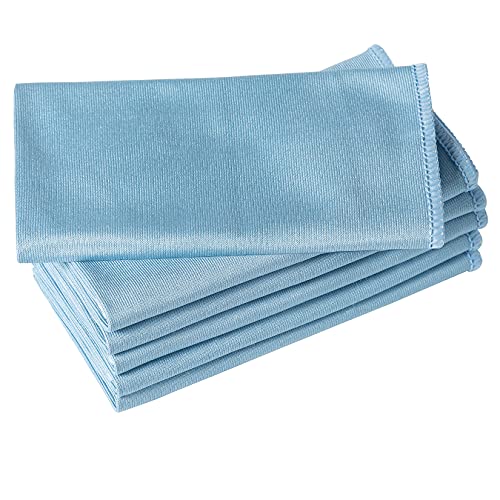
Puomue Microfiber Glass Cleaning Cloth (6 Pack, 16 x 16 in) — Best Overall
The Puomue cloths are the straightforward answer: microfiber woven for glass, sized at 16 by 16 inches — large enough to cup a tumbler or wrap a wine glass with a dry layer between your hand and the bowl — and sold six to a pack so a clean, dry cloth is always available. The listing names its territory precisely: windows, glasses, windshields, mirrors, and stainless steel, with lint-free performance as the headline claim. For pure glassware duty at home, this is the pack we would buy first.
Strengths
- Purpose-built glass microfiber, lint-free per the listing
- 16-inch size handles stemware without bunching
- Six-pack supports a proper clean-cloth rotation
Trade-offs
- Smooth glass cloths absorb less bulk water than waffle or cotton
- Microfiber needs its own washing rules (no fabric softener)
- Blue colorway only in this listing
| Detail | What the listing confirms |
|---|---|
| Size | 16 x 16 in |
| Pack | 6 cloths |
| Material | Microfiber, lint-free (per listing) |
| Uses | Glass, windows, mirrors, stainless steel |
| Color of this listing | Blue |
The two-cloth method flatters this pack: dry the glass with one cloth, polish with a second, bone-dry one. Because the Puomue cloths are smooth rather than terry-looped, they leave nothing behind on the glass — the entire point — and the size keeps your fingers off the polished surface. They also moonlight on mirrors and stainless appliances, which is where the rest of the pack will earn its keep between dinner parties.
Storage tip that separates the pros: keep glass cloths in a closed drawer, never on a hook beside the stove, where airborne cooking grease settles into the fibers between uses and redeposits as film. The Puomue pack’s six cloths divide naturally — four for the kitchen’s glass, two for bathroom mirrors — and rotating them evenly keeps the whole set aging at the same rate. When a cloth eventually loses its grab, demote it to car glass rather than fighting it at the stemware rack.
Best for: Stemware, tumblers, and mirrors — the main glass-polishing pack for most homes / Not suited for: Soaking up big spills, which want an absorbent cotton or waffle towel

HOMERHYME Microfiber Glass Cleaning Cloth (10 Pack) — Best Value Pack
If the Puomue is the starter pack, the HOMERHYME is the entertainer’s: ten polishing cloths, 16 by 14 inches, with streak-free and lint-free performance claimed in the listing and delicate surfaces — glasses, stainless steel, windshields — named as the use case. Ten cloths change the routine: a full dinner party’s worth of stemware can be polished with a fresh dry cloth every few glasses, which is exactly how bars keep glass spotless through a service.
Strengths
- Ten-pack makes a fresh dry cloth always available
- Streak-free, lint-free claims aimed at delicate surfaces
- Slightly rectangular shape suits wrapping glassware
Trade-offs
- Like all smooth microfiber, bulk absorption is modest
- A ten-pack is more than a small household needs
- Same microfiber care rules — no softener, no high heat
| Detail | What the listing confirms |
|---|---|
| Size | 16 x 14 in |
| Pack | 10 cloths |
| Material | Microfiber polishing cloth |
| Claims | Streak free, lint free (per listing) |
| Uses | Delicate surfaces, glasses, stainless steel |
Rotation is the unglamorous secret of spotless glass: a damp cloth polishes worse with every glass, smearing the moisture it should be removing. With ten cloths, the discipline costs nothing — swap to a dry one the moment the current cloth feels cool and damp. For households that host often, or that simply refuse to re-wash midweek, this pack removes the bottleneck entirely.
The ten-pack size also suits a habit worth adopting: the single-use-per-session cloth. For a dinner party, take two fresh cloths — one absorber substitute, one polisher — and retire them to the wash afterward rather than pressing a tired cloth through twelve glasses. At this pack size and tier, that discipline costs almost nothing and produces the most consistent results in this guide. Label or store the set apart from general cleaning cloths so a well-meaning helper does not demote one to counter duty.
Best for: Entertainers, large households, and anyone polishing full sets of stemware / Not suited for: Minimalists who need only a cloth or two

The Rag Company Standard Waffle Weave Towels (3 Pack) — Best Waffle Weave
Waffle weave is the engineering answer to microfiber’s one weakness: the woven pockets hold water the way a waffle holds syrup, giving a microfiber towel real absorption while keeping the lint-free, streak-free behavior glass demands. The Rag Company builds these at 370 GSM — a substantial weight confirmed in the listing — and aims them at window, glass, and drying work. In a two-towel system, this is towel one: the dryer. Follow with a smooth polishing cloth and the glass is finished.
Strengths
- Waffle weave adds real absorption to microfiber’s lint-free finish
- 370 GSM weight confirmed — a substantial, durable towel
- Detailing-brand construction, sized 16 x 16 in
Trade-offs
- Three-pack is the smallest rotation here
- Waffle texture polishes slightly less finely than smooth cloth
- Premium tier per towel within this guide
| Detail | What the listing confirms |
|---|---|
| Weave | Waffle weave microfiber |
| Weight | 370 GSM |
| Size | 16 x 16 in |
| Pack | 3 towels |
| Claims | Lint-free, streak-free (per listing) |
Buy these if your current routine fails at step one — the glass comes off the rack dripping and your cloth just moves the water around. The waffle pockets genuinely drink, so a tumbler needs two passes instead of six, and the towel stays effective through a full rack of glasses. They also dry dishes and counters beautifully, which makes the three-pack easier to justify: this is a kitchen towel that happens to be glass-safe, not a diva that only does stemware.
The Rag Company’s detailing heritage shows in the edges and consistency — waffle towels from this brand are made to survive hundreds of wash cycles on cars, which is harder service than a wine glass will ever give them. In the kitchen that durability translates to years. Use one as your permanent first-pass towel and it will quietly standardize your results: same absorption, same hand feel, every session, while lesser towels rotate around it.
Best for: The absorbent first pass on wet glassware, plus general drying / Not suited for: Final polishing, where a smooth cloth finishes finer

Utopia Kitchen Flour Sack Towels (12 Pack, 28 x 28 in) — Best Cotton Classic
Before microfiber existed, bars and bakeries dried glass with flour sacks, for sound reasons: the flat, open cotton weave absorbs well, releases water easily, and — crucially — has no terry loops to shed lint onto wet glass. Utopia’s pack gives you twelve towels at a big 28 by 28 inches, 100% cotton per the listing, at the most accessible tier in this guide. They are also the most versatile cloths here: glass today, proofing cover tomorrow, straining and wrapping the day after.
Strengths
- Flat cotton weave — the original lint-light glass towel
- Large 28-inch size wraps big bowls and platters
- Twelve-pack at an accessible tier; endlessly multi-purpose
Trade-offs
- Cotton needs a few washes to reach full absorbency
- Not a microfiber polish — final shine is good, not mirror-grade
- White cotton shows stains and asks for occasional brightening
| Detail | What the listing confirms |
|---|---|
| Material | 100% cotton flour sack |
| Size | 28 x 28 in |
| Pack | 12 towels |
| Weave | Flat weave |
| Brand | Utopia Kitchen |
Flour sacks reward the cook as much as the glass-polisher. They dry stemware without lint drama, line bread baskets, cover rising dough, and strain stock — the hardest-working cloth in a traditional kitchen. For glassware specifically, their absorbency makes them the natural first towel, with a microfiber polisher as the optional second. Buy the dozen, dedicate four to glass, and let the rest roam the kitchen.
Break-in is the flour sack’s only ritual: wash the set several times before judging absorbency, because new cotton carries a finish that repels water. After that, these towels improve for months. Their 28-inch size also makes them the best glass-adjacent buy in the guide — they dry the big roasting pans and salad bowls that defeat 16-inch cloths, then fold down to line the bread basket. A dozen sounds like a lot until the first holiday weekend, when it suddenly sounds like planning.
Best for: Traditional kitchens, bulk drying, and multi-purpose cloth duty / Not suited for: Perfectionist final polishing of fine stemware

Amazon Basics Organic Cotton Waffle Weave Dish Towels (6 Pack) — Best Cotton Waffle
This six-pack is the cotton answer to the waffle question: an organic cotton waffle weave, in a classic 15 by 25 inch dish-towel size, with the listing claiming ultra absorbent, quick drying, and — the glass-critical word — lint-free performance. Waffle cotton dries faster than flat cotton between uses, which keeps it fresher in a working kitchen, and the rectangular format hangs and folds like the dish towel you already know. It is the pick for shoppers who prefer natural fiber against their glassware.
Strengths
- Organic cotton waffle weave, lint-free per the listing
- Quick-drying structure suits daily rotation
- Classic dish-towel size for general kitchen duty
Trade-offs
- Cotton waffle polishes less finely than smooth microfiber
- Needs break-in washes like all cotton
- Six-pack in one style — no mixed sizes
| Detail | What the listing confirms |
|---|---|
| Material | Organic cotton, waffle weave |
| Size | 15 x 25 in |
| Pack | 6 towels |
| Claims | Ultra absorbent, quick drying, lint-free (per listing) |
| Brand | Amazon Basics |
Choose these as your everyday glass-and-dish towel if microfiber’s care rules annoy you — cotton forgives hot washes and rough handling that degrade microfiber. The waffle pockets give it real thirst for a cotton towel, and the lint-free claim, which the listing makes explicitly, is what earns a cotton towel a place in a glassware guide at all. Pair with one smooth microfiber pack for stemware nights and the system is complete.
Organic cotton shoppers should note what the listing does and does not say: it confirms organic cotton, the waffle weave, and the lint-free claim — the three facts this guide needs — and makes no grander promises. That restraint is a point in its favor. In rotation, these towels dry noticeably faster than the flat flour sacks, which makes them the better choice for households that wash glass daily and need yesterday’s towel ready again by tonight.
Best for: Natural-fiber households wanting one towel for dishes and glass / Not suited for: Microfiber-level mirror polishing on its own

Niveaya Fish Scale Microfiber Glass Cleaning Cloth (8 Pack) — Best Fish-Scale Weave
Fish-scale weave is microfiber’s textured branch: the overlapping scale pattern gives the cloth more bite than a smooth polishing cloth, so it lifts water and light residue in one pass while staying streak-free and lint-free per the listing. Niveaya’s eight-pack is pitched at windows, kitchen surfaces, shower glass, stainless steel, and cars — a household glass specialist rather than a stemware-only cloth. Keep two in the kitchen for glassware and let the rest patrol the bathroom mirrors and shower doors.
Strengths
- Fish-scale texture adds water-gripping bite to microfiber
- Streak-free, lint-free claims; quick drying
- Eight-pack covers kitchen, bathroom, and car glass
Trade-offs
- Texture is slightly less fine than a smooth polisher for delicate stemware
- Listing does not state cloth dimensions — check the product page
- Generalist design, not a stemware specialist
| Detail | What the listing confirms |
|---|---|
| Weave | Fish-scale microfiber |
| Pack | 8 cloths |
| Claims | Streak free, lint free, quick drying (per listing) |
| Uses | Window, kitchen, shower, stainless steel, auto |
| Size | Not stated in the listing title |
The fish-scale cloth is the one to reach for when glass is not just wet but marked — water spots on shower doors, fingerprints on appliance fronts, the film on a French press. Its texture does light scrubbing that a smooth cloth cannot, then finishes clean. For fine stemware we would still finish with the smooth Puomue or HOMERHYME cloths, but as the household’s all-glass workhorse, the Niveaya earns its pack.
Fish-scale cloths also clean eyeglasses, phone screens, and camera lenses in a pinch — the same streak-free logic at smaller scale — though kitchen sets should stay kitchen sets if you want them grease-free for glassware. The Niveaya’s quick-drying nature suits humid bathrooms, where a damp cloth mildews between uses; hang these over a rail rather than balling them on a hook. For shower-door households, two cloths used weekly will hold water spots at bay better than any monthly deep clean.
Best for: All-around household glass: shower doors, mirrors, appliances, everyday glassware / Not suited for: The final polish on your finest stemware
Comparison Table
Split the table by job: absorbers on one side, polishers on the other. Most kitchens want one of each; the packs above make that affordable. The table’s real message is that ‘best’ splits by verb. For absorbing, the waffle weaves and the flour sack lead; for polishing, the smooth microfibers lead; for scrubbing lightly while drying, the fish scale stands alone. A towel that tops one column and trails another is not a compromise — it is a specialist, and the system in the guide is built from specialists deliberately. Buy the verbs your kitchen actually performs nightly.
| Pick | Badge | Key spec | Best for |
|---|---|---|---|
| Puomue Microfiber Glass Cleaning Cloth (6 Pack, 16 x 16 in) | Best Overall | 16×16 in lint-free microfiber glass cloths, 6-pack | Stemware, tumblers, and mirrors — the main glass-polishing pack for most homes |
| HOMERHYME Microfiber Glass Cleaning Cloth (10 Pack) | Best Value Pack | 10-pack lint-free polishing cloths, 16×14 in | Entertainers, large households, and anyone polishing full sets of stemware |
| The Rag Company Standard Waffle Weave Towels (3 Pack) | Best Waffle Weave | 370 GSM waffle-weave microfiber, 16×16 in, 3-pack | The absorbent first pass on wet glassware, plus general drying |
| Utopia Kitchen Flour Sack Towels (12 Pack, 28 x 28 in) | Best Cotton Classic | 100% cotton flour sack, 28×28 in, 12-pack | Traditional kitchens, bulk drying, and multi-purpose cloth duty |
| Amazon Basics Organic Cotton Waffle Weave Dish Towels (6 Pack) | Best Cotton Waffle | Organic cotton waffle weave, lint-free, 6-pack | Natural-fiber households wanting one towel for dishes and glass |
| Niveaya Fish Scale Microfiber Glass Cleaning Cloth (8 Pack) | Best Fish-Scale Weave | Fish-scale microfiber glass cloths, 8-pack | All-around household glass: shower doors, mirrors, appliances, everyday glassware |
How to Choose Kitchen Towels for Glassware: Why Lint Happens
Lint on glass comes from loose fibers, and the biggest source is the looped terry weave of ordinary towels: thousands of tiny loops, each a fiber waiting to detach onto a wet surface. Flat weaves — flour sack cotton, smooth microfiber — have almost nothing to shed, which is why they anchor this guide. Waffle weaves sit in between: the structure is woven rather than looped, so lint stays low while absorption climbs.
The second cause is a dirty or damp towel. A cloth already loaded with water and residue redeposits both onto the glass as streaks and specks. This is why pack size is a performance feature: rotation guarantees a dry, clean cloth, and a dry, clean cloth of any of these weaves outperforms a premium cloth used damp. Buy the pack that matches your glass volume — a couple’s weeknight tumblers need six cloths; a dinner-party household needs ten.
Absorb First, Polish Second: The Two-Towel System
Professional glass care is a sequence, not a product. Step one removes water: an absorbent towel — waffle microfiber, waffle cotton, or flour sack — takes the glass from dripping to merely damp in a couple of passes. Step two removes evidence: a smooth, dry microfiber polisher buffs away the remaining moisture film before it can dry into spots. Skipping step one exhausts your polisher; skipping step two leaves water marks to dry where they lie.
Technique matters at the stemware level. Hold the glass by the base or the stem, never by squeezing the bowl through the towel — pressure on a thin bowl held against a twisting hand is how stems snap. Cup the bowl in the cloth with one hand and polish with the other, and inspect against the light before the glass goes away. Thirty seconds of method beats five minutes of enthusiasm.
Washing Rules That Keep Towels Working
Microfiber has one enemy household: fabric softener and dryer sheets coat its fibers and turn an absorbent cloth repellent. Wash microfiber separately from cotton (cotton lint migrates into microfiber), in warm water with plain detergent, and dry on low heat or air. Cotton towels follow the opposite rules — they tolerate heat, improve with washing, and reach full absorbency after several cycles strip their factory finish.
Keep glass towels a dedicated set. A cloth that wiped up olive oil yesterday will smear a wine glass today no matter how clean it looks. Dedicate specific packs to glass, wash them together, and store them somewhere they will not collect kitchen grease mist — a drawer beats a hook beside the stove. Small disciplines, visibly better glass.
Stemware, Tumblers, and Decanters: Cloth by Glass Type
Fine stemware wants the smooth polishers — Puomue or HOMERHYME — and the two-hand technique from the how-to: support the bowl, polish with the other hand, never twist against the stem. Everyday tumblers are forgiving: a waffle towel dries them inside and out in seconds, and fish-scale cloth handles the water-spotted ones from the dishwasher. Highball and beer glasses sit between the two — absorb first, polish if they are going to the table rather than the counter.
Decanters and narrow-neck bottles defeat every towel eventually; the honest tools are a drip-dry stand, time, and for the last moisture, a long strip of flour-sack cotton coaxed inside and retrieved with tongs. Do not force a bunched microfiber cloth into a neck it cannot exit gracefully. Some glassware is dried by patience, and knowing which pieces those are is part of a calm kitchen.
Building the Towel Drawer: A Complete System
A well-built glass system needs three slots: absorbers (waffle or flour sack), polishers (smooth microfiber), and one textured problem-solver (fish scale). Most households fill the first two slots with one pack each from this guide and add the third only if shower glass or appliance fronts demand it. Total cost stays modest because every slot is a multi-pack, and the system outperforms any single expensive towel at every task.
Replace by performance, not by calendar. A polisher that starts leaving film after a proper wash has picked up a coating or worn out its split fibers — demote it to general cleaning and promote a fresh cloth. Absorbers last longer and announce retirement by smelling stale after washing or absorbing slowly. Keep one unopened pack in reserve and the system never has a bad night.
Hard Water, Rinse Aid, and the Limits of Any Towel
If your glasses spot despite good towels, suspect the water before the cloth. Hard water leaves mineral scale that no polishing fully removes once it has dried on; the counters are a softener if your home has one, a rinse aid in the dishwasher, or — for hand-washed glass — a final rinse and an immediate dry, before minerals can set. Towels win their battles at the drying stage; they cannot retroactively fix a mineral deposit from the washing stage.
Detergent dosing runs the same direction. Too much detergent leaves a film that towels smear rather than remove, and the smear masquerades as a towel problem for months. If film is your issue, run an empty hot cycle, halve the dose for a week, and watch the glass improve before you replace a single towel. The cheapest fix in this entire guide is sometimes a smaller scoop.
How to Dry and Polish Glassware Without Streaks
This is the routine behind bar-quality glass at home. It takes under a minute per glass once it is habit.
Step 1: Start with a clean, dry rotation
Lay out two towels: an absorber (waffle or flour sack) and a dry polisher (smooth or fish-scale microfiber). If either feels damp or smells of the kitchen, swap it — the routine cannot rescue a compromised cloth.
Step 2: Shake and drain first
Give each glass a gentle shake over the sink and a few seconds upside-down on a rack or clean towel. Water you do not have to absorb is water your towels do not carry into the next glass.
Step 3: Absorb with the first towel
Dry the outside, then work a corner of the absorber inside the bowl with a soft twisting motion. For stemware, support the bowl from outside with your other hand — never grip and twist against each other.
Step 4: Polish with the dry cloth
Buff the whole glass with the dry polisher until it squeaks faintly and shows no film against the light. Hold stemware by the base while polishing the bowl so your fingers never touch the finished surface.
Step 5: Inspect against the light
Hold the glass up to a window or light. Spots show now or they show at the table. A five-second second buff fixes what you catch; what you miss becomes the evening’s quiet embarrassment.
Step 6: Store glasses the way they dry best
For everyday glassware, rim-up storage in a clean cabinet avoids trapped moisture smells; for fine stemware used rarely, rim-down on a clean shelf liner keeps dust out of the bowl. Either way, glasses go away fully dry — a polished glass stored damp re-spots itself.
Step 7: Dry the rack, not just the glass
Before a big wash-up, wipe the dish rack and the counter where glasses will land. A polished glass set down on a wet, gritty surface re-spots at the rim while you dry the next one. Thirty seconds of surface prep protects every glass in the batch, and it is the step home routines most often skip.
Step 8: Fold for the glass, not for the drawer
Fold the polishing cloth in quarters before you start. You get eight clean faces as you refold through a batch of glasses, and your fingers stay behind cloth instead of on the bowl. Pro bartenders fold by reflex; at home it takes one dinner party to make it a habit, and it is the cheapest quality upgrade in this entire guide.
Two towels, dry hands on the base, one look against the light. That is the whole secret, and every pick in this guide is chosen to make it easy. Finish the routine with the cloths themselves: rinse the absorber, hang both towels where air moves, and never ball a damp microfiber cloth into a drawer — it will mildew faintly and carry the smell into the next session’s glass. A hook in moving air, or a rail, is all the infrastructure great glass requires. Tomorrow’s first glass will tell you whether tonight’s cloths were stored well; they are honest reporters.
Common Buying Mistakes
Using the everyday terry towel on glass
The towel that dried the pots will lint the wine glasses — terry loops shed, and the same cloth carries cooking residue. Glass gets its own towels, full stop. This single separation fixes most home glass complaints.
Polishing with a damp cloth
A damp polisher smears moisture instead of removing it, and each glass comes out worse than the last. Swap to a dry cloth the moment yours feels cool and heavy. This is why the packs in this guide run from six to twelve pieces.
Washing microfiber with fabric softener
Softener coats microfiber’s split fibers and quietly converts your best glass cloth into a water-repellent rag. Plain detergent, no softener, no dryer sheets, low heat — and wash microfiber apart from linty cotton.
Twisting stemware by the bowl
Holding the bowl in one hand and the base in the other and twisting is the classic way to snap a stem. Support the bowl, polish gently, and let the cloth do the work. Fine glass breaks from torque, not from water.
Storing glasses while still damp
A glass put away damp spots itself inside the cabinet and can pick up a musty note that survives into the next pour. Dry fully, polish, then store. Two extra minutes, no mystery spots.
Reaching for paper towels ‘just for the good glasses’
Paper towels shed their own fibers onto wet glass and can scratch delicate surfaces over time — the opposite of the favor intended. Your good glasses deserve the good cloth: a clean, dry microfiber polisher is both gentler and more effective, and it is already in the drawer if you bought any pack in this guide.
Drying glasses straight from a steamy dishwasher with a cold cloth
A glass still hot from the dishwasher flashes its rinse water into vapor that re-condenses as film if it meets a cold, damp cloth. Let glasses cool to handling temperature, then dry with a dry cloth. Two minutes of patience prevents the mysterious streaks that survive every other fix.
Final Recommendation
Build the simple system: the Puomue six-pack as your polisher, or the HOMERHYME ten-pack if you entertain, plus one absorber — the Rag Company’s waffle microfiber for maximum thirst, the Utopia flour sacks for cotton versatility, or the Amazon Basics waffle cotton if you want one towel for dishes and glass alike. Add the Niveaya fish-scale pack when your glass problem extends to shower doors and appliance fronts.
Start small if you are converting from terry: one six-pack of the Puomue cloths beside the sink will convert most households within a week, because the difference on the first wine glass is not subtle. Add the absorber pack when you are ready to run the full two-towel system, and demote the old terry towels to the honorable work they were made for — pots, counters, and spills.
Keep the glass towels dedicated, dry, and softener-free, and your glassware will look poured-by-a-professional every night. For the rest of the towel drawer, see our related guides: Best Kitchen Towels Absorbent and Best Kitchen Towels For Cleaning, then check price on Amazon for the packs that fit your household’s glass volume.
Puomue Microfiber Glass Cleaning Cloth (6 Pack, 16 x 16 in) HOMERHYME Microfiber Glass Cleaning Cloth (10 Pack) The Rag Company Standard Waffle Weave Towels (3 Pack)
Best Kitchen Towels Absorbent Best Kitchen Towels For Cleaning Best Kitchen Towels Blue Best Large Cleaning Towels Best High Quality Towels
Frequently Asked Questions
What towel material is best for drying glassware?
Lint-free microfiber and flat-weave cotton are the two proven families. Smooth microfiber polishes finest; waffle weaves of either fiber absorb most; flour-sack cotton is the versatile traditional choice. Avoid looped terry on glass — its fibers are the lint you keep wiping off.
Why do my glasses come out streaky even with a clean towel?
Usually the towel is damp, or it was washed with fabric softener, or it shares duty with greasy kitchen work. Use a bone-dry, dedicated glass cloth, absorb first and polish second, and check your wash routine — softener residue is the hidden cause in many homes.
How many glass towels do I actually need?
Enough to always have a dry one: six is a sensible minimum for a small household, ten or more if you entertain or wash up large sets of stemware. Rotation is a performance feature, not hoarding — a damp cloth polishes worse with every glass.
Can one towel do both drying and polishing?
A waffle-weave towel comes closest, absorbing well and finishing respectably. But a two-towel system — absorb, then polish with a dry smooth cloth — is visibly better on stemware and costs little. For everyday tumblers, one good waffle towel is honestly enough.
How do I keep microfiber towels absorbent?
Wash them separately from cotton, with plain detergent, no fabric softener or dryer sheets, and dry on low heat. Softener and lint are the two things that kill microfiber performance; avoid both and the cloths stay thirsty for years.
Are flour sack towels really lint-free?
They are lint-light rather than absolutely lint-free: the flat weave has no loops to shed, and after a few break-in washes they leave glass essentially clean. For the final mirror polish on fine stemware, smooth microfiber still finishes a step finer — which is why the two-towel system pairs them.


