Disclosure: airfryerkitchensupply.com is reader-supported. When you buy through links on our site, we may earn an affiliate commission at no extra cost to you.
Where to buy
All six of the best inexpensive pillows for neck pain support in this guide are current Amazon listings verified, chosen because their contoured shapes help sleepers keep their head and neck in a comfortable, neutral position — without the premium price tags this category is known for. Start with the EPABO if you want the proven all-rounder, the UTTU if you need height adjustability, and the A-Pce if the budget is the whole point.
- EPABO Contour Memory Foam Pillow — Best Overall: Check the current price on Amazon
- UTTU Cervical Pillow, Adjustable — Best Adjustable Height: Check the current price on Amazon
- Cozyplayer Adjustable Cervical Pillow, Cooling — Best Cooling Feel: Check the current price on Amazon
- DONAMA Cervical Pillow, Dual-Height — Best Dual-Height Design: Check the current price on Amazon
- Polovo Neck Pillow, Memory Foam — Best for Mixed Sleep Positions: Check the current price on Amazon
- A-Pce Cervical Neck Pillow, Dual Height — Best Budget: Check the current price on Amazon
Introduction: what an inexpensive pillow can honestly do for a sore neck
People searching for the best inexpensive pillows for neck pain usually wake up with a stiff, aching neck and a reasonable suspicion that their flat, worn-out pillow is part of the problem. Often it is. A pillow that has lost its loft lets the head drop or tilt all night; a pillow that is too thick pushes the head forward; either way the neck spends eight hours held at an angle, and it complains in the morning. A contoured memory foam pillow addresses the comfort side of that equation: its shaped surface cradles the head in a shallow hollow while a raised edge supports the neck’s natural curve, helping you rest in a neutral position instead of a kinked one.
Two honesty points frame this whole guide. First, a pillow is a comfort product, not a medical device, and nothing in this article claims to treat, cure, or fix any condition. Some of the manufacturer titles in this category use medical-sounding language; we do not repeat that language as a claim, and we have shortened product names in this guide where a title’s marketing language overpromises. If your neck pain is persistent, worsening, follows an injury, or comes with numbness or weakness in the arms or hands, the right purchase is a medical appointment, not a pillow. Second, “inexpensive” here is real: every pick sits in the budget-to-mid tier of this category (check price on Amazon — we print no prices, but we screened out the premium outliers), because the contour shape that does the work does not require a luxury badge.
What actually matters when choosing among these six is fit: your sleep position, your shoulder width, and whether you need to adjust the height. A contour pillow in the wrong height is worse than a decent ordinary pillow, which is why two of the picks below are adjustable and two more offer dual heights — at this budget, adjustability is how you buy insurance against a bad guess.
In this guide
Quick Picks
| Pick | Badge | Why it made the list |
|---|---|---|
| EPABO Contour Memory Foam Pillow | Best Overall | The established contour shape for side, back, and stomach sleepers |
| UTTU Cervical Pillow | Best Adjustable Height | Adjustable “sandwich” construction lets you tune the loft |
| Cozyplayer Adjustable Cervical Pillow | Best Cooling Feel | Adjustable contour with a cooling focus for warm sleepers |
| DONAMA Cervical Pillow | Best Dual-Height Design | Cooling contour with two heights in one pillow — flip to change |
| Polovo Neck Pillow | Best for Mixed Sleep Positions | Contour shape aimed at side, back, and stomach sleepers alike |
| A-Pce Cervical Neck Pillow | Best Budget | Dual-height contour and slow-rebound foam at the lowest tier here |
How These Picks Were Chosen
Every pick was verified against a live Amazon listing, and every feature mentioned comes from that verified listing data. We screened for three things: a genuine contour or cervical shape (not a standard rectangular pillow with marketing copy), memory foam construction, and a price position in the budget-to-mid tier of the category, checked internally against listing data without printing prices. Travel neck pillows — the U-shaped kind for airplanes — were excluded even when their titles mentioned necks, because they solve a different problem. Duplicate variants of the same product (the EPABO and Cozyplayer lines each appear under several ASINs for sizes and colors) count as one pick each; we list one verified ASIN per product. Product names are shortened in this guide where a manufacturer’s title contains medical marketing language, and the _SOURCES file records the full verified titles so nothing is hidden.
The 6 Best Inexpensive Pillows for Neck Pain Support
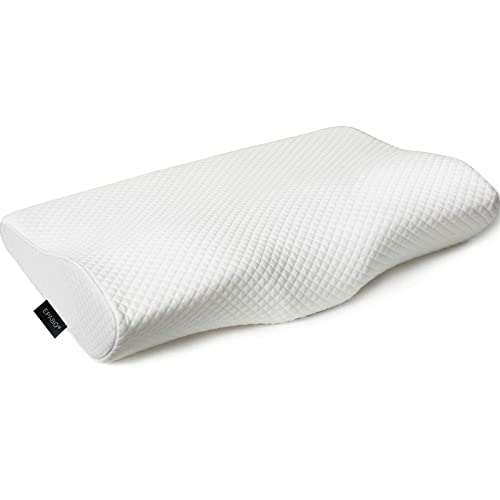
EPABO Contour Memory Foam Pillow — Best Overall
The EPABO is the contour pillow that defined this budget category: a wave-shaped memory foam pillow with a higher edge for the neck and a lower center for the head, aimed — per its verified title — at side, back, and stomach sleepers. That shape is the whole idea of a cervical pillow in one object, and EPABO’s version has been the default recommendation at this tier for years because it is simply, reliably that shape, in foam that holds it. It suits first-time contour buyers who want the proven option before experimenting. It is less suited to sleepers who know they need unusual heights — this is a fixed-shape pillow, and its fit depends on your frame matching its assumptions.
Strengths
- The classic contour profile: raised neck edge, recessed head hollow, in supportive memory foam
- Positioned for side, back, and stomach sleepers (per listing title) — the widest fit brief in this guide
- Established, widely available product at a budget-friendly tier (check price on Amazon)
Trade-offs
- Fixed height: if the contour is too tall or too low for your shoulders, there is nothing to adjust
- Memory foam sleeps warmer than shredded or latex fills
- The manufacturer’s title uses medical marketing language we do not endorse — judge it as a comfort pillow
| Spec | Detail (as verified) |
|---|---|
| Type | Contour memory foam pillow |
| Sleep positions (as listed) | Side, back, stomach |
| Adjustability | Fixed contour |
| Dimensions | Not stated in the verified listing title |
Fit guidance for fixed contours like this one: side sleepers need the raised edge to fill the shoulder-to-head gap without lifting the head into a tilt; back sleepers need the hollow to let the head rest back while the edge supports the neck curve. If you are between sizes in the maker’s range, broader shoulders generally take the higher option. Give any contour pillow a genuine trial — most sleepers need several nights to adapt from a lifetime of flat pillows, and the first night is the worst predictor of the tenth.
As the overall pick, the EPABO’s role is to be the reference point: buy it if you want the category’s standard shape at a fair tier, and move to the adjustable picks below only if you already know your fit is non-standard.
Best for: first-time contour pillow buyers who want the proven budget standard / Not suited for: sleepers who need tunable height or who sleep very hot

UTTU Cervical Pillow, Adjustable — Best Adjustable Height
The UTTU’s verified title names its distinguishing construction: an adjustable “sandwich” pillow. Layered construction means the loft can be changed — adding or removing a layer to raise or lower the pillow — which directly attacks the number-one failure of contour pillows, wrong height. Its title also notes a cooling focus in the contour design. It suits sleepers between standard sizes, couples buying one model for two different frames, and anyone who has already returned a fixed pillow for being too tall. It is less suited to minimalists who want zero setup: an adjustable pillow asks you to spend a few nights experimenting, which is precisely its value.
Strengths
- Adjustable layered (“sandwich”) construction (per listing title) — tune the height instead of guessing it
- Contour memory foam shape with a cooling design focus (per listing title)
- One purchase covers a range of shoulder widths and sleep positions
Trade-offs
- Requires a few nights of layer experiments to find your setting
- Layer seams mean it feels slightly less monolithic than a single-block contour
- As with all picks here, the title’s medical marketing language is the maker’s, not our claim
| Spec | Detail (as verified) |
|---|---|
| Type | Contour memory foam pillow |
| Adjustability | Adjustable layered construction |
| Design focus | Contour with cooling focus |
| Dimensions | Not stated in the verified listing title |
How to use the adjustability properly: change one layer at a time and sleep at least two nights per setting. Night-to-night sleep quality varies for a dozen reasons, and a single night per configuration turns the experiment into noise. Keep notes — it sounds excessive until you are on configuration three trying to remember whether two felt better.
The UTTU is also the sensible pick for a shared bed where both partners want contours but differ in build. Two of the same pillow, set to different heights, is a cleaner solution than two different models with different foam feels.
Best for: sleepers between sizes, and anyone burned by a fixed pillow’s wrong height / Not suited for: buyers who want to unwrap and sleep with zero adjustment
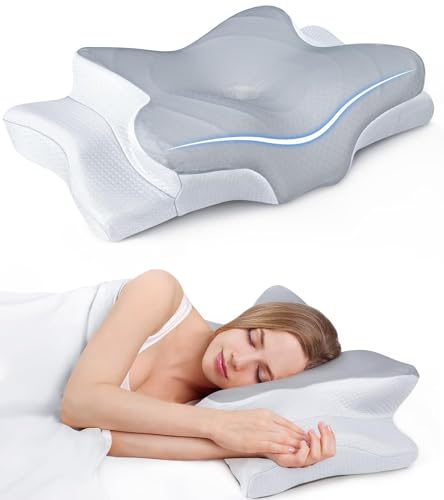
Cozyplayer Adjustable Cervical Pillow, Cooling — Best Cooling Feel
Heat is the quiet reason many people abandon memory foam: the foam that cradles so well also insulates, and a warm pillow makes for a restless night regardless of neck position. The Cozyplayer’s verified title leads with a cooling design and an adjustable cervical contour, in an odorless memory foam — three practical answers to the three standard foam complaints (heat, fixed height, new-foam smell). A note on naming: the manufacturer’s full title uses “pain relief” marketing language; we have shortened the name in this guide and make no such claim — this is a comfort pillow with a cooling, adjustable contour. It suits warm sleepers and anyone in a warm bedroom. It is less suited to cold sleepers, who may find a cooling surface works against them in winter.
Strengths
- Cooling-focused design (per listing title) aimed at memory foam’s heat problem
- Adjustable contour (per listing title), so the height can be tuned like the UTTU’s
- Odorless foam (per listing title) — no airing-out period before first use
Trade-offs
- Cooling surfaces feel cool initially; no passive pillow stays cold all night
- Multiple near-identical ASINs exist for this line — make sure you order the size/configuration you intend
- Cooling focus is a drawback for cold sleepers in winter
| Spec | Detail (as verified) |
|---|---|
| Type | Contour memory foam pillow |
| Adjustability | Adjustable |
| Design focus | Cooling; odorless foam |
| Dimensions | Not stated in the verified listing title |
Set expectations about “cooling” honestly, because this category oversells it. A cooling pillowcase or foam formulation feels noticeably cooler at first contact and sheds heat better through the night than standard foam; it does not refrigerate. For genuinely hot sleepers, the pillow is one part of the system — breathable bedding and room temperature do the rest — but within the pillow’s control, this is the right design brief.
Between this and the UTTU, the choice is which problem you are solving: pure height uncertainty points to the UTTU’s layer system; height plus heat points here.
Best for: warm sleepers who want an adjustable contour without foam’s heat penalty / Not suited for: cold sleepers, or anyone expecting active cooling

DONAMA Cervical Pillow, Dual-Height — Best Dual-Height Design
The DONAMA takes a different route to fit flexibility: instead of layers, it builds two heights into one contour — a higher side and a lower side — so you change the loft by rotating the pillow. Its verified title also states a cooling contour memory foam construction. Dual-height designs suit sleepers who switch between back and side sleeping, since side sleeping wants more height than back sleeping, and a rotatable pillow can serve both in one night. One data honesty note: this pick’s Amazon title is truncated in our cache record (it ends mid-word at “Dual-Height Ergonomic Neck Support P”), so the details we state are limited to what the verified portion confirms. It is less suited to sleepers who need fine-grained height steps rather than two fixed options.
Strengths
- Dual-height contour (per listing title) — two lofts in one pillow, changed by rotating it
- Cooling contour memory foam (per listing title)
- Particularly natural fit for combination back-and-side sleepers
Trade-offs
- Two heights, not infinite adjustment — if neither matches your frame, layers (UTTU) serve better
- Full specification details are truncated in the verified listing record — confirm dimensions on the listing
- Rotation-based design takes a night or two of habit-building
| Spec | Detail (as verified) |
|---|---|
| Type | Contour memory foam pillow |
| Heights | Dual-height (two sides) |
| Design focus | Cooling contour |
| Dimensions | Not confirmed — Amazon title truncated in cache record |
The combination-sleeper logic deserves a fuller explanation, because it decides between this and the adjustable picks. Back sleeping wants the head low enough that the chin is not pushed toward the chest; side sleeping wants the head raised enough to keep the spine straight across the shoulders. A fixed pillow forces a compromise between the two. A dual-height pillow turns the compromise into a choice you make by feel as you roll over — high side under the neck when you are on your side, low side when you are on your back.
If you are a disciplined single-position sleeper, that flexibility buys you nothing and a fixed contour is simpler. The DONAMA is for the restless majority who use the whole bed.
Best for: combination back-and-side sleepers who want two heights without layers / Not suited for: sleepers needing fine height steps or fully confirmed dimensions from the title alone

Polovo Neck Pillow, Memory Foam — Best for Mixed Sleep Positions
The Polovo’s verified title describes an ergonomic cervical contour in memory foam aimed at side, back, and stomach sleepers — the same broad brief as the EPABO, executed as a distinct design at a similar budget tier. It earns its own slot because fit is personal: two pillows with the same brief but different contour geometry will suit different necks, and at this price the practical advice is to treat shape as the variable. If the EPABO’s profile looks too pronounced, the Polovo is the alternative contour to try; if you are ordering for a household, one of each is a rational experiment. It suits mixed-position sleepers who want a single contour to handle their whole night. It is less suited to buyers who need adjustability — this is a fixed shape.
Strengths
- Ergonomic contour shape (per listing title) for side, back, and stomach positions
- Memory foam construction at a budget tier (check price on Amazon)
- A genuinely different contour geometry from the EPABO — useful as the alternate fit
Trade-offs
- Fixed height and shape — fit is take-it-or-leave-it
- Dimensions are not stated in the verified listing title
- Title language about relief is the maker’s marketing; treat this as a comfort product
| Spec | Detail (as verified) |
|---|---|
| Type | Contour memory foam pillow |
| Sleep positions (as listed) | Side, back, stomach |
| Adjustability | Fixed contour |
| Dimensions | Not stated in the verified listing title |
A word about stomach sleeping, since two picks in this guide list it: stomach sleepers generally need the thinnest pillow of all, because a thick pillow cranes the neck sideways and up for hours. A contour pillow’s low center can work for stomach sleepers precisely because the head rests in the hollow rather than on the raised edge. If you are a committed stomach sleeper, use the lowest configuration of whichever pick you choose — or the low side of the DONAMA — and judge honestly whether any contour beats a thin standard pillow for you.
The Polovo, in short, is the fit alternative: same brief, different geometry, same honest budget tier.
Best for: mixed-position sleepers who want a second contour geometry to try / Not suited for: buyers who need height adjustability

A-Pce Cervical Neck Pillow, Dual Height — Best Budget
The A-Pce is the floor of this category done properly: a dual-height contour in slow-rebound memory foam, with the verified title describing the dual-height design as offering customized support for different sleepers — at the lowest price tier in this guide (check price on Amazon; internally, it screened as the least expensive of the six). Slow rebound is the classic memory foam feel: the pillow yields gradually and holds its shape rather than springing back. The dual heights give you the back/side flexibility of the DONAMA’s concept at a starter price. It suits students, guest rooms, first experiments with contour pillows, and anyone who wants to learn whether contour sleeping suits them before spending more. It is less suited to buyers who want premium foams or a cooling design.
Strengths
- Lowest price tier in this guide (verified internally against listing data)
- Dual-height contour (per listing title) — two fit options in one inexpensive pillow
- Slow-rebound memory foam (per listing title) for the classic contour feel
Trade-offs
- Budget foam will soften sooner than premium foams under nightly use
- No cooling design focus — warm sleepers should look at the Cozyplayer or DONAMA
- Blue colorway as listed may not suit all bedding; check options on the listing
| Spec | Detail (as verified) |
|---|---|
| Type | Contour memory foam pillow |
| Heights | Dual height |
| Foam feel | Slow rebound |
| Color as listed | Blue |
There is a strategic way to use a budget pick like this: treat it as the diagnostic. Sleep on a dual-height contour for a month and you will learn your correct height, your preferred firmness, and whether contour sleeping helps your mornings at all — knowledge that makes any later premium purchase a certainty instead of a gamble. Plenty of sleepers will also find the diagnostic is simply their pillow, full stop, and never need the upgrade.
Guest-room buyers should note the dual-height logic too: one pillow that offers guests two heights accommodates more visitors than a fixed pillow chosen for your own frame.
Best for: first contour experiments, students, and guest rooms on a budget / Not suited for: hot sleepers or buyers wanting premium foam longevity
Comparison Table
| Pick | Badge | Key spec (verified) | Best for |
|---|---|---|---|
| EPABO Contour | Best Overall | Fixed contour, all positions | The proven standard shape |
| UTTU Cervical | Best Adjustable | Layered adjustable loft, cooling focus | Tuning height precisely |
| Cozyplayer Cervical | Best Cooling | Adjustable, cooling, odorless foam | Warm sleepers |
| DONAMA Cervical | Best Dual-Height | Two heights, cooling contour | Back-and-side switchers |
| Polovo Neck Pillow | Best for Mixed Positions | Fixed contour, all positions | The alternate fit |
| A-Pce Cervical | Best Budget | Dual height, slow rebound | First experiments, guest rooms |
How to Choose an Inexpensive Pillow for Neck Comfort
Match height to sleep position and shoulder width
This is the decision that decides everything else. Side sleepers need enough height to fill the gap between shoulder and head so the neck stays straight; broader shoulders need more. Back sleepers need less height, with support concentrated in the neck curve rather than under the head. Stomach sleepers need the least of all. If your shoulders are broad, if you switch positions, or if you have been wrong before, buy adjustability (UTTU, Cozyplayer) or dual heights (DONAMA, A-Pce) instead of gambling on a fixed contour.
Contour shape: what the curves are for
The raised edge supports the neck; the hollow receives the head. When you evaluate any contour pillow, check that the edge height suits your position (above) and that the hollow is shallow — a deep bowl forces the head into flexion. The differences between the EPABO, Polovo, and DONAMA profiles are exactly these two dimensions, which is why trying a second geometry is rational if the first feels wrong.
Firmness and foam feel
Memory foam ranges from slow-rebound and enveloping (A-Pce) to firmer and more supportive. Neither is universally better: lighter sleepers often prefer a softer yield, heavier sleepers need foam that does not bottom out. At this budget, expect honest mid-density foams; what you give up versus premium tiers is mostly longevity, not first-year comfort.
Heat management
If you sleep warm, treat cooling design as a first-order feature, not a bonus: the Cozyplayer and DONAMA build it in. Pair any foam pillow with a breathable pillowcase, and remember that a protector adds a layer between you and any cooling surface — use a thin one.
Trial windows and returns are part of the product
Because fit is individual and adaptation takes two weeks, the practical value of a pillow includes the terms under which you can change your mind. Before ordering, check the listing’s return conditions and keep the packaging until your trial is done. A pillow that cannot be returned after a genuine trial is a riskier purchase than a slightly more expensive one that can — factor that into what “inexpensive” really means. The cheapest pillow is the one you buy once; the most expensive is the third one you buy after two unreturnable mistakes. This is also the strongest argument for the adjustable picks: their fit range forgives the uncertainty that returns policies exist to cover.
Know what a pillow cannot do
A pillow can remove a bad sleeping angle from your life. It cannot diagnose or treat the causes of neck pain, which range from posture and screen habits to conditions that need professional care. Buy the pillow for comfort and position; see a professional for pain that persists, worsens, follows trauma, or travels into the arms and hands. That boundary is not legal boilerplate — it is how you avoid spending a year adjusting foam when you needed help.
How to Set Up and Adapt to a Contour Pillow
- Position it correctly. The raised edge goes under your neck, the hollow under your head. It sounds obvious; a surprising number of contour pillows spend their first week upside down in someone’s bed, being hated.
- Set the height before the first night. Adjustable models: start at the middle configuration. Dual-height models: side sleepers start on the high side, back sleepers on the low side.
- Check your alignment in a mirror or with a partner. Lying on your side, your nose should align with the center of your chest and your spine should run straight. On your back, your chin should sit level, not tucked to your chest or tipped back.
- Adapt over two weeks. Alternate nights if you must, but give the pillow a genuine trial before judging. Muscles accustomed to a kinked position protest when it is corrected, then settle.
- Keep the rest of the bed constant. Do not change mattress toppers, sleep position goals, and pillow in the same week, or you will learn nothing about which change did what.
- Rotate the pillow. Turn the pillow head-to-foot every week or so when you change the bedding. Even memory foam benefits from distributing compression across the contour rather than loading the identical spot in the identical way for months — it is a small habit that visibly extends the useful life of a budget foam.
- Maintain the foam. Use a washable cover, air the pillow out when you change bedding, and keep memory foam out of the washing machine — water breaks down its structure. Expect a budget contour to give its best service for one to two years of nightly use.
Beyond the Pillow: The Daytime Half of Morning Neck Stiffness
Honesty requires this section, because for many people the pillow is only half the story. Necks spend their days at screens, and the position you hold for eight working hours matters as much as the one you hold for eight sleeping hours. A monitor set too low, a laptop used on a couch, a phone scrolled in bed with the head propped at a sharp angle on two stacked pillows — each of these loads the same muscles that then complain at 6 a.m. None of this is medical advice; it is the ordinary ergonomics any office worker hears, and it belongs in a pillow guide precisely so the pillow is not blamed, or credited, for everything.
There is a second daytime factor that pillow shoppers rarely connect: how you sleep is partly trained by how you sit. People who spend the day with their head carried forward of their shoulders often find a neutral sleeping position feels “too far back” at first, and they abandon a correctly fitted contour pillow for recreating their daytime posture in bed. Knowing this in advance changes the trial: the strangeness of the first nights may be the feeling of a position your neck is not used to, which is information, not a verdict. Give the adaptation period its full two weeks before deciding the pillow is wrong — and use the alignment check in the setup section, which judges by your spine’s line rather than by first-night familiarity. The practical checks are simple. Raise screens toward eye level so your head is not held in a forward tilt for hours. If you read or scroll in bed, support your back and keep the device raised rather than propping only your head — the propped-head angle, held nightly, is a common hidden cause of the exact stiffness people buy contour pillows to escape. Take movement breaks during desk work; necks are built for variety, not for any single posture held indefinitely, however correct that posture is. Then let the pillow do its one job: keeping the neutral position your daytime habits have made possible. Buyers who fix both halves usually find the inexpensive pillow was enough. Buyers who fix only the pillow sometimes conclude, wrongly, that contour pillows do not work.
Pillow Materials at This Budget: What You Are Actually Choosing Between
All six picks are memory foam, because at the inexpensive tier memory foam is what contour shapes are made from — but it is worth knowing the alternatives you are passing over, and why. Shredded foam pillows adjust by moving fill around and sleep cooler, but they do not hold a molded contour, so they serve a different strategy (adjustable fill rather than fixed shape). Latex is springier, cooler, and longer-lived, and a contoured latex pillow is a genuinely good object — it is also rarely inexpensive, which is why it does not appear in this guide. Down and down-alternative pillows are comfortable and familiar but compress to near-nothing under the head’s weight by midnight, which is the failure mode most neck-comfort shoppers are trying to leave. Buckwheat molds precisely and sleeps cool, at the cost of weight, noise, and a feel many people reject in one night.
Within memory foam, the variables are density and formulation. Denser foam supports more and lasts longer but can feel firm to lighter sleepers; cooling formulations and gel infusions moderate temperature without changing the support story; slow-rebound foams (like the A-Pce) feel classic and enveloping, while faster foams feel more responsive when you change position. At this budget you are choosing among honest versions of these trade-offs — the premium tiers mostly buy you longevity and refinement, not a different category of result in the first year.
The Second-Pillow Strategy: Travel, Guests, and the Sofa
One underappreciated benefit of this category’s pricing is that a second pillow is a realistic purchase, and a second contour pillow in the right place prevents the first one’s benefits from being undone. If you travel for work, your contour adaptation is hostage to hotel pillows; a familiar-height pillow of your own — or at minimum the knowledge of your correct height, so you can fold hotel towels to approximate it — protects your mornings on the road. If your household has a guest room, the dual-height A-Pce is the rational stocking choice, since guests arrive with unknown shoulder widths and the two heights cover most of them. And if you read or watch television in bed, do it against a separate sitting arrangement rather than by stacking your contour pillow into a ramp; contour foam used as a wedge compresses unevenly and shortens its life, besides recreating the propped-head angle described above.
None of this requires spending much. It requires treating the pillow as what it is at this tier: an inexpensive, replaceable comfort tool whose value comes from correct fit and consistent use — at home, on the road, and in every bed you regularly sleep in.
Common Buying Mistakes
- Buying the tallest contour “for maximum support.” Excess height is the most common cause of contour-pillow misery. Support means neutral alignment, not elevation.
- Judging after one night. Contour pillows have an adaptation period. One night tells you almost nothing; ten nights tell you nearly everything.
- Believing medical marketing language. Titles in this category promise relief freely. A pillow is a comfort product — buy it for shape, fit, and feel, and take persistent pain to a professional.
- Ignoring sleep position. A side sleeper’s ideal pillow and a stomach sleeper’s are nearly opposites. Any guide or listing that ignores position is selling, not advising.
- Skipping the pillowcase math. Thick protectors and padded cases change the effective height and mute cooling surfaces. Keep covers thin on contour pillows.
- Buying two different contour pillows at once to “test both.” Parallel testing confuses the adaptation process — your neck is adjusting to a new position, not comparison-shopping. Test one pillow for its full two weeks; only then, if the fit is wrong, change one variable: height first, geometry second.
- Expecting a pillow to fix a bad mattress. If the mattress sags, your spine starts the night misaligned below the shoulders, and no pillow compensates. Fix the foundation first if it is failing.
What “Inexpensive” Buys and What It Does Not
It is worth stating plainly what separates these six pillows from the premium tier of this category, because the answer is narrower than the marketing suggests. In the first year, a well-chosen budget contour delivers the essential thing: the right shape, at the right height, in foam that holds both. What premium money adds is mostly time and refinement — foams that keep their rebound for three or four years instead of one or two, covers with better zippers and fabrics, cooling systems that work a little harder, and brand-level quality control that reduces the chance of an off-spec unit. Those are real benefits, and heavy users who have already found their shape may rationally pay for them.
But notice what premium money does not add: a different category of result in month one, or any medical capability whatsoever. The most expensive pillow in this category is still a comfort product with the same honest limits as the A-Pce. That is why this guide is comfortable recommending the inexpensive tier without apology — the smart sequence is to learn your fit cheaply, live with it, and only then decide whether longevity upgrades are worth paying for. Many sleepers complete that sequence and discover the answer is no.
Final Recommendation
Start with fit insurance: if you do not know your correct height, buy the UTTU for its layered adjustment, or the A-Pce if budget rules and you want the dual-height experiment at the lowest tier. If you know you want the standard contour, the EPABO is the reference shape, with the Polovo as the alternate geometry. Warm sleepers should shortlist the Cozyplayer and the DONAMA, the latter especially if you switch between back and side sleeping. And keep the framing honest: these pillows are inexpensive tools for a comfortable, neutral sleeping position — a sensible first step for pillow-related morning stiffness, and no substitute for care when pain persists.
Related guides in this series: Best Affordable Pillows, Best 100 Down Pillows, Best Eco Friendly Hypoallergenic Pillows, Best Faux Down Pillows, and Best Affordable Firm Pillows.
Related guides
Frequently Asked Questions
How long does it take to get used to a contour pillow?
Most sleepers adapt within one to two weeks. Expect the first few nights to feel strange — your neck muscles are accustomed to your old pillow’s position, even if that position was the problem. Judge the pillow at night ten, not night one, and use the setup steps in this guide to make sure strange does not actually mean wrong height.
What pillow height is right for side sleepers?
Enough to fill the shoulder-to-head gap so the spine stays straight — which means broader shoulders need higher pillows. Because bodies vary, side sleepers are the group that benefits most from adjustable or dual-height designs rather than a fixed guess.
Can a pillow really help morning neck stiffness?
A pillow that holds your head and neck in a neutral position can remove one common cause of morning stiffness: spending the night at a bad angle on a collapsed or overly thick pillow. It is a comfort improvement, not a treatment. Stiffness that persists, worsens, or comes with other symptoms deserves professional evaluation.
Do cooling pillows actually work?
They moderate rather than refrigerate: cooling surfaces feel cooler on contact and shed heat better than standard memory foam through the night. For warm sleepers that difference is meaningful, especially combined with breathable bedding — but no passive pillow stays cold until morning.
Will a contour pillow work on an adjustable or inclined bed?
Generally yes, with one adjustment: when the head of the bed is raised, gravity slides you down and the pillow’s raised edge can end up under your shoulders instead of your neck. Reposition the pillow when you settle, and prefer a configuration with enough height that the edge stays in contact with the neck curve. Combination sleepers on inclined beds usually do best with the adjustable picks, set a step higher than they would use flat.
How often should I replace an inexpensive memory foam pillow?
Plan on one to two years of nightly use at this tier. Replace it when the foam no longer rebounds evenly, when the contour’s raised edge has visibly flattened, or when you start folding or stacking to recover the original height — those are the signs the support you bought is gone.
Should I choose an adjustable pillow or a fixed contour?
Choose adjustable if any of these are true: you do not know your correct height, you have returned a pillow for height reasons before, your shoulders are unusually broad or narrow, or the pillow will be shared or used by guests. Choose a fixed contour if you already know the shape family that suits you — the EPABO and Polovo exist for exactly that buyer — and value simplicity over tunability.
What firmness is best for neck comfort?
Medium to medium-firm suits most sleepers: soft enough to let the head settle into the hollow, firm enough that the neck edge does not collapse by midnight. Very light sleepers can go softer; heavier side sleepers should stay at the firmer end so the raised edge keeps its height under load. If you are between, an adjustable model lets you change the feel by changing the configuration, which is the practical answer at this budget.
Can I wash a memory foam contour pillow?
Do not machine-wash the foam itself — water and agitation break down its structure. Wash the removable cover instead, spot-clean the foam if needed, and air the pillow regularly. A washable cover plus a thin protector is the hygiene system for every pick in this guide.
Is memory foam safe to sleep on?
Memory foam pillows are a mainstream bedding product; new foam can have an odor, which is why the odorless formulation of a pick like the Cozyplayer is worth noting, and why airing any new foam pillow before use is sensible. When in doubt, let the pillow air out for a full day before its first night. If you are sensitive to smells, choose the odorless option and use a washable cover from the first night.

