Disclosure: airfryerkitchensupply.com is reader-supported. When you buy through links on our site, we may earn an affiliate commission at no extra cost to you.
Where to buy
A home office purifier succeeds or fails on noise and footprint before filtration ever gets a vote, so every model below was verified in Amazon catalog data first, and each review separates what its title actually states — coverage, decibels where given, filter type, auto features — from the wellness language around it. Use this box to check the current price on Amazon, and check the replacement filter’s listing at the same time: the filter is the running cost you will actually live with.
- Levoit Core 300-P Air Purifier — Check on Amazon
- BLUEAIR Blue Pure 511i Max Air Purifier — Check on Amazon
- WINIX A230 Air Purifier — Check on Amazon
- COWAY Airmega 50 Air Purifier — Check on Amazon
- Medify MA-25 Air Purifier — Check on Amazon
- GermGuardian Tower HEPA Air Purifier 22 Inch — Check on Amazon
The best home office air purifiers solve a different problem from the best bedroom or living-room purifiers, and this guide refuses to pretend otherwise. Your office is small, you sit in it for eight or more hours, and you spend a meaningful share of those hours on calls — so the purifier’s real specification sheet is three numbers: how quietly it runs at the speed that cleans a small room, how little floor or desk it steals, and how completely it can be ignored once it is switched on. Filtration matters, but in rooms of 100 to 250 square feet, almost every serious purifier is oversized for the space, which is precisely why the quiet low speeds are where office purifiers are won and lost.
The six picks were all verified in Amazon catalog data through the airfry site’s own research, with their titles checked for the office-relevant specifics. The Levoit Core 300-P is the balanced default. The Blueair 511i Max is the quiet specialist, with a stated 19 dB night mode. The Winix A230 brings a stated air quality monitor and auto mode in a compact tower. The Coway Airmega 50 is the small-office specialist at a stated 500 square feet. The Medify MA-25 doubles its filters for value. And the GermGuardian tower is the floor-space miser’s pick, standing 22 inches tall in a corner footprint. A note on language: these are comfort appliances for cleaner-feeling air, not medical devices, and this guide makes no health claims for any of them.
In this guide
Quick Picks
Start with the noise and coverage columns in spirit: every pick covers a typical home office several times over on paper, so the differentiators that survive contact with a working day are sound, size, auto behavior, and filter economics — which is how the badges below were assigned.
| Pick | Badge | Why it stands out | Check |
|---|---|---|---|
| Levoit Core 300-P Air Purifier | Best Overall for a Home Office | The balanced default: HEPA filtration with a sleep mode, AHAM-verified positioning, and coverage stated to 1,073 square feet. | Check on Amazon |
| BLUEAIR Blue Pure 511i Max Air Purifier | Best Quiet Pick | The only pick with a stated decibel number: a 19 dB night mode, with coverage to 1,138 square feet and app-connected auto operation. | Check on Amazon |
| WINIX A230 Air Purifier | Best With Air Quality Monitoring | A compact tower with a stated air quality monitor and auto mode, True HEPA plus carbon filtration, and coverage to 1,110 square feet in an hour. | Check on Amazon |
| COWAY Airmega 50 Air Purifier | Best for a Small Office | Right-sized on purpose: coverage stated to 500 square feet, an AQI monitor, auto mode, and a stated two-year warranty. | Check on Amazon |
| Medify MA-25 Air Purifier | Best Dual-Filter Value | Two True HEPA filters working in one unit, coverage stated at 825 square feet, with sleep mode and a timer — a value brief with real specifications. | Check on Amazon |
| GermGuardian Tower HEPA Air Purifier 22 Inch | Best Slim Tower | A 22-inch tower that stands where other purifiers cannot: coverage stated to 743 square feet, three quiet speeds, and a UV-C feature stated in the title. | Check on Amazon |
How These Picks Were Chosen
Picks were chosen from previously verified Amazon catalog entries in the airfry site’s research cache, each originally confirmed through the site’s own Amazon listing data connection. For this search, titles were screened for office fitness: a stated coverage area comfortably above a typical home office, a recognized filtration approach (HEPA-type filters, carbon stages for odors), and at least one ignore-it feature — sleep mode, auto mode, a timer, or an air quality monitor. Desktop novelties with no stated coverage, and replacement filters that masquerade as purifiers in search results, were excluded.
Coverage figures in this guide are the manufacturers’ own, as stated in the verified titles, and they are not comparable across brands in any strict sense — test cadences differ, and a figure quoted for one hour of operation in a large room does not translate directly to your office. The honest way to use them is as a size class: all six picks sit in classes that cover a home office with room to spare, which licenses you to run them low and quiet, which is the actual strategy this guide recommends.
Decibel figures are quoted only where a title states them — the Blueair’s 19 dB night mode is the example — because decibel claims measured under unknown conditions are not numbers this guide will launder into facts. Where a title does not state a noise figure, the review says the model offers a sleep or quiet mode as stated, and no more.
The 6 Best Home Office Air Purifiers

Levoit Core 300-P Air Purifier — Best Overall for a Home Office
The Core 300-P is the purifier this guide would hand to a colleague without knowing anything about their office except that it exists. Its title states the complete office brief: HEPA filtration with a quiet sleep mode, AHAM-verified positioning, and coverage up to 1,073 square feet — several times a typical home office, which means it spends its working life on its lowest, quietest speeds. It suits the general case: one person, one desk, dust from a busy household, a pet that has claimed the office chair, and calls that cannot compete with a roaring fan.
Strengths
- Coverage stated to 1,073 square feet gives a small office enormous headroom to run low and quiet
- A dedicated sleep mode is stated — the setting that matters most during calls and focused work
- AHAM-verified positioning in the title gives its performance claims an independent frame most rivals lack
Trade-offs
- The title does not state a decibel figure, so its quiet is a mode, not a number — the Blueair pick is the one with a stated dB
- No air quality monitor or auto mode is stated; it runs at the speed you set, which some buyers will count as simplicity and others as a missing feature
- Its round, tabletop-friendly format still needs a home — plan the desk corner or floor spot before it arrives
| Coverage | Up to 1,073 sq ft (per Amazon title) |
|---|---|
| Filtration | HEPA, 3-in-1 filter family (per Amazon title) |
| Mode | Quiet HEPA sleep mode (per Amazon title) |
| Verification note | AHAM VERIFIDE positioning (per Amazon title) |
The headroom strategy deserves explaining, because it inverts how most people shop. Buyers tend to match purifier coverage to room size exactly, then run the machine at medium or high to achieve it — and live with the noise. The office-correct method is to oversize deliberately: a purifier rated for several times your room cleans your air thoroughly on its lowest setting, where its fan is a background whisper rather than a colleague on your calls. The Core 300-P’s stated coverage makes it the cleanest expression of that strategy at a mainstream position in this guide.
Ownership is filter economics and placement. Put it where air can reach it — not sealed behind a monitor or under a desk cave — with clearance around its intake, and let it run during working hours rather than in heroic bursts. Replacement filters are the recurring cost; check the genuine filter’s current price alongside the unit, and be wary of the cheapest compatible cartridges, whose fit and media quality are the usual places corners get cut. For most home offices, this is the recommendation to beat.
Best for: the typical one-person home office that wants set-and-forget clean air on calls / Not suited for: buyers who want a stated decibel figure or sensor-driven auto operation
Check on Amazon — check the current price on Amazon before you decide, and confirm the exact size, color, or configuration on the listing, because several of these products are sold in more than one variant.
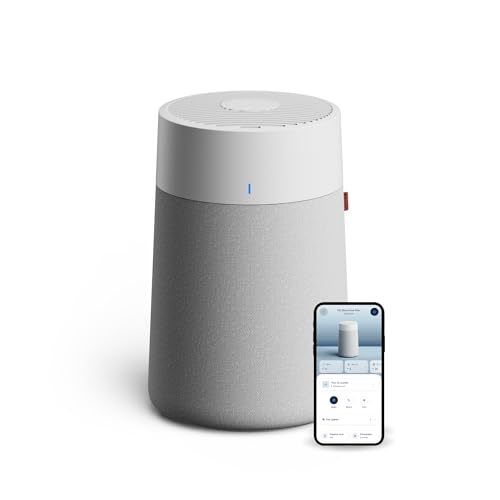
BLUEAIR Blue Pure 511i Max Air Purifier — Best Quiet Pick
If your workday is measured in call quality — client meetings, recordings, teaching, anything where your microphone is a professional instrument — this is your pick, and the reason fits in one stated number: a 19 dB night mode. Its title pairs that quiet with coverage up to 1,138 square feet, HEPASilent filtration, auto mode, WiFi app control, and a 360-degree air intake that forgives corner placement. It suits the noise-sensitive professional whose office shares a wall with a nursery, a bedroom, or their own concentration.
Strengths
- 19 dB night mode stated in the title — the most call-friendly noise claim in this guide
- Auto mode plus app control means it manages itself around your working day, ramping when air worsens and settling when it clears
- 360-degree intake makes placement forgiving in real offices, where the perfect central spot does not exist
Trade-offs
- Connected features are only a virtue if you will use them; buyers who want a dumb dial appliance are paying for an app they will open twice
- The title’s coverage class is generous for an office, so you are buying headroom and quiet, not necessary capacity
- As with all picks here, replacement filter cost belongs in the decision — check it on the listing before ordering
| Coverage | Up to 1,138 sq ft (per Amazon title) |
|---|---|
| Noise | 19 dB night mode (per Amazon title) |
| Filtration | HEPASilent (per Amazon title) |
| Features | Auto mode, WiFi app, 360-degree intake (per Amazon title) |
Nineteen decibels, for calibration, sits below the ambient hush of most quiet rooms — which is the point. A purifier at that level can run through a recorded call without announcing itself, and that single capability reorganizes the office day: no muting the machine before meetings, no choosing between clean air and clean audio. The auto mode completes the picture by removing the management task; the machine watches the air so the worker can watch the work, which is the correct division of labor.
The HEPASilent name describes Blueair’s approach of combining filtration methods to move air with less fan strain, and the practical upshot for an office is the same headroom story as the Levoit, told at a quieter register. Place it with its intake unobstructed, connect the app once, and then — the highest compliment available to an office appliance — forget it exists. Buyers whose offices are call-free and budget-led can step down this guide happily; buyers whose voice is their job should start here.
Best for: call-heavy, recording, and noise-sensitive professionals in small offices / Not suited for: buyers who dislike connected appliances or shop purely on unit price
Check on Amazon — check the current price on Amazon before you decide, and confirm the exact size, color, or configuration on the listing, because several of these products are sold in more than one variant.
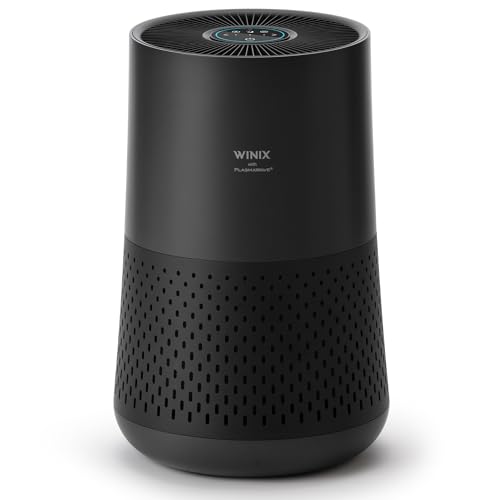
WINIX A230 Air Purifier — Best With Air Quality Monitoring
The A230 is for the buyer who wants the machine to know things. Its title states an air quality monitor with auto mode — the purifier senses the room and adjusts itself — alongside True HEPA filtration and a carbon filter stage, in a tower format with coverage up to 1,110 square feet in one hour. It suits offices where air quality swings across the day: a door that opens to a kitchen at lunch, a printer that works in bursts, a street-facing window in pollen season. Set it to auto and it spends quiet hours quiet and busy hours busy.
Strengths
- A stated air quality monitor with auto mode — the self-managing brief, without needing an app
- True HEPA plus a carbon stage covers both particles and the odor side of office life — lunches, printers, pets
- Tower format stands in a corner rather than occupying desk surface
Trade-offs
- Sensor-driven auto modes are only as calm as their sensors; a monitor placed near a door or kitchen can hunt between speeds more than a fixed low setting would
- The title does not state a decibel figure, so call-critical buyers should weigh the Blueair’s stated number
- Carbon stages are consumables with their own replacement rhythm, separate from the HEPA element
| Coverage | Up to 1,110 sq ft in 1 hr (per Amazon title) |
|---|---|
| Filtration | True HEPA with carbon filter (per Amazon title) |
| Monitoring | Air quality monitor, auto mode (per Amazon title) |
| Format | Tower (per product line naming in title) |
The monitor changes the owner’s job from operator to supervisor, and for a working office that is the right promotion. Instead of a morning ritual of choosing a speed, you glance at an air quality readout the way you glance at a clock — information when wanted, ignored when not. In practice the auto mode also answers the office’s dirtiest moments, the cooking hour and the cleaning hour, without anyone remembering to intervene, and then it settles back down for the afternoon’s calls on its own.
Place the unit so its sensor samples the room’s real air — not the draft from a window and not the exhaust of the purifier itself — and give the carbon stage its due: it is the component that handles the gaseous, smelly side of a home that a particle filter cannot. When the carbon is spent, odors return before particles do, which is your replacement signal. For buyers who like feedback and automation in equal measure, the A230 is the most informative pick in the guide.
Best for: offices with swinging air quality that want sensor-driven, self-adjusting operation / Not suited for: buyers who want a stated decibel rating or the simplest possible controls
Check on Amazon — check the current price on Amazon before you decide, and confirm the exact size, color, or configuration on the listing, because several of these products are sold in more than one variant.

COWAY Airmega 50 Air Purifier — Best for a Small Office
Every other pick in this guide is a large-room machine idling in a small room. The Airmega 50 is the one actually sized for the job: coverage stated up to 500 square feet — still double or triple a typical home office — with HEPA and deodorization filtration, an air quality monitor, auto mode, a filter indicator, a night light, and a stated two-year warranty. It suits the box-room office, the desk-in-a-bedroom, and the buyer who would rather have a compact, warranty-backed appliance than a tower of unused capacity in the corner.
Strengths
- 500 square foot class is the honest size for a home office — headroom without the furniture-scale footprint
- AQI monitor and auto mode bring the self-managing brief down to the compact class
- A stated two-year warranty and a filter indicator remove two ownership unknowns that rivals leave open
Trade-offs
- The night light is a bedroom-friendly feature that an office may simply switch off — check the listing for its controls
- Buyers who later move the purifier to a large living room will outgrow its class; it is a specialist, proudly
- Deodorization performance depends on the carbon stage’s freshness, as with every pick here
| Coverage | Up to 500 sq ft (per Amazon title) |
|---|---|
| Filtration | HEPA and deodorization filter (per Amazon title) |
| Features | AQI monitor, auto mode, filter indicator, night light (per Amazon title) |
| Warranty | 2 year warranty stated (per Amazon title) |
There is a discipline argument for the right-sized machine that the headroom strategy overlooks: a compact purifier can live on the floor beside a desk or on a wide shelf in a small office without rearranging the room around it, and an appliance that fits is an appliance that runs. The Airmega 50’s monitor-and-auto package means its smaller size does not cost it the self-managing behavior that makes office purifiers pleasant, and the filter indicator replaces the calendar-guessing that leads owners to run dead filters for months.
Coway’s Airmega line is an established name in this category, and the stated warranty is the kind of detail this guide weights heavily, because a purifier is a fan, a sensor, and a control board living in a box — moving parts that either come with backing or do not. For the small office, this is the complete package: sized right, self-managing, honest about its filter’s end of life, and backed. Check the current price on Amazon, confirm the filter replacement listing at the same time, and the decision is made.
Best for: small and bedroom-corner offices that want a compact, self-managing, warranty-backed purifier / Not suited for: anyone buying one machine to serve a large living room later
Check on Amazon — check the current price on Amazon before you decide, and confirm the exact size, color, or configuration on the listing, because several of these products are sold in more than one variant.

Medify MA-25 Air Purifier — Best Dual-Filter Value
The MA-25’s argument is arithmetic: its title states dual True HEPA filters in a single unit covering 825 square feet, with a sleep mode and a timer for easy use. Twin filter elements mean more media area working at once, which in an office translates to thorough cleaning at modest fan speeds. It suits the buyer who shops specifications per dollar, whose office sits in a dust-generous home — renovation next door, a workshop in the garage, a shedding dog with office privileges — and who wants a timer-based routine: on before the workday, off after it.
Strengths
- Dual True HEPA filters stated in the title — more media, more headroom, in the value position of this guide
- 825 square feet of stated coverage is several times a home office, licensing low-speed running
- Sleep mode and a timer are both stated — the two features an office routine actually uses
Trade-offs
- The catalog entry reused for this pick does not record a verification date, so confirm the live listing’s details with extra care before ordering
- No air quality monitor or auto mode is stated; the timer is its automation, and it is a simpler kind
- Two filter elements means a two-element replacement when the time comes — price that into the running cost
| Coverage | 825 sq ft (per Amazon title) |
|---|---|
| Filtration | Dual True HEPA filters (per Amazon title) |
| Features | Sleep mode, timer (per Amazon title) |
| Color | White, 1-pack (per Amazon title) |
Dual filtration is easy to file as a gimmick until you think in terms of resistance: air passes through filter media reluctantly, and doubling the media area lets a given airflow happen at lower fan effort — and lower fan effort is lower noise, which is the office currency this entire guide trades in. That is the MA-25’s real brief, and it is a sound one. The timer completes a genuinely office-shaped routine for owners who keep regular hours and see no reason to purify an empty room at full attention overnight.
The value position cuts both ways, and the honest notes are these: the finish and connected frills of the premium picks are not here, and the reused catalog entry for this model lacks a recorded verification date, which is why this review insists you re-confirm the specification on the live listing before ordering. Do that, price the dual replacement filters, and if the numbers still smile, the MA-25 is the specification-led buyer’s pick — the one that spends its budget on filter media instead of features.
Best for: specification-led buyers in dusty homes who want a timer routine and dual filtration / Not suited for: buyers who want sensor-driven auto mode or app control
Check on Amazon — check the current price on Amazon before you decide, and confirm the exact size, color, or configuration on the listing, because several of these products are sold in more than one variant.

GermGuardian Tower HEPA Air Purifier 22 Inch — Best Slim Tower
Some offices have no floor to spare and no desk corner to give. The GermGuardian tower is built for that room: a 22-inch tower format with coverage stated up to 743 square feet, three quiet speeds, HEPA filtration, and a UV-C feature included in its title — described here as a stated feature of the appliance, in a guide that makes no medical claims for any purifier. It suits the corner-of-the-bedroom office, the under-used vertical slot beside a bookshelf, and buyers who want a purifier that reads as a slim appliance rather than a small refrigerator.
Strengths
- The slimmest footprint in the guide — a tower that fits the leftover corner every office actually has
- 743 square feet of stated coverage keeps the oversize-and-run-low strategy intact
- Three quiet speeds give simple, predictable manual control without menus or apps
Trade-offs
- Manual speeds only, as stated — no monitor, no auto mode, no timer story in the title
- The UV-C feature is a stated appliance feature; buyers should read the listing’s own description and not treat any purifier as a health device
- Tower formats move air from a tall, narrow body — placement away from obstructions matters more than for the 360-intake pick
| Coverage | Up to 743 sq ft (per Amazon title) |
|---|---|
| Format | 22 inch tower (per Amazon title) |
| Filtration | HEPA filter (per Amazon title) |
| Features | UV-C feature stated; 3 quiet speeds; AHAM-verified positioning (per Amazon title) |
Footprint is a filtration feature in a small office, in the only way that counts: a purifier that fits gets placed well, and a purifier placed well — intake clear, exhaust unobstructed, air free to circulate — cleans better than a stronger machine shoved into a dead corner. The GermGuardian’s tower is the easiest shape in this guide to place well in a tight room, and its simple three-speed control has a constituency of its own: workers who want the machine at one known, call-safe speed all day, every day, with no sensor’s opinion involved.
The AHAM-verified positioning in its title gives its coverage claim the same independent frame as the Levoit’s, which matters in a category of self-awarded numbers. Set it on a low, known-quiet speed for the working day, step it up when the office empties or the vacuuming happens, and let the filter schedule in the manual set your replacement rhythm. For the space-starved office, this is not the compromise pick — it is the correctly shaped one.
Best for: tight offices with a corner but no floor plan to spare, and fans of simple manual control / Not suited for: buyers who want auto sensing, app features, or a stated decibel figure
Check on Amazon — check the current price on Amazon before you decide, and confirm the exact size, color, or configuration on the listing, because several of these products are sold in more than one variant.
Comparison Table
Coverage classes here all exceed a home office — deliberately. The columns that should decide your purchase are the ignore-it features (sleep mode, auto mode, monitor, timer), the stated noise evidence, and the physical format your room can actually host. Filtration is table stakes at this level; behavior is the differentiator.
| Pick | Badge | Key spec | Best for | Check |
|---|---|---|---|---|
| Levoit Core 300-P Air Purifier | Best Overall for a Home Office | Up to 1,073 sq ft, HEPA sleep mode, AHAM-verified positioning | the typical one-person home office that wants set-and-forget clean air on calls | Check on Amazon |
| BLUEAIR Blue Pure 511i Max Air Purifier | Best Quiet Pick | 19 dB night mode, up to 1,138 sq ft, auto mode with app | call-heavy, recording, and noise-sensitive professionals in small offices | Check on Amazon |
| WINIX A230 Air Purifier | Best With Air Quality Monitoring | Air quality monitor with auto mode, True HEPA plus carbon, up to 1,110 sq ft | offices with swinging air quality that want sensor-driven, self-adjusting operation | Check on Amazon |
| COWAY Airmega 50 Air Purifier | Best for a Small Office | Up to 500 sq ft, AQI monitor with auto mode, 2-year warranty stated | small and bedroom-corner offices that want a compact, self-managing, warranty-backed purifier | Check on Amazon |
| Medify MA-25 Air Purifier | Best Dual-Filter Value | Dual True HEPA, 825 sq ft, sleep mode with timer | specification-led buyers in dusty homes who want a timer routine and dual filtration | Check on Amazon |
| GermGuardian Tower HEPA Air Purifier 22 Inch | Best Slim Tower | 22-inch tower, up to 743 sq ft, HEPA, 3 quiet speeds | tight offices with a corner but no floor plan to spare, and fans of simple manual control | Check on Amazon |
How to Choose an Air Purifier for a Home Office
Start with the room’s real dimensions, then deliberately oversize. Measure your office, note that a typical home office runs 80 to 250 square feet, and then choose a purifier whose stated coverage is two to four times that figure. The reason is acoustic, not hygienic: an oversized purifier cleans a small room thoroughly on its lowest speed, and its lowest speed is the one you can hold a call over. Every pick in this guide follows that logic, including the right-sized Coway, whose 500 square foot class is still a multiple of most offices.
Second, decide how the machine will be managed, because management style is the daily experience. Auto mode with an air quality monitor (Winix, Coway, Blueair in this guide) makes the purifier a colleague who handles itself. A timer (Medify) suits a fixed workday. Fixed quiet speeds (GermGuardian, Levoit’s sleep mode) suit workers who want one known behavior and no surprises. None is wrong; mismatching the style to your temperament is what produces returns.
Third, be literate about filtration without being credulous. A HEPA-type filter is the particle workhorse — dust, pollen, pet dander, the visible and invisible grit of a lived-in home. A carbon stage addresses odors and gases, which in a home office means lunch, printers, and pets. Treat every purifier, whatever its badges, as a comfort appliance that makes the air in one room cleaner-feeling and lower in particles — not as a medical device, and not as a substitute for ventilation, source control, or a clinician’s advice where health is concerned.
Finally, price the filter before the machine. The purifier is a one-time purchase; its filter is a subscription you cannot cancel while you own it. Check the genuine replacement’s current price and stated life for any model you shortlist, and divide honestly. A cheaper unit with a costly, short-lived filter regularly outspends a premium unit across three years — and a run-too-long filter quietly turns any purifier into a noisy box that moves uncleaned air.
Placement and Running Habits That Make an Office Purifier Work
Placement is half the product. Air must reach the intake and leave the exhaust without obstruction, so give the unit clearance on all sides, keep it out of the dead cave under a desk, and avoid sealing it behind a monitor or a curtain. In most offices the best spot is on the floor or a low stand near — but not under — the desk, where the breathing zone it serves is the one you sit in. The Blueair’s 360-degree intake forgives corners; directional towers want a clearer field.
Running rhythm matters more than running intensity. A purifier on low through the working day outperforms the same machine blasted for twenty minutes, because office air is continuously re-dirtied by the door, the window, your clothes, and the household beyond. Let auto modes work, or hold a call-safe low speed from first coffee to last email, and step the machine up only when the room empties or a known event — vacuuming, cooking, a visiting dog — loads the air.
Keep the rest of the system honest. Vacuum the pre-filter or the unit’s exterior on the maker’s schedule, change filters by the indicator or the calendar rather than by optimism, and crack a window when weather allows — purifiers filter air, they do not refresh it, and a stuffy office is a ventilation problem wearing a filtration costume. With those habits, any pick in this guide will simply disappear into the working day, which is the entire goal.
How to Set Up a Home Office Air Purifier on Day One
Setup is short, but the order matters — most purifiers ship with their filter sealed in plastic inside the unit, and the single most common ownership failure is running the machine for a month with that plastic still on.
- Unpack the unit and open it before the first run: remove the filter from its protective packaging, refit it exactly as the manual shows, and note the filter’s model number in your phone for reordering.
- Place the purifier with clearance around its intake and exhaust, near your breathing zone but out of the under-desk cave, on a stable surface at the height the maker intends.
- Run it on its highest setting for the first half hour with the office door closed to clear the room’s standing dust, then settle it to auto mode or its quiet working speed.
- Take one call — or record one minute of audio — with the purifier at your chosen working speed, and adjust the speed or the placement until your microphone cannot hear it; this five-minute test settles the setting you will use all year.
- Set the management rhythm now: auto mode on, or a timer matched to your workday, and a calendar note for the filter check at the interval the manual states.
- Register the warranty if the maker offers it, and store the manual with the filter number — future you, mid-workday, will be grateful.
That is the whole commissioning: filter unwrapped, placement breathing, call test passed, rhythm set. An office purifier should thereafter be the least interesting appliance you own — present in the air, absent from your attention — and any unit that keeps demanding attention is telling you its speed, its placement, or its filter wants adjusting.
Common Buying Mistakes
Matching coverage exactly to the room. An exactly-sized purifier must run at audible speeds to do its job. Oversize deliberately — two to four times the room’s area in stated coverage — and live on the quiet low setting instead.
Leaving the filter’s shipping plastic on. Purifiers commonly ship with the filter bagged inside the housing. Running it sealed cleans nothing and confuses owners for months. Open the unit before the first run, every time.
Judging noise in a silent showroom moment. Office noise tolerance is set by your worst call, not your quietest afternoon. Test the working speed against a recording or a real call before the return window closes.
Ignoring filter economics at purchase. The filter is a mandatory subscription. A bargain unit with an expensive, short-lived cartridge outspends a premium unit over a few years, and a stretched filter silently stops purifying.
Hiding the purifier for tidiness. A purifier sealed under a desk or behind curtains is furniture, not filtration. Intake and exhaust clearance are performance specifications, not aesthetic suggestions.
Treating a purifier as a health device. Purifiers make one room’s air lower in particles and pleasanter to work in. They do not treat conditions, replace ventilation, or substitute for professional advice — and buying one on that basis disappoints everyone involved.
Final Recommendation
For most home offices, the Levoit Core 300-P is the buy: oversized for the room, sleep-mode quiet, and independently framed by its AHAM positioning. If your voice is your living, step up to the Blueair 511i Max and its stated 19 dB night mode. If you want the machine to manage itself by sensor, the Winix A230 and the Coway Airmega 50 split that brief by size — tower for the standard office, compact for the small one — while the Medify MA-25 serves the specification-led value buyer and the GermGuardian tower serves the office with a corner and nothing else.
Before ordering, do the three checks this guide keeps returning to: confirm the coverage class is a comfortable multiple of your room, check the current price on Amazon for both the unit and its genuine replacement filter, and plan the placement spot with real clearance. A home office purifier bought that way disappears into the working day — and an appliance you never think about, quietly doing its one job, is the best kind there is.
- Levoit Core 300-P Air Purifier (Best Overall for a Home Office) — Check on Amazon
- BLUEAIR Blue Pure 511i Max Air Purifier (Best Quiet Pick) — Check on Amazon
- WINIX A230 Air Purifier (Best With Air Quality Monitoring) — Check on Amazon
- COWAY Airmega 50 Air Purifier (Best for a Small Office) — Check on Amazon
- Medify MA-25 Air Purifier (Best Dual-Filter Value) — Check on Amazon
- GermGuardian Tower HEPA Air Purifier 22 Inch (Best Slim Tower) — Check on Amazon
Best Air Purifiers Under $200 Best Air Purifiers For Small Areas Best Air Purifiers For Living Rooms Best Portable Air Purifiers For Home Best Room Air Purifiers With Hepa Filters Best Dog Dander Air Purifiers
Frequently Asked Questions
What size air purifier does a home office need?
Deliberately more than the room’s size suggests. For a typical 80-250 square foot office, choose a stated coverage class of roughly 500 to 1,100 square feet, as this guide’s picks span, so the machine cleans thoroughly on its lowest and quietest speed. Exact matching forces audible fan speeds; headroom buys silence.
How loud is too loud for calls?
If your microphone can hear it, it is too loud for professional calls. The Blueair pick states a 19 dB night mode, which sits below most rooms’ ambient hush. For other models, use sleep or the lowest speed, place the unit away from the microphone, and run the one-minute recording test in this guide’s setup section before the return window closes.
Do I need an air quality monitor and auto mode?
Need, no — appreciate, probably. A monitor with auto mode lets the purifier respond to cooking hours, open doors, and cleaning days without your attention, then settle for calls. Timer and fixed-speed models serve predictable routines just as well. It is a management style choice, and this guide includes both kinds deliberately.
How often will I replace the filter?
By the maker’s stated interval or the unit’s filter indicator, whichever your model offers — and the honest answer is that this cost, not the unit price, defines ownership. Check the genuine replacement filter’s price and life on the listing before you buy the machine, and never stretch a spent filter: a purifier with a dead filter is a fan with good intentions.
Can an air purifier help with my allergies or health?
This guide makes no health claims, and no purifier should be bought as a medical device. What these machines verifiably do is reduce airborne particles — dust, pollen, pet dander — in one room, which many people find makes the air more comfortable to work in. For symptoms or conditions, a clinician’s advice comes first and a purifier is, at most, a comfort appliance alongside it.
Where is the best place to put an office purifier?
Near your breathing zone with clearance on all sides: on the floor or a low stand beside the desk, not sealed under it, not behind curtains or monitors. Keep intakes unobstructed, give towers a clear field, and let 360-degree-intake models forgive the corner if that is the spot your room actually offers.


