Disclosure: airfryerkitchensupply.com is reader-supported. When you buy through links on our site, we may earn an affiliate commission at no extra cost to you.
Where to buy
Start with this shortlist of the best food processors for hummus. Every linked pick below was verified against Amazon’s own catalog data for this site before this guide was written, so the model names and capacities in this article match real, current listings. Use the links in this box, in Quick Picks, and under each review to check price on Amazon on the day you buy, because bundles and included accessories change between listings. If a pick is marked as unlinked anywhere in this guide, that means we could not confirm the exact configuration, and you should compare live listings carefully instead of trusting a headline claim.
- Cuisinart 14-Cup Food Processor DFP-14BCNY (Best Overall) — check price on Amazon
- Ninja Professional Plus Food Processor BN601 (Best for Fast, Smooth Batches) — check price on Amazon
- Breville Sous Chef 16 Cup Food Processor BFP810 (Best Premium for Large Batches) — check price on Amazon
- KitchenAid 9-Cup Food Processor KFP0921 (Best for Storage and Everyday Use) — check price on Amazon
- Hamilton Beach 10-Cup Food Processor 70730 (Best Value Mid-Size) — check price on Amazon
- Cuisinart Core Custom 10-Cup Food Processor FP-110 (Best Modern Controls) — check price on Amazon
If you are shopping for the best food processors for hummus, the honest starting point is that hummus is one of the hardest jobs you can give a food processor. Cooked chickpeas are dense, starchy, and resistant: a weak machine leaves you with a grainy, lumpy paste no amount of extra olive oil can rescue, while a strong machine with a well-shaped bowl turns the same ingredients into something smooth, pale, and scoopable in a few minutes. The difference is rarely the blade alone. It is motor torque that does not fade as the mixture thickens, a bowl that keeps the paste circulating through the blade path instead of plastering it to the walls, and enough capacity that a standard batch — two cans of chickpeas plus tahini, lemon, and ice water — fits without riding up over the center post.
This guide was built around that single job. Every pick below earned its place because its verified listing confirms the things hummus actually needs: real bowl capacity in cups, a motor the manufacturer rates in watts where stated, and a design meant for pureeing as well as chopping. We also cover the technique side, because even the best machine produces mediocre hummus if the chickpeas go in hot, the tahini goes in last, or the processor runs in short pulses instead of one long, patient blend. You will find a full buying guide, a step-by-step hummus method, and the mistakes that most often ruin a batch.
A note on expectations: a food processor will not match a high-end blender for absolute silkiness, and it does not need to. What a good processor gives you is texture control — rustic and chunky one day, whipped and smooth the next — plus the ability to make double batches for a crowd, fold in toppings, and stop exactly where you like it. Prices are never printed here because they move constantly; check price on Amazon for the current figure on any model you shortlist.
In this guide
Quick Picks
Short on time? These are the six processors that handle chickpea purees best, from the heavy-duty 14-cup classic to the modern 10-cup machine with the friendliest controls.
- Best Overall — Cuisinart 14-Cup Food Processor DFP-14BCNY: The classic heavy-duty answer for hummus: a 14-cup bowl and a 720-watt motor whose own listing names puree work, sized for double batches without strain. Check on Amazon
- Best for Fast, Smooth Batches — Ninja Professional Plus Food Processor BN601: A 1000-watt, 9-cup processor with Auto-iQ presets that explicitly include puree — the fastest route on this list from canned chickpeas to a smooth bowl. Check on Amazon
- Best Premium for Large Batches — Breville Sous Chef 16 Cup Food Processor BFP810: The 16-cup flagship for people who make hummus for a crowd: the biggest bowl on this list, in brushed stainless, built for entertaining-scale batches. Check on Amazon
- Best for Storage and Everyday Use — KitchenAid 9-Cup Food Processor KFP0921: A 9-cup processor whose blades and discs store inside the bowl — the tidy-kitchen pick that still has the bowl size a proper hummus batch needs. Check on Amazon
- Best Value Mid-Size — Hamilton Beach 10-Cup Food Processor 70730: A 10-cup processor whose listing names puree work and includes a bowl scraper — a small accessory that matters a lot when the food is thick hummus. Check on Amazon
- Best Modern Controls — Cuisinart Core Custom 10-Cup Food Processor FP-110: Cuisinart’s modern 10-cup platform — a multifunctional processor sized right for hummus, with the Core Custom accessory ecosystem behind it. Check on Amazon
How These Picks Were Chosen
Picks were chosen by matching verified catalog data against the physical demands of hummus: bowl capacity in cups, motor wattage where the listing states it, and whether the machine is designed for pureeing and emulsifying, not just slicing and shredding. Listings that name puree work were prioritized, because hummus is a puree task — the blade must keep a thick, heavy paste moving for two to five minutes without the motor bogging down or the bowl leaking at the lid.
We also weighed batch logic. A hummus machine that only handles half a can of chickpeas at a time is a poor buy for anyone who meal-preps, so the list favors 9-cup and larger bowls, with the 16-cup Breville included for people who make party-sized quantities. Every linked model was confirmed through this site’s own catalog verification before writing; where a spec appears in a mini spec box, it comes from the verified listing title, not from marketing copy. No prices, star ratings, or review counts are used anywhere in this guide.
The 6 Best Food Processors for Hummus

1. Cuisinart 14-Cup Food Processor DFP-14BCNY — Best Overall
This is the machine for the cook who makes hummus weekly and often doubles it. The 14-cup bowl swallows two or three cans of chickpeas with room for the paste to circulate, and the 720-watt motor holds its speed as the mixture goes from loose to thick. It suits households that also want one processor for shredding, slicing, and dough. It is less suited to tiny kitchens with no storage for a large base, or to anyone who only ever makes a single small tub.
Strengths
- 720W motor keeps blade speed up as hummus thickens
- 14-cup bowl handles double and triple batches in one run
- Listing explicitly confirms puree work, not just chopping
Trade-offs
- Large footprint needs real counter or cupboard space
- Heavier base is less fun to move in and out of storage
- More machine than a once-a-month hummus maker needs
| Spec | Detail |
|---|---|
| Capacity | 14-cup work bowl |
| Motor | 720 watts |
| Confirmed jobs in listing | Mincing, dicing, shredding, puree, kneading dough |
| Finish | Stainless steel |
In hummus terms, what matters about this Cuisinart is sustained torque. Chickpea paste reaches a stage — usually around the second minute — where it becomes heavy enough to slow a lesser motor, and that is exactly where texture is won or lost. This motor pushes through that stage, so the blade keeps shearing instead of stirring, and the result is a noticeably smoother puree with fewer visible skins and lumps. The wide bowl also helps: the paste folds over the blade in a continuous roll rather than climbing the walls and hiding there.
Beyond hummus, the same machine covers the rest of a mezze spread without a second appliance — shredding carrots, slicing cucumbers, and mincing herbs for tabbouleh-style salads. Cleanup is the usual processor routine of bowl, lid, and blade, all of which benefit from a rinse immediately after a tahini-heavy batch, since dried tahini paste is stubborn. If you buy one processor for dips and spreads generally, this is the safest single choice on the list.
Best for: Weekly hummus makers and double batches / Not suited for: Very small kitchens with no storage space
Check on Amazon — check the current price on Amazon before you buy.

2. Ninja Professional Plus Food Processor BN601 — Best for Fast, Smooth Batches
Buy this Ninja if you want hummus on a weeknight without babysitting the machine. The Auto-iQ puree program runs a timed pattern of pulses and steady blending that suits chickpea paste well, and the 1000-watt motor is the strongest on this list by stated wattage. It suits smoothie-and-prep households too, since the system includes multiple blades. It is not the pick for someone who wants the largest possible batch, because the 9-cup bowl is a single-to-double batch size, not a party size.
Strengths
- 1000W motor — strongest stated power here
- Auto-iQ puree preset removes guesswork from timing
- Three blades cover chopping and dough as well as purees
Trade-offs
- 9-cup bowl caps batch size below the big Cuisinart and Breville
- Preset programs give less manual control than a simple dial
- Stacked-blade style needs care when washing by hand
| Spec | Detail |
|---|---|
| Capacity | 9-cup bowl |
| Motor | 1000 watts (listing states 1000PW) |
| Programs | Auto-iQ presets including puree |
| Parts | Dishwasher-safe parts per listing |
The BN601’s advantage for hummus is the combination of raw power and a program designed for purees. Chickpea skins are the enemy of smoothness, and a puree cycle that alternates bursts with sustained running breaks them down more evenly than manual pulsing, which tends to leave a ring of coarsely chopped peas above the blade. With ice water added gradually through the feed chute, this machine produces a light, whipped texture that rivals machines costing considerably more.
The feed chute deserves a mention for hummus specifically: being able to drizzle olive oil and lemon juice in while the machine runs is how you emulsify properly, and the pusher-and-chute design here makes that easy without stopping. The parts are listed as dishwasher-safe, which matters after tahini. Choose the Ninja if speed and smoothness per batch matter more to you than maximum batch size.
Best for: Weeknight hummus with a puree preset doing the timing / Not suited for: Party-size triple batches
Check on Amazon — check the current price on Amazon before you buy.

3. Breville Sous Chef 16 Cup Food Processor BFP810 — Best Premium for Large Batches
This Breville is for the host who makes hummus by the kilo — mezze nights, family gatherings, and meal prep for a week of lunches. Sixteen cups of capacity means a triple batch runs without the paste reaching the lid, and Breville’s Sous Chef line is built around large-batch prep and entertaining, as its listing states. It is a premium-tier machine and a poor fit for a single person in a studio kitchen, both in size and in tier.
Strengths
- 16-cup bowl — the largest capacity verified here
- Built for large-batch prep and entertaining
- Premium stainless build suits a permanent counter spot
Trade-offs
- Premium tier — the most expensive positioning on this list
- Big, heavy machine that wants to live on the counter
- Oversized for a single can of chickpeas
| Spec | Detail |
|---|---|
| Capacity | 16-cup |
| Finish | Brushed stainless steel |
| Positioning per listing | Large batches, meal prep and entertaining |
Large batches change hummus physics in your favor. With more mass in the bowl, the paste circulates in a slower, steadier roll, and the blade gets a consistent bite instead of flinging a thin layer up the walls. The BFP810 exploits that: a triple batch of chickpeas, tahini, and lemon processes evenly without the stop-start scraping that smaller bowls demand every thirty seconds. For a host, that means one run, one wash-up, and a serving bowl filled in minutes.
The trade-off is commitment. This is a machine you buy when the counter space is already allocated and hummus is one of several large jobs — slaw for twenty, shredded cheese in bulk, big pastry batches. If your hummus habit is a single weekly tub, the Cuisinart 14-cup or the Ninja gives you the same texture for a lower tier. If your habit is feeding people, this is the top of the list for a reason.
Best for: Entertaining and meal-prep-scale hummus / Not suited for: Singles or very tight counters
Check on Amazon — check the current price on Amazon before you buy.
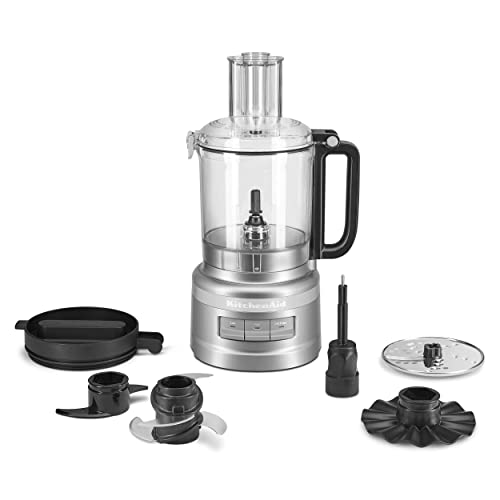
4. KitchenAid 9-Cup Food Processor KFP0921 — Best for Storage and Everyday Use
Choose the KitchenAid if your processor lives in a cupboard and loose discs in a drawer are your pet hate. Everything stores in the bowl, so setup is fast, and the 9-cup capacity is right for a standard double batch of hummus. The whisk accessory is a bonus for whipped toppings and dressings. It suits everyday cooks who value order and easy cleaning. It is less ideal for the power-obsessed: KitchenAid does not headline wattage in this listing the way Ninja and Cuisinart do, so buyers who shop by motor numbers may prefer those.
Strengths
- All parts store inside the bowl — no loose-disc drawer
- 9-cup bowl fits a standard double hummus batch
- Easy-clean bowl design speeds up tahini wash-up
Trade-offs
- Motor wattage not stated in the verified listing
- Whisk accessory is nice-to-have, not a hummus feature
- Mid-size bowl is not for crowd batches
| Spec | Detail |
|---|---|
| Capacity | 9-cup work bowl |
| Storage | All-in-one in-bowl storage per listing |
| Accessories | Whisk accessory; multipurpose blade design |
| Bowl | Easy-clean work bowl per listing |
For hummus, the KFP0921 plays a sensible middle game. The bowl is big enough that a two-can batch circulates properly, the multipurpose blade handles the long puree run, and the easy-clean bowl design matters more than it sounds — tahini and chickpea paste dry into a cement-like film, and a bowl that rinses clean without crevices saves real annoyance. Texture lands a notch behind the Ninja’s preset-driven smoothness unless you run it a little longer and add ice water patiently, which the guide below explains.
Where this machine wins is daily life. In-bowl storage means it goes from cupboard to counter in one trip, and the same design makes it the processor most likely to be used for the small jobs — a quick salsa, grated cheese, breadcrumbs — that justify owning one. If your hummus is a weekly staple rather than a production, this balance of size, tidiness, and capability is hard to beat.
Best for: Tidy kitchens and weekly double batches / Not suited for: Buyers who shop purely by motor wattage
Check on Amazon — check the current price on Amazon before you buy.

5. Hamilton Beach 10-Cup Food Processor 70730 — Best Value Mid-Size
This Hamilton Beach is the value-conscious pick that still respects how hummus behaves. The included bowl scraper is genuinely useful here: thick paste climbs the walls, and being able to scrape it back into the blade path without removing the lid keeps the texture even. The 10-cup bowl fits a double batch. It suits budget-tier shoppers who make hummus regularly. It is not the choice for someone who wants premium build or the strongest motor — this is a sensible mid-tier tool, not a flagship.
Strengths
- Bowl scraper included — ideal for thick pastes
- 10-cup capacity at a budget-friendly tier
- Listing confirms puree among its jobs
Trade-offs
- Build and finish are workmanlike, not premium
- Less motor headroom than the 720W–1000W picks for very stiff batches
- Fewer included blades and discs than flagship bundles
| Spec | Detail |
|---|---|
| Capacity | 10-cup bowl |
| Included extra | Easy-clean bowl scraper per listing |
| Confirmed jobs in listing | Slicing, shredding, mincing, puree |
The scraper sounds like a gimmick until you have made hummus in a machine without one. Half the batch ends up above the blade’s reach, and the usual fix — stop, open, scrape with a spatula, repeat — breaks the emulsion rhythm and adds minutes. Hamilton Beach’s scraper works through the lid, so you can keep the paste moving and the texture consistent. Combined with a 10-cup bowl and a listing that confirms puree work, it covers the hummus brief honestly at its tier.
Expect to help it slightly more than the top picks on the stiffest batches: a splash more ice water, a touch more patience in the final minute. In return you get a machine that also handles the everyday slicing and shredding list without complaint. For a first food processor bought mainly for dips and spreads, this is the pragmatic choice.
Best for: Budget-tier buyers who make hummus often / Not suited for: Buyers wanting flagship power and finish
Check on Amazon — check the current price on Amazon before you buy.

6. Cuisinart Core Custom 10-Cup Food Processor FP-110 — Best Modern Controls
Pick the FP-110 if you like Cuisinart’s approach but want the newer Core Custom platform rather than the classic designs. The 10-cup bowl is the sweet spot for hummus — big enough for a double batch, small enough that a single batch still circulates instead of spreading thin. It suits buyers who may add platform accessories over time. It is not the maximum-power or maximum-capacity choice; the 14-cup Cuisinart above beats it on both counts for batch work.
Strengths
- 10-cup bowl is the hummus sweet spot for most homes
- Modern Core Custom platform with accessory options
- Cuisinart puree pedigree in a fresher design
Trade-offs
- Smaller than the 14-cup model for crowd batches
- Platform accessories cost extra over time
- White finish shows tahini and spice stains more than steel
| Spec | Detail |
|---|---|
| Capacity | 10-cup work bowl |
| Platform | Core Custom multifunctional system |
| Finish | White and stainless |
In practice, the FP-110 makes very good hummus. The bowl geometry keeps a two-can batch in the blade’s working zone, and Cuisinart’s blade design has decades of dip-and-spread work behind it. Where it differs from the 14-cup classic is feel: controls and handling are more modern, and the machine is easier to live with as an everyday appliance rather than a weekend project tool. Run chickpeas a full two to three minutes with gradual ice water and the texture is smooth and light.
Consider this the list’s balance point — capacity, platform, and everyday manners in one machine. If you also plan to use the processor for the Core Custom system’s other attachments, the value case strengthens. If hummus is the only job and budget rules, the Hamilton Beach does the core task for a lower tier.
Best for: Everyday cooks who want a modern 10-cup platform / Not suited for: Maximum-batch or minimum-budget shoppers
Check on Amazon — check the current price on Amazon before you buy.
Comparison Table
Read the table by batch size first, then by how much help the machine gives you. Capacity decides how much hummus you can make at once; the badge tells you what each machine does best once the size is right.
| Pick | Badge | Key spec | Best for |
|---|---|---|---|
| Cuisinart 14-Cup Food Processor DFP-14BCNY | Best Overall | 14-cup bowl, 720W motor | Weekly hummus makers and double batches |
| Ninja Professional Plus Food Processor BN601 | Best for Fast, Smooth Batches | 9-cup bowl, 1000W, Auto-iQ puree preset | Weeknight hummus with a puree preset doing the timing |
| Breville Sous Chef 16 Cup Food Processor BFP810 | Best Premium for Large Batches | 16-cup capacity, brushed stainless | Entertaining and meal-prep-scale hummus |
| KitchenAid 9-Cup Food Processor KFP0921 | Best for Storage and Everyday Use | 9-cup bowl, in-bowl storage, whisk accessory | Tidy kitchens and weekly double batches |
| Hamilton Beach 10-Cup Food Processor 70730 | Best Value Mid-Size | 10-cup bowl, bowl scraper included | Budget-tier buyers who make hummus often |
| Cuisinart Core Custom 10-Cup Food Processor FP-110 | Best Modern Controls | 10-cup multifunctional, Core Custom platform | Everyday cooks who want a modern 10-cup platform |
How to Choose the Best Food Processors for Hummus
Start with capacity, because hummus exposes small bowls immediately. A standard batch — two 15-ounce cans of chickpeas, drained, plus tahini, lemon juice, garlic, salt, and ice water — occupies roughly five to six cups once processed and needs headroom above that to circulate. That is why this list starts at 9-cup bowls. A 3- or 4-cup mini chopper can make a half batch, but the paste packs tight, the blade cavitates, and the texture comes out coarse no matter how long you run it. If you regularly double for parties, step up to 14 or 16 cups rather than running two batches back to back.
Next, motor behavior under load. Hummus thickens as it processes, and the final minute is the hardest work the motor will do. Wattage stated in a listing — 720 watts on the big Cuisinart, 1000 watts on the Ninja — is a rough proxy for that stamina, but design matters too: a bowl that keeps paste in the blade path lets a mid-power motor outperform a stronger one in a poorly shaped bowl. Treat wattage as a shortlisting tool, then check that the listing confirms puree work, as the picks here do.
Finally, the practical details: a feed tube wide enough to drizzle oil and ice water while running, parts that tolerate the dishwasher or at least rinse without crevices, and storage that fits your kitchen. Hummus is a repeat habit, not a special occasion, so the machine you will actually pull out weekly beats the theoretically perfect one that lives in a box.
- Capacity: 9 cups minimum for a standard batch; 14–16 cups for doubles and parties
- Puree confirmation: the listing should name puree or emulsifying work, not only slicing
- Feed tube: must let you drizzle liquids in while the motor runs
- Cleanup: smooth bowl interior and dishwasher-tolerant parts save real effort after tahini
- Storage: in-bowl storage or a compact footprint if cupboard space is tight
Why Hummus Texture Depends on the Machine
Hummus texture is decided by three things the machine controls: how finely the blade breaks chickpea skins, how steadily the paste circulates, and how much air and water get emulsified into it. Skins are the gritty part. A blade that spins fast in a bowl shaped to fold the mixture over itself will shred skins into invisibility over two to four minutes; a bowl that lets paste plaster itself to the walls leaves those skins intact in the plastered layer, which is why scraping — by hand or with the Hamilton Beach’s through-lid scraper — changes results so much.
Emulsion is the second half. Tahini is an oil-rich paste, and hummus is at its best when that oil, lemon juice, and ice water are beaten into a stable, pale emulsion rather than sitting in streaks. That only happens with sustained running while liquids are added slowly. Machines with a proper feed chute and pusher make the drizzle easy; machines you must stop to open discourage it, and the hummus shows the difference. This is also why ice water matters: cold liquid keeps the emulsion stable and the color light while the motor’s friction warms the batch.
None of this requires the most expensive machine. It requires the right size, a confirmed puree function, and a few minutes of patience — which is exactly the combination the six picks were chosen to provide at their different tiers.
Processor vs Blender for Hummus: An Honest Comparison
A high-speed blender can make hummus marginally smoother than any processor, because its vortex pulls the paste through the blades continuously. What it cannot do as well is everything around the hummus: it struggles with small batches, needs more liquid to keep moving, and offers no slicing, shredding, or dough capability. A processor is the better mezze tool — it makes the hummus, shreds the carrots, slices the cucumbers, and minces the herbs for the same table.
The processor also gives texture control a blender takes away. Rustic, chunky hummus for scooping with warm pita is a thirty-second pulse job in a processor and nearly impossible to stop at the right point in a blender. Whipped, fluffy hummus is a long run with ice water in either machine. For most homes, the processor’s range matters more than the blender’s last five percent of smoothness, and the picks above close most of that gap anyway when the technique in the next section is followed.
How to Make Smooth Hummus in a Food Processor
This method works with every pick on the list and is written for a standard double batch. The order of ingredients and the long, uninterrupted run matter more than any single machine setting.
- Drain two cans of chickpeas and rinse them well. For the smoothest result, simmer them for fifteen minutes in water with a pinch of baking soda until the skins loosen and some float free; skim what you can. This step is optional but is the single biggest texture upgrade available to you.
- Add the tahini first — about two-thirds of a cup — with the lemon juice, a grated garlic clove, salt, and a splash of ice water. Process for a full minute until pale and whipped. Tahini beaten first emulsifies far better than tahini added to chickpeas.
- Add the chickpeas in two additions, processing at least a minute between them. Keep the machine running rather than pulsing; sustained running is what shreds the skins.
- With the motor running, drizzle in ice water a spoonful at a time through the feed tube until the hummus turns light, fluffy, and just loose enough to swirl. Stop and taste: add salt, lemon, or a pinch of cumin as needed.
- Run one final thirty seconds, then rest the hummus for ten minutes. It thickens slightly as it sits. Serve swirled in a shallow bowl with olive oil pooled on top, or refrigerate in a sealed container for up to several days.
If a batch comes out grainy, the fix is almost always more time and a spoonful more ice water, not more oil. If it comes out thin, you added water too fast — process longer and it will tighten as the emulsion builds, or fold in a spoonful of extra chickpeas. Clean the bowl promptly: dried hummus paste is far harder to wash than fresh.
Hummus Variations and How Your Processor Handles Them
Once the base method is comfortable, the processor’s range opens up. White bean hummus — cannellini or butter beans in place of chickpeas — processes faster and silkier than chickpea hummus in every machine here, because the skins are thinner; it is the variation to serve guests who think they do not like hummus. Roasted red pepper hummus asks only that the peppers be drained well before they join the bowl, since their liquid loosens the emulsion. Beetroot hummus is the sternest test of a bowl’s seals: the color is glorious and the staining is real, and it is the batch that will teach you to rinse the bowl immediately rather than after dessert.
Edamame and pea ‘hummus’ style dips sit at the other end of the difficulty scale — soft ingredients, quick processing, and a texture that forgives a smaller machine. Spiced versions, from smoked paprika to za’atar folded through at the end, should be added after the base is smooth: whole spices and coarse blends survive processing as pleasant texture, while fine ground spices added at the start can turn gritty against the blade’s heat over a long run. The through-line is that a processor with genuine puree stamina handles all of these without a recipe change, which is precisely the quality the picks were chosen for.
Toppings deserve a processor note too. The current restaurant style — hummus swooshed in a bowl and topped with whole spiced chickpeas, minced salad, or chopped herbs — uses the machine twice: once for the base, once for a coarse pulse of the topping ingredients. A machine with a responsive pulse makes that second texture easy to land; a machine with only full-speed running turns toppings into more base. When you taste your hummus in restaurants and wonder at the contrast of textures, that two-texture technique, not a secret ingredient, is usually the answer.
Batch Planning, Storage, and Food Safety for Homemade Hummus
Hummus is a batch food by nature, and a little planning turns one processing session into a week of lunches. A double batch in a 9- to 10-cup machine covers sandwiches, snack tubs, and a mezze night; a triple batch in the 14- or 16-cup picks is the party move, best made the day before so the flavors can settle — hummus genuinely improves overnight as the garlic mellows and the lemon integrates. Portion the batch into small sealed containers rather than one large tub: each container keeps an unbroken surface, stays fresher, and can be flavored differently at serving.
In the fridge, homemade hummus keeps well for several days; a thin film of olive oil over the surface of each container slows drying and oxidation. It also freezes respectably for longer storage — thaw it in the fridge, then stir vigorously or give it ten seconds in the processor to restore the emulsion, with a spoonful of ice water if it looks tight. Texture after freezing is a small step below fresh, which makes frozen hummus ideal for cooking uses and sandwiches, and fresh batches the choice for a mezze spread where hummus is the headline.
Two safety habits matter with any homemade dip. Cool and refrigerate promptly rather than leaving a batch at room temperature through a long evening — serve from a smaller bowl and top it up from the fridge instead. And wash the processor parts promptly and thoroughly after each batch: tahini and chickpea residue in blade assemblies is exactly the kind of organic film you do not want aging in a warm kitchen. The machines here were chosen partly for cleanup that makes those habits easy to keep.
What to Serve With Hummus, and How the Processor Helps
Hummus is a centerpiece that implies a table, and the same machine that made it can build most of that table. The shredding and slicing sides of these processors — the jobs beyond pureeing — produce the cucumber slices, shredded carrot, and cabbage slaw that surround a mezze spread, while a coarse pulse makes a chopped herb-and-olive topping or a quick tomato-cucumber salad with the texture a knife would give. Warm pita is not machine work, but the dough for homemade flatbreads is, and several picks here confirm kneading in their listings: a batch of simple flatbread dough, rested while the hummus chills, turns a dip into a meal.
There is a rhythm to assembling this around one appliance: hummus first, while the bowl is clean; toppings and salads second, with a rinse between; dough last, since it leaves the bowl needing a proper wash anyway. Working in that order, a single processor session produces the whole spread with one washing-up at the end. It is the practical argument for buying a full-size processor rather than a dip-only gadget — the hummus is the headline, but the machine’s week is written by everything around it.
Drinks and finishing touches need no machinery: lemon wedges, good olive oil for pooling, a dusting of paprika or sumac, and warm bread. The cook who owns the base technique and a machine with real puree stamina owns the whole format — which is why this guide treated a single dip with the seriousness usually reserved for a main course.
Buying Used, Warranties, and When to Upgrade
Food processors are among the safer appliances to buy with a long view, because the good designs change slowly and the classic models here have parts support measured in decades. If you are upgrading from a mini chopper, the honest trigger is batch math: when a standard hummus batch stops fitting, or when you have run two batches back-to-back for the third weekend in a row, the 9-cup class has stopped being a luxury. If you already own a mid-size machine and your frustration is texture rather than capacity, technique is the cheaper upgrade — simmered chickpeas, tahini first, ice water slowly — before any purchase is.
When a machine does reach the end, it usually announces itself in the motor’s note under load or in a bowl lock that no longer feels certain with a full, heavy batch. Both matter more for hummus than for lighter work, because hummus is the load that tests them. At that point the picks here divide cleanly by your proven habits: the size you actually filled, the programs you actually used, and the cleanup you actually tolerated are the specification sheet of your next machine, written by your own kitchen.
Common Buying Mistakes
The most common buying mistake is choosing a mini chopper for hummus. A 3- or 4-cup machine is a fine herb and onion tool, but hummus packs it solid, overheats the motor, and stays grainy. Buy the 9-cup class or larger for this job, and let minis do the jobs they are good at.
The second mistake is shopping by blade claims instead of bowl and motor. Every processor advertises a sharp stainless blade; what separates the picks here is capacity, sustained power, and a listing that confirms puree work. A sharp blade in a bowl that cannot circulate thick paste still makes coarse hummus.
- Buying a mini for a full batch — capacity, not blade sharpness, is the usual failure
- Ignoring the feed tube — you need to drizzle oil and ice water while the machine runs
- Overfilling a big bowl — paste above the max line climbs the lid and leaks
- Skipping cleanup design — tahini paste punishes creviced bowls every single time
- Expecting blender silk from a rustic setting — run longer and add ice water before blaming the machine
A final mistake is assuming the most expensive pick is automatically the best hummus maker for you. The Breville earns its tier on batch scale and build. For a weekly two-can batch, the Ninja’s preset or the KitchenAid’s tidy design may serve you better. Match the machine to the batch you actually make.
Final Recommendation
For most people, the Cuisinart 14-Cup DFP-14BCNY is the recommendation: it has the capacity, the confirmed puree pedigree, and the motor stamina to make excellent hummus at any batch size a home cook attempts. If you want the machine to do the timing for you, the Ninja BN601 and its puree preset is the fastest route to a smooth bowl on a weeknight.
On a tighter budget, the Hamilton Beach 70730 with its bowl scraper is the honest value pick, and the KitchenAid KFP0921 is the one to choose if storage and cleanup decide your purchases. The Breville BFP810 sits at the top for hosts and meal-preppers, with the Cuisinart FP-110 as the modern middle ground. Whichever you choose, use the method above — tahini first, chickpeas simmered if you can, ice water slowly — and the machine will do the rest.
- Cuisinart 14-Cup Food Processor DFP-14BCNY — check price on Amazon
- Ninja Professional Plus Food Processor BN601 — check price on Amazon
- Breville Sous Chef 16 Cup Food Processor BFP810 — check price on Amazon
Keep exploring this category with related guides from the same program: Best Food Processors For Baby Food Best Food Processors For Dough Best Food Processors For Chopping Best Food Processors For Home Use Best Food Processors For Kneading Dough
Frequently Asked Questions
Can a food processor make hummus as smooth as a blender?
Very close, with the right technique. A processor run for three to four minutes with simmered chickpeas, tahini whipped first, and ice water drizzled in produces hummus most people cannot distinguish from blender hummus. A blender keeps a small edge in absolute silkiness but loses on batch flexibility, texture control, and every other prep job.
How big a food processor do I need for hummus?
Nine cups is the practical minimum for a standard two-can batch, because the paste needs headroom to circulate. Fourteen to sixteen cups suits double and party batches. Mini choppers under five cups only handle half batches and tend to leave them grainy.
Should I peel the chickpeas for smoother hummus?
Peeling helps, but simmering the chickpeas briefly with a pinch of baking soda loosens most skins with far less effort, and a long processing run shreds what remains. Peeling by hand is only worth it for special occasions.
Why is my hummus grainy even after long processing?
Usually the chickpeas were undercooked, the bowl was too full for the paste to circulate, or the run was interrupted by pulsing. Simmer the chickpeas until very soft, work in a bowl with headroom, scrape the walls down once midway, and run continuously with gradual ice water.
How long does homemade hummus keep?
Refrigerated in a sealed container, homemade hummus keeps well for several days. A thin layer of olive oil on the surface helps it stay fresh. The texture firms in the fridge; let it sit at room temperature briefly and stir before serving.
Can these processors make other dips and spreads?
Yes — that is half their value. The same puree capability covers baba ganoush, white bean dip, romesco, pesto, and nut butters in modest quantities, and the slicing and shredding discs handle the vegetables that go with them.

