Disclosure: airfryerkitchensupply.com is reader-supported. When you buy through links on our site, we may earn an affiliate commission at no extra cost to you.
Where to buy
If you are shopping for the best food mixers for dough, start with the shortlist below. Every linked model in this guide was checked against Amazon’s own catalogue data for this site before it earned a link, and the listing is where you confirm the exact bowl size, colour and included attachments for the configuration you want. Prices move often in this category, so use the listing rather than any roundup to see what a model costs today.
- Ankarsrum Assistent Original Stand Mixer AKM6230 — check the current price on Amazon and confirm the exact configuration on the listing before you order.
- Bosch Universal Plus Stand Mixer with Stainless Steel Bowl (MUZ6ER1) — check the current price on Amazon and confirm the exact configuration on the listing before you order.
- KitchenAid 7-Quart Bowl-Lift Stand Mixer KSM70 (Contour Silver) — check the current price on Amazon and confirm the exact configuration on the listing before you order.
- KitchenAid Commercial Series 8-Qt Bowl-Lift Stand Mixer KSM8990 — check the current price on Amazon and confirm the exact configuration on the listing before you order.
- Cuisinart Precision Pro Digital Stand Mixer SMD-50BC — check the current price on Amazon and confirm the exact configuration on the listing before you order.
- Joydeem Electric Dough Maker with Ferment Function HMJ-A701 — check the current price on Amazon and confirm the exact configuration on the listing before you order.
Dough is the job that separates mixers from toys, which is why the search for the best food mixers for dough deserves its own guide rather than a paragraph in a general one. A cake batter forgives; a dough pushes back for ten minutes straight, climbs, stiffens and warms, and it finds every weakness in a machine — the flexing head, the optimistic motor rating, the bowl that is technically big enough and practically not. The machines below were chosen for that specific punishment: how they knead, how much flour they honestly handle, and how they behave on the tenth minute, not the first.
Two honest principles frame everything that follows. First, flour weight matters more than bowl volume: a mixer’s true dough capacity is the weight of flour it can knead without strain, and it is always lower than the bowl’s size suggests. Respect the maker’s stated limit and any machine here will serve for years; exceed it weekly and even the best will complain. Second, kneading method shapes dough. Hooks pull and fold, rollers press and fold, bottom drives turn and fold — all can make excellent bread, but they feel different, suit different doughs and ask different things of the baker. The reviews say which is which.
Finally, a market truth: the best dough machine for you is the one matched to your actual batch. A single-loaf household gains nothing from commercial capacity except a bowl its dough gets lost in, and a batch baker gains nothing from a charming mid-range machine except split batches and a strained motor. Read with your weekly flour usage in mind — it is the most honest specification you own.
One more framing note, because dough searches attract two different readers. If you are a cake baker adding a weekly loaf, the all-rounders in this list protect your existing baking while covering the new habit. If you are a bread baker who occasionally meets a cake, the specialists will serve your centre of gravity and merely cope with the exceptions. Both readers are right; they should simply not buy each other’s machine. The badges below are written so each of you can find your own answer quickly.
In this guide
Quick Picks
Short on time? These are the best food mixers for dough worth a serious look, each chosen for a different kind of baker, budget and counter. The badge beside each name is the same badge used in its full review further down, so you can jump straight to the model that matches how you actually bake.
- Best Overall for Dough — Ankarsrum Assistent Original Stand Mixer AKM6230: The Swedish rotating-bowl design kneads the way hands do — gently, thoroughly, in big quantities — and is the dough specialist serious bread bakers graduate to.
- Best for Big Bread Batches — Bosch Universal Plus Stand Mixer with Stainless Steel Bowl (MUZ6ER1): Bottom-drive power with a stainless bowl and 6.5-quart class capacity — the batch baker’s machine for sandwich loaves, rolls and pizza dough in quantity.
- Best Bowl-Lift All-Rounder — KitchenAid 7-Quart Bowl-Lift Stand Mixer KSM70 (Contour Silver): A rigid bowl-lift frame, 11 speeds and a dough-capable accessory kit — the strongest dough performer that still behaves like a familiar KitchenAid for everything else.
- Best Heavy-Duty — KitchenAid Commercial Series 8-Qt Bowl-Lift Stand Mixer KSM8990: NSF-certified commercial build with an 8-quart bowl — for home bakers whose dough volume has quietly become semi-professional, and for small food businesses.
- Best Mid-Range for Dough — Cuisinart Precision Pro Digital Stand Mixer SMD-50BC: Digital 12-speed control with preprogrammed settings in a 5.5-quart machine — precise, repeatable kneading speeds for bakers building a bread habit.
- Best Dedicated Dough Maker — Joydeem Electric Dough Maker with Ferment Function HMJ-A701: A 7.4-quart dedicated dough machine that kneads and then ferments in the same bowl — pizza, bread and sourdough with the proofing stage built in.
How These Picks Were Chosen
Verification came first, as in every guide in this series: each linked model was confirmed against Amazon’s catalogue data through this site’s own checking system, and quoted specifications — capacities, speeds, included tools — are the confirmed listing details. Unconfirmable models were excluded rather than described from rumour. Prices are not printed, because they change; each pick links to its listing with an invitation to check the current price on Amazon on the configuration you intend to buy.
Judging criteria were dough-specific. Kneading action and how it treats gluten development; honest flour capacity versus headline bowl size; frame rigidity under sustained load; speed control at the low end, where dough work lives; bowl and tool design for adding flour in stages and removing finished dough cleanly; and suitability across the dough spectrum — soft pizza and enriched doughs at one end, stiff wholegrain at the other. General cake and cream performance was considered only where a machine claims all-rounder status.
The 6 Best Food mixers for dough
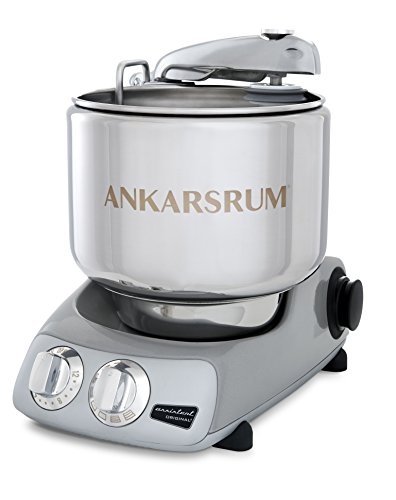
Best Overall for Dough: Ankarsrum Assistent Original Stand Mixer AKM6230
Every other machine in this guide kneads by dragging a hook through dough. The Ankarsrum kneads the way a baker’s hands do: the bowl itself rotates while a roller presses and folds the dough against its side, with a scraper keeping the bowl clean. The result, over thousands of home bakeries, is a reputation no hook has matched — gluten developed thoroughly but gently, dough that stays cool instead of friction-warming, and high-hydration mixtures that climb a hook in other machines handled without drama. For dough specifically, this is the benchmark the rest of the list is priced and judged against.
Strengths
- Roller-and-bowl kneading develops gluten without tearing or overheating the dough
- Huge effective capacity for double and triple loaves in one batch
- Gentle action suits enriched and high-hydration doughs that punish hook-only machines
Trade-offs
- Premium tier machine — the most considered purchase in this guide
- Technique differs from hook kneading; expect a learning curve of several bakes
- Large footprint and a design that divides opinion on the counter
| Model | AKM6230, Jubilee Silver |
| Design | Rotating bowl with roller and scraper system |
| Style | Assistent Original, Swedish design |
Capacity is the second half of its case. The rotating bowl takes family-and-then-some quantities — multiple loaves, a party’s worth of pizza bases, a big batch of brioche — in a single knead, where hook machines force split batches that proof unevenly. The system also asks less of the motor per kilo of dough, because the roller works with the bowl’s rotation rather than fighting a static mass. Bakers moving from a tilt-head will need several bakes to learn its cues: dough readiness is judged by how it sheets and pulls from the roller, not by how it wraps a hook.
The costs are money, space and commitment. It is a premium machine that earns its price only in dough — as a general cake-and-cream mixer it is capable but not the star of those guides — and its size wants a permanent counter position. Buy it when bread has become a weekly discipline rather than a monthly project, and it will likely be the last dough machine you purchase. Buy it hopefully, for a habit you do not yet have, and it becomes the most elegant under-used appliance in the kitchen.
Best for: serious home bread bakers making multiple loaves, pizza and enriched doughs weekly / Not suited for: occasional bakers or anyone who wants one familiar tilt-head for everything
Check the current price on Amazon for the Ankarsrum Assistent Original Stand Mixer AKM6230 in the colour and configuration you want.

Best for Big Bread Batches: Bosch Universal Plus Stand Mixer with Stainless Steel Bowl (MUZ6ER1)
Batch baking breaks ordinary mixers in a specific way: not on the first loaf, but on the third, when the bowl is full, the dough is stiff and the motor has been working for ten minutes. The Universal Plus was designed in that territory. Its bottom-drive system turns the whole bowl’s contents with an even, unhurried strength, and the open top — no head hovering over the bowl — lets you add flour in the staged additions that keep a big dough from climbing or dusting the kitchen. This configuration pairs it with the MUZ6ER1 stainless steel bowl for bakers who prefer metal’s durability and chill.
Strengths
- Bottom drive delivers steady kneading torque through full, heavy bowls
- Open-top bowl makes adding flour in stages easy and visible
- Stainless bowl configuration suits bakers who prefer metal over the standard bowl
Trade-offs
- Dough handling differs from hook machines — flour addition timing matters more
- Accessories and bowls are Bosch-system specific
- Light cake work is competent rather than class-leading
| Bowl | MUZ6ER1 stainless steel bowl |
| Design | Bottom-drive Universal Plus |
| Capacity class | 6.5 quart class |
In dough terms, its virtues are stamina and honesty. It does not surge as resistance builds, it does not need the dough babysat and re-centred the way small hook machines do, and its working capacity means the weekly bake — sandwich loaves for the freezer, rolls for Sunday, pizza for Friday — happens in one session with one washing-up. Generations of batch bakers, particularly in bread-heavy households, have kept these machines in service for remarkable spans, which is the market’s own durability verdict.
The trade-offs mirror the Ankarsrum’s at a lower tier: a system to learn, brand-specific bowls and attachments, and cake work that is perfectly good rather than inspired. If your baking identity is ‘bread, in quantity, every week’, those are trivial costs. If dough is one chapter of a varied baking life, the KitchenAid bowl-lift below splits the difference more gracefully.
Best for: batch bakers producing several loaves or large pizza and roll doughs at once / Not suited for: small-batch bakers or those wanting a conventional tilt-head experience
Check the current price on Amazon for the Bosch Universal Plus Stand Mixer with Stainless Steel Bowl (MUZ6ER1) in the colour and configuration you want.

Best Bowl-Lift All-Rounder: KitchenAid 7-Quart Bowl-Lift Stand Mixer KSM70 (Contour Silver)
Most bakers do not want a dough-only machine; they want one excellent mixer whose dough work they never have to apologise for. The KSM70 is that compromise executed properly. The bowl-lift frame is the key: where tilt-head machines can nod and strain against a stiff dough, the lift’s clamped bowl and rigid column stay composed, and the 7-quart bowl gives dough room to be worked rather than merely contained. Eleven speeds include the low, steady settings dough wants at the start, when flour and water are becoming a shaggy mass.
Strengths
- Bowl-lift rigidity keeps stiff doughs from rocking the machine
- Large bowl kneads family-size dough batches in one go
- Full KitchenAid attachment ecosystem for everything beyond dough
Trade-offs
- Dough capacity still has a ceiling — very stiff, maximum-flour batches should be split
- Tall and heavy; a permanent counter resident
- Hook kneading warms dough slightly more than roller systems on long kneads
| Bowl capacity | 7 quart |
| Design | Bowl-lift |
| Speeds | 11 speeds, including 1/2 speed for folding |
| Included | Double flex-edge beater and 4 other accessories |
Technique with a hook is about restraint, and this machine supports it: start slow until the flour is incorporated, knead at the low working speed the maker specifies for dough — never the dramatic high speeds new bakers choose — and let time do what force cannot. Within its flour-weight ceiling, which the listing and manual state and which you should respect, it produces smooth, elastic dough for loaves, rolls and pizza with the convenience of the wider KitchenAid world: hub attachments, available parts, familiar controls.
Its limits are the honest limits of hook kneading itself. Very stiff doughs at maximum batch size will still be happier split in two, and a long knead adds a little frictional warmth that roller systems avoid. For the baker whose life is bread plus everything else — cakes on birthdays, cream on Sundays — those limits rarely bind, and the KSM70 is the most complete single purchase in this guide.
Best for: bakers who knead weekly and also want a full-service stand mixer for cakes and more / Not suited for: purist bread specialists, who should look at the Ankarsrum, or small kitchens
Check the current price on Amazon for the KitchenAid 7-Quart Bowl-Lift Stand Mixer KSM70 (Contour Silver) in the colour and configuration you want.

Best Heavy-Duty: KitchenAid Commercial Series 8-Qt Bowl-Lift Stand Mixer KSM8990
There is a point in a home baker’s life — usually around the first farmers-market stall or the first standing order from a café — where consumer machines stop being the right tool. The KSM8990 is built past that point: a commercial-series bowl-lift mixer with an 8-quart bowl and NSF certification, which is the credential that lets a machine work legally in many food-selling contexts. Its dough case is simple: sustained work, big batches, day after day, without the duty-cycle anxiety of domestic motors.
Strengths
- Commercial construction rated for sustained, daily dough work
- 8-quart bowl handles the largest home and micro-bakery batches
- NSF certification matters if you sell what you bake
Trade-offs
- Size, weight and cost exceed almost any purely domestic need
- Fewer domestic comforts and colours than the consumer lines
- Small doughs are lost in the big bowl — this is a volume machine
| Bowl capacity | 8 quart |
| Design | Bowl-lift, commercial series |
| Certification | NSF certified |
At home, its virtues show as headroom. Doughs that would fill a 5-quart machine to protesting point sit comfortably; long kneads are a design assumption rather than an imposition; the frame treats a full bowl of stiff dough as a normal Tuesday. If your baking has a revenue line attached, or your household genuinely consumes bread at institutional rates, this is the machine that ends the upgrade cycle.
For everyone else it is, frankly, too much machine: too tall for many cabinets, too heavy to move, too capacious for a single loaf, and priced like the professional tool it is. This guide includes it because dough searches attract both audiences, and the worst outcome is a serious baker under-buying twice. Match it to genuine volume and it is superb; match it to a hobby and it will loom.
Best for: micro-bakeries, market bakers and households baking dough at near-commercial volume / Not suited for: ordinary home bakers, for whom it is machinery in search of a problem
Check the current price on Amazon for the KitchenAid Commercial Series 8-Qt Bowl-Lift Stand Mixer KSM8990 in the colour and configuration you want.
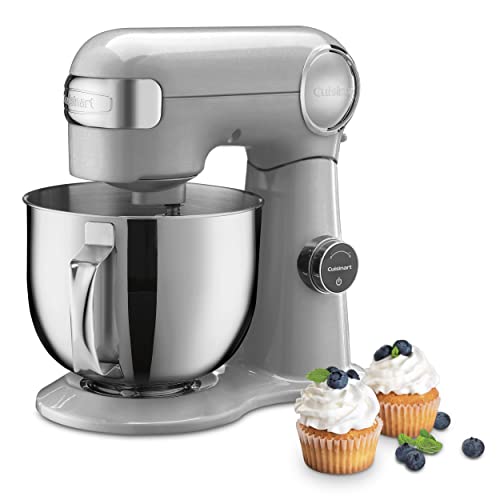
Best Mid-Range for Dough: Cuisinart Precision Pro Digital Stand Mixer SMD-50BC
Consistency is the skill bread baking actually teaches, and the SMD-50BC is built to help you learn it. Its digital control holds a chosen speed precisely and returns to it exactly, bake after bake — and since dough responds to kneading speed as surely as to time, repeatable speed means repeatable crumb. Three preprogrammed settings cover common preparation stages for bakers who would rather follow a programme than improvise one, and the 5.5-quart bowl is the right size for the standard home loaf and pizza quantities.
Strengths
- Digital speed control makes kneading speeds repeatable bake after bake
- Preprogrammed settings take guesswork out of common dough stages
- Full kit included — paddle, whisk and dough hook in the box
Trade-offs
- Digital controls are a different feel from a lever — some bakers prefer analogue
- Mid-range frame is not built for maximum-stiffness dough at full capacity
- Smaller service and accessory network than KitchenAid
| Bowl capacity | 5.5 quart |
| Speeds | 12 speeds, digital control |
| Settings | 3 preprogrammed food prep settings |
| Included | Mixing bowl, whisk, flat mixing paddle, dough hook |
As a dough machine it sits in the sensible middle: stronger and more controlled than budget tilt-heads, less specialised than the roller and bottom-drive systems above. Enriched doughs, sandwich loaves and pizza dough are its home ground; the stiffest wholegrain batches at full bowl capacity are where you learn its ceiling and start splitting batches — a normal stage in a baker’s education, not an indictment. The included dough hook, paddle and whisk mean no second purchase stands between you and the first loaf.
Choose it if your bread habit is forming and you value control aids while it forms. Bakers who already knead weekly in quantity should spend the difference on the batch machines above; bakers who bake dough twice a year should spend less. In its intended middle — regular home dough, made with increasing skill — the Cuisinart digital is a thoughtful, well-judged machine.
Best for: developing bread bakers who want control and consistency at a mid-range tier / Not suited for: heavy batch bakers or traditionalists who distrust digital controls on mixers
Check the current price on Amazon for the Cuisinart Precision Pro Digital Stand Mixer SMD-50BC in the colour and configuration you want.

Best Dedicated Dough Maker: Joydeem Electric Dough Maker with Ferment Function HMJ-A701
The Joydeem takes the opposite bet from every all-rounder in this guide: it makes dough, only dough, and it stays for the second act. After kneading in its 7.4-quart bowl, the machine’s fermentation function holds the dough at proofing conditions — with seasonal settings that acknowledge a winter kitchen and a summer kitchen are different proofing environments — so pizza dough, bread dough and sourdough move from mixing to proofing without being scraped into a second oiled bowl and covered with film.
Strengths
- Knead and proof in one bowl — no transferring sticky dough between containers
- Fermentation function with seasonal settings supports sourdough and slow doughs
- Large capacity aimed squarely at dough, not diluted by other jobs
Trade-offs
- It does one job — no whipping, creaming or cake work at all
- Another single-purpose appliance to store
- Less familiar brand and ecosystem than the stand-mixer names
| Capacity | 7.4 quart |
| Function | Kneading plus seasonal fermentation |
| Use | Dough proofing for pizza, bread and sourdough |
That single-vessel workflow is more valuable than it sounds. Every transfer of a wet dough loses a little of it to bowls, hands and worktops, and disturbs the structure the kneading built. For the pizza-night household and the sourdough keeper — bakers whose dough life is frequent and focused — a machine that kneads generously and then minds the proof is a genuinely different tool, not a lesser stand mixer. Its capacity is dough-honest too: sized for real batches of the one thing it does.
The boundary is absolute, and the guide will not blur it: this machine will not whip your cream, cream your butter or mix your cake, and its brand ecosystem is a fraction of the big names’. Buy it as a dough specialist alongside a general mixer, or as the sole machine of a baker who truly only makes dough. In either of those lives it earns its shelf; as an only-mixer for a varied baker, it is the wrong shape of excellent.
Best for: pizza and sourdough devotees who want kneading and proofing in a single vessel / Not suited for: anyone needing a general-purpose mixer — pair it with one, or choose above
Check the current price on Amazon for the Joydeem Electric Dough Maker with Ferment Function HMJ-A701 in the colour and configuration you want.
Hook, Roller or Bottom Drive: The Three Kneading Actions Explained
Stand in front of the three systems with the same dough and the differences stop being abstract. A hook works from above, dragging the dough mass around the bowl, folding it against itself — effective, familiar, and the reason hook bakers learn to manage climbing and to rest dough mid-knead. A roller works from the side: the bowl rotates, the dough is carried to the roller, pressed, folded and released, hundreds of quiet repetitions that mimic hand kneading more closely than any other machine action, which is why roller doughs often feel smoother at the same hydration.
A bottom drive works from below, turning beaters or a hook through the dough with the bowl’s full weight stabilising the machine — the batch baker’s friend, because nothing about a full bowl changes the geometry of the work. None of the three is a gimmick; each is a coherent answer to the same physics, with a different baker in mind. The reviews in this guide are, underneath the badges, an argument about which answer fits which kitchen — and the right response to that argument is to recognise your own baking in one of the descriptions.
Comparison Table
| Pick | Badge | Key spec | Best for |
|---|---|---|---|
| Ankarsrum Assistent Original Stand Mixer AKM6230 | Best Overall for Dough | Rotating-bowl kneading system | serious home bread bakers making multiple loaves, pizza and enriched doughs weekly |
| Bosch Universal Plus Stand Mixer with Stainless Steel Bowl (MUZ6ER1) | Best for Big Bread Batches | Bottom-drive, stainless bowl, batch capacity | batch bakers producing several loaves or large pizza and roll doughs at once |
| KitchenAid 7-Quart Bowl-Lift Stand Mixer KSM70 (Contour Silver) | Best Bowl-Lift All-Rounder | 7-qt bowl-lift, 11 speeds | bakers who knead weekly and also want a full-service stand mixer for cakes and more |
| KitchenAid Commercial Series 8-Qt Bowl-Lift Stand Mixer KSM8990 | Best Heavy-Duty | 8-qt commercial bowl-lift, NSF certified | micro-bakeries, market bakers and households baking dough at near-commercial volume |
| Cuisinart Precision Pro Digital Stand Mixer SMD-50BC | Best Mid-Range for Dough | 5.5-qt digital, 12 speeds, dough hook included | developing bread bakers who want control and consistency at a mid-range tier |
| Joydeem Electric Dough Maker with Ferment Function HMJ-A701 | Best Dedicated Dough Maker | 7.4-qt knead-and-ferment dough maker | pizza and sourdough devotees who want kneading and proofing in a single vessel |
Specifications above are limited to figures confirmed in the manufacturer listing data checked for this guide. Where a maker sells the same model in several sizes or bundles, the listing for the exact version is the final word, which is one more reason to check price on Amazon on the precise configuration rather than relying on a headline number.
How to Choose the Best Food Mixers for Dough
Start with flour weight, the specification that actually governs your baking. Tot up the flour in your standard bake: a single sandwich loaf might use a modest amount, a double batch of pizza dough for a family night considerably more, a weekly freezer-filling session more still. Then choose a machine whose stated dough capacity — not bowl volume — covers that weight with headroom. Working habitually at a machine’s ceiling shortens its life and worsens the dough, because a straining mixer kneads unevenly and warms the batch. Headroom is not waste; in dough, headroom is quality.
Then choose your kneading philosophy. Hook machines — the KitchenAid and Cuisinart pattern — are familiar, versatile and entirely capable for most home doughs; their discipline is speed restraint, kneading low and slow. Roller machines — the Ankarsrum pattern — knead most gently and at the largest scale, and reward bakers who make dough the centre of their baking. Bottom-drive machines — the Bosch pattern — offer stamina and open-bowl convenience for batch work. Dedicated dough makers add proofing to the knead and suit focused pizza and sourdough bakers. None is universally best; each is best for a baker-shaped reason.
Hydration and stiffness: the hidden variables
Wet doughs and stiff doughs stress machines oppositely. High-hydration dough — the slack, sticky kind behind ciabatta and many sourdoughs — climbs hooks and slaps around bowls; roller and bottom-drive systems handle it with the least theatre. Stiff dough — bagels, some wholegrain and enriched festival breads — is a torque test that exposes frame flex and motor optimism; bowl-lift rigidity and conservative batch sizes are the answer. Know which end of the spectrum your baking lives at, and weight the reviews accordingly.
Budget tiers for dough bakers
Dough is where spending more buys measurable things, which is not true of every category in this series. The mid-range buys competent hook kneading for standard loaves. The upper tier buys rigidity, capacity and repeatability — bowl-lift frames and digital control. The specialist tier buys a different kneading action altogether in the roller and bottom-drive machines, and for weekly dough bakers that difference is worth more than any feature list. What no tier buys is permission to ignore flour limits: the cheapest way to own a dough mixer for a decade is to respect the ceiling printed in its manual.
Reading a Dough Mixer Specification Like a Baker
Ignore the headline wattage arms race and read three other numbers. Bowl capacity tells you the vessel; the maker’s flour or dough capacity — stated in the manual and often on the listing — tells you the truth. Speed range matters at the bottom: you want a genuine slow speed for incorporating flour without a dust storm, and a defined dough speed, because kneading fast tears gluten and overheats dough. Finally, duty guidance: machines that state kneading-time limits are being honest with you, and the honest number is the one to plan batches around.
Attachments deserve one dough-specific check: the hook’s shape. C-hooks push dough around adequately; spiral and J-shaped hooks gather and knead more efficiently and climb less. Where a listing shows the hook clearly, let its shape inform you — it is the part of the machine that touches your bread’s future every single bake.
Dough Types and the Machines That Suit Them
Pizza dough is the friendliest machine dough: moderate hydration, forgiving timing, and batches that scale from one base to a party. Every machine in this guide handles it, and the choice turns on quantity — hand-mixer households can manage a single base, while the batch machines turn pizza night for twelve into one knead. Sandwich and loaf doughs are the generalists’ ground too, with the caveat that enriched versions — milk, egg, butter — knead stickier and benefit from the autolyse and from adding butter late, in pieces, once the gluten has formed.
Sourdough deserves specific respect because its long fermentations punish over-kneading: the dough arrives at the mixer already developing, and heavy-handed machine work early can tear what time built. Gentle systems and short, watched kneads suit it best, which is why sourdough bakers gravitate to roller machines and knead-and-proof dough makers. At the other extreme, bagel and pretzel doughs — stiff, low-hydration, unforgiving — are the torque examination: small batches, bowl-lift rigidity, and a baker who listens to the machine. Brioche and panettone, rich with butter and egg, ask for patience and cool dough rather than power; they reward the machine whose low speed is truly low.
The pattern across all four families is the same lesson this guide keeps teaching: dough type is a specification. When you read a mixer’s marketing, translate it into your doughs — their hydration, their stiffness, their weekly weight — and the right machine usually names itself.
How to Knead Dough in a Stand Mixer Without Hurting the Dough or the Machine
Most mixer-kneading failures are process failures. This sequence works across the hook machines in this guide, with notes where the roller and bottom-drive systems differ.
- Combine flour and liquid in the bowl and mix at the lowest speed only until a shaggy mass forms and no dry flour remains — usually a minute or two. Add flour in stages for big batches rather than all at once; dry pockets at the base are the seed of uneven dough.
- Rest the shaggy dough, covered, for twenty to thirty minutes before kneading. This autolyse lets the flour hydrate and gluten begin forming on its own, and it can cut the machine kneading your dough needs by a third — less strain on dough and motor alike.
- Knead at the machine’s dough speed — the low setting the maker specifies, not the speed that looks impressive. Watch the dough, not the clock: you are looking for a smooth surface, elasticity when pulled, and a mass that cleans the bowl’s sides.
- Use the windowpane test to judge doneness: stretch a small piece thin enough to see light through without tearing. If it tears, knead a few minutes more and test again. Under-kneaded dough bakes dense; over-kneaded dough turns slack and sticky and cannot be rescued.
- If dough climbs the hook, stop, push it down and restart — climbing means the batch is at the top of the machine’s comfort or the dough is very wet, and both are information, not malfunctions. On roller and bottom-drive machines, adjust the roller position or add flour a spoonful at a time instead.
- Turn the dough out, shape it into a smooth ball and proof it in a covered bowl — or, with a dedicated dough maker, simply leave it in the machine’s bowl on its ferment setting. Clean the hook and bowl promptly; dried dough is concrete with ambitions.
Temperature is the quiet variable: friction warms dough as it kneads, so start with cool liquid for long kneads and shorter kneads for enriched doughs whose butter you want to stay emulsified. Bakers who check dough temperature with a simple thermometer stop guessing about proofing times — the dough tells you its schedule if you measure it.
Common Buying Mistakes
Kneading at high speed to save time. Speed does not substitute for time in gluten development; it tears strands, oxidises the dough and heats it. Every maker specifies a low dough speed for a reason. Slow kneading is not the cautious option — it is the correct one.
Judging capacity by bowl size. A 7-quart bowl does not mean 7 quarts of dough. Flour weight limits are printed in manuals because motors and frames have real ceilings. Learn your machine’s flour limit and treat it as law.
Skipping the autolyse. Twenty idle minutes of hydration does work your machine would otherwise strain to do. Bakers who skip it knead longer, heat the dough more and wear the mixer harder for the same loaf.
Adding all the flour at once. A full load of dry flour over liquid guarantees dust, dry pockets and a hook paddling in powder while the base stays wet. Stage the flour, especially in larger batches, and let each addition incorporate.
Walking away from a kneading machine. Dough changes state mid-knead: it climbs, it tightens, it can strain the machine audibly. Stay within earshot, check every few minutes, and treat new noises as instructions to stop and look.
Expecting one machine to be best at everything. The dough specialists here are merely good at cake; the cake champions are merely good at dough. Bakers serious about both either accept the all-rounder’s honest compromises or end up, like many professionals, with two tools.
Final Recommendation
If dough is the centre of your baking, the Ankarsrum is the machine this guide exists to point you to — its roller kneading is a genuine difference, not a marketing one. Batch bakers should choose the Bosch Universal Plus for stamina and open-bowl ease, and bakers who want one machine for dough and everything else should take the KSM70 bowl-lift, the strongest all-rounder here. Developing bakers get control and value from the Cuisinart digital, volume professionals get their machine in the 8-quart Commercial, and pizza-and-sourdough specialists get a workflow in the Joydeem that no stand mixer copies.
Whichever you choose, learn its flour limit, knead low and slow, and let the autolyse do its quiet work. Check the current price on Amazon for the exact configuration before you commit — and then bake weekly, because dough skill, like dough itself, only develops with regular handling.
- Best Overall for Dough: Ankarsrum Assistent Original Stand Mixer AKM6230 — serious home bread bakers making multiple loaves, pizza and enriched doughs weekly.
- Best for Big Bread Batches: Bosch Universal Plus Stand Mixer with Stainless Steel Bowl (MUZ6ER1) — batch bakers producing several loaves or large pizza and roll doughs at once.
- Best Bowl-Lift All-Rounder: KitchenAid 7-Quart Bowl-Lift Stand Mixer KSM70 (Contour Silver) — bakers who knead weekly and also want a full-service stand mixer for cakes and more.
- Best Heavy-Duty: KitchenAid Commercial Series 8-Qt Bowl-Lift Stand Mixer KSM8990 — micro-bakeries, market bakers and households baking dough at near-commercial volume.
- Best Mid-Range for Dough: Cuisinart Precision Pro Digital Stand Mixer SMD-50BC — developing bread bakers who want control and consistency at a mid-range tier.
- Best Dedicated Dough Maker: Joydeem Electric Dough Maker with Ferment Function HMJ-A701 — pizza and sourdough devotees who want kneading and proofing in a single vessel.
Related guides in this series: Best Food Mixers For Cake Making; Best Food Mixers For Cakes; Best Food Stand Mixers; Best Food Mixers For Bread Making; Best Food Mixers Under $100; Best Freestanding Kitchen Mixers.
Frequently Asked Questions
What is the best type of mixer for bread dough?
For dedicated dough work, roller-style machines such as the Ankarsrum knead most gently and at the largest scale, while bowl-lift hook machines are the best all-round compromise. Bottom-drive machines suit batch baking. The best type is the one matched to your batch size and how exclusively you bake dough.
How much flour can a stand mixer knead at once?
Far less than the bowl size implies — every machine has a stated flour or dough capacity in its manual, and that figure, not the quarts, is the limit to respect. As a pattern, mid-size home machines handle standard single and double loaf batches; batch and specialist machines handle considerably more. Exceeding the limit strains the motor and kneads unevenly.
Why does my dough climb the hook?
Climbing happens with wet doughs, full bowls and hooks whose shape lets the mass ride up. Stop, push the dough down and continue; reduce batch size if it persists; and consider that very high-hydration doughs are simply happier in roller or bottom-drive machines, which is a matching issue, not a skill issue.
Can kneading in a mixer overheat dough?
Yes — friction adds warmth throughout a knead, and long or fast kneads add the most. Warm dough proofs faster and can turn slack. Start with cool liquid, knead at the specified low speed, use an autolyse to shorten machine time, and check temperature if your proofing times never match recipes.
Is a dedicated dough maker worth it if I own a stand mixer?
For frequent pizza and sourdough bakers, the knead-and-proof-in-one-bowl workflow is a real convenience that stand mixers do not replicate. For occasional dough bakers, it is an extra appliance solving a rare problem. Frequency is the whole answer.
What speed should I knead dough at?
The low speed your machine’s maker specifies for dough — on most home machines, one of the lowest settings. High speeds tear gluten, overheat the batch and strain the drive. If a recipe’s timing assumes hand kneading, expect the machine to be somewhat faster, and judge by the windowpane test rather than the clock.


