Disclosure: airfryerkitchensupply.com is reader-supported. When you buy through links on our site, we may earn an affiliate commission at no extra cost to you.
Where to buy
This page compares the best desk chairs with soft seats shortlisted and verified for this guide. Every linked chair below was confirmed before it earned a link, and each one is sold as a complete chair, not a cushion pad or a chair mat. Listings in this category change cushions and fabrics between production runs, so check price on Amazon and re-read the seat description on the listing page before you order.
- BestOffice Ergonomic Office Chair (Sponge Seat) — Best Overall: check price on Amazon
- SIHOO B100 SE Ergonomic Office Chair — Best Soft Seat: check price on Amazon
- Furmax Office Chair (Mesh Back) — Best Budget: check price on Amazon
- SIHOO M18 Ergonomic Office Chair — Best Wide Cushion: check price on Amazon
- FDW High Back Office Chair — Best Padded Executive: check price on Amazon
- Ergonomic Leather Desk Office Chair 400LBS — Best Big and Tall: check price on Amazon
If you are shopping for the best desk chairs with soft seats, the honest starting point is that “soft” is the most abused word in this category. Almost every budget mesh chair calls its seat comfortable, yet many of them are a thin layer of foam over a hard plywood pan that feels fine for twenty minutes and punishing by hour three. A genuinely soft seat is about what is under you after the foam compresses: enough thickness to keep your sit bones off the base, a material that gives without bottoming out, and a front edge that does not press into the back of your thighs.
The six chairs in this guide were chosen because their verified listings actually say something concrete about the seat: a sponge seat, a wide cushion, a soft memory foam seat, a padded backrest and soft seat cushion, or padded armrests on a chair built around a cushioned design. Where a listing only promises generic comfort with no seat detail at all, the chair did not make the cut. You will find mesh-back chairs with cushioned seats, leather executive chairs, and one big-and-tall design, because softness matters to very different bodies in very different ways.
One warning before the picks: soft is not automatically better. A seat that is too soft and too deep can tilt your pelvis, round your lower back, and make a long workday worse than a firm seat would. The buying-guide sections below explain how to match cushion thickness, seat depth, and back support to your body and your desk, and the reviews call out honestly which of these chairs run plush, which run merely padded, and which trade some softness for structure.
Key Takeaways
- Seat softness you can verify comes from the listing itself: sponge, memory foam, wide cushion, or an explicitly padded seat — not from the word “comfortable.”
- A soft seat still needs a supportive back; every pick here pairs its cushion with lumbar support of some kind.
- Seat depth matters as much as padding: you should be able to sit back fully with a small gap behind your knees.
- Mesh backs with foam seats are the practical middle ground for warm rooms; full leather chairs feel plusher but trap more heat.
- No prices are printed in this guide on purpose — check price on Amazon on the listing, where the current configuration is described.
In this guide
Quick Picks
BestOffice Ergonomic Office Chair (Sponge Seat) — Best Overall. The rare budget chair whose listing actually names its seat material: a sponge seat, paired with a breathable mesh back and lumbar support. Check the current price on Amazon.
SIHOO B100 SE Ergonomic Office Chair — Best Soft Seat. The only pick whose verified title leads with the words “Soft Memory Foam” for the seat — the most direct soft-seat claim in this guide. Check the current price on Amazon.
Furmax Office Chair (Mesh Back) — Best Budget. A long-running budget staple: mesh back, lumbar support, 360-degree swivel, and a padded seat at the lowest tier in this guide. Check the current price on Amazon.
SIHOO M18 Ergonomic Office Chair — Best Wide Cushion. A wide cushion, a headrest, 2D armrests and a stated 330 lb capacity — the roomiest verified seat in this guide. Check the current price on Amazon.
FDW High Back Office Chair — Best Padded Executive. The verified title says it plainly — padded backrest and soft seat cushion — in a PU leather high-back executive format. Check the current price on Amazon.
Ergonomic Leather Desk Office Chair 400LBS — Best Big and Tall. A big-and-tall executive design with a stated 400 lb capacity and padded armrests — softness scaled up for larger frames. Check the current price on Amazon.
How These Picks Were Chosen
A chair only received a purchase link when the listed a clear, exact match for the model described. Chairs whose titles described accessories — seat cushion pads, chair mats, footrests, lumbar pillows — were excluded, because this guide is about complete desk chairs, and a pad is a different purchase with different expectations.
Within the verified shortlist, chairs were ranked on four things: what the listing verifiably says about the seat, the support structure around that seat (lumbar support, armrests, tilt), build signals such as stated capacity where the title gives one, and how honestly the chair’s likely trade-offs can be described. Two chairs from the same brand family were only both included when their verified titles describe genuinely different designs, not the same chair in two colours.
The 6 Best Desk Chairs With Soft Seats
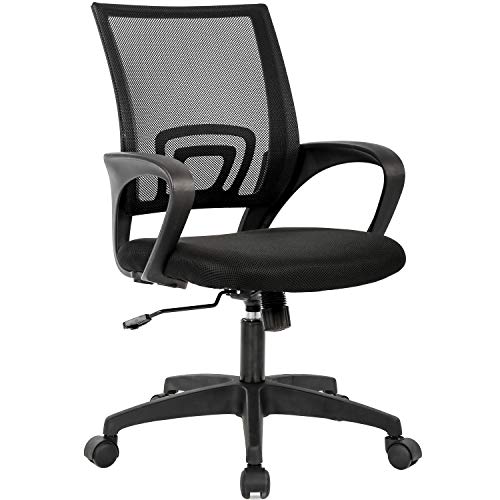
BestOffice Ergonomic Office Chair (Sponge Seat) — Best Overall
This is the chair that best matches the literal promise of this search at a budget tier. The verified listing describes a sponge seat — a simple, honest cushion rather than a sculpted ergonomic pan — under a mid-back mesh design with lumbar support and adjustable height. It suits students, home-office workers furnishing a first desk, and anyone who wants a seat that feels cushioned the moment they sit down rather than engineered and firm.
Strengths
- Verified listing explicitly describes a sponge seat
- Breathable mesh backrest keeps the back cooler than full upholstery
- Lumbar support and adjustable height cover the basic ergonomic adjustments
Trade-offs
- Sponge seats compress over time faster than denser foams
- Mid-back design gives no head or upper-back support for reclining
- Budget-tier build; heavy daily users may outgrow it
| Seat | Sponge seat (per Amazon title) |
| Back | Breathable mesh backrest, mid-back |
| Support | Lumbar support |
| Height | Adjustable |
| Base | Rolling wheels, swivel |
Sponge foam is the classic soft-seat material: it gives immediately, distributes weight evenly at first contact, and feels welcoming in a way dense ergonomic foams do not. The trade is longevity and support — sponge compresses, and after months of full workdays it can pack down over the seat pan. For the price tier this chair occupies, that is a fair exchange, and the mesh back compensates by keeping the other half of the sitting equation cool and lightly supportive. Treat it as a genuinely soft seat for moderate daily hours, not a ten-hour executive throne, and it does its job honestly.
Best for: budget buyers who want a verifiably cushioned seat for a home desk / Not suited for: very heavy users or anyone needing headrest support for long reclines
Check on Amazon — check price on Amazon before ordering, since listings and configurations change.

SIHOO B100 SE Ergonomic Office Chair — Best Soft Seat
SIHOO’s B100 SE is the pick for readers who want the softness itself to be the headline feature. The listing-verified title describes a soft memory foam seat, lumbar support, flip-up armrests, and a three-gear tilt that locks out to 135 degrees, with a stated 300 lb capacity. Memory foam behaves differently from sponge: it warms, moulds, and holds your shape, which many sitters experience as the plushest seat of all.
Strengths
- Verified title explicitly describes a soft memory foam seat
- Flip-up armrests let the chair slide fully under a desk
- 3-gear tilt to 135° supports genuine reclining breaks
Trade-offs
- Memory foam sleeps warm compared with mesh seats
- 300 lb stated capacity excludes some larger sitters
- Foam softness varies with room temperature
| Seat | Soft memory foam (per Amazon title) |
| Capacity | 300 lbs (per Amazon title) |
| Tilt | 3-gear, up to 135° |
| Armrests | Flip-up |
| Support | Lumbar support |
Memory foam’s moulding effect is a real comfort advantage for people whose main complaint is pressure points on a hard seat: the foam spreads load across the whole contact area instead of concentrating it under the sit bones. The honest cautions are heat and softness drift — foam feels firmer in a cold room and softer in a warm one, and it returns slowly when you shift position. The flip-up arms and the deep tilt range make this the most lounge-friendly chair here, while the stated capacity in the title lets larger buyers self-select without guessing.
Best for: sitters who specifically want a moulding memory-foam seat and take reclined breaks / Not suited for: hot sleepers of chairs — anyone who already finds foam seats too warm
Check on Amazon — check price on Amazon before ordering, since listings and configurations change.
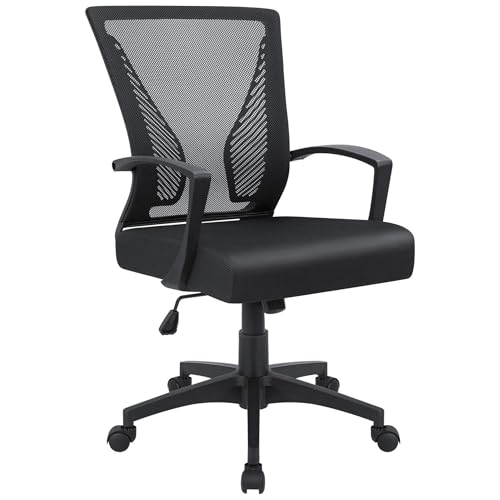
Furmax Office Chair (Mesh Back) — Best Budget
Furmax’s mesh desk chair is the value anchor of this list. Its verified title does not name a special seat foam, so this guide describes it plainly: it is a padded-seat budget chair whose comfort comes from a conventional cushion under a breathable mesh back, with lumbar support, adjustable height, and armrests included. It earns its place because for light-to-moderate daily use it delivers the soft-seat experience most people actually mean — no hard pan, no plastic shell — at the tier where every dollar matters.
Strengths
- Complete ergonomic basics: lumbar support, height adjustment, armrests
- Mesh back suits warm rooms and shared spaces
- 360° swivel and easy assembly per the verified title
Trade-offs
- Seat foam is not specified in the title — padding is standard, not plush
- Mid-back height only; no headrest
- Budget casters and arms feel less solid than premium chairs
| Seat | Padded seat (foam type: Not stated) |
| Back | Mesh, mid-back, breathable |
| Support | Lumbar support |
| Swivel | 360° |
| Assembly | Easy assembly (per Amazon title) |
There is a useful honesty in a chair like this: it does not promise a special foam, and the seat you get is a normal, serviceable cushion. For a spare-room desk, a teenager’s study chair, or a first apartment, that is often exactly right, and the money saved versus the premium picks is real. Where it loses ground is marathon sitting — thin-to-medium padding over a standard pan will eventually announce itself during a ten-hour day. Buy it for the hours you actually sit, and it is a sensible, soft-enough seat.
Best for: budget furnishing, spare desks, and moderate daily sitting hours / Not suited for: full-time remote workers logging very long days at one desk
Check on Amazon — check price on Amazon before ordering, since listings and configurations change.

SIHOO M18 Ergonomic Office Chair — Best Wide Cushion
The M18 answers a different soft-seat problem: not foam type, but space. Its verified title promises a wide cushion, and pairs it with a mesh back, a headrest, adjustable lumbar support, 2D armrests, tilt lock, and a stated 330 lb capacity. Wider sitters, and anyone who shifts position or sits cross-legged at a desk, often find that width delivers more real comfort than an extra half-inch of foam ever could.
Strengths
- Wide cushion per the verified title — room to shift and settle
- Headrest included, unlike the mid-back budget picks
- Stated 330 lb capacity and 2D adjustable armrests
Trade-offs
- Wide seat can feel unsupportive for petite sitters
- Mesh back support depends on correct lumbar adjustment
- Larger footprint needs more desk clearance
| Seat | Wide cushion (foam type: Not stated) |
| Capacity | 330 lbs (per Amazon title) |
| Back | Mesh with headrest |
| Armrests | 2D adjustable |
| Tilt | Tilt lock |
Seat width is the under-discussed half of softness. A narrow plush seat still concentrates pressure; a wide cushion lets you distribute weight, change posture, and avoid the perched feeling that makes people fidget. The M18’s supporting cast — adjustable lumbar, real armrest adjustment, tilt lock — means the soft seat sits inside a properly adjustable chair rather than substituting for one. Petite readers should note the honest trade-off in reverse: on a wide seat, a smaller frame may not reach the backrest with feet flat, which is its own discomfort.
Best for: broader sitters and position-shifters who value seat width / Not suited for: petite sitters who need a compact, closely fitted seat
Check on Amazon — check price on Amazon before ordering, since listings and configurations change.

FDW High Back Office Chair — Best Padded Executive
For readers who want the traditional executive look, this FDW high-back chair is the verified option whose title explicitly describes both halves of the padding story: a padded backrest and a soft seat cushion, in black PU leather with lumbar support and height adjustment. It is the plush, enveloping style of soft — upholstery you sink into slightly — rather than the technical ergonomic style.
Strengths
- Verified title explicitly pairs padded backrest with soft seat cushion
- High back supports shoulders and head better than mid-back picks
- PU leather wipes clean more easily than fabric upholstery
Trade-offs
- PU leather traps more heat than mesh during long sessions
- Executive padding style offers fewer fine adjustments
- Leather-look upholstery can wear at edges over years
| Seat | Soft seat cushion (per Amazon title) |
| Back | Padded backrest, high back |
| Upholstery | PU leather, black |
| Support | Lumbar support |
| Height | Height adjustment |
Executive chairs deliver softness through upholstery volume: thicker padding on both the seat and the back, wrapped in a smooth surface. The FDW follows that formula and, unusually for its tier, says so in verifiable words. What you give up versus the mesh picks is airflow and adjustability — there is no mention of armrest adjustment or tilt lock in the title, so treat the ergonomics as supportive-but-simple. For a home office that doubles as a meeting-room chair, or for shorter daily sitting with a premium feel, that trade is reasonable.
Best for: readers who want an executive look with padding on seat and back alike / Not suited for: warm rooms or sitters who need many fine ergonomic adjustments
Check on Amazon — check price on Amazon before ordering, since listings and configurations change.

Ergonomic Leather Desk Office Chair 400LBS — Best Big and Tall
Larger sitters are the readers most often failed by soft-seat claims, because a cushion that feels plush under a lighter body can bottom out completely under a heavier one. This verified big-and-tall executive chair states a 400 lb capacity in its title, pairs lumbar support with padded armrests, and uses a leather executive format. The padded arms matter more than they sound: they are part of the total softness equation during long sits.
Strengths
- Stated 400 lb capacity in the verified title — the highest here
- Padded armrests extend the soft contact surfaces
- Executive format with lumbar support for larger frames
Trade-offs
- Seat foam type is not stated in the title
- Large chair needs a large desk footprint
- Leather upholstery runs warmer than mesh
| Capacity | 400 lbs (per Amazon title) |
| Design | Big and tall executive |
| Armrests | Padded |
| Support | Lumbar support |
| Seat foam | Not stated |
For big-and-tall buyers, the correct order of operations is capacity first, softness second — a chair not built for your weight will not stay soft, because its foam and base are working beyond their design range. This chair clears the first bar with a stated figure in its own title rather than in fine print, and adds padded armrests, which cheaper big-and-tall chairs often leave as bare plastic. Its seat foam is not described in the title, and this guide will not invent one; judge it as a well-padded executive seat and verify the current listing description before ordering.
Best for: larger sitters who need stated capacity headroom plus padded contact points / Not suited for: small spaces or petite sitters, for whom the scale works against fit
Check on Amazon — check price on Amazon before ordering, since listings and configurations change.
Comparison Table
| Pick | Badge | Key spec | Best for |
|---|---|---|---|
| BestOffice Ergonomic Office Chair (Sponge Seat) | Best Overall | Sponge seat, mesh back | budget buyers who want a verifiably cushioned seat for a home desk |
| SIHOO B100 SE Ergonomic Office Chair | Best Soft Seat | Soft memory foam seat, 135° tilt | sitters who specifically want a moulding memory-foam seat and take reclined breaks |
| Furmax Office Chair (Mesh Back) | Best Budget | Padded seat, mesh mid-back | budget furnishing, spare desks, and moderate daily sitting hours |
| SIHOO M18 Ergonomic Office Chair | Best Wide Cushion | Wide cushion, 330 lb capacity | broader sitters and position-shifters who value seat width |
| FDW High Back Office Chair | Best Padded Executive | Soft seat cushion, padded high back | readers who want an executive look with padding on seat and back alike |
| Ergonomic Leather Desk Office Chair 400LBS | Best Big and Tall | 400 lb capacity, padded armrests | larger sitters who need stated capacity headroom plus padded contact points |
How to Choose a Desk Chair With a Soft Seat
Start by translating “soft” into the three things you can actually verify: cushion material, cushion thickness where a listing states it, and seat dimensions. A listing that names its seat — sponge, memory foam, wide cushion — is giving you checkable information. A listing that only says “comfortable” is giving you an adjective. Prefer the checkable kind, and treat unstated foam types as standard padding, neither a scandal nor a feature.
Next, fit the seat to your body. Sit depth should let you rest your back against the backrest with roughly two or three fingers of space behind your knees; a seat that is too deep forces you to perch, which cancels out any softness. Seat width should let you sit without the sides pressing your hips. Height should adjust low enough for your feet to rest flat. These fit checks matter more than foam branding, because a perfectly plush seat in the wrong size is still the wrong chair.
Finally, look at the support around the seat. Lumbar support — ideally adjustable — keeps a soft seat from turning into a slouch. Armrests should meet your forearms without lifting your shoulders. A tilt mechanism with a lock lets you shift load off the seat periodically, which does more for end-of-day comfort than any single cushion material. Buy the chair as a system: soft seat, honest fit, real support.
Soft Seat Materials Compared: Sponge, Memory Foam and Standard Padding
Sponge and conventional foam seats, like the BestOffice pick, feel soft immediately and evenly. They are the familiar cushion of budget and mid-range chairs: welcoming at first sit, adequate for moderate hours, and the fastest to compress permanently over years of use. If your sitting day is three to five hours, sponge is honestly sufficient, and paying more buys durability rather than a different sensation.
Memory foam, like the SIHOO B100 SE’s verified seat, moulds to your shape and redistributes pressure points, which many people experience as the plushest option. Its quirks are temperature sensitivity — firmer when cold, softer when warm — and a slower response when you shift position. It also sleeps warmer than a mesh seat. Sitters who stay in one posture for long stretches tend to love it; fidgeters tend to fight it.
Standard padding under mesh or fabric, like the Furmax and M18 picks, is the unglamorous middle: thinner, firmer-feeling, and heavily dependent on seat size and shape for comfort. The wide-cushion approach shows the other route to softness — geometry instead of material. None of these is universally best; the right choice is the one whose trade-offs match your hours, your room temperature, and your body.
Budget Tiers for Soft-Seat Desk Chairs, Without the Price Traps
This guide prints no product prices, because listings change prices and configurations constantly; check price on Amazon for the current figure. What can be described honestly is what each tier usually buys. The budget tier buys a padded or sponge seat, a mesh or simple upholstered back, and basic height and lumbar features — enough for moderate daily hours. The mid tier adds named seat materials such as memory foam, wider cushions, headrests, better armrest adjustment, and stated capacities. The premium tier adds denser foams that resist compression for years, deeper adjustment ranges, and stronger bases.
The trap to avoid is paying mid-tier money for budget-tier information: a chair whose listing cannot tell you what its seat is made of is a budget chair whatever it costs. Conversely, a budget chair with a verifiably described seat, like the BestOffice sponge seat, is a rational purchase for the right hours. Let the listing’s own words, not the discount banner, set your expectations.
What a Soft Seat Feels Like at Hour One, Hour Four and Hour Eight
The first sit is the worst judge of a chair, because every new cushion feels generous before it has taken your weight for any length of time. At hour one, what you notice is surface character: sponge and standard padding feel immediately soft, memory foam feels slow and enclosing as it warms and moulds, and a wide cushion feels like freedom to shift. None of these impressions is false, but none of them predicts the afternoon. This is why showroom sits and first-evening impressions mislead so many buyers, and why this guide weights verifiable construction over adjectives.
By hour four, the differences become structural. Thin padding over a hard pan announces the pan; you begin to feel the seat’s skeleton through the foam, and you start perching, crossing your legs, or standing more often without knowing why. A wider cushion delays this moment by letting you redistribute weight. Memory foam, fully moulded by now, either feels like a custom seat or like a warm trap, depending on your temperature preference — there is very little middle opinion about it by hour four, which is useful information about yourself if you have ever owned a foam mattress topper.
By hour eight, the chair as a system decides. Lumbar support that was set correctly keeps your back from rounding into the soft seat; tilt that you actually use shifts load off the cushion periodically; armrests at the right height stop your shoulders from creeping upward. The softest seat in this guide will lose to a moderately padded seat inside a well-adjusted chair by hour eight, every time. Buy softness, absolutely — but buy it as part of the system, set the system up with the steps in the how-to section, and judge the result after a full working day rather than a first impression.
Desk Chair Softness for Different Bodies
Petite sitters are the group most often failed by generous seats. A deep, plush cushion on a chair whose seat depth was designed for a taller frame leaves a shorter sitter choosing between back support and feet on the floor, and the softness becomes irrelevant because the posture is wrong. If you are petite, prioritise seat depth and height range over cushion thickness, and treat wide-cushion models with suspicion until you have checked their dimensions against your own thigh length.
Tall and heavy sitters face the opposite failure: cushions that bottom out. Foam density and stated capacity matter more than foam type at higher loads, which is why this guide includes a big-and-tall pick whose title states its capacity outright. A heavier sitter on an under-rated chair compresses its cushion to the pan within months, and the chair is then blamed for a mismatch that was predictable from its own specifications. Match the chair’s stated capacity to your body with headroom to spare.
Everyone between those poles should think in terms of sitting hours rather than body type. A soft seat is a consumable interface: it is engineered for a load range and a daily duration. Three honest hours a day is kind to almost every cushion in this guide; ten unforgiving hours will test the best of them. The most comfortable purchase is the one whose stated design matches the life you will actually give it.
Questions to Ask Before You Order Any Soft-Seat Chair
Work through five questions, in this order, and the right pick usually names itself. First: how many hours a day will this chair actually be sat in? Be honest — the answer separates the budget sponge seat, which is a rational purchase at three hours, from the chairs built for ten. Second: what does the listing verifiably say about the seat? If you cannot point to a material, a dimension, or a construction word, you are buying standard padding and should pay standard-padding money. Third: does the chair’s stated capacity cover you with room to spare? Capacity is a comfort specification, because foam working within its design range stays soft and foam working beyond it does not.
Fourth: does the seat’s size fit your body — depth against your thigh length, width against your hips, height range against your desk? A soft seat in the wrong size is a wrong chair with good marketing. Fifth: what surrounds the seat? Lumbar support, armrests that meet your arms, and a tilt you will actually use decide how the chair feels at hour eight, when the cushion alone has stopped being the story. The six picks in this guide each answer these questions differently, and the comparison table is organised so you can run your own five questions down its rows.
A final practical note on ordering: configurations drift. The same model name can arrive with a revised cushion or a different fabric between production runs, which is why this guide keeps repeating one instruction — read the current listing, in full, on the day you order. If the two disagree, believe the door.
Who Each Pick Is Really For: A Final Sorting
Guides end with recommendations, but the honest version of a recommendation is a sorting — matching each reader to the chair whose trade-offs they will mind least. If your budget is the binding constraint and your sitting day is moderate, the Furmax and the BestOffice divide your decision by one question: do you trust a named sponge seat or a lower price with standard padding? The BestOffice answers with a material; the Furmax answers with value. Neither answer is wrong, and both chairs will be outgrown by a ten-hour-a-day remote worker, who should be reading the next tier up.
If softness itself is the headline — you have sat on chairs in shops and rejected them all as boards — the SIHOO B100 SE is your chair, because its title makes the softest verifiable claim in this guide and its tilt and flip-up arms support the lounging that soft-seat lovers actually do. If your body is the headline — wider, heavier, or simply unwilling to perch — the M18’s wide cushion and the 400 lb executive chair are your shortlist, divided by whether you want mesh breathability or leather executive presence. If the room is the headline — a home office that must look composed on video calls and host the occasional guest — the FDW’s padded executive form is the pick that serves the room and the sitter in that order.
Notice what this sorting never uses: a star, a score, or a price. It uses your hours, your body, your room, and the verifiable words in each listing. That is deliberate, and it is the method this guide would want you to keep for the next furniture decision as well. Chairs are sat in for years; the half hour spent matching their stated facts to your actual life is the best-returning half hour in the whole purchase. Sit well.
Care and Longevity: Keeping a Soft Seat Soft
Foam ages by compression and by environment, and both are partly in your control. Rotate your sitting position where the chair allows it, avoid using the seat as a step or a kneeling pad — point loads crush foam cells faster than any sitting — and keep leather and PU surfaces out of prolonged direct sun, which dries and cracks them. A chair stored in a hot garage between uses ages faster than one in daily service, which surprises people until they think of foam as the organic material it behaves like.
Cleaning should match the surface: mesh backs vacuum and brush clean; fabric seats want prompt blotting of spills before they set into the foam beneath; PU and leather wipe with a damp cloth and dislike harsh solvents. When a cushion finally packs down beyond comfort — and every cushion in this guide eventually will — judge the chair as a whole before replacing it: a sound frame with a dead seat is a different problem from a dead chair, and some readers will reupholster a favourite rather than restart the search. Either way, the years of service you got are the honest measure of whether the softness was worth its price.
A Short Glossary for Chair Shoppers
Listings compress a chair into a dozen phrases, and four of them decide this search. Sponge seat means a conventional foam cushion — soft on contact, ordinary in lifespan. Memory foam means a moulding cushion that responds to heat and pressure and recovers slowly. Wide cushion is a dimension claim, not a material one, and it promises room rather than plushness. Padded, without further words, is the weakest claim in the family: everything upholstered is padded, and the word alone tells you nothing about thickness or density. Reading titles with that glossary in hand converts marketing into information, which is the entire skill this guide has tried to teach.
Two more phrases deserve translation. Ergonomic, on its own, commits a listing to nothing checkable; it earns its meaning only when the title names the mechanisms — lumbar support, adjustable height, tilt lock, armrest adjustment. Capacity, by contrast, is a number with consequences, and a title that states one is making a promise you can hold it to. When you compare the six picks in the comparison table, those translations are the difference between reading the table and merely looking at it.
How to Set Up a Soft-Seat Desk Chair for All-Day Comfort
A soft seat only performs if the chair around it is adjusted correctly, and most people skip the five minutes that make the difference. Work through these steps in order, because each adjustment changes the ones after it.
- Set seat height so your feet rest flat on the floor with knees at roughly a right angle; use a footrest if your desk forces the chair higher.
- Sit fully back so your lower back touches the backrest, then adjust the lumbar support until it fills the curve of your lower back without pushing you forward.
- Check seat depth fit: there should be a small gap — about two or three fingers — between the seat’s front edge and the back of your knees.
- Set armrests so your forearms rest lightly with shoulders relaxed, not shrugged; flip-up arms should be down for typing and up only for tucking the chair away.
- Adjust tilt tension so you can lean back with gentle pressure, and use the tilt lock for focused upright work and open tilt for reading or calls.
- Position your monitor so the top of the screen is near eye level; a soft seat cannot fix a neck bent toward a low screen.
- Every few days, rotate how you sit — both feet flat, then a short stretch break — because even the best cushion compresses under an unchanging load.
If the seat still feels hard after correct setup, the cushion itself is likely too thin or too compressed for your weight and hours, and the honest fix is a different chair rather than stacking pads, which raise your sitting height and disturb every adjustment you just made.
Common Buying Mistakes
Buying softness by adjective. If the listing never names the seat material or construction, you are buying standard padding at whatever price is asked. Look for the checkable words — sponge, memory foam, wide cushion, padded — before you pay for plush.
Ignoring seat depth. A deep, plush seat that presses behind your knees will feel worse by noon than a shallower firm one. Measure your thigh length and compare it with the seat depth before ordering.
Forgetting that soft seats compress. Foam that feels perfect in week one packs down with daily use. Denser and wider cushions resist this longer; ultra-soft thin cushions show it first. Match the chair to your real daily hours.
Choosing full upholstery for a hot room. Leather and PU executive chairs feel luxurious and trap heat. If your room runs warm, a mesh back with a cushioned seat is the more comfortable system by mid-afternoon.
Skipping the capacity check. A stated capacity in the title is a fit specification, not marketing. Sitting daily above a chair’s design capacity destroys its cushion and its base faster than anything else.
Final Recommendation
For most readers, the BestOffice sponge-seat chair is the straightforward answer: a verifiably cushioned seat, a breathable back, and the basics done right at a budget tier. If softness itself is the priority, the SIHOO B100 SE’s soft memory foam seat is the most direct match in this guide, while wider and larger sitters are better served by the M18’s wide cushion or the 400 lb big-and-tall executive chair. The FDW is the pick when the executive look matters as much as the sit.
Whichever you choose, do the five-minute setup in the how-to section before judging the seat — an unadjusted chair makes every cushion feel wrong. And re-check the listing on Amazon before ordering: configurations drift, and the listing page, not any guide, is the final word on what will arrive.
Related guides in this series: Best Desk Chairs With Comfortable Seats Best Desk Chairs For Extended Use Best Desk Chairs Around 300 Best Desk Chairs Mesh Best Chairs For Sitting At Desk Best Desk Chairs With Headrest
Frequently Asked Questions
What makes a desk chair seat genuinely soft?
Three verifiable things: a named cushion material such as sponge or memory foam, enough cushion between you and the seat pan that you cannot feel the base through it, and a seat size that fits your body so pressure spreads instead of concentrating. Adjectives alone prove nothing; the picks here were chosen because their listings state something concrete about the seat.
Is a softer seat always better for long workdays?
No. A seat that is too soft or too deep lets your pelvis roll backward and your lower back round, which can feel worse than a supportive firm seat by the end of the day. For long hours, pair a cushioned seat with real lumbar support and correct setup, and take movement breaks — softness is one part of comfort, not the whole of it.
Memory foam or sponge: which soft seat lasts longer?
Both compress with daily use, but they age differently. Sponge tends to pack down evenly and feel thinner; memory foam tends to keep a body-shaped impression where you sit most. Wider cushions and denser constructions resist visible aging longest. Match the chair to your hours: moderate daily use is kind to both materials.
Can I just add a cushion pad to my current chair instead?
A pad is a different product category and a legitimate budget experiment, but it raises your sitting height, which can break your desk and armrest fit, and it slides unless secured. If your chair’s base, back, and mechanisms are sound, a pad can help; if the chair itself is worn out, a new chair with a verified soft seat is the cleaner fix.
How do I know if a wide seat will suit me?
If you often feel pinched at the hips, shift position frequently, or sit with a leg tucked up, width usually helps. If you are petite and your feet struggle to reach the floor or your back struggles to reach the backrest in standard chairs, a wide seat will likely feel worse. The stated capacity and the seat dimensions in the listing are your best guides.
Why are there no prices in this guide?
Because listing prices and configurations change too often for a printed figure to stay honest. Each pick says “check price on Amazon” instead; the listing page shows the current price for the exact configuration you would receive, which is the only figure worth trusting.


