Disclosure: airfryerkitchensupply.com is reader-supported. When you buy through links on our site, we may earn an affiliate commission at no extra cost to you.
Where to buy
Shopping for the best commercial meat smokers means shopping for freight-class equipment, so this guide links only to verified listings. Every linked pick below is sold through Amazon, which keeps ordering, delivery and returns in one place for a purchase this large. Use the links below to check price on Amazon and confirm the exact configuration before you commit:
- recteq Flagship 1600 Pellet Smoker Grill — check price on Amazon
- Oklahoma Joe’s Highland Reverse Flow Offset Smoker — check price on Amazon
- HAKKA Commercial Electric Smoker DSH-S50B — check price on Amazon
- Masterbuilt Gravity Series 1150 Digital Charcoal Grill and Smoker — check price on Amazon
- Traeger Timberline 1300 Pellet Grill & Smoker — check price on Amazon
- Weber Smokey Mountain Cooker 22-inch — check price on Amazon
Commercial smokers are freight-class purchases for many buyers, so confirm liftgate delivery, pallet size and who unloads before checkout. A smoker that arrives on a pallet at the kerb is only a bargain if you have the staff and equipment to move it the last fifty feet.
Meat is the whole point, so let us be specific about it: the best commercial meat smokers are not one machine, because ‘meat’ is not one job. A brisket programme wants wide grates, steady 225–275°F heat for fourteen hours and bark. A sausage programme wants low, gentle, precise heat and racks stacked like shelving. A mixed restaurant programme wants a cooker that can do Saturday’s shoulders and Tuesday’s bacon without being brilliant at neither. This guide sorts six verified commercial smokers by the meat they actually serve best, and says plainly where each one’s talents end.
Fuel follows the meat. Pellet machines give brisket consistency across staff rotations. Electric cabinets give cured meats their low, metronomic heat. A reverse-flow offset gives the deepest smoke and demands the most skill. Charcoal gravity systems split the difference. None of these is the ‘best fuel’ in the abstract; each is the best answer to a particular menu, and the reviews are organised to match yours.
Capacity is judged the same way — in meat, not in square inches. How many whole briskets laid flat, how many racks of ribs, how many kilos of sausage links: those are the numbers a business runs on, and they are the numbers this guide uses.
In this guide
Quick Picks
If you need the short version of the best commercial meat smokers before the detail, start here. Each pick below earned its badge for a different commercial job, and the badge stays the same in the full review further down.
- Best Overall for Meat Volume: recteq Flagship 1600 Pellet Smoker Grill — barbecue restaurants smoking brisket and mixed meats at volume. — Check on Amazon
- Best for Smoke Flavour and Bark: Oklahoma Joe’s Highland Reverse Flow Offset Smoker — smoke-led barbecue businesses selling flavour as the brand. — Check on Amazon
- Best for Sausage and Cured Meats: HAKKA Commercial Electric Smoker DSH-S50B — delis and restaurants whose meat programme is cured and smoked daily. — Check on Amazon
- Best Mixed-Programme All-Rounder: Masterbuilt Gravity Series 1150 Digital Charcoal Grill and Smoker — mixed-meat restaurants wanting charcoal character without a fire tender. — Check on Amazon
- Best for Menu Flexibility: Traeger Timberline 1300 Pellet Grill & Smoker — restaurants whose smoker must also roast and grill across service. — Check on Amazon
- Best Charcoal Craft Smoker: Weber Smokey Mountain Cooker 22-inch — small restaurants and caterers building a reputation on charcoal craft. — Check on Amazon
If you take one shortcut from this guide, take this: buy for the meat you will smoke most, in the week you will smoke most of it. The occasional special can borrow time on any cooker; the core programme cannot borrow capacity.
How These Picks Were Chosen
Picks were chosen by programme fit. Each machine had to be genuinely commercial in capacity and build, and each had to lead at something a meat business needs: brisket volume, cured-meat precision, traditional smoke, or all-round flexibility. Temperature behaviour across long cooks and recovery after door openings were weighted heavily, because meat at commercial volume is a scheduling problem as much as a flavour one.
Every linked pick was verified against the airfry site’s Amazon data before earning a link, and spec boxes quote only those verified listings. No prices and no fixed ratings appear anywhere in this guide; running-cost discussion stays qualitative, as it should for equipment whose economics depend on your menu.
The 6 Best Commercial Meat Smokers Reviewed
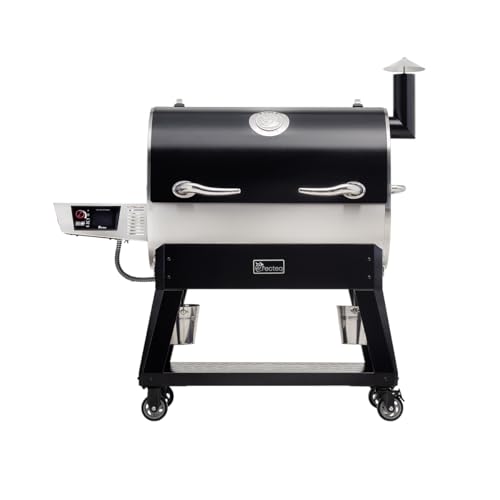
recteq Flagship 1600 Pellet Smoker Grill — Best Overall for Meat Volume
For meat at volume, the Flagship 1600 is the straightforward leader: 1,667 verified square inches and a 40 lb hopper, burning pellets under Wi-Fi control. It cooks the brisket programme — the long, heavy, overnight work — with a steadiness that makes yields predictable and staffing simple.
Strengths
- Biggest verified meat capacity here — briskets in business quantities
- Long hopper endurance matches overnight commercial cooks
- Consistency across staff rotations protects the menu
Trade-offs
- Pellet bark is cleaner and thinner than offset bark
- Size demands a planned station and freight route
- Pellet inventory becomes a standing supply task
| Spec | Detail |
|---|---|
| Cooking space | 1,667 sq. in. (per verified listing) |
| Hopper | 40 lb pellet hopper |
| Control | Wi-Fi smart control |
| Fuel | Wood pellets |
Predictability is the commercial argument. The same load, the same settings, the same result, whoever is on shift: that is what a menu is built on. The smoke is the clean pellet style and the bark thinner than a stick-burner’s, which most high-volume menus accept gladly in exchange for never losing a night’s briskets to a dying fire.
Ownership and running costs: Ownership is where the recteq Flagship 1600 Pellet Smoker Grill earns or loses its place after the first month. Its running costs are the ordinary ones for its class — fuel, chips or pellets where relevant, gaskets, probes and the occasional controller or burner part — and none of them should surprise a buyer who budgets a small maintenance line from day one. What protects the economics is routine: a five-minute check on a schedule catches the worn seal, the tired igniter or the ash-choked fire path while it is still a nuisance rather than a lost service. Kitchens that treat this machine as infrastructure, with a named owner and a log, report the familiar pattern of commercial equipment: boring reliability. Kitchens that treat it as a purchase, finished at checkout, meet the other pattern. The recteq Flagship 1600 Pellet Smoker Grill rewards the first kind of owner, which is precisely the kind a business should be. The verified headline specification — 1,667 sq. in. (per verified listing) — frames all of it: keep that number in view when you plan loads, staffing and space, and the machine will do the job its badge promises.
Best for: barbecue restaurants smoking brisket and mixed meats at volume / Not suited for: cured-meat specialists needing very low temperatures
Check the current price on Amazon

Oklahoma Joe’s Highland Reverse Flow Offset Smoker — Best for Smoke Flavour and Bark
If the meat is the marketing, the Highland Reverse Flow is the machine: a reverse-flow offset whose baffle evens heat across 1,093 square inches of grate, burning real splits for the deepest smoke and bark in this guide. This is the cooker whose output customers photograph.
Strengths
- Deepest smoke flavour and heaviest bark in this guide
- Reverse flow evens the chamber for full-rack loading
- No electronics between the cook and the fire
Trade-offs
- A person owns this fire for the whole cook
- Yield and timing vary with the operator’s skill
- Fuel and ash are ongoing labour lines
| Spec | Detail |
|---|---|
| Cooking space | 1,093 sq. in. (per verified listing) |
| Design | Reverse-flow offset |
| Fuel | Charcoal and wood splits |
| Format | Horizontal offset |
The cost is a person. Splits, fire judgement, weather sense — the offset converts labour into flavour at a rate no controller matches, and converts neglect into inconsistency just as efficiently. Staff it with someone who loves it and it will carry a brand; staff it with whoever is free and it will punish the menu.
Cleaning and daily care: Cleaning decides how long the Oklahoma Joe’s Highland Reverse Flow Offset Smoker stays pleasant to run. Racks and drip paths want attention while they are still warm, when grease wipes rather than chisels; the fire or chip path wants its ash and residue cleared on a fixed rhythm rather than when performance visibly sags. Build both into the closing checklist with initials attached, because commercial cleaning that depends on memory happens exactly as often as memory allows. The good news is that nothing in this machine’s care routine is skilled work — it is timed work, ten minutes in the right places. The bad news is symmetrical: skip those ten minutes for a month and the machine will collect the debt in flavour, in temperature behaviour and eventually in a deep clean that takes an afternoon. Buyers choosing the Oklahoma Joe’s Highland Reverse Flow Offset Smoker for smoke-led barbecue businesses selling flavour as the brand should cost that daily ten minutes into the decision; it is the real subscription the machine charges. The verified headline specification — 1,093 sq. in. (per verified listing) — frames all of it: keep that number in view when you plan loads, staffing and space, and the machine will do the job its badge promises.
Best for: smoke-led barbecue businesses selling flavour as the brand / Not suited for: thinly staffed kitchens needing unattended cooks
Check the current price on Amazon

HAKKA Commercial Electric Smoker DSH-S50B — Best for Sausage and Cured Meats
Meat is not only brisket, and for the cured half of the trade the HAKKA is this guide’s specialist: eight electric racks built for pastrami, sausage, bacon and smoked chicken. Its temperature manners — low, steady, patient — are exactly what curing asks and what fires hate giving.
Strengths
- Eight racks stack cured production the way it is actually made
- Electric steadiness suits sausage and bacon exactly
- Vertical format fits beside the main line
Trade-offs
- Not a brisket-bark machine
- Narrow cabinet limits wide cuts
- Light electric smoke profile by design
| Spec | Detail |
|---|---|
| Racks | 8 racks (per verified listing) |
| Format | Vertical electric smoke oven |
| Positioning | Built for pastrami, sausage, bacon and poultry |
| Fuel | Electric with wood chips |
Production rhythm is its gift. Load the cabinet, set it, and pull a uniform batch sized for a week’s boards and sandwiches. Where the brisket cookers sell drama, the HAKKA sells sameness, and wholesale accounts pay for sameness. If cured meat is your revenue, this is your smoker.
Staffing and workflow fit: In a working kitchen the HAKKA Commercial Electric Smoker DSH-S50B is a colleague, and like a colleague it has a temperament the roster must fit. Its demands are predictable — loading, periodic checks, a defined cleaning moment — which makes it easy to write into prep sheets and shift plans. That predictability is worth more than raw capacity in most businesses, because the cook who runs it also runs three other things. Where this machine sits in the workflow matters too: close enough to the pass that checking it costs steps in single digits, far enough from the line’s traffic that its door is not opened by curiosity. Train the routine to two people, write the temperatures and timings on a card that lives with the machine, and the HAKKA Commercial Electric Smoker DSH-S50B becomes the rare station that survives staff turnover intact. That, more than any feature, is what ‘commercial’ means in practice. The verified headline specification — 8 racks (per verified listing) — frames all of it: keep that number in view when you plan loads, staffing and space, and the machine will do the job its badge promises.
Best for: delis and restaurants whose meat programme is cured and smoked daily / Not suited for: brisket-led barbecue operations
Check the current price on Amazon
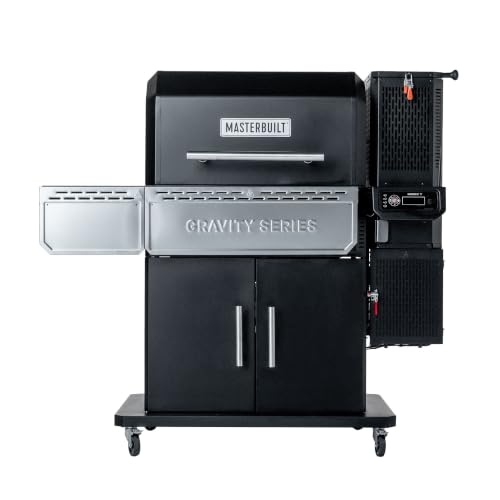
Masterbuilt Gravity Series 1150 Digital Charcoal Grill and Smoker — Best Mixed-Programme All-Rounder
The Gravity 1150 is the mixed programme’s best friend: charcoal flavour and bark, a gravity-fed hopper, and digital fan control holding temperature like a pellet machine. Briskets overnight, ribs and chicken by day, one cooker, no fire vigil.
Strengths
- Charcoal bark and flavour with controller consistency
- Hopper feeding suits overnight meat cooks
- Wide format handles briskets and mixed loads
Trade-offs
- Fan and hopper need cleaning discipline
- Charcoal storage and ash are part of the deal
- Jack of two trades — offsets still out-smoke it
| Spec | Detail |
|---|---|
| Cooking space | 1,150 sq. in. (per verified listing) |
| Fuel system | GravityFed charcoal hopper |
| Control | Digital fan with WiFi app |
| Fuel | Charcoal |
For a restaurant whose meat menu spans the barbecue canon, that combination resolves the staffing equation — flavour people can taste, consistency managers can schedule. The upkeep is the honest tax: fans, hopper and ash want a routine. Kitchens that keep simple routines get a cooker that behaves like staff you never have to roster.
Scaling and menu growth: Buyers rarely stay the size they were, so it is worth asking how the Masterbuilt Gravity Series 1150 Digital Charcoal Grill and Smoker behaves as the programme grows. Its ceiling is honest: when loads regularly fill every rack and the schedule regularly wants a second run, the machine is telling you the programme has outgrown a single unit — at which point it typically becomes the second cooker rather than being replaced, handling overflow, specials or the delicate work while a larger unit takes the core. That graceful second life is a real economic virtue, and it is one reason to choose a recognised design over an obscure one: parts, knowledge and resale interest persist. Plan the growth path when you buy — where a second unit would stand, what it would be — and the Masterbuilt Gravity Series 1150 Digital Charcoal Grill and Smoker stops being a purchase and becomes the first step of a system sized for mixed-meat restaurants wanting charcoal character without a fire tender. The verified headline specification — 1,150 sq. in. (per verified listing) — frames all of it: keep that number in view when you plan loads, staffing and space, and the machine will do the job its badge promises.
Best for: mixed-meat restaurants wanting charcoal character without a fire tender / Not suited for: purists at either the offset or curing extreme
Check the current price on Amazon

Traeger Timberline 1300 Pellet Grill & Smoker — Best for Menu Flexibility
The Timberline 1300 treats the smoker as a meat station rather than a single-task pit: 1,300 square inches, WiFIRE control, Super Smoke for the early hours of a brisket, and a 500°F ceiling for roasting and finishing. Restaurants whose smoked meats share a menu with roasts and grilled cuts will use every bit of that range.
Strengths
- Smokes, roasts and grills — one cooker across the meat menu
- Super Smoke deepens early smoke uptake on big cuts
- High top temperature finishes and sears in place
Trade-offs
- Less pure capacity than the Flagship
- Pellet profile, not stick-burner depth
- Feature richness rewards an app-comfortable team
| Spec | Detail |
|---|---|
| Cooking space | 1,300 sq. in. (per verified listing) |
| Control | WiFIRE with Super Smoke mode |
| Top temperature | 500°F (per verified listing) |
| Modes | 6-in-1 grill, smoke, bake, roast, braise, BBQ |
Its commercial logic is floor space. One footprint doing three jobs beats three footprints doing one each in most kitchens. The compromise is purity — the dedicated brisket machine out-capacities it, the offset out-smokes it — but menus are compromises by design, and this is the cooker built for the menu as written.
Who should walk past it: Honesty about fit matters as much as enthusiasm, so here is the other side of the Traeger Timberline 1300 Pellet Grill & Smoker. It is the wrong machine for single-programme brisket or curing specialists, and no discount or deadline changes that. It is also the wrong machine for buyers who will not keep its small routines — the checks, the cleaning, the log — because its design assumes an owner who does. And it is the wrong machine bought for a menu that exists only in ambition: equipment should serve the programme you will actually run this season, with the next season’s growth handled by the scaling path rather than by overbuying today. Buyers whose needs match its badge — Best for Menu Flexibility, aimed at restaurants whose smoker must also roast and grill across service — will find it exactly as advertised. Buyers outside that description should take the compliment of a clear ‘not this one’ and choose from the other five with this guide’s blessing. The verified headline specification — 1,300 sq. in. (per verified listing) — frames all of it: keep that number in view when you plan loads, staffing and space, and the machine will do the job its badge promises.
Best for: restaurants whose smoker must also roast and grill across service / Not suited for: single-programme brisket or curing specialists
Check the current price on Amazon

Weber Smokey Mountain Cooker 22-inch — Best Charcoal Craft Smoker
The 22-inch Smokey Mountain is the craft pick: a porcelain-enamelled charcoal bullet with dual grates and a water pan, famous for steadiness and for the flavour that made a generation of competition cooks. At commercial scale it is the small-batch, high-character cooker — the one for the special, the chef’s cut, the limited run.
Strengths
- Legendary charcoal flavour in a compact, durable format
- Water-pan bullet design is famously steady for its class
- Porcelain enamel shrugs off commercial-adjacent abuse
Trade-offs
- Smallest capacity here — a craft tool, not a volume plant
- Charcoal tending across long cooks
- Vertical bullet format limits wide cuts
| Spec | Detail |
|---|---|
| Size | 22-inch charcoal bullet smoker (per verified listing) |
| Grates | Dual cooking grates |
| Body | Porcelain-enamelled with damper control |
| Fuel | Charcoal with wood chunks |
No honest guide would call it a volume plant; its capacity is the smallest here. Its role is different: flavour credibility and a price class that lets a small operation smoke beautifully from day one, then keep it as the specials cooker after the big machine arrives. Some equipment earns its place by being outgrown gracefully.
Delivery, siting and first month: The first month with the Weber Smokey Mountain Cooker 22-inch decides its reputation in the building, so manage it deliberately. Confirm the delivery route and the final position before it arrives — door widths, floor, clearances and the utility it needs — then commission it empty, then with a cheap load, then with the real programme, in that order. Each stage teaches the team something the next stage depends on: the machine’s hot spots, its recovery habits, its voice. Write those lessons down while they are fresh; the card that lives with the machine is the difference between a cooker one person understands and a cooker the whole kitchen runs. Buyers who invest that first month get the boring, profitable years that follow. The Weber Smokey Mountain Cooker 22-inch is built for those years — the commissioning is simply how you claim them. The verified headline specification — 22-inch charcoal bullet smoker (per verified listing) — frames all of it: keep that number in view when you plan loads, staffing and space, and the machine will do the job its badge promises.
Best for: small restaurants and caterers building a reputation on charcoal craft / Not suited for: high-volume meat production
Check the current price on Amazon
Comparison Table
| Pick | Badge | Key spec | Best for |
|---|---|---|---|
| recteq Flagship 1600 Pellet Smoker Grill | Best Overall for Meat Volume | 1,667 sq. in. (per verified listing) | barbecue restaurants smoking brisket and mixed meats at volume |
| Oklahoma Joe’s Highland Reverse Flow Offset Smoker | Best for Smoke Flavour and Bark | 1,093 sq. in. (per verified listing) | smoke-led barbecue businesses selling flavour as the brand |
| HAKKA Commercial Electric Smoker DSH-S50B | Best for Sausage and Cured Meats | 8 racks (per verified listing) | delis and restaurants whose meat programme is cured and smoked daily |
| Masterbuilt Gravity Series 1150 Digital Charcoal Grill and Smoker | Best Mixed-Programme All-Rounder | 1,150 sq. in. (per verified listing) | mixed-meat restaurants wanting charcoal character without a fire tender |
| Traeger Timberline 1300 Pellet Grill & Smoker | Best for Menu Flexibility | 1,300 sq. in. (per verified listing) | restaurants whose smoker must also roast and grill across service |
| Weber Smokey Mountain Cooker 22-inch | Best Charcoal Craft Smoker | 22-inch charcoal bullet smoker (per verified listing) | small restaurants and caterers building a reputation on charcoal craft |
Read the table by programme column, not by size. The pellet pair lead brisket and mixed volume; the HAKKA leads cured production; the offset leads flavour; the Weber leads charcoal craft at smaller scale; the Gravity leads the flavour-with-convenience middle. Your menu already knows which row is yours.
How to Choose a Commercial Smoker by Meat Programme
Brisket and large cuts first. They need width — a whole packer brisket laid flat without folding — and a cooker that holds barbecue temperature through a long night with minimal intervention. Wide pellet grills and offsets serve this programme; tall cabinets serve it awkwardly. Count your peak briskets and buy the cooker that fits them with airflow to spare.
Ribs, chicken and pork butts are the forgiving middle: almost every format cooks them well, so choose on throughput and staffing. Sausage, bacon, jerky and fish are the precision end: low temperatures held exactly, racks stacked close, smoke as seasoning. Electric cabinets own this programme outright. A business running both ends should either buy the cooker for its revenue core and accept compromise on the rest, or run two smaller specialists — a common and sensible commercial answer.
Smoke, Bark and Yield: The Meat Economics That Matter
Yield is the quiet profit centre of smoked meat. A cooker that holds steady temperature and humidity loses less moisture than one that swings, and across hundreds of kilos a year, a few points of yield outweigh any equipment saving. Water pans, tight seals and controllers are yield equipment as much as flavour equipment.
Bark is the visible half of the equation: it forms where heat, airflow and time let the surface dry and set. Offsets and charcoal cookers build it most aggressively; pellet machines build a cleaner, thinner bark; electric cabinets build the least, which is correct for cured products and a compromise for brisket. Know which surface your customers are paying for and buy the cooker that builds it.
Consistency is the third leg. A restaurant sells the brisket it served last month; a cooker whose results wander with the weather or the operator taxes the menu with quiet quality failures. Controllers cost money because consistency is money.
Throughput Planning: Loads, Resting and Holding
A commercial meat smoker’s real capacity includes what happens after the cook. Briskets rest for hours; ribs hold briefly; sausage cools and packages. Plan the chain — cooker to rest to hold to service — and size the smoker for the chain’s narrowest point, which is often holding space rather than cooking space.
Stagger loads where the menu allows: long cuts on overnight, fast cuts in the morning, cured production on the quiet day. A smoker scheduled like a production line out-produces a bigger smoker used at random, and the schedule costs nothing but thought. Write the week’s smoking plan next to the prep list and review it like one.
Trimming, Seasoning and Loading: Where Meat Quality Is Decided
By the time meat meets smoke, most of its fate is set — and the setting happens at the bench, not the cooker. Trimming decides yield and cook evenness: fat caps thinned to a consistent layer, hard fat removed, loose flaps that would burn taken off and saved for sausage. A brisket trimmed by three different hands cooks like three different briskets, which is why production kitchens trim to a photographed standard.
Seasoning is the second bench decision, and its commercial virtue is measurability. Rubs weighed per kilo of meat, salt timed — overnight for large cuts where it seasons through, at loading for delicate items — and the whole formula written where the next shift can find it. The romance of the handful is a home-kitchen pleasure; a business seasons by weight or accepts that Tuesday’s product argues with Saturday’s.
Loading closes the triangle: spacing for airflow, fat orientation decided by the cooker’s heat direction, cold meat into a settled cooker rather than a climbing one. None of this is glamorous and all of it is visible in the sliced product. The smoker reviews in this guide assume this bench discipline; without it, the best machine in the list will faithfully reproduce inconsistency at scale.
Resting, Holding and Slicing: The Forgotten Half of the Cook
Meat leaves the smoker unfinished. The rest redistributes moisture, relaxes texture and — for large cuts — carries the internal temperature to its final point; slicing early pours the cook’s twelve hours onto the board. Production kitchens treat the rest as a scheduled stage with its own equipment and timing, not as the meat sitting around while people find tasks. Wrapped, held at safe temperature and protected from drying, a brisket improves for hours; rushed, it merely survives.
Holding extends the same logic to service. Every smoked product has a quality window — ribs are brief romantics, brisket is patient, sausage is a marathon runner — and the menu should be engineered around those windows rather than discovering them through complaints. Hold in small batches, refresh in small batches, and let the 86 board, not hope, manage the end of a product’s day.
Slicing is the final craft and the one the customer sees. Grain direction, slice thickness by cut, the separation of point and flat, the portioning of bark so every plate gets its share — these are trainable, photographable standards. A meat programme that specifies them slices its reputation onto every plate deliberately; one that does not leaves its best advertisement to chance and a tired knife hand at 9 p.m.
Food Safety at Commercial Smoking Scale
Smoking’s traditions predate refrigeration, which is charming in a story and unacceptable in a process. Commercial meat smoking runs on controlled temperatures and recorded times: product moved through the danger zone on a schedule the cook can prove, curing salts measured by weight where they are used, cooling and storage that treat smoked product with the same rigour as raw. The cook log recommended throughout this guide is not bureaucracy — it is the evidence that the tradition was executed as a process.
The danger points are predictable, which makes them manageable. Slow, low cooks that linger warm; large cuts cooling too slowly at room temperature; smoked product held indefinitely because ‘smoking preserves it’. Each has a procedural answer — validated cook schedules, shallow-pan and ice-bath cooling, dated rotation — and the answers belong in the same written routine as the rub formula.
None of this diminishes the craft; it professionalises it. The businesses that sell smoked meat for years are the ones whose safety habits are as automatic as their seasoning. Build them into the programme’s first week, when habits form, rather than retrofitting them after the first inspector’s raised eyebrow — or worse, the first customer made ill.
Your Decision Checklist by Meat, Not by Machine
Write your programme as three numbers before looking at any machine: the peak count of your largest cut in one load, the weekly weight of your cured or delicate production, and the number of services per week the smoker must support. Those three numbers eliminate most of the catalogue honestly. The brisket number strikes cabinets too narrow for whole packers; the cured number strikes cookers whose lowest steady temperature is a rumour; the services number strikes any machine whose cleaning and loading routine your roster cannot repeat at that tempo.
Next, the yield test: favour the candidate whose temperature behaviour — controller quality, seal, thermal mass — best protects cooked weight, because across a year the yield difference between a steady cooker and a swinging one is a line item with a comma in it. Then the bark test, conducted with your mouth where possible: if your brand sells smoke and crust, weight the offset and charcoal candidates accordingly and accept their staffing as the cost of the brand.
Finally, the chain test: walk the meat’s whole journey — bench, cooker, rest, hold, slice, plate — and check the candidate against the journey’s narrowest point, which is rarely the cooker itself. Buy the machine that fits the chain you actually run, staff the chain with named people, and log everything for the first quarter. Meat programmes fail at interfaces — between cooks, between stages, between shifts — far more often than they fail inside a smoker, and this checklist is built to look where failures actually live.
Maintenance Rhythm for a Working Meat Smoker
Meat volume makes grease volume, and the maintenance rhythm of a meat smoker is mostly a grease strategy with a schedule. After every cook: racks scraped hot, drip and drain paths emptied, ash or chip residue cleared. The rule is that no cook starts on top of the previous cook’s leavings — flavour, temperature behaviour and fire safety all read from that single discipline.
Weekly: the deep rack clean, door seals inspected, probes verified against a reference, and the fire or fuel path examined for the buildup that quietly changes a cooker’s character. Meat programmes run their machines harder than any other in this cluster, and the weekly rhythm is priced accordingly — it is not overhead, it is yield protection, because a fouled cooker swings, and swinging cookers evaporate profit.
Quarterly: full degrease, hardware inspection, and a review of the cook log for the season’s patterns — loads growing, times drifting, products changing. The log tells the business when the programme has outgrown the machine, months before the pass starts saying it. Maintenance, done this way, stops being a chore list and becomes the programme’s early-warning system.
Questions to Ask Before You Order a Meat Smoker
Ask your programme, not the catalogue: how many of my largest cut, laid properly, fit in one load? What is my weekly cured weight, and can this machine hold its temperature honestly? How many services must the routine survive, and whose names are attached to each stage? Then ask the machine: how does it recover after a door opening at full load — the answer being a property of its mass and sealing, not its marketing — and what does it burn, eat or wear per week of my actual schedule?
Ask the chain, finally: where does the meat rest, where does it hold, who slices, and what happens on the day the smoker is down? Buyers who can answer all of it are not buying a smoker; they are commissioning a meat programme that happens to include one. That is the correct purchase, and every machine in this guide will serve it better than it serves a hopeful guess.
A Note on Buying a Second Cooker Instead of a Bigger One
Sooner or later every successful meat programme faces the fork this guide has circled: one larger smoker, or a second, different one. The case for the second cooker is stronger than most buyers expect. Two machines give redundancy on the day one fails — which, at commercial volume, is a revenue event, not an inconvenience. They give specialisation: the brisket cooker stops being borrowed for sausage, and both programmes improve. And they give scheduling freedom, because two moderate loads on two clocks beat one heroic load on one clock almost every week of the year.
The case against is footprint, capital and one more routine to keep. But notice what the programme’s own growth usually looks like: the second need that arrives is rarely ‘more of the same’ — it is a different meat, a different temperature, a different day. A second, complementary cooker answers the need that actually arrived. When the fork comes, resist the reflex to simply scale the first machine up; the mixed fleet is how most mature meat businesses in this cluster actually look, and they look that way for reasons this paragraph has just priced.
How to Run a Mixed Meat Programme on One Commercial Smoker
Step 1: Sequence by temperature. Run the cook in temperature order — low curing work first or last depending on the machine, barbecue cuts at their plateau — so the cooker is never fighting itself between loads.
Step 2: Load by finishing time. Work backwards from service: the longest cooks load first, and everything else joins the schedule by its deadline, not by convenience.
Step 3: Keep a cook log per load. Meat, weight, temperature, fuel and result. Across a month, the log teaches you your cooker’s true capacity and your products’ true timing — the two numbers the business runs on.
Step 4: Rest and hold deliberately. Rest large cuts wrapped and held at safe temperature; do not let the pass improvise. Holding is a cooking stage, and treating it like one protects both quality and safety.
Step 5: Clean between programmes. A brisket run’s grease does not belong in tomorrow’s fish. The between-programme clean is short, scheduled and non-negotiable.
Common Buying Mistakes
Buying for the special, not the staple. The cooker must serve the meat you sell weekly. Occasional items adapt; the core programme cannot.
Counting square inches instead of briskets. Advertised area counts every rack at every spacing. Count whole cuts at real spacing.
Ignoring yield. A swinging cooker quietly evaporates profit. Steady heat is a margin decision.
No holding plan. Meat that finishes into chaos loses quality fast. Rest and hold space is part of capacity.
One cooker, no schedule. Random loading wastes more capacity than a smaller cooker used on a plan.
Skipping the between-programme clean. Yesterday’s brisket fat in today’s salmon is a flavour and safety failure in one.
Final Recommendation
For a brisket-led business, the recteq Flagship 1600 is the volume answer and the Highland Reverse Flow the flavour answer; for cured production, the HAKKA cabinet stands alone; the Gravity 1150 is the middle path most mixed programmes will love. Wood-specific depth is in Best Commercial Meat Wood Smokers, the fuel alternatives in Best Commercial Electric Smokers and Best Commercial Gas Smokers, and the full cluster at Best Commercial Smokers, with the big-format class in Best Commercial 2700 Smokers and traditional depth in Best Offset Smokers.
Shortlist again, for convenience: recteq Flagship 1600 Pellet Smoker Grill, Oklahoma Joe’s Highland Reverse Flow Offset Smoker, HAKKA Commercial Electric Smoker DSH-S50B. Each link goes to the verified listing used throughout this guide — check price on Amazon there and confirm the configuration before ordering.
Frequently Asked Questions
What is the best fuel for commercial meat smoking?
The one matched to your programme: pellets for brisket consistency at volume, electric for cured-meat precision, wood offsets for maximum smoke flavour, charcoal gravity systems for the middle. There is no programme-free answer.
How many briskets should a commercial smoker fit?
At least your peak service count in one load, with airflow space around each. Count whole packers laid flat — that number, not advertised area, is your capacity.
Why does yield matter more than capacity?
Because you sell cooked weight. A steady cooker that keeps a few extra percent of moisture in every brisket quietly out-earns a larger, swing-prone cooker across a year.
Can one smoker handle brisket and sausage?
A wide pellet or gravity cooker can do both adequately; specialists do each better. Businesses serious about both often run a brisket cooker and a curing cabinet rather than one compromise.
How important is bark commercially?
It is the visible quality signal customers judge before tasting. Offsets and charcoal build the most; if your brand sells bark, weight that heavily. For cured products, bark is irrelevant and control is everything.
What temperature should commercial meat smokers hold?
Barbecue cuts live around 225–275°F held steadily for many hours. Curing and fish work needs far lower, precise heat. Buy the range your programme actually uses.


