Disclosure: airfryerkitchensupply.com is reader-supported. When you buy through links on our site, we may earn an affiliate commission at no extra cost to you.
Where to buy
Shopping for the best commercial 2700 smokers means shopping for freight-class equipment, so this guide links only to verified listings. Every linked pick below is sold through Amazon, which keeps ordering, delivery and returns in one place for a purchase this large. Use the links below to check price on Amazon and confirm the exact configuration before you commit:
- recteq Flagship 1600 Pellet Smoker Grill — check price on Amazon
- Traeger Timberline 1300 Pellet Grill & Smoker — check price on Amazon
- Oklahoma Joe’s Highland Reverse Flow Offset Smoker — check price on Amazon
- HAKKA Commercial Electric Smoker DSH-S50B — check price on Amazon
- Pellet Pro 2300 Vertical Pellet Smoker Cabinet — check price on Amazon
- Masterbuilt Gravity Series 1150 Digital Charcoal Grill and Smoker — check price on Amazon
Commercial smokers are freight-class purchases for many buyers, so confirm liftgate delivery, pallet size and who unloads before checkout. A smoker that arrives on a pallet at the kerb is only a bargain if you have the staff and equipment to move it the last fifty feet.
Start with the honest part, because it decides everything else in this guide to the best commercial 2700 smokers: no manufacturer actually builds a smoker called, sized or rated “2700”. There is no 2,700-cubic-inch standard, no 2700 model line and no certification behind the number. What buyers mean when they search it is the class of large-format commercial smokers that sit at the serious end of the market — big cabinets, big pellet grills and big offsets with four-figure footprints, freight delivery and enough rack space to cook for a business rather than a backyard party. This guide covers that class honestly, with six verified machines that genuinely cook at commercial volume.
That framing matters because the failure mode at this size is expensive. A restaurant, caterer or commissary that buys on a headline number instead of rack layout, fuel logistics and cleanability ends up with a cooker that is too small at the Saturday rush, too slow to recover temperature after the door opens, or too dirty to pass a health inspection without an hour of scrubbing. The picks below were chosen for throughput first: how much meat fits in one load, how the cooker behaves across a ten-hour service, and how the fuel system holds up when nobody has time to babysit it.
Fuel splits the class cleanly. Pellet machines trade a little smoke depth for push-button consistency across long cooks. Electric cabinets trade peak bark for indoor-adjacent convenience and precise low temperatures. A reverse-flow offset trades labour for the deepest smoke flavour in the group. None of those trades is wrong; the right answer depends on your menu, your staffing and whether your local code lets you run solid fuel where you plan to cook.
In this guide
Quick Picks
If you need the short version of the best commercial 2700 smokers before the detail, start here. Each pick below earned its badge for a different commercial job, and the badge stays the same in the full review further down.
- Best Overall: recteq Flagship 1600 Pellet Smoker Grill — high-volume restaurants and caterers who want pellet consistency at maximum scale. — Check on Amazon
- Best for Menu Versatility: Traeger Timberline 1300 Pellet Grill & Smoker — restaurants that want one cooker to smoke, roast and grill across the menu. — Check on Amazon
- Best for Traditional Smoke Flavour: Oklahoma Joe’s Highland Reverse Flow Offset Smoker — smoke-led restaurants and caterers who staff the pit as a station. — Check on Amazon
- Best for Sausage and Cured Meats: HAKKA Commercial Electric Smoker DSH-S50B — delis, butchers and restaurants running cured-meat and sausage programmes. — Check on Amazon
- Best Vertical Pellet Cabinet: Pellet Pro 2300 Vertical Pellet Smoker Cabinet — kitchens short on floor space that still need pellet convenience and volume. — Check on Amazon
- Best Charcoal Flavour With Digital Control: Masterbuilt Gravity Series 1150 Digital Charcoal Grill and Smoker — kitchens that want charcoal flavour without staffing a fire all day. — Check on Amazon
Notice what is not in the quick list: a cheap big-box cabinet with commercial language in the listing. At this size, thin steel, toy casters and a controller that cannot hold temperature through a door opening stop being annoyances and start costing covers. Every pick here is a machine a working kitchen can build a service around, and each review below explains the staffing and fuel commitment that comes with it.
How These Picks Were Chosen
These six were chosen against commercial criteria, not backyard ones. First, real capacity: rack area and rack layout that accept full briskets, whole shoulders and hotel pans without trimming meat to fit. Second, temperature behaviour across a long cook: recovery after door openings, evenness from top rack to bottom rack, and a controller or fire design that does not demand hourly correction. Third, fuel logistics: hopper size, chip or split consumption, and whether a second staff member has to own the cooker all day.
Fourth, cleanability, because a commercial smoker that cannot be degreased quickly will not stay in a commercial kitchen. Fifth, delivery and service reality: freight terms, replacement parts and whether the maker sells the machine as a business tool rather than a seasonal patio item. Every linked pick was verified against the airfry site’s Amazon data before it earned a link; specifications quoted in the mini spec boxes come only from those verified listings. Where a famous commercial name is sold direct rather than through Amazon, it is discussed in prose rather than given an invented link.
The 6 Best Commercial 2700 Smokers Reviewed
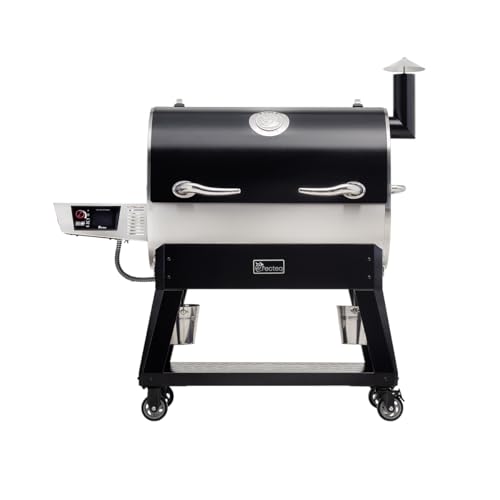
recteq Flagship 1600 Pellet Smoker Grill — Best Overall
The Flagship 1600 is the volume answer in this class: a wide pellet grill with the biggest verified cooking space in the guide and a 40 lb hopper that matches it. For a kitchen turning briskets, shoulders and pans through a long service, that pairing — space plus fuel endurance — is what ‘commercial’ actually means.
Strengths
- Largest verified cooking space in this guide, sized for full commercial loads
- 40 lb hopper supports long unattended cooks across a service
- Wi-Fi control lets one cook monitor the pit from anywhere in the kitchen
Trade-offs
- Pellet flavour is cleaner and milder than a stick-burner’s
- A machine this size needs a planned freight route into the building
- Pellet supply becomes a standing inventory item to manage
| Spec | Detail |
|---|---|
| Cooking space | 1,667 sq. in. (per verified listing) |
| Hopper | 40 lb pellet hopper |
| Control | Wi-Fi smart grill control |
| Fuel | Wood pellets |
In practice the Flagship’s value is scheduling. Load it in the morning, and the controller carries the cook while your team preps everything else; Wi-Fi monitoring turns pit checks into glances. The smoke profile is the clean pellet style — present and pleasant, less aggressive than an offset — which most high-volume menus prefer because it plates consistently across hundreds of covers. Keep pellets dry, keep the hopper above the auger’s comfort zone on long cooks, and this is the lowest-drama route to commercial volume here.
Ownership and running costs: Ownership is where the recteq Flagship 1600 Pellet Smoker Grill earns or loses its place after the first month. Its running costs are the ordinary ones for its class — fuel, chips or pellets where relevant, gaskets, probes and the occasional controller or burner part — and none of them should surprise a buyer who budgets a small maintenance line from day one. What protects the economics is routine: a five-minute check on a schedule catches the worn seal, the tired igniter or the ash-choked fire path while it is still a nuisance rather than a lost service. Kitchens that treat this machine as infrastructure, with a named owner and a log, report the familiar pattern of commercial equipment: boring reliability. Kitchens that treat it as a purchase, finished at checkout, meet the other pattern. The recteq Flagship 1600 Pellet Smoker Grill rewards the first kind of owner, which is precisely the kind a business should be. The verified headline specification — 1,667 sq. in. (per verified listing) — frames all of it: keep that number in view when you plan loads, staffing and space, and the machine will do the job its badge promises.
Best for: high-volume restaurants and caterers who want pellet consistency at maximum scale / Not suited for: buyers who want deep offset smoke flavour as the house signature
Check the current price on Amazon

Traeger Timberline 1300 Pellet Grill & Smoker — Best for Menu Versatility
The Timberline 1300 is the flexible cooker of the group: 1,300 square inches, WiFIRE control and a feature set built to smoke low, roast and grill in the same shift. For a kitchen whose smoker also has to earn its floor space at lunch service, that range matters more than a few extra briskets of capacity.
Strengths
- 6-in-1 versatility covers smoking, grilling, baking and roasting in one footprint
- Super Smoke mode deepens smoke at low temperatures
- WiFIRE app control suits multi-station kitchens
Trade-offs
- Smaller cooking space than the Flagship 1600
- Premium pellet features reward kitchens that actually use the app workflow
- Still a pellet flavour profile, not stick-burner smoke
| Spec | Detail |
|---|---|
| Cooking space | 1,300 sq. in. (per verified listing) |
| Control | WiFIRE app control with Super Smoke mode |
| Top temperature | 500°F (per verified listing) |
| Fuel | Wood pellets |
Super Smoke mode is the feature commercial users actually cite: at low temperatures it pushes more smoke onto the meat early in the cook, when meat takes it up best. The 500°F ceiling means the same unit finishes with a sear or a tray of roast vegetables without a second appliance. Treat it as the kitchen’s all-rounder — slightly less pure capacity than the biggest pick, considerably more menu range.
Cleaning and daily care: Cleaning decides how long the Traeger Timberline 1300 Pellet Grill & Smoker stays pleasant to run. Racks and drip paths want attention while they are still warm, when grease wipes rather than chisels; the fire or chip path wants its ash and residue cleared on a fixed rhythm rather than when performance visibly sags. Build both into the closing checklist with initials attached, because commercial cleaning that depends on memory happens exactly as often as memory allows. The good news is that nothing in this machine’s care routine is skilled work — it is timed work, ten minutes in the right places. The bad news is symmetrical: skip those ten minutes for a month and the machine will collect the debt in flavour, in temperature behaviour and eventually in a deep clean that takes an afternoon. Buyers choosing the Traeger Timberline 1300 Pellet Grill & Smoker for restaurants that want one cooker to smoke, roast and grill across the menu should cost that daily ten minutes into the decision; it is the real subscription the machine charges. The verified headline specification — 1,300 sq. in. (per verified listing) — frames all of it: keep that number in view when you plan loads, staffing and space, and the machine will do the job its badge promises.
Best for: restaurants that want one cooker to smoke, roast and grill across the menu / Not suited for: purists who want offset flavour and are willing to staff a fire
Check the current price on Amazon

Oklahoma Joe’s Highland Reverse Flow Offset Smoker — Best for Traditional Smoke Flavour
The Highland Reverse Flow is the traditionalist’s commercial cooker: a horizontal offset whose baffle plate sends heat and smoke the length of the chamber before it crosses the meat, evening out the hot-spot problem that wastes rack space on basic offsets. The flavour ceiling here is the highest in the guide — and so is the labour floor.
Strengths
- Reverse-flow baffle evens heat across the chamber so more rack space is usable
- Real wood fire gives the deepest smoke flavour in this guide
- No electronics to fail mid-service
Trade-offs
- Demands a dedicated fire tender through long cooks
- Fuel consumption and ash management are ongoing labour
- Temperature swings with weather and fire discipline
| Spec | Detail |
|---|---|
| Cooking space | 1,093 sq. in. (per verified listing) |
| Design | Reverse-flow offset |
| Fuel | Charcoal and wood splits |
| Format | Horizontal offset smoker and grill |
Be honest about the staffing: splits go on regularly, the fire wants watching, and the cooker’s personality changes with wind and wood moisture. Kitchens that embrace that get brisket bark and smoke depth no auger fully matches. Kitchens that cannot staff it get inconsistency. If your brand sells smoke, this is the pick; if your roster is thin, choose a pellet machine and sleep better.
Staffing and workflow fit: In a working kitchen the Oklahoma Joe’s Highland Reverse Flow Offset Smoker is a colleague, and like a colleague it has a temperament the roster must fit. Its demands are predictable — loading, periodic checks, a defined cleaning moment — which makes it easy to write into prep sheets and shift plans. That predictability is worth more than raw capacity in most businesses, because the cook who runs it also runs three other things. Where this machine sits in the workflow matters too: close enough to the pass that checking it costs steps in single digits, far enough from the line’s traffic that its door is not opened by curiosity. Train the routine to two people, write the temperatures and timings on a card that lives with the machine, and the Oklahoma Joe’s Highland Reverse Flow Offset Smoker becomes the rare station that survives staff turnover intact. That, more than any feature, is what ‘commercial’ means in practice. The verified headline specification — 1,093 sq. in. (per verified listing) — frames all of it: keep that number in view when you plan loads, staffing and space, and the machine will do the job its badge promises.
Best for: smoke-led restaurants and caterers who staff the pit as a station / Not suited for: kitchens that need unattended, set-and-forget cooking
Check the current price on Amazon

HAKKA Commercial Electric Smoker DSH-S50B — Best for Sausage and Cured Meats
HAKKA builds cabinets for the cured-meat trade, and the DSH-S50B shows it: eight racks in a vertical smoke oven aimed squarely at pastrami, sausage, bacon and smoked poultry. Where a wide grill wastes height, this cabinet stacks product the way a deli actually produces it.
Strengths
- Eight-rack cabinet built for sausage, bacon, pastrami and jerky volume
- Electric heat gives precise, repeatable low temperatures
- Vertical format uses floor space efficiently
Trade-offs
- Electric smoke profile is lighter than wood-fired cooking
- Cabinet width limits very wide cuts compared with horizontal grills
- Indoor use still needs ventilation and code approval
| Spec | Detail |
|---|---|
| Racks | 8 racks (per verified listing) |
| Format | Vertical electric smoke oven cabinet |
| Positioning | Commercial cabinet for pastrami, sausage, bacon and poultry |
| Fuel | Electric with wood chips |
Electric heat is the point. Sausage and curing work lives at low, steady temperatures where a fire is at its least cooperative; the cabinet simply holds the number for hours. Smoke comes from chips, so the profile is lighter — appropriate for cured products where smoke is a seasoning, not the whole dish. For a charcuterie-leaning programme, this is the most purpose-built machine in the guide.
Scaling and menu growth: Buyers rarely stay the size they were, so it is worth asking how the HAKKA Commercial Electric Smoker DSH-S50B behaves as the programme grows. Its ceiling is honest: when loads regularly fill every rack and the schedule regularly wants a second run, the machine is telling you the programme has outgrown a single unit — at which point it typically becomes the second cooker rather than being replaced, handling overflow, specials or the delicate work while a larger unit takes the core. That graceful second life is a real economic virtue, and it is one reason to choose a recognised design over an obscure one: parts, knowledge and resale interest persist. Plan the growth path when you buy — where a second unit would stand, what it would be — and the HAKKA Commercial Electric Smoker DSH-S50B stops being a purchase and becomes the first step of a system sized for delis, butchers and restaurants running cured-meat and sausage programmes. The verified headline specification — 8 racks (per verified listing) — frames all of it: keep that number in view when you plan loads, staffing and space, and the machine will do the job its badge promises.
Best for: delis, butchers and restaurants running cured-meat and sausage programmes / Not suited for: buyers chasing deep bark on brisket as the main event
Check the current price on Amazon

Pellet Pro 2300 Vertical Pellet Smoker Cabinet — Best Vertical Pellet Cabinet
The Pellet Pro 2300 takes the pellet formula vertical: a double-wall cabinet with a convection fan, stacking racks the way the HAKKA does but burning pellets with controller convenience. For a kitchen with a narrow equipment line, that footprint-to-capacity ratio is the whole argument.
Strengths
- Double-wall cabinet construction helps hold temperature in poor weather
- Convection fan evens heat across stacked racks
- Vertical layout stacks capacity on a small footprint
Trade-offs
- Vertical racks suit some cuts better than others — wide briskets need care
- Pellet mechanism needs routine cleaning to stay reliable
- Cabinet style gives a milder bark than open-grate cooking
| Spec | Detail |
|---|---|
| Design | Double-wall vertical pellet cabinet (per verified listing) |
| Airflow | Convection fan included in listing |
| Format | Tall cabinet smoker |
| Fuel | Wood pellets |
The convection fan is more than a bullet point — in tall cabinets, still air stratifies and top racks cook differently from bottom ones; moving air narrows that gap, which is exactly what a multi-rack service load needs. The double wall pays off in winter and wind, holding temperature without the controller working overtime. It is the thoughtful middle path between the electric cabinets and the wide pellet grills.
Who should walk past it: Honesty about fit matters as much as enthusiasm, so here is the other side of the Pellet Pro 2300 Vertical Pellet Smoker Cabinet. It is the wrong machine for buyers who mainly cook wide cuts laid flat, and no discount or deadline changes that. It is also the wrong machine for buyers who will not keep its small routines — the checks, the cleaning, the log — because its design assumes an owner who does. And it is the wrong machine bought for a menu that exists only in ambition: equipment should serve the programme you will actually run this season, with the next season’s growth handled by the scaling path rather than by overbuying today. Buyers whose needs match its badge — Best Vertical Pellet Cabinet, aimed at kitchens short on floor space that still need pellet convenience and volume — will find it exactly as advertised. Buyers outside that description should take the compliment of a clear ‘not this one’ and choose from the other five with this guide’s blessing. The verified headline specification — Double-wall vertical pellet cabinet (per verified listing) — frames all of it: keep that number in view when you plan loads, staffing and space, and the machine will do the job its badge promises.
Best for: kitchens short on floor space that still need pellet convenience and volume / Not suited for: buyers who mainly cook wide cuts laid flat
Check the current price on Amazon
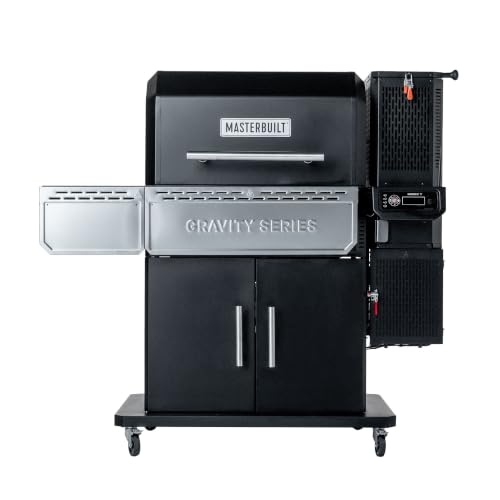
Masterbuilt Gravity Series 1150 Digital Charcoal Grill and Smoker — Best Charcoal Flavour With Digital Control
The Gravity Series 1150 answers the oldest argument in this guide: charcoal flavour without charcoal labour. A gravity-fed hopper drops charcoal onto the fire as it burns while a digital fan holds the set temperature, and WiFi control keeps the pit on your phone instead of on your task list.
Strengths
- Real charcoal flavour with set-and-forget digital temperature control
- Gravity-fed hopper feeds fuel without opening the cooking chamber
- WiFi app control fits a busy kitchen’s workflow
Trade-offs
- Charcoal hopper needs dry storage and regular ash clearing
- Moving parts and fan need more upkeep than a plain offset
- Grill-and-smoker format is a compromise for dedicated low-and-slow purists
| Spec | Detail |
|---|---|
| Cooking space | 1,150 sq. in. (per verified listing) |
| Fuel system | GravityFed charcoal hopper |
| Control | Digital fan control with WiFi app |
| Fuel | Charcoal |
For a commercial kitchen, the appeal is a middle staffing model: one cook loads the hopper, checks ash on a rhythm, and otherwise works the line. The flavour lands closer to a charcoal offset than to a pellet grill, which suits menus built on bark and char. The trade is mechanical — fans, hopper and electronics want cleaning and care that a steel offset never asks for. Kitchens that keep a simple maintenance routine get the best of both worlds here.
Delivery, siting and first month: The first month with the Masterbuilt Gravity Series 1150 Digital Charcoal Grill and Smoker decides its reputation in the building, so manage it deliberately. Confirm the delivery route and the final position before it arrives — door widths, floor, clearances and the utility it needs — then commission it empty, then with a cheap load, then with the real programme, in that order. Each stage teaches the team something the next stage depends on: the machine’s hot spots, its recovery habits, its voice. Write those lessons down while they are fresh; the card that lives with the machine is the difference between a cooker one person understands and a cooker the whole kitchen runs. Buyers who invest that first month get the boring, profitable years that follow. The Masterbuilt Gravity Series 1150 Digital Charcoal Grill and Smoker is built for those years — the commissioning is simply how you claim them. The verified headline specification — 1,150 sq. in. (per verified listing) — frames all of it: keep that number in view when you plan loads, staffing and space, and the machine will do the job its badge promises.
Best for: kitchens that want charcoal flavour without staffing a fire all day / Not suited for: buyers who want the absolute deepest stick-burner smoke
Check the current price on Amazon
Comparison Table
| Pick | Badge | Key spec | Best for |
|---|---|---|---|
| recteq Flagship 1600 Pellet Smoker Grill | Best Overall | 1,667 sq. in. (per verified listing) | high-volume restaurants and caterers who want pellet consistency at maximum scale |
| Traeger Timberline 1300 Pellet Grill & Smoker | Best for Menu Versatility | 1,300 sq. in. (per verified listing) | restaurants that want one cooker to smoke, roast and grill across the menu |
| Oklahoma Joe’s Highland Reverse Flow Offset Smoker | Best for Traditional Smoke Flavour | 1,093 sq. in. (per verified listing) | smoke-led restaurants and caterers who staff the pit as a station |
| HAKKA Commercial Electric Smoker DSH-S50B | Best for Sausage and Cured Meats | 8 racks (per verified listing) | delis, butchers and restaurants running cured-meat and sausage programmes |
| Pellet Pro 2300 Vertical Pellet Smoker Cabinet | Best Vertical Pellet Cabinet | Double-wall vertical pellet cabinet (per verified listing) | kitchens short on floor space that still need pellet convenience and volume |
| Masterbuilt Gravity Series 1150 Digital Charcoal Grill and Smoker | Best Charcoal Flavour With Digital Control | 1,150 sq. in. (per verified listing) | kitchens that want charcoal flavour without staffing a fire all day |
Read the table by workload, not by headline size. The pellet grills win on unattended hours, the electric cabinets win on low-temperature control and placement flexibility, and the offset wins on smoke flavour per load while demanding the most labour. If two picks look close, choose by who on your team will actually run the cooker on your busiest day.
How to Choose a Commercial Smoker at This Scale
Start with your peak load, not your average one. Count the most meat you must finish inside one service window, then add the holding problem: smoked meat rests and holds, so the cooker that finishes briskets at noon also has to free up by early afternoon if ribs or chicken follow. Kitchens that buy for the average day discover the ceiling on the first holiday weekend, and there is no cheap way to add rack space later.
Next, walk the building. Measure the door the smoker comes through, the pad or floor it sits on, the clearance to combustibles your insurer and fire code require, and the route grease takes out of the kitchen. Large smokers arrive on pallets; more than one buyer has owned a cooker that lived in the car park because it never fit through the kitchen door. Finally, decide who owns the fire. A pellet or electric cabinet can be one task among many for a prep cook. An offset is a station, and staffing it is a real labour line in your budget.
Which Fuel Suits a Commercial Kitchen?
Pellets are the labour answer. An auger and controller hold temperature while staff do other work, the flavour is clean and repeatable, and the main costs are pellet storage and keeping the hopper dry. Electric cabinets are the placement answer: no open flame, precise low heat for sausage, fish and jerky programmes, and the simplest path in buildings where solid fuel is restricted — but they produce a lighter smoke profile and depend on your electrical capacity. Charcoal gravity systems sit between the two, giving real charcoal flavour with controller convenience.
Stick-burning offsets are the flavour answer and the labour problem in one machine. A reverse-flow design evens out the cooking chamber so more of the rack space is usable, but somebody feeds splits, watches the fire and learns the cooker’s moods. Restaurants whose brand is built on smoke flavour accept that cost deliberately. Everyone else should be honest about whether the flavour difference survives being plated, sauced and served at volume.
What Capacity Numbers Actually Mean for Service
Cooking-area figures count every rack, including racks too close together for the meat you actually cook. A cabinet that advertises a huge area across five racks may fit five racks of jerky and two racks of pork butts. Ask instead: how many whole briskets, how many full racks of ribs laid flat, how many hotel pans. Vertical cabinets shine for hanging and small items; wide pellet grills shine for briskets and pans; offsets shine for whole cuts that benefit from radiant firebox heat.
Recovery time is the hidden capacity spec. Every door opening dumps heat and smoke; a heavy, well-sealed cooker recovers in minutes, a thin one can take a quarter of an hour, and across a service of repeated openings that difference is a full extra cook. Weight, door seals and insulation in the spec box matter more than one extra rack.
What Does a Commercial Kitchen Actually Get at This Scale?
Scale buys three things that smaller smokers cannot fake. The first is thermal mass and recovery: a big, heavy cooker with a full load shrugs off door openings that would cost a light cabinet twenty minutes, and across a service of constant checking that difference is the difference between a schedule and a hope. The second is batch integrity — the whole service’s briskets cooked in one load, in one environment, finishing together, instead of two loads cooked hours apart with subtly different results that the pass then has to explain away.
The third is labour geometry. One large cooker, loaded once and monitored by one person, replaces two smaller cookers loaded twice and monitored in two places. In a business where the scarcest resource is a trained pair of hands at 6 a.m., that geometry is worth more than the steel. It is also why this class exists at all: not because bigger is more impressive, but because at commercial volume, consolidation is efficiency.
Against those gains, weigh the concentration risk. One big cooker down is the whole programme down, where two smaller ones degrade gracefully. Mature operations answer that risk with maintenance discipline and a menu that can flex for a day — not with a second full-size machine gathering dust. Know which answer your business can actually execute before choosing the single-big-cooker route this guide’s leaders represent.
Freight, Floors and the Installation Nobody Budgets For
Large smokers are installed, not placed, and the installation has a budget line whether you plan it or not. Freight delivery to a commercial address, a liftgate if you lack a dock, a pallet jack or forklift for the last stretch, and a floor that carries the loaded weight without complaint — each is a small cost that becomes a large day when it is missing. Walk the route with a tape measure before ordering: gate widths, door widths, the turn at the corridor, the step nobody remembers until a pallet meets it.
Then the standing position. The cooker needs its clearances, a surface that tolerates heat and grease, drainage or a grease plan, and weather thinking if it lives outdoors — wind direction for the fire-tenders, rain protection for the pellet hoppers and controllers. Utilities matter in proportion to fuel: electrical capacity for cabinets and pellet machines, a sane propane arrangement if a gas side exists, water access for cleaning that will otherwise be carried in buckets.
None of this is exotic, and all of it is cheaper decided on paper. The kitchens that install smoothly are the ones that treated delivery day as a small project with an owner. The kitchens that improvise it remember the day for years, and not fondly.
Building the Production Week Around One Large Smoker
A large cooker earns its money on a schedule, not on enthusiasm. Map the week: the overnight brisket run that anchors the menu, the midweek rib and chicken production, the cured or speciality batch on the quiet day, and the deep clean in the gap the schedule deliberately leaves. Written down, that map exposes the real capacity question — not ‘how much fits’ but ‘how much fits in the hours the building is staffed’ — and it usually shows the cooker has more capacity than the roster, which is the correct imbalance.
Resting and holding belong on the same map. Meat that finishes at 6 a.m. needs somewhere safe and warm to be until service; a cooker that must immediately become the holding cabinet cannot start the next load. Cambros, a low oven or a dedicated holding plan are part of the smoker purchase in everything but invoice.
Finally, review the map monthly against the cook log. Loads that always overrun, products that always queue, cleaning that always slips — the log shows all of it, and small schedule changes recover capacity that no equipment purchase would. The largest smoker in this guide, run on a thoughtful week, out-produces a bigger one run on vibes.
Your Decision Checklist for the 2700-Class Shortlist
Work through this checklist in order; it is designed to eliminate, not to decorate. First, the load test: write your peak service load in whole cuts and pans, then match it against each shortlisted machine’s rack layout — not its advertised area — and strike any machine that fits the load only by stacking meat against airflow. Second, the staffing test: name the person who runs each candidate on your thinnest day. Pellet and electric candidates will survive this test easily; the offset survives it only with a named, trained tender. A candidate nobody can run is eliminated regardless of its flavour.
Third, the building test: measure the delivery route and the standing position, confirm the utility each candidate needs, and price the freight honestly. Fourth, the cleaning test: read each candidate’s grease path and ask who empties it, when, and how long it takes — then multiply by your services per week. Fifth, the failure test: if this machine is down on your biggest day, what exactly happens? Kitchens with a real answer may buy a single large cooker with confidence; kitchens without one should consider two mid-size machines instead, and this guide’s cabinet picks make that a respectable strategy rather than a compromise.
If two candidates survive all five tests, choose by the tiebreaker that actually predicts satisfaction: the quality of the routine your team will keep. The machine whose checks, cleaning and logging fit your existing closing list will be maintained; the machine that demands a new religion will be neglected by March. Commercial equipment succeeds as a habit before it succeeds as hardware, and the 2700 class — big, expensive, central — is where that truth carries the most money.
Maintenance Rhythm for a Large Commercial Cooker
Big machines fail in small, scheduled ways, and a maintenance rhythm converts those failures into appointments. Daily: racks scraped, grease path emptied, ash or residue cleared from the fire or chip system, and a glance at door seals while the machine is warm and honest. Weekly: the deep rack clean, drip system flushed, probes checked against a reference, and — on pellet and gravity machines — the fuel path inspected for the dust and bridging that quietly starve a cook. Monthly: fasteners, casters, hinges and controllers reviewed with the machine cold and the log book open, because the log is where patterns announce themselves.
Keep a small parts shelf as part of the rhythm: gaskets, a probe, igniter or burner parts appropriate to the fuel, and the consumables the machine eats. A part on the shelf is a fifteen-minute fix; the same part ordered in a panic is a lost weekend. At this scale the arithmetic is not close, and mature kitchens treat the shelf as part of the machine’s price.
Finally, schedule one full degrease and inspection per quarter, written into the production calendar like a service. The cooker that gets a planned day of attention rarely takes an unplanned one, and in the 2700 class an unplanned day is measured in covers, not in inconvenience.
One Last Test Before You Commit at This Scale
Before the order, run the paper service: take your busiest real day from last season and play it against the shortlisted machine hour by hour — loading, checks, door openings, resting, holding, cleaning — with the actual staff names written beside each task. Every candidate in this guide will pass a brochure test; the paper service is where the pretenders quietly fail, because it prices attention, and attention is the currency commercial kitchens actually run on. The machine that survives your worst documented day, with your real roster, is the machine to buy — and at this scale, buying once and buying right is the entire game.
How to Set Up a Large Commercial Smoker for Its First Service
Step 1: Site and level the cooker. Place it on the pad or floor it will live on, level it so grease runs to the drain rather than pooling, and confirm clearances to walls and combustibles before the first fire. Check that the door swings fully with a loaded pan in your hands — the working position matters more than the parked position.
Step 2: Season it empty. Run the cooker through a full empty heat cycle at smoking temperature for several hours. This burns off manufacturing oils, cures paint and seals, and — just as important — shows you the controller’s behaviour and the hot spots before meat is at stake. Map the racks with a row of plain biscuits or bread slices if you want a cheap heat map.
Step 3: Run a cheap full load. Cook chicken thighs or pork shoulders, not briskets, for the first loaded run. Fill the racks the way service will, open the door the way service will, and write down recovery times and fuel use. That notebook page is your baseline for every future argument about whether the cooker is performing.
Step 4: Build the cleaning routine on day one. Decide who scrapes racks, who empties grease, and how often ash and the firebox get attention, then put it on the closing checklist. Grease management is fire prevention; the routine is cheapest to build before the first heavy service, not after the first flare-up.
Step 5: Calibrate your probes. Check built-in probes against a reference thermometer in ice water and boiling water. Commercial cooking runs on internal temperature and time, and a probe that reads low turns your schedule into guesswork.
Common Buying Mistakes
Buying the headline number. The “2700” in the search is not a spec. Kitchens that shop the number instead of rack layout and recovery time buy twice.
Forgetting freight and doors. Pallet delivery, liftgate fees and a 36-inch kitchen door have ended more commercial smoker plans than any cooking flaw. Measure the whole route.
Understaffing the fire. An offset on a Saturday with no dedicated fire tender produces late, uneven food. Match the fuel to the roster you actually have.
Ignoring grease. High-volume smoking makes high-volume grease. No drain plan and no cleaning roster means smoke, smell complaints and eventually a fire risk.
Skipping the test cook. The first time a cooker meets a full load should not be a paid service. One cheap test cook pays for itself in calm.
Letting one cooker be a single point of failure. At commercial volume, plan what happens when the smoker is down: a backup cooker, a menu that flexes, or a supplier who can service quickly.
Final Recommendation
For most commercial buyers in this class, start with the recteq Flagship 1600: the largest verified cooking space in the guide, a hopper sized for long cooks and pellet convenience that does not consume a staff member. If your brand is smoke flavour above all, the Oklahoma Joe’s Highland Reverse Flow is the honest traditional choice, provided you staff it. For a sausage, jerky or fish programme that needs precise low heat, the HAKKA cabinet is the specialist. Compare the electric route in Best Commercial Electric Smokers, the meat-first shortlist in Best Commercial Meat Smokers, and the gas alternative in Best Commercial Gas Smokers. The wider cluster starts at Best Commercial Smokers, with fuel-specific depth in Best Offset Smokers and Best Pellet Smokers.
Shortlist again, for convenience: recteq Flagship 1600 Pellet Smoker Grill, Traeger Timberline 1300 Pellet Grill & Smoker, Oklahoma Joe’s Highland Reverse Flow Offset Smoker. Each link goes to the verified listing used throughout this guide — check price on Amazon there and confirm the configuration before ordering.
Related guides
Frequently Asked Questions
Is there really a smoker model called a 2700?
No. No manufacturer in this guide — or in the verified catalogue behind it — sells a smoker rated or named 2700. The number is shopper shorthand for the large commercial class. Shop rack layout, recovery and fuel instead of the number.
How much meat does a commercial smoker in this class hold?
It depends on the cut and rack layout rather than the advertised area. Wide pellet grills in this guide handle multiple whole briskets per load; tall cabinets hold more small items across more racks. Count your own peak load in whole cuts and pans before choosing.
Pellet or offset for a restaurant?
Pellet if staffing is tight and consistency across shifts matters most. Offset if smoke flavour is the brand and a trained person can own the fire. Many kitchens run a pellet cooker for volume and keep traditional flavour through wood choice and finishing.
Can these smokers run indoors?
Only electric cabinets are candidates for indoor commercial use, and only with proper ventilation and local code approval. Pellet, charcoal and offset cookers produce combustion exhaust and belong outdoors or under a properly engineered hood system.
What does freight delivery involve?
Large smokers typically ship on a pallet by freight. Confirm liftgate service, delivery access and who moves the cooker from the kerb to its pad before ordering; those details are cheaper to settle before the truck arrives.
How often should a commercial smoker be cleaned?
Racks and grease management after every service day, ash and firebox attention on a fixed weekly rhythm, and a deep degrease on a schedule your health inspector would approve of. Build the roster on day one.


