Disclosure: airfryerkitchensupply.com is reader-supported. When you buy through links on our site, we may earn an affiliate commission at no extra cost to you.
Where to buy
Shopping for the best commercial electric smokers means shopping for freight-class equipment, so this guide links only to verified listings. Every linked pick below is sold through Amazon, which keeps ordering, delivery and returns in one place for a purchase this large. Use the links below to check price on Amazon and confirm the exact configuration before you commit:
- Masterbuilt 40-inch Digital Electric Smoker with Window and Legs — check price on Amazon
- HAKKA Commercial Electric Smoker DSH-S50B — check price on Amazon
- CLIVIA Electric Smoker, 4-Rack Digital Commercial — check price on Amazon
- Masterbuilt 30-inch Digital Electric Smoker MB20071117 — check price on Amazon
- EAST OAK 30-inch Electric Smoker, Mist Black — check price on Amazon
- Bradley Digital Smoker (Puck-Fed System) — check price on Amazon
Commercial smokers are freight-class purchases for many buyers, so confirm liftgate delivery, pallet size and who unloads before checkout. A smoker that arrives on a pallet at the kerb is only a bargain if you have the staff and equipment to move it the last fifty feet.
Electric heat is the quiet revolution in commercial smoking, and the best commercial electric smokers earn their place for one reason: repeatability. A heating element and a controller do not care about wind, wood moisture or a tired fire tender at hour nine. They hold the set temperature, hour after hour, shift after shift, which is exactly what a business selling the same brisket, the same sausage and the same smoked salmon every day actually needs. What electric gives up is smoke intensity — chips smouldering on an element produce a cleaner, lighter profile than a log fire — and this guide treats that trade honestly rather than pretending it away.
The commercial electric class splits into two shapes. Tall cabinets with many racks serve cured meats, sausage, jerky, fish and cheese, where low steady temperatures matter more than bark. Wider digital smokers in the Masterbuilt pattern serve barbecue menus — briskets, butts and ribs — with set-and-forget convenience and a viewing window for the pass. Both shapes share the electric advantages: no open flame, simpler siting, and running costs a manager can predict to the penny.
One warning belongs at the top: electric does not mean indoor by default. These cookers produce smoke and grease-laden vapour, and commercial indoor use means ventilation, clearances and local code approval. The indoor-specific guides in this cluster cover that in depth; here, choose the machine first and site it properly second.
In this guide
Quick Picks
If you need the short version of the best commercial electric smokers before the detail, start here. Each pick below earned its badge for a different commercial job, and the badge stays the same in the full review further down.
- Best Overall: Masterbuilt 40-inch Digital Electric Smoker with Window and Legs — barbecue restaurants wanting electric convenience at maximum volume. — Check on Amazon
- Best for Cured Meats and Sausage: HAKKA Commercial Electric Smoker DSH-S50B — delis, butchers and charcuterie programmes running daily cured production. — Check on Amazon
- Best Low-Temperature Control: CLIVIA Electric Smoker, 4-Rack Digital Commercial — small restaurants and delis needing precise low heat in a stainless cabinet. — Check on Amazon
- Best Side-Loader Value: Masterbuilt 30-inch Digital Electric Smoker MB20071117 — small restaurants and food trucks wanting unattended barbecue consistency. — Check on Amazon
- Best for Uninterrupted Long Cooks: EAST OAK 30-inch Electric Smoker, Mist Black — kitchens that run long overnight cooks and hate opening the door. — Check on Amazon
- Best Puck-Fed Smoke System: Bradley Digital Smoker (Puck-Fed System) — buyers who value automatic smoke feeding above all else. — Check on Amazon
Read the badges by programme, not by size. A deli smoking sausage daily and a barbecue joint smoking briskets have almost opposite needs, and both are ‘commercial electric’ buyers. The cabinet picks serve the first kitchen; the wide digital smokers serve the second.
How These Picks Were Chosen
Picks were chosen on temperature range and control first, because that is the electric promise: cabinets that hold genuinely low temperatures for curing work, and digital models that hold barbecue temperatures without drift across a long cook. Rack count and layout came second — how many racks are actually usable for the product named — followed by chip loading, because a smoker that must be opened every hour to add chips loses the unattended advantage that justified electric in the first place.
Every linked pick was verified against the airfry site’s Amazon data before it earned a link, and spec boxes quote only those verified listings. Bradley, the famous puck-fed name, is linked to its verified listing for the 4-rack digital model (BTDS76P) — the exact configuration this review covers.
The 6 Best Commercial Electric Smokers Reviewed
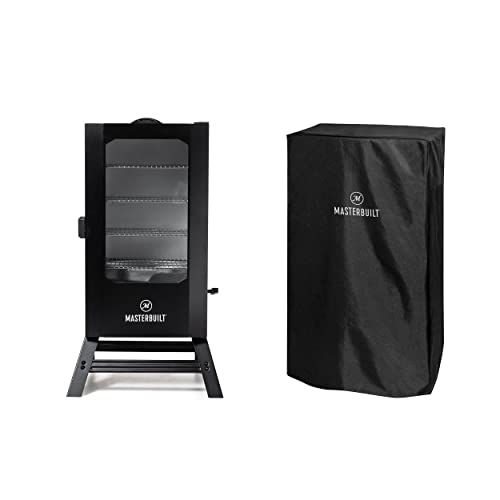
Masterbuilt 40-inch Digital Electric Smoker with Window and Legs — Best Overall
The 40-inch Masterbuilt is the barbecue end of commercial electric: a big digital cabinet with a window, legs and the set-and-forget control that makes electric worth buying. It is sized for briskets, butts and ribs in business quantities, and it runs them with a consistency a fire-tendered cooker only matches on a good day.
Strengths
- Largest electric barbecue capacity in this guide
- Window lets staff check product without opening the door and losing heat
- Digital control holds barbecue temperatures unattended
Trade-offs
- Barbecue-focused cabinet is not the tool for very low curing temperatures
- Window needs regular cleaning to stay useful in a greasy kitchen
- Chips need refilling on long cooks for continuous smoke
| Spec | Detail |
|---|---|
| Format | 40-inch digital electric vertical smoker (per verified listing) |
| Features | Viewing window and leg kit |
| Control | Digital temperature control |
| Fuel | Electric with wood chips |
The window is the detail working kitchens appreciate — a glance replaces a door opening, and across a long cook those saved openings are saved heat and smoke. Run it on a chip rhythm, keep the glass wiped, and it becomes the most predictable cooker in the building. It will not cure sausage at near-room temperatures like the specialist cabinets, and it does not pretend to.
Ownership and running costs: Ownership is where the Masterbuilt 40-inch Digital Electric Smoker with Window and Legs earns or loses its place after the first month. Its running costs are the ordinary ones for its class — fuel, chips or pellets where relevant, gaskets, probes and the occasional controller or burner part — and none of them should surprise a buyer who budgets a small maintenance line from day one. What protects the economics is routine: a five-minute check on a schedule catches the worn seal, the tired igniter or the ash-choked fire path while it is still a nuisance rather than a lost service. Kitchens that treat this machine as infrastructure, with a named owner and a log, report the familiar pattern of commercial equipment: boring reliability. Kitchens that treat it as a purchase, finished at checkout, meet the other pattern. The Masterbuilt 40-inch Digital Electric Smoker with Window and Legs rewards the first kind of owner, which is precisely the kind a business should be. The verified headline specification — 40-inch digital electric vertical smoker (per verified listing) — frames all of it: keep that number in view when you plan loads, staffing and space, and the machine will do the job its badge promises.
Best for: barbecue restaurants wanting electric convenience at maximum volume / Not suited for: charcuterie programmes that live at curing temperatures
Check the current price on Amazon

HAKKA Commercial Electric Smoker DSH-S50B — Best for Cured Meats and Sausage
HAKKA’s DSH-S50B is a smoke oven in the deli tradition: eight racks in a vertical cabinet, listed for pastrami, sausage, bacon and smoked chicken. If your business smokes cured product every day, this is the machine shaped like your workload.
Strengths
- Eight racks stack a full production run of sausage or bacon
- Cabinet design targets cured-meat work specifically
- Vertical footprint fits tight production spaces
Trade-offs
- Narrow cabinet limits wide barbecue cuts
- Electric smoke is light — a seasoning, not a headline
- Indoor siting still needs ventilation and approval
| Spec | Detail |
|---|---|
| Racks | 8 racks (per verified listing) |
| Format | Vertical electric smoke oven cabinet |
| Positioning | Built for pastrami, sausage, bacon and smoked poultry |
| Fuel | Electric with wood chips |
Production value here is rhythm. Load eight racks in the morning, hold the temperature without a thought, and pull a uniform batch — the same batch your customers bought last week. That sameness is what wholesale and repeat retail accounts pay for. Barbecue tourists should look at the wide digital smokers instead; this cabinet’s talents are specific and it is excellent at them.
Cleaning and daily care: Cleaning decides how long the HAKKA Commercial Electric Smoker DSH-S50B stays pleasant to run. Racks and drip paths want attention while they are still warm, when grease wipes rather than chisels; the fire or chip path wants its ash and residue cleared on a fixed rhythm rather than when performance visibly sags. Build both into the closing checklist with initials attached, because commercial cleaning that depends on memory happens exactly as often as memory allows. The good news is that nothing in this machine’s care routine is skilled work — it is timed work, ten minutes in the right places. The bad news is symmetrical: skip those ten minutes for a month and the machine will collect the debt in flavour, in temperature behaviour and eventually in a deep clean that takes an afternoon. Buyers choosing the HAKKA Commercial Electric Smoker DSH-S50B for delis, butchers and charcuterie programmes running daily cured production should cost that daily ten minutes into the decision; it is the real subscription the machine charges. The verified headline specification — 8 racks (per verified listing) — frames all of it: keep that number in view when you plan loads, staffing and space, and the machine will do the job its badge promises.
Best for: delis, butchers and charcuterie programmes running daily cured production / Not suited for: brisket-led barbecue menus chasing bark
Check the current price on Amazon

CLIVIA Electric Smoker, 4-Rack Digital Commercial — Best Low-Temperature Control
The CLIVIA’s headline is a number most smokers cannot offer: control down to 86°F. That low end opens cold-adjacent smoking — cheese, fish, delicate curing — that a barbecue cabinet simply cannot hold, and the 0–12 hour timer with auto shutoff lets those long, gentle runs happen overnight.
Strengths
- Genuinely low minimum temperature suits fish, cheese and curing
- Timer with auto shutoff fits overnight and unattended runs
- Stainless cabinet cleans down to a commercial standard
Trade-offs
- Four racks is mid-size — high-volume producers will outgrow it
- Top of the range is barbecue temperature, not searing heat
- Cabinet width limits the widest cuts
| Spec | Detail |
|---|---|
| Temperature range | 86–248°F digital control (per verified listing) |
| Timer | 0–12 hour timer with auto shutoff |
| Racks | 4 racks |
| Body | Stainless steel cabinet |
Four stainless racks make it the mid-size professional option: bigger than a home unit, honest about not being a production plant. For a small restaurant building a smoked-fish or charcuterie board programme, the combination of low control, timer discipline and a cabinet that wipes clean is exactly the brief. Volume producers should step up to the HAKKA’s eight racks.
Staffing and workflow fit: In a working kitchen the CLIVIA Electric Smoker, 4-Rack Digital Commercial is a colleague, and like a colleague it has a temperament the roster must fit. Its demands are predictable — loading, periodic checks, a defined cleaning moment — which makes it easy to write into prep sheets and shift plans. That predictability is worth more than raw capacity in most businesses, because the cook who runs it also runs three other things. Where this machine sits in the workflow matters too: close enough to the pass that checking it costs steps in single digits, far enough from the line’s traffic that its door is not opened by curiosity. Train the routine to two people, write the temperatures and timings on a card that lives with the machine, and the CLIVIA Electric Smoker, 4-Rack Digital Commercial becomes the rare station that survives staff turnover intact. That, more than any feature, is what ‘commercial’ means in practice. The verified headline specification — 86–248°F digital control (per verified listing) — frames all of it: keep that number in view when you plan loads, staffing and space, and the machine will do the job its badge promises.
Best for: small restaurants and delis needing precise low heat in a stainless cabinet / Not suited for: high-volume barbecue production
Check the current price on Amazon

Masterbuilt 30-inch Digital Electric Smoker MB20071117 — Best Side-Loader Value
The 30-inch Masterbuilt digital is the workhorse specification of electric barbecue: 710 square inches, digital control and the side wood chip loader that defines the type. That loader is not a gimmick — refilling chips without opening the door is how an electric smoker keeps both its temperature and its smoke for twelve straight hours.
Strengths
- Side chip loader adds smoke without opening the door
- 710 sq. in. is honest mid-size barbecue capacity
- Digital control with a long track record in commercial-adjacent use
Trade-offs
- Mid-size cabinet will ceiling-out a growing barbecue programme
- Chrome racks need care to stay easy-clean
- No window — you cook by probe, not by eye
| Spec | Detail |
|---|---|
| Cooking space | 710 sq. in. (per verified listing) |
| Chip system | Side wood chip loader |
| Racks | Chrome smoking racks |
| Control | Digital temperature control |
This is the pick for the smaller operation that wants the electric bargain — consistency without a fire tender — at a scale a food truck or café can site. It gives up the 40-inch model’s volume and window, and in exchange fits more buildings and more budgets. Thousands of these cabinets have done commercial-adjacent work for years; the design’s maturity is part of the recommendation.
Scaling and menu growth: Buyers rarely stay the size they were, so it is worth asking how the Masterbuilt 30-inch Digital Electric Smoker MB20071117 behaves as the programme grows. Its ceiling is honest: when loads regularly fill every rack and the schedule regularly wants a second run, the machine is telling you the programme has outgrown a single unit — at which point it typically becomes the second cooker rather than being replaced, handling overflow, specials or the delicate work while a larger unit takes the core. That graceful second life is a real economic virtue, and it is one reason to choose a recognised design over an obscure one: parts, knowledge and resale interest persist. Plan the growth path when you buy — where a second unit would stand, what it would be — and the Masterbuilt 30-inch Digital Electric Smoker MB20071117 stops being a purchase and becomes the first step of a system sized for small restaurants and food trucks wanting unattended barbecue consistency. The verified headline specification — 710 sq. in. (per verified listing) — frames all of it: keep that number in view when you plan loads, staffing and space, and the machine will do the job its badge promises.
Best for: small restaurants and food trucks wanting unattended barbecue consistency / Not suited for: high-volume brisket production
Check the current price on Amazon

EAST OAK 30-inch Electric Smoker, Mist Black — Best for Uninterrupted Long Cooks
EAST OAK’s 30-inch entry competes on the exact thing electric buyers care about: not being disturbed. A side chip loader listed for up to six times longer uninterrupted smoking, a built-in meat probe and a viewing window add up to a cabinet you can leave alone for the length of a brisket cook.
Strengths
- Side loader rated for up to 6x longer smoking per load in the listing
- Built-in probe and window reduce door openings to near zero
- 725 sq. in. suits bigger batches than most 30-inch cabinets
Trade-offs
- Outdoor positioning — indoor use needs the usual ventilation answers
- Window maintenance is part of ownership
- Newer brand than the Masterbuilt establishment
| Spec | Detail |
|---|---|
| Cooking space | 725 sq. in. (per verified listing) |
| Chip system | Side chip loader for longer uninterrupted smoking |
| Features | Built-in meat probe and viewing window |
| Fuel | Electric |
That matters commercially because attention is the scarcest resource in a kitchen. A smoker that asks nothing for hours frees a cook for everything else, and the 725 square inches means the batches are business-sized. EAST OAK lacks the Masterbuilt name’s history, but the specification is aimed precisely at the electric use case, and on paper it answers it completely.
Who should walk past it: Honesty about fit matters as much as enthusiasm, so here is the other side of the EAST OAK 30-inch Electric Smoker, Mist Black. It is the wrong machine for curing programmes needing very low temperatures, and no discount or deadline changes that. It is also the wrong machine for buyers who will not keep its small routines — the checks, the cleaning, the log — because its design assumes an owner who does. And it is the wrong machine bought for a menu that exists only in ambition: equipment should serve the programme you will actually run this season, with the next season’s growth handled by the scaling path rather than by overbuying today. Buyers whose needs match its badge — Best for Uninterrupted Long Cooks, aimed at kitchens that run long overnight cooks and hate opening the door — will find it exactly as advertised. Buyers outside that description should take the compliment of a clear ‘not this one’ and choose from the other five with this guide’s blessing. The verified headline specification — 725 sq. in. (per verified listing) — frames all of it: keep that number in view when you plan loads, staffing and space, and the machine will do the job its badge promises.
Best for: kitchens that run long overnight cooks and hate opening the door / Not suited for: curing programmes needing very low temperatures
Check the current price on Amazon

Bradley Digital Smoker (Puck-Fed System) — Best Puck-Fed Smoke System
Bradley’s puck-fed system is the electric smoker for people who think about smoke the way espresso people think about grinding: an automatic feeder advances wood pucks onto a burner at timed intervals, so smoke production is metronomic for the entire cook. For fish, cheese and cured products, that steadiness built Bradley a loyal commercial following.
Strengths
- Automatic puck feeding gives the steadiest smoke supply in electric smoking
- Low, gentle heat suits fish, cheese and curing traditions
- A long-established system with a deep accessory ecosystem
Trade-offs
- Depends on proprietary wood pucks as a running consumable
- Smoke generator and cabinet are a system — you buy into the format
- Smoke flavour choice is limited to the bisquette flavours Bradley itself sells
About this entry’s link: the links here point to the verified Amazon listing for the Bradley Smoker BTDS76P 4-Rack Digital Vertical Smoker, the current 4-rack digital cabinet in the puck-fed line this review covers. Confirm the rack count and configuration on the listing before ordering, and budget the ongoing puck supply as part of the machine’s true cost.
Delivery, siting and first month: The first month with the Bradley Digital Smoker (Puck-Fed System) decides its reputation in the building, so manage it deliberately. Confirm the delivery route and the final position before it arrives — door widths, floor, clearances and the utility it needs — then commission it empty, then with a cheap load, then with the real programme, in that order. Each stage teaches the team something the next stage depends on: the machine’s hot spots, its recovery habits, its voice. Write those lessons down while they are fresh; the card that lives with the machine is the difference between a cooker one person understands and a cooker the whole kitchen runs. Buyers who invest that first month get the boring, profitable years that follow. The Bradley Digital Smoker (Puck-Fed System) is built for those years — the commissioning is simply how you claim them. The verified headline specification — its verified specification — frames all of it: keep that number in view when you plan loads, staffing and space, and the machine will do the job its badge promises.
Best for: buyers who value automatic smoke feeding above all else / Not suited for: buyers who want to avoid proprietary consumables
Check the current price on Amazon — check the current price on Amazon before ordering, and confirm the rack count and configuration on the listing match what this review describes. For a freight-class purchase, get the delivery terms in writing either way.
Comparison Table
| Pick | Badge | Key spec | Best for |
|---|---|---|---|
| Masterbuilt 40-inch Digital Electric Smoker with Window and Legs | Best Overall | 40-inch digital electric vertical smoker (per verified listing) | barbecue restaurants wanting electric convenience at maximum volume |
| HAKKA Commercial Electric Smoker DSH-S50B | Best for Cured Meats and Sausage | 8 racks (per verified listing) | delis, butchers and charcuterie programmes running daily cured production |
| CLIVIA Electric Smoker, 4-Rack Digital Commercial | Best Low-Temperature Control | 86–248°F digital control (per verified listing) | small restaurants and delis needing precise low heat in a stainless cabinet |
| Masterbuilt 30-inch Digital Electric Smoker MB20071117 | Best Side-Loader Value | 710 sq. in. (per verified listing) | small restaurants and food trucks wanting unattended barbecue consistency |
| EAST OAK 30-inch Electric Smoker, Mist Black | Best for Uninterrupted Long Cooks | 725 sq. in. (per verified listing) | kitchens that run long overnight cooks and hate opening the door |
| Bradley Digital Smoker (Puck-Fed System) | Best Puck-Fed Smoke System | See review | buyers who value automatic smoke feeding above all else |
The table divides cleanly: cabinets (HAKKA, CLIVIA) for cured and low-temperature programmes, wide digital smokers (the two Masterbuilts, EAST OAK) for barbecue volume, and the Bradley Digital Smoker for buyers who want its puck-fed smoke. Choose the shape that matches your menu before comparing within it.
How to Choose a Commercial Electric Smoker
Start with your lowest temperature, not your highest. Barbecue lives between roughly 225 and 275°F, which any machine here reaches; curing, sausage, fish and cheese live far lower, and only cabinets designed for that work hold those temperatures without overshoot. If your programme includes charcuterie, the low end of the range is your first filter.
Then count racks the way you will load them. Eight racks of sausage links is a production run; eight racks advertised on a cabinet that fits two racks of brisket is a barbecue disappointment. Match rack spacing to your thickest product, and check whether extra racks can be bought — production kitchens always end up wanting one more.
Finally, chip logistics. Side loaders and external chip systems let you add smoke without opening the door and dumping heat; tray-inside designs are simpler but cost you a door opening each refill. Across a twelve-hour production day, that difference is real labour and real temperature stability.
Electric Smoke Flavour, Without the Fairy Tales
Electric smokers make smoke by smouldering chips or pucks on or near the element. The result is clean and consistent, and noticeably lighter than offset smoke. For sausage, fish, cheese, bacon and most deli work, that lightness is correct — smoke is a seasoning there. For brisket sold on bark and smoke ring, electric is a compromise you should choose knowingly, often mitigated by starting product on a wood-fired cooker or finishing with techniques your menu develops over time.
What electric returns for that compromise is control no fire matches: the same temperature at 3 a.m. as at noon, in January as in July, with a new hire as with your best cook. Restaurants are businesses before they are romances, and for many menus the repeatability is worth more than the last increment of smoke.
Power, Placement and Code for Electric Smokers
Electric smokers draw real power for many hours. Check the circuit where the smoker will live, and do not share it casually with other heavy equipment. A tripped breaker at hour six of an overnight cook is a food-safety incident, not an inconvenience — build a habit of checking the cooker on a schedule even though it ‘runs itself’.
Placement still involves smoke: these machines vent wood smoke and cooking vapour, so outdoor siting or engineered ventilation is required, and ‘electric’ on the listing does not override your fire code, your lease or your insurer. Grease management matters too — cabinets that smoke fatty product daily need a drain and cleaning rhythm, or the flavour of last month starts seasoning this month.
Electric Smokers and the Labour Equation
Every fuel is a staffing decision wearing an equipment costume, and electric makes the trade most nakedly: you pay for energy and give up a measure of smoke depth, and in return you delete the fire tender from the roster. Price that deletion honestly. A cook-hour spent watching a fire is a cook-hour not spent on prep, service or the hundred other tasks a kitchen queues; across a year of daily production, the deleted hours are the largest number in the comparison — larger than the electricity, larger than the chips, often larger than the machine.
The deletion is not total, and pretending otherwise sets buyers up to fail. Electric smokers still want loading discipline, chip rhythms, probe checks and cleaning. What they delete is vigilance — the continuous, interrupt-driven attention a fire demands. A person can own an electric cook and three other jobs; a person who owns a fire owns a fire. Staffing plans built on that distinction are the ones that survive contact with a busy Saturday.
There is a training dividend too. Fire craft takes months to teach and walks out the door with the employee; electric procedure takes a shift to teach and lives in the written routine. Businesses with high turnover — which is to say, most food businesses — should weigh that dividend at full value when the flavour purists argue for fire.
Chip Strategy: Getting the Most Smoke From an Element
Electric smoke is made in a small box under constraint, so chip craft matters more here than in any other fuel. Dry chips smoulder steadily; soaked chips — a persistent myth — mostly steam until they dry, delaying smoke and dropping temperature. Fill the box fully at the start, when meat is cold and takes smoke best, and refill on the schedule your first test cooks establish rather than when the smell fades, because by the time the smell fades the smoke has been gone a while.
Species selection is the second lever. Hickory and oak read strongest at electric-smoker quantities; fruitwoods are gentler and suit fish, poultry and cheese; mesquite is a spice, not a staple, at this scale. Many production kitchens blend — a strong wood early for depth, a mild wood later for length — and write the blend into the production sheet so Tuesday’s batch matches Saturday’s.
Finally, respect the element’s limits. Smoke in an electric cabinet is a seasoning system, not an atmosphere; piling chips beyond the box’s design makes acrid, stale smoke and a cleaning problem. The goal is a thin, steady stream for the first hours, and the discipline to stop adding when the product has taken what it needs.
When Electric Is the Wrong Answer
A guide that only sells is a brochure, so here is the honest boundary. If your brand is smoke — if customers come specifically for bark, ring and the taste of a log fire — an electric cabinet will quietly undermine the promise no matter how well it is run. The flavour is good; it is not that flavour, and regulars can tell. Businesses in that position should buy the fire and staff it, or reposition the brand before the reviews do it for them.
Electric is also the wrong answer where the electrical supply cannot support it: old buildings with strained panels, sites where the circuit must be shared with other heavy loads, outdoor locations without proper supply. A smoker that trips breakers is worse than no smoker, because it fails mid-cook with food inside. Have the supply assessed as part of the purchase, not as the first troubleshooting step.
And it is the wrong answer for very high-heat work. Electric cabinets smoke; they do not sear, grill or finish at flame temperatures. Menus needing those techniques need a second tool. Knowing where a machine’s competence ends is not criticism — it is how a kitchen ends up with the right two machines instead of the wrong one bought twice.
Your Decision Checklist for a Commercial Electric Purchase
Start at the bottom of the temperature range, because that is where electric purchases are won and lost. Write the lowest temperature your programme truly needs — for curing, fish and cheese it may be under 100°F — and strike every candidate that cannot hold it steadily. Then write the highest: barbecue programmes need the mid-200s held for half a day, and a cabinet that tops out exactly at your working temperature has no headroom for recovery after loading. Range first, everything else second.
Second, rack reality: load each candidate on paper with your actual product at its actual spacing. The eight-rack cabinet that fits eight racks of links may fit three of brisket; both numbers are true and only one is yours. Third, the chip system: side-loading designs protect long cooks from door openings, and across a production week that protection is measurable in temperature stability and labour. Fourth, the electrical audit — a proper circuit, confirmed before delivery, with the breaker panel’s blessing in writing if the building is old.
Fifth, the programme’s growth: choose the cabinet that fits next year’s batch, not this month’s, because electric cabinets are cheap to run and annoying to replace mid-season. And finally, the flavour honesty test: taste electric-smoked product — ideally your own product, from a borrowed or trialled unit — before committing a menu built on smoke depth. Buyers who run these six checks rarely regret an electric purchase; buyers who shop by rack count and a headline discount meet most of this guide’s mistakes section in person.
Maintenance Rhythm for Electric Cabinets
Electric smokers are the lowest-maintenance machines in this cluster, which is exactly why their maintenance gets skipped until it matters. Daily habits are minutes: racks wiped, drip tray emptied, the chip box’s ash cleared so the next load smoulders cleanly instead of through yesterday’s residue. A cabinet that starts every cook clean tastes like it, and the flavour difference between a maintained and a neglected electric smoker is larger than the difference between most models.
Weekly, check the door seal — the quiet determinant of temperature stability — and verify the displayed temperature against a reference probe at rack height. Controllers drift and seals compress; a five-minute check catches both while they are still trivia. Keep the vent path clear with the same regularity, because an electric cabinet that cannot breathe makes stale smoke regardless of chip quality.
Quarterly, inspect the element and wiring with the machine unplugged and cold, and review the cook log for cook times creeping longer — the earliest symptom of an element ageing or a seal failing. Electric machines announce their declines politely and early; the rhythm above is simply the habit of listening.
Questions to Ask Before You Order an Electric Smoker
Ask the seller — or yourself, with the listing open — five questions and require written answers. What is the lowest temperature the cabinet holds steadily, not merely reaches? How are chips refilled mid-cook, and does refilling open the cooking chamber? Are extra racks available, and at what spacing do they fit your thickest product? What circuit does the machine want, stated in the manual rather than in a review’s guesswork? And what does the warranty actually cover for commercial use — a question whose answer eliminates more listings than any other in this category, because many warranties quietly assume a domestic kitchen.
Then ask your own building two questions: is the circuit real, and is the ventilation approved for this exact installation? An electric smoker purchase is the sum of those seven answers. Buyers who collect them in writing before ordering join the majority who never think about the purchase again; the rest meet the questions later, at retail prices, during a service.
How to Run an Electric Smoker Through a Production Day
Step 1: Preheat with the load in mind. Bring the empty smoker to temperature and let it settle; a cabinet that has heat-soaked its walls recovers far faster after loading than one brought up with the meat inside.
Step 2: Load cold, load once. Arrange product with air gaps — smoke and heat need to circulate — and get the door closed. Every extra opening in the first hour costs smoke and temperature the cook never quite wins back.
Step 3: Manage chips on a rhythm. Note when the chip load is spent and refill on schedule rather than by smell. Consistent chip timing is how electric smokers produce the same flavour on Tuesday as on Saturday.
Step 4: Probe the thickest pieces. Cabinets cook evenly but not identically on every rack; rotate if your model runs a known hot rack, and pull pieces by temperature, not by the clock.
Step 5: Rest, then clean while warm. Rest the product, then wipe racks and empty grease while the cabinet is still warm. Ten minutes now saves an hour of chiselling later and keeps old grease flavours out of tomorrow’s batch.
Common Buying Mistakes
Assuming electric means indoor. Smoke and grease vapour still need ventilation and code approval. Site the machine properly or buy a different plan.
Buying rack count, not rack fit. Count racks at the spacing your thickest product needs. Advertised racks assume thin loads.
Opening the door to admire the cook. Every opening dumps heat and smoke. Trust the probe and the window; the meat does not improve for being looked at.
Letting chips run dry, then flooding them. Smoke comes in waves if you feed it in waves. A steady refill rhythm gives steady flavour.
Sharing the circuit. A smoker, a warmer and a mixer on one circuit is a breaker trip during service. Give the cooker its own capacity.
Skipping the warm clean. Baked-on grease becomes next week’s off-flavour and next month’s fire risk. Clean while warm, every time.
Final Recommendation
For a barbecue programme, the Masterbuilt 40-inch digital is the volume pick: the largest verified electric cooking space here, with a window and legs that suit a working line. For cured meats and sausage, the HAKKA eight-rack cabinet is the professional tool, with the CLIVIA as the stainless mid-size option. Placement questions are answered in Best Commercial Indoor Smokers and Best Commercial Indoor Smokers For Restaurants; the wider cluster is at Best Commercial Smokers, with meat-first picks in Best Commercial Meat Smokers, home-scale context in Best Electric Smokers and the big-format class in Best Commercial 2700 Smokers.
Shortlist again, for convenience: Masterbuilt 40-inch Digital Electric Smoker with Window and Legs, HAKKA Commercial Electric Smoker DSH-S50B, CLIVIA Electric Smoker, 4-Rack Digital Commercial. Each link goes to the verified listing used throughout this guide — check price on Amazon there and confirm the configuration before ordering.
Frequently Asked Questions
Do electric smokers produce real smoke flavour?
Yes, but a lighter and cleaner profile than wood-fired cookers, because chips smoulder rather than burn as logs. For sausage, fish, cheese and deli meats that lightness is ideal; for brisket it is a known compromise chosen for control.
Can a commercial electric smoker run indoors?
Only with proper ventilation and local code approval — electric heat removes the open flame, not the smoke and grease vapour. The indoor guides in this cluster cover siting in detail.
What temperature range do I need?
Barbecue needs roughly 225–275°F held steadily. Curing, sausage and fish programmes need much lower, controlled temperatures — the CLIVIA cabinet in this guide is listed at 86–248°F, which is the kind of low-end control to look for.
How do electric smokers make smoke?
Wood chips or pucks smoulder on or near the heating element. Side-loading designs let you refill without opening the door, which protects temperature stability on long cooks.
Are electric smokers cheaper to run than pellet or gas?
Running costs are predictable and there is no fuel to store, but the real saving is labour: nobody tends a fire. For most commercial users the labour line dwarfs the energy line either way.
How many racks do I actually need?
As many as fit your product at proper spacing for one production run. Count your own batch — links, fillets or briskets — and buy for that load, not for the advertised maximum.


