Disclosure: airfryerkitchensupply.com is reader-supported. When you buy through links on our site, we may earn an affiliate commission at no extra cost to you.
Where to buy
Choosing the best chopsticks with grip starts with a stated grip mechanism — so every pick below has its grip feature — textured tips, a silicone grip, an engraved non-slip surface, or a square profile — confirmed in its verified Amazon listing title, so open the listing, confirm the grip style matches your problem food, and check price on Amazon.
- GLAMFIELDS Fiberglass Chopsticks 10 Pairs Black Flower 9.5 Inches — check price on Amazon
- Sakura Fiberglass Chopsticks 5 Pairs 9.5 Inches Matte Textured Tips — check price on Amazon
- Yosoo Health Gear Silicone Grip Chopsticks 5 Pairs 9.5 Inches — check price on Amazon
- HLIOYAMFAE Silicone Chopsticks Set 9.45 Inches Textured Grip — check price on Amazon
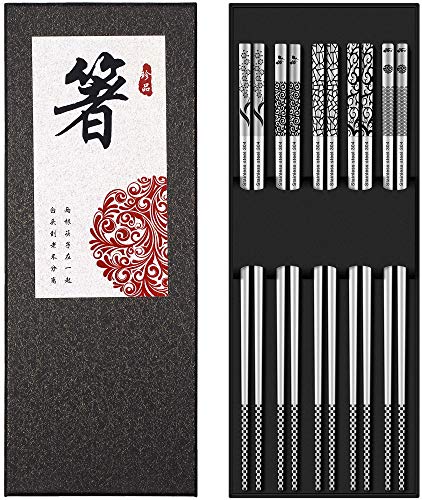
- Metal Chopsticks 18/8 Stainless Steel Laser Engraved 5 Pairs 9.25 Inches — check price on Amazon
- Wavy Fiberglass Chopsticks 10 Pairs 9.5 Inches — check price on Amazon
If you have ever watched a dumpling slide off your chopsticks for the third time, you already know what the best chopsticks with grip are for. Grip is not a marketing garnish; it is the difference between eating calmly and negotiating with every bite. Manufacturers build it four ways — matte textured tips, laser-engraved patterns, soft silicone grip sections, and square profiles whose flat faces meet the food — and this guide includes verified examples of each, so you can choose the mechanism that suits your hands and your menu.
Every grip claim below comes from the verified listing title of that set: non-slip designs, textured and matte tips, a named silicone grip, engraved patterns, and square cross-sections are all stated there, not inferred from photographs. That discipline matters in this category more than most, because grip is the easiest feature to exaggerate in a picture and the hardest to judge until the chopsticks meet something round, wet, and determined to escape.
The picks split by who needs the grip. Beginners and anyone with reduced hand strength benefit most from silicone grip sections and strongly textured tips. Experienced users who simply lose noodles and sashimi do better with matte fiberglass or engraved steel. And one wavy-profile fiberglass set shows how shape alone can do the work. Read the mechanism, not just the badge.
In this guide
Quick Picks
Six verified grip designs across fiberglass, silicone-grip steel, and engraved steel. Badges match the detailed reviews, and each review names the grip mechanism plainly.
- Best Overall Grip: GLAMFIELDS Fiberglass Chopsticks 10 Pairs Black Flower 9.5 Inches — textured tips on a non-slip fiberglass body, in a ten-pair household set — the grip most people need, in the quantity families need.
- Best Fine-Control Grip: Sakura Fiberglass Chopsticks 5 Pairs 9.5 Inches Matte Textured Tips — matte textured tips on a lightweight fiberglass body — the precise, understated grip for sushi and ramen specialists.
- Best for Weak or Learning Hands: Yosoo Health Gear Silicone Grip Chopsticks 5 Pairs 9.5 Inches — a true silicone grip section over a stainless core — the set built for hands that need the most help.
- Best Full-Silicone Grip: HLIOYAMFAE Silicone Chopsticks Set 9.45 Inches Textured Grip — full silicone construction with a textured grip, sized for noodles, rice, mixing, and serving — the softest hold in the guide.
- Best Grip in Steel: Metal Chopsticks 18/8 Stainless Steel Laser Engraved 5 Pairs 9.25 Inches — laser-engraved non-slip patterning on 18/8 stainless — the permanent answer to metal’s slippery reputation.
- Best Grip by Shape: Wavy Fiberglass Chopsticks 10 Pairs 9.5 Inches — a wavy profile that grips by geometry — ten non-slip pairs that show shape can do what texture does.
How These Picks Were Chosen
Picks qualified only if the grip mechanism is stated in the verified Amazon title — textured tips, non-slip design, silicone grip, laser engraving, or a square profile. Sets with no stated grip feature were excluded even if they are excellent chopsticks, because this search is a promise about one specific property.
The second filter was variety of mechanism. A guide that recommended six matte fiberglass sets would be honest but useless; hands differ, and the right grip for a beginner with weak pinch strength (a silicone section) is wrong for a confident user who wants precision (fine textured tips). Each mechanism appears at least once.
Finally, baseline quality still applied: dishwasher behaviour, pair count, and length had to be stated and sensible for home use. Grip added to a badly made set is still a badly made set.
The 6 Best Chopsticks with Grip
Each review names the grip mechanism first and the material second — that is the correct order for this search. Check the current price on Amazon for the set whose mechanism matches your slippery-food problem.

GLAMFIELDS Fiberglass Chopsticks 10 Pairs Black Flower 9.5 Inches — Best Overall Grip
This GLAMFIELDS set states its grip design as plainly as a title can: a non-slip design with textured tips, aimed at sushi, noodles, and Asian cuisine generally. Textured tips work because they multiply the contact edges between stick and food — instead of two smooth lines skating across a dumpling skin, the micro-texture bites just enough to hold without tearing. On fiberglass, the texture is part of a matte, dishwasher-proof body, so the grip survives years of washing unchanged.
Ten pairs at 9.5 inches makes this the household answer: everyone at the table gets the same grippy set, spares cover the dishwasher cycle, and beginners in the family learn on equipment that helps them. The black flower finish is the one decorative note. If your problem is ordinary slippery food at ordinary family meals, start and very possibly finish here.
Strengths
- Textured tips grip sushi and noodles securely
- Ten pairs equip the whole household
- Fiberglass grip never washes or wears smooth
Trade-offs
- Texture is fixed — no softer grip section for weak hands
- Fiberglass feel is functional, not luxurious
- Decorative finish may not suit every table
| Specification | Detail |
|---|---|
| Material | Fiberglass |
| Pairs | 10 pairs |
| Length | 9.5 inches |
| Grip | Non-slip design, textured tips |
Best for: families and anyone whose noodles keep escaping / Not suited for: users who need a cushioned grip for hand comfort
Check the current price on Amazon.

Sakura Fiberglass Chopsticks 5 Pairs 9.5 Inches Matte Textured Tips — Best Fine-Control Grip
The Sakura set pursues grip through surface rather than pattern: a matte finish with textured tips, on a lightweight fiberglass body. Matte surfaces hold a thin film of friction against wet food that polished surfaces cannot, which is why this set’s title pairs its grip claim with sushi and ramen — the two foods where a half-second of slide ruins the bite. Five pairs keeps the set focused and giftable.
Lightweight matters for control: a lighter stick telegraphs less of its own momentum into your fingers, so corrections are smaller and food stays held. Confident users who find strongly patterned grips crude will appreciate this set’s restraint. It is dishwasher safe and heat resistant per its title, so the matte surface is a permanent property, not a coating with a lifespan.
Strengths
- Matte textured tips excel with sushi and ramen
- Lightweight body improves fine control
- Dishwasher safe and heat resistant
Trade-offs
- Five pairs only — smaller households
- Subtle grip helps less for very weak pinch strength
- Matte finish shows its working life honestly
| Specification | Detail |
|---|---|
| Material | Fiberglass |
| Pairs | 5 pairs |
| Length | 9.5 inches |
| Grip | Matte textured tips, non-slip |
Best for: sushi and ramen lovers who want precise, subtle grip / Not suited for: users who need maximum assistance holding food
Check the current price on Amazon.

Yosoo Health Gear Silicone Grip Chopsticks 5 Pairs 9.5 Inches — Best for Weak or Learning Hands
This is the only pick whose grip is a material, not a texture: a silicone grip section over a stainless steel core, described in its title as an anti-slip easy grip. Silicone changes the problem entirely — instead of asking your fingers to pinch harder, it gives them a soft, high-friction surface that stays put in the hand, while the food end keeps the core’s structure. For beginners, older users, and anyone whose grip strength is reduced, that hand-end assistance matters more than any tip texture.
Five pairs at 9.5 inches suit home, kitchen, and party use per the title, and the steel core means the pair will not flex or warp. Be honest about care: silicone sections deserve a check that they are seated properly after washing, and the set’s help is aimed at the hand, so extremely slippery foods still reward the textured-tip picks. For the user this set is designed for, nothing else in the guide comes close.
Strengths
- Silicone grip section assists the hand directly
- Anti-slip easy grip over a stainless core
- Helps beginners and reduced grip strength most
Trade-offs
- Grip help is at the hand, not extra tip texture
- Silicone section needs a seating check after washing
- Less elegant than plain material sets
| Specification | Detail |
|---|---|
| Material | Stainless steel core, silicone grip |
| Pairs | 5 pairs |
| Length | 9.5 inches |
| Grip | Silicone grip, anti-slip easy grip |
Best for: beginners, older users, and reduced hand strength / Not suited for: experienced users who want a plain, minimal stick
Check the current price on Amazon.

HLIOYAMFAE Silicone Chopsticks Set 9.45 Inches Textured Grip — Best Full-Silicone Grip
Where the Yosoo set adds silicone to a steel core, this set is silicone throughout, with a textured grip stated in its title and a brief covering mixing, noodles, rice, and serving. A full-silicone body is the softest, quietest option here — kind to nonstick bowls, silent against dishes, and grippy along its whole length rather than only at a tip or a grip band. The four-piece set size suits a couple or a single cook’s everyday rotation.
Silicone’s trade-offs are structural: it flexes more than fiberglass or steel, so very heavy or awkward pieces of food feel less positive, and purists will miss the snap of a rigid stick. For everyday kitchen use — the title’s own framing — those are minor costs against a grip that never has an off day and a surface that treats your cookware gently.
Strengths
- Textured silicone grip along the stick
- Gentle and quiet on bowls and nonstick surfaces
- Suited to noodles, rice, mixing, and serving
Trade-offs
- Silicone flexes under heavy food
- Four pieces is a small set
- Less precise feel than rigid materials
| Specification | Detail |
|---|---|
| Material | Silicone |
| Pieces | 4 pcs |
| Length | 9.45 inches |
| Grip | Textured chopstick grip |
Best for: everyday kitchen users who want the softest, quietest grip / Not suited for: users who want a rigid, precise stick for heavy food
Check the current price on Amazon.
Metal Chopsticks 18/8 Stainless Steel Laser Engraved 5 Pairs 9.25 Inches — Best Grip in Steel
Steel’s one honest weakness is grip, and this set attacks it with the most durable method available: a laser-engraved non-slip pattern cut into 18/8 stainless steel. Engraving cannot wear off, peel, or wash away, because it is the surface of the metal itself — which means the grip this set has on day one is the grip it has in year ten, through unlimited dishwasher cycles.
At 9.25 inches in a Japanese-Korean profile, the set sits between the short Japanese and standard table lengths, suiting most hands and dishes. Five pairs come as a gift set. The remaining steel truths still apply — it will clink against bowls and conduct some heat — but the engraved grip removes the objection that keeps most people from choosing the permanent material. If you want steel and grip in the same sentence, this is the verified way to get both.
Strengths
- Laser-engraved grip can never wear off
- 18/8 stainless is effectively permanent
- Dishwasher safe with zero grip maintenance
Trade-offs
- Steel still clinks against ceramic
- Engraved pattern is grippy, not cushioned
- Metal feel is not for traditionalists
| Specification | Detail |
|---|---|
| Material | 18/8 stainless steel |
| Pairs | 5 pairs |
| Length | 9.25 inches |
| Grip | Laser engraved non-slip |
Best for: buyers who want permanent steel with real grip / Not suited for: users who need a soft or cushioned hold
Check the current price on Amazon.

Wavy Fiberglass Chopsticks 10 Pairs 9.5 Inches — Best Grip by Shape
The wavy set makes the guide’s most interesting argument: grip does not have to be a surface treatment at all. A wavy profile gives the fingers natural resting points along the stick and presents changing angles to the food, so the pair resists both hand-slip and food-slip by shape. Its title confirms the non-slip claim, dishwasher safety, and a heat resistance figure of 120 degrees Celsius, on a PET and fiberglass body at the standard 9.5 inches.
Ten pairs makes it a fleet purchase like the GLAMFIELDS anchor, and the choice between them is tactile: textured tips if your problem is food escaping at the point of contact, wavy shape if your problem is the sticks shifting in your hand. Some users find the waviness a delight; others find any departure from a straight stick distracting. If your grip problem lives in your fingers rather than at the tips, this is your pick.
Strengths
- Wavy shape grips the hand by geometry
- Non-slip and dishwasher safe, ten pairs
- Stated heat resistance to 120°C
Trade-offs
- Non-straight profile divides users
- Grip is positional, not cushioned
- Shape-first design may distract purists
| Specification | Detail |
|---|---|
| Material | PET + fiberglass |
| Pairs | 10 pairs |
| Length | 9.5 inches |
| Grip | Wavy non-slip profile; heat resistant to 120°C |
Best for: users whose chopsticks shift in the hand while eating / Not suited for: users who want a classic straight stick
Check the current price on Amazon.
Comparison Table
| Pick | Badge | Key spec | Best for |
|---|---|---|---|
| GLAMFIELDS Fiberglass Chopsticks 10 Pairs Black Flower 9.5 Inches | Best Overall Grip | Fiberglass, textured tips, 10 pairs, 9.5 in | families and anyone whose noodles keep escaping |
| Sakura Fiberglass Chopsticks 5 Pairs 9.5 Inches Matte Textured Tips | Best Fine-Control Grip | Fiberglass, matte textured tips, 5 pairs | sushi and ramen lovers who want precise, subtle grip |
| Yosoo Health Gear Silicone Grip Chopsticks 5 Pairs 9.5 Inches | Best for Weak or Learning Hands | Silicone grip, steel core, 5 pairs, 9.5 in | beginners, older users, and reduced hand strength |
| HLIOYAMFAE Silicone Chopsticks Set 9.45 Inches Textured Grip | Best Full-Silicone Grip | Full silicone, textured grip, 9.45 in | everyday kitchen users who want the softest, quietest grip |
| Metal Chopsticks 18/8 Stainless Steel Laser Engraved 5 Pairs 9.25 Inches | Best Grip in Steel | 18/8 steel, laser-engraved grip, 5 pairs | buyers who want permanent steel with real grip |
| Wavy Fiberglass Chopsticks 10 Pairs 9.5 Inches | Best Grip by Shape | Wavy fiberglass, non-slip, 10 pairs, 9.5 in | users whose chopsticks shift in the hand while eating |
How to Choose the Best Chopsticks with Grip
Diagnose your slip before you shop, because the two kinds need different tools. If food escapes at the tips — dumplings rotating, noodles sliding, sashimi skating — you need tip grip: textured, matte, or engraved tips like the GLAMFIELDS, Sakura, and steel picks here. If the chopsticks themselves shift and rotate in your fingers, you need hand grip: a silicone section like the Yosoo set, a full silicone body, or a shaped profile like the wavy set. Buying tip texture for a hand problem, or the reverse, leaves the frustration exactly where it was.
Match assistance to experience honestly. Beginners and anyone with reduced hand strength should take the most help available — silicone grips exist precisely for them, and there is no virtue in struggling with polished steel for tradition’s sake. Experienced users usually want the opposite: the least grip that solves the problem, because heavy textures can feel crude when your technique is already sound. Matte fiberglass is the connoisseur’s grip — present, permanent, and unobtrusive.
Finally, prefer grip that is built into the material over grip that is applied to it. Textures moulded into fiberglass, engraving cut into steel, and silicone that is part of the construction all survive washing indefinitely. Thin coatings and printed patterns are the first thing a dishwasher removes, and a grip feature with a lifespan is a countdown, not a solution. Every pick in this guide builds its grip in.
The Four Grip Mechanisms, Compared Honestly
Textured tips concentrate friction exactly where food is held and change nothing else about the stick; they are the most targeted fix and the easiest to live with long-term. Matte surfaces spread a gentler version of the same friction along the tip area and flatter users who value subtlety. Both live happily on fiberglass, the easiest material to own.
Silicone grips intervene at the hand instead. A grip section or full silicone body raises friction between fingers and stick, which is why silicone is the beginner and low-strength answer — and why it does relatively little for a confident user whose only problem is a wet dumpling. Engraving and square profiles are the permanent-material answers: geometry and cut pattern in steel or titanium that cannot degrade. Choose the mechanism by where your slip happens, and the category becomes simple.
Grip and Dishwashers: What Survives
Grip is only useful if it survives your cleaning routine. Moulded fiberglass textures and matte finishes are indifferent to dishwashers — the Sakura and GLAMFIELDS sets state dishwasher safety alongside their grip claims. Laser engraving in steel is likewise permanent. Silicone tolerates dishwashing well, though grip sections on cored designs deserve an occasional check that they remain seated.
What does not survive is anything printed, painted, or thinly coated, which is why this guide contains none. When you compare listings beyond this guide, treat an unstated grip as an absent grip and a coated grip as a temporary one. The verified titles here let you skip that detective work.
When Grip Is Not the Problem
Sometimes the sticks are fine and the geometry is wrong: a set half an inch too long rotates in a small hand no matter its texture, and a learner fighting an oversized pair will blame grip for a length problem. If a new grippy set still feels unstable, drop to a shorter length before buying a grippier one — the companion guides cover the length question in depth.
Technique is the other silent variable. Only the upper stick should move; if both sticks wander, no texture will save the meal. Ten minutes of deliberate practice with large foods fixes more meals than any purchase — and then the right grip set makes that fixed technique feel effortless.
Testing Grip Before You Commit
You can audition a grip mechanism in one meal if you choose the right test foods. Cook or order three things: smooth round noodles in broth, something with a sauce glaze, and something soft that tears under pressure, like tofu or ripe avocado. A tip-grip set should hold the noodles without crushing the tofu; a hand-grip set should feel invisible by the third bite, the sticks simply staying where your fingers put them. If a set fails one test badly, it is the wrong mechanism for your menu, however well it reviewed elsewhere.
Test with the food you actually eat weekly, not with party tricks. Peas and marbles measure parlour skill; Tuesday’s ramen measures your life. The picks in this guide were separated by mechanism precisely so this test has somewhere to go — a failed experiment with texture points you to silicone, and a failed experiment with silicone points you back to shape and engraving.
Grip for Children, Older Hands, and Everyone Between
Grip assistance is not a beginner crutch to be embarrassed about; it is an accessibility feature that keeps people eating independently and enjoying shared meals. For children, textured tips plus a shorter length succeed fastest, because small hands fight length before they fight slipperiness. For older users or anyone with arthritis or reduced pinch strength, the silicone grip section is the single most helpful design in this guide, because it reduces the force the hand must sustain for an entire meal, not just the force needed for one bite.
Households that eat together across generations do well to stock two grip levels without making a ceremony of it: the standard textured fleet for most, and the silicone-grip set at the place of the person it helps. Nobody is singled out; the drawer simply contains options, the way it contains both large and small plates. That quiet inclusiveness is good hosting, engineered.
Grip, Gloves, and Wet Hands: Kitchen Realities
Grip problems spike in real kitchens for predictable reasons: wet hands from washing produce, oily fingers from cooking, and the hurry of serving while food is hot. Silicone grip sections earn special praise here because silicone’s friction barely changes when wet, while polished wood and metal become noticeably slicker. If your slipping happens while you cook and serve rather than while you eat, weight your choice toward the silicone and full-silicone picks in this guide.
The serving moment deserves its own equipment thought: a household that serves family-style from shared dishes should keep one grippy serving pair — textured fiberglass is ideal — dedicated to the shared plates. It keeps the meal hygienic, gives the server real control over portions, and spares everyone’s personal pairs from double duty.
How Grip Ages Across Materials
A grip feature is a promise about year three, not day one, so consider how each mechanism ages. Moulded fiberglass texture is the surface of the material and ages exactly as the stick does — which is to say, almost not at all. Laser engraving in steel is similarly permanent. Silicone stays grippy for years but should be inspected for nicks and for the day it begins to feel loose on a cored design. Matte finishes can polish slightly with heavy use, trading a little of their subtle friction for a smoother hand-feel that many users actually prefer.
The mechanisms to distrust are the ones this guide excluded: printed patterns, thin rubberised coatings, and any grip the listing cannot describe. They age in months, and their failure is quiet — the set simply becomes the one nobody reaches for. Buy the grip that is built in, and the set stays chosen.
Pairing Grip With the Right Bowl and Food
Equipment works as a system. Deep, narrow bowls bring food closer to the hand and shorten the lift, which reduces drops regardless of grip; wide, shallow bowls do the opposite. Glazed ceramic is the slickest stage for metal tips, while matte stoneware forgives them. None of this requires new purchases to exploit — simply notice which of your existing bowls make your current set feel clumsy, and you will learn whether your problem is truly grip or partly geometry.
Food choice is the training variable you control completely. Practise new grip equipment on forgiving foods for the first few meals — the mechanism will feel like an upgrade immediately — and only then take it to the dumpling test. Confidence built in the right order is what turns a purchase into a habit.
Grip Training Progression: A Two-Week Plan
Week one belongs to forgiving foods and a textured set: thick noodles, roasted vegetables, pieces of omelette, eaten slowly at real meals rather than in drills. The goal is a hold that survives without conscious thought — lower stick still, upper stick moving, tips meeting evenly. By the end of the week, most learners feel the grip texture quietly doing the work their fingers used to strain for, which is exactly the partnership this category promises.
Week two introduces the slippery canon one food at a time: a glazed dumpling, a piece of sashimi or smoked salmon, round noodles in broth. Change nothing else — same set, same bowl position — so progress is measurable and confidence is earned honestly. If one food still defeats you at the week’s end, that food, not your hands, sets the next equipment question, and this guide’s mechanism map tells you which direction to move.
Occupational Hands: Cooks, Servers, and Makers
People whose hands work for a living — cooks, servers, carpenters, nurses washing hands forty times a shift — present grip problems the average guide ignores: skin that is dry, calloused, or frequently wet changes friction hour by hour. Silicone’s stable friction across wet and dry states is why it recurs in this guide’s recommendations for working hands, and why the full-silicone set suits kitchen professionals at home, where the cooking and the eating blur together.
For hands that tire — a long shift’s worth of grip already spent — the silicone grip section’s force reduction matters beyond food control: it lowers the total effort of the meal itself. Equipment that respects tired hands gets used; equipment that adds strain gets quietly replaced by a fork. Choose for the hands you come home with.
What Grip Cannot Fix: A Short, Kind List
Grip cannot fix a bowl placed too far away, food cut into pieces too large for any stick, or a table height that puts your hand at a clumsy angle. It cannot fix rushing. A remarkable share of ‘chopstick problems’ dissolve when the bowl comes closer, the pieces get smaller, and the meal slows by ten percent — adjustments that cost nothing and that experienced eaters make unconsciously. Audit the geometry of your meals before auditing your equipment a second time.
Nor can grip fix a set that is simply worn out: fiberglass polished by a decade of use, bamboo gone rough, a silicone section gone loose. Retirement is a legitimate solution, and this guide’s picks are priced and built so that replacing a tired set is a small event. The goal is meals that feel easy; sometimes the easiest path is a fresh pair.
Comparing Grip Claims When You Shop Beyond This Guide
Take three habits into any listing. First, find the mechanism in words — textured, engraved, silicone, square — and distrust any grip claim that cannot name its own method. Second, check whether the grip survives the stated care routine; a textured set that forbids dishwashing will lose its texture to hand-washing abrasion or its owner to inconvenience. Third, match the mechanism’s location to your slip’s location, hand or tip, as this guide’s diagnostic section teaches.
Listings that pass all three tests are rare enough to be worth shortlisting on the spot — and they are exactly the tests every pick in this guide was required to pass, with the mechanism quoted from its verified title rather than paraphrased from a photograph. Shop with the tests and the category stays honest, wherever you buy.
Grip as a Household Standard
There is a quiet argument for standardising a household on grippy chopsticks even when only some members struggle: the cost of texture to a confident user is approximately zero, while the benefit to a struggling user is the difference between joining the meal and fighting it. A drawer of textured-tip fiberglass — this guide’s top pick — serves grandparents, children, guests, and experts with the same pair, and nobody’s dignity is consulted in the process. Accessibility that requires no announcement is the best kind.
Keep the silicone-grip set in the same drawer for the hands that need more, and the system is complete: two levels of help, zero ceremony. That is the mature endpoint of this category — not a personal arsenal of specialised sticks, but a household standard chosen with everyone’s hands in mind, verified mechanism by mechanism, exactly as this guide set out to do.
Texture Vocabulary: Reading a Grip Description
Listings describe grip in a small vocabulary worth learning precisely. ‘Textured tips’ means the working ends carry a moulded or machined roughness — the GLAMFIELDS and Sakura pattern. ‘Matte’ means the surface finish itself is the friction, subtler and spread wider. ‘Engraved’ means the pattern is cut into metal and is effectively immortal. ‘Silicone grip’ means a soft section at the hand, a different intervention at a different location. ‘Square’ and ‘wavy’ mean the friction is geometry — the shape resists rotation in the fingers and presents edges to the food.
When a listing uses the vocabulary loosely — grip everywhere and mechanism nowhere — apply this guide’s standing rule and treat the claim as unmade. The sellers who built real grip can always say how, in five words or fewer, in the title itself. Every pick here did.
Grip and Confidence: The Psychology of the Table
There is a social layer to grip that specifications miss: people who trust their chopsticks eat more adventurously. The diner who has survived three escaped dumplings orders the safe dish next time; the diner whose textured set has never embarrassed them tries the slippery special, shares the shared plates, and enjoys the meal the table was having without them. Grip, in other words, is not really about food retention — it is about who gets to relax at dinner.
That is why this guide treats a modest equipment category with unusual seriousness, and why the household-standard argument in the previous section matters. A small, verified, mechanical advantage, distributed to everyone at the table, quietly widens what the table dares to cook and order. Few purchases in a kitchen pay out in that currency at all.
One Last Test Before You Order
Bring the diagnostic discipline home in three questions. Where does my food actually escape — at the tips, in the fingers, or in the geometry of a set that is simply the wrong length for my hand? Which mechanism in this guide answers that exact location, named in its verified title rather than implied by a photograph? And will that mechanism survive my washing routine for years, built into the material as every pick here is, rather than applied to it as a coating with a countdown?
Answer those honestly and the category collapses into a single obvious purchase, which is what good buying guides are for. The six sets verified here span every mechanism and every hand, from a beginner’s silicone-assisted first pair to an engraved steel set that will grip identically in a decade. Pick the one your answers point to, and let dinner get easier.
Why Mechanisms Beat Marketing in This Category
Grip is the most photographable and least photograph-verifiable property in the chopstick market: a picture can suggest texture that fingers would call polish, and studio lighting has never dropped a dumpling. That is why this guide built its entire shortlist on mechanisms stated in words — textured, matte, engraved, silicone, square, wavy — each of which makes a testable claim about physics rather than an untestable claim about vibes. The result is a shorter, duller-sounding, and far more trustworthy list than the category usually produces.
The habit generalises. Any product feature that matters to you should be findable as a mechanism in the manufacturer’s own confirmed description: not ‘advanced grip technology’ but the thing itself, named. Sellers who built the feature can always name it. Sellers who cannot are telling you, in the only language available to them, that the feature is not really there.
Keep the corollary for your own drawer audits: a set whose grip you cannot describe in one word — textured, matte, engraved, silicone, square, wavy — is a set whose grip you do not actually know. When the day comes to replace a tired pair or add a second set, that single word is the fastest route back to equipment that works, because it searches as precisely as it describes. Name your grip, and you can always find it again.
How to Hold Chopsticks So Grip Can Do Its Job
The best grip set cannot rescue a two-moving-sticks hold. Set the hold up correctly once, and then let the equipment’s texture do the rest.
- Rest the lower chopstick on the base of your thumb and the side of your ring finger; keep it completely still.
- Hold the upper chopstick like a pen, between thumb, index, and middle finger — this is the only stick that moves.
- Align the tips so they meet evenly; uneven tips are the hidden cause of most food rotation and escape.
- Practise first on large, textured foods — roasted vegetables, thick noodles, omelette pieces — where grip can succeed visibly.
- Move to slippery targets — dumplings, sashimi, round noodles — only when the hold feels automatic.
- Keep your grip relaxed; a white-knuckle pinch makes tips cross and food squirt out sideways.
- If food still escapes, change one variable at a time: tip texture first, then length, then a silicone grip section.
Most users feel the difference from a proper grip set within one meal, and the technique settles within a week of ordinary eating. If it does not, the mismatch is almost always length — try a shorter set from the companion guides before concluding that chopsticks are not for you.
Common Buying Mistakes
Buying tip texture for a hand-slip problem. If the sticks rotate in your fingers, you need a grip section or shaped profile, not rougher tips.
Choosing polished steel as a learner. Smooth metal is the hardest surface to learn on. Start textured or silicone, graduate later.
Trusting a grip claim with no stated mechanism. If the title cannot say how the grip works, it probably does not. Every pick here names its mechanism.
Squeezing harder when food slips. Excess pinch crosses the tips and ejects food. Relax, realign the tips, and let texture work.
Ignoring silicone care. Grip sections should be checked after washing and kept seated; a loose section helps no one.
Expecting grip to fix wrong length. An overlong set stays clumsy at any texture. Match length to hand first.
Final Recommendation
For most households, the GLAMFIELDS textured-tip set is the grip answer — ten pairs, permanent texture, no special care. Learners and weaker hands should go straight to the Yosoo silicone grip set, steel loyalists to the laser-engraved steel set, and anyone whose sticks wander in the hand to the wavy fiberglass set.
More from this cluster: Best Chopsticks To Use, Best Chopsticks With Case, Best Chopsticks Wood, Best Chopsticks To Grip Noodles, and Best Chopsticks For Beginners. All verify grip and material claims from listing titles the same way.
Frequently Asked Questions
What type of grip works best for slippery foods like dumplings and noodles?
Textured or matte tips. They multiply contact edges at the exact point where food is held, which is why the GLAMFIELDS and Sakura fiberglass sets lead this guide. Engraved steel achieves the same result permanently for metal loyalists.
Are silicone grip chopsticks good for beginners?
They are the best option for beginners who struggle to keep the sticks stable in the hand, and for users with reduced grip strength. The silicone section raises friction where the fingers hold, so less pinch force is needed. Pair them with large practice foods for the fastest progress.
Does grip texture wear off over time?
Not on the picks here. Moulded fiberglass texture, matte finishes, and laser engraving are part of the material itself and survive unlimited washing. Printed or coated grip patterns are the ones that fade, which is why none were selected.
Square or round chopsticks — which grips better?
Square profiles grip both hand and food more securely, because flat faces resist rotation. Round sticks roll more freely, which experienced users sometimes prefer for speed. If slipping is your complaint, choose square or textured.
Can grippy chopsticks damage delicate food?
Overly aggressive texture can mark very soft foods if you squeeze, but the fix is pressure, not equipment: hold gently and let the texture do the holding. Matte tips, like the Sakura set’s, are the gentlest grippy option for delicate fish.
My chopsticks slip in my hand, not at the food. What should I buy?
A hand-grip design: the silicone-grip Yosoo set, the full-silicone set, or the wavy-profile fiberglass set. Tip texture will not help you — your problem is at the fingers, and those three picks are built for exactly that.


