Disclosure: airfryerkitchensupply.com is reader-supported. When you buy through links on our site, we may earn an affiliate commission at no extra cost to you.
Where to buy
Every pick below was checked against Amazon’s own catalogue data before this guide was written, and each linked model is sold through Amazon. Start with the shortlist for the best chopsticks from beijing:
- SOMOYA Iron Wood Chopsticks (10 Pairs, 9.8 in) — Best Overall. Check the current price on Amazon before you buy, because listings change.
- Mannice Bamboo Chopsticks (10 Pairs, 9.8 in) — Best Classic Bamboo. Check the current price on Amazon before you buy, because listings change.
- LOROTOCO Bamboo Chopsticks (20 Pairs, Chinese, 9.45 in) — Best Bulk for Gatherings. Check the current price on Amazon before you buy, because listings change.
- LUXXII Natural Bamboo Chopsticks (5 Pairs, 9.5 in) — Best Small Set. Check the current price on Amazon before you buy, because listings change.
- Helen’s Asian Kitchen Bamboo Chopsticks (10.5 in, 10 Pairs) — Best for Hotpot and Peking Duck. Check the current price on Amazon before you buy, because listings change.
- Natural Bamboo Chinese Chopsticks, Patterned (10 Pairs, 9.45 in) — Best Patterned Bamboo. Check the current price on Amazon before you buy, because listings change.
A note of honesty before the picks: shoppers searching for the best chopsticks from beijing are usually after the Beijing style of chopstick, the longer, squared, bamboo-and-wood pattern used across northern Chinese cooking, rather than a certificate of city origin, and Amazon’s US catalogue rarely verifies a chopstick’s city of manufacture. So this guide does the useful thing: it selects genuine Chinese-style chopsticks, the length, profile and materials of the Beijing table, each verified against its manufacturer’s listing, and says plainly that ‘from Beijing’ here describes a style and a cuisine, not a proven factory address.
The Beijing table explains the style. This is the cuisine of Peking duck, hand-pulled noodles, hotpot and wheat-based dishes eaten communally, and its chopsticks run longer than Japanese pairs, around 9.5 to 10.5 inches, often square in profile so they do not roll, in bamboo and hardwoods that handle shared dishes and hot broths. The six picks below cover that table properly: a durable ironwood set, classic bamboo in three depths, the long pair for hotpot work, and a patterned carbonised bamboo set, all of them tools a Beijing kitchen would recognise as its own.
It is also worth naming what this guide is not: it is not a claim that style outranks substance. Every pick below had to pass the same verification as any other category on this site, brand, material, length and pair count taken from the manufacturer’s own listing. The Beijing framing decided which verified products belonged in the conversation; it did not lower the bar for entering it.
In this guide
Quick Picks
- Best Overall: SOMOYA Iron Wood Chopsticks (10 Pairs, 9.8 in) — dense ironwood pairs at the classic Chinese 9.8-inch length, the durable heart of a Beijing-style drawer.
- Best Classic Bamboo: Mannice Bamboo Chopsticks (10 Pairs, 9.8 in) — classic Chinese bamboo at the full 25-centimetre length, polished splinter-free, in a ten-pair gift-ready set.
- Best Bulk for Gatherings: LOROTOCO Bamboo Chopsticks (20 Pairs, Chinese, 9.45 in) — twenty pairs of Chinese bamboo chopsticks for the communal table at full stretch: banquets, hotpot nights and big family dinners.
- Best Small Set: LUXXII Natural Bamboo Chopsticks (5 Pairs, 9.5 in) — a five-pair natural bamboo set at Chinese dining length, the right-sized start for smaller households eating Beijing-style dishes.
- Best for Hotpot and Peking Duck: Helen’s Asian Kitchen Bamboo Chopsticks (10.5 in, 10 Pairs) — the longest dining pairs here at 10.5 inches, for hotpot fishing, shared platters and the pancake work of Peking duck.
- Best Patterned Bamboo: Natural Bamboo Chinese Chopsticks, Patterned (10 Pairs, 9.45 in) — carbonised bamboo with a patterned non-slip design, paint- and wax-free per the listing, for a Chinese set with some ceremony in it.
How These Picks Were Chosen
Every pick was verified against Amazon’s catalogue data for this site before writing: the brand, material, length, pair count and care claims in each review come from the manufacturer’s own listing, not from roundups or guesswork. Where a listing states a heat resistance or a dishwasher claim, we report it as stated; where it does not, the review says nothing rather than inventing a number.
Selection filtered for the job named in the search first and general quality second. Length was matched to the food, tip texture was matched to how slippery that food is, and material was matched to the heat and washing routine involved. Sets that duplicated another pick’s exact role were cut, so the six slots cover genuinely different ways to solve the same meal.
We also weighted the unglamorous arithmetic of sets: how many pairs arrive, whether the count matches the household the pick claims to serve, and whether the set’s role, dining, cooking or bulk reserve, stays honest. A ten-pair set that cannot survive a dishwasher is a worse family pick than a five-pair set that can, and the reviews score that reality rather than the headline count.
Ramen-specific weighting deserves a sentence of its own: in this category we scored heat behaviour and broth behaviour ahead of appearance, because a pair lives its whole service life in steam and soup. A beautiful pair that warms uncomfortably in the hand, stains in miso or slips when coated fails the ramen test regardless of its table manners elsewhere, and the reviews say so where it applies.
Sushi weighting ran opposite to the ramen guide’s: here we scored tip finesse, hand feel and table quietness ahead of heat tolerance, because nothing at a sushi table is hot, deep or heavy. A pair that would triumph over a steaming bowl can be merely adequate over a platter of nigiri, and the reviews judge each pick by sushi’s own examination, which is placement under delicacy.
Stage accuracy was the first filter in this category, ahead of design appeal. Each pick was classified by the assistance it actually provides, alignment, guidance or transition, and several charming products were cut because their assistance was decorative rather than mechanical. A trainer that does not change the physics of the child’s attempt is a toy shaped like a lesson, and the reviews below only include tools that change the physics.
Within the style, selection weighted the working properties of the northern table: length for communal reach, profiles that do not roll, materials that tolerate broth and shared service, and pair counts matched to how this cuisine is actually eaten, which is together. Decorative sets that could not work a hotpot or survive a festival table were excluded, however handsome their photographs.
The 6 Best Chopsticks From Beijing (Chinese-Style Picks)
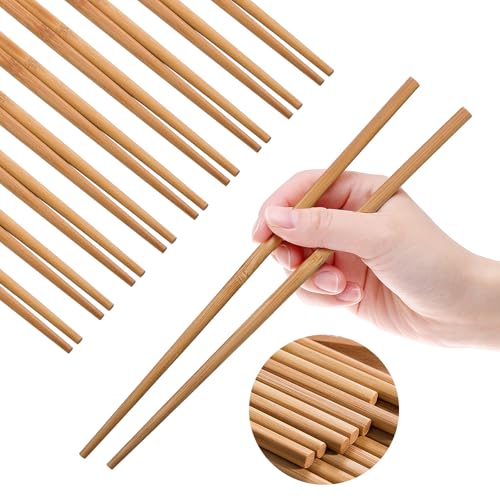
SOMOYA Iron Wood Chopsticks (10 Pairs, 9.8 in) — Best Overall
Ironwood is the connoisseur’s Chinese chopstick material: exceptionally dense, naturally weighty and resistant to the warping that ends lesser wooden pairs. SOMOYA’s ten-pair set at 9.8 inches is the full Chinese dining format, long enough for shared dishes and hotpot-adjacent bowls, with the listing stating dishwasher safety, a claim to still treat gently if you want the wood to age gracefully.
Strengths
- Ironwood density gives a balanced, substantial hand-feel and excellent resistance to warping
- 9.8-inch Chinese length suits communal dishes, noodle bowls and tabletop cooking alike
- Ten pairs equip a household for the shared-dish style of eating this cuisine assumes
Trade-offs
- Dense wood is heavier than bamboo, which some eaters notice over long meals
- Natural wood still rewards hand washing despite the listing’s dishwasher statement
- The serious, plain finish is functional rather than decorative
| Material | Iron wood |
| Length | 9.8 in |
| Pairs | 10 |
| Style | Chinese |
Northern Chinese eating is communal and unhurried: dishes in the middle, bowls in hand, chopsticks travelling constantly between the two. The tool for that rhythm needs length for the reach, weight for control and durability for daily service, and ironwood delivers all three with a material honesty bamboo cannot match at the decade scale. This is the set a Beijing household that cooks seriously would keep as its core.
It also anchors a mixed drawer well: ironwood for daily family meals, bamboo bulk for crowds, the long pair for the hotpot. If you buy one Chinese-style set from this guide, this is the one built to still be in service when the others are memories.
Ironwood has one more virtue that reveals itself slowly: it takes a polish from use. A year of meals leaves the surface smoother and slightly deeper in tone, so the set looks better in its second year than its first, the opposite trajectory of bamboo and of every synthetic. Owners who keep one set for years, rather than rotating purchases, will find this the most satisfying material in the guide to live with.
Best for: households eating Chinese-style communal meals who want a durable core set / Not suited for: eaters who prefer the lightest possible pair; bamboo is your material
Check on Amazon — check price on Amazon for the current listing.

Mannice Bamboo Chopsticks (10 Pairs, 9.8 in) — Best Classic Bamboo
Mannice’s set is the traditional article: natural bamboo at 25 centimetres, the Chinese dining standard, finished through repeated burnishing so the surface is smooth and splinter-free, per the listing. Bamboo is the historical Beijing material, light, quick in the hand and kind to shared dishes, and ten pairs make it a household set with gift presentation.
Strengths
- Full 25 cm Chinese length for communal reach and noodle-bowl depth
- Repeatedly burnished bamboo surface is smooth and splinter-free in service
- Featherweight bamboo keeps long communal meals fatigue-free
Trade-offs
- Bamboo is a consumable: expect seasons of service, not decades, and replace tired pairs
- Hand washing and prompt drying are the price of bamboo’s longevity
- Natural bamboo varies subtly in tone from pair to pair
| Material | Bamboo |
| Length | 9.8 in / 25 cm |
| Pairs | 10 |
| Finish | Burnished, non-slip |
If the question is what chopsticks a Beijing home actually uses daily, the answer is usually this: plain bamboo, full length, bought in tens and replaced without sentiment. The Mannice set is faithful to that reality, down to the smooth burnished finish that separates good bamboo from the splintery bulk sticks that give the material a bad name.
Buy it as the working standard and spend your discernment on the food. When a pair finally frays, the set’s depth absorbs the loss, which is exactly how the material is meant to be owned.
Bamboo sourcing varies and the listing’s burnishing detail is the quality signal to trust: cheap bamboo is split, dried and bundled with its splinters intact, while properly finished bamboo is worked smooth before it is packed. The difference is felt at the lips in the first meal. When comparing bamboo sets, finish claims matter more than pair counts, and this set makes the right claim in its own text.
Best for: traditionalists who want the authentic bamboo standard of the Chinese table / Not suited for: buy-once-for-life shoppers; ironwood or fiberglass fits that philosophy
Check on Amazon — check price on Amazon for the current listing.
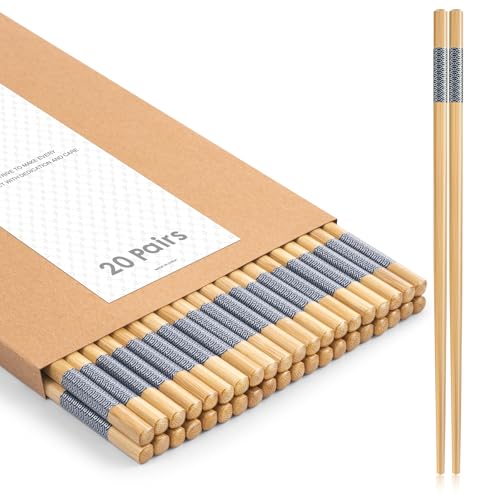
LOROTOCO Bamboo Chopsticks (20 Pairs, Chinese, 9.45 in) — Best Bulk for Gatherings
Beijing-style eating scales: the cuisine of shared plates assumes a table of people, and LOROTOCO’s twenty-pair bamboo set is the depth that assumption requires. At 9.45 inches with a round-head, non-slip profile, these are proper Chinese dining pairs in party quantity, for the household whose normal dinner is eight and whose festival dinner is twenty.
Strengths
- Twenty pairs cover banquets, hotpot nights and festival tables without a disposable in sight
- Round-head joined profile needs no separating and resists fragmenting, per the listing
- Natural bamboo is flexible and light for guests of every skill level
Trade-offs
- The listing recommends hand washing for durability, a real task at twenty-pair scale
- Bulk bamboo varies slightly pair to pair in finish
- Storing twenty pairs neatly needs a crock or wide drawer section
| Material | Bamboo |
| Length | 9.45 in |
| Pairs | 20 |
| Style | Chinese, round head |
Every cuisine has a hosting problem, and for the Chinese table it is pairs: guests cannot eat a shared meal with forks without the meal changing character. Twenty real bamboo pairs keep the table authentic at any headcount, and they spare you the disposable sticks that splinter, taste of the packet and end the evening in the bin.
The care arithmetic is the honest cost: rinse them in batches, dry them in a crock, and treat the set as a renewable resource. Households that host often will find the trade obviously worth it by the second hotpot night.
A host’s refinement for bulk sets: designate the LOROTOCO pairs as the house’s guest standard and keep them together in their own crock, so the family’s daily pairs and the guest reserve never intermix. Guests receive a matched, complete-feeling set; the household’s favourites stay in their drawer; and the post-party wash returns twenty pairs to one known place. Systems like this are what make hosting at scale feel calm rather than improvised.
Best for: hosts of Chinese communal meals, hotpot nights and festival dinners / Not suited for: solo diners; the ten-pair and five-pair sets are your scale
Check on Amazon — check price on Amazon for the current listing.

LUXXII Natural Bamboo Chopsticks (5 Pairs, 9.5 in) — Best Small Set
LUXXII’s five-pair set is the modest entry: natural bamboo, 9.5 inches, lightweight and non-slip, listed for the full northern repertoire of noodles, dumplings and shared dishes. For a couple or a small family adopting Chinese home cooking, it is the correctly sized first set, neither the commitment of twenty pairs nor the fragility of a single gift pair.
Strengths
- Five-pair count fits small households and first kitchens without drawer overflow
- 9.5-inch Chinese length handles noodles, dumplings and shared plates properly
- Natural bamboo lightness suits new chopstick users building technique
Trade-offs
- Five pairs run short when guests join; hosts should hold a bulk reserve
- Bamboo care rules apply: hand wash, dry promptly, never soak
- Plain presentation, a working set rather than a gift object
| Material | Bamboo |
| Length | 9.5 in |
| Pairs | 5 |
| Profile | Non-slip |
Small households adopting a cuisine deserve tools at their scale. This set covers nightly Beijing-style cooking, dumpling nights, noodle bowls, stir-fries eaten properly, for the two-to-four-person household, with bamboo’s forgiving grip helping any learner at the table.
It is also the sensible trial of the style itself. Cook a month of northern dishes with these; if the cuisine takes root in your kitchen, the ironwood core set above is the graduation, and this set becomes the respected reserve.
This set is also the correct first purchase for a student or first-flat kitchen discovering Chinese cooking: one box equips the table, the material forgives learner technique, and the cost tier respects a first kitchen’s budget. Many cooks’ lifelong drawers began with exactly such a set, retained long after graduation as the spare that never quite leaves service.
Best for: small households starting Chinese home cooking / Not suited for: regular hosts, who need the twenty-pair depth
Check on Amazon — check price on Amazon for the current listing.

Helen’s Asian Kitchen Bamboo Chopsticks (10.5 in, 10 Pairs) — Best for Hotpot and Peking Duck
Length is a Beijing virtue: the cuisine’s signature acts, fishing in a bubbling hotpot, lifting from a lazy-Susan platter, assembling a Peking duck pancake at the table, all reward reach. Helen’s Asian Kitchen’s 10.5-inch bamboo set, ten pairs of it, is the dining-length maximum in this guide, long enough to work a tabletop pot from a seated position without standing into the steam.
Strengths
- 10.5-inch reach masters hotpot, shared platters and tabletop cooking from the chair
- Bamboo insulates fingers from broth heat and grips slick hotpot items kindly
- Ten pairs equip a full hotpot table in matched, proper tools
Trade-offs
- Too long for small bowls and small hands; this is a specialist dining length
- Bamboo care applies, and hotpot service is hard on any natural material
- Guests new to chopsticks may find the length intimidating; keep standard pairs for them
| Material | Bamboo |
| Length | 10.5 in |
| Pairs | 10 |
| Use | Hotpot and communal dining |
Hotpot with short chopsticks is a knuckle-burning compromise everyone has suffered once. The extra inch and a half here is the difference between fishing comfortably and hovering over the pot, and bamboo’s insulation means the broth’s heat stays in the broth. For households whose Beijing cooking centres on the communal pot, this is not an optional extra; it is the correct tool for the cuisine’s central ritual.
The same reach serves the Peking duck ritual, where the pancake is assembled at the table with scallion, cucumber and sauce, a small piece of theatre that wants a confident, lengthy pair. Buy this set when your table performs the cuisine, not just eats it.
Hotpot veterans will add one accessory to this set: a small fine-mesh strainer per diner for the items that defeat any chopstick, quail eggs, small meatballs, glass noodles at the end of their patience. The long pairs do the skilled work; the strainers do the retrieval work; together they end the fishing expeditions that splash broth and tempers. Buy the set for the pairs, and equip it with strainers for the ritual’s sake.
Best for: hotpot households and Peking duck traditionalists / Not suited for: small-bowl, small-hand eaters; standard Chinese length will serve better
Check on Amazon — check price on Amazon for the current listing.

Natural Bamboo Chinese Chopsticks, Patterned (10 Pairs, 9.45 in) — Best Patterned Bamboo
This set adds finish to the bamboo formula: carbonised bamboo, which the listing credits with resisting mould and bending, a unique patterned grip section, and a stated paint-free, wax-free surface. At 9.45 inches in ten pairs, it is a full Chinese household set that looks intentional on the table, suited to households that want their working tools to carry a little design.
Strengths
- Carbonised bamboo is stated to resist mould and warping better than raw bamboo
- Patterned grip section adds friction exactly where fingers and food need it
- Paint- and wax-free finish keeps the eating surface plain natural bamboo
Trade-offs
- Pattern and carbonised tone are aesthetic commitments not every table wants
- Still bamboo underneath: hand washing and dry storage remain the care rule
- Dishwasher safety is stated, but patterned finishes last longest washed gently
| Material | Bamboo, carbonised |
| Length | 9.45 in / 24 cm |
| Pairs | 10 |
| Finish | Patterned, paint- and wax-free (stated) |
Carbonising is an old bamboo treatment, heat used to stabilise and deepen the material, and in chopsticks it buys resistance to the two things that kill bamboo in humid kitchens: mould and warping. Combined with the patterned grip, this is the bamboo set engineered hardest against the material’s known weaknesses while staying entirely natural at the surface.
It is also the set to put in front of guests when the meal is Chinese and the table matters. Working tools do not have to look like they came from a bulk bin, and this set proves the point at a working tier.
Carbonised bamboo also behaves well in the one environment that ruins ordinary bamboo fastest: the steamy kitchen where pairs are stored near the stove. Mould resistance is not an abstract laboratory claim there but the difference between a set that stays in service through a humid summer and one that is quietly thrown away in September. Kitchens with real humidity should weight this pick above its ranking.
Best for: households wanting natural bamboo with better durability treatment and a finished look / Not suited for: minimalists who prefer entirely plain tools; the Mannice set is that bamboo
Check on Amazon — check price on Amazon for the current listing.
Comparison Table
| Pick | Badge | Key spec | Best for |
|---|---|---|---|
| SOMOYA Iron Wood Chopsticks (10 Pairs, 9.8 in) | Best Overall | Iron wood, 10 pairs, 9.8 in, dishwasher safe (stated) | households eating Chinese-style communal meals who want a durable core set |
| Mannice Bamboo Chopsticks (10 Pairs, 9.8 in) | Best Classic Bamboo | Bamboo, 10 pairs, 9.8 in / 25 cm, non-slip, gift set | traditionalists who want the authentic bamboo standard of the Chinese table |
| LOROTOCO Bamboo Chopsticks (20 Pairs, Chinese, 9.45 in) | Best Bulk for Gatherings | Bamboo, 20 pairs, 9.45 in, non-slip, round head | hosts of Chinese communal meals, hotpot nights and festival dinners |
| LUXXII Natural Bamboo Chopsticks (5 Pairs, 9.5 in) | Best Small Set | Bamboo, 5 pairs, 9.5 in, lightweight, non-slip | small households starting Chinese home cooking |
| Helen’s Asian Kitchen Bamboo Chopsticks (10.5 in, 10 Pairs) | Best for Hotpot and Peking Duck | Bamboo, 10.5 in, 10 pairs | hotpot households and Peking duck traditionalists |
| Natural Bamboo Chinese Chopsticks, Patterned (10 Pairs, 9.45 in) | Best Patterned Bamboo | Bamboo, 10 pairs, 9.45 in / 24 cm, carbonised, paint- and wax-free (stated) | households wanting natural bamboo with better durability treatment and a finished look |
Understanding the Beijing Style of Chopstick
Chinese chopsticks, the Beijing pattern among them, are the longest of the East Asian dining styles, typically 9.5 to 10.5 inches, because the cuisine is communal: dishes sit in the centre, often over heat, and the chopstick must bridge from bowl to shared plate and into the hotpot. Japanese pairs run shorter for individual, delicate portions, and Korean pairs run shorter still in metal for barbecue and stews. Length is not national vanity; it is the fossil record of how each cuisine is served.
Profile follows the same logic. Chinese pairs are often square or squared-round in section, because a square shaft does not roll off a rest or a bowl rim and gives the fingers a reference face during the twisting lift used on noodles. Tips are blunter than Japanese points, built for lifting and separating rather than spearing, which suits wheat noodles, dumpling handling and shared-dish service.
Materials at the Beijing table are bamboo and hardwoods, ironwood prized among them, because the cuisine involves heat, broth and volume, and because natural materials stay kind in the hand across a long communal meal. Lacquered and decorative finishes exist for ceremony, but the working standard this guide selects for is the plain, durable, full-length pair.
A final style note for the undecided: profile is the easiest specification to verify from a listing photograph, because a square shaft shows its faces clearly. If the communal, non-roll behaviour of the Beijing pattern is what you are buying, let the photograph confirm the section before the price persuades you, and treat a listing that hides the shaft’s shape as a listing that has not answered the style’s defining question.
The Beijing Dishes That Decide Your Choice
Hotpot decides first: if your household runs a tabletop pot, length is non-negotiable and the 10.5-inch pick exists for you. Hand-pulled and knife-cut noodles decide second: heavy wheat noodles want the rigid, grippy full-length pair, ironwood or bamboo, and punish short delicate tools. Dumplings, the northern staple, are the gentlest test and any pick here passes it, which is why dumpling-only households can choose on material preference alone.
Peking duck is the ceremonial case: the pancake assembly at the table is a small performance, and a confident full-length pair is part of the costume as much as the toolkit. Households that serve it properly a few times a year will feel the difference the long bamboo makes; households that order it in can safely ignore the category.
Finally, consider your guests. Communal eating with mixed skill levels argues for depth and forgiveness: bulk bamboo in quantity, standard lengths for learners, long pairs for the cooks and the confident. Equipping the table for its least experienced eater is the host’s real job, and the bulk picks here are priced for exactly that generosity.
Pairing Chopsticks With Northern Chinese Cooking at Home
equipping for a cuisine is easier when the menu is honest. A household whose Chinese cooking is dumplings and stir-fries needs only the standard-length core set. A household that runs hotpot monthly needs the long pairs and the bulk depth. A household learning hand-pulled noodles needs grip and rigidity at standard length, and will feel the ironwood’s steadiness in the first bowl. Let the dishes you actually cook, counted over a real month, specify the drawer; aspirational menus buy aspirational tools that gather dust.
The same honesty applies to skill. Communal eating with learners at the table argues for bamboo’s forgiveness at every place, with the ironwood reserved for the confident. There is no prize for equipping a learner with the connoisseur’s pair; there is only a meal made harder than the food required.
Storing and Rotating a Communal Drawer
A communal drawer lives a harder life than a personal one: more washes, more hands, more loss. Organise it in tiers, the core set in daily use, the bulk reserve washed and rested between gatherings, the long pairs stored separately so their length does not tangle the rest. Rotate the core set’s pairs so wear spreads evenly instead of the front two pairs ageing alone, a thirty-second habit that doubles the uniform life of any natural-material set.
Retirement should be unsentimental and prompt at communal scale: a frayed pair at a shared table is a hygiene issue, not a thrift badge. The bulk economics of bamboo exist to make that decision easy, and the ironwood core exists for the household that prefers to make it rarely. Either philosophy works; drifting between them is what produces drawers full of tired pairs nobody chose to keep.
Regional Chinese Styles and Why Beijing Is the Reference
China’s chopstick map is not uniform: southern styles trend slightly shorter and lighter alongside rice-based, seafood-rich cuisines, while the wheat-eating north, Beijing its capital in every sense, kept the longer, sturdier pattern for noodles, dumplings and communal pots. Sichuan’s hotpot culture pushed length further still at the table. When the world says ‘Chinese chopsticks’, it is usually picturing the northern pattern, which is why this guide treats the Beijing style as the reference and specifies it in length, profile and material rather than in folklore.
For the home buyer the regional detail has a practical use: match the style to the dishes you cook most. Northern menus want the full-length pattern in this guide; a household cooking mostly Cantonese seafood can work happily a half-inch shorter. Cuisine first, geography second, and the drawer ends up correct either way.
Learning the Northern Repertoire: Dishes That Teach the Tools
A household adopting Beijing-style chopsticks usually adopts the cooking with them, and the dishes themselves form a curriculum. Begin with dumplings, boiled and pan-fried, the most forgiving cargo in the cuisine, and let the full-length pair become familiar at low stakes. Move to hand-pulled or store-bought wheat noodles in broth, where the winding lift and the square shaft’s steadiness start to make sense in the hand. Graduate to a first home hotpot, the cuisine’s full examination, with the long pairs deployed and the serving-pair system in place.
Each dish teaches the tool property it depends on: dumplings teach placement, noodles teach grip under load, hotpot teaches reach and patience. A cook who works through the repertoire in that order understands their drawer completely within a season, and understands also why the style settled where it did, because their own hands will have re-derived it. That is the deepest answer this guide can give to the question of what makes a chopstick ‘from Beijing’: not a stamp, but a fit between a tool and a table, discovered by use.
Equip in the same order and the spending stays sane: the core set with the dumplings, the noodle-worthy grip next, the long pairs when the hotpot is actually scheduled. The festival bulk can wait for the first festival. Tools bought in step with dishes are used; tools bought in step with fantasies are stored.
The Working Drawer, Audited: A Beijing Kit Checklist
Audit a Beijing-style drawer against the cuisine’s actual demands and the checklist writes itself. Core pairs at full length, enough for the household plus two, in ironwood or bamboo according to the house philosophy. Serving pairs, distinct in colour or length, one for every two shared dishes the table typically runs. Long pairs for the hotpot and the noodle pot, kept with the cooking tools rather than the dining drawer. A bulk reserve, washed and rested, scaled to the household’s festival calendar. Rests enough for the largest regular table. Anything in the drawer that serves none of those functions is decoration, and anything missing from the list will be improvised badly at the worst moment.
The audit also exposes the two failure modes of real drawers: the orphan accumulation, singles from dead sets kept from sentiment, and the false economy of one premium pair expected to serve a communal table. Clear the orphans once a year into the training and lunch-bag pool, where singles are useful, and let the working tiers stay complete and matched. A communal cuisine deserves a communal drawer in working order.
None of this requires wealth; the entire checklist, assembled from this guide’s picks at their working tiers, costs less than one premium Japanese knife. It requires only that the household decide its table is worth equipping deliberately, which is the oldest Beijing idea in this entire article.
How to Set a Beijing-Style Table With Chopsticks
A communal Chinese table is a system, and the chopsticks are placed with the same intention as the dishes. Set it this way and the meal runs itself.
- Place each diner’s bowl on a small plate or stand, with their chopsticks on a rest to the right of the bowl, tips pointing left and together, never laid across the bowl.
- Put serving chopsticks, a distinct pair, ideally longer or differently coloured, at each shared dish, so eating pairs never enter communal plates.
- For hotpot, give each diner the long pair for the pot and keep a strainer spoon per place for retrieving what chopsticks miss.
- Set small dipping dishes before each place, because northern dishes travel with sauces, vinegar for dumplings, sesame for hotpot, and the chopstick’s last job is the dip.
- Keep spare pairs at the sideboard; dropped chopsticks are replaced, not retrieved, and a host with spares never breaks the meal’s rhythm.
- At the meal’s end, rest pairs neatly together on their rests, the signal of a table that was run with care from first dish to last.
None of this requires ceremony for its own sake; each rule solves a hygiene or logistics problem that communal eating genuinely has, which is why the conventions have lasted.
A Straight Word About ‘From Beijing’ as a Claim
Chopsticks are among the least origin-documented products in any kitchen. Listings state materials, lengths and styles reliably, because those are checkable, and state cities of origin rarely, because they are not. A buyer who needs a guaranteed Beijing-made pair should shop specialist importers who document their makers, and expect to pay for that documentation. For everyone else, the style, specified honestly and verified as this guide verifies it, is the substance of the purchase, and a full-length bamboo pair made anywhere serves a Beijing table exactly as well.
Chopsticks as Gifts Within Chinese Custom
In Chinese custom, chopsticks are a meaningful gift: the word plays on speed and happiness, pairs symbolise partnership, and a boxed set is a traditional wedding and housewarming present. The boxed and presentable sets in this guide, the Mannice gift set among them, suit that purpose properly. Give them in pairs and sets, never singly, and accompany them with the meal invitation that puts them to work; the custom is generous because the object is useful, which is the best kind of symbolism there is.
Festival Tables: Planning Pairs for the Biggest Nights
The lunar calendar guarantees the communal drawer its annual examinations: New Year, Mid-Autumn, family birthdays and the weddings in between. Planning pairs for those nights is a host’s quiet competence: count the table, add a third again for spares and serving pairs, and check the reserve a month ahead while bamboo is cheap and unhurried. The bulk picks in this guide exist for that planning rhythm, and the household that buys them in a calm month never pays the festival-eve premium in money or in dignity.
Common Buying Mistakes
Buying Japanese-length pairs for a Chinese table. Short pairs cannot work a communal table or a hotpot. Beijing-style eating starts at 9.5 inches and goes up from there.
Expecting a verified city of origin from a marketplace listing. Listings verify material and dimensions, not geography. Buy the style on its merits, or shop documented specialist importers for provenance.
Serving shared dishes with personal pairs. Communal hygiene and manners both call for serving chopsticks at shared plates. Keep a distinct pair per dish; it costs almost nothing.
Putting one pair per person and no spares. Dropped pairs happen at every communal meal. Spares at the sideboard keep the table’s rhythm and the host’s dignity.
Soaking bamboo pairs after a hotpot night. Hotpot is bamboo’s hardest service; rinse pairs promptly, dry them standing, and they will survive many festivals. Soaked overnight, they will not.
Final Recommendation
Build the Beijing drawer around the SOMOYA ironwood set if durability leads, or the Mannice bamboo if tradition and lightness lead; both are the cuisine’s working standard at full Chinese length. Add the 10.5-inch Helen’s Asian Kitchen set when hotpot or Peking duck is part of your table’s life, because no standard pair substitutes for reach at a bubbling pot.
Hosts should hold the LOROTOCO twenty pairs against the festival calendar, small households should start with the LUXXII five, and the carbonised patterned set serves anyone who wants natural bamboo that looks as considered as it works. Judge ‘from Beijing’ as what it honestly is, a style with a cuisine attached, and these six verified sets will equip that cuisine properly.
Start your shortlist with the SOMOYA Iron Wood Chopsticks (10 Pairs, 9.8 in), the Mannice Bamboo Chopsticks (10 Pairs, 9.8 in) and the LOROTOCO Bamboo Chopsticks (20 Pairs, Chinese, 9.45 in) — check price on Amazon for each of them first, because those three cover the widest range of needs in this guide.
Keep researching within this category: Best Chinese Chopsticks Best Chinese Style Chopsticks Best Chopsticks For Noodles Best Chopsticks For Cooking Best Chopsticks For Sushi Best Chopsticks
Frequently Asked Questions
Are these chopsticks actually made in Beijing?
The listings verify Chinese style, materials and dimensions, not a city of manufacture, and this guide does not claim otherwise. ‘From Beijing’ is treated honestly as the Beijing style of chopstick, the long bamboo-and-wood pattern of northern Chinese eating. For documented provenance, specialist importers are the route.
Why are Beijing-style chopsticks longer than Japanese ones?
Serving style. Chinese meals are communal, with shared dishes and hotpots at the centre of the table, so the chopstick must reach and work over heat. Japanese meals are individually portioned and delicate, favouring shorter, finer pairs. Length follows the cuisine.
What material is most traditional for Beijing chopsticks?
Bamboo, for everyday use across centuries, with hardwoods such as ironwood as the durable upgrade. Both appear in this guide at full Chinese length, bamboo in several depths and ironwood as the core set.
Can I use Beijing-style chopsticks for Japanese food?
Yes; they are simply longer than the Japanese ideal, so sushi precision is slightly reduced. Households eating both cuisines often keep the Chinese set as the house standard and add one short Japanese set for sushi nights.
How many pairs does a household need?
For communal eating, at least two per regular diner plus spares, and a bulk set if you host. The twenty-pair pick exists because festival tables in this cuisine are large, and running out of pairs mid-meal is a hosting failure, not a charm.
How should bamboo chopsticks be cared for?
Rinse promptly, wash in warm water, dry standing in air, store dry. Never soak them, and retire pairs whose tips fray or split. Treated so, a bamboo pair gives seasons of daily service, which is the material’s intended rhythm.


