Disclosure: airfryerkitchensupply.com is reader-supported. When you buy through links on our site, we may earn an affiliate commission at no extra cost to you.
The best chinese chopsticks follow a design logic shaped by the cuisine itself: longer than Japanese chopsticks — typically ten to eleven inches — because Chinese cooking and dining reach across shared dishes, into woks and across the steam of a hot pot; traditionally wood or bamboo, increasingly ceramic, fiberglass and porcelain for modern tables. Where Japanese chopsticks are short and precise for individual bowls, Chinese chopsticks are the long tools of a communal table, and buying them well means buying for that reach, that heat and that sharing.
Every pick in this guide was confirmed on the airfryerkitchensupply.com account, with the product matched against the listed title before its ASIN was recorded. Prices are never printed here; check the current price on Amazon for the set you choose. The roundup spans the materials a Chinese table actually uses — porcelain and ceramic for the dining room, bamboo for tradition and daily cooking, iron wood for durability, fiberglass for the dishwasher era — so the right answer depends on how your household cooks and eats, which is exactly how it should be.
One clarification for buyers cross-shopping the cluster: this guide is about chopsticks in the Chinese style and tradition. Its sibling guides cover chopsticks generally, Chinese-style designs as a broader aesthetic, and children’s trainers — links are at the end if your search began in the wrong room of the same house.
Where to buy
The confirmed picks in this guide are sold through Amazon, where you can check the current price on Amazon for each set and confirm length, material and pair count on the listing — the three details that define a Chinese chopstick purchase. Start with these confirmed options:
- LEETOYI Ceramic Chopsticks Set of 5, Porcelain Chinese Chopsticks, White — Best Overall: Check the current price on Amazon
- Helen’s Asian Kitchen Bamboo Chopsticks, 10.5 Inches, 10 Pairs — Best Traditional Bamboo: Check the current price on Amazon
- Bone China Chopsticks, 5 Pairs, 9.5 Inches, Gift Set — Best Gift Set: Check the current price on Amazon
- SOMOYA Iron Wood Chopsticks, 10 Pairs, 9.8 Inches — Best Durable Wood: Check the current price on Amazon
- HIWARE 10 Pairs Fiberglass Chopsticks, Black, 9.5 Inches — Best Dishwasher Workhorse: Check the current price on Amazon
- Ceramic Chopsticks, Blue Peony Bone China Gift Set, 5 Pairs — Best Decorative: Check the current price on Amazon
Length listings deserve a careful read: Chinese dining chopsticks run about 10.5 inches, cooking pairs run 16 inches and beyond, and a listing that mixes the two in its photos still ships one or the other. Confirm the inches on the page, and confirm whether a decorative set is sold as pairs for the table or as a gift box — the picks below state their formats as verified.
In this guide
Quick Picks
- Best Overall: LEETOYI Ceramic Chopsticks Set of 5, Porcelain Chinese Chopsticks, White — Porcelain Chinese chopsticks that clean like glassware and present like tableware — Check the current price on Amazon
- Best Traditional Bamboo: Helen’s Asian Kitchen Bamboo Chopsticks, 10.5 Inches, 10 Pairs — The classic form at the classic length — ten pairs of real bamboo for the communal table — Check the current price on Amazon
- Best Gift Set: Bone China Chopsticks, 5 Pairs, 9.5 Inches, Gift Set — Bone china pairs in a gift presentation — the set that arrives ready to be given — Check the current price on Amazon
- Best Durable Wood: SOMOYA Iron Wood Chopsticks, 10 Pairs, 9.8 Inches — Dense iron wood pairs built for daily eating and cooking duty, ten at a time — Check the current price on Amazon
- Best Dishwasher Workhorse: HIWARE 10 Pairs Fiberglass Chopsticks, Black, 9.5 Inches — Fiberglass pairs that live in the dishwasher and never warp, stain or splinter — Check the current price on Amazon
- Best Decorative: Ceramic Chopsticks, Blue Peony Bone China Gift Set, 5 Pairs — Blue peony porcelain pairs — the set that makes the table look set — Check the current price on Amazon
How These Picks Were Chosen
Picks were chosen to represent the materials and roles of a real Chinese table rather than six versions of one set. The roundup includes a porcelain dining set as the overall pick, the classic 10.5-inch bamboo set that defines the traditional form, a bone china gift set, an iron wood set for buyers who want wood that shrugs off daily use, a fiberglass workhorse for dishwasher households, and a decorative blue-peony ceramic set for tables where presentation matters. Each was verified by brand and product, with length and material taken from the listed titles.
Judging criteria were specific to the Chinese brief: length in the true Chinese dining range, tip shape suited to noodles and shared dishes (secure grip without tearing delicate food), heat tolerance for hot pot and wok-adjacent serving, material honesty — real bamboo, real porcelain, no mystery coatings — and care requirements stated plainly, because a set that demands hand-washing will be dishwasher-washed by someone eventually.
Excluded: Japanese-length sets wearing Chinese marketing, disposable bulk bamboo (a different purchase, covered in the general guide’s orbit), and cooking-length pairs presented as dining sets. Where a pick’s strengths are aesthetic as much as functional, the review says so — a Chinese table is allowed to be beautiful on purpose.
The 6 Best Chinese Chopsticks

LEETOYI Ceramic Chopsticks Set of 5, Porcelain Chinese Chopsticks, White — Best Overall
LEETOYI’s porcelain set is the modern Chinese dining answer: ceramic sticks with the smooth, non-porous surface of fine tableware — nothing absorbs, nothing stains, nothing carries yesterday’s chilli oil into today’s dumplings — in a clean white that suits any table. At 9.6 inches it sits at the shorter, handier end of the Chinese range, suiting home tables where dishes are near and hands are various sizes. Five pairs cover a family with a spare for the inevitable guest.
Strengths
- Porcelain is fully non-porous: no staining, no retained odours, genuinely easy to clean
- White porcelain presents like part of a dinner service rather than a utensil drawer afterthought
- Five-pair set is the right family quantity at the right stage of commitment
Trade-offs
- Ceramic can chip if dropped on hard floors or knocked in a crowded sink — handle like tableware, because it is
- 9.6 inches is shorter than the classic 10.5-inch Chinese dining length; hot pot devotees may want longer
- Smooth porcelain tips are less grippy on the slipperiest noodles than textured wood or fiberglass
Key specs: 5 pairs, porcelain ceramic, 9.6 inches, white (per Amazon title)
Porcelain’s case is hygiene physics. Wood and bamboo are porous at the microscopic level; they drink a little of every meal and give a little back, which is why old wooden chopsticks eventually smell like their history. Porcelain gives nothing a home. For households that eat strongly flavoured food often — mala, fermented, garlicky — that neutrality is a daily pleasure, and the dishwasher treats porcelain exactly like the plates it already washes. LEETOYI executes the idea cleanly, in a set sized and priced for real families rather than display cabinets.
The honest cautions are fragility and grip. Treat these as tableware — do not use them as wok tools, do not let them rattle loose in a cutlery basket against steel — and they will serve for years. For noodle nights, some users keep a textured pair alongside; many find the porcelain tip perfectly adequate once the pinch technique adjusts. As the single set a household buys for Chinese dining, this is the guide’s first recommendation: beautiful, neutral, and honest about what it is.
Best for: households wanting hygienic, presentable Chinese dining chopsticks for daily use / Not suited for: hot pot specialists wanting maximum length, or rough-and-tumble kitchens where chips are inevitable
Check the current price on Amazon

Helen’s Asian Kitchen Bamboo Chopsticks, 10.5 Inches, 10 Pairs — Best Traditional Bamboo
If the phrase ‘Chinese chopsticks’ conjures a specific object, it is this: natural bamboo, ten and a half inches, light in the hand, warm to the touch, in a bundle generous enough for a full table. Helen’s Asian Kitchen — a brand built around Asian cooking tools — sells the form in its canonical proportions, ten pairs at a time, which is how bamboo has always been bought: as the household’s working stock, not as precious objects.
Strengths
- True Chinese dining length at 10.5 inches — right for shared dishes and hot pot reach
- Bamboo is light, naturally grippy and kind to nonstick and porcelain alike
- Ten pairs covers a dinner party or a large family without a second thought
Trade-offs
- Bamboo is porous: it ages, stains gently and eventually wants replacing — priced and packed accordingly
- Hand-washing and drying extends life; daily dishwasher cycles shorten it
- Plain working appearance — these are the household standard, not the guest-room showpiece
Key specs: 10 pairs, bamboo, 10.5 inches (per Amazon title)
Bamboo’s virtues are the cuisine’s virtues. It does not conduct heat, so a pair left resting across a steaming dish stays holdable; it does not clink or scratch, so it moves quietly across porcelain and lacquer; its slight texture grips noodles the way smooth materials cannot. Ten and a half inches is not an arbitrary spec — it is the length at which a diner reaches the centre of a shared table and a cook turns food in a wok without steam-bathing their knuckles. This set is that tradition, unadorned and correctly priced as a consumable staple.
Ownership is the bamboo ritual: wash, dry upright, replace pairs as they fray or darken — with ten in the bundle, rotation stretches the set’s life considerably. Households that eat Chinese food weekly often keep exactly this bundle as the default and one finer set for occasions, which is the arrangement this guide recommends below as well. If you buy one bamboo set to learn what Chinese chopsticks are supposed to feel like, buy this one and use it daily.
Best for: traditional Chinese home cooking and dining, hot pot households, large families / Not suited for: buyers wanting a permanent, non-porous, dishwasher-proof set
Check the current price on Amazon

Bone China Chopsticks, 5 Pairs, 9.5 Inches, Gift Set — Best Gift Set
Bone china is porcelain’s refined sibling — whiter, more translucent, with a delicacy that reads instantly as occasion-ware — and this five-pair gift set leans into that identity. It is the pick for weddings, housewarmings, Lunar New Year giving and the host gift that is not another bottle: beautiful at the table, dishwasher-safe in the kitchen, and presented as a set meant to be handed over.
Strengths
- Bone china’s finish elevates a table setting in a way guests notice
- Gift-set presentation solves the giving occasion completely
- Non-porous and dishwasher safe — refinement without the hand-wash penance
Trade-offs
- Delicacy is real: bone china chips under the treatment bamboo laughs at
- 9.5 inches runs shorter than the traditional dining length
- A gift set is priced as a gift set — daily-family buyers get more pairs per dollar elsewhere in this guide
Key specs: 5 pairs, bone china, 9.5 inches, dishwasher safe, gift set (per Amazon title)
Judge this set as tableware, not as tools, and it wins its category easily. Bone china chopsticks beside bone china plates create the unified place setting that Chinese fine dining aspires to, and the material’s slight translucency catches light in a way no wood can. The dishwasher-safe rating matters more than it might seem: earlier generations of fine chopsticks demanded hand care that guaranteed they would be used twice and stored forever; a set that survives the machine actually gets used, which is the difference between a gift and a burden.
The buying logic is occasion-first. For your own daily table, the LEETOYI porcelain or the bamboo bundle serves better per dollar; for the table you set when people you respect are coming — or the box you hand them — this is the set. Keep it stored in its presentation box between uses, both for protection and because the box is part of the object’s ceremony. Fine things that are used carefully outlast rough things used carelessly, and these reward exactly that household.
Best for: gifts, formal Chinese dining and unified fine-tableware settings / Not suited for: everyday family use with children, or wok-adjacent serving work
Check the current price on Amazon
SOMOYA Iron Wood Chopsticks, 10 Pairs, 9.8 Inches — Best Durable Wood
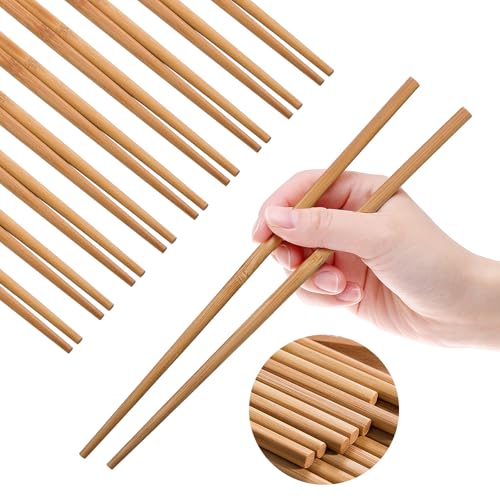
Iron wood is the answer to bamboo’s one weakness: softness. These dense hardwood pairs — ten of them, at a versatile 9.8 inches — are built for households that use chopsticks as their primary eating and much of their cooking tooling, and are tired of replacing frayed bamboo. The listing positions them for eating and cooking alike, restaurants and home gourmets, which matches the material: iron wood endures heat, water and years in a way softwoods cannot.
Strengths
- Iron wood density delivers wood feel with far greater wear and water resistance
- Ten pairs at a working length suits family dining plus kitchen duty
- Handmade character — each pair has the slight individuality machine sets lack
Trade-offs
- Denser wood is heavier in the hand than bamboo — a preference, but a real one
- Wood of any kind eventually shows its age versus porcelain or fiberglass
- The listing mixes bamboo wording into its title; confirm the iron wood specification on the page before ordering
Key specs: 10 pairs, iron wood, 9.8 inches, dishwasher safe per listing, handmade (per Amazon title)
The iron wood proposition is longevity within the wooden tradition. You keep everything bamboo lovers love — warmth, quiet, grip, kindness to cookware — and trade away the rapid replacement cycle. For a household that cooks Chinese food several times a week, turning ingredients in the wok with the same pairs they eat with (a common and sensible practice at this length), that durability compounds into the set’s whole argument. The 9.8-inch length is the versatile middle: long enough for serving and light cooking, handy enough for the table.
A note on listing literacy, included because this guide verifies rather than assumes: the Amazon title for this product blends iron wood and bamboo phrasing, as marketplace titles do. The product is sold as the iron wood set; confirm the material line on the product page at order time, as the _SOURCES note records. That thirty-second check is the difference between the set reviewed here and a surprise — and it is the kind of check this guide exists to teach.
Best for: heavy-use households wanting wooden chopsticks that last, and cook-diners / Not suited for: buyers who prefer bamboo’s lightness, or fully non-porous materials
Check the current price on Amazon

HIWARE 10 Pairs Fiberglass Chopsticks, Black, 9.5 Inches — Best Dishwasher Workhorse
HIWARE’s fiberglass set is the pragmatic modern answer for Chinese dining at home: ten black pairs, 9.5 inches, that go in the dishwasher every night and come out identical every morning — no warping, no staining, no splinters, no ceremony. Fiberglass has quietly become the restaurant industry’s Chinese chopstick for exactly these reasons, and this set brings that logic home at family scale.
Strengths
- Fiberglass is effectively indestructible in domestic service — heat, water and dishwashers included
- Ten pairs in uniform black suit any table and hide the set’s working life
- Textured fiberglass tips grip noodles better than smooth ceramic or steel
Trade-offs
- Fiberglass lacks the warmth and tradition of bamboo or wood in the hand
- 9.5 inches is the handy end of the Chinese range, not the classic 10.5
- Black uniformity is practical, not festive — celebration tables may want the porcelain picks
Key specs: 10 pairs, fiberglass, 9.5 inches, black, dishwasher safe (per Amazon title)
There is a reason the fiberglass pick keeps appearing across this programme’s chopstick guides: it is the material that removed every maintenance objection to reusable chopsticks. For Chinese dining specifically, the case strengthens — the cuisine’s oils, sauces and coloured broths are precisely what porous wood absorbs and shows, and fiberglass simply does not care. HIWARE’s execution is the category standard: correct weight, grippy tips, honest dishwasher rating, and a ten-pair count that ends the matching-pairs hunt in the drawer.
Buy these as the household’s daily drivers and you will likely still own them, unchanged, when finer sets have chipped and bamboo bundles have cycled twice. Pair them with one presentable set — the porcelain or bone china above — and the two-set system covers every Chinese meal your home will ever serve, from Tuesday noodles to New Year. That system, rather than any single set, is this guide’s real recommendation for most households.
Best for: daily Chinese dining in dishwasher households, restaurants-at-home, pragmatic buyers / Not suited for: traditionalists who want natural materials, or formal presentation
Check the current price on Amazon

Ceramic Chopsticks, Blue Peony Bone China Gift Set, 5 Pairs — Best Decorative
The blue peony set is for the host: five pairs of porcelain chopsticks decorated in the classic blue-and-white idiom that has defined Chinese ceramic beauty for centuries. Functionally it shares porcelain’s virtues — non-porous, easy to clean, dishwasher safe — but its purpose is the table’s appearance: these are the pairs that make a home-cooked meal look like an occasion before a single dish lands.
Strengths
- Blue peony decoration in the blue-and-white tradition — instantly, classically Chinese
- Porcelain hygiene and dishwasher convenience under the beauty
- Gift-set format suits giving as much as hosting
Trade-offs
- Ceramic fragility applies: chips punish carelessness
- Decorative sets earn their keep at hosted meals, not Tuesday noodles
- 9.7 inches is mid-range — fine for dining, short for hot pot purists
Key specs: 5 pairs, ceramic/porcelain, 9.7 inches, blue peony design, gift set, dishwasher safe (per Amazon title)
Blue-and-white porcelain is not a pattern choice; it is a cultural signature, and chopsticks that carry it connect the utensil to the bowls and plates in a way plain sticks cannot. Hosts know the effect: a table set with these reads as considered before the food arrives, and food tastes better in considered rooms. The set’s practical chassis — real porcelain, real dishwasher tolerance — keeps it from the display-cabinet fate of purely decorative tableware.
Use them as the occasion layer of the two-set system this guide recommends: daily fiberglass or bamboo underneath, blue peony for guests, festivals and the meals you photograph. Stored in their gift box between appearances, five pairs will cover years of occasions. If your Chinese dining is as much about the table as the food — and for many households it joyfully is — this is the set that completes it.
Best for: hosts, festive tables and blue-and-white porcelain lovers / Not suited for: daily family workhorse duty or homes with hard floors and harder luck
Check the current price on Amazon
Comparison Table
Sort by material first — it decides care, heat behaviour and feel — then by the role: daily dining, cooking-adjacent serving, or the set that comes out for guests.
| Pick | Badge | Key spec | Best for |
|---|---|---|---|
| LEETOYI Ceramic Chopsticks Set of 5, Porcelain Chinese Chopsticks, White | Best Overall | Porcelain, 9.6in, 5 pairs | households wanting hygienic, presentable Chinese dining chopsticks for daily use |
| Helen’s Asian Kitchen Bamboo Chopsticks, 10.5 Inches, 10 Pairs | Best Traditional Bamboo | Bamboo, 10.5in, 10 pairs | traditional Chinese home cooking and dining, hot pot households, large families |
| Bone China Chopsticks, 5 Pairs, 9.5 Inches, Gift Set | Best Gift Set | Bone china, 9.5in, gift set | gifts, formal Chinese dining and unified fine-tableware settings |
| SOMOYA Iron Wood Chopsticks, 10 Pairs, 9.8 Inches | Best Durable Wood | Iron wood, 9.8in, 10 pairs | heavy-use households wanting wooden chopsticks that last, and cook-diners |
| HIWARE 10 Pairs Fiberglass Chopsticks, Black, 9.5 Inches | Best Dishwasher Workhorse | Fiberglass, 9.5in, 10 pairs | daily Chinese dining in dishwasher households, restaurants-at-home, pragmatic buyers |
| Ceramic Chopsticks, Blue Peony Bone China Gift Set, 5 Pairs | Best Decorative | Porcelain blue peony, 9.7in, 5 pairs | hosts, festive tables and blue-and-white porcelain lovers |
How to Choose the Best Chinese Chopsticks
Length is the first and most Chinese decision. Traditional dining length runs about 10.5 to 11 inches — long enough to reach shared dishes at the table’s centre and to serve from a hot pot without leaning into the steam. Modern home sets often run 9.5 to 9.8 inches, handier for smaller tables and smaller hands. Cooking chopsticks are a separate tool at 16 inches and up. Decide which job you are buying for — dining, hot pot, or both — and let that fix the length before material is even discussed; a beautiful set at the wrong length is a decoration.
Material decides care and character. Bamboo is the tradition: light, grippy, kind to cookware, porous and eventually replaced. Hardwoods like iron wood keep the wooden feel with far longer life. Porcelain and bone china are non-porous, presentable and dishwasher-safe, at the cost of chip-ability. Fiberglass is the modern workhorse: indestructible, dishwasher-proof, grippy, and aesthetically neutral. None of these is ‘best’ in the abstract — the best material is the one whose care rules your household will actually follow.
Tips and finish finish the brief. Noodle-heavy households should favour textured or tapered tips that hold slippery strands; delicate-fish households should favour smooth, fine tips that slide under flakes without tearing. Check listings for whether the set is lacquered or plain — lacquer can be beautiful and can also be the first thing hot pot steam attacks — and confirm pair counts against your table: five pairs for a family, ten for a household that hosts.
Chinese vs Japanese vs Korean Chopsticks: Knowing What You Are Buying
The three traditions differ because the cuisines differ. Chinese chopsticks are the longest (about 10.5–11 inches for dining) because meals are shared from central dishes and cooked in woks and hot pots that demand reach and heat distance. Japanese chopsticks are shorter (about 8–9 inches) and finer-pointed, because meals are individual, fish is central, and precision at close range is the virtue. Korean chopsticks sit between in length, are often metal and flatter in profile, shaped by barbecue and metal tableware traditions.
Why this matters for a buyer: the marketplaces blur these constantly. A ‘Chinese’ set at 8.8 inches is a Japanese set in costume, and it will feel short at a shared table and shorter at a hot pot. The picks in this guide were checked for Chinese-range lengths in their verified titles; when you shop beyond it, let the inches — not the adjectives — tell you which tradition a set belongs to.
Households that cook across Asia often end up owning both Chinese and Japanese sets and using each for its cuisine, which is not extravagance but fit. If you must choose one, choose by your dominant table: shared dishes and hot pots say Chinese; individual bowls and sushi nights say Japanese. This guide’s sibling on Chinese-style chopsticks explores the design-led middle ground between the traditions.
Using Chinese Chopsticks for Cooking and Hot Pot
At the stove, Chinese-length dining pairs handle light work — turning dumplings, retrieving a taste, arranging a plate — but true cooking wants the 16-inch class, which this guide treats as a separate tool (see the general chopsticks guide for the cooking pick). What dining-length pairs do superbly is hot pot: 10.5 inches keeps fingers clear of the broth while giving the control to fish out a slice of lamb at the exact second it cooks. Keep raw-meat pairs and eating pairs distinct — many households use different colours or materials for the cooking set versus the eating set, a hygiene habit worth copying.
Heat behaviour by material, for hot pot and serving: bamboo and wood stay cool in the hand and forgive contact with hot vessels; fiberglass tolerates heat well within home ranges; porcelain conducts more and can chip against a metal pot rim if knocked; metal dining pairs (more Korean in tradition) grow warm and slippery in broth, one reason the Chinese tradition stayed with wood. Match the pair to the pot and the meal is smoother for everyone.
Serving etiquette is part of the tool’s design: communal chopsticks (a dedicated serving pair, often the longest or a distinct colour) move food from shared dishes to individual bowls, and diners traditionally reverse their own sticks or use the serving pair when taking from the centre. Owning one distinct serving pair — the bamboo bundle’s longest, or a dedicated set — makes the custom effortless to keep.
Care, Lifespan and When to Replace
Bamboo and wood: wash promptly, dry upright with air around them, and never leave them soaking — water is what splits and warps them. Expect a hard-working bamboo pair to serve months to a couple of years; replace at fraying, deep staining or any crack, and rotate pairs from a multi-pair bundle to spread the wear. Iron wood stretches every one of those timelines severalfold with the same care.
Porcelain and bone china: treat as tableware — dishwasher-safe in the picks here, but loaded so they cannot rattle against steel, and stored where they will not be knocked. A chipped tip retires the pair; porcelain does not forgive and a chip near food is not negotiable. Fiberglass asks nothing: wash it however you wash anything, and expect it to outlast the drawer it lives in.
Whatever the material, store pairs together and dry — a chopstick rest at the table and a ventilated holder in the kitchen prevent the rolling, mixing and damp-corner neglect that shorten every set’s life. The households whose chopsticks last are not doing anything exotic; they are doing these small things every time, which is the entire secret.
A Brief History at the Table: Why Chinese Chopsticks Look the Way They Do
Chinese chopsticks are among the oldest continuously used tools on earth, and their modern form is a record of the cuisine’s own evolution. As Chinese cooking moved toward shared dishes, stir-frying and communal hot pots over the centuries, the sticks lengthened — reach across a table, distance from steam and oil, and the ability to cook and eat with the same implement all pushed toward the ten-and-a-half-inch standard that the traditional pick in this guide still honours. Bamboo and wood dominated because they were everywhere, worked beautifully, and could be replaced without ceremony; porcelain pairs marked the tables that could afford ceremony.
The materials in this roundup are that history continuing by other means. Fiberglass is bamboo’s role — the democratic everyday pair — rewritten in a substance the dishwasher cannot harm. Bone china and blue porcelain carry the ceremonial line forward. Iron wood answers the oldest complaint about the oldest material. Understanding the picks this way clarifies the buying decision: you are not choosing between old and new, you are choosing which chapter of a very long story your table will live in, and the healthiest households usually keep a foot in two chapters at once — the two-set system this guide recommends is, among other things, historically literate.
One durable etiquette note survives every material change: the sticks are a shared-table technology, and their courtesies — serving pairs for communal dishes, no upright sticks in rice, no pointing or spearing — are part of the tool’s design as surely as its length. A buyer who adopts the courtesies with the utensils gets the full benefit of both, and a table that keeps them is recognisably a Chinese table whatever the sticks are made of.
Chopstick Rests, Holders and the Small Infrastructure of a Chinese Table
The picks in this guide perform better inside a small supporting infrastructure that costs very little and is worth naming in full. A rest at each place — ceramic, wood, or a folded paper rest for a casual night — keeps tips off the table, pairs parallel, and the setting composed; it also stops the slow roll off the table edge that accounts for a surprising share of chipped porcelain. A ventilated upright holder in the kitchen keeps washed pairs drying in air rather than in a damp drawer corner, which is where bamboo goes to sulk and wood goes to warp.
For serving, one long or distinct pair per shared dish, laid across the dish’s edge, converts the communal-chopstick courtesy from a rule people must remember into an object the table provides. For storage of the finer sets, the gift box they arrived in remains the best-designed container ever made for them — flat, padded by its own presentation, and sized exactly. Households that adopt these three small systems — rests, a drying holder, serving pairs — find their sets last longer and their tables look intentional, which in a category bought partly for beauty is not a side benefit but the point.
None of this infrastructure needs to match, and most of it should not be bought in a rush: add rests when a set you love deserves them, a holder when the drawer starts to smell like a drawer, serving pairs when the guest list grows. The utensils came first in this guide because they matter most; the infrastructure is how a household tells the utensils, and itself, that they were worth buying well.
Pairing Chopsticks with Bowls, Spoons and Rests
A Chinese place setting is a small system, and the chopsticks in this guide perform their best inside it. The bowl wants a saucer or small plate beneath it at a dressed table, both to catch the journey of shared dishes and to give the sticks a rim to rest across when no rest is provided. The ceramic soup spoon is the chopsticks’ partner, not their rival — broth and loose grains are spoon work in Chinese dining, and a table that sets both tools lets each do what it is for, which is why experienced hosts never force the sticks to audition for the spoon’s job.
Rests deserve their second mention in this guide because they are where sets and settings meet: a rest keeps a porcelain pair’s tips off the linen and a bamboo pair from rolling, and a set of rests that matches the table’s mood — porcelain with porcelain, wood with bamboo — costs little and unifies much. Buy rests when you buy the occasion set, not as an afterthought, and the first table you set with them will explain the expenditure better than this paragraph can. The system is the style; the sticks are its most visible citizens.
How to Hold Chinese Chopsticks Correctly (and Eat Noodles Without Fear)
The Chinese grip is the universal grip — the longer sticks simply reward it more. Learn it once, on any pair in this guide, and every length and material that follows will feel familiar.
- Rest the bottom stick. Lay one stick in the valley between thumb and index finger, resting its lower third on your ring finger. This stick is furniture: it does not move for the entire meal.
- Hold the top stick like a pencil. Grip the second stick with thumb, index and middle finger, exactly as you would a pen, above the resting stick. All motion lives here.
- Practise the pinch. Open and close the top stick against the still one until the tips meet cleanly every time. Tips that cross or scissor mean the top stick is gripped too low — slide up a fraction.
- Start with forgiving food. Peanuts, edamame, chunky vegetables — grippy, light, patient targets. Ten successes teach more than thirty dropped noodles.
- Approach noodles correctly. Gather a small bundle, lift, and let gravity settle it; do not chase single strands. A gentle twirl against the bowl’s edge portions the bite — the Chinese table’s quiet technique.
- At a hot pot, commit. Lower the food, hold it in the broth with the tips, and lift decisively when cooked. Hesitant dipping is how slices are lost to the pot forever.
- Rest them properly. Between bites, tips on the chopstick rest or across your own bowl — never stuck upright in rice, which carries funeral associations at a Chinese table and is the one etiquette error everyone notices.
Competence arrives faster than pride expects: a week of meals on a correctly sized pair installs the grip for life. If a household member struggles, check length before technique — an inch too long defeats more learners than any finger position — and let the children’s trainers in this cluster handle the small hands while the adults master the long ones.
Common Buying Mistakes
Chinese chopstick purchases go wrong in a handful of repeatable ways, most of them born in the listing rather than at the table.
- Buying Japanese length in Chinese clothing. An 8.8-inch set at a shared Chinese table is a daily annoyance. Read the inches, not the adjectives.
- Using dining pairs as wok tools. Dining lengths put knuckles in the steam and dining finishes in the oil. Cooking pairs are a separate, longer tool — buy both if you cook.
- Dishwashing bamboo daily, then blaming bamboo. Porous wood and machine cycles are enemies. If your household dishwashes everything, buy fiberglass or porcelain and be happy.
- One material for every job. The two-set system — daily workhorse plus occasion set — out-serves any single compromise set. The picks above are chosen to combine.
- Ignoring the serving-pair custom. Shared dishes deserve a dedicated serving pair. It costs one pair from the bundle and elevates the whole table’s hygiene.
- Storing pairs damp and mixed. Damp corners warp wood and dull finishes. Dry, paired, ventilated storage is the cheapest lifespan upgrade there is.
Final Recommendation
For most households, start with the system rather than a single set: HIWARE fiberglass or Helen’s bamboo as the daily foundation — dishwasher-proof practicality or classic tradition, both at family quantities — and add the LEETOYI porcelain for the table you present. Gift-givers should go straight to the bone china set, hosts to the blue peony, and heavy cook-diners to the iron wood, whose durability matches a wok-centred kitchen.
Every pick was verified, with lengths and materials taken from the verified titles — check the current price on Amazon, confirm the inches on the page one last time, and buy for the table you actually set: shared, steaming and reached across. That is what Chinese chopsticks are for, and the right pair makes the reaching effortless.
Keep exploring the cluster: Best Chopsticks Best Chinese Style Chopsticks Best Children’s Chopsticks Best Bamboo Chopsticks Best Ceramic Chopsticks Best Stainless Steel Chopsticks
Frequently Asked Questions
How long are Chinese chopsticks supposed to be?
Traditional Chinese dining chopsticks run about 10.5 to 11 inches (roughly 27 cm), longer than Japanese pairs because meals are shared from central dishes and hot pots demand reach. Modern home sets often run 9.5 to 9.8 inches for smaller tables. Cooking chopsticks are a separate, longer tool at 16 inches and beyond.
What is the best material for Chinese chopsticks?
It depends on the household’s care habits. Bamboo is the light, grippy tradition but is porous and replaced periodically; iron wood keeps the wooden feel far longer; porcelain is non-porous and presentable but chips; fiberglass is effectively indestructible and dishwasher-proof. This guide’s recommendation for most homes is a workhorse set plus a presentable set.
Can Chinese chopsticks go in the dishwasher?
Porcelain, bone china (as listed) and fiberglass sets in this guide are dishwasher safe. Bamboo and wood survive occasional cycles but live much longer washed by hand and dried upright. If everything in your kitchen is machine-washed, choose your material accordingly rather than fighting your own routine.
Are longer chopsticks harder to use?
They feel different for an evening, then normal — the grip is identical, and the extra length is leverage you aim, not weight you fight. Most adults adapt within a few meals. If a pair feels unwieldy after a week, it is usually a full inch too long for your hand and table, not a technique failure.
How many pairs should a household own?
Enough that a clean pair always exists: five pairs covers a family, ten covers a family that hosts. Add one distinct serving pair for shared dishes. Multi-pair bundles are priced for exactly this arithmetic, which is why most picks in this guide come in fives and tens.
What is the difference between Chinese and Chinese-style chopsticks?
Chinese chopsticks follow the tradition directly — length, materials and forms from Chinese dining. ‘Chinese-style’ is the broader design category, including modern and fusion sets that borrow the length and look while varying materials and decoration. This programme has a sibling guide for the style category; the picks here are the tradition itself.
Why do Chinese chopsticks have squarer handles than Japanese ones?
Traditional Chinese pairs often carry a squared or faceted handle section — it stops the sticks rolling off the table and gives the fingers a purchase reference — while tapering to round, fine tips at the food end. Japanese pairs more often run round or finely shaped along their shorter length. It is a small detail that becomes obvious the first time a round pair rolls off a lively shared table, and one more reason the traditions’ dimensions in this guide were checked rather than assumed.

